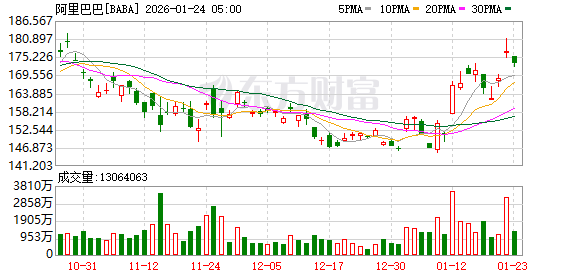
BABA(BABA)

Search documents
一场8年谋局,让阿里市值涨了1000亿
虎嗅APP· 2026-01-25 09:33
Core Viewpoint - The article discusses the strategic importance of Alibaba's chip subsidiary, Pingtouge, in the context of its AI ambitions and the competitive landscape of the chip industry in China [4][7]. Group 1: Pingtouge's Role and Strategy - Pingtouge is positioned as a "tactical base" within Alibaba's AI ecosystem, which includes Alibaba Cloud, Pingtouge, and the Qianwen model [4][5]. - Since its establishment in 2018, Pingtouge has been heavily invested in, focusing on developing a full-stack capability across various chip types, including CPU, GPU, and storage chips [5][6]. - Pingtouge's diverse product offerings, such as the AI inference chip Lingguang 800 and the server CPU chip Yitian 710, differentiate it from other domestic chip manufacturers that typically focus on a single segment [6][7]. Group 2: Competitive Landscape - The article highlights the differences in chip strategies among major Chinese internet companies, with Pingtouge adopting a full-stack approach while competitors like Tencent and ByteDance focus on specialized chips [8]. - Pingtouge's strategy is seen as a response to the competitive pressures from companies like Huawei, Xiaomi, and Baidu, which are also heavily investing in chip technology [10]. Group 3: Future Prospects and Challenges - If Pingtouge successfully goes public, it could alleviate Alibaba's financial pressure and allow for more resources to be allocated towards foundational models and consumer AI products [10][11]. - The chip market is characterized as a "slow engineering" field, indicating that long-term investment and sustained effort will be necessary for success [11].



计算机行业研究:动态漫Agent,景气的极致
SINOLINK SECURITIES· 2026-01-25 07:50
Investment Rating - The report indicates a positive investment outlook for the industry, highlighting a "golden window period" for the short drama sector, with expectations for significant growth in the coming years [2][11]. Core Insights - The short drama industry has reached a scale of nearly 1 trillion yuan, surpassing both the film and long video sectors, with a projected compound annual growth rate (CAGR) of over 50% from 2023 to 2026 [11]. - The market for animated dramas is expected to exceed 22 billion yuan by 2026, contributing 50% of the incremental growth in the short drama industry [11]. - ByteDance is positioned as the absolute leader in the animated drama sector, leveraging its "traffic + IP + AI" integrated strategy to dominate the market [2][17]. - The application of AI technology is transforming the production paradigm of animated dramas, reducing production cycles from over 50 days to under 30 days and significantly lowering costs [3][21]. Summary by Sections Section 1: The Golden Window for Short Dramas - The short drama market has surpassed 1 trillion yuan, with user engagement increasing, and the average daily viewing time expected to exceed 100 minutes by 2025 [11]. - The market has entered a phase of rapid growth and commercialization, with significant increases in both supply and demand for animated dramas [11][12]. Section 2: AI Reshaping Production Paradigms - AI technologies are enabling a shift from manual production to industrialized generation, with production costs dropping to the thousand-yuan level [3][21]. - The integration of AI in production processes is expected to streamline workflows, reducing the number of steps from 11 to 5 and cutting costs by 60% [3][24]. Section 3: Trends in AI Applications - The report anticipates a significant uptick in AI applications by 2026, driven by the need for software to leverage substantial computational investments [4][31]. - Companies are increasingly integrating AI into their business models, with some reporting that AI-related revenues account for over 10% of total income [4][31]. Section 4: Related Investment Targets - Key investment targets include companies such as DeCai Co., Zhaochi Co., and Wanxing Technology, among others, which are positioned to benefit from the growth in the animated drama and AI sectors [5][40].


“平头哥”新动作!深度拆解阿里八年“造芯”路
Mei Ri Jing Ji Xin Wen· 2026-01-25 05:59
Core Viewpoint - Alibaba Group is preparing to push its semiconductor company, Pingtouge, towards an independent IPO after internal restructuring, highlighting the growing importance of AI chip manufacturing in China [2][14][17]. Group 1: Company Overview - Pingtouge, established nearly eight years ago, has remained relatively low-profile until recent news of its potential IPO [2][4]. - The company is located in the Zhangjiang Artificial Intelligence Industrial Park in Shanghai, surrounded by major tech firms like IBM and COMAC [2]. - Pingtouge's name, derived from the honey badger, symbolizes resilience and determination in overcoming technological barriers [3]. Group 2: Product Development - Pingtouge has developed several key products, including the "Hanguang 800" AI chip, which boasts a peak performance of 78,563 IPS and energy efficiency of 500 IPS/W, equating to the power of ten GPUs [4]. - The latest product, the "Zhenyue 510" enterprise SSD controller chip, has been deployed at scale in Alibaba Cloud's EBS and is used in various AI applications [4][5]. - The company is also expanding its "Yuzhen" series chips into logistics and supply chain management, enhancing operational efficiency [5][6]. Group 3: Market Position and Strategy - Pingtouge is transitioning from being an internal supplier for Alibaba to an independent market player, indicating a shift in its business strategy [6][12]. - The company is positioned to capitalize on the growing domestic AI chip market, especially as U.S. restrictions on companies like NVIDIA create opportunities for local manufacturers [3][14]. - Pingtouge's recent developments suggest it is ready to compete with international players, with reports indicating its new AI chip surpasses some NVIDIA models in key performance metrics [7][14]. Group 4: Industry Context - The AI chip market in China is entering a phase of concentrated IPO activity, with several companies, including Pingtouge, looking to capitalize on this trend [3][14]. - The push for domestic AI chip production is seen as a long-term necessity, with current market conditions viewed as optimal for growth [14][15]. - Major tech companies, including Baidu and Tencent, are also accelerating their AI chip initiatives, indicating a competitive landscape among Chinese tech giants [15][16].

慕了!内存芯片巨头年终奖人均64万;32岁程序员猝死背后公司被扒,曾给39万“封口费”;马斯克曝星舰成本将降99%,商业航天受捧|AI周报
AI前线· 2026-01-25 05:33
Group 1 - SK Hynix announced a record year-end bonus of approximately 1.36 billion KRW (around 640,000 RMB) per employee, part of a shareholder participation plan allowing employees to receive up to 50% of their bonuses in company stock [2][4] - The new bonus structure, effective from the end of January, allows for bonuses to be based on 10% of the previous year's operating profit, with 80% paid in the current year and the remaining 20% deferred over two years [3][4] - The company’s operating profit for the previous year is estimated at 45 trillion KRW, leading to the high bonus payout [4] Group 2 - Zhang Yutong, president of Kimi, stated that the company utilizes only 1% of the resources from top U.S. laboratories to develop leading open-source models, which reportedly outperform some closed-source models [5] - Kimi's valuation reached 4.8 billion USD (approximately 33 billion RMB) in its latest funding round, reflecting strong market demand for AI IPO candidates [5] Group 3 - A tragic incident involving a 32-year-old programmer who died due to excessive work hours has raised concerns about workplace culture, particularly regarding the lack of cooperation from the employer in recognizing the incident as a work-related injury [6][7] - The company involved, Vision Shares, has been criticized for its handling of the situation, including offering a "hush money" payment to the family and obstructing investigations into the work conditions leading to the programmer's death [7][8] Group 4 - Volkswagen announced plans to cut 35,000 jobs, including a third of its management positions, as part of a strategy to save 1 billion euros by 2030 amid industrial slowdowns and competition [10][11] - The restructuring aims to streamline management and enhance operational efficiency, particularly as the company transitions towards electrification and digitalization [11] Group 5 - TikTok has established a U.S. data security joint venture to manage data protection while retaining ownership of its algorithm, ensuring compliance with U.S. regulations [19] - The joint venture will be responsible for TikTok's U.S. operations, allowing over 200 million American users to continue using the platform [19] Group 6 - Elon Musk announced that SpaceX aims to achieve full reusability of its Starship this year, potentially reducing launch costs by 99% [15][16] - Musk also discussed plans for deploying solar-powered AI satellites in the coming years, highlighting the efficiency of solar energy in space [16] Group 7 - OpenAI plans to launch its first hardware device in the second half of 2026, aiming to transform user interaction with technology [22] - The device is designed to provide a more focused and less distracting user experience, contrasting with current smart devices [22] Group 8 - Baichuan Intelligence released the M3 Plus model, which boasts the lowest hallucination rate in medical scenarios, enhancing the reliability of AI-generated medical conclusions [27] - The model incorporates unique evidence anchoring technology to provide accurate citations for its outputs [27]




【数智周报】中芯国际等巨头集体提价;风投资金涌入Anthropic,新一轮融资250亿美元;DeepMind CEO:中国头部AI企业只比前沿水平落后六个月,但中国AI基础创新仍存短板
Sou Hu Cai Jing· 2026-01-25 00:26
Group 1 - Huang Renxun discussed the AI bubble, stating that the bubble is due to unprecedented investment scale aimed at building AI infrastructure, with total investment expected to reach trillions of dollars [2] - Microsoft CEO Satya Nadella warned that if AI development relies solely on capital without real productivity improvements, a bubble may form, emphasizing the need for a focus on actual demand and application [3] - DeepMind CEO Demis Hassabis and Anthropic founder Dario Amodei debated the timeline for AGI, with predictions ranging from two years to the late 2030s, highlighting the potential impact on the labor market [4] Group 2 - DeepMind's Hassabis noted that Chinese AI companies are only about six months behind the frontier level, showcasing impressive catch-up capabilities, although he believes they have yet to prove their ability to innovate beyond the frontier [5] - Tencent's Tang Daosheng emphasized that AI development should not be limited to AGI but should focus on diverse model adaptations for different scenarios [6] - Baichuan Intelligent's Wang Xiaochuan responded to concerns about AI in healthcare, arguing that limiting AI use could hinder medical advancements [7] Group 3 - Alibaba is reportedly planning to spin off its chip company T-Head for independent listing [8] - Moore Threads forecasted a revenue of 1.45 to 1.52 billion yuan for 2025, with a year-on-year growth of 230.70% to 246.67% [9] - Major Chinese foundries, including SMIC, are raising prices by 5% to 20% due to a reduction in global 8-inch foundry capacity [10] Group 4 - DeepSeek plans to launch its flagship AI model DeepSeek V4 in February, featuring a new architecture aimed at enhancing coding capabilities [11] - Alibaba Cloud's PolarDB has released new products, including an AI data lake solution designed for integrated data management [12] - DingTalk has launched an "AI travel" feature in collaboration with Gaode and Alipay, allowing enterprise users to access travel services without upfront costs [13][14] Group 5 - Baichuan Intelligent released the M3 Plus medical model, introducing "evidence anchoring" technology to ensure AI-generated medical advice is backed by professional evidence [15] - Donghua Software announced a 300 million yuan investment to establish a wholly-owned subsidiary focused on AI and big data [16] - Alibaba Health's AI product "Hydrogen Ion" has completed internal testing and aims to assist doctors with low hallucination rates and high evidence-based capabilities [17] Group 6 - Baidu launched the official version of its Wenxin model 5.0, featuring 2.4 trillion parameters and supporting multiple information formats [18] - The 2025 Hurun AI 50 list ranked Cambricon and Moore Threads at the top, with significant representation from chip companies [19] - MiniMax introduced an AI-native workspace, enhancing local environment applications and expert agents [20] Group 7 - Moonshot AI's valuation increased by 500 million dollars to 4.8 billion dollars following its latest funding round [43] - OpenAI is reportedly negotiating a new round of financing with a Middle Eastern sovereign wealth fund, potentially raising 50 billion dollars [32] - Anthropic is raising at least 1 billion dollars in its latest funding round, with annual revenue expected to exceed 9 billion dollars by 2025 [42]


陆家嘴财经早餐2026年1月25日星期日
Wind万得· 2026-01-24 22:24
1、 《北京市关于促进商业卫星遥感数据资源开发利用的若干措施(2026-2030年)》提出,鼓励有能力的企业对卫星数据上下游企业进 行并购重组,整合完善地面站网、数据应用服务产业链环节 ,打造具备全球竞争力的链主企业。支持企业规划建设具有差异化优势、商业价值 明确、应用前景清晰的商业卫星星座。 2、 美国银行表示,在美国总统特朗普威胁因格陵兰岛问题对部分欧洲国家加征关税的一周里,美股资金流出接近170亿美元。 值得注意的 是,印度正加入部分主要经济体的行列,逐步撤离美国债券市场,其持有的美国国债规模已降至1740亿美元,较2023年峰值下降26%,为五年来最低水 平。与此同时,瑞典最大私人养老基金、丹麦"学界养老基金"也正在或计划抛售美债。 4、基金2025年四季报披露完毕,"专业买手"公募FOF最新持仓动向浮出水面。 去年四季度,FOF延续对低风险产品的偏爱,短融ETF成为其头号 重仓品种。 在国际金价迭创新高之际,FOF却普遍减持了黄金ETF,转而大举增持黄金股ETF,展现出独特的"淘金"策略。 3、 英伟达创始人黄仁勋再度前往中国,首站到访英伟达位于上海的新办公室,这是黄仁勋2026年首度赴华。 知情人 ...



计算机行业周报20260124:Token需求“通胀”:从CPU到云服务
Guolian Minsheng Securities· 2026-01-24 13:25
Investment Rating - The report maintains a "Recommended" rating for the industry [4] Core Insights - The demand for Tokens is driving inflation across the AI industry chain, with price increases being observed from storage to CPUs and now extending to cloud services, marking a significant shift in the pricing dynamics of the cloud computing sector [14][30] - AWS has initiated a price increase for its EC2 machine learning capacity blocks by approximately 15%, breaking a long-standing trend of declining prices in the cloud services industry, which may lead to a revaluation of cloud computing and related service providers [14] - The report highlights potential investment opportunities in cloud computing, CPUs, and databases, suggesting companies such as Alibaba, Kingsoft Cloud, and Inspur for cloud computing; Haiguang Information and Longxin for CPUs; and companies like StarRing Technology and DM Database for databases [30] Summary by Sections 1. Cloud Computing Price Trends - The report indicates that the AI industry chain is experiencing a price transmission trend, with cloud computing being the next area to see price increases following storage and CPU price hikes [14] - AWS's price adjustment reflects anticipated supply-demand dynamics, suggesting that successful price increases could lead to further adjustments in the future [14] 2. CPU Market Dynamics - The report notes a persistent supply-demand imbalance in the CPU market, particularly with Intel facing production limitations that may lead to continued shortages into 2026 [16] - The importance of CPUs is expected to rise significantly due to the increasing demand from AI applications, with the report emphasizing the need for optimization across both CPU and GPU resources [24][25] 3. Database Sector Growth - The report anticipates a rapid increase in the number of database PCU nodes driven by the demand for AI agents, which could lead to significant revenue growth for database providers [26] - The emergence of AI-native databases is highlighted as a key trend, with companies like Alibaba's PolarDB gaining traction in the market [29] 4. Investment Recommendations - The report suggests focusing on companies in the cloud computing sector such as Alibaba, Kingsoft Cloud, and UCloud, as well as CPU manufacturers like Haiguang Information and Longxin, and database firms like StarRing Technology and DM Database [30]



阿里国际站SEO案例:流量骤降背后的增长教训
Sou Hu Cai Jing· 2026-01-24 12:49
那天我正吃着火锅,真的,油碟刚打好,毛肚还没下锅。电话就来了。 "流量崩了。" 阿里巴巴SEO的核心优势是什么? 很多人会说,是关键词研究、网站结构、外链。没错,但这些是表象。阿里很早就能做到,即使用生冷的产品名搜索,它的信息也总出现在前面。它的每个 网页,从标题、META标签到HTML代码,都透着专业。 就四个字。阿里国际站九月大促,SEO流量断崖式往下掉。你能想象那种感觉吗?全世界供应商的眼睛都盯着呢。后来查出来,是开发同学为了服务器稳 定,顺手把搜索引擎爬虫给屏蔽了。原因简单得让人想哭,但绩效确确实实受了影响。 这事儿让我琢磨了好久。 我们这些搞SEO的,整天在干嘛?盯着GA、GSC的数据曲线,像个救火队员。流量一下降,马上维度细分、链路细分、关键词类型细分,一顿操作猛如 虎。搞个巡检系统,检查TDK、死链、统计代码。再弄个数据预警,涨跌超10%就报警。 这重要吗?太重要了。这是基本功,是地板。 但天花板在哪? 我后来看到阿里工程师写的一篇文章,猛地被敲了一下。他们早就不满足于这些"维护"了。他们在用深度强化学习,教AI从海量又杂乱的商品描述里,自动 抽取出能提升搜索排名的商品摘要。这不是优化,这他娘的 ...
AI手机的终局,“读屏”还是“对话”?
创业邦· 2026-01-24 10:43
Core Viewpoint - The article discusses two distinct technological approaches to AI integration in mobile devices: the GUI (Graphical User Interface) route, which prioritizes speed and ease of use, and the A2A (Agent-to-Agent) route, which emphasizes security and collaboration through standardized APIs [7][17][29]. Group 1: AI Integration Approaches - The GUI approach allows AI to simulate user actions on apps by utilizing system permissions, enabling rapid deployment but raising concerns about user experience and security [10][14]. - The A2A approach establishes a standardized communication protocol between AI and applications, requiring dual authorization from users and app developers, which enhances security and accountability [14][15]. - The choice between these approaches reflects companies' strategic interests and their positions within the tech ecosystem, with GUI being faster but riskier, while A2A is slower but more stable and secure [17][29]. Group 2: Industry Responses - Major tech companies like Apple and Google favor the A2A approach, focusing on API integration to maintain control over their ecosystems and ensure compliance with privacy regulations [18][21]. - Microsoft has developed frameworks like "AutoGen" to facilitate multi-agent collaboration, while OpenAI and Anthropic are pushing for API standards that align with the A2A model [19][21]. - In contrast, domestic companies like ByteDance are exploring high-permission GUI routes to disrupt existing ecosystems and capture new market opportunities [23][24]. Group 3: Future Implications - The A2A model is seen as a long-term solution that could lead to new business opportunities, including the development of specialized agents for various industries and the establishment of a new ecosystem of protocols and middleware [33][35]. - The article suggests that the evolution of AI integration will ultimately shape the relationship between humans and machines, emphasizing the need for AI to serve as an intelligent assistant rather than a replacement for human decision-making [37][38].


阿里巴巴加码教育布局 云谷学校二期开工引入香港汉基合作
Xin Hua Cai Jing· 2026-01-24 07:14
值得关注的是,二期项目引入了重要的战略合作方——香港汉基国际学校。该校标志性的"杭州十年级 寄宿项目"将整体入驻,实现课程体系、师资与管理模式的深度共享。此举强化了云谷在国际化教育领 域的品牌影响力,预期将间接带动周边区域价值与教育生态升级。 仪式现场,前淘天CEO、阿里巴巴创始人之一戴珊低调出席,引发市场对其未来是否更深入参与教育板 块的关注。分析人士指出,随着国内教育行业向高质量、特色化转型,企业办学尤其是科技企业赋能教 育的模式,正逐渐成为民间资本进入教育领域的重要路径。 (文章来源:新华财经) 新华财经北京1月24日电(记者刘旭阳)记者24日获悉,杭州云谷学校二期工程正式奠基开工,该项目 预计于2028年8月建成投用,标志着阿里巴巴集团在教育领域的战略性布局进一步深化。 云谷学校为阿里巴巴集团创办的15年制私立国际学校,总规划占地面积约14.6万平方米。此次开工的二 期项目建筑面积约8.2万平方米,设计容纳规模1200人。项目建成后,将与已投入使用的一期工程形成 协同,整体容纳量提升至约3000人,进一步巩固其在长三角地区高端教育市场中的资源配置优势。 ...