
BIDU(BIDU)

Search documents
美股大型科技股盘前普跌
第一财经· 2025-11-21 10:51
Group 1 - Multiple AI concept stocks declined in pre-market trading, with Nvidia's drop expanding to 3%, TSMC down 2.9%, and AMD and Oracle falling over 2% [1] - Major tech stocks also experienced declines, including Apple, Tesla, Google, and Microsoft, all trading lower in pre-market [2] - In the Chinese concept stock sector, Xpeng Motors fell over 3%, Alibaba dropped over 2%, and Baidu Group decreased by 1.35% [3]



港股科技股下跌,华虹半导体跌超6%,比特币跌破8.2万美元
21世纪经济报道· 2025-11-21 09:13
Market Performance - The Hong Kong stock market experienced significant declines, with the Hang Seng Index dropping by 2.38%, the Hang Seng China Enterprises Index falling by 2.45%, and the Hang Seng Tech Index decreasing by 3.21%. This week marked a cumulative decline of 7.18%, resulting in four consecutive weeks of losses [1][3]. - The market turnover increased to 285.70 billion HKD, up from 245.14 billion HKD in the previous trading day [1]. Sector Performance - The technology and semiconductor sectors faced the largest declines, with JD Health falling over 8%, SMIC and Hua Hong Semiconductor dropping more than 6%, and Tencent Music and Baidu Group decreasing over 5%. Other notable declines included NIO, Alibaba, and Alibaba Health, which fell over 4%, while NetEase and BYD Electronics dropped over 3% [3]. - In contrast, Xiaomi Group saw an increase of over 1%, and Kingsoft experienced a slight rise [3]. Global Market Trends - Major European stock indices opened lower, with the Euro Stoxx 50 Index down by 1.57%, the UK FTSE 100 Index down by 1.04%, the French CAC 40 Index down by 1.29%, the German DAX 30 Index down by 1.48%, and the Italian FTSE MIB Index down by 1.48% [3]. Cryptocurrency Market - The cryptocurrency market faced a sharp decline, with Bitcoin dropping over 9% to below 82,000 USD per coin, Ethereum falling nearly 11%, BNB decreasing over 8%, and Solana dropping over 12%. The total market capitalization of cryptocurrencies fell below 3 trillion USD, with Bitcoin prices dropping below the average purchase price of the US Bitcoin ETF [3].




百度发布文心大模型5.0,李彦宏称将持续推高智能天花板
Jing Ji Wang· 2025-11-21 08:26
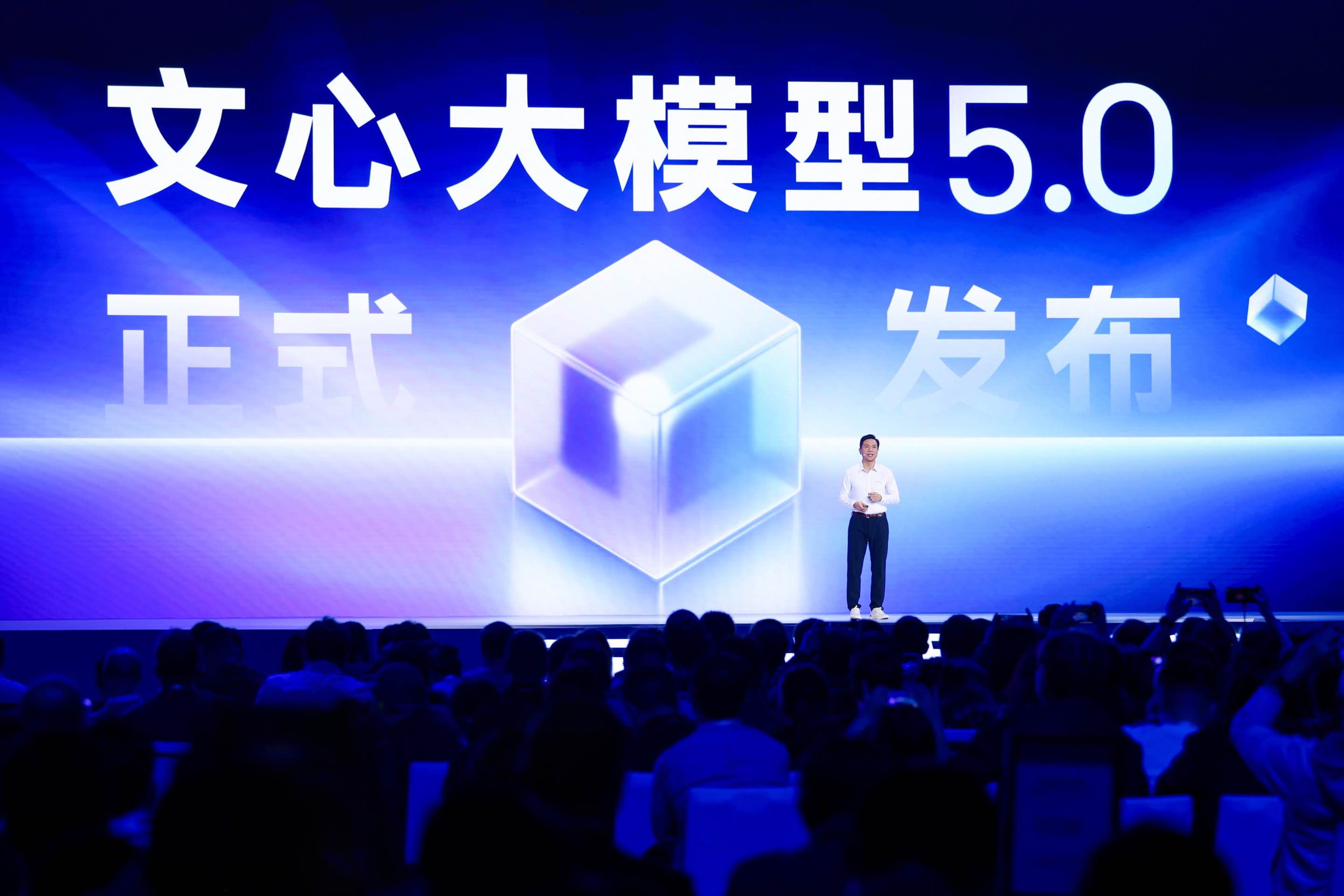
Core Insights - Baidu officially launched its native multimodal large model, Wenxin 5.0, at the 2025 Baidu World Conference, featuring 2.4 trillion parameters and supporting various forms of input and output including text, images, audio, and video [1][4]. Group 1: Model Capabilities - Wenxin 5.0 has undergone comprehensive upgrades in multimodal understanding, instruction adherence, creative writing, factuality, agent planning, and tool application, demonstrating strong understanding, logic, memory, and persuasion capabilities [4]. - In over 40 authoritative benchmark evaluations, Wenxin 5.0's language and multimodal understanding capabilities are on par with models like Gemini-2.5-Pro and GPT-5-High, while its image and video generation capabilities are comparable to specialized models in vertical fields, achieving a globally leading level [4]. Group 2: Technical Innovations - Unlike most industry multimodal models that use post-fusion methods, Wenxin 5.0 employs a unified autoregressive architecture for native multimodal modeling, integrating language, image, video, and audio data from the training phase [6]. - The model utilizes the PaddlePaddle deep learning framework and features a super-sparse mixture of experts architecture, with a total parameter scale exceeding 2.4 trillion and an activation parameter ratio below 3%, enhancing inference efficiency while maintaining strong capabilities [6]. Group 3: Market Position and Accessibility - The Wenxin 5.0 Preview is now available on the Wenxin App for users to experience directly, while developers and enterprise users can access the Wenxin 5.0 API services through Baidu's Qianfan large model platform [6]. - As of November 8, the latest rankings from LMArena show that the Wenxin model ERNIE-5.0-Preview-1022 ranks second globally in text task evaluations and first in China, particularly excelling in creative writing and complex problem understanding [6].
电子行业2026年度投资策略:人工智能产业变革持续推进,半导体周期继续上行
Zhongyuan Securities· 2025-11-21 07:38
Group 1 - The report highlights the ongoing transformation in the artificial intelligence (AI) industry, with significant advancements in AI models and increasing capital expenditures from cloud service providers, driving demand for AI computing hardware infrastructure [8][20][39] - The semiconductor industry is expected to continue its upward trend, with AI driving a potential super cycle in the memory sector, as domestic manufacturers enhance their competitive advantages in technology and supply chains [11][18][19] - The electronic industry has significantly outperformed the CSI 300 index, with a year-to-date increase of 38.35% compared to the CSI 300's 16.85% [18][19] Group 2 - Major cloud companies are increasing their capital expenditures, with North American cloud providers collectively spending $96.4 billion in Q3 2025, a 67% year-on-year increase, to support AI infrastructure [39][40] - The report emphasizes the rapid growth of AI server demand, with the global AI server market projected to reach $158.7 billion in 2025, reflecting a compound annual growth rate of 15.5% from 2024 to 2028 [51][53] - The report identifies key investment opportunities in sectors such as AI computing chips, AI PCBs, and memory modules, recommending specific companies for investment based on their market positions and growth potential [11][12][52]


AI 搜索重塑 BAT 竞争边界
Xi Niu Cai Jing· 2025-11-21 07:12
Core Insights - AI search is transforming the information retrieval methods for 240 million users in China, redefining the competitive landscape among the BAT (Baidu, Alibaba, Tencent) giants [2] - The AI search sector is evolving into a three-way competition, with significant growth in user engagement and market size projected [3] Group 1: Market Dynamics - The AI search market is expected to exceed $28 billion globally by 2024, with China being the fastest-growing region [3] - Major players are adopting different strategies: Baidu focuses on general search, Alibaba integrates AI into its Quark app, and ByteDance leverages a product matrix for competitive advantage [6][7] Group 2: User Engagement and Growth - As of February 2025, DeepSeek, Doubao, and Tencent Yuanbao lead the AI native application market in China with monthly active users of 190 million, 110 million, and 40 million respectively [3] - Baidu's AI-generated content in mobile search results surged from 35% in April to 64% in July, indicating a significant shift from traditional search methods [3][5] Group 3: Product Innovation and Differentiation - Baidu's recent search overhaul introduced an "intelligent box" for enhanced user interaction, moving away from static links to structured, multimodal AI responses [5][6] - ByteDance's Doubao achieved rapid growth, surpassing DeepSeek with 159 million monthly active users, benefiting from a robust product ecosystem [3][6] Group 4: Commercialization Strategies - Alibaba's Quark app monetizes through subscription services and AI document processing, while Baidu's Wenku shows strong commercial potential with over 90 million monthly active users [10][12] - ByteDance's Doubao employs a diversified revenue model through API licensing, B2B partnerships, and ad revenue, establishing a clearer commercial value [13] Group 5: Regulatory Challenges - The AI search industry faces challenges such as content homogenization and compliance issues, highlighted by Quark's recent regulatory penalties for inappropriate content [14] - The competitive landscape is shifting as companies adapt to new regulations and user expectations, with a focus on building robust ecosystems [14][15] Group 6: Future Outlook - The competition in AI search is set to intensify, with predictions indicating that by 2027, over 70% of smart devices in China will support AI search capabilities [16][17] - The next 1-2 years will be critical in determining whether traditional giants can maintain their market positions or if niche players can leverage their advantages to gain traction [17]

抢先报名!MEET2026最新嘉宾阵容官宣,一起热聊AI
量子位· 2025-11-21 06:29
Core Viewpoint - The article emphasizes the transformative impact of artificial intelligence (AI) on various industries and society as a whole, highlighting the upcoming MEET2026 conference as a platform to explore these advancements and trends in AI technology [1][3]. Group 1: Conference Overview - The MEET2026 Intelligent Future Conference will focus on cutting-edge technologies and industry developments, particularly in AI [2]. - The theme of the conference is "Symbiosis Without Boundaries, Intelligence to Ignite the Future," aiming to explore how AI transcends industry, discipline, and scenario boundaries [3]. - Key topics of discussion will include reinforcement learning, multimodal AI, chip computing power, AI applications in various industries, and AI's global expansion [4]. Group 2: Notable Speakers - The conference will feature prominent figures such as Zhang Yaqin, a renowned scientist and former president of Baidu, who has made significant contributions to digital video and AI [12][13]. - Sun Maosong, Executive Vice President of the Tsinghua University AI Research Institute, will also be a key speaker, known for his leadership in national research projects [17]. - Other notable speakers include Wang Zhongyuan, Director of the Beijing Academy of Artificial Intelligence, and He Xiaodong, Senior Vice President of JD Group, both recognized for their contributions to AI research and applications [21][30]. Group 3: AI Trends and Reports - The conference will feature the release of the "Artificial Intelligence Annual List" and the "Annual AI Trends Report," which are anticipated to provide insights into the most influential companies, products, and individuals in the AI sector [6][102]. - The "Annual AI Trends Report" will identify and analyze ten significant AI trends based on technology maturity, current applications, and potential value [104]. Group 4: Event Details - The MEET2026 conference is scheduled for December 10, 2025, at the Beijing Jinmao Renaissance Hotel, with registration now open for attendees [105]. - The event is recognized as a major technology business summit, attracting thousands of industry professionals and millions of online viewers each year, establishing itself as a key indicator of trends in the intelligent technology sector [107].


消电ETF(561310)跌超3%,半导体复苏与AI加速或成结构性支撑,把握回调布局机会
Mei Ri Jing Ji Xin Wen· 2025-11-21 05:33
Core Viewpoint - The semiconductor industry is experiencing a recovery, supported by structural opportunities in AI and semiconductor equipment, despite a decline in the consumer electronics ETF (561310) by over 3% [1] Group 1: Semiconductor Industry - SMIC's third-quarter capacity utilization reached 95.8%, with an ASP increase of 3.8% quarter-on-quarter, driven by product structure optimization and increased shipments of complex process products [1] - Although the fourth quarter is traditionally a low season, production lines are expected to remain fully loaded, indicating a sustained recovery in the semiconductor sector [1] - The demand recovery in the electronics industry is evident, with storage chip prices rising more than expected and increased domestic substitution efforts leading to effective supply clearance [1] Group 2: AI and Technology - Baidu has released the Wenxin large model 5.0 and Kunlun chips M100/M300, unveiling a "Five Years, Five Chips" strategic roadmap, marking an acceleration in the AI sector [1] - Structural opportunities worth noting include AI computing power, semiconductor equipment, key components, and rising storage prices [1] Group 3: Consumer Electronics ETF - The consumer electronics ETF (561310) tracks the consumer electronics index (931494), which selects listed companies involved in smartphones, home appliances, and wearable devices to reflect the overall performance of the consumer electronics industry [1] - The consumer electronics index focuses on companies with strong technological innovation and brand influence, effectively reflecting industry development trends and market dynamics [1]

百度最大的变量还是搜索
Tai Mei Ti A P P· 2025-11-21 04:13
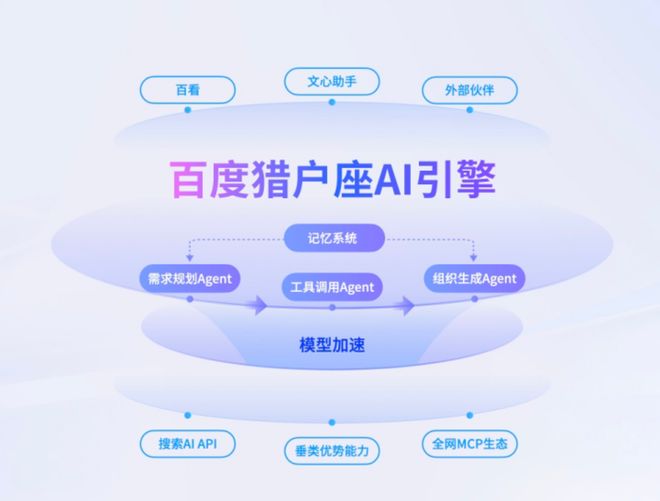
Core Insights - Baidu's third-quarter AI business revenue grew over 50% year-on-year, with intelligent cloud infrastructure revenue at 4.2 billion yuan, AI application revenue at 2.6 billion yuan, and AI native marketing service revenue at 2.8 billion yuan, which saw a 262% increase [1][2] - However, Baidu's total revenue and core revenue both declined by 7% year-on-year, primarily due to a decrease in online marketing revenue, which fell by 18% to 15.3 billion yuan, accounting for nearly half of total revenue [1][2] - The 2025 Baidu World Conference highlighted Baidu's ambition to position itself as a central hub for task execution in the AI era, showcasing innovations like the Orion AI engine and various AI applications [1][4] Revenue Trends - Baidu's online marketing revenue has been on a downward trend since 2024, indicating a significant challenge for the company [1][2] - The decline in online marketing revenue is attributed to the loss of traffic distribution capability, impacted by competition from platforms like Douyin, Kuaishou, Xiaohongshu, and WeChat [2][3] AI Search Development - Baidu's AI search is evolving into a task execution hub, integrating various AI capabilities to understand complex user needs and deliver personalized results [3][5] - The new search engine aims to provide a richer user experience by offering results in various formats, including text summaries, AI-generated videos, and direct task execution [5][11] Strategic Positioning - Baidu is building a more complex and open task execution hub that integrates multi-modal capabilities and memory systems to enhance user interaction [11][12] - The company is exploring new commercial opportunities, such as testing e-commerce components in AI search, which generated peak daily transaction volumes close to 6 million yuan during the Double 11 shopping festival [12] Future Outlook - Baidu's ability to establish the Orion AI engine as a foundational pillar for the industry will significantly influence its position in the AI era, determining whether it remains a key player in entry control or transitions to a provider of large models and cloud infrastructure [12]
恒生指数午盘跌2.07%,恒生科技指数跌3.11%,半导体板块跌幅居前
Mei Ri Jing Ji Xin Wen· 2025-11-21 04:11
Core Viewpoint - The Hong Kong stock market experienced a significant decline, with the Hang Seng Index dropping by 2.07% and the Hang Seng Tech Index falling by 3.11% on November 21 [1] Group 1: Market Performance - The semiconductor sector led the declines, with notable drops in stocks such as Hua Hong Semiconductor and SMIC, both falling over 5% [1] - Shanghai Fudan also saw a decline of nearly 3% [1] Group 2: Technology Sector - Technology stocks faced widespread losses, with Baidu dropping over 6% and Alibaba declining by 4% [1] - Other major players like NetEase and JD.com experienced declines of nearly 3% [1]

恒生科技指数ETF、恒生互联网ETF连续16日获资金净申购
Sou Hu Cai Jing· 2025-11-21 02:53
Group 1 - The Hong Kong stock market opened lower today, with the Hang Seng Technology Index dropping by 2.21% and the Hang Seng Internet ETF and Hang Seng Technology Index ETF falling by 2% and 1.6% respectively, influenced by unexpected strong U.S. non-farm payroll data and a decline in U.S. stocks [1] - Despite the market downturn, there has been a significant net inflow into the Hang Seng Technology Index ETF, totaling 4.472 billion yuan over 16 trading days from October 30 to November 20, even as the index fell by 10.11% during this period [1] - The Hang Seng Internet ETF also saw a net inflow of 2.518 billion yuan over the same 16 days, with a decline of 10.24% [1] Group 2 - The recent adjustment in the Hong Kong stock market is attributed to factors such as the "AI bubble theory," tightening liquidity in the U.S. market, and profit-taking by institutions after a more than 20% increase in the Hang Seng Technology Index this year [1][2] - The Hang Seng Technology Index has experienced a cumulative decline of over 18% since October 3, indicating a potential buying opportunity [2] - Positive developments include strong Q3 financial results and Q4 guidance from Nvidia, which may help alleviate concerns regarding the "AI bubble," alongside Alibaba's upcoming earnings report on November 25 [2] Group 3 - The Federal Reserve's decision to pause balance sheet reduction on December 1, coupled with rising unemployment rates over the past three months, suggests a cautious approach to monetary policy [3] - The Hang Seng Technology Index ETF has a current scale of 46.49 billion yuan, including major Chinese tech companies such as SMIC, Alibaba, Tencent, Baidu, Xiaomi, and Lenovo [4] - The Hang Seng Internet ETF, with a scale of 34.284 billion yuan, has over 80% weight in leading internet stocks, with an AI content exceeding 90% [4]

