
Goldman Sachs(GS)

Search documents
经历三年AI狂热后,华尔街开始审慎评估盈利能力
Huan Qiu Wang· 2026-01-04 01:23
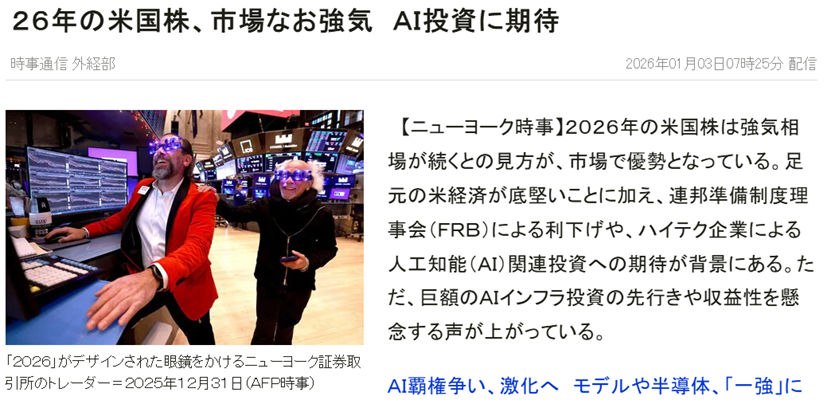
Group 1 - Goldman Sachs' trading division is shifting its focus for 2026 U.S. stock investments from infrastructure to actual productivity enhancement through AI applications [1] - The three main trading strategies identified by Goldman Sachs include going long on companies using AI to enhance productivity, going short on discretionary consumer goods companies targeting low-income groups, and a pair trade of going long on quality AI stocks while shorting weak AI stocks [1] - Analysts suggest that this shift reflects a more cautious market assessment of which companies can truly convert AI technology into profitability after three years of AI enthusiasm [1] Group 2 - The general consensus in the market is that the U.S. stock market will continue to strengthen in 2026, supported by a robust U.S. economy, anticipated interest rate cuts by the Federal Reserve, and expectations for corporate investments in AI [1] - Concerns are emerging regarding the profitability and prospects of massive investments in AI infrastructure, which may impact market sentiment [1] - Analysts in Japan express uncertainty about whether AI can deliver returns that match the substantial investments made, emphasizing the importance of companies securing ongoing funding for investments [3] Group 3 - Major U.S. tech unicorns, including SpaceX, OpenAI, and Anthropic, are preparing for IPOs, potentially starting in 2026, with SpaceX currently valued at $800 billion and OpenAI at $500 billion, aiming for a new funding round with a target valuation of $750 billion or higher [3] - Anthropic is also in discussions for a new funding round with a target valuation exceeding $300 billion [3]


A股能否延续涨势?金价还有多少上行空间?四大国际投行研判2026年
天天基金网· 2026-01-04 01:06
Group 1 - Morgan Stanley anticipates a more proactive fiscal policy in China for 2026, driven by the "14th Five-Year Plan" and supportive measures in fiscal and real estate policies [3] - Key positive changes include flexible policies, resilient corporate performance in sectors like AI and biopharmaceuticals, and increased interest from overseas investors in Chinese assets [3] - The outlook for China's exports remains strong, with domestic demand policies being a critical variable for 2026 [3] Group 2 - UBS is optimistic about the continued upward trend of the Chinese stock market in 2026, driven by advanced manufacturing and technological self-reliance [4] - Structural changes are expected to support the rise of Chinese stocks, with AI and technology being key long-term growth drivers [4] - UBS forecasts a 37% growth in earnings per share for the Hang Seng Tech Index by 2026, supported by strong liquidity and favorable policies [5] Group 3 - Goldman Sachs predicts that gold prices may rise to $4,900 per ounce by December 2026, driven by central bank demand and a potential interest rate cut cycle [6] - Central banks are expected to purchase an average of 70 tons of gold monthly in 2026, contributing approximately 14 percentage points to gold price increases [6] - Goldman Sachs also sees copper prices strengthening due to supply constraints and sustained demand, maintaining a long-term price target of $15,000 per ton by 2035 [6] Group 4 - Nomura expects that the investment boom driven by AI and supportive monetary and fiscal policies will continue to propel global economic growth in 2026 [7] - Despite challenges such as reduced global cooperation and tight fiscal policy space, the AI-led investment trend is anticipated to provide a strong foundation for economic performance [7] - Nomura forecasts stable and accelerating growth in the global economy for 2026, although growth will be uneven across regions [7]



高盛交易团队2026年三大美股交易:聚焦“AI交易”下一步
美股IPO· 2026-01-04 00:51
Core Viewpoint - Goldman Sachs emphasizes a shift in investment strategies for 2026, focusing on AI applications that enhance productivity, while also addressing the challenges faced by low-income consumers in a K-shaped recovery [1][3][7]. Group 1: Investment Strategies - The three core trading strategies identified by Goldman Sachs include: going long on AI productivity beneficiaries, shorting low-income discretionary consumer stocks, and implementing pair trades by going long on high-profit quality AI stocks while shorting fundamentally weak AI stocks [1][3][10]. - These strategies aim to capture market opportunities arising from the K-shaped recovery in the U.S. economy and the differentiation in AI applications, reflecting a transition from investment to application phases of AI technology [3][6]. Group 2: Economic Outlook - Goldman Sachs forecasts a global economic growth of 2.8% in 2026, surpassing the market consensus of 2.5%, with all regions expected to continue expanding [3]. - The U.S. economy is projected to grow by 2.6% in 2026, significantly above the market consensus of 2.0%, driven by reduced tariff drag, tax cuts, and a supportive financial environment [4]. Group 3: AI Productivity Beneficiaries - Goldman Sachs has launched an index focusing on U.S. AI productivity beneficiaries, shifting the investment focus from infrastructure to companies that effectively integrate AI to reduce costs and enhance profit margins [5]. - The index includes non-tech companies that have specific plans to incorporate AI into their workflows, and it has begun to outperform the S&P 500 since Q3 2024 [5][6]. Group 4: K-Shaped Recovery and Consumer Trends - Despite strong GDP growth in 2025, the labor market remains weak, particularly with negative job growth in summer months and an increase in unemployment from 4.1% in June to 4.6% in November [7][8]. - Low-income consumers are under significant pressure from high prices, leading to underperformance in discretionary non-essential goods companies, which is expected to continue into 2026 [7][8]. Group 5: Market Sentiment on AI Stocks - Following three years of rapid growth in AI stocks (with Goldman Sachs' AI index rising approximately 284% compared to an 80% increase in the S&P 500), the market is becoming more cautious in evaluating the fundamentals of AI stocks [9][10]. - Goldman Sachs has categorized AI stocks into "high-profit AI" and "weak AI" indices based on balance sheet strength, credit quality, and free cash flow resilience, recommending a pair trading strategy to benefit from stricter market selection criteria [10].
科技分化加剧,中概股强势爆发,黄金冲高回落
Ge Long Hui· 2026-01-03 22:07
Market Overview - The market experienced a mixed performance with the S&P 500 rising by 0.66%, the Nasdaq declining by 0.03%, and the Dow Jones increasing by 0.19% [1] Banking Sector - The banking sector saw widespread gains, with Goldman Sachs surging by 4.02%, Morgan Stanley increasing by 2.46%, and other major banks like Bank of America, Citigroup, JPMorgan, Zions Bancorporation, and Alliance West Bank all rising by over 1% [3] Technology Sector - The technology sector displayed continued divergence, highlighted by Intel's significant increase of 6.72% and AMD's rise of 4.35%. However, notable declines were observed in Netflix, which fell by 3.95%, Tesla down by 2.59%, and Microsoft decreasing by 2.21%, with Amazon and META also experiencing declines of over 1% [3] Chinese Concept Stocks - Chinese concept stocks experienced a strong rally, with the China Golden Dragon index rising by 4.38%. Baidu saw a remarkable increase of 15.03%, while Bilibili rose by 7.24%, NetEase by 7.22%, Alibaba by 6.25%, and Tencent Holdings and iQIYI also saw gains exceeding 5% [3] Gold Market - The COMEX gold market experienced volatility, initially rising by 1.91% before closing slightly up by 0.02% at $4341.9 per ounce. The intraday trading range saw a low of $4340 and a high of $4414.8 [3]


四大国际投行研判2026年:A股看涨,金价走高
Xin Lang Cai Jing· 2026-01-03 14:04
Group 1: Morgan Stanley's Outlook - Morgan Stanley anticipates a more proactive fiscal policy in China for 2026, supported by real estate policies to stabilize the economy [1] - Three positive changes are expected to boost confidence: flexible policies, resilient corporate performance in sectors like AI and biopharmaceuticals, and increased foreign investment interest in Chinese assets [1] - The firm predicts that China's exports will remain relatively strong, with a key variable being domestic demand policies [1] Group 2: UBS's Market Perspective - UBS believes that the upward trend in the Chinese stock market will continue into 2026, driven by advanced manufacturing and technological self-reliance [2] - Structural changes are expected to propel Chinese stocks, with AI and technology being key long-term growth drivers [2] - UBS forecasts a 37% growth in earnings per share for the Hang Seng Tech Index in 2026, supported by strong liquidity and favorable policies [2] Group 3: Goldman Sachs on Commodity Prices - Goldman Sachs projects gold prices to rise to $4,900 per ounce by December 2026, driven by central bank demand and a potential Fed rate cut cycle [3] - The firm estimates that central bank gold purchases will average around 70 tons per month in 2026, contributing approximately 14 percentage points to gold price increases [3] - In industrial metals, Goldman Sachs favors copper due to constrained supply and growing demand, maintaining a long-term price target of $15,000 per ton by 2035 [3] Group 4: Nomura's Economic Growth Forecast - Nomura expects AI-driven investment trends and supportive monetary and fiscal policies to continue driving strong global economic growth in 2026 [5] - The firm notes that despite reduced global cooperation and tight fiscal policy space, the investment momentum from AI will lay a strong foundation for economic performance [5] - Nomura anticipates signs of stability and accelerated growth in the global economy for 2026, although growth will remain uneven across regions [5]
四大国际投行研判2026年:A股看涨 金价走高
Zhong Guo Zheng Quan Bao· 2026-01-03 13:44
Group 1: Economic Outlook - Morgan Stanley anticipates a more proactive fiscal policy in China for 2026, driven by the "14th Five-Year Plan" and supportive measures in fiscal and real estate policies [2] - UBS expects the Chinese stock market to continue its upward trend in 2026, with advanced manufacturing and technological self-reliance as new growth engines [3] - Nomura forecasts that the investment boom driven by artificial intelligence, along with supportive monetary and fiscal policies, will sustain strong global economic growth in 2026 [6] Group 2: Market Trends - Morgan Stanley highlights three positive changes boosting confidence: flexible policies, resilient enterprises in key sectors, and increased foreign investment interest in Chinese assets [2] - UBS notes that the technology sector, particularly in AI, is becoming a key driver of long-term profit growth, with the Hang Seng Tech Index expected to see a 37% increase in earnings per share by 2026 [3] - Goldman Sachs predicts gold prices will rise to $4,900 per ounce by December 2026, supported by central bank demand and a potential increase in personal investment in gold [4] Group 3: Sector-Specific Insights - Goldman Sachs identifies copper as a long-term favorite due to constrained supply and growing demand, maintaining a price forecast of $15,000 per ton by 2035 [4] - Nomura emphasizes that the AI-driven investment trend will continue to shape economic performance, despite challenges from reduced global cooperation and tight fiscal spaces [6]
芯片股引爆全球!中概股深夜爆发,百度狂飙12%,DeepSeek要发大招了,梁文锋署名新论文引爆AI圈!
雪球· 2026-01-03 03:46
Group 1 - The core viewpoint of the article highlights the mixed performance of major U.S. stock indices on the first trading day of 2026, with a notable surge in Chinese tech stocks and a significant increase in the Nasdaq Golden Dragon Index, which rose by 4.38%, marking its largest single-day gain since May 12 of the previous year [2][3][7] - Major technology stocks showed a mixed performance, with ASML and Micron Technology both achieving historical highs, rising over 9% and 10% respectively, while other tech giants like Tesla and Microsoft experienced declines of over 2% [3][5] - The semiconductor sector saw a strong rally, with the Philadelphia Semiconductor Index increasing by over 4.5%, driven by significant gains in companies like ASML and Micron Technology, which are benefiting from the growing demand for AI infrastructure [10][15] Group 2 - Tesla's Q4 delivery data fell short of expectations, resulting in a loss of its title as the world's top electric vehicle seller to BYD, which reported a 27.86% increase in annual electric vehicle sales [22][25][26] - Foreign investment institutions maintain a positive outlook on Chinese assets, with predictions of a 38% increase in the Chinese stock market by the end of 2027, emphasizing structured investment opportunities in technology innovation, green energy, and high-end manufacturing [28]



Dow Jones 2025 Scorecard: Caterpillar, Nvidia Help Index Hit All-Time Highs – Top 5 Winners & Losers
Benzinga· 2026-01-02 21:17
Core Insights - The Dow Jones Industrial Average reached new all-time records in 2025, with President Donald Trump celebrating this achievement [1] Group 1: 2025 Performance Overview - In 2025, 23 out of 30 Dow Jones Industrial component stocks experienced gains, while 7 declined, marking an improvement compared to previous years where 18 stocks were up in 2024 and 19 in 2023 [2] - The overall performance of the Dow Jones Industrial Average was an increase of approximately 13% for the full year [3] Group 2: Top Gainers and Losers - The top five gainers in 2025 included: 1. Caterpillar: +59.5% 2. Goldman Sachs: +55.8% 3. Johnson & Johnson: +43.5% 4. NVIDIA: +40.2% 5. IBM: +39.1% [6] - The top five losers in 2025 included: 1. UnitedHealth Group: -35.0% 2. Salesforce: -20.4% 3. Nike: -19.1% 4. Procter & Gamble: -13.8% 5. Honeywell: -12.7% [6] Group 3: New Additions to the Index - Nvidia replaced Intel in the Dow Jones Industrial Average in November 2024, with Intel outperforming Nvidia in 2025, gaining over 90% [4] - Sherwin-Williams replaced Dow Inc. in November 2024, with Sherwin-Williams down 1.3% over the past year, while Dow stock fell more than 30% [5] - Amazon replaced Walgreens Boots Alliance, with Amazon shares up 4.8% in 2025 [6]



2025 in Review: Goldman Sachs ETFs Net $8.2 Billion in Flows
Etftrends· 2026-01-02 20:30
Core Insights - The year 2025 has concluded, providing valuable data for investors, particularly regarding fund flows and performance metrics [1] - Goldman Sachs ETFs attracted over $8 billion in net inflows, highlighting key investment themes [1] Fund Performance - The Goldman Sachs S&P 500 Premium Income ETF (GPIX) and the Goldman Sachs Nasdaq-100 Premium Income ETF (GPIQ) each saw significant inflows of $2.18 billion and $2.13 billion respectively, both focusing on equity income strategies [2][3] - GPIX and GPIQ have delivered returns of 16.24% and 19.8% over the past year, respectively, with both funds charging 29 basis points [3] Additional ETF Insights - Thirteen other Goldman Sachs ETFs experienced net inflows exceeding $100 million, including the Goldman Sachs Physical Gold ETF (AAAU), which gained $869 million in 2025 and achieved a remarkable return of 64.1% [4] - Overall, Goldman Sachs added $8.2 billion in total flows for the year, with more than half of this amount, $5.5 billion, occurring in the second half of the year [5] Future Opportunities - The success of Goldman Sachs ETFs in 2025 may lead to increased interest in other investment opportunities within their suite for 2026, including foreign equities and fixed income offerings [5]

高盛:AI投资未重演互联网泡沫
Jin Rong Jie· 2026-01-02 03:08
Group 1 - The core viewpoint of the article emphasizes that investors' attitudes towards AI have shifted from long-term speculative visions reminiscent of the 1990s to a focus on immediate, quantifiable profit performance [1] - Ben Snider, the incoming head of Goldman Sachs' U.S. equity business, notes that the current market is more cautious, learning from past experiences such as the internet bubble, which led to inflated valuations [1] - The market's current focus on sectors like semiconductors, hyperscale data centers, and utilities reflects this more pragmatic approach to investment [1] Group 2 - Snider points out that speculative activities in the market have significantly cooled compared to the internet bubble era [2] - Goldman Sachs has established a "speculative trading indicator" to measure the proportion of trading activity from loss-making companies, small-cap stocks, or overvalued stocks, indicating that current speculation levels are much lower than 25 years ago and even below the market frenzy of 2021 [2] - Snider describes the current investment environment as potentially the "least frenzied yet often labeled as a bubble" in modern history [2]