Honda Motor(HMC)

Search documents
日系车三强财报透视:关税冲击下利润分化,中国市场成关键变量
2 1 Shi Ji Jing Ji Bao Dao· 2025-08-18 15:09
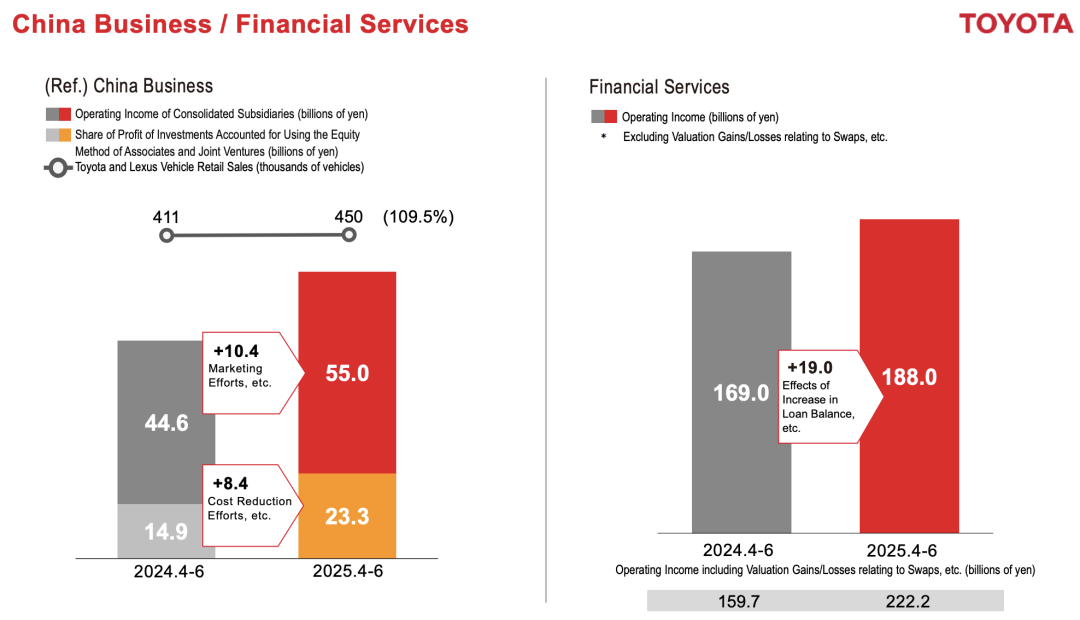
Core Viewpoint - The financial reports for the first quarter of the fiscal year 2025 (April 1 to June 30) from Japan's three major automakers—Toyota, Honda, and Nissan—show significant divergence in performance amid global tariff pressures, with Toyota achieving sales growth, Honda facing profit halving, and Nissan experiencing substantial losses [1][2][4]. Sales Performance - Toyota reported a global delivery of 2.411 million vehicles, a year-on-year increase of 7.1%, outperforming both Honda and Nissan combined [2][3]. - Nissan's global sales fell to 707,000 units, a decline of 10.1% year-on-year, while Honda's sales dropped to 839,000 units, marking a significant decrease of 30% [2][3]. Revenue Analysis - Toyota led with an operating revenue of 12.25 trillion yen, a 4% increase year-on-year [3]. - Honda's revenue was 5.34 trillion yen, a slight decrease of 1.2%, while Nissan's revenue plummeted to 2.7 trillion yen, a significant drop of 9.7% [3]. Profitability Insights - Toyota's net profit decreased by 37% to 841.3 billion yen, despite revenue growth, indicating a "revenue without profit" situation [4][6]. - Honda's net profit halved to 170.4 billion yen, with an operating profit of 244.17 billion yen, down 49.6% [4][6]. - Nissan reported a net loss of 115.76 billion yen, marking a shift from profit to loss, with an operating loss of 79.1 billion yen [4][6]. Impact of Tariffs - The U.S. tariff policy has been identified as the primary factor affecting profitability, with Toyota estimating a profit reduction of 450 billion yen due to these tariffs [6]. - Nissan indicated that the tariff impacts, combined with restructuring costs, would lead to severe losses, with an expected profit reduction of up to 300 billion yen for the fiscal year [6]. Market Dynamics - The North American market, a crucial profit source for Japanese automakers, has been significantly impacted by U.S. tariffs, with Toyota's North American sales reaching 5.3 trillion yen, a 6.2% increase [5][6]. - Honda's North American sales grew by 51% to 457,000 units, marking it as the only market with growth for Honda [5]. Electric Vehicle Transition - Toyota's electric vehicle sales accounted for 47.6% of its total sales in the first half of 2025, driven by hybrid models [13]. - Honda is in a transitional phase, with expectations of losses in its electric vehicle segment, while planning to launch a new electric vehicle line by 2026 [14][15]. - Nissan's electric vehicle strategy is heavily reliant on the new model N7, which has shown potential but lacks a comprehensive product matrix to drive overall sales [15]. Chinese Market Performance - Toyota's sales in China reached 837,700 units, a 6.8% increase, benefiting from strong performance in joint ventures [8][9]. - Nissan's sales in China fell by 21.3% to 279,500 units, while Honda's sales dropped over 24% to 315,200 units, indicating challenges in the Chinese market [12].


全球央行年会前市场押注美联储降息,日、澳股市创历史新高
2 1 Shi Ji Jing Ji Bao Dao· 2025-08-18 12:57
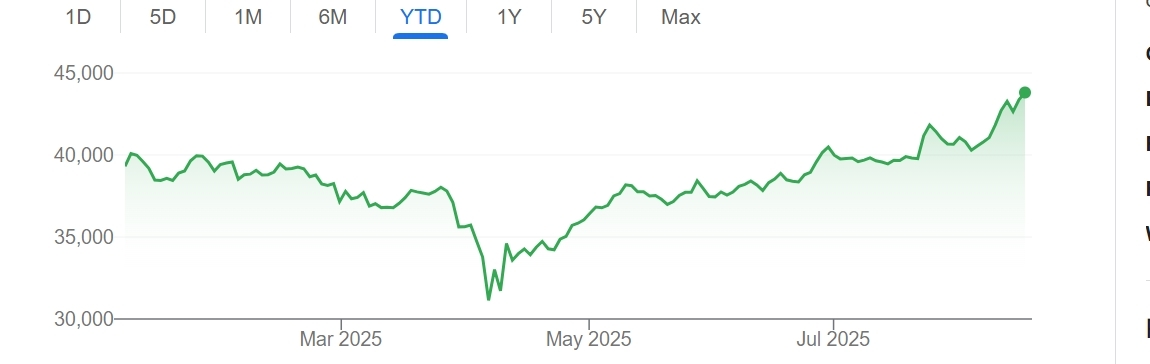
Group 1 - The Asia-Pacific stock markets are performing well, with Japan and Australia reaching historical highs due to favorable factors such as easing international geopolitical tensions [1][2] - The Nikkei 225 index rose by 0.77% or 336 points, closing at 43714.31 points, while the S&P/ASX200 index increased by 0.23%, closing at 8959.3 points [1][2] - The KOSPI index in South Korea fell by 1.5%, closing at 3177.28 points, indicating mixed performance across the region [1] Group 2 - The rise in risk appetite in the Asia-Pacific markets is attributed to three main factors: easing oil supply risks from Russia, investor bets on a dovish path from the Federal Reserve ahead of the Jackson Hole meeting, and strong regional market momentum [2] - Japan's stock market has seen renewed optimism due to clearer U.S. tariff policies, which have positively influenced the outlook for domestic companies [2] - The Japanese stock market's performance is driven by external profits from a weaker yen and improved corporate governance, attracting sustained foreign investment [2][3] Group 3 - The depreciation of the yen has boosted the stock prices of export-oriented companies, particularly in the automotive sector, with Toyota and Honda shares rising by 1.72% and 1.56% respectively [3] - Foreign investment in Japanese stocks has been strong, with net purchases reaching 489.3 billion yen, marking the 18th net buying in the past 19 weeks [3] Group 4 - The Australian stock market's rise is driven by a balance of valuation and profit recovery, with financial sectors benefiting from stable shareholder returns amid expectations of interest rate cuts [4] - Key sectors contributing to the Australian market's performance include telecommunications, IT, and financial services, which are favored during periods of rising valuations [4] Group 5 - Future trends in the Asia-Pacific stock markets will be influenced by several factors, including guidance from the Federal Reserve, oil and metal prices, currency fluctuations, and corporate earnings reports [5]
推动转型,东风汽车将出售所持东风本田发动机股权
Guan Cha Zhe Wang· 2025-08-18 10:39
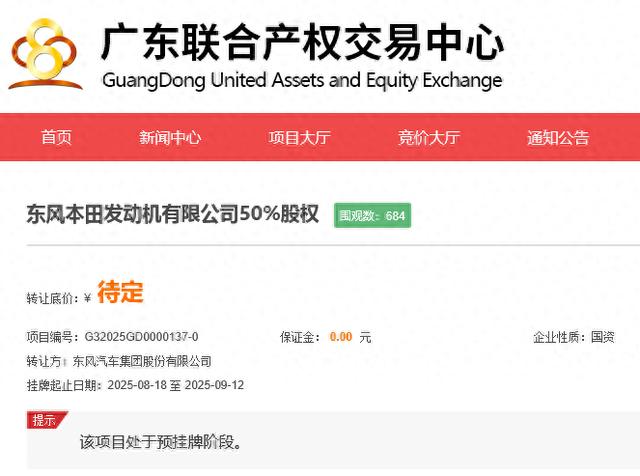
Group 1 - Dongfeng Motor Group Co., Ltd. is selling its 50% stake in Dongfeng Honda Engine Co., Ltd. to accelerate the company's transition to new energy vehicles [1][3] - Dongfeng Honda Engine Co., Ltd. was established in 1998 and is jointly owned by Dongfeng Motor Group (50%), Honda Motor Co., Ltd. (40%), and Honda Motor (China) Investment Co., Ltd. (10%) [3] - In 2024, Dongfeng Honda Engine is projected to generate revenue of 9.566 billion yuan, with a net loss of 228 million yuan, while in the first half of the year, it achieved a revenue of 3.807 billion yuan and a net profit of 371 million yuan, marking a turnaround [3][5] Group 2 - Honda's sales in China for 2024 are expected to be 850,000 units, a decrease of one-third compared to the previous year, marking the first time in nine years that sales have fallen below 1 million units [3][5] - Honda is facing challenges in the Chinese market, prompting a restructuring and a shift towards electric vehicles, with plans for 70% of new models in 2024 to be electric [5][6] - Dongfeng Honda Engine's production capacity for fuel vehicle engines has been halved, representing 30% of its fuel engine production in China [5]

观车 · 论势 || 跨国车企的利润去哪儿了
Zhong Guo Qi Che Bao Wang· 2025-08-18 10:12
Core Viewpoint - The global automotive industry is experiencing a significant decline in profits across major multinational companies, attributed to various external and internal factors, including new U.S. tariff policies and the transition to electric vehicles [1][2][4]. Group 1: Financial Performance - Major automotive companies reported either revenue growth without profit increase or declines in both revenue and profit, with substantial profit drops noted [1]. - German automakers saw drastic profit reductions: Volkswagen Group's operating profit fell by 33%, Mercedes-Benz's net profit dropped by 56%, and BMW's net profit decreased by 29% [1]. - U.S. automakers also faced challenges, with General Motors' net profit down 21%, Ford's net profit shrinking from $3.2 billion to $400 million, and Stellantis reporting a net loss of €2.256 billion [1]. - Japanese automakers like Toyota and Honda reported net profit declines of 37% and 50%, respectively, while Nissan continued to incur losses [1]. Group 2: Impact of Tariff Policies - The new U.S. tariff policies have significantly impacted all automotive companies, leading to increased costs and reduced profit margins [2]. - Toyota reported a loss of ¥450 billion due to tariffs in Q2, with an estimated total loss of ¥1.4 trillion for the fiscal year [2]. - Hyundai indicated a loss of ₩828 billion in Q2 due to tariffs, with expectations of greater impacts in Q3 [2]. - Volkswagen, BMW, and Mercedes-Benz also cited tariff impacts on their profit declines, with Volkswagen reporting a loss of €1.3 billion due to tariffs [2]. Group 3: Strategic Adjustments - Many automotive companies are adjusting their strategies in response to tariff pressures, including shifting production to the U.S. to mitigate costs, although this may lead to increased production expenses [3]. - The transition to electric vehicles presents structural challenges, as current electric vehicle sales do not yet match the profitability of traditional fuel vehicles, necessitating high R&D expenditures [3]. - Volkswagen's electric vehicle sales grew by 47% in H1, but profitability remains lower than that of fuel vehicles, impacting overall profit levels [3]. - Companies like Stellantis and Nissan are undergoing leadership changes and implementing cost-cutting measures, including workforce reductions and factory closures, to address financial pressures [4]. Group 4: Future Outlook - The collective profit pressure on global automotive companies results from a combination of external factors like tariffs and internal challenges such as market positioning and strategic adjustments [4]. - The industry faces the critical task of balancing profitability from traditional vehicles while investing in electric vehicle development amidst changing global trade environments and geopolitical factors [4].


日元贬值提振汽车出口,日股刷新历史新高
Feng Huang Wang· 2025-08-18 05:17
Group 1 - The Nikkei 225 index reached a historical high, rising 0.95% to 43,789.19 points, while the Tokyo Stock Exchange index also hit a record high, increasing 0.68% to 3,128.89 points [1] - The rebound in the Japanese stock market is attributed to renewed optimism regarding domestic companies' prospects as the impact of U.S. tariffs becomes clearer, alongside a weaker yen benefiting export-oriented stocks, particularly in the automotive sector [3] - Fast Retailing, the parent company of Uniqlo, saw a 1.44% increase, making it the largest contributor to the Nikkei index's rise [3] Group 2 - Major automotive stocks, including Toyota and Honda, experienced collective gains, with Toyota rising 1.58% and Honda increasing 1.22% [4] - The yen depreciated by 0.2% against the dollar, which typically boosts the stock prices of companies reliant on export revenues, as it enhances the value of overseas profits when converted back to yen [5] - Conversely, Japanese bank stocks faced declines, with the banking sector index dropping 1.45%, marking it as the largest declining sector on the Tokyo Stock Exchange, highlighted by Mitsubishi UFJ Financial Group falling 1.96% and Sumitomo Mitsui Financial Group decreasing 1.78% [5]
30款燃油车行情大盘点:降价、减配、薅IP 是关键词
车fans· 2025-08-18 00:30
Core Viewpoint - The article highlights the significant decline in the sales and production of traditional fuel vehicles, particularly compact cars and SUVs, as consumer preferences shift towards new energy vehicles. It emphasizes the current market dynamics and pricing strategies of various fuel vehicle models, indicating a competitive landscape where traditional automakers are adjusting to maintain market share [1][56]. Fuel Sedan Segment - Nissan Sylphy has seen a price drop with the classic model now priced at 59,900 (down 20,000) and the new model at 84,900 (down 45,000), achieving a July sales figure of 26,000 units, which is half of its peak sales [2]. - Volkswagen Lavida's new strategy has resulted in July sales of 23,000 units, also a significant decline from its peak, with the new model acting more as a substitute for older models [4]. - Despite the decline, a monthly sales figure of 20,000 is still notable, as many manufacturers struggle to achieve such numbers across their entire lineup [5]. Fuel SUV Segment (Compact) - The Geely Boyue series is noted for its dual model strategy, with competitive pricing and features, making it a strong contender in the compact SUV market [29]. - The Toyota RAV4 is approaching the end of its product cycle, with recent price adjustments making it a potential buy for those considering trade-ins [37]. - The Haval Big Dog is gaining traction as the H6 declines, showcasing strong build quality and value in the SUV segment [35]. Fuel Sedan Segment (B-Class) - The Toyota Camry continues to lead in B-class fuel vehicle sales, achieving 18,000 units in July despite recent price increases [15]. - The Volkswagen Passat and Magotan are also performing well, with sales figures around 17,000 units, indicating strong consumer loyalty to these models [20][18]. General Market Trends - The article suggests that both traditional fuel vehicles and new energy vehicles are experiencing competitive pricing, making them more affordable compared to previous years [56]. - It emphasizes the importance of supporting a diverse automotive market, where both fuel and electric vehicles can coexist, reflecting a broader consumer choice [56].
利润塌方、份额断崖:日系车的光环还剩几分?|钛度车库
Tai Mei Ti A P P· 2025-08-17 03:35
Core Viewpoint - Japanese automakers are facing significant financial challenges, with declining profits and increasing operational pressures due to currency fluctuations and U.S. tariff policies [2][3][4]. Financial Performance - Toyota's net profit dropped to 841.4 billion yen, a 37% year-on-year decline, despite a 3.5% increase in sales revenue to 12.25 trillion yen [2]. - Honda's net profit halved to 196.67 billion yen, with operating profit down nearly 50%, while Nissan reported a net loss of 115.7 billion yen for the first quarter [2][4]. - Mazda's net profit turned into a loss of 42.1 billion yen from a profit of 49.8 billion yen in the same period last year [2][5]. Impact of Currency and Tariffs - The depreciation of the yen against the dollar has severely impacted Japanese automakers, with Toyota estimating a loss of 165 billion yen in operating profit due to currency fluctuations [3]. - U.S. tariffs have forced Japanese manufacturers to reduce export prices by 19%, leading to a significant profit loss for Toyota, estimated at 450 billion yen for a single quarter [3][5]. - The overall impact of U.S. tariffs is projected to reduce the operating profits of Japan's seven major automakers by approximately 2.67 trillion yen for the fiscal year [5]. Strategic Responses - Japanese automakers are initiating "capacity restructuring" to mitigate risks by relocating production closer to key markets [6][8]. - Isuzu plans to shift production of its small trucks from Japan to the U.S. by 2028 to avoid tariff impacts [6]. - Toyota is considering reverse exporting vehicles produced in the U.S. back to Japan to leverage favorable trade conditions [7]. Market Challenges in China - Japanese automakers have seen their market share in China plummet from 30.79% in 2008 to 9.6% in the first half of 2025, driven by increased competition and a failure to adapt to local consumer demands [10][11]. - Despite Toyota's sales growth in China, overall performance of Japanese brands remains weak, with Honda and Nissan experiencing significant declines in sales [11][12]. - The transition to electric vehicles and the need for improved technology and consumer engagement are critical for Japanese automakers to regain market share in China [10][12]. Future Outlook - The ability of Japanese automakers to navigate the dual challenges of U.S. tariffs and currency fluctuations will determine their future viability [13]. - Strategic execution and adaptability in both the U.S. and Chinese markets are essential for these companies to recover and thrive [13].

Honda Q1 Earnings Surpass Expectations, Revenues Rise Y/Y
ZACKS· 2025-08-15 15:45
Core Insights - Honda reported earnings of $0.97 per share for Q1 fiscal 2026, exceeding the Zacks Consensus Estimate of $0.51, but down from $1.57 in the same quarter last year [1][10] - Quarterly revenues reached $37 billion, slightly below the Zacks Consensus Estimate of $37.8 billion, but higher than $34.7 billion from the previous year [1] Segmental Highlights - The Automobile segment's revenues increased by 1.1% year over year to ¥3.54 trillion ($24.4 billion), but it incurred an operating loss of ¥29.6 billion ($204 million), contrasting with an operating income of ¥222.8 billion in the same quarter last year [2] - Motorcycle segment revenues were approximately ¥951.6 billion ($6.58 billion), up 1.5% year over year, with an operating profit of ¥189 billion ($1.30 billion), reflecting a 6.8% increase year over year [3] - Financial Services segment revenues totaled ¥832.6 billion ($5.76 billion), down 11.4% year over year, with operating profit remaining flat at ¥85 billion ($588 million) [3] - Power Products and Other Businesses generated revenues of ¥92.8 billion ($641 million), a decrease of 2.2% year over year, but the operating loss narrowed to ¥219 million from ¥753 million in the same period last year [4] Financials & FY26 Outlook - As of June 30, 2025, Honda's consolidated cash and cash equivalents stood at ¥4.01 trillion ($27.7 billion), with long-term debt around ¥6.95 trillion ($48.1 billion) [5] - For fiscal 2026, Honda projects consolidated sales volumes of 14.25 million units for Motorcycles, 2.83 million units for Automobiles, and 3.67 million units for Power Products, indicating a 4.1% growth in Motorcycles but declines of 0.3% and 0.8% in Automobiles and Power Products, respectively [6] - Honda forecasts fiscal 2026 revenues of ¥21.1 trillion, a decline of 2.7% year over year, with an operating profit expected at ¥700 billion, down 42.3% year over year, and a pretax profit forecasted at ¥710 billion, suggesting a drop of 46.1% year over year, attributed to macroeconomic and tariff-related challenges [7]
【快讯】每日快讯(2025年8月15日)
乘联分会· 2025-08-15 11:07
Domestic News - Xiaopeng Motors and Volkswagen signed an expanded electronic and electrical architecture technology agreement, building on their previous collaboration to accelerate development and achieve key project milestones [4] - Beijing Hyundai launched the "818 Super Fuel Purchase Festival," offering a low entry fee and multiple purchase incentives to enhance customer engagement [5] - SAIC-GM-Wuling and Huawei are upgrading their collaboration, with the Baojun brand potentially adopting the Hi model [6] - Dongfeng Motor and JD Group established a strategic cooperation agreement to enhance collaboration in vehicle marketing, after-sales service, procurement, and smart logistics [7] - Geely's CEO announced a plan for a more than 30% increase in overseas exports in the second half of the year, focusing on a flat organizational structure and tailored product strategies for different regions [9] - NIO launched the world's highest-altitude battery swap station in Linzhi, located at 4500 meters, as part of its strategy to enhance service along the G318 route [10] - Avita's new concept car is set to debut on September 7 in Munich, with plans to enter 50 countries and regions by 2025 [11] - GAC Energy and Chery Green Energy reached a cooperation agreement to open over 20,000 charging stations to enhance charging convenience for electric vehicle users [12] Foreign News - Sony and Honda's joint venture Afeela announced the pre-production of its first electric vehicle, with deliveries expected in mid-2026 [14] - UK battery developer Harmony Energy plans to raise £300 million (approximately $400 million) to expand into the European energy storage market [15] - VinFast intends to spin off its R&D department and sell it to its founder for approximately $1.5 billion as part of its restructuring efforts [16] - Toyota plans to launch three electric vehicle models in South Africa by 2026, entering a competitive market dominated by Chinese and European brands [17] Commercial Vehicles - BYD Commercial Vehicles and JD Auto signed a strategic cooperation agreement to deepen collaboration in the electric commercial vehicle sector [19] - Sinotruk established a joint venture in Kazakhstan to produce commercial vehicles, supported by the local government [20][21] - Zero One Automotive launched its ZSD autonomous driving heavy truck in Guangdong, marking a significant milestone in the field of electric heavy trucks [23] - Proton Motors unveiled the "Yao Ling II," a new concept heavy truck aimed at leading the industry towards a future of unmanned freight [24]



日本国际氢能源燃料电池展2025|FC EXPO
Sou Hu Cai Jing· 2025-08-15 08:08
Core Insights - The Japan International Hydrogen Fuel Cell Expo (FCEXPO) is a significant event in the hydrogen and fuel cell sector, providing a platform for companies to showcase their technologies and products in the Japanese market [1][8] - The 2025 FCEXPO will feature three exhibitions in different cities, attracting manufacturers, suppliers, investors, and industry professionals [1][8] - The previous expo had 450 participating companies and attracted approximately 27,000 visitors, highlighting its importance and influence in the industry [1][8] Exhibition Details - The 2025 exhibition schedule includes a fall event from September 17-19 in Chiba, a winter event from November 19-21 in Osaka, and a spring event from March 17-19, 2026, in Tokyo [1] - The exhibition areas are clearly defined, including sections for fuel cell systems/products, hydrogen production/storage/supply, and fuel cell manufacturing/development [5] - The fuel cell systems/products area showcases next-generation fuel cell systems, automotive fuel cells, residential fuel cells, and cogeneration systems, representing current technological trends and future market solutions [5] Industry Participation - Major international companies such as Toyota, Honda, Suzuki, Panasonic, Toshiba, Air Liquide, and Ballard are among the exhibitors, indicating strong capabilities in hydrogen and fuel cell technology [3] - Attendees come from diverse sectors, including fuel cell manufacturers, automotive manufacturers, electronic manufacturers, and energy-related companies, enriching the content and perspectives of the expo [3] Technological Focus - The hydrogen production, storage, and supply area includes technologies and equipment such as hydrogen production devices, valves, hydrogen transport and storage tanks, compressors, and hydrogen detection devices, showcasing the complete hydrogen energy ecosystem [5] - The fuel cell manufacturing and development area focuses on the technical requirements and innovative directions in the research and production of fuel cells, attracting significant attention from industry professionals [5] Industry Impact - The expo plays a crucial role in promoting the hydrogen industry, which is seen as a vital component of future clean energy solutions across transportation, power generation, and industrial applications [6] - The successful hosting of FCEXPO is expected to enhance public awareness of hydrogen energy, facilitate the commercialization of hydrogen technologies, and promote international cooperation in the hydrogen sector [6][8]