JD(JD)

Search documents
中国互联网-抖音电商专家电话会议核心要点-Takeaways from Douyin ecommerce expert call
2025-11-24 01:46
Summary of Douyin Ecommerce Expert Call Industry Overview - **Industry**: Ecommerce in China, specifically focusing on Douyin (unlisted) and its performance during the Double 11 shopping festival Key Points 1. **Growth Performance**: Douyin's gross merchandise value (GMV) during the Double 11 period grew by 25% year-on-year, which is noted as the fastest growth in the industry, although it has slowed from over 30% growth in the previous three quarters [2][3] 2. **Year-End Expectations**: Douyin is expected to conclude the year with a GMV of CNY4.4 trillion, representing a 29% year-on-year increase, surpassing the initial target of CNY4.2 trillion set for 2025 [2] 3. **Factors Contributing to Growth**: The expert attributed Douyin's growth to: - A less tough base effect compared to competitors JD and Alibaba - Increased subsidies - Strong momentum in its marketplace ecommerce [3] 4. **Subsidy Program Expansion**: Douyin's trade-in subsidy program (TSP) expanded from 8 provinces last year to approximately 22 provinces this year, contributing to its growth despite starting slower than JD and Alibaba [4] 5. **Subsidy Spending**: Douyin spent CNY5 billion in subsidies during this year's Double 11, which is a 27% increase year-on-year [5] 6. **Marketplace Model Success**: Douyin's marketplace model saw GMV growth of approximately 50% year-on-year, accounting for 45% of total GMV from January to October, while live-streaming ecommerce GMV grew by 14-18% year-on-year [6] 7. **Challenges in Marketplace**: Despite strong growth, Douyin faces challenges with lower shopper mind share compared to established competitors like Alibaba, JD, and Pinduoduo, with nearly half of its marketplace GMV relying on user traffic from live-streaming ecommerce [6] 8. **Grocery Category Performance**: The grocery category performed well, benefiting from the shift of consumption from offline to online channels, driven by competition in quick commerce between Alibaba and Meituan [7] Additional Insights - **Competitive Landscape**: There was a notable competition between Douyin and Alibaba towards the end of the Double 11 period, as both platforms sought to capture growth in a sluggish consumer market [5] - **Market Dynamics**: The overall ecommerce industry is experiencing a significant migration of grocery shopping from offline to online, influenced by competitive pressures [7]


传媒互联网教育行业2026年度策略
2025-11-24 01:46
Summary of Key Points from Conference Call Records Industry Overview - **Industry Focus**: Media, Internet, and Education sectors are highlighted for 2026 strategies, with significant emphasis on AI-driven advancements and market dynamics [1][2]. Core Insights and Arguments Advertising Sector - **AI Impact**: AI has significantly improved advertising efficiency, with Tencent's advertising revenue growing by 20% year-over-year in Q2 and continuing to rise in Q3. Kuaishou has made notable progress in user profiling and targeted advertising, while Bilibili achieved over 20% growth through AI enhancements [6][4]. - **Competition**: Third-party programmatic advertising platforms like Huishuangzang Technology and Yidian Tianxia are gaining competitiveness, driving transformation in the advertising industry [1][5]. Gaming Industry - **Regulatory Environment**: The normalization of game license issuance ensures a steady supply of content, supported by a resilient consumer environment. Major companies like Century Huatong and Giant Network are expected to benefit from a concentrated release of new products [7][9]. - **Market Dynamics**: The gaming sector is projected to maintain a high level of activity, driven by product innovation and commercial efficiency. Key players include Tencent, Century Huatong, and Giant Network [14][9]. Instant Retail Market - **Market Growth**: The instant retail market is expected to reach 1.175 trillion yuan by 2026, with a year-on-year growth rate of 28%. Major players like Alibaba, Meituan, and JD.com are heavily investing in this space, although profitability is under pressure due to intense competition [11][8]. - **Consumer Trends**: The county-level market is emerging as a new growth point, supported by the increasing number of rural internet users and their consumption habits [11][10]. Autonomous Driving Sector - **Competitive Landscape**: The autonomous driving sector is entering a price competition phase, with companies like Xpeng and Li Auto differentiating themselves through chip technology and self-driving capabilities. This trend is expected to enhance user experience and drive further development in the electric vehicle industry [12][10]. Short Drama and AI Animation - **Market Expansion**: The short drama market is rapidly growing, with approximately 700 million users in China. The market share of Hongguo exceeds 50%, while companies like China Online and Kunlun Wanwei are performing well in overseas markets, particularly targeting the U.S. [18][1]. - **AI Animation Growth**: The supply of AI animation (dynamic comics) has surged, with a compound monthly growth rate of about 83% in the first half of the year, resulting in over 3,000 works produced and a revenue scale that has increased twelvefold [19][3]. Education Sector - **AI Integration**: AI is increasingly penetrating the education sector, with companies like Dou Shen Education expected to achieve full AI integration by 2026, with AI revenue accounting for 90% of total income. Fenbi Education's AI interview courses are projected to enhance profit margins significantly [20][21]. - **Valuation Appeal**: Dou Shen Education's valuation metrics, such as a PS ratio of around 7 and a PE ratio in the 30s, are considered attractive compared to other sectors, which often see PE ratios of 60-70 [21][20]. Additional Important Insights - **Consumer Resilience**: The macroeconomic environment is supporting consumer resilience, with trends like the "lipstick effect" maintaining consumption levels [9][8]. - **Content Supply Recovery**: The film and television sectors are experiencing a recovery in content supply, with stable growth in box office revenues and favorable policies aiding the industry [17][7]. This summary encapsulates the key points from the conference call records, providing a comprehensive overview of the current trends and future outlooks across various sectors.



京东工业通过上市聆讯:8个月营收141亿,刘强东将再敲钟
3 6 Ke· 2025-11-24 01:00
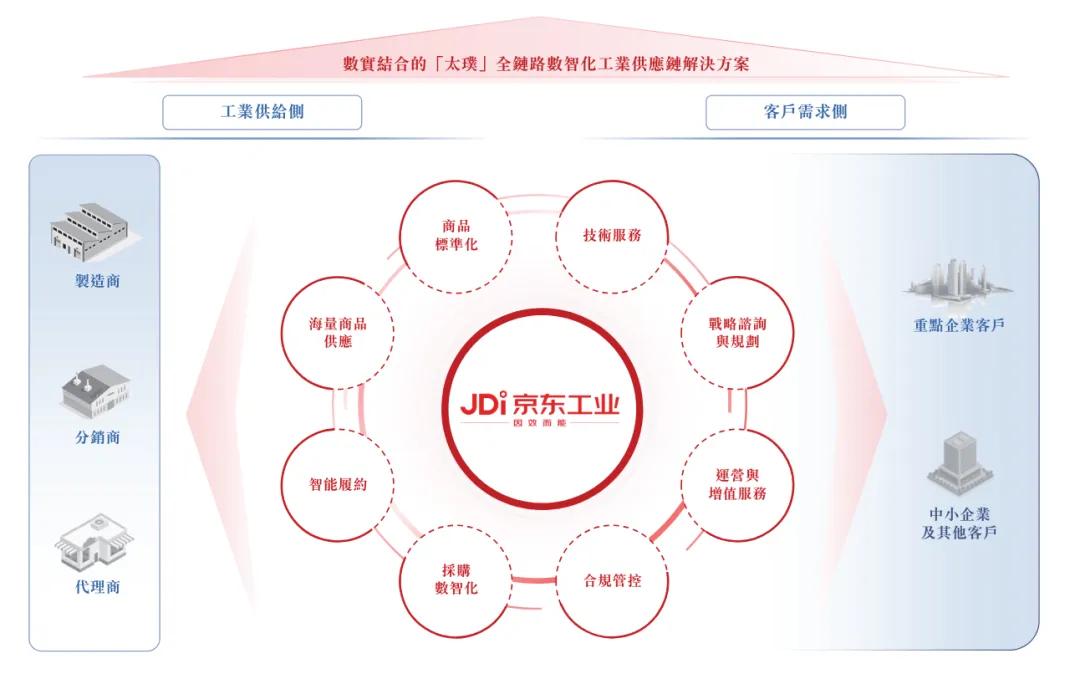
Core Viewpoint - JD Industrial is preparing for an IPO on the Hong Kong Stock Exchange, which will add another publicly listed company under JD Group, led by Liu Qiangdong [1][2]. Financial Performance - JD Industrial reported total revenue of 14.1 billion RMB for the eight months ending August 31, 2025, representing an 18.9% increase compared to the same period in 2024 [1]. - The revenue for 2022, 2023, and 2024 was 14.1 billion RMB, 17.3 billion RMB, and 20.4 billion RMB, respectively, with corresponding gross profits of 2.54 billion RMB, 2.8 billion RMB, and 3.3 billion RMB [4][6]. - For the first half of 2025, JD Industrial's revenue was 10.25 billion RMB, up from 8.62 billion RMB in the previous year, with a gross profit of 1.9 billion RMB and a gross margin of 18.6% [5][6]. Business Model and Strategy - JD Industrial focuses on providing industrial supply chain technology and services, emphasizing the construction of digital infrastructure rather than merely selling products [2][4]. - The company has maintained a stable gross margin, with figures of 18%, 16.1%, and 16.2% for the years 2022, 2023, and 2024, respectively [4]. Profitability Metrics - Continuous operating profits for 2022, 2023, and 2024 were -1.38 billion RMB, 4.8 million RMB, and 761.6 million RMB, with operating profit margins of -9.8%, 0%, and 3.7% [5][6]. - For the first half of 2025, continuous operating profit was 512 million RMB, a 35.4% increase from 378 million RMB in the same period of 2024 [6][8]. Cash Flow and Assets - As of June 30, 2025, JD Industrial held cash and cash equivalents of 4.56 billion RMB [9]. - The total current assets amounted to 13.17 billion RMB, while total current liabilities were 13.26 billion RMB, indicating a net asset position of approximately 10 billion RMB [10]. Shareholder Structure - JD Group holds approximately 77.32% of JD Industrial's issued share capital, with Liu Qiangdong holding an additional 3.68% through Max I&P Limited [14][15]. - Other significant shareholders include GGV Capital and Sequoia China, among others [12][17]. Recent Developments - JD Industrial has previously acquired a controlling stake in Liexin Technology but later terminated this control due to unmet performance expectations [11]. - The company has engaged in multiple rounds of financing, including a recent $300 million Series B preferred stock transaction [14].

这个厮杀激烈的行业,迎来越来越多的女性CEO
吴晓波频道· 2025-11-24 00:20
Core Viewpoint - The rise of female CEOs in China's retail industry signifies a shift in leadership dynamics, with women increasingly taking on top roles in both multinational and local companies, reflecting new strategies to navigate the challenges of the retail landscape [3][9]. Group 1: Female Leadership in Retail - More women are assuming leadership positions in China's retail sector, marking a significant change from a historically male-dominated landscape [3][9]. - Notable examples include Zhu Xiaojing at Walmart China, Huang Yamei at Ito-Yokado, and Xu Min at Procter & Gamble, all of whom have taken on key roles in recent years [10][11][12]. - The trend indicates a broader acceptance and recognition of female leadership capabilities within the industry [9][10]. Group 2: Career Paths of Female CEOs - Female CEOs in retail often come from diverse backgrounds, with three main pathways to leadership: cross-industry experience, internal promotions, and financial expertise [24][30]. - Zhu Xiaojing, for instance, has a background in consulting and has held various roles in multinational companies before leading Walmart China [25]. - Xu Min's journey at Procter & Gamble showcases a long-term commitment to the company, rising through the ranks from a management trainee [26]. Group 3: Advantages of Female CEOs - Research suggests that female CEOs tend to adopt conservative financial strategies, such as lowering leverage and reducing aggressive mergers and acquisitions, which can enhance company survival rates during economic uncertainty [36]. - Zhu Xiaojing emphasizes the importance of intuition, collaboration, and resilience as key traits for effective leadership in the current retail environment [37]. - The concept of the "glass cliff" suggests that women are often appointed to leadership roles during crises, which can present both challenges and opportunities for demonstrating their capabilities [38]. Group 4: Challenges Faced by Female CEOs - Female leaders like Ni Wenling at Watsons and Yan Xiaolei at Hema are stepping into roles during challenging times, with their companies facing declining revenues and market pressures [38][41]. - Zhu Xiaojing has navigated significant challenges at Walmart, including a reduction in the number of traditional stores while expanding e-commerce and membership models [43]. - Chen Jia at Aldi faces the challenge of implementing a low-price strategy in a highly competitive market, where price wars are common [46].



京东外卖将推出独立App;拼多多、快手、唯品会三季报出炉
Mei Ri Jing Ji Xin Wen· 2025-11-23 23:17
E-commerce and Retail - ByteDance integrates its Chinese e-commerce, lifestyle services, and advertising engineering teams into a new "China Transaction and Advertising" department to enhance R&D efficiency and competitiveness in the e-commerce sector [1] - Pinduoduo reports Q3 revenue of 108.28 billion yuan, a 9% year-on-year increase, with net profit rising 17% to 29.33 billion yuan, indicating a slowdown in revenue growth and a strategic shift towards long-term value over short-term profits [2] - Vipshop achieves Q3 net revenue of 21.4 billion yuan, a 3.4% year-on-year increase, with adjusted net profit rising 14.6%, reflecting improved platform activity despite the need for ongoing reforms in core business areas [3] - JD.com announces the launch of an independent app for its food delivery service, aiming to capture a larger share of the instant delivery market and enhance user engagement through new features [3] - Hema's founder, Hou Yi, announces the closure of several physical stores for the pet food brand "Paiteshengsheng," citing a mismatch between operational performance and initial goals, while shifting focus to online business [4] - Xibei raises salaries for frontline employees by an average of 500 yuan per person per month to boost morale and service quality amid recent controversies [5][6] Logistics and Supply Chain - The State Post Bureau reports that in October, express delivery revenue reached 131.67 billion yuan, a 4.7% year-on-year increase, with business volume growing by 6.5%, highlighting the increasing reliance on online shopping [6] - Flash Delivery reports Q3 revenue of 1.005 billion yuan, a slight decline year-on-year, but net profit increases by 83.6% to 43.7 million yuan, indicating effective cost control [7] - ZTO Express announces Q3 revenue of 11.86 billion yuan, an 11.1% year-on-year increase, with adjusted net profit growing by 5% to 2.51 billion yuan, reflecting strong market competitiveness [8] Innovation and Investment - Keling AI reports Q3 revenue exceeding 300 million yuan, with Kuaishou's total revenue growing by 14.2% to 35.6 billion yuan, indicating progress in AI commercialization and strengthening competitiveness in live commerce [8]


京东工业通过港交所聆讯 刘强东将迎来第六家上市公司




Mei Ri Jing Ji Xin Wen· 2025-11-23 15:36
Group 1 - JD Industrial Co., Ltd. is undergoing a hearing with the Hong Kong Stock Exchange for its potential IPO [2] - If JD Industrial successfully lists, it will become the sixth publicly traded company under Liu Qiangdong's leadership [2]

两部门发文,DeepSeek、Kimi、豆包等或将入围
2 1 Shi Ji Jing Ji Bao Dao· 2025-11-23 14:41
Core Points - The National Internet Information Office and the Ministry of Public Security released a draft regulation on personal information protection for large internet platforms, establishing criteria for identifying such platforms and their obligations for personal information protection [1][3] - The draft regulation aligns with previous regulations and emphasizes the principle that greater capabilities entail greater responsibilities in digital economy regulation [1][3] Group 1: Identification Criteria for Large Platforms - Large platforms are identified based on having over 50 million registered users or over 10 million monthly active users, providing significant network services, and handling data that could impact national security and economic operations if compromised [5][6] - Traditional internet platforms like Tencent, Alibaba, and ByteDance, as well as emerging AI companies and smart device manufacturers, are likely to fall under this regulation [3][6] Group 2: Compliance and Reporting Requirements - Large platforms must appoint a personal information protection officer and establish a dedicated team to manage personal information protection, including creating internal management systems and emergency response plans [9][10] - The draft regulation requires platforms to publish annual social responsibility reports on personal information protection, addressing previous shortcomings in compliance and transparency [9][10] Group 3: Independent Supervision Mechanism - The draft regulation proposes the establishment of independent supervisory committees composed mainly of external members to oversee personal information protection compliance [12][13] - These committees will have specific responsibilities, including monitoring compliance systems, evaluating the impact of personal information protection measures, and maintaining regular communication with users [13][14]




两部门发文,DeepSeek、Kimi、豆包等或将入围
21世纪经济报道· 2025-11-23 14:31
Core Viewpoint - The article discusses the newly released draft regulations for personal information protection by large internet platforms in China, emphasizing the responsibilities and obligations these platforms must adhere to in safeguarding user data [1][3]. Group 1: Regulatory Framework - The draft regulations define large internet platforms based on user scale, specifically those with over 50 million registered users or 10 million monthly active users [5]. - Major companies like Tencent, Alibaba, ByteDance, and emerging AI firms such as DeepSeek and MiniMax are included under this definition, indicating a broader scope of regulation [3][5]. - The principle of "with great power comes great responsibility" is highlighted, indicating that larger platforms will face stricter compliance requirements [1][3]. Group 2: Compliance Requirements - Large platforms are required to establish dedicated personal information protection teams responsible for creating and implementing internal management systems and emergency response plans [10]. - The regulations mandate that personal information collected within China must be stored in domestic data centers, and platforms must conduct compliance audits and risk assessments [11]. - There is an emphasis on the need for platforms to publish social responsibility reports regarding personal information protection, which has previously been inadequately addressed by many companies [10]. Group 3: Independent Oversight - The draft regulations propose the establishment of independent supervisory committees composed mainly of external members to oversee personal information protection practices [13][15]. - These committees are tasked with monitoring compliance, evaluating the protection of sensitive personal information, and ensuring regular communication with users [15]. - Concerns are raised about the feasibility of these committees, as many platforms have yet to take significant steps towards establishing them [14].





京东集团-SW(09618):外卖UE持续减亏,与零售强协同
GOLDEN SUN SECURITIES· 2025-11-23 12:23
Investment Rating - The report maintains a "Buy" rating for JD Group [3][5]. Core Views - JD Group reported a revenue of 299.1 billion yuan for Q3 2025, representing a year-on-year growth of 14.9%. The revenue breakdown includes JD Retail at 250.6 billion yuan, JD Logistics at 55.1 billion yuan, and new businesses at 15.6 billion yuan, with respective growth rates of 11.4%, 24.1%, and 213.7% [1]. - The company recorded a consolidated operating loss of 1.1 billion yuan for the quarter, with JD Retail and JD Logistics achieving operating profit margins of 5.9% and 2.3%, while new businesses had a negative margin of 100.9% [1]. - Non-GAAP net profit attributable to shareholders was 5.8 billion yuan, a decline of 56% year-on-year, with a non-GAAP net profit margin of approximately 1.9% [1]. Revenue Growth and User Engagement - As of October, JD's annual active users exceeded 700 million, with a 40% year-on-year increase in user numbers and purchase frequency [2]. - The revenue growth for JD's consumer goods and daily necessities categories was 4.9% and 18.8%, respectively, with the daily necessities category growing approximately four times faster than the industry average [2]. - The platform and advertising service revenue growth accelerated, achieving a year-on-year increase of 23.7% [2]. Delivery Business Performance - JD's delivery business continues to improve, with a significant reduction in operating losses due to increased order volume and a higher proportion of high-ticket orders [2][3]. - The number of quality restaurants on the delivery platform has surpassed 2 million, with top 300 restaurant brands seeing a 13-fold increase in daily order volume since launch [3]. - The "Seven Fresh Kitchen" initiative has gained consumer recognition, contributing to a 12% increase in order volume for nearby quality restaurants [3]. Financial Projections - The report forecasts revenues of 1,328.7 billion yuan, 1,415.5 billion yuan, and 1,512.9 billion yuan for 2025, 2026, and 2027, respectively, with year-on-year growth rates of 14.7%, 6.5%, and 6.9% [3][4]. - Non-GAAP net profit projections for the same years are 28 billion yuan, 39.5 billion yuan, and 51.4 billion yuan, with year-on-year changes of -41.5%, 40.9%, and 30.3% [3][4]. - The report estimates a reasonable market capitalization of 335.3 billion yuan for JD, corresponding to target prices of 32 USD and 124 HKD [3].
两部门拟明确“守门人”认定标准,AI新贵们也入围了?
2 1 Shi Ji Jing Ji Bao Dao· 2025-11-23 07:57
Core Viewpoint - The draft regulations on personal information protection for large internet platforms have been released, establishing criteria for identifying such platforms and outlining their obligations for personal information protection [1][2]. Group 1: Identification of Large Platforms - The draft specifies that platforms with over 50 million registered users or 10 million monthly active users will be classified as large internet platforms, which includes traditional internet giants and emerging AI companies [3][4]. - Companies like DeepSeek, MiniMax, and Kimi, as well as smart device manufacturers such as OPPO, vivo, and Honor, are also likely to fall under this classification due to their user base [1][3]. Group 2: Responsibilities and Compliance - Large platforms are required to establish dedicated personal information protection teams, appoint responsible personnel, and publish annual social responsibility reports regarding personal information protection [6][7]. - The draft emphasizes the need for platforms to store personal information generated within China in domestic data centers and to conduct compliance audits and risk assessments [7]. Group 3: Independent Supervision - The draft regulations propose the establishment of independent supervisory committees composed mainly of external members to oversee personal information protection compliance [10][11]. - These committees will be responsible for monitoring compliance with personal information protection regulations and will need to maintain regular communication with users [11].