
JD(JD)

Search documents
透视外卖账本:京东被「暴击」,阿里方向转移
雷峰网· 2025-11-24 10:57
Core Viewpoint - The fierce competition in the food delivery and instant retail sectors has led to significant financial losses for major players like Alibaba and JD.com, raising questions about the sustainability of their business models and strategies [2][5][6]. Group 1: Financial Performance and Losses - JD.com's new business segment reported a loss of 157 billion yuan in Q3, with daily losses in the food delivery sector reaching approximately 1.5 to 1.6 billion yuan [6][8]. - Alibaba's flash purchase segment is expected to incur losses of 350 to 400 billion yuan in Q3, contributing to an overall loss of around 450 billion yuan for the quarter [8][9]. - Analysts predict that Alibaba's overall EBITA will decline by 80% year-on-year, with significant losses in its instant retail segment [9][10]. Group 2: Market Dynamics and Competition - The competition has intensified, with Alibaba's GMV growth lagging behind that of Pinduoduo and Douyin, indicating a lack of synergy in its e-commerce operations [4][6]. - The market share for JD.com's instant retail has dropped from 11% to 8% within a quarter, highlighting the challenges it faces in maintaining its position [7][8]. - The food delivery market has seen a shift in dynamics, with Alibaba's aggressive subsidy strategy narrowing the market share gap with Meituan, although concerns remain about the sustainability of this approach [11][21]. Group 3: Strategic Implications - Alibaba's long-term goal is to generate an additional 1 trillion yuan in annual transactions through instant retail, but the effectiveness of its subsidy strategy remains uncertain as user engagement metrics show signs of slowing [15][23]. - The competition is expected to continue, with both Alibaba and Meituan focusing on high-value customers as the key battleground for profitability [22][24]. - Analysts suggest that the future of the food delivery war will depend on the ability of these companies to optimize their cost structures and improve operational efficiencies [19][26].





互联网大厂下注,给具身智能机器人带来了哪些舞台?
3 6 Ke· 2025-11-24 09:13
过去十多年的移动互联网时代,是众多互联网巨头乘浪而起、蓬勃发展,并逐步成为我们日常生活和系 统运转中重要部分的过程,对社会而言,可以说这些企业已经日渐 "毛细血管"化了。 而2025年,火热的具身智能机器人赛道背后,同样不缺乏这些企业的身影: 沉寂了一段时间的京东投资部门,仅在今年5-7月,就连续出手投资了6家机器人相关公司。 而美团则是延续了过去一年多时间里对机器人赛道的投资节奏,在不同的轮次进入,洒下了超过5亿元 的金额。 再看和美团在今夏大打外卖大战的阿里,他们也没有闲着,对于机器人产业上游的公司出手频频。 加上字节、腾讯等企业,到了2025年的秋季,一眼看去,头部序列的具身智能机器人公司,其身后基本 上站了不止一家互联网公司的身影。 这些手握资金和资源的互联网公司为什么青睐这个赛道?而他们的下注,又会反过来给这个赛道里的玩 家们带来什么机遇和变数? 互联网企业为什么不想缺席这波投资热潮 过去十年,不断扩张的互联网巨头们,在业务形态和边界逐渐接近和交锋的过程里,面对有潜力的业务 和赛道,要么自己下场亲自做,要么依靠投资来做布局。 前者以软件、线上虚拟性质,以及在线下已经有了基础的业务为主。比如年初大热的 ...


京东工业冲刺港股,估值近500亿!刘强东将添第六家上市公司
Sou Hu Cai Jing· 2025-11-24 08:52
Core Insights - JD Industrial has successfully passed the listing hearing on the Hong Kong Stock Exchange, marking a significant step towards its IPO after three previous unsuccessful attempts [2] - If successful, JD Industrial will become the sixth company under JD Group to be listed, enhancing the group's capital landscape and injecting new vitality into the digitalization of the industrial supply chain [2] Company Performance - JD Industrial has transitioned from losses to profitability, with revenue and profit showing a steady upward trend; revenue is projected to grow from over 10 billion to 20.4 billion yuan from 2022 to 2024 [3] - In the first half of 2025, revenue reached 10.3 billion yuan, an 18.9% year-on-year increase, with total revenue for the year expected to be strong [3] - The company reported a net profit of 4.8 million yuan in 2023, a significant turnaround from a net loss of 1.3 billion yuan in 2022, with net profit expected to rise to 760 million yuan in 2024, reflecting over a 15-fold increase [3] Shareholding Structure - JD Industrial maintains a core control structure similar to other JD Group companies, with Liu Qiangdong holding significant voting rights through direct and indirect shareholdings [4] - JD Group, as the controlling shareholder, holds approximately 79% of the shares, while Liu Qiangdong directly holds 3.68%, collectively controlling about 83% of the voting rights [4] - Notable institutional investors include Abu Dhabi Investment Fund and Sequoia China, each holding between 1.37% and 1.57%, indicating strong market confidence in the company's growth potential [4] Business Strategy - JD Industrial is a leader in the industrial supply chain technology and services sector, with a market share nearly three times that of its closest competitor in the MRO digital procurement service segment [5] - The company has developed a comprehensive digital supply chain system, utilizing proprietary technology to enhance efficiency and reduce costs for clients, serving over 1.1 million key enterprise clients and more than 2.6 million small and medium-sized enterprises [5] - The product offering includes over 57.1 million SKUs from more than 120,000 suppliers, catering to diverse procurement needs across various industries [5] Industry Context - The listing of JD Industrial is a significant milestone for both the company and JD Group, complementing its existing B2C and C2M business models and maximizing user coverage [6] - The industrial sector in China is valued at 49.2 trillion yuan, with a compound annual growth rate of 5.3%, indicating substantial room for efficiency improvements as digital procurement penetration remains low at 10% [6] - Post-IPO, JD Industrial is expected to leverage capital to enhance technology development and expand into high-end manufacturing and new energy vehicle sectors, driving industry consolidation and upgrades [6]

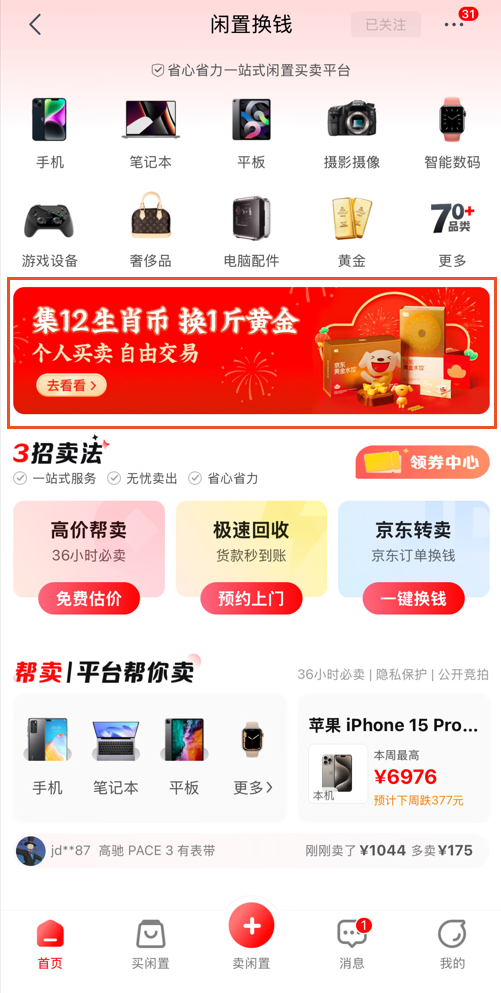
京东十二生肖金币均已面世 首批20个“狗头金”大奖已入库
Zhong Guo Zhi Liang Xin Wen Wang· 2025-11-24 08:07
也专门提供了二手交易、求购以及官方渠道回收等多种服务,方便消费者收集或交换生肖金币。此外, 京东要求十二枚生肖金币的防伪卡实名认证信息必须为兑奖者本人,所以提醒消费者在二手交易时,除 需要交易金币外还需要有防伪卡,并且需要确认防伪卡是未绑定或已解绑状态。 已集齐12枚不同生肖金币和防伪卡的用户,可以在完成防伪卡实名认证(务必确认12张防伪卡实名 认证信息均为兑奖本人)后,在2024年12月23日至2025年2月28日之间致电京东客服950618,按照客服 指引操作预约上门验证和兑换。 去年12月以来,不少消费者对京东推出的集齐十二枚不同生肖的金币兑换一斤"狗头金"的玩法十分 关注。目前,从一些平台用户晒单中发现,所有十二种生肖均已开出,随着部分用户进行生肖金币的二 手交易买卖,预计首个大奖将很快出现。京东方面表示,首批20个1斤重的"狗头金"大奖已制作完成并 入库,具备兑换资格的用户在2025年2月28日前可随时致电京东客服950618,预约上门验证并进行兑 换。 据悉,目前在京东"闲置换钱"频道及其他二手交易平台上已经出现一些生肖金币二手交易。京东方 面提醒,计划通过二手交易集齐12枚不同生肖币兑换大奖的消 ...
2025年营销“5大趋势”| 麦当劳、小红书、追觅、完美日记近40位企业嘉宾齐聚灵眸大赏
Sou Hu Cai Jing· 2025-11-24 07:42
Core Insights - The Morketing Summit 2025 will focus on the new ecosystem of marketing in China, discussing trends and transformations from 2025 to 2026 [2][3] - Key topics include brand building, channel innovation, AI-driven marketing growth, and podcast marketing, with participation from nearly 40 companies [2] Group 1: Marketing Trends - The discussions at the summit will shift from traditional advertising techniques to the broader changes in the marketing ecosystem, including consumer behavior and technological advancements [2] - Five major trends have been identified that will influence brand strategies and marketing decisions in 2025-2026 [2] Group 2: Emotional Economy - The concept of the emotional economy emphasizes that consumers are increasingly motivated by emotional connections rather than just product functionality [42][43] - Brands like McDonald's leverage emotional assets that resonate across generations, highlighting the importance of creating a sense of belonging and happiness for consumers [43] Group 3: Human-Centric Marketing - Human-centric marketing focuses on understanding users as individuals with emotions and motivations, rather than just data points [44] - This approach is driven by the decline in effectiveness of traditional marketing methods, necessitating brands to create content that resonates personally with consumers [44] Group 4: Content as Core Asset - In the fragmented media landscape, engaging content is essential for capturing consumer attention and driving brand loyalty [45] - Brands should develop a content strategy that includes basic product information, professional educational content, and value-driven narratives to connect with consumers [45][46] Group 5: All-Scene Marketing - The concept of "all-scene" marketing recognizes that consumer interactions occur across multiple touchpoints, necessitating a cohesive brand presence in various contexts [47][48] - Brands must ensure consistent experiences across different platforms and touchpoints to enhance consumer engagement and loyalty [49] Group 6: AI in Marketing - AI is a significant focus, with its potential to enhance marketing decision-making, content generation, and consumer engagement [50] - The summit will explore how AI can transform marketing strategies, improve efficiency, and create personalized consumer experiences [50][51]




股票市场概览:资讯日报:纽约联储行长鸽派言论提振市场情绪-20251124
Guoxin Securities Hongkong· 2025-11-24 06:39
Market Overview - The Hang Seng Index closed at 25,220, down 2.38% for the day and 5.09% for the week, but up 25.72% year-to-date[3] - The Hang Seng Technology Index fell 3.21% to 5,395, with a year-to-date increase of 20.76%[3] - The Hang Seng China Enterprises Index decreased by 2.45% to 8,920, with a year-to-date rise of 22.36%[3] - The Shanghai Composite Index dropped 2.45% to 3,835, with a year-to-date increase of 14.41%[3] Sector Performance - The lithium battery sector saw significant declines, with Ganfeng Lithium down over 12% and Tianqi Lithium down over 11%[9] - Semiconductor stocks also performed poorly, with Innolux down over 8% and SMIC and Hua Hong Semiconductor both down over 6%[9] - Xiaomi-related stocks rose against the trend, driven by the launch of Xiaomi's enhanced smart driving system[9] U.S. Market Insights - On November 21, U.S. markets saw all major indices rise, with the Dow Jones gaining approximately 1.1%[9] - The probability of a 25 basis point rate cut by the Federal Reserve in December increased from under 40% to over 70% following dovish comments from New York Fed President Williams[9] - Notable movements in large tech stocks included Google up 3.53% and Nvidia down 0.96%[9] Japanese Market Trends - The Nikkei 225 index fell 2.4%, with a cumulative decline of 3.5% over the past week[13] - Japanese semiconductor stocks faced significant drops, with Tokyo Electron down 7.14% and Advantest down 12.10%[13] - The Japanese government announced a $135 billion economic stimulus plan, adding pressure to the yen and government bonds[13]




最后一周!2025年度中国技术力量榜单申报即将截止
AI前线· 2025-11-24 05:52
Core Insights - The article announces the upcoming deadline for the "2025 China Technology Power Annual List" registration, which is set for November 30, 2023 [3] - This year marks the fifth consecutive year of the InfoQ list evaluation, with participation from over 100 companies, including major industry players and innovative representatives [4] - The theme for this year's list is "Insight into AI Transformation, Witnessing Intelligent Future," focusing on eight key areas related to AI advancements [4] Summary by Categories - The evaluation will cover eight award categories, including: - 2025 AI Infrastructure Excellence Award TOP20 - 2025 AI Engineering and Deployment Excellence Award TOP20 - "Artificial Intelligence +" Best Industry Solution TOP20 - AI Agent Most Productive Product/Application/Platform TOP15 - Data & AI Most Valuable Product/Platform TOP10 - AI Coding Most Productive Product TOP5 - Embodied Intelligence Star Product TOP10 - AI Open Source Star Project TOP10 [5] Event Details - The results of the annual list evaluation will be announced on December 19, 2023, during the AICon·Beijing event, which will also feature an award ceremony [8] - The two-day event will gather industry experts from leading companies and innovative teams to discuss trending AI topics, including Agents, AI Programming, Embodied Intelligence, and Multimodal [8] Keynote Sessions - The event will feature various keynote sessions focusing on topics such as: - The revolution in content creation driven by multimodal large models - The evolution and implementation of Agent technology - New paradigms in software development in the LLM era - Practical challenges and experiences in deploying Coding Agents at scale [10][11][12] Participation Invitation - Companies and teams are encouraged to share their latest achievements and outstanding projects in the AI field, covering areas such as infrastructure development, innovative engineering and deployment, and productivity enhancement through intelligent agents [25]



工信部颁发移动通信转售业务经营许可 阿里京东小米等15家企业入围
Mei Ri Jing Ji Xin Wen· 2025-11-24 04:09
Core Viewpoint - The recent issuance of operating licenses for mobile communication resale businesses to 15 companies, including Alibaba, JD.com, and Xiaomi, marks a significant step towards the commercialization of mobile communication resale in China, which is expected to enhance service innovation and provide consumers with more choices in mobile communication services [1][2]. Industry Overview - The Chinese government has long encouraged private investment in the telecommunications sector, with policies dating back to 2010 aimed at promoting private capital participation in telecom infrastructure [2]. - The Ministry of Industry and Information Technology (MIIT) officially launched pilot programs for mobile communication resale in 2013, transitioning to formal commercialization on May 1, 2018 [2]. Business Model - Mobile communication resale, often referred to as virtual operator business, allows companies to purchase basic telecom services from operators like China Unicom and repackage them for resale to consumers [4]. - This model creates a wholesale and retail relationship between enterprises and telecom operators, enabling companies to tailor services to their brand and customer needs [4]. Consumer Benefits - Increased competition from multiple enterprises entering the market is expected to better meet diverse consumer demands and provide more affordable options [4]. - While the immediate impact on the market may be limited, long-term prospects suggest potential disruptive innovations in business models and services within the telecommunications sector [4]. Challenges Ahead - The MIIT has outlined specific conditions for companies seeking to operate in the mobile communication resale market, including the requirement for commercial contracts with basic telecom providers covering various operational aspects [5]. - Potential challenges for these businesses include profitability pressures due to intense competition, the need to effectively integrate resale services with existing business models, and compliance with real-name registration requirements that may increase operational costs [5][6]. Regulatory Measures - The MIIT plans to implement management measures post-commercialization, including annual reporting and credit constraints, to ensure compliance and protect user rights and network security [6].



超30亿元抄底的恒生互联网ETF(513330)涨超2%,恒生科技指数ETF(513180)连续17日获资金净申购,千问APP下载突破1千万+灵光下载量突破200万
Ge Long Hui· 2025-11-24 03:25
Group 1 - Hong Kong stocks opened higher, with Alibaba's shares increasing by 5%, driving the Hang Seng Internet Index up over 2% and the Hang Seng Technology Index ETF rising by 1.36% [1] - The launch of Google's Gemini 3 Pro and its image model Nano Banana Pro has become a major tech highlight, increasing market attention on AI applications [1] - Alibaba's AI assistant, Qianwen App, has surpassed 10 million downloads within a week of its public testing, making it the fastest-growing AI application, outpacing ChatGPT, Sora, and DeepSeek [1] - Ant Group's general AI assistant, Lingguang, achieved over 2 million downloads within 6 days of its launch [1] - The Hang Seng Technology Index ETF has seen a net inflow of 5.2 billion yuan over 17 consecutive trading days despite a cumulative decline of 11% from October 30 to November 21 [1] - The Hang Seng Internet ETF also experienced a net inflow of 3.3 billion yuan over the same period, despite a cumulative decline of 12% [1] Group 2 - The Hang Seng Internet ETF has a weight of over 80% in leading internet stocks, with an AI content exceeding 90%, including major companies like Alibaba, Tencent, NetEase, JD.com, and Baidu [2] - The latest scale of the Hang Seng Internet ETF is 33.979 billion yuan, reflecting strong investor interest in AI-driven companies [2]


中国互联网-抖音电商专家电话会议核心要点-Takeaways from Douyin ecommerce expert call
2025-11-24 01:46
Summary of Douyin Ecommerce Expert Call Industry Overview - **Industry**: Ecommerce in China, specifically focusing on Douyin (unlisted) and its performance during the Double 11 shopping festival Key Points 1. **Growth Performance**: Douyin's gross merchandise value (GMV) during the Double 11 period grew by 25% year-on-year, which is noted as the fastest growth in the industry, although it has slowed from over 30% growth in the previous three quarters [2][3] 2. **Year-End Expectations**: Douyin is expected to conclude the year with a GMV of CNY4.4 trillion, representing a 29% year-on-year increase, surpassing the initial target of CNY4.2 trillion set for 2025 [2] 3. **Factors Contributing to Growth**: The expert attributed Douyin's growth to: - A less tough base effect compared to competitors JD and Alibaba - Increased subsidies - Strong momentum in its marketplace ecommerce [3] 4. **Subsidy Program Expansion**: Douyin's trade-in subsidy program (TSP) expanded from 8 provinces last year to approximately 22 provinces this year, contributing to its growth despite starting slower than JD and Alibaba [4] 5. **Subsidy Spending**: Douyin spent CNY5 billion in subsidies during this year's Double 11, which is a 27% increase year-on-year [5] 6. **Marketplace Model Success**: Douyin's marketplace model saw GMV growth of approximately 50% year-on-year, accounting for 45% of total GMV from January to October, while live-streaming ecommerce GMV grew by 14-18% year-on-year [6] 7. **Challenges in Marketplace**: Despite strong growth, Douyin faces challenges with lower shopper mind share compared to established competitors like Alibaba, JD, and Pinduoduo, with nearly half of its marketplace GMV relying on user traffic from live-streaming ecommerce [6] 8. **Grocery Category Performance**: The grocery category performed well, benefiting from the shift of consumption from offline to online channels, driven by competition in quick commerce between Alibaba and Meituan [7] Additional Insights - **Competitive Landscape**: There was a notable competition between Douyin and Alibaba towards the end of the Double 11 period, as both platforms sought to capture growth in a sluggish consumer market [5] - **Market Dynamics**: The overall ecommerce industry is experiencing a significant migration of grocery shopping from offline to online, influenced by competitive pressures [7]
