JD(JD)

Search documents
“宠物+”融合发展 撬动万亿消费市场
Bei Jing Shang Bao· 2026-01-04 09:23
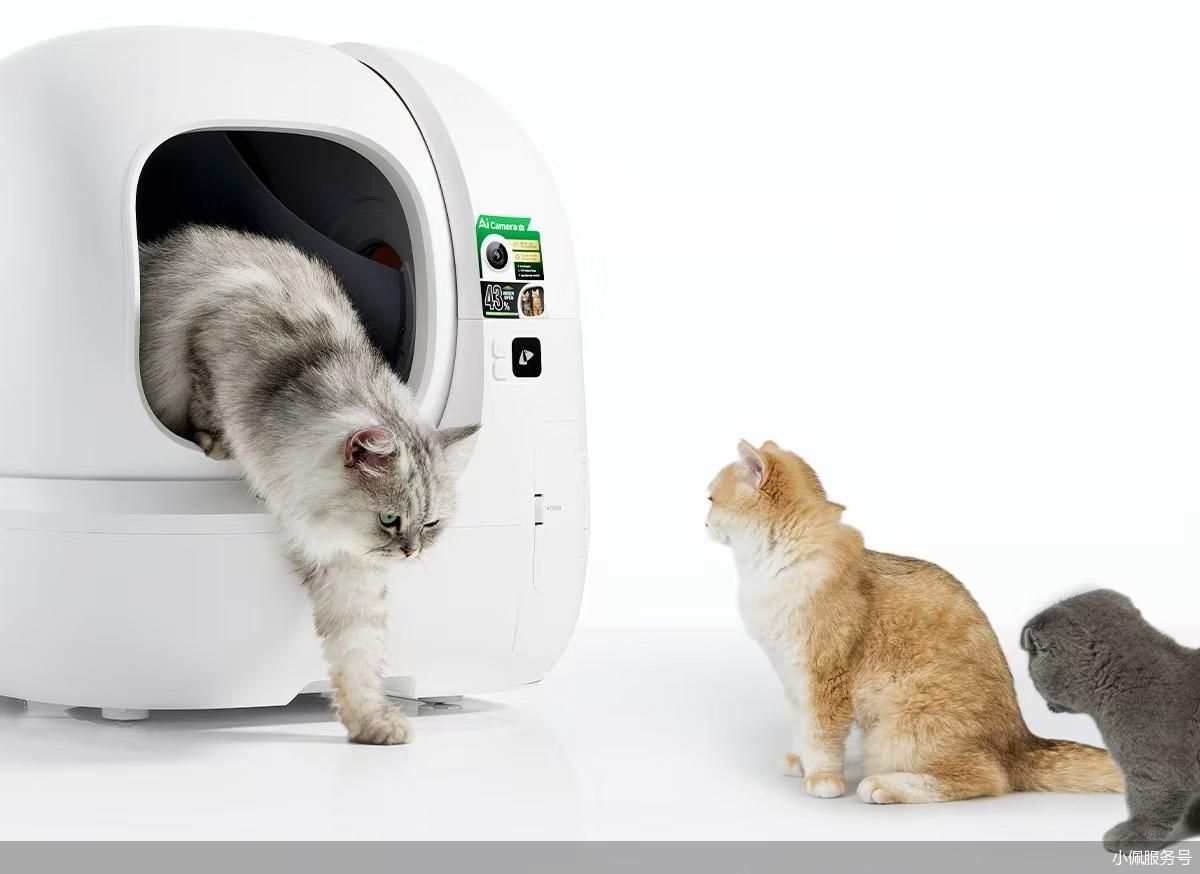
Group 1 - The core viewpoint of the articles highlights the rapid growth of the pet economy, transforming pet consumption from a marginal activity to a significant driver of consumer spending, with projections indicating that by 2025, pet ownership will influence various sectors including home cleaning, health, and entertainment [1][3][4] - Pet consumption is characterized by a trend of "humanization of pet needs" and "petification of human products," leading to increased sales of pet-specific appliances such as vacuum cleaners and smart litter boxes, with a notable 65% growth in pet hair vacuum sales in Beijing by 2025 [3][4] - The demand for ornamental pets is rising, as evidenced by a 52% growth in aquarium sales in Beijing, indicating a shift towards pets as companions for visual enjoyment [4] Group 2 - The pet health sector is emerging as the primary growth driver in pet consumption, with pet prescription food sales expected to increase by 290% and therapeutic products by 80% by 2025, significantly outpacing traditional categories [5][6] - The perception of pets is evolving from mere animals to family members, leading to a surge in high-value products such as pet pharmaceuticals and health supplements, with average monthly spending on pet nutrition reaching 85 yuan, a 30% increase year-on-year [6][7] - The pet consumption market is experiencing a shift towards "refined" consumption, with consumers in different cities showing similar preferences for high-quality pet products, indicating a nationwide trend towards functional and health-oriented pet care [7][8] Group 3 - The development of smart technology is expected to create new opportunities and challenges in the pet economy, as the growing pet owner demographic and rising spending levels will lead to more niche markets and opportunities [8]


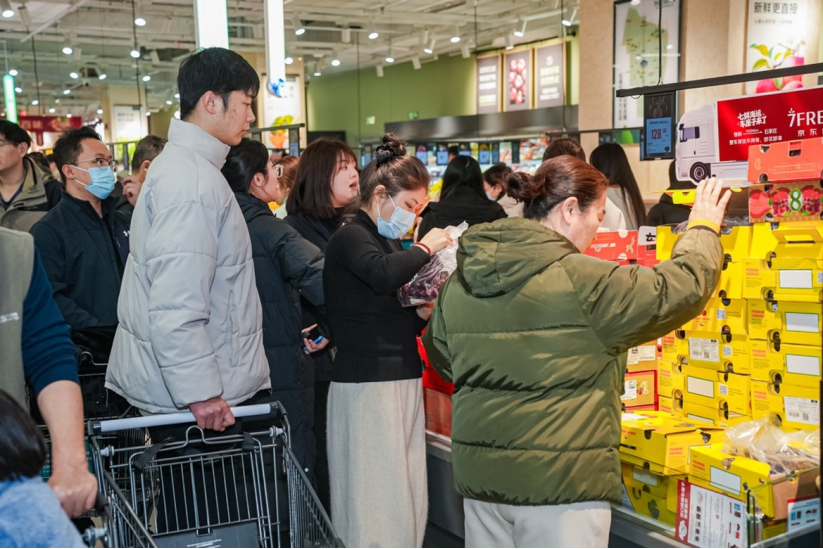
京东七鲜石家庄元旦试吃吸引超10万客流!北京、上海春节前将再开两店
Jin Rong Jie Zi Xun· 2026-01-04 09:03
Core Insights - JD Fresh Supermarket's first store in Shijiazhuang has become a popular destination during the New Year holiday, with over 100,000 customers served in three days and an average daily foot traffic exceeding 30,000 [1][3][13] Group 1: Sales Performance - During the New Year consumption surge, JD Fresh Supermarket's total online and offline order volume increased by 100% year-on-year, with online orders rising by 180% [3][9] - The supermarket's various product categories saw significant sales growth, with vegetable category online sales up by 190%, and meat, poultry, and egg products increasing by 150% [9][13] - The bakery category continued its strong performance with online sales growing over 200%, highlighting the popularity of specific items like strawberry box cakes and durian mille-feuille cakes [9][13] Group 2: Customer Engagement - The supermarket's free tasting event featured over 40 tasting points across various product categories, generating high customer satisfaction and engagement on social media [5][7] - Many customers, after tasting products, added items to their shopping carts, leading to notable sales increases in popular items like freshly baked egg tarts and seasonal fruits [7][9] Group 3: Expansion Plans - JD Fresh Supermarket announced the opening of two new stores in Beijing and Shanghai before the Spring Festival, aiming to enhance its market presence in these regions [11][13] - The successful performance of the Shijiazhuang store serves as a replicable operational model for the upcoming stores, reinforcing the company's confidence in its expansion strategy [13]
春节不打烊!京东物流升级新年服务:覆盖方案更优 寄件维修即时配送
Zheng Quan Shi Bao Wang· 2026-01-04 07:37
Core Viewpoint - As the Spring Festival approaches, JD Logistics is committed to providing uninterrupted logistics services, ensuring a smooth and efficient shopping experience for consumers and supporting merchants during the holiday season [1][2]. Domestic Logistics Services - JD Logistics will focus on high-frequency consumer needs during the Spring Festival, offering a one-stop logistics solution that includes express delivery, appliance installation, and instant delivery services [2]. - All "Asia No. 1" smart industrial parks will operate around the clock, supported by hundreds of regional smart warehouses to ensure stable fulfillment networks, promising services like "same-day delivery" and "next-day delivery" [2]. - The company has established front warehouses in key cities to enhance its instant delivery capabilities, allowing for rapid order processing and delivery [2][3]. International Logistics Services - JD Logistics operates over 130 overseas warehouses to ensure continuous service during the Spring Festival, covering 23 countries and regions [4]. - In Europe, popular products like frozen dumplings and hot pot ingredients are being stored in JD's overseas warehouses for quick dispatch, while in the U.S., a high-efficiency service guarantees delivery within 2-3 days [4]. - The company is expanding its logistics services in Southeast Asia and the Middle East, providing integrated delivery services for large items [4]. Cross-Border Logistics - There has been a significant increase in the volume of Chinese New Year-themed products being shipped globally, with cross-border small package shipments between China and the U.S. increasing by over 100% since mid-2025 [5]. - JD Logistics has developed a comprehensive cross-border logistics network that can deliver goods to most countries within four days [5]. Technological Innovations - JD Logistics has launched the industry's first "AI New Year Goods Map," which uses AI to predict demand and optimize inventory distribution, enhancing logistics efficiency [6][8]. - The implementation of smart management has improved delivery times and reduced cross-regional distribution, significantly benefiting merchants [8]. - The company is also deploying advanced technologies like the "Super Brain" model and "Wolf Pack" robots to enhance logistics operations across multiple regions [8]. Employee Support Initiatives - JD Logistics plans to include full-time delivery riders in its Spring Festival support team, providing them with festive meals to foster a sense of community and warmth during the holiday [8].

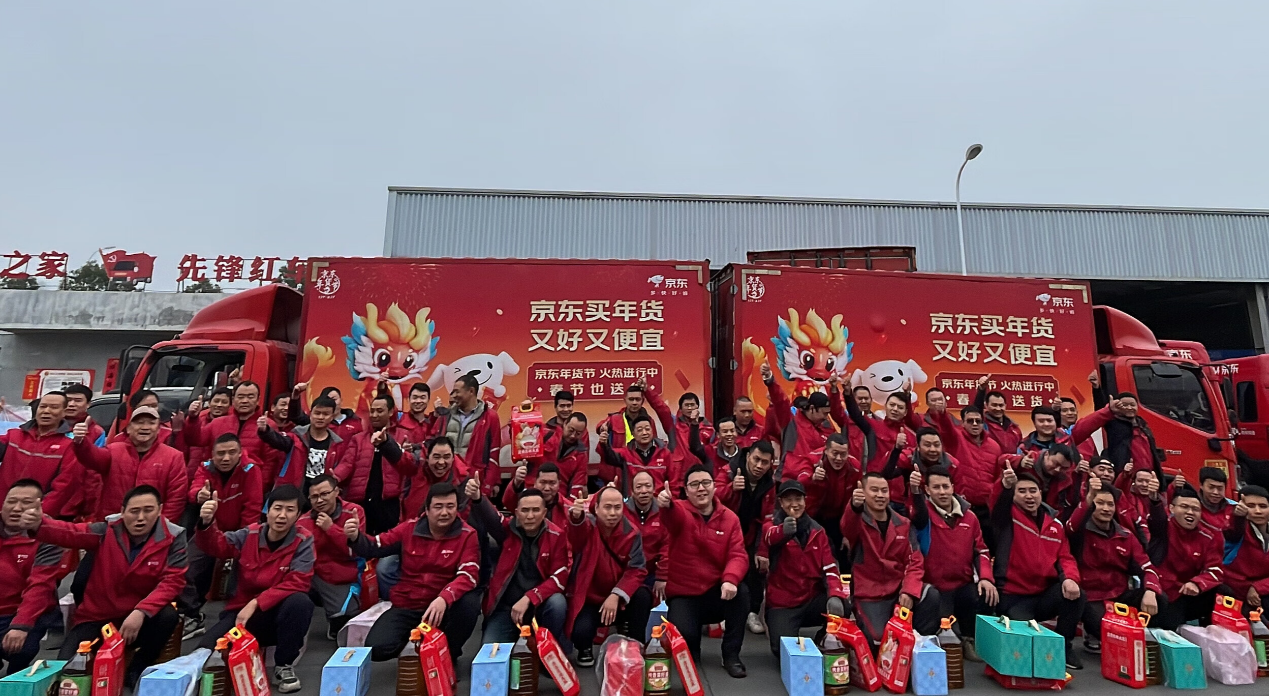
京东全职骑手首次参与春节保障,“我在京东过大年”持续红火
Zhong Jin Zai Xian· 2026-01-04 07:33
Core Viewpoint - As the Spring Festival approaches, logistics demand is expected to peak, and the company is committed to ensuring logistics safety and service continuity during the holiday season [1][3]. Group 1: Logistics and Service Commitment - The company announced that it will operate without interruption during the Spring Festival, focusing on logistics safety and enhancing service coverage for warehousing, delivery, and repair services [1]. - The company will provide welfare guarantees for frontline employees working during the holiday, aiming to lead the industry in overall welfare support for new employment groups [1]. Group 2: Employee Welfare Initiatives - In 2026, full-time delivery riders will join the holiday support team, with the company preparing New Year's Eve meals for them to ensure they feel at home while working away from their families [3]. - The establishment of "Rider Homes" across the country will allow delivery personnel to experience a sense of warmth and community during the Spring Festival [3]. Group 3: Special Spring Festival Activities - The company will organize various New Year-themed activities at its logistics stations and warehouses, including making dumplings and distributing good luck symbols, while also providing hot drinks and portable food for employees working in winter [4]. - The investment in technology, such as unmanned vehicles, will help reduce the workload of employees, making the delivery process more efficient and secure during the holiday [4].
消费者在京东如何领国补?一图读懂领取攻略
Sou Hu Cai Jing· 2026-01-04 07:13
Core Viewpoint - The National Development and Reform Commission and the Ministry of Finance have issued a notice regarding the implementation of a large-scale equipment update and consumer goods replacement policy starting January 1, 2026, which includes subsidies for specific household appliances and digital products. Group 1: Subsidy Details - The policy supports subsidies for six categories of household appliances: refrigerators, washing machines, televisions, air conditioners, water heaters, and computers, as well as four categories of digital products: smartphones, tablets, smartwatches (bands), and smart glasses, with a maximum subsidy of 1,500 yuan for appliances and 500 yuan for digital products [1][6]. - The subsidy standard is set at 15% of the final sales price after discounts, with each individual eligible for one subsidy per category [1][6]. Group 2: Implementation Process - Consumers can access the subsidy through a simple three-step process on the JD app, which includes searching for "National Subsidy," selecting their city, and browsing eligible products [1][3]. - In addition to online channels, JD will also provide support through various offline stores, allowing consumers to consult with staff for subsidy redemption and purchases [6]. Group 3: Additional Services and Coverage - JD will offer additional services such as old appliance recycling subsidies, integrated services for delivery, installation, and removal, as well as free on-site activation for digital products [6]. - The company aims to enhance its subsidy experience in rural areas, ensuring that logistics services cover both county and administrative village levels, allowing rural consumers to benefit from the subsidy program [6]. Group 4: Security Measures - JD has implemented a fully digital approach to ensure the compliance and traceability of subsidy funds, optimizing measures to prevent fraud and ensure that subsidies reach consumers safely [6].

骑手成抢手资源?美团、淘宝闪购真金白银急挖人
Xi Niu Cai Jing· 2026-01-04 06:45
值得一提的是,这一轮骑手争夺并非偶然,而是2025年外卖行业竞争升级的必然结果。此前,平台竞争多集中于价格补贴与商户资源争夺,如今已逐步延伸 到履约环节的核心人力保障。有北京美团骑手透露,近期身边至少有六七位同行被淘宝闪购的福利吸引跳槽。 不过也有资深骑手表示,成熟骑手更看重单量稳定性与平台服务保障,不会因短期高额奖励轻易流动。事实上,早在2025年7月,淘宝闪购就曾在三里屯推 出高额周补补贴政策,吸引大量美团骑手跳槽,9月补贴收缩后,骑手又大规模回流美团。 临近年底,外卖行业的竞争战火再度升级,这场始于流量与价格的博弈,如今已聚焦到对优质骑手资源的白热化争夺。美团、淘宝闪购等头部平台相继抛出 高额"转会"奖励,在北京等核心区域掀起抢人热潮。 据每日经济新闻报道,北京多个外卖站点的骑手们接连收到来自不同平台的高薪邀约。美团针对11月在饿了么、京东等平台月单量超720单的骑手,推出了 2888元的入职奖励,条件是加入美团乐跑并完成6周服务。 淘宝闪购的政策则面向2025年12月15日至21日在京东、美团、顺丰等平台跑单超过140单、加入淘宝闪购优选并连续跑4周的骑手奖励3000元,同时设置1000 元邀请奖励激 ...


春节不打烊!京东物流升级新年服务:覆盖方案更优,寄件维修即时配送
Zheng Quan Shi Bao Wang· 2026-01-04 06:08
Core Viewpoint - As the Spring Festival approaches, logistics demand is expected to surge, and JD Logistics is committed to providing uninterrupted services during the holiday period, ensuring a smooth shopping experience for consumers and operational stability for merchants [1][3]. Domestic Logistics Services - JD Logistics will focus on high-frequency consumer needs during the Spring Festival, offering a one-stop logistics solution that includes express delivery, appliance installation, and instant delivery services [3]. - All "Asia No. 1" smart industrial parks will operate around the clock during the festival, supported by hundreds of regional smart warehouses to ensure stable fulfillment networks [3]. - The company has established front warehouses in key cities to enable rapid order processing and delivery, with promises of same-day and next-day delivery services [3]. - Instant delivery services will be enhanced for popular products such as gift boxes, digital products, and fresh food, with some items available for delivery in as little as 9 minutes [3][5]. International Logistics Services - JD Logistics will maintain operations in over 130 overseas warehouses across 23 countries and regions, ensuring timely delivery of goods during the Spring Festival [6]. - In Europe, popular frozen products are being stored in JD's overseas warehouses for quick dispatch, while in the U.S., a high-efficiency service covers most regions with a delivery time of 2-3 days [8]. - The company has seen a significant increase in cross-border logistics volume, with a 100% growth in cross-border small package shipments between China and the U.S. since December 2025 [9]. Technological Innovations - JD Logistics has launched the industry's first "AI New Year Goods Map," which uses AI to predict demand and optimize inventory distribution, allowing for proactive stock management [9][11]. - The implementation of smart management has improved delivery efficiency, with next-day delivery times increasing by 14% and cross-region delivery ratios decreasing from 27% to 6% [11]. - The company is also deploying advanced technologies such as the "Super Brain" model and "Wolf Pack" robots across multiple provinces and countries to enhance logistics efficiency [11]. Employee Support Initiatives - JD Logistics plans to include full-time delivery riders in the Spring Festival support team, providing them with festive meals to foster a sense of community and warmth during the holiday [11].

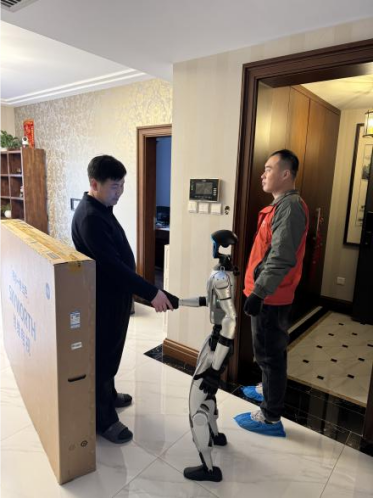
2026国补“首单机器人送货”在北京签收 用户点赞京东“人机搭档”新体验
Jin Rong Jie Zi Xun· 2026-01-04 04:55
Core Insights - The launch of the 2026 national subsidy program has led to a significant increase in consumer interest in purchasing home appliances, with innovative delivery methods such as robot-assisted delivery enhancing customer experience [1][3][5] Group 1: National Subsidy Program - Starting January 1, 2026, consumers can receive a subsidy of 15% on the purchase price for various electronic products, with a maximum subsidy of 500 yuan for certain items and 1500 yuan for major appliances [3][4] - Consumers can save up to 11,000 yuan cumulatively across ten categories of home appliances and digital products, with additional discounts available through trade-in programs and coupons [4] Group 2: Company Initiatives - JD.com has invested heavily in ensuring the effective implementation of the national subsidy program, with significant resources allocated to logistics, customer service, and marketing to enhance consumer experience [5] - The company has introduced a comprehensive service model that includes free old appliance pickup, dismantling, and transportation, as well as on-site activation for new devices [5] Group 3: Consumer Experience - The first delivery under the national subsidy program featured a combination of human and robot delivery, which has been well-received by consumers, enhancing the overall shopping experience [1][3] - JD.com aims to continue improving the consumer experience by providing a seamless integration of various subsidy programs and ensuring efficient service delivery [5]

外卖大战还在继续,只是换了个战场
3 6 Ke· 2026-01-04 03:16
Core Viewpoint - The recent competition among food delivery companies has intensified, with significant financial incentives being offered to attract delivery riders, indicating a fierce battle for market share in the industry [1][2][3]. Group 1: Competition and Incentives - Meituan is offering a one-time transfer reward of 2888 yuan to active riders from Ele.me and JD with monthly orders exceeding 720 [1]. - Taobao Shanguo is providing a subsidy of 3000 yuan to riders who meet specific order criteria on competing platforms, along with additional rewards for referrals [1]. - JD has not engaged in direct recruitment but is investing 22 billion yuan over five years to create "JD Rider Homes" to retain its riders [2]. Group 2: Financial Implications - The total investment by the three major players in the food delivery battle has exceeded 100 billion yuan this year, with a notable increase in transfer subsidies compared to previous years [3]. - Despite the massive financial outlay, profits have not increased, with Alibaba and JD reporting net profit declines of 52% and 55% respectively, while Meituan recorded its largest loss since going public, with a net loss of 16 billion yuan in Q3 [3][4]. Group 3: Marketing and User Growth - Marketing expenses for Alibaba, JD, and Meituan have risen significantly, with year-on-year increases of 106%, 110%, and 91% respectively, despite growth in food delivery orders [4]. - JD's new user conversion rate for food delivery is nearly 50%, contributing to a 40% year-on-year increase in active users and shopping frequency [7]. - Meituan's app has also seen a user growth of over 20% [9]. Group 4: Long-term Outlook and Market Value - The substantial financial investments have not translated into significant improvements in e-commerce revenue growth, with Alibaba's e-commerce growth rate around 9% and JD's fluctuating between 20% and 11.4% [6]. - The value of food delivery remains questionable, as the increase in orders has not led to a corresponding increase in revenue or profitability for the companies involved [10]. - The expectation that high-frequency food delivery could drive low-frequency retail sales has not materialized, as evidenced by the low percentage of new users converting to significant e-commerce spending [10]. Group 5: Local Life Services and Ecosystem Development - The true value of food delivery may lie in its potential to drive local life services, as seen with Meituan's hotel bookings, where 90% of users originated from food delivery [11]. - The competition is not just about food delivery but also about establishing a broader ecosystem that includes various local services, as evidenced by the strategic moves of Alibaba and JD into local life services [14][28]. - Building a comprehensive ecosystem is essential for long-term success, as it requires time and user trust to develop beyond just food delivery [29].
京东:2025年3C趋势品类白皮书
Xin Lang Cai Jing· 2026-01-04 01:29
Core Insights - The Chinese 3C digital product market is projected to reach $19.4 billion by 2025, driven by both mature and emerging product categories [6][8][9]. Market Overview - The growth of the 3C industry is supported by stable sales in mature categories like smartphones and laptops, with AI-related technologies contributing positively [9][10]. - Emerging categories such as smart wearables, XR devices, and action cameras are experiencing significant growth, with smart wearables seeing a year-on-year increase of 612% [9][10]. Growth Drivers - The growth of the 3C industry is driven by four key factors: policy guidance, technological penetration, supply chain upgrades, and expanding consumer demand [10][12]. - Policies aimed at stimulating market activity and consumer demand are expected to continue in 2025, enhancing the efficiency of market conversion [12][13]. Technological Innovations - The transition from "point intelligence" to "ecological collaboration" in technology is evident, with platforms like JD leveraging AI and green technologies to enhance the 3C ecosystem [15][16]. Consumer Demand Trends - There is a shift in consumer demand towards personalized, high-quality, and health-oriented products, moving the focus from merely selling hardware to providing value based on user identity and interests [20][21]. - The demand for products that offer a blend of functionality and aesthetic appeal is increasing, particularly among younger demographics [21][60]. Consumption Scenarios - The 3C consumption landscape is evolving from a focus on product functionality to an emphasis on experiential and scenario-based usage, driven by efficiency, self-satisfaction, and community recognition [22][23]. - Various consumption scenarios such as home entertainment, efficient office setups, and outdoor activities are emerging, with brands innovating to meet diverse consumer needs [29][45]. User Preferences - Users are increasingly looking for products that offer seamless integration across devices, emphasizing the importance of multi-device compatibility and smart functionalities [50][57]. - The trend towards stylish and practical wearable technology is gaining traction, with consumers prioritizing both aesthetic and functional attributes in their purchasing decisions [59][61].