Luckin Coffee(LKNCY)

Search documents
瑞幸及其大股东要竞购蓝瓶咖啡?瑞幸回应:不予置评
Xin Jing Bao· 2025-12-18 04:43
Core Viewpoint - Luckin Coffee and its major shareholder, Centurium Capital, are reportedly considering a bid for Blue Bottle Coffee, although Luckin has declined to comment on the matter [1] Financial Performance - As of the end of Q3 2023, Luckin Coffee has a total of 29,214 stores globally, with a net addition of 3,008 stores in the quarter [1] - For Q3 2025, Luckin's total net revenue is approximately 15.287 billion yuan, representing a year-on-year growth of 50.2% [1] - The GAAP operating profit for the same period is about 1.777 billion yuan, with a monthly average of 111 million transaction customers, reflecting a year-on-year increase of 40.6% [1] - Despite strong revenue growth, the net profit for Q3 2025 is approximately 1.278 billion yuan, showing a year-on-year decline of about 2.7% [1] - The GAAP operating profit margin stands at 11.6%, down from 15.5% in the same period last year [1]
11月,咖啡开店2979家
3 6 Ke· 2025-12-18 03:25
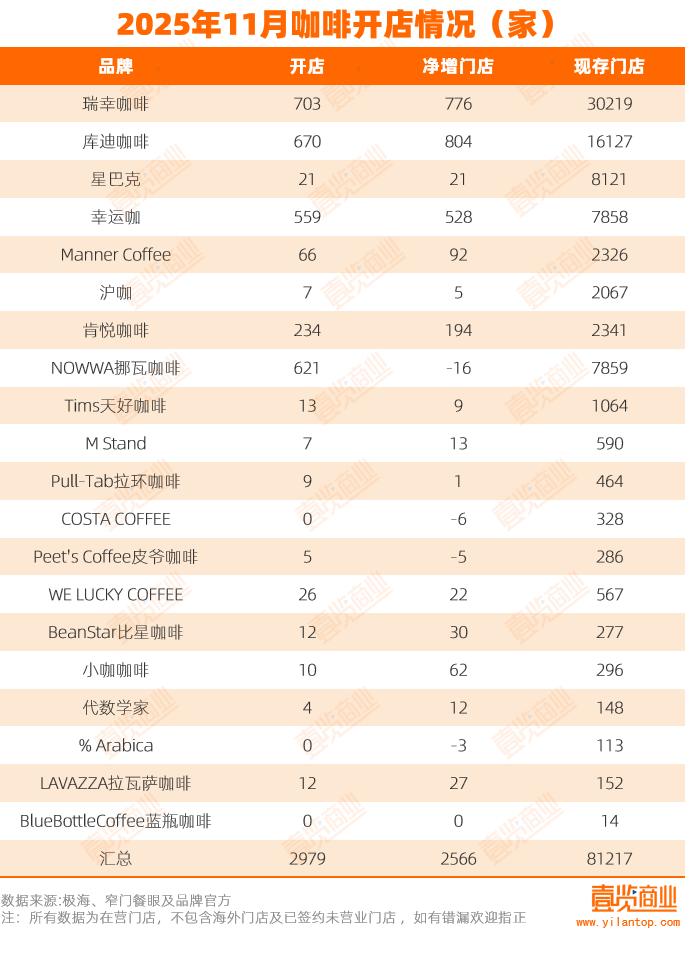
11月,壹览商业长期跟踪的20家连锁咖啡品牌共新开2979家门店,同比增长75.64%;总门店突破8.1万家,共计81217家,环比净增2566家,整体规模持续扩 大。 从新开门店看,幸运咖(新开门店不包含海外门店及已签约未营业门店)、瑞幸咖啡(新开门店不包含海外门店及已签约未营业门店)、库迪咖啡(新开门 店不包含海外门店及已签约未营业门店)、挪瓦咖啡(新开门店不包含海外门店及已签约未营业门店)四家品牌共开店2553家,合计贡献了85.69%的新增 门店。 | 2025年11月咖啡开店情况(家) | | --- | | 品牌 | 开店 | 净增门店 | 现存门店 | | --- | --- | --- | --- | | 瑞幸咖啡 | 703 | 776 | 30219 | | 库迪咖啡 | 670 | 804 | 16127 | | 星巴克 | 21 | 21 | 8121 | | 幸运咖 | રેત્વે | 528 | 7858 | | Manner Coffee | 66 | 92 | 2326 | | 沪咖 | 7 | 5 | 2067 | | 肯悦咖啡 | 234 | 194 | 2341 | | ...

COSTA收购案尚未落地,瑞幸又盯上蓝瓶咖啡,算法“镰刀”终于挥向“匠心咖啡”?
3 6 Ke· 2025-12-18 02:23
Core Viewpoint - Nestlé is planning to sell Blue Bottle Coffee, which it acquired in 2017, to Luckin Coffee, as it struggles with the operational challenges of the brand while seeking to maintain its high-margin consumer goods business [2][4][5]. Group 1: Nestlé's Strategy - Nestlé's decision to sell Blue Bottle is driven by the realization that the brand's expansion has diluted its identity, creating a conflict with the company's growth expectations [3][4]. - The sale involves a strategic separation of the brand from its physical retail operations, allowing Nestlé to retain the brand's intellectual property while offloading the costly and complex retail locations [4][5]. - This divestment is seen as a perfect asset separation for Nestlé, allowing it to focus on its strengths in high-margin consumer products [5]. Group 2: Blue Bottle's Market Performance - Blue Bottle's initial success in China has waned, with a significant decline in consumer interest and foot traffic in its stores, which were once seen as trendy [6][7]. - The brand's pricing strategy has come under scrutiny, as consumers question the value of its offerings compared to local competitors like Manner and Grid Coffee, which provide similar quality at lower prices [7][9]. - As of August 2025, Blue Bottle has only 14 stores in mainland China, a stark contrast to the rapid expansion of competitors, highlighting its struggle to adapt to the local market [9]. Group 3: Luckin Coffee's Ambitions - Luckin Coffee's recent financial performance shows significant growth, with a net revenue of 15.287 billion yuan in Q3 2025, reflecting a 50.2% year-on-year increase [10]. - The acquisition of Blue Bottle is viewed as a strategic move for Luckin to elevate its brand perception from a budget option to a premium player in the coffee market [12][13]. - Luckin aims to leverage Blue Bottle's established brand recognition in international markets to enhance its global presence and valuation [12][13]. Group 4: Challenges for Luckin Coffee - Despite its rapid growth, Luckin faces challenges related to its brand image, which is often associated with low-cost offerings, limiting its potential in the premium segment [11][12]. - The company's aggressive expansion strategy, including opening new stores near existing ones, has led to dissatisfaction among franchisees, impacting profitability and operational stability [16][17]. - The cultural clash between Luckin's data-driven approach and Blue Bottle's artisanal ethos raises questions about the future integration of the two brands [16][17].
马斯克预测某车企:必死;“天才少女”罗福莉首秀,称小米开源模型全球前二;好特卖回应新加盟叫停;玛莎拉蒂APP遭下架丨邦早报
创业邦· 2025-12-18 00:07
Group 1 - Elon Musk predicts Ford's electric strategy will lead to its demise, citing a $19.5 billion asset impairment and the halt of F-150 Lightning production as key factors [3] - Tesla's market value surpassed $1.6 trillion, with a single-day increase of $48.5 billion, reflecting investor confidence in electric vehicle technology [3] - Xiaomi's new model, MiMo-V2-Flash, has been released and is capable of deep thinking and real-time data retrieval, indicating advancements in AI capabilities [18] Group 2 - Luckin Coffee is reportedly considering acquiring Blue Bottle Coffee, although Blue Bottle has not confirmed this information [13] - OpenAI is in talks with Amazon for a potential investment of at least $10 billion, which could elevate OpenAI's valuation to over $500 billion [14] - Databricks has completed over $4 billion in Series L funding, raising its valuation to $134 billion, indicating strong investor interest in data and AI sectors [17] Group 3 - BYD has initiated comprehensive testing for L3 autonomous driving in Shenzhen, completing over 150,000 kilometers of real-world validation [18] - The Chinese music theater market is projected to generate over 1.8 billion yuan in ticket revenue by 2025, with a growing number of performances and audience engagement [22] - The foldable smartphone panel shipment is expected to grow by 46% in 2026, driven by Apple's first foldable device, with Samsung Display likely to capture over 50% market share [22]




中金2026年展望 | 旅游酒店及餐饮:服务连锁正当时,布局反转和高成长
中金点睛· 2025-12-17 23:54
Core Viewpoint - The service industry is showing signs of stabilization and bottoming out after experiencing price pressure and same-store sales decline in 2024, with expectations for recovery in 2026, particularly in sub-sectors like hotels and duty-free [2][17]. Group 1: Industry Trends - The service consumption ratio is increasing, supported by improved infrastructure for chain operations, leading to the emergence of more quality brands [4][21]. - The government has introduced multiple policies to promote service consumption, indicating a potential for stronger recovery in domestic demand [18][20]. - The hotel sector is expected to see a rebalancing of supply and demand in 2026, with RevPAR stabilizing due to a low base and slowing supply growth [4][31]. Group 2: Sub-sector Analysis - **Hotels**: The hotel industry faced pressure from weak business travel demand and continued supply expansion, but RevPAR showed signs of recovery in October 2025, driven by ADR increases [26][33]. - **Duty-Free**: Duty-free sales are stabilizing, with a focus on the potential of new policies to boost sales from departing travelers and local residents [45][49]. - **Dining**: The dining sector is experiencing a controlled competitive environment, with affordable brands performing relatively well amidst a recovering landscape [36][44]. Group 3: Investment Opportunities - Companies that can effectively meet consumer demands for value and emotional satisfaction, possess strong operational capabilities, and capture sustainable growth drivers are likely to succeed [4][29]. - The focus on high-quality brands and those with strong internal capabilities is expected to yield better performance in the coming years [4][21]. Group 4: Market Performance - In 2025, companies like Gu Ming and Mi Xue have shown significant stock performance, indicating a trend where companies with strong growth potential outperform their peers [7][12]. - The overall market for the service sector is expected to see a gradual recovery, with structural opportunities emerging in the hotel and duty-free segments [6][31].





瑞幸咖啡:醇香中淬炼可持续未来 推动产业与生态共荣
Di Yi Cai Jing· 2025-12-17 15:48
Core Viewpoint - Luckin Coffee leads the industry with a comprehensive green sustainable development strategy, winning the "Sustainable Ecological Contribution Model Award" at the recent China Corporate Social Responsibility Model Selection event organized by Yicai [1] Group 1: Sustainable Development Strategy - Luckin Coffee has achieved significant commercial success while implementing a green sustainable development strategy throughout its entire industry chain [1] - The 2025 Yicai China Corporate Social Responsibility Model Selection focuses on "sustainable competitiveness," assessing how companies transform social responsibility practices into long-term capabilities that drive business, environmental, and social resilience [1] Group 2: Innovations in Production - The company has built a green value chain, driving industry progress through technological innovation, including a fresh fruit processing plant in Yunnan that utilizes advanced water treatment technologies to achieve zero industrial wastewater discharge [1] - Luckin's Jiangsu roasting base, operational since 2024, integrates green operational principles and received the LEED BD+C Platinum certification in May 2025 [2] Group 3: Expansion of Sustainable Practices - Luckin Coffee extends its sustainability standards from backend production to frontend consumption, developing a standardized LEED model for its stores, with three locations in Xiamen, Tianjin, and Hangzhou achieving LEED Gold certification [2] - The flagship store in Beijing's Zhongguancun area received the LEED v4 ID+C Platinum certification, setting a positive example for the domestic coffee industry [2] Group 4: Biodiversity and Social Responsibility Initiatives - To promote biodiversity at coffee origins, Luckin has launched a "Business for Good" biodiversity protection project in collaboration with WWF and OPF, focusing on the protection of the endangered Blue-throated Bee-eater [3] - The company has supported health initiatives in Yunnan and Xinjiang, donating eight "Benevolence Medical Rooms" and assisting children with congenital heart disease in receiving professional treatment [3] Group 5: Long-term Strategic Vision - Luckin Coffee's sustainable development practices are integrated into its core business, representing a shift from scale growth to a focus on quality, responsibility, and sustainable competitiveness [3] - The company is evolving from merely providing coffee to advocating for sustainable lifestyles and harmonious coexistence between industry and ecology, offering a "Luckin model" for sustainable development in Chinese enterprises [3]
瑞幸咖啡考虑收购蓝瓶咖啡?蓝瓶咖啡回应
Bei Jing Shang Bao· 2025-12-17 12:12
Core Viewpoint - Luckin Coffee is reportedly considering acquiring Blue Bottle Coffee, a premium coffee brand owned by Nestlé, although Blue Bottle Coffee has declined to comment on the matter [1]. Group 1 - The news indicates that there have been previous discussions regarding Nestlé and related institutions evaluating future development options for Blue Bottle Coffee, including the possibility of selling the business [1].
Blue Bottle Fever? China’s Luckin Coffee Weighs Offer for California Chain
Yahoo Finance· 2025-12-17 11:30
From coconut latte to single-origin pourover: Chinese coffee-and-tea giant Luckin is said to be in the early stages of considering a bid on Blue Bottle Coffee as it expands its presence beyond Beijing. Luckin is known for creative and low-cost takes on coffee, while Blue Bottle has built a name for itself by selling straightforward, high-quality classics. Blue Bottle Coffee’s majority-owned by Nestle, which bought a 68% stake for $425 million in 2017, according to Bloomberg. Luckin is also said to be cons ...

雀巢想瘦身,瑞幸在狂奔:蓝瓶咖啡收购传闻背后的资本局
3 6 Ke· 2025-12-17 11:27
Group 1 - The core of the news revolves around the potential acquisition of Blue Bottle Coffee by Luckin Coffee, which symbolizes a shift in the global coffee landscape, especially as both companies are in different strategic phases [1][9] - Nestlé, having acquired a 68% stake in Blue Bottle Coffee for approximately $425 million in 2017, is now considering divesting it as the brand no longer aligns with its current focus on large-scale products [4][5] - The new CEO of Nestlé, Philipp Navratil, emphasizes a shift towards "RIG-led growth," indicating a need for rational evaluation of all business segments, which may lead to the sale of Blue Bottle Coffee if it does not meet performance standards [4][8] Group 2 - Luckin Coffee's recent financial performance shows a significant increase, with Q3 revenue reaching 15.3 billion yuan, a 50% year-on-year growth, and a total of nearly 30,000 stores, highlighting its ambition to acquire a premium brand like Blue Bottle [11][17] - The acquisition could fill a gap in Luckin's brand portfolio, providing a high-end image and facilitating international expansion, particularly in the U.S. market where Blue Bottle has a presence [11][12] - Despite the potential benefits, Luckin's management has historically been cautious about acquisitions, preferring organic growth strategies, which raises questions about the feasibility of the Blue Bottle acquisition [14][15][16] Group 3 - Nestlé's financial urgency is evident as it announced a cost-saving plan of up to 2.5 billion Swiss francs and plans to cut 12,000 white-collar jobs, making the retention of Blue Bottle Coffee seem impractical [7][8] - The operational model of Blue Bottle Coffee, which relies on high-touch, artisanal coffee preparation, contrasts sharply with Luckin's automated and efficiency-driven approach, creating a fundamental conflict in business philosophies [16] - Luckin's cash flow is strong, with approximately 9.3 billion yuan in cash and equivalents as of September 30, 2025, but the competitive landscape in China necessitates careful financial management, especially in light of rising delivery costs [17][18]

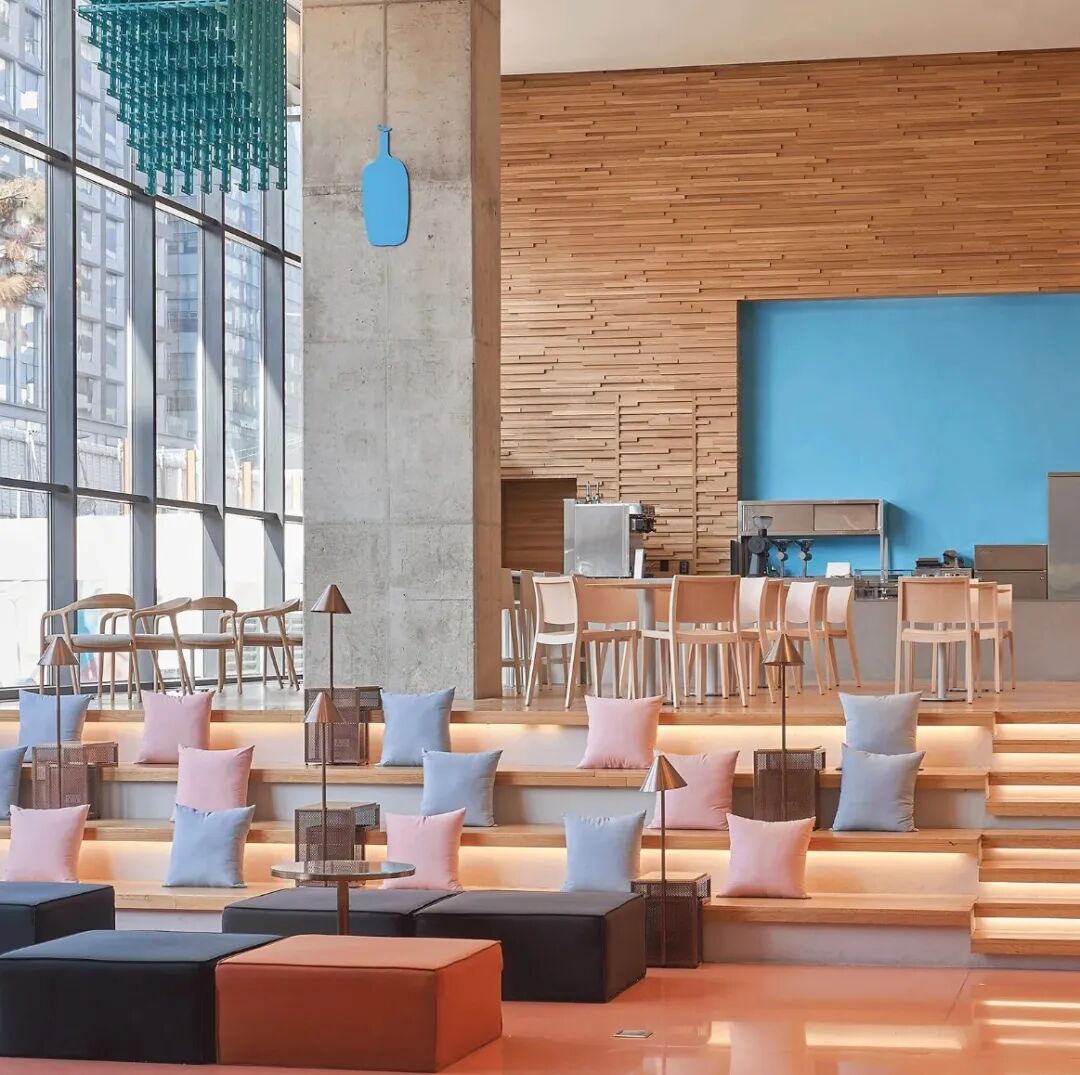
瑞幸咖啡,传考虑竞购雀巢的蓝瓶咖啡Blue Bottle Coffee
Xin Lang Cai Jing· 2025-12-17 04:23
Group 1 - Luckin Coffee is reportedly considering acquiring Blue Bottle Coffee from Nestle to enhance its brand image and expand into the premium coffee market [2] - The company and its shareholder, Dazhong Capital, are also evaluating other acquisition targets, including the operator of %Arabica coffee shops, which is backed by private equity firm PAG [2] - Previous considerations included Costa Coffee, owned by Coca-Cola, but it is unlikely that they will pursue this option further [2] Group 2 - Luckin Coffee aims to return to the US stock market, although there is currently no timeline for the listing [3] - As of Q3 2025, Luckin Coffee has increased its total number of stores to 29,214, with an average monthly customer traffic of 112.3 million [3] - As of December 16, Luckin Coffee's stock price was $32 per share, giving it a market capitalization of approximately $9.248 billion [3]