
Morgan Stanley(MS)

Search documents
X @Bloomberg
Bloomberg· 2025-09-02 08:20
Market Trends - US stocks are expected to continue rallying after four months of gains [1] - The rally is anticipated due to Federal Reserve interest rate cuts coinciding with robust corporate earnings [1] Analyst Opinion - Morgan Stanley's Michael Wilson predicts the continued stock market rally [1]

大摩:贵金属“完美风暴”已至,黄金今年有望冲击3800!
美股IPO· 2025-09-02 07:41
Core Viewpoint - Multiple favorable macro catalysts are converging to create a "perfect storm" for gold and silver prices, with expectations of a Federal Reserve rate cut, a weakening dollar, ETF inflows, and a recovery in physical demand providing strong support for precious metals [3][10]. Group 1: Federal Reserve Rate Cut - The primary catalyst is the anticipated Federal Reserve rate cut, with expectations of a 25 basis point reduction in the upcoming meeting on September 16-17, 2025, and another cut by the end of the year [6][7]. - Historical data indicates that gold prices typically rise by an average of 6% within 60 days following the start of a rate cut cycle, with some periods seeing increases as high as 14% [6][7]. Group 2: Dollar Weakness - The ongoing weakness of the dollar is another critical support factor, as gold prices have shown a strong negative correlation with the dollar index (DXY) this year [3][7]. Group 3: ETF and Central Bank Demand - There has been a significant turnaround in market sentiment, with global gold ETFs recording a net inflow of approximately 440 tons this year after four consecutive years of outflows, indicating a resurgence of institutional investor interest in gold [10]. - Central banks have also been strong buyers of gold, with net purchases totaling 415 tons this year, contributing to a stable long-term support for gold prices [11]. Group 4: Physical Investment Demand - Demand for gold bars and coins increased by 11% year-on-year in the second quarter, reflecting strong interest from individual investors seeking to hedge risks and preserve value [12]. - Although global jewelry demand was weak due to high prices, early signs of recovery are emerging, particularly with increased gold imports in India, suggesting potential rebounds in jewelry demand as consumers adapt to new price levels [14]. Group 5: Silver Outlook - Morgan Stanley's target price for silver is set at $40.9 per ounce, with cautious optimism regarding its potential for exceeding this target due to strong industrial demand and a decline in silver production from Mexico [17]. - Despite concerns about previous overbuilding in solar facilities in China, the stable growth trajectory of solar cell output, which has increased by approximately 40% year-on-year, indicates robust underlying industrial demand for silver [17].


美联储降息在即,散户却踩中牛市四大陷阱!
Sou Hu Cai Jing· 2025-09-02 07:22
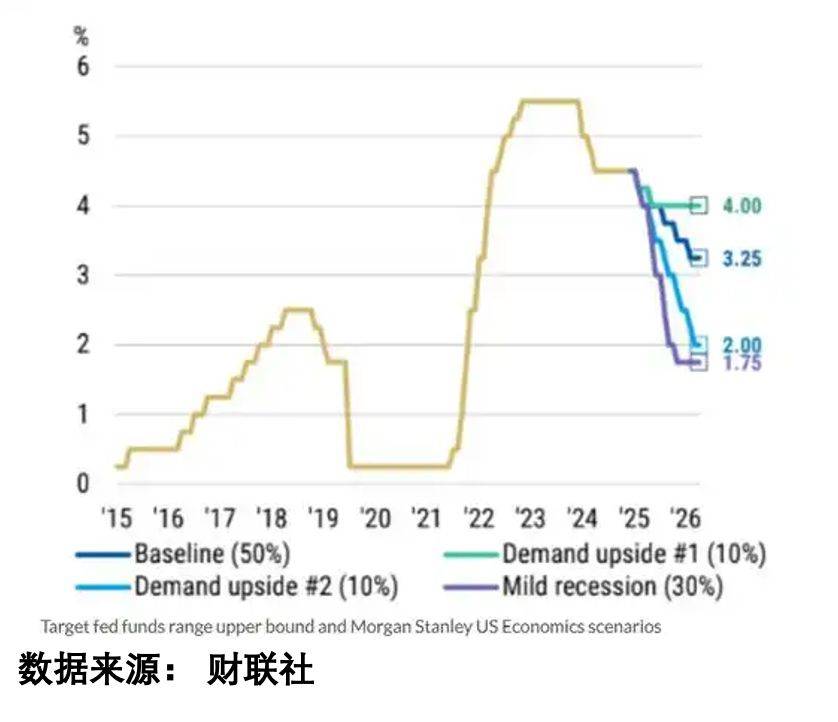
Core Insights - Morgan Stanley suggests that the Federal Reserve may implement larger-than-expected interest rate cuts, leading to significant market reactions, particularly in U.S. Treasury bonds [1][2] - The report outlines three scenarios for the Fed's actions: fiscal stimulus (10% probability), inflation tolerance (10% probability), and economic recession (30% probability) [2] Group 1: Market Reactions - Following the news of potential rate cuts, Wall Street traders began to engage in steepening yield curve trades, indicating a shift in market sentiment [1][2] - Retail investors often react impulsively to interest rate news, leading to potential losses, as seen in the recent volatility in the brokerage sector [4] Group 2: Investor Behavior - Four common misconceptions among retail investors during bull markets are identified: 1. "Holding stocks will lead to gains" syndrome, where investors hold onto losing stocks in hopes of recovery [6] 2. "Chasing hot trends" syndrome, where investors invest heavily in trending sectors without proper analysis [6] 3. "Strong stocks will continue to perform" fallacy, where investors assume that leading stocks will always rise, ignoring underlying data [6] 4. "Buying the dip" trap, where investors buy stocks that have fallen significantly without considering institutional selling behavior [8] Group 3: Institutional Insights - The pricing power in the stock market is primarily held by institutional investors, who utilize advanced data models and algorithmic trading, contrasting with retail investors' reliance on basic technical indicators [9] - The "institutional inventory" data is highlighted as a crucial metric for understanding market dynamics, as it reflects the activity level of institutional funds [11][13] Group 4: Strategic Recommendations - To avoid losses, retail investors should adopt an institutional perspective by monitoring foreign capital trading behavior and institutional inventory data [14][16] - The importance of recognizing genuine market opportunities through active institutional participation is emphasized, rather than relying solely on media narratives about interest rate cuts [14][17]
大摩:贵金属“完美风暴”已至,黄金今年有望冲击3800!
Hua Er Jie Jian Wen· 2025-09-02 06:14
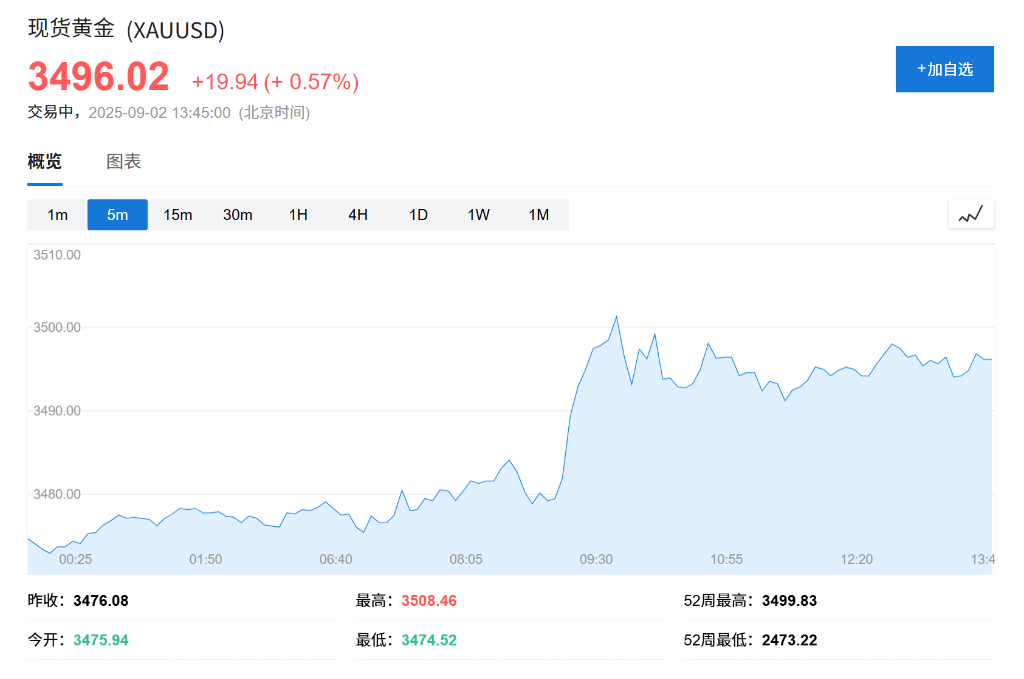
Core Viewpoint - A "perfect storm" of macro catalysts is forming for precious metals, particularly gold and silver, driven by expected interest rate cuts, a weakening dollar, ETF inflows, and a recovery in physical demand [1][4]. Group 1: Monetary Policy and Price Predictions - Morgan Stanley predicts the Federal Reserve will announce a 25 basis point rate cut on September 16-17, with another cut expected by year-end, historically leading to a significant increase in gold prices [1][4]. - Historical data shows that gold prices average a 6% increase within 60 days of the Fed starting a rate cut cycle, with some periods seeing increases as high as 14% [4]. - Morgan Stanley sets a target price of $3,800 per ounce for gold by Q4 2025, indicating an approximate 8% upside from the current price of $3,496 per ounce [2]. Group 2: Demand Factors - Despite a weak global demand for gold jewelry in Q2, early signs of recovery are noted, particularly with a significant increase in India's gold imports in July [10]. - Global gold ETFs have seen a net inflow of approximately 440 tons this year, marking a fundamental shift in market sentiment after four years of outflows [11]. - Central banks have purchased 415 tons of gold this year, contributing to a stable long-term support for gold prices [11]. - Demand for physical gold bars and coins increased by 11% year-on-year in Q2, indicating strong interest from individual investors [11]. Group 3: Silver Outlook - Morgan Stanley's target price for silver is set at $40.9 per ounce, with potential for upside despite cautious views due to concerns over solar energy infrastructure in China and improved silver production in Mexico [14]. - Recent data shows a stable growth trajectory in China's solar cell production, increasing by approximately 40% year-on-year, suggesting strong underlying industrial demand for silver [14]. - Mexico's silver production declined by 7% year-on-year in June, which may create upward pressure on silver prices [14].
情绪突变?A股“吹哨人”,最新发声
Zheng Quan Shi Bao· 2025-09-02 04:30
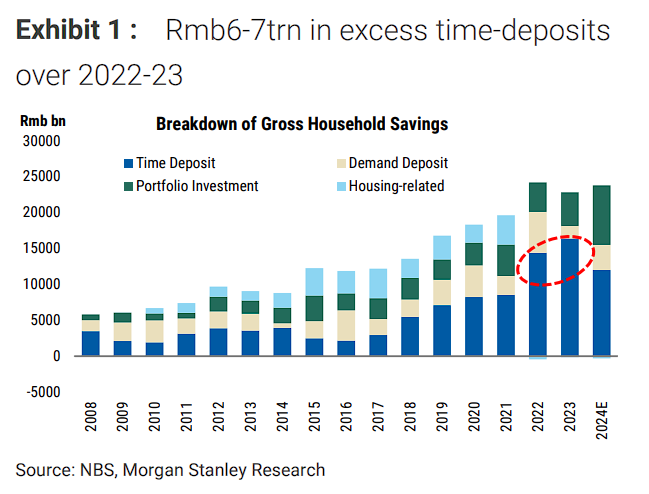
Market Sentiment - A-shares experienced a sudden adjustment with a significant drop in the number of rising stocks, from 3200 to less than 1000 [1] - The Shanghai Composite Index fell by 0.79%, the Shenzhen Component Index by 2.21%, and the ChiNext Index by 2.9%, indicating a notable change in market sentiment [1] Morgan Stanley Insights - Morgan Stanley's recent report highlights three core issues facing the A-share market: the potential and limitations of household deposits shifting to the stock market, the regulatory balance towards stock price surges, and investor expectations for economic policy catalysts [4] - The report suggests that while there is a theoretical excess of 6 trillion to 7 trillion RMB in term deposits available for reallocation, large-scale inflows into the stock market depend on sustained market momentum and improvements in fundamentals [4] Financial Institutions' Role - Financial institutions, particularly insurance companies, have been the main contributors to stock market liquidity in the first half of the year, with an estimated contribution of around 600 billion RMB [5] - Seasonal patterns showed a reduction of 300 billion to 500 billion RMB in household term deposits during June and July, indicating a shift in investment strategies [5] Valuation and Performance - Current A-share valuation levels are generally in line with overall performance, although significant differences exist across industries [3] - The overall net profit of A-share companies increased by 2.45% year-on-year, with non-financial sectors showing a 1.04% increase, reflecting stable corporate profitability [3] Defensive Sectors - Defensive sectors such as banking and gold have shown strength, with the gold price reaching a historical high of 3557.1 USD/ounce, and domestic gold futures also experiencing significant gains [2]
情绪,突变!A股“吹哨人”,最新发声!
券商中国· 2025-09-02 04:07
A股,突然迎来调整。 9月2日早盘,市场情绪突变。与昨天上涨个股达3200只相比,今天早上上涨个股数量不足一千只。截至午间收盘,沪指跌 0.79%,深成指跌2.21%,创业板指跌2.9%,情绪上已经出现了明显变化。那么,火爆的市场是否将迎来调整? 在这个关键时候,一份署名为"摩根士丹利"的深圳投资策略会纪要开始在市场流传。 摩根士丹利曾经有着A股"吹哨人"之称 ,多次较为准确地判断了市场的走向。该纪要认为,股市并未全面过热。 A股"吹哨人"发声 多次准确预判A股的外资大行——摩根士丹利在此关键时刻发声。 与此同时,据追风交易台最新消息,摩根士丹利首席中国经济学家邢自强团队在最新研报中剖析了当前A股市场面临的三大核 心议题:居民存款向股市转移的潜力与限制、监管层面对股市的平衡态度,以及投资者对经济政策催化剂的期待。 来看报道! 情绪突变 与此前的炽热相比,今天的兑现情绪明显浓烈了许多。 早盘,上证指数跌幅虽然不大,但个股杀跌面扩大,上涨个股不足一千只。封板的资金明显减少,涨停个股大幅下降,万得 微盘股指数大跌近3%。盘面上,虽有抵抗和诱多动作,但跟进资金并没有此前那么强。市场上最大的亮点依然是寒武纪。该 股经过 ...

盾博dbg:摩根士丹利认为美联储将会加大降息幅度
Sou Hu Cai Jing· 2025-09-02 02:04
Core Viewpoint - Morgan Stanley's interest rate strategy team suggests that the Federal Reserve's future rate cuts may be more aggressive than current market pricing indicates [1] Group 1: Federal Reserve Rate Predictions - Morgan Stanley's baseline forecast indicates a 25 basis point rate cut at the upcoming monetary policy meeting, with an additional 25 basis point cut expected before December 2026 [3] - The market previously anticipated a "hawkish neutral" stance from Powell, focusing on inflation not returning to the 2% target, but Morgan Stanley notes a shift towards prioritizing labor market signals over inflation [3] - The team constructed three alternative scenarios for changes in the federal funds target rate, weighted by probability [3] Group 2: Scenarios for Rate Cuts - Scenario 1: Accelerating labor market weakness with non-farm payrolls below 100,000 for three consecutive months and unemployment exceeding 4.5%, leading to a potential shift to 50 basis point cuts at each meeting [3] - Scenario 2: Mild inflation rebound with moderate labor market weakness, maintaining the current rate cut pace but with a total cut exceeding the baseline by 50 basis points [3] - Scenario 3: A "soft landing" for the economy with synchronized mild adjustments in employment and inflation, aligning closely with the baseline rate cut path [3] Group 3: Probability Adjustments - The combined probability for the first two accommodative scenarios has been raised to 65%, while the neutral scenario's probability stands at 35% [4] Group 4: Investment Recommendations - Investors are advised to take three types of actions: 1. Go long on 5-year U.S. Treasuries, which are most sensitive to rate cut timing, as falling rates will boost bond prices [4] 2. Engage in steepening trades by establishing long positions at the short end of the yield curve while shorting at the long end to mitigate risks from rising long-term rates [5] 3. Go long on January 2026 federal funds futures, reflecting a bet that the future federal funds rate will be lower than current market pricing [5]

存款搬家、监管态度与市场叙事--大摩邢自强解读A股三大焦点
Hua Er Jie Jian Wen· 2025-09-02 01:01
Group 1: Core Issues in A-Share Market - The A-share market is currently focused on three main issues: the potential and limitations of household deposits moving to the stock market, the regulatory stance on rising stock prices, and investor expectations regarding economic policy catalysts [1][2][6] - Morgan Stanley estimates that there is a potential of 6-7 trillion RMB in excess term deposits available for reallocation, but significant inflows into the stock market depend on sustained market momentum and improvements in fundamentals [1][2][5] Group 2: Deposit Migration - The potential for household deposits to shift to the stock market is primarily driven by excess allocation during 2022-2023, influenced by increased household savings during lockdowns, adjustments in the real estate market, and a weak job market leading to lower risk appetite [2][5] - Financial institutions, particularly insurance companies, contributed approximately 600 billion RMB to stock market liquidity in the first half of the year, supported by central bank relending tools and more flexible investment performance assessments [5] Group 3: Regulatory Attitude - The regulatory body has shown a balanced attitude towards recent capital market performance, signaling support for healthy development while preventing excessive speculation [6][7] - The use of precise regulatory tools, such as the "national team" and window guidance, aims to intervene at appropriate times to curb excessive risk-taking, with recent market indicators showing signs of overheating [6][7] Group 4: Market Narrative - Despite challenges in the macroeconomic fundamentals, investor concerns about export prospects have eased, shifting focus towards potential policy catalysts and sustainable measures to boost domestic demand [7] - Anticipation is building for the upcoming "14th Five-Year Plan" and the Central Economic Work Conference, which are expected to provide clearer guidance on reform priorities, particularly in areas like local incentive mechanisms and tax reforms [7]
摩根士丹利投资管理黄敏:联动全球资源 持续投资中国市场
Sou Hu Cai Jing· 2025-09-02 00:05
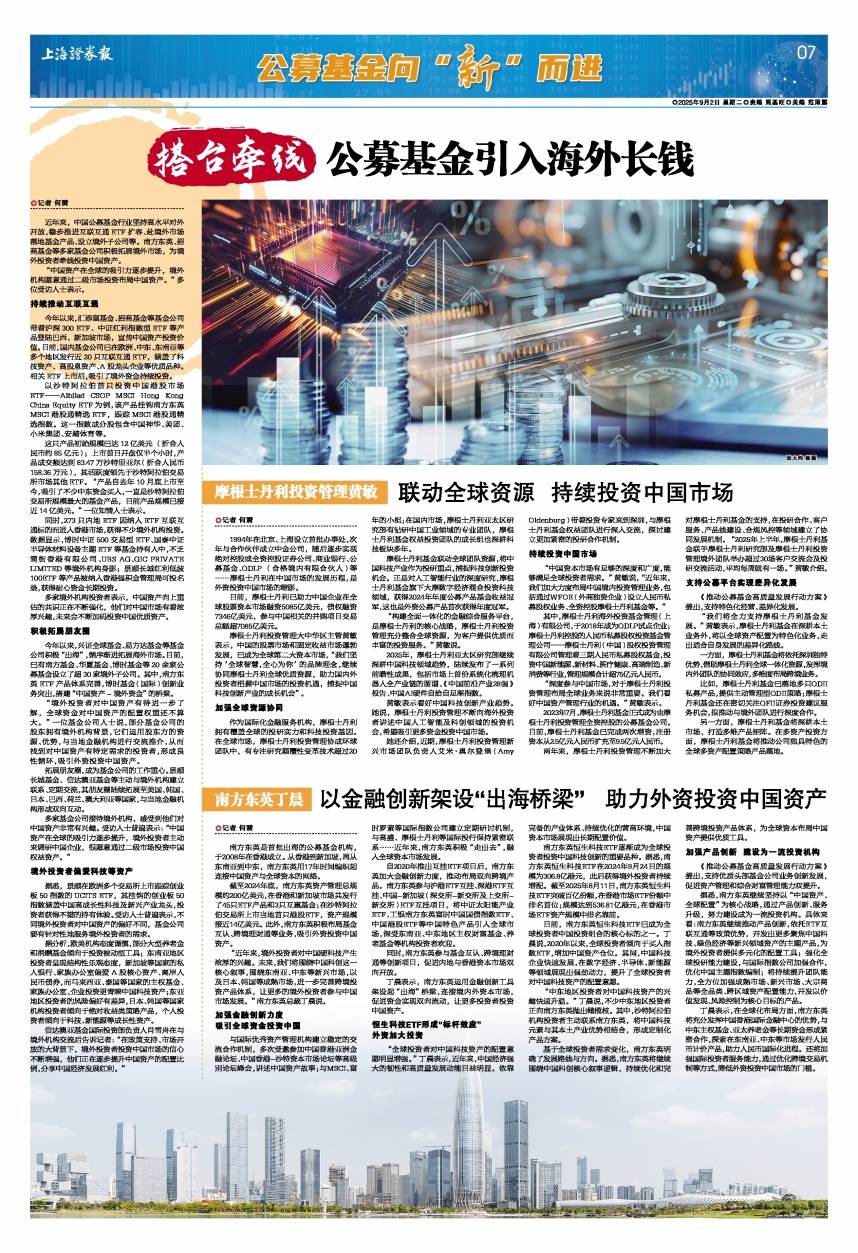
Group 1 - Morgan Stanley's investment management in Greater China emphasizes the robust growth of China's stock and fixed income markets, positioning it as the second-largest capital market globally [1][14] - The firm aims to leverage its global resources to assist domestic and international investors in seizing investment opportunities in China's technology innovation sector [1][14] - The company has established a strong presence in China, having facilitated $508.5 billion in equity financing and $734.6 billion in debt financing for Chinese enterprises [14] Group 2 - The Chinese public fund industry has been actively promoting high-level openness and expanding cross-border investment products, with several fund companies launching ETFs in international markets [2][3] - Notable fund companies like Huatai-PineBridge and China Southern Asset Management have successfully introduced products in markets such as Brazil and Singapore, attracting foreign capital [2][3] - The increasing interest from foreign investors in Chinese assets is evident, with many institutions expressing a desire to invest in China's technology sector [4][10] Group 3 - Morgan Stanley has been enhancing its investment management capabilities in China, including establishing a wholly-owned RMB private equity business and expanding its fund management scale [17][18] - The firm has increased its registered capital from 250 million RMB to 950 million RMB, reflecting its commitment to the Chinese market [17] - The company has been actively supporting its fund management arm through collaborative efforts in research, client services, and product development [18][19] Group 4 - The firm is focused on creating a differentiated development strategy for its public fund platform, leveraging its global asset allocation capabilities [19][20] - Morgan Stanley aims to develop a multi-asset investment product matrix while deepening its engagement in the domestic market [20] - The company is also exploring opportunities for cross-border investment products to facilitate foreign investment in Chinese assets [12][19]
摩根士丹利投资管理黄敏 联动全球资源 持续投资中国市场
Shang Hai Zheng Quan Bao· 2025-09-01 18:54
Core Insights - Morgan Stanley has significantly contributed to China's capital markets, facilitating $508.5 billion in equity financing and $734.6 billion in debt financing, with over $708.5 billion in M&A transactions [1] Group 1: Global Resource Coordination - Morgan Stanley has a global investment research capability and a strong technology investment background, with teams focusing on disruptive technologies for over 20 years [2] - The firm emphasizes the Chinese technology sector as a key investment focus, leveraging global team resources to capture opportunities in technological innovation [2] - Morgan Stanley's fund, which focuses on the digital economy, achieved the highest annual return among public funds in 2024, marking the first time a foreign public fund has won this accolade [2] Group 2: Continued Investment in China - Morgan Stanley is expanding its investment management operations in China, including establishing a wholly foreign-owned enterprise (WFOE) for RMB private equity and fully owning Morgan Stanley Fund [4] - The firm manages over 7.5 billion RMB across three RMB private equity funds, investing in sectors such as new energy, new materials, healthcare, high-end manufacturing, and new consumption [4] - In July 2023, Morgan Stanley Fund became fully owned by Morgan Stanley Investment Management, increasing its registered capital from 250 million RMB to 950 million RMB [4] Group 3: Support for Public Fund Development - Morgan Stanley Investment Management has enhanced support for Morgan Stanley Fund in areas like research collaboration, client services, and compliance [5] - The firm plans to leverage its unique advantages in Shenzhen and global resources to develop differentiated cross-border business strategies [5] - Morgan Stanley Fund aims to create a multi-dimensional product matrix while focusing on local market development and global multi-asset allocation strategies [5]