Morgan Stanley(MS)

Search documents
美股新高但多空对峙激烈:小摩看空非农就业数据 大摩坚信降息预期延续牛市
智通财经网· 2025-06-30 11:33
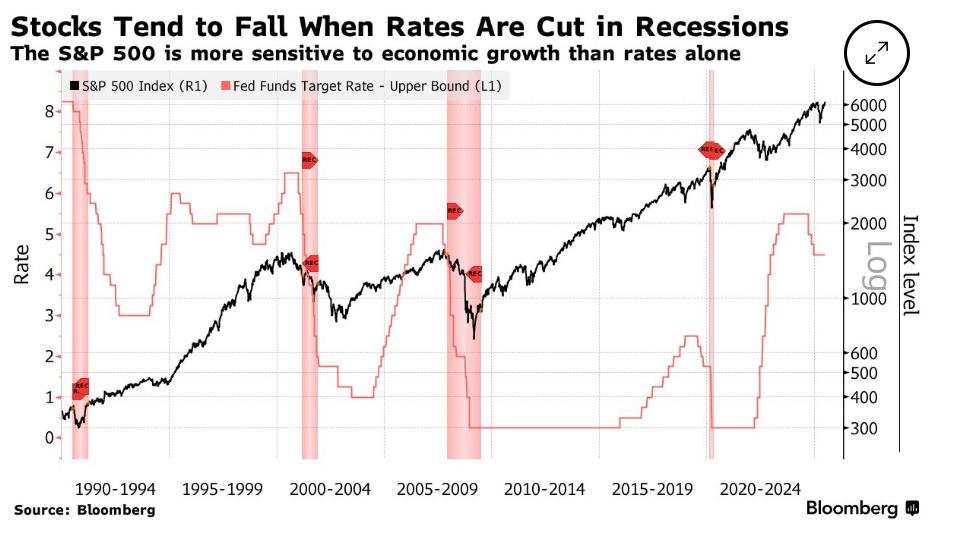
Group 1 - JPMorgan's strategy team indicates that the cooling labor market in the U.S. may exert a greater suppressive effect on the stock market than the potential boost from Federal Reserve rate cuts [1] - The team, led by Chief Strategist Mislav Matejka, believes that the weakening macro environment supporting U.S. equities is diminishing, and that the negative impact of a weak labor market on investor confidence will be more significant than the positive effects of monetary easing [1] - The report emphasizes that the adverse effects of a weak labor market will dominate over the positive push from the Fed's loosening of monetary policy [1] Group 2 - In contrast, Morgan Stanley's strategy team, led by Michael Wilson, suggests that the market may begin to rebound before the anticipated rate cuts are realized [3] - Morgan Stanley economists predict that the Fed will implement a total of seven rate cuts by 2026, which will provide crucial support for the stock market in the second half of this year [3] - The differing views between the two investment banks reflect a divide in assessing the turning point of the U.S. economy, with JPMorgan focusing on the negative chain reaction from a deteriorating labor market and Morgan Stanley emphasizing the driving effect of policy shifts on valuation expansion [3]


摩根士丹利:中国经济韧性增长下遮蔽了结构分化
摩根· 2025-06-30 01:02
Investment Rating - The report maintains a cautious outlook on the industry, with expectations of GDP growth slowing to 4.5% in the third quarter of 2025, following a strong second quarter performance [3][13]. Core Insights - The second quarter showed robust growth, but June data revealed emerging concerns, particularly in retail and export sectors, indicating a potential softening of economic momentum [3][4]. - The real estate market continues to struggle, with declining transaction volumes and increased fiscal pressure on local governments, necessitating potential policy adjustments [5][12]. - Consumer spending is being supported through financial measures, with a focus on enhancing service supply to stimulate demand [10][11]. Summary by Sections Economic Performance - The second quarter GDP growth is projected to reach 5%, but a decline to 4.5% is anticipated in the third quarter due to weakening exports and a sluggish real estate market [3][13]. - Retail sales showed strong performance in early June, driven by promotional activities, but this may not be sustainable as consumer sentiment weakens [4][10]. Export and Trade - Exports to the U.S. saw a rebound in June, likely due to seasonal demand for the holiday shopping season, but overall export performance remains weak [4][18]. - Container throughput at major ports in China has significantly slowed, indicating a broader decline in trade activity [4][14]. Real Estate Market - The real estate sector remains under pressure, with transaction volumes continuing to decline and fiscal revenues falling short of budget targets [5][22]. - Local governments face increasing fiscal challenges, prompting discussions on expanding budgetary flexibility and potential new financing tools [5][12]. Consumer Spending and Policy Measures - The government is implementing measures to support consumer spending, including financial backing for service consumption and infrastructure development [10][11]. - Structural reforms are necessary for a more balanced economic recovery, focusing on social welfare and tax reforms [11][12].
信摩根士丹利:号、流向与关键数据
摩根· 2025-06-27 02:04
Investment Rating - The report does not explicitly state an overall investment rating for the industry, but it provides forecasts and expected returns for various asset classes, indicating a mixed outlook across equities, bonds, and commodities [4][18]. Core Insights - The correlation between the dollar and the S&P 500 has returned to negative territory after reaching five-year highs, suggesting a shift in market dynamics [9]. - Bloomberg's Fedspeak Index has dropped to its most dovish signal since 2021, indicating a potential easing in monetary policy [10]. - The US economic surprise index has fallen to its lowest level in nine months, reflecting weaker-than-expected economic data [20]. Summary by Sections Equities - S&P 500 forecasted returns range from a bear case of 5,968 to a bull case of 7,200, with a base case return of 6,500, indicating a potential decline of 16.6% in the bear scenario and an increase of 21.9% in the bull scenario [4]. - MSCI Europe shows a bear case of 2,141 and a bull case of 2,620, with a base case of 2,250, reflecting a potential decline of 21.6% in the bear scenario and an increase of 25.6% in the bull scenario [4]. - Topix forecasts range from 2,100 in the bear case to 3,250 in the bull case, with a base case of 2,900, indicating a potential decline of 21.8% in the bear scenario and an increase of 19.7% in the bull scenario [4]. Fixed Income - UST 10-year yields are forecasted to range from 4.38% in the bear case to 2.85% in the bull case, with a base case of 3.45%, indicating a potential increase of 7.8% in the bear scenario and a decrease of 17.5% in the bull scenario [4]. - US Investment Grade (IG) credit spreads are expected to range from 85 bps in the bear case to 70 bps in the bull case, with a base case of 90 bps, reflecting a potential decline of 2.2% in the bear scenario and an increase of 1.8% in the bull scenario [4]. Commodities - Brent crude oil is forecasted to range from $77 in the bear case to $120 in the bull case, with a base case of $60, indicating a potential decline of 29.1% in the bear scenario and an increase of 70.2% in the bull scenario [4]. - Gold prices are expected to range from $3,368 in the bear case to $3,900 in the bull case, with a base case of $3,250, reflecting a potential decline of 21.5% in the bear scenario and an increase of 10.9% in the bull scenario [4]. Market Sentiment - The Market Sentiment Indicator (MSI) aggregates survey positioning, volatility, and momentum data to quantify market stress and sentiment, indicating a current negative sentiment [55][60]. - The report tracks daily fund flows across approximately 5,000 ETFs globally, covering around $7 trillion in assets, providing insights into cross-asset sentiment and positioning [23].
摩根士丹利、高盛点出“秘密指标”:全球资本正逃离美元!
美股研究社· 2025-06-26 09:27
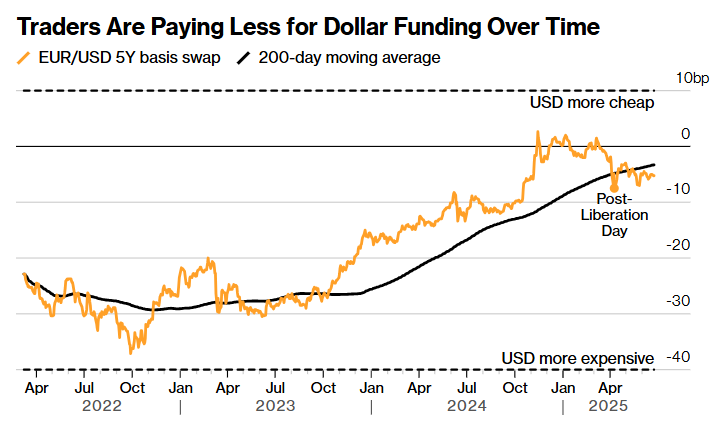
Core Viewpoint - The article discusses the recent changes in the cross-currency basis swap, indicating a shift in investor preferences away from dollar-denominated assets towards euro and yen-denominated assets, influenced by geopolitical risks and U.S. fiscal uncertainties [4][6][8]. Group 1: Cross-Currency Basis Swap Dynamics - Analysts from banks like Morgan Stanley and Goldman Sachs have noted a recent shift in the cross-currency basis swap, which measures the additional cost of exchanging one currency for another beyond cash market borrowing costs [4]. - Increased demand for specific currencies leads to a rise in this additional cost or premium, while decreased demand can lower it or even turn it negative [5]. - The preference for dollar liquidity has weakened over time, particularly against the euro, which may result in higher borrowing costs in euros compared to dollars [6]. Group 2: Investor Behavior and Market Trends - The recent changes in cross-currency basis swaps suggest a declining willingness among investors to purchase dollar-denominated assets, while interest in euro and yen-denominated assets is increasing [6][8]. - The dollar index has dropped over 8% this year, marking the worst annual start in its twenty-year history, coinciding with a broader questioning of the dollar's role as a safe haven [7]. - There is a notable trend of cross-border capital flows, particularly from the U.S. to Europe, as indicated by analysts from BNP Paribas and Goldman Sachs [8][9]. Group 3: Future Implications - Goldman Sachs posits that the cross-currency basis swap market may see the euro becoming more expensive than the dollar, a rare occurrence in the past two decades [10].


ETO Markets 出入金:摩根士丹利押注美联储将在2026年大幅降息?
Sou Hu Cai Jing· 2025-06-25 09:59
Core Viewpoint - Morgan Stanley predicts that the Federal Reserve will begin a series of seven interest rate cuts starting in March 2026, ultimately lowering the federal funds rate to a range of 2.5% to 2.75%, which is significantly lower than the current policy rate and earlier than most institutions expect [1][3]. Economic Growth and Inflation Trends - The prediction is based on the assessment of a downward trend in economic growth and a decline in inflation. Over the past two years, the Fed has maintained interest rates above 5% to combat persistent inflation, but with a cooling labor market and weakening core price increases, the monetary environment has tightened [3]. - Morgan Stanley anticipates that by 2026, the U.S. economy will experience a cyclical slowdown, leading to a decrease in potential output growth and a structural slowdown in investment, necessitating a swift shift to accommodative monetary policy to prevent a hard landing [3]. Inflation Cycle and Monetary Policy - The end of the inflation cycle may arrive sooner than the market expects. Despite Fed Chair Powell's emphasis on a temporary rise in inflation during the summer, trends in rent, healthcare, and commodity prices indicate that most price structures are entering a downward trajectory [3]. - If energy prices remain stable and labor supply improves, inflation expectations may stabilize over the next two years, providing the Fed with ample room to implement easing measures [3]. Neutral Interest Rate and Policy Adjustment - Morgan Stanley's forecast of a final interest rate midpoint of 2.5%-2.75% suggests that the U.S. neutral interest rate has not been permanently elevated due to temporary factors such as the pandemic or geopolitical issues. If this assessment holds, the Fed will need to gradually "return to normal" in the coming years, aligning policy rates with inflation targets [3]. Uncertainties and Market Reactions - The proposed path is not without uncertainties, including high U.S. fiscal deficits, ongoing global supply chain restructuring, and potential geopolitical tensions. If inflation becomes sticky in services and wages, or if financial markets react excessively to premature easing, the Fed may have to delay its adjustment pace [4]. - Morgan Stanley's expectations represent a "baseline scenario" rather than a rigid policy blueprint, indicating a shift in market sentiment from "higher for longer" to "lower and faster," which will directly impact bond markets, the U.S. dollar, and growth assets, becoming a core variable in financial markets over the next two years [4].

美联储保持观望,大摩认为今年不会降息,明年3月开始将有七次降息
Hua Er Jie Jian Wen· 2025-06-25 09:04
美联储主席鲍威尔在北京时间25日凌晨的国会证词中,重申观望的立场,表示美联储将继续等待更多经 济数据以获得政策方向的清晰性。 据追风交易台消息,摩根士丹利发布最新研报,分析师Michael T Gapen等预测由于关税政策将推动通胀 在今年夏季上升至3.0-3.3%,同时移民管控政策将保持劳动力市场紧张,美联储在2025年全年不会降 息。 该投行预计,降息将从2026年3月开始,全年共有七次降息,将利率降至2.5%-2.75%区间。 不过,摩根士丹利也承认存在风险:如果私营部门不得不承担比预期更多的关税成本,那么风险将转向 劳动力市场疲软,利率降息可能会更早到来。 美联储继续观望政策,数据决定一切 大摩在研报中表示,鲍威尔重申了上周FOMC会议的核心信息: "我们处于有利位置,可以等待了解更多经济可能走向,然后再考虑对政策立场进行任何调 整。" 他强调美联储将继续保持观望模式,直到数据带来更多清晰性。 美联储认为当前经济状况"稳固",政策处于适度限制性水平,这让央行处于"良好位置"来等待观察。鲍 威尔强调,美联储的反应将取决于经济偏离双重使命的程度。 关税影响预计第三季度显现 他解释称,关税传导将在第三季度变 ...
敢想敢干:专访黑石集团CEO苏世民等三位卓越CEO
麦肯锡· 2025-06-25 08:01
Core Insights - The article emphasizes the importance of CEOs developing their own "toolbox" of thinking strategies to navigate the complexities and uncertainties of today's business environment, drawing parallels to the crisis faced by Apollo 13 [1][2]. Group 1: CEO Mindsets - Top CEOs share a common mindset when fulfilling six core responsibilities, such as being bold in setting direction and prioritizing team dynamics over rigid management structures [2]. - Continuous interviews with successful CEOs have confirmed previous research findings and provided additional practical insights [2]. Group 2: Stephen Schwarzman (Blackstone Group) - Schwarzman co-founded Blackstone Group in 1985, growing it into one of the largest investment firms globally, managing nearly $1 trillion in assets across various sectors [6]. - He utilized a systematic approach to investment analysis, achieving a 64% annualized return during a downturn in the real estate market by applying a cash flow-based valuation method [7]. - Schwarzman emphasizes that success in finance relies more on talent allocation than on capital, advocating for the recruitment of top talent for critical roles [8]. Group 3: Ken Frazier (Merck) - Frazier reaffirmed Merck's commitment to research and development, prioritizing patient welfare over profits, which led to the development of significant drugs like the cancer treatment Pembrolizumab [12]. - He faced multiple crises, including the Vioxx litigation, by prioritizing the company's values and maintaining public trust, even rejecting settlement offers [13]. - Frazier believes that while specific crisis plans are impractical, organizations can enhance their resilience through training and simulations [14]. Group 4: James Gorman (Morgan Stanley) - Gorman transformed Morgan Stanley post-2008 financial crisis by focusing on wealth management, which he viewed as undervalued due to poor management [17][18]. - He established a strategic framework that involved assessing industry risks and ensuring a balanced approach to growth and risk management [19][20]. - Gorman emphasizes the importance of team dynamics, evaluating executives based on competence and collaboration to ensure a unified approach to challenges [23].



Morgan Stanley (MS) Laps the Stock Market: Here's Why
ZACKS· 2025-06-24 23:01
Group 1: Stock Performance - Morgan Stanley's stock increased by 1.42% to $135.90, outperforming the S&P 500's gain of 1.11% for the day [1] - Prior to the recent trading session, Morgan Stanley shares had risen by 6.29%, surpassing the Finance sector's gain of 1.91% and the S&P 500's gain of 3.92% [1] Group 2: Upcoming Earnings - Morgan Stanley is set to announce its earnings on July 16, 2025, with an expected EPS of $2, reflecting a 9.89% increase compared to the same quarter last year [2] - The consensus estimate for revenue is projected at $15.97 billion, indicating a 6.36% growth year-over-year [2] Group 3: Full-Year Estimates - Zacks Consensus Estimates forecast earnings of $8.57 per share and revenue of $65.12 billion for the full year, representing year-over-year changes of +7.8% and +5.43%, respectively [3] - Recent analyst estimate revisions suggest optimism regarding Morgan Stanley's business and profitability [3] Group 4: Zacks Rank and Valuation - Morgan Stanley currently holds a Zacks Rank of 3 (Hold), with a consensus EPS projection that has decreased by 0.1% in the past 30 days [5] - The company has a Forward P/E ratio of 15.64, which is higher than the industry average of 15.02 [6] Group 5: PEG Ratio and Industry Ranking - Morgan Stanley's PEG ratio stands at 1.22, compared to the Financial - Investment Bank industry's average PEG ratio of 1.26 [7] - The Financial - Investment Bank industry is ranked 96 in the Zacks Industry Rank, placing it in the top 40% of over 250 industries [7][8]

一项衡量货币需求的关键指标正引起华尔街的关注
news flash· 2025-06-24 14:15
Core Insights - A key indicator measuring currency demand, known as "cross-currency basis swaps," is gaining attention on Wall Street [1] - This indicator reflects the cost of exchanging two currencies beyond the implied levels of cash market borrowing costs, influencing the long-term foreign exchange hedging costs for global companies and investors [1] - Recent trends in cross-currency basis suggest a decline in interest for dollar-denominated assets, while interest in euro and yen-denominated assets is increasing [1] - The impact of U.S. tariff policies appears to have triggered a temporary withdrawal from dollar assets, posing a challenge to the dollar amid growing skepticism about its global financial dominance [1]
7.5万亿外汇市场异常亮起“去美元化”指标:美元遭嫌,欧元受捧
智通财经网· 2025-06-24 13:57
Core Viewpoint - The interest in the US dollar is declining among investors, even during market turmoil, which contrasts with historical trends where the dollar was typically sought as a safe haven [1][2][5]. Group 1: Currency Market Dynamics - Analysts from major banks, including Morgan Stanley and Goldman Sachs, have noted changes in the "cross-currency basis swap," indicating a decrease in demand for the dollar relative to other currencies like the euro and yen [1][5]. - The Bloomberg Dollar Spot Index has dropped over 8% this year, marking its worst performance since its inception 20 years ago, reflecting growing skepticism about the dollar's status as a safe haven [5]. - There is a significant cross-border capital flow from the US to Europe, suggesting that European investors are withdrawing funds from the US [9]. Group 2: Central Bank Trends - A survey by OMFIF revealed that one-third of central banks managing trillions in reserves plan to increase investments in gold, euro, and renminbi, indicating a shift away from the dollar [10][13]. - The political environment in the US has made 70% of surveyed central banks hesitant to invest in the dollar, a significant increase from previous years [13]. - The euro is becoming the most favored currency among central banks, with 16% planning to increase their euro holdings in the next 12 to 24 months, up from 7% a year ago [13]. Group 3: Geopolitical Influences - Geopolitical risks remain, as evidenced by recent tensions in the Middle East, which temporarily boosted the dollar's value [6]. - The uncertainty surrounding US fiscal policies and the Trump administration's decisions have contributed to the current market dynamics and investor sentiment towards the dollar [5][10].