Nvidia(NVDA)

Search documents
The Big Tech losers as AI fears wipe billions of dollars off valuations
Yahoo Finance· 2026-02-16 09:38
Group 1 - The world's most valuable technology stocks have experienced significant declines in market value this year, raising concerns about the return on heavy AI investments [1] - Microsoft shares have dropped approximately 17% year-to-date, resulting in a market value loss of about $613 billion, bringing its valuation to around $2.98 trillion [2] - Amazon's stock has decreased by about 13.85% this year, erasing roughly $343 billion in market value, leaving it valued at approximately $2.13 trillion [2] Group 2 - Capital spending for Amazon is expected to increase by more than 50% this year [3] - Other major companies like Nvidia, Apple, and Alphabet have also seen declines in market value, totaling $89.67 billion, $256.44 billion, and $87.96 billion, respectively [3] - The shift in market psychology indicates a move from long-term AI ambitions to a demand for near-term earnings visibility [4] Group 3 - Companies such as TSMC, Samsung Electronics, and Walmart have gained market value, adding $293.89 billion, $272.88 billion, and $179.17 billion, respectively [4] - The current valuations for TSMC, Samsung Electronics, and Walmart stand at $1.58 trillion, $817 billion, and $1.07 trillion [4]





Why Nvidia, AMD, and Super Micro Computer Are No Longer Moving in Sync
Investing· 2026-02-16 08:33
Market Analysis by covering: NVIDIA Corporation, Advanced Micro Devices Inc, Super Micro Computer Inc. Read 's Market Analysis on Investing.com ...



Alphabet Just Gave Nvidia and Broadcom Investors 185 Billion Reasons to Cheer
The Motley Fool· 2026-02-16 07:45
Alphabet's massive capital expenditure plans are great news for computing providers.Listening to other companies' earnings reports outside of the ones you invest in is an important task for investors. You can pick up lots of useful information, especially from the customers of companies that you're invested in.One of the companies to report earnings recently dropped a bombshell that should make Nvidia (NVDA 2.21%) and Broadcom (AVGO 1.87%) investors jump for joy. Alphabet (GOOG 1.10%) (GOOGL 1.06%) told inv ...


从同涨同跌到集体分化:七大巨头的AI豪赌,谁会最先扛不住?
美股研究社· 2026-02-16 05:34
如果把时间拨回一年前,华尔街几乎形成了共识:只要是AI相关的资本支出,规模越大、投入 越激进,未来的护城河就越深。彼时的逻辑很简单——算力决定上限,模型决定胜负,而现金 流只是暂时性的牺牲。 但进入2026年,这套逻辑正在被市场亲手拆解。 亚马逊正式跌入熊市区间,微软成为Mag7中最早确认熊市的一员,Meta距离20%的技术性熊 市只剩一步之遥;与此同时,Alphabet的跌幅明显受控,英伟达则被推到了所有交易的"风暴 眼"。 这并不是一轮普通的科技股回调,而是一次 AI投资逻辑的阶段性结算 : 市场第一次开始系统 性地追问——这些前所未有的AI资本支出,究竟能不能转化为可验证的回报。 七大巨头不再同涨同跌,正是这个问题被摆上台面的直接结果。 分化的起点:当AI资本 支出开始侵蚀现金流安全垫 真正的分水岭:不是投不投AI, 而是AI能否被"内部消化" 表面上看,最近一轮抛售似乎是情绪主导,但真正让市场产生分歧的,是 AI支出对财务结构的 冲击已经变得不可忽视 。 【如需和我们交流可扫码添加进社群】 以亚马逊为例。2026年高达2000亿美元的资本支出计划,在两年前会被视为"云计算+AI长期 护城河"的加码,如 ...

10 Reasons to Remain Optimistic About the US Economy
Investing· 2026-02-16 05:20
Market Analysis by covering: . Read 's Market Analysis on Investing.com ...
Rampant AI demand for memory fuels deepening supply crunch for chips
Business· 2026-02-16 04:22
By Debby Wu, Takashi Mochizuki and Yoolim Lee A growing procession of tech industry leaders including Elon Musk and Tim Cook are warning about a global crisis in the making: A shortage of memory chips is beginning to hammer profits, derail corporate plans and inflate price tags on everything from laptops and smartphones to automobiles and data centers — and the crunch is only going to get worse. Since the start of 2026, Tesla Inc., Apple Inc. and a dozen other major corporations have signaled that th ...

帮主快评:黄仁勋跌出全球前十,谁把他挤下来了?
Sou Hu Cai Jing· 2026-02-16 03:16
Group 1 - Huang Renxun has dropped out of the global top ten billionaires, with a net worth of $151 billion, having lost over $3 billion since the beginning of the year [1] - The decline in Huang's wealth is attributed to the peak of Nvidia's stock price in October last year, leading to a significant reduction in his fortune [1] - In contrast, the Walmart siblings have entered the top ten with a combined wealth exceeding $460 billion, benefiting from an 18% increase in Walmart's stock price due to digital transformation [3] Group 2 - Elon Musk's wealth surged by $57.2 billion, reaching a historic high of $677 billion, driven by the merger of SpaceX and xAI, which pushed the valuation over $1 trillion [3] - There is a notable shift in investment trends, with funds moving away from the AI sector towards essential consumer goods, as evidenced by the performance of Walmart versus declines in software and fintech stocks [3] - The market is questioning the return on investment in AI, as Nvidia's chip sales may not translate into profits for downstream companies, raising concerns about the sustainability of the AI narrative [3]

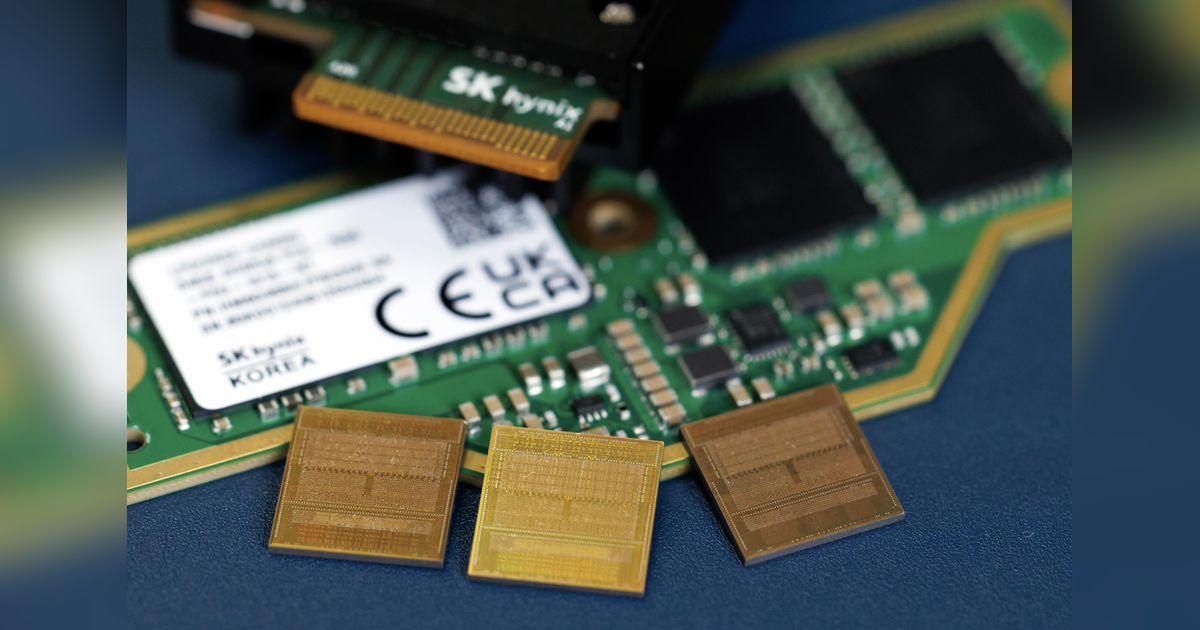
存储芯片,走向失控
半导体行业观察· 2026-02-16 01:58
Core Viewpoint - A global storage crisis is emerging, driven by a significant shortage of memory chips, particularly DRAM, which is impacting profits across various sectors, including consumer electronics and automotive industries [2][3][4]. Group 1: Causes of the Crisis - The shortage of DRAM is primarily attributed to the increasing demand from artificial intelligence data centers, which require high bandwidth memory (HBM) for processing large datasets [3][6]. - Companies like Alphabet Inc. and OpenAI are purchasing millions of memory chips for AI applications, leading to a competitive squeeze on supply for consumer electronics manufacturers [4][5]. - The price of DRAM has surged dramatically, with some prices increasing by 75% from December to January, reminiscent of hyperinflation [4][23]. Group 2: Impact on Companies - Major semiconductor manufacturers, including SK Hynix, Samsung, and Micron, control over 90% of global memory chip production and are experiencing record valuations due to the demand surge [4][5]. - The shift in production focus from traditional DRAM to HBM has resulted in reduced availability of standard memory chips for consumer electronics, affecting companies like Apple and Tesla [2][5]. - The memory crisis is causing significant disruptions in product release schedules, with companies like Sony considering delays for their next-generation gaming consoles [19][23]. Group 3: Market Predictions - TrendForce predicts that DRAM and NAND flash prices will rise by 90% to 95% and 55% to 60%, respectively, in the first quarter alone [4][6]. - The demand for HBM is expected to grow by 70% year-on-year by 2026, indicating a long-term shift in the memory market dynamics [6][22]. - The supply-demand imbalance is projected to persist throughout the year, with potential declines in smartphone shipments and increased prices for low-end devices [23][19].
港股开盘:恒指开盘跌0.25%,恒生科指跌0.19%,阿里巴巴跌1.8%
Jin Rong Jie· 2026-02-16 01:37
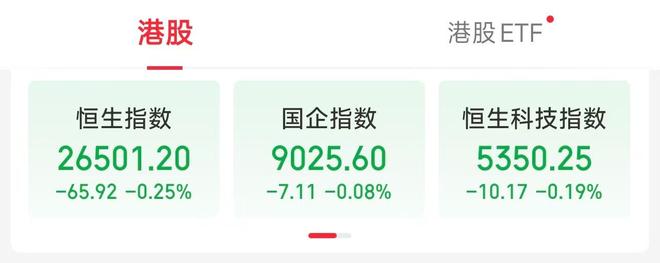
Market Overview - The Hang Seng Index opened down 0.25% at 26,501.2 points, while the Hang Seng Tech Index fell 0.19% to 5,350.25 points, and the National Enterprises Index decreased by 0.08% to 9,025.6 points [1] - Major tech stocks experienced declines, with Alibaba down 1.8%, Tencent down 0.38%, and JD.com down 0.85%. However, Netease saw an increase of 1.83% [3][4] Industry Insights - Huatai Securities reported that the Hong Kong market experienced fluctuations last week, driven by global "reflation" trades and upgrades in AI domestic applications, leading to rebounds in resource products and certain software sectors. However, concerns over the intensifying competition among e-commerce giants suppressed the performance of heavyweight stocks [3] - The market remains volatile, with key factors influencing it being US stock performance, consumer activity during the Spring Festival, and advancements in AI technology [3] Regulatory News - The State Administration for Market Regulation held discussions with major platform companies including Alibaba, Douyin, Baidu, Tencent, JD.com, Meituan, and Taobao, emphasizing compliance with various laws and regulations to enhance promotional practices [5] Company Developments - Qunhe Technology received approval from the China Securities Regulatory Commission for overseas issuance and listing, planning to issue up to approximately 312 million shares in Hong Kong, marking a significant step for the company [6] - China Merchants Energy signed shipbuilding contracts for one ethylene ship and eighteen oil tankers, totaling RMB 7.882 billion [7] - China Shenhua reported coal sales of 33.2 million tons in January, a year-on-year increase of 9.9%, and total electricity sales of 20.96 billion kWh, up 34.4% year-on-year [7] - China Southern Airlines saw a 1.1% decrease in passenger capacity and a 2.86% decline in passenger turnover in January, with a seat load factor of 83.26%, down 1.51 percentage points year-on-year [7] - China Eastern Airlines reported a 3.54% decrease in passenger capacity and a 1.03% decline in passenger turnover, with a seat load factor of 85.01%, up 2.16 percentage points year-on-year [7] - Huizhong Network completed the acquisition of a 25% stake in Jintongling, advancing its "production and sales integration" strategy [7] Performance Metrics - China General Nuclear Power completed 1,647.8 GWh of electricity generation in January, a year-on-year increase of 7.9% [8] - R&F Properties reported a contract sales revenue of approximately RMB 720 million in January, down 8.05% year-on-year [9] - Hopson Development Group recorded a contract sales amount of approximately RMB 591 million in January, a year-on-year increase of 24.95% [10] - Kaisa Group reported contract sales of RMB 325 million in January, down 35.3% year-on-year [11] - Jianye Real Estate reported contract sales of RMB 398 million in January, a year-on-year decrease of 31.1% [12] - Shanghai Fudan projected total revenue of approximately RMB 3.982 billion for 2025, a year-on-year increase of 10.92%, but a net profit decrease of 59.42% [12] - Ruian Real Estate issued a profit warning, expecting a net loss of between RMB 1.7 billion and 1.8 billion for the 2025 fiscal year [12]



刘胜院士专访 深度解读:玻璃基板与先进封装
是说芯语· 2026-02-16 01:02
Core Viewpoint - The article discusses the urgent need for innovative cooling technologies in the face of increasing power demands from AI and HPC chips, highlighting a paradigm shift from external cooling methods to intrinsic solutions that integrate with chip materials and structures [1][11]. Group 1: Breakthroughs in Cooling Technologies - The article identifies three disruptive breakthroughs in cooling technologies: material-level innovations, packaging architecture competition, and structural integration [2]. - The first breakthrough involves the use of diamond and SiC materials to overcome the thermal resistance limitations of silicon, with diamond being a key material due to its superior thermal conductivity [3][4]. - The second breakthrough focuses on the competition between SiC interposers and glass substrates for packaging architecture, with SiC offering significantly better thermal efficiency [8][9]. - The third breakthrough is the concept of embedded microfluidics, where cooling fluids are integrated within the chip structure to manage extreme heat loads effectively [10]. Group 2: Future of Packaging Materials - For large-scale production of structural substrates by 2028, glass substrates are expected to dominate, while diamond will play a crucial role in addressing AI computing bottlenecks [12][16]. - Glass substrates are favored for their high interconnect density capabilities, which are essential as AI chips evolve [14][15]. - Diamond is positioned as a critical component for thermal management in high-performance AI chips, expected to be integrated into packaging solutions alongside glass substrates [16][17]. Group 3: Addressing Thermal Management Challenges - The article outlines three key strategies for improving thermal management in glass substrates: vertical thermal vias, lateral heat diffusion enhancements, and integrated microfluidic cooling systems [19][20][21]. - Vertical thermal vias involve creating high-density copper pillar arrays to facilitate heat dissipation [19]. - Lateral heat diffusion can be enhanced by thickening metal layers on the substrate to improve thermal conductivity [20]. - Integrated microfluidics leverage the chemical properties of glass to create internal cooling channels, significantly improving heat management [21]. Group 4: Multi-Physics Co-Design in Chip Manufacturing - The article emphasizes the importance of multi-physics co-design in semiconductor manufacturing, integrating electrical, thermal, mechanical, and magnetic fields to optimize performance and reliability [22][29]. - The approach advocates for eliminating interface issues through hybrid bonding techniques, which enhance electrical, thermal, and mechanical properties [23][26]. - Material selection is evolving from traditional methods to computational approaches that balance multiple physical fields, ensuring optimal performance under high thermal loads [28][29].