PDD(PDD)

Search documents
金十图示:2025年08月01日(周五)中国科技互联网公司市值排名TOP 50一览




news flash· 2025-08-01 02:55
Core Insights - The article presents the market capitalization rankings of the top 50 Chinese technology and internet companies as of August 1, 2025, highlighting significant shifts in rankings and valuations [1]. Group 1: Market Capitalization Rankings - TSMC leads the list with a market capitalization of $125.32 billion [3]. - Tencent Holdings ranks second with a market capitalization of $64.22 billion [3]. - Alibaba has moved up to the third position with a market capitalization of $28.77 billion, showing a notable increase from its previous rank of 12 [3]. Group 2: Notable Companies and Changes - Xiaomi Group is ranked fourth with a market capitalization of $17.57 billion [3]. - Pinduoduo follows closely in fifth place with a market capitalization of $16.11 billion [3]. - Meituan and NetEase are ranked sixth and seventh, with market capitalizations of $9.46 billion and $8.25 billion, respectively [3][4]. Group 3: Additional Rankings - Semiconductor Manufacturing International Corporation (SMIC) is in eighth place with a market capitalization of $5.23 billion [4]. - JD.com is ranked tenth with a market capitalization of $4.54 billion [4]. - Kuaishou and Tencent Music are ranked 11th and 12th, with market capitalizations of $4.17 billion and $3.25 billion, respectively [4]. Group 4: Lower Rankings - Companies ranked from 25 to 50 include Kingdee International at $0.83 billion and Yuyuan at $0.40 billion, indicating a diverse range of valuations among the lower-ranked firms [5][6].


美国宣布对多国“对等关税”税率 外交部:近期谨慎前往日本旅游 缅甸宣布组建新联邦政府
Di Yi Cai Jing· 2025-08-01 01:31
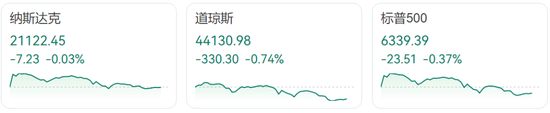
Market Overview - US stock markets experienced a collective decline on July 31, with the Dow Jones falling by 330.30 points (0.74%) to close at 44,130.98 points, the S&P 500 down by 23.51 points (0.37%) to 6,339.39 points, and the Nasdaq decreasing by 7.23 points (0.03%) to 21,122.45 points [2] - In July, the S&P 500 rose by 2.17%, the Nasdaq increased by 3.70%, and the Dow Jones saw a slight increase of 0.08% [2] - The majority of the 11 sectors in the S&P 500 closed lower, with the healthcare sector leading the decline at 2.9% [2] Company Performance - Microsoft shares rose by 3.9% after reporting Q4 revenue of $76.44 billion, exceeding market expectations of $73.89 billion, with Azure business growth reaching 39% [3] - Meta's stock surged by 11.2% as the company projected Q3 revenue between $47.5 billion and $50.5 billion, significantly above analyst estimates [3] - Apple reported better-than-expected performance in its Q3 earnings, leading to a 3.2% increase in its stock price in after-hours trading [3] - Amazon's Q2 revenue was $167.7 billion, a 13% year-over-year increase, surpassing expectations of $162.09 billion, although its stock fell by approximately 6.8% in after-hours trading [3] Economic Indicators - The US core Personal Consumption Expenditures (PCE) price index rose by 2.8% year-over-year in June, above the expected 2.7%, while overall PCE increased to 2.6% for the second consecutive month [3] - The labor cost index increased by 0.9%, and the number of initial jobless claims was reported at 218,000, slightly below expectations [3] Trade and Tariffs - President Trump signed an executive order establishing "reciprocal tariffs" ranging from 10% to 41% on multiple countries, with a specific increase of tariffs on Canada from 25% to 35% effective August 1 [5] - The US has suspended the tax exemption policy for small packages, affecting many parcels from China [6] Industry Developments - The manufacturing PMI for July fell to 49.3, a decrease of 0.4 percentage points from the previous month, indicating a contraction in manufacturing activity [10] - The non-manufacturing business activity index also declined to 50.1, down 0.4 percentage points [10]




中国电商出海日本,策略都不灵了?
Hu Xiu· 2025-08-01 01:08
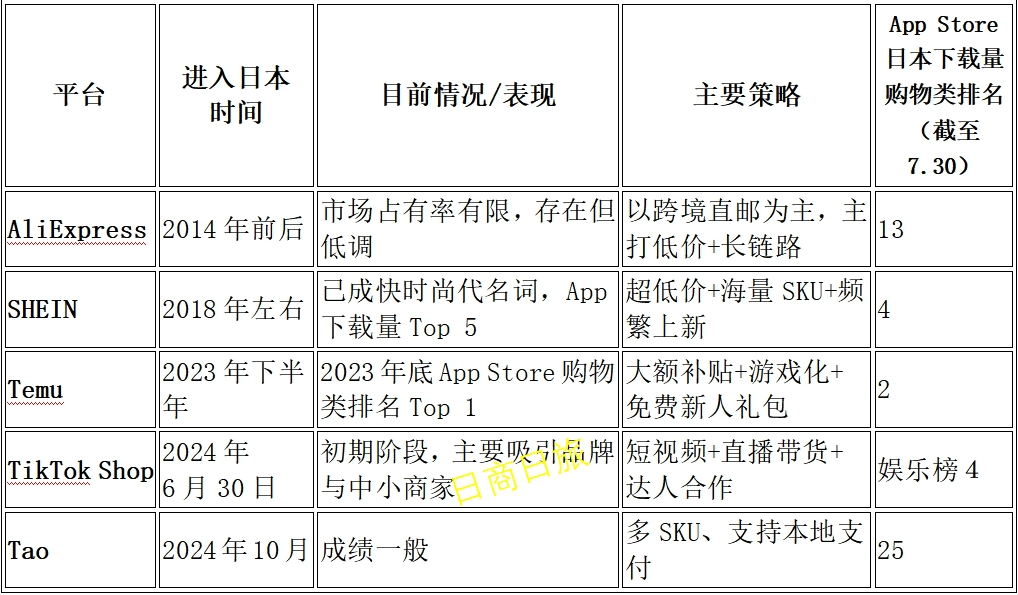
Core Viewpoint - The article discusses the challenges and strategies of Chinese e-commerce companies, particularly Temu and SHEIN, as they expand into the Japanese market, highlighting the differences in consumer behavior and marketing strategies between China and Japan [4][72]. Group 1: Market Conditions - Japan has favorable conditions for e-commerce, including strong payment capabilities, good logistics infrastructure, high internet penetration, and stable demand for clothing, beauty, and daily goods [5][4]. - Despite the strong offline retail presence, there is a solid foundation for e-commerce, with many older consumers having experience with online shopping [5]. Group 2: Company Strategies - Temu, launched in 2022, has rapidly gained traction in Japan, achieving 15.5 million monthly active users by July 2023, largely due to aggressive advertising spending of approximately $2 billion by its parent company, Pinduoduo [12][4]. - SHEIN entered the Japanese market earlier and has become a well-known fast fashion brand, ranking in the top 5 for shopping app downloads on Google Play [13][4]. - Temu's strategy in Japan focuses on low-price subsidies and gamification elements, such as time-limited offers and lotteries, diverging from Pinduoduo's original social group-buying model [24][25]. Group 3: Consumer Behavior - Japanese consumers exhibit a preference for stability and safety in shopping, often conducting extensive research before making purchases, contrasting with the impulsive buying behavior seen in Chinese consumers [57][52]. - The Japanese market is characterized by a high loyalty to brands and a preference for PC-based shopping, with over 50% of e-commerce transactions occurring on desktop computers [53][56]. Group 4: Marketing Techniques - Temu and SHEIN utilize gamification to engage users, employing tactics like limited-time promotions and interactive elements to enhance user experience [30][36]. - Japanese e-commerce typically does not incorporate gamification or urgency in marketing, focusing instead on loyalty programs and straightforward pricing strategies [32][31]. Group 5: Competitive Landscape - The competitive landscape in Japan is challenging for foreign e-commerce players, as local companies have established strong brand loyalty and consumer trust [72][62]. - Temu and SHEIN must navigate cultural differences and consumer expectations, adapting their strategies to align with Japanese shopping habits and preferences [72][74].

世界500强出炉:民企京东排名最高、4成企业大裁员、中美企业利润差57%
吴晓波频道· 2025-08-01 00:41
Core Insights - The 2025 Fortune Global 500 list reflects the power dynamics of global enterprises, showcasing the economic fluctuations, industry transformations, and shifts in national strengths [1]. Group 1: Overall Performance - The total revenue of the companies on the list reached approximately $41.7 trillion, accounting for over one-third of the global GDP, with a year-on-year growth of 1.8% [2]. - Total profit for these companies was about $2.98 trillion, showing a slight increase of 0.4%, marking the second-highest profit in history [2]. - The average revenue of the 124 Chinese mainland companies listed was approximately $10.21 trillion, representing 25.7% of the total revenue of the Fortune Global 500 [11]. Group 2: Chinese Companies - Among the 124 Chinese mainland companies, 49 saw their rankings improve, while 68 experienced declines, with state-owned enterprises remaining the main contributors to the list [6]. - Five major Chinese private internet companies improved their rankings, with JD.com leading as the highest-ranked private enterprise from mainland China at $161.06 billion in revenue, up three places to rank 44 [7]. - The number of Chinese companies on the list is the lowest in six years, with 130 companies total, including six from Taiwan, a decrease of three from the previous year [9]. Group 3: Profitability and Employment - The average profit of the 124 Chinese companies was $4.2 billion, which is significantly lower than the average profit of $9.7 billion for U.S. companies [13]. - Approximately 40% of the companies on the list have undergone significant layoffs, with a total reduction of 360,000 employees to 70.14 million [32]. - The trend of layoffs is increasing, with 40% of companies reporting layoffs in 2024, up from 35% in 2023 [36]. Group 4: Industry Insights - The majority of Chinese companies on the list are concentrated in traditional sectors, particularly heavy asset industries, which tend to have lower profit margins due to high fixed costs [20]. - The automotive sector in China is facing challenges, with ten companies listed but showing a decline in profitability, with total profits down 20.4% to $14.7 billion [24]. - In contrast, global automotive companies have an average sales return of 4.3%, nearly double that of Chinese automotive firms [26]. Group 5: Notable Companies - Saudi Aramco remains the most profitable company globally, despite a 13% decline in profits, with $105 billion in profit [39]. - Nvidia has seen a remarkable profit increase of 145%, entering the top ten for the first time, with the highest profit margin among the listed companies at over 55% [43]. - Pinduoduo leads Chinese companies in return on equity (ROE) at 36%, ranking 25th overall [47].



世界500强出炉!沃尔玛蝉联第一,中国互联网巨头排名飙升
天天基金网· 2025-07-31 12:07
Core Insights - The 2025 Fortune Global 500 list reveals that the total revenue of the listed companies for 2024 is approximately $41.7 trillion, representing a year-on-year growth of about 1.8%, exceeding one-third of the global GDP [1] - The total net profit of these companies has increased by approximately 0.4% year-on-year, amounting to around $2.98 trillion [1] - Walmart continues to lead as the largest company globally with revenues of approximately $681 billion, marking its twelfth consecutive year at the top [1] Company Rankings - JD.com ranks 44th, up 3 places from last year, maintaining its position as the highest-ranked private company from mainland China [2] - Alibaba's ranking improved by 7 places to 63rd, while Tencent rose 25 places to 116th [2] - Pinduoduo saw the most significant increase, climbing 176 places to 266th, and Meituan moved up 57 places to 327th [2] Profitability Insights - Saudi Aramco remains the most profitable company globally with a profit of approximately $105 billion, despite a year-on-year decline of about 13% [2] - Alphabet, the parent company of Google, ranks second in profitability with a net profit of $100.1 billion, surpassing Apple, which ranks third with $93.7 billion [2] - Berkshire Hathaway and Microsoft follow, with profits of over $88.9 billion and $88.1 billion, respectively [2] - Nvidia's profit surged by approximately 145% to around $72.9 billion, marking its first entry into the top ten profitability rankings [2] - The Industrial and Commercial Bank of China ranks as the highest Chinese company in net profit, exceeding $50.8 billion and placing 10th globally [2]



一顶帽子的“西部突围”,拼多多让商家在“头等大事”上挖出金矿
21世纪经济报道· 2025-07-31 07:57
Core Viewpoint - The article highlights the success of small businesses in niche markets, particularly in the context of e-commerce expansion into western regions of China, driven by platforms like Pinduoduo that provide logistical support and financial incentives [1][9][16]. Group 1: Market Opportunities - The "Big Head Planet" brand achieved an annual sales revenue of 140 million yuan by catering to a previously overlooked demand for larger-sized hats, which was initially rejected by 200 suppliers [1][4]. - The sales of fan hats by Zheng Mingliang, priced at 66 yuan, primarily came from rural areas and construction sites, indicating a shift in consumer behavior towards multifunctional products [1][6]. - Orders from western regions have increased by 30%-40% over the past year, reflecting the effectiveness of Pinduoduo's "e-commerce westward" policy [1][9]. Group 2: Platform Support - Pinduoduo's "100 billion support plan" aims to invest over 100 billion yuan in resources to enhance the e-commerce ecosystem, particularly benefiting small businesses in western regions [9][16]. - The introduction of a logistics cost-sharing model for deliveries to remote areas has significantly reduced shipping costs, allowing small businesses to expand their market reach [8][9]. - The platform's initiatives have led to a substantial increase in orders from western provinces, with some areas experiencing sales growth that surpasses more populous eastern provinces [9][10]. Group 3: Business Strategies - Zheng Peilei's brand transitioned from struggling to sell hats to facing production challenges due to high demand, achieving a monthly sales growth rate that exceeded expectations [5][12]. - The article emphasizes the importance of product differentiation and meeting specific consumer needs rather than competing solely on price, as demonstrated by the success of both Zheng Peilei and Zheng Mingliang [12][16]. - The shift towards quality and customer feedback-driven product development has allowed businesses to maintain healthy profit margins while addressing niche market demands [13][14].

金十图示:2025年07月31日(周四)中国科技互联网公司市值排名TOP 50一览


news flash· 2025-07-31 02:55
| 36 | | 阿里巴巴 | 2799.92 | | | --- | --- | --- | --- | --- | | 4 | | 小米集团-W | 1763.96 | | | 5 | | 拼多多 | 1603.06 | | | | 網易 | 网易 | 825.18 | 11 | | 7 | | 东方财富 | 520.85 | II | | 8 | | 中芯国际 | 516.85 | | | --- | --- | --- | --- | --- | | 9 | | 京东 | 457.68 | | | 10 | | 快手-W | 409.34 | | | II | | 腾讯音乐 | 326.82 | | | 12 | Bal Car | 目度 | 295.44 | | | 13 | | 理想汽车 | 283.13 | | | 14 | | 贝壳 | 221.36 | | | 15 | | 同花顺 | 218.78 | | | 16 | | 小鹏汽车 | 171.87 | | | 17 | | 中通快递 | 159.79 | | | 18 | | 科大讯飞 | 157.13 | | | 19 | | 蔚来 ...

一顶帽子的“西部突围”,拼多多让商家在“头等大事”上挖出金矿
2 1 Shi Ji Jing Ji Bao Dao· 2025-07-31 01:11
Core Insights - The article highlights the success of small businesses in Yiwu, particularly in niche markets, driven by the "e-commerce westward" policy initiated by platforms like Pinduoduo [1][5][11] - The demand for specialized products, such as oversized hats and multifunctional sun hats, has led to significant sales growth for these businesses, with some reporting annual revenues of 140 million yuan [1][7][11] Business Strategies - Zheng Leilei identified a gap in the market for larger-sized hats, leading to the creation of the "Big Head Planet" brand, which achieved rapid sales growth after overcoming initial skepticism from suppliers [2][3] - Zheng Mingliang pivoted to selling multifunctional sun hats with built-in fans, targeting laborers in remote areas, which resulted in stable daily sales of 400-500 units [3][5] Market Dynamics - The logistics challenges faced by small businesses in western regions were alleviated by Pinduoduo's initiative to cover logistics costs for deliveries to remote areas, significantly increasing order volumes [4][5][6] - The overall order volume from western regions has seen a growth of approximately 30%, with some businesses reporting that sales from these areas now account for a significant portion of their total sales [5][6] Platform Impact - Pinduoduo's support through logistics subsidies and promotional campaigns has enabled small businesses to focus on quality and innovation rather than competing solely on price [8][10] - The "Big Head Planet" brand has benefited from Pinduoduo's traffic and promotional activities, leading to a sales increase of 80%-100% year-on-year after joining the platform [7][8] Supply Chain Transformation - Suppliers have adapted to the changing demands of e-commerce by improving product quality and reducing production times, moving away from a volume-based business model [9][10] - The collaboration between small businesses and suppliers has fostered a more responsive supply chain, allowing for quick adjustments to market demands [10][11]
美股三大指数收盘涨跌不一,中概指数跌1.82%
Ge Long Hui A P P· 2025-07-30 22:24
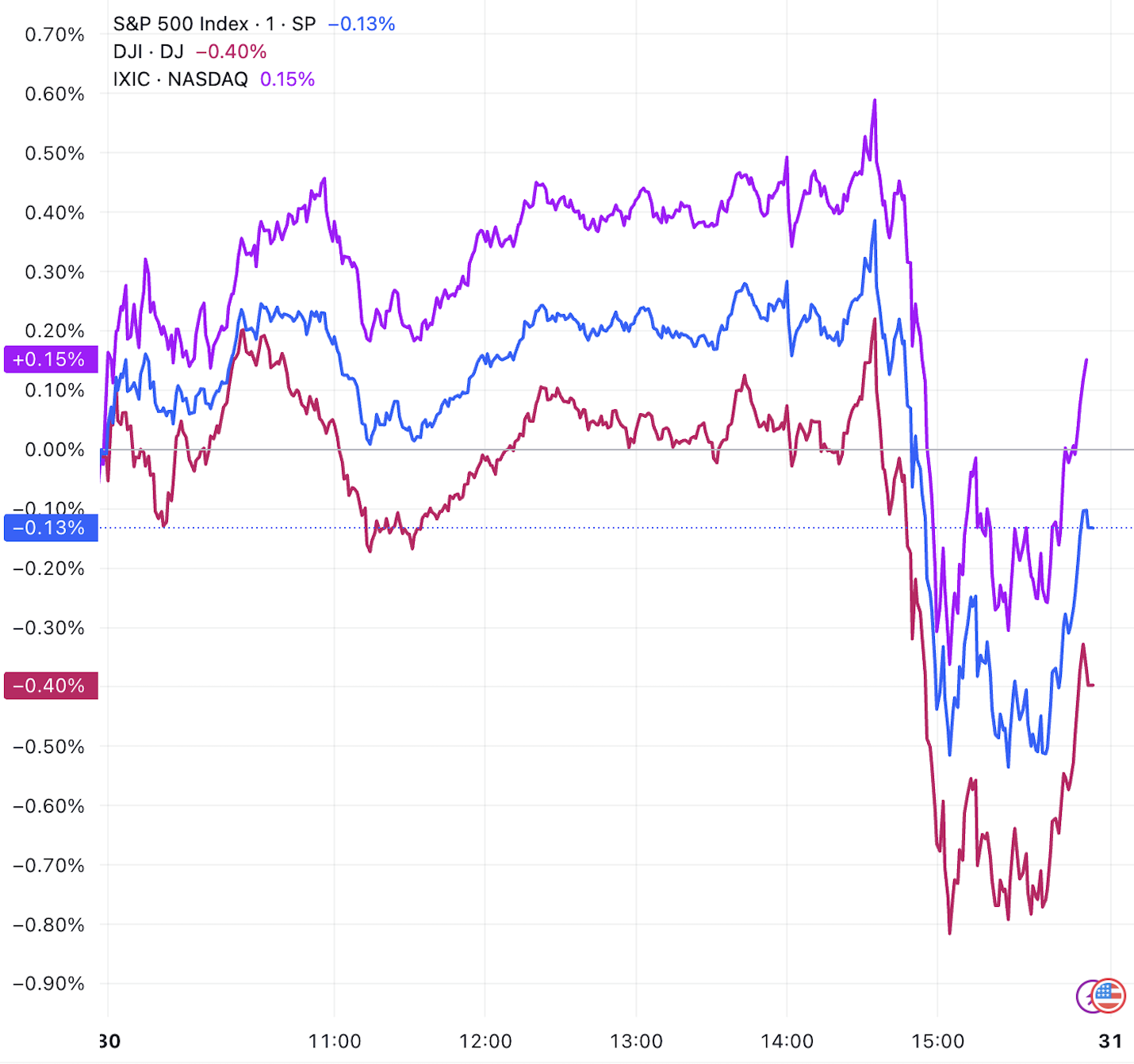
Group 1 - The Federal Reserve has maintained interest rates unchanged for the fifth consecutive time, impacting market performance [1] - Major U.S. stock indices showed mixed results, with the Dow Jones down 0.38%, the Nasdaq up 0.15%, and the S&P 500 down 0.12% [1] - Popular technology stocks experienced varied movements, with Nvidia rising over 2% and Apple declining more than 1% [1] Group 2 - Precious metals and copper-related stocks faced significant declines, with Freeport-McMoRan Copper & Gold down over 9% and Southern Copper down over 6% [1] - The Nasdaq China Golden Dragon Index fell by 1.82%, with most popular Chinese concept stocks declining, including NIO and New Oriental down over 4% [1] - Other notable declines included Li Auto down over 3%, Pinduoduo and Xpeng down over 2%, and Alibaba and JD down over 1% [1]


鲍威尔讲话打压降息预期,美股三大指数涨跌不一,热门中概股普跌
Feng Huang Wang· 2025-07-30 22:13
Market Overview - The Dow Jones index fell by 0.38% to 44,461.28 points, the S&P 500 index decreased by 0.12% to 6,362.90 points, while the Nasdaq index rose by 0.15% to 21,129.67 points [2] - The Federal Reserve maintained the federal funds rate target range at 4.25% to 4.50%, consistent with market expectations, marking five consecutive meetings without a rate change since December [2] - Fed Chair Jerome Powell indicated that no decision has been made regarding a policy adjustment in September, emphasizing the need to stabilize long-term inflation expectations [2][3] Interest Rate Expectations - Following Powell's remarks, market expectations for a rate cut in September diminished, with the probability dropping from approximately 65% to just below 50% [4] - Jamie Cox from Harris Financial Group noted that Powell is unlikely to yield to political pressure for rate cuts, prompting the market to reassess future federal funds rate levels [5] Company Performance - Microsoft reported a fourth-quarter net profit of $27.2 billion, a 24% year-over-year increase, with revenues of $76.44 billion, up 18% from the previous year [7] - Meta Platforms achieved a second-quarter net profit of $18.337 billion, reflecting a 36% year-over-year growth, with revenues of $47.52 billion, up 22% [9] - Qualcomm's third-quarter adjusted net profit reached $2.67 billion, a 25% increase year-over-year, with revenues of $10.37 billion, up 10% [11] Stock Movements - Microsoft shares jumped over 7% in after-hours trading following its earnings report [8] - Meta shares surged over 10% in after-hours trading after announcing strong quarterly results [10] - Qualcomm shares fell over 5% in after-hours trading despite reporting positive earnings [12] Industry Developments - Baidu is testing an AI application entry point on its search homepage, allowing users to access various AI applications directly [13]