PDD(PDD)

Search documents
美联储突发!重大人事变化
Sou Hu Cai Jing· 2025-08-02 00:40
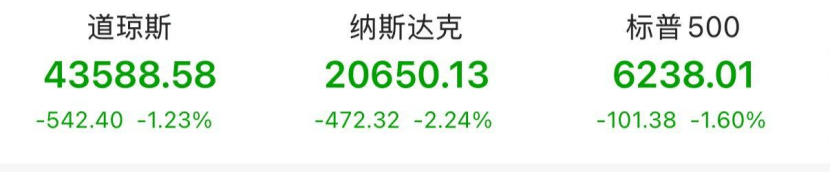
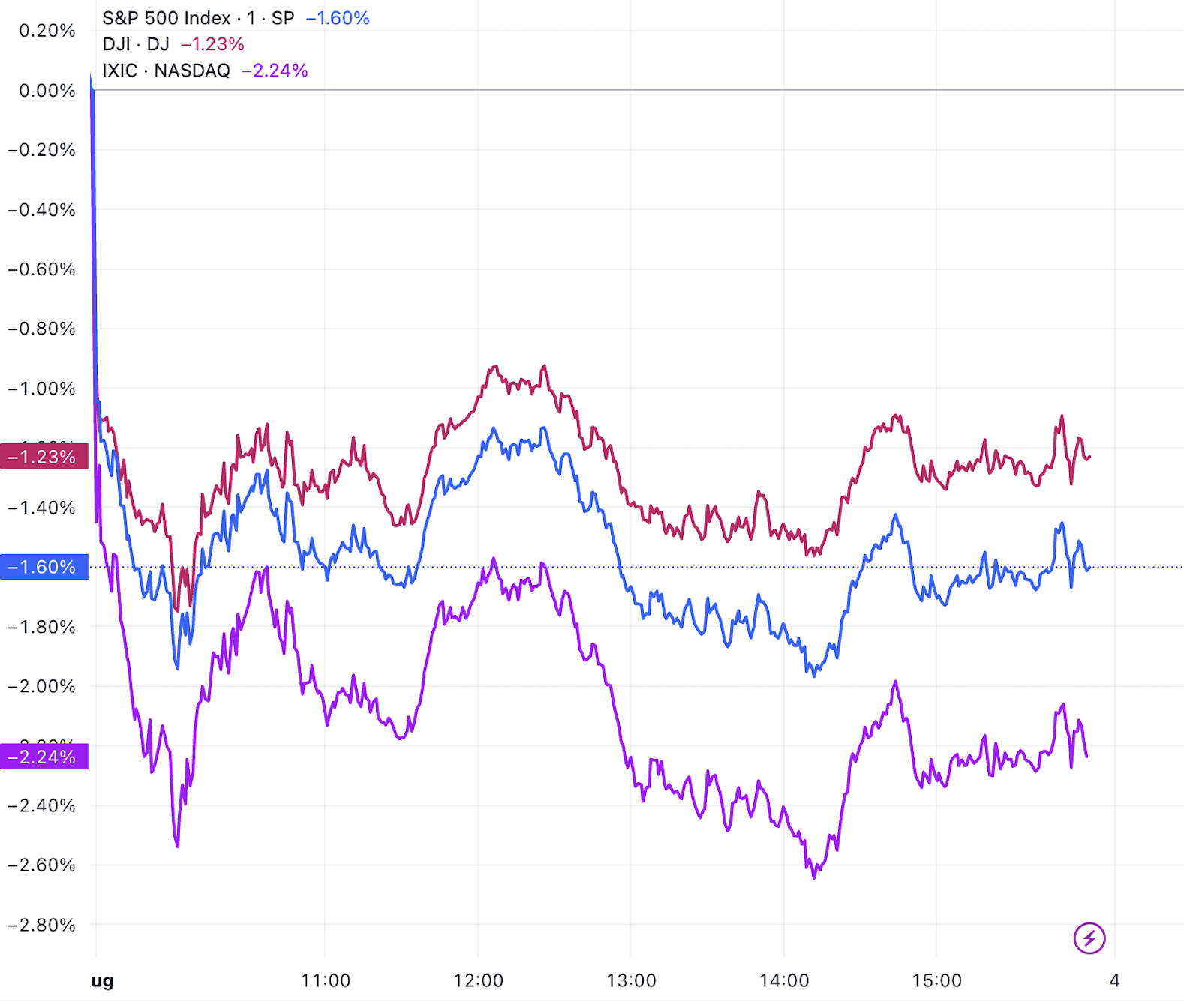
Market Performance - The three major U.S. stock indices closed lower, with the Dow Jones down 1.23% at 43,588.58 points, the S&P 500 down 1.60% at 6,238.01 points, and the Nasdaq down 2.24% at 20,650.13 points, marking the largest decline since April [3][4] - The U.S. stock market lost over $1 trillion in market capitalization due to investor concerns about economic prospects [3] Employment Data - The U.S. non-farm payrolls for July showed an increase of only 73,000 jobs, significantly below expectations, with the unemployment rate rising slightly to 4.2% [4][6] - Previous months' non-farm employment data were revised down sharply, with May's figures adjusted from 144,000 to just 19,000, and June's from 147,000 to 14,000 [4][6] Federal Reserve and Interest Rate Expectations - Following the weak employment data, the probability of a 25 basis point rate cut by the Federal Reserve in September surged from less than 40% to nearly 90% [6] - The bond market saw a decline in U.S. Treasury yields across the board, with the 2-year yield down 6.76%, the 5-year down 5.13%, and the 10-year down 3.23% [5] Political Developments - President Trump called for the dismissal of the Bureau of Labor Statistics director, citing concerns over inflated employment data ahead of the 2024 elections [8][11] - Federal Reserve Governor Adriana Kugler announced her resignation effective August 8, which allows Trump to appoint a new member to the Federal Reserve Board earlier than expected [11]




美股收盘:非农爆冷叠加关税冲击,三大指数均跌超1%
Feng Huang Wang· 2025-08-01 23:02
Market Overview - On the first trading day of August, U.S. stock markets experienced significant declines, with all three major indices dropping over 1% as investors assessed signs of economic weakness and President Trump's revised tariff policies [1][2] - The Dow Jones Industrial Average fell by 1.23% to 43,588.58 points, the S&P 500 dropped 1.60% to 6,238.01 points, and the Nasdaq Composite decreased by 2.24% to 20,650.13 points [2] Economic Data - The U.S. non-farm payrolls for July showed an increase of only 73,000 jobs, significantly below economists' expectations of 100,000 [5] - Previous months' employment data were also revised downwards, with June's job additions adjusted from 147,000 to 14,000 and May's from 125,000 to 19,000, indicating a prolonged weakness in the labor market [5] Banking Sector - Concerns over economic slowdown impacting loan growth led to a sharp decline in bank stocks, with JPMorgan Chase down over 2%, and Bank of America and Wells Fargo each falling more than 3% [6] - The weak employment data heightened expectations for an interest rate cut by the Federal Reserve, with traders estimating a roughly 86% probability of a rate cut in September [6] Technology Sector - Major technology stocks faced significant sell-offs, with Amazon's stock plummeting over 8% due to weak guidance for the current quarter [7] - Other notable declines included Nvidia down 2.33%, Microsoft down 1.76%, Apple down 2.50%, and Meta down 3.03% [7] Company News - OpenAI has reportedly raised $8.3 billion, achieving a valuation of $300 billion, with annual recurring revenue increasing from $10 billion in June to $13 billion, and expected to surpass $20 billion by year-end [8] - Roblox reported second-quarter revenue of $1.1 billion, a 21% year-over-year increase, with a goal to capture 10% of the $180 billion global gaming content market [10] - Nintendo's second-quarter revenue surged by 132.1% to ¥572.3 billion (approximately $3.8 billion), driven by strong sales of the new Switch 2 console [11] - Chevron reported second-quarter revenue of $44.82 billion, exceeding market expectations of $43.73 billion, with adjusted earnings per share of $1.77 [12]


美股三大指数集体收跌,亚马逊跌超8%
Ge Long Hui A P P· 2025-08-01 22:14
Core Points - The U.S. stock market experienced a collective decline, with the Dow Jones falling by 1.23% and a weekly drop of 2.92% [1] - The Nasdaq Composite decreased by 2.24% this week, while the S&P 500 index fell by 1.6%, accumulating a weekly decline of 2.36% [1] - Major tech stocks saw significant losses, with Amazon dropping over 8%, Meta down more than 3%, and Apple and Nvidia both declining over 2% [1] Sector Performance - The cryptocurrency and computer hardware sectors faced the largest declines, with Coinbase falling over 16% and Dell Technologies down over 4% [1] - Weight loss drugs and precious metals sectors showed gains, with gold resources increasing nearly 17% and Eli Lilly rising over 3% [1] Chinese Stocks - The Nasdaq China Golden Dragon Index fell by 1.82%, with popular Chinese stocks also declining, including Bilibili down over 4% and Li Auto down over 3% [1] - Pinduoduo, Alibaba, and Miniso all dropped nearly 3%, while NIO saw an increase of over 2% [1]


纳斯达克中国金龙指数收跌1.82%
Mei Ri Jing Ji Xin Wen· 2025-08-01 22:09
Group 1 - The Nasdaq China Golden Dragon Index fell by 1.82% on August 2, indicating a decline in the performance of popular Chinese concept stocks [1] - Bilibili experienced a drop of over 4%, while Li Auto fell by more than 3% [1] - Pinduoduo, Alibaba, and Miniso each saw declines of nearly 3%, and Baidu and JD.com dropped by over 1% [1] Group 2 - NIO recorded an increase of over 2%, contrasting with the overall downward trend in the market [1]

热门中概股美股盘前普跌,理想汽车跌超3%
Mei Ri Jing Ji Xin Wen· 2025-08-01 13:26
Group 1 - The core viewpoint is that popular Chinese concept stocks experienced a decline in pre-market trading on August 1, with significant drops observed across various companies [1] Group 2 - Bilibili, Tencent Music, and Li Auto each fell over 3% [1] - Alibaba dropped over 2%, while Pinduoduo, Baidu, iQIYI, NIO, and Xpeng Motors all saw declines exceeding 1% [1] - JD.com experienced a smaller decline of 0.79% [1]

被200家档口拒绝的“怪帽子”,在拼多多火遍西部
Mei Ri Jing Ji Xin Wen· 2025-08-01 05:57
Core Insights - The article highlights the emergence of niche markets in the hat industry, particularly focusing on customized hats for larger head sizes and innovative products like fan-equipped sun hats, driven by consumer demand and market gaps [1][3][5] - Pinduoduo's initiatives to support e-commerce expansion into western regions of China are emphasized, showcasing how logistics improvements and financial backing are enabling small businesses to thrive [6][9] Group 1: Market Opportunities - Zheng Leilei identified a market gap for larger-sized baseball caps, leading to the launch of his brand "Big Head Planet," which quickly gained traction with significant sales growth [1][3] - Zheng Mingliang's fan-equipped sun hats cater to outdoor workers, demonstrating the potential for specialized products to meet specific consumer needs [3][7] Group 2: E-commerce and Logistics - Pinduoduo's "thousand billion support" plan is facilitating the growth of e-commerce in western China, reducing logistics costs and enabling businesses to reach underserved markets [6][9] - The platform's logistics innovations, such as eliminating secondary shipping fees for remote areas, have significantly lowered costs for sellers and increased order volumes from these regions [5][6] Group 3: Business Growth and Strategy - Both entrepreneurs have experienced rapid growth through Pinduoduo, with Zheng Leilei's sales reaching over 100 million yuan and a significant portion coming from the platform [5][7] - The article illustrates a shift in business strategy from low-margin sales to brand building and innovation, highlighting the importance of understanding consumer needs and leveraging platform support [8][9]
在拼多多“电商西进”中掘金蓝海市场,腰部商家掀“头脑风暴”
Sou Hu Cai Jing· 2025-08-01 05:45
Core Insights - The article highlights the success stories of two entrepreneurs, Zheng Leilei and Zheng Mingliang, who have carved out niche markets in the hat industry by focusing on specific consumer needs and leveraging e-commerce platforms like Pinduoduo [1][14]. Group 1: Company Overview - Zheng Leilei, the founder of the hat brand "Big Head Planet," achieved over 100 million in sales last year and opened multiple stores on Pinduoduo in 2023 [2][11]. - Zheng Mingliang, also in the hat industry, focused on a niche market with fan sun hats, experiencing a 30% increase in sales in western regions [1][14]. - Both entrepreneurs emphasize the importance of product differentiation and quality control in their respective businesses [8][9]. Group 2: Market Strategy - Zheng Leilei identified a gap in the market for large-sized hats (61-62cm) after noticing consumer complaints about standard sizes [2][3]. - The "Big Head Planet" brand became synonymous with large-sized hats, achieving daily sales of 5,000 units on Pinduoduo [3][8]. - Zheng Mingliang's fan sun hats cater to outdoor workers, addressing their specific needs for sun protection and cooling [6][9]. Group 3: E-commerce Impact - Pinduoduo's initiatives, such as the "Billion Subsidy" program, have significantly boosted sales for both entrepreneurs, with Zheng Leilei's store contributing 40% to overall revenue [11][13]. - The platform's logistics support has reduced shipping costs, particularly for orders to remote areas, leading to a 40% increase in shipments to these regions [13][14]. - Both entrepreneurs have successfully utilized Pinduoduo's promotional activities to enhance visibility and sales, with Zheng Leilei's sales increasing three to four times during promotional events [11][14].

拒绝均码!拼多多店主把吐槽变成亿元生意,专治"大头尴尬"
Huan Qiu Wang Zi Xun· 2025-08-01 04:41
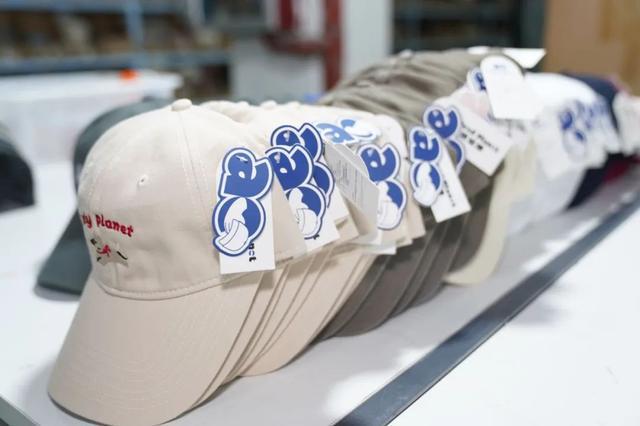
Core Insights - The article highlights the success of a young entrepreneur, Zheng Leilei, who identified an overlooked market for oversized hats, leading to the creation of the "Big Head Planet" brand, which achieved over 100 million yuan in sales by 2024 [3][10] - The brand's growth was significantly boosted by its presence on the Pinduoduo platform, which contributed nearly 40% of total revenue and experienced an 80% growth rate [10][12] Market Opportunity - Zheng Leilei faced rejection from over 200 factories when seeking to produce hats for head sizes larger than the industry standard of 58 cm, indicating a long-ignored demand in the market [5][6] - The initial product launch in early 2022 saw rapid sales growth, with the first month generating over 200,000 yuan, and subsequent months doubling sales figures [8] Supply Chain and Production - The entrepreneur had to navigate traditional supply chain barriers, including high mold costs and minimum order requirements, before successfully partnering with a factory that recognized the market trend for larger hats [6][8] - The production capacity expanded from one factory to five within a short period, indicating a strong demand for the product [8][9] E-commerce Strategy - The decision to enter Pinduoduo was initially met with skepticism, but the platform's unique features, such as brand store visibility and participation in promotional events, led to significant sales increases [9][10] - The introduction of the "e-commerce westward" policy by Pinduoduo reduced logistics costs for shipments to western regions, further enhancing market access and sales growth [12][13] Product Development - The brand quickly adapted to market needs by developing specialized products, such as a wide-brimmed sun hat designed for high-altitude areas, which saw high sales and customer retention rates [13][15] - The ability to respond to customer feedback and emerging trends has been crucial for maintaining competitive advantage in a growing market [13][16] Competitive Landscape - The emergence of competitors selling similar products has increased market competition, but "Big Head Planet" maintains its unique positioning by focusing on genuine oversized hats rather than modified standard sizes [9][10] - The article also mentions other successful entrepreneurs in the same category, indicating a growing trend of niche markets within the hat industry [15][16]
拼多多的“神助攻”,把大头帽子卖到西部去
Xin Jing Bao· 2025-08-01 04:22
Core Insights - The article highlights the emergence of niche markets within the e-commerce sector, particularly focusing on customized hats for specific consumer needs, such as larger head sizes and functional designs like sun hats with built-in fans [1][3][5] Group 1: Market Trends - The hat industry in Yiwu accounts for over 20% of the national sales volume, with a 7:3 ratio of domestic to foreign trade [3] - The trend of targeting specific consumer needs has led to the creation of products like hats designed for larger head sizes and sun hats with fans, which have gained unexpected popularity among outdoor workers [1][5][10] Group 2: Entrepreneurial Stories - Zheng Leilei identified a gap in the market for hats catering to larger head sizes after noticing consumer complaints about standard sizes [3][4] - Zheng Mingliang, after years in e-commerce, successfully launched a sun hat with a fan, initially targeting tourists but later finding a strong market among laborers [5][6] Group 3: E-commerce Strategies - Both entrepreneurs utilized platforms like Pinduoduo to reach broader markets, benefiting from promotional activities and logistics support that reduced costs for consumers in remote areas [2][9] - Zheng Leilei's sales grew exponentially after launching online, with monthly sales figures doubling within the first few months [7] Group 4: Regional Market Expansion - The "千亿扶持" plan by Pinduoduo has facilitated e-commerce growth in western regions, leading to a threefold increase in orders from these areas compared to the previous year [9][10] - The demand for specialized hats in western provinces has surged, with significant sales growth reported in regions like Inner Mongolia and Gansu [10]
电商出海日本报告:阿里、字节、拼多多在日鏖战有感
创业邦· 2025-08-01 03:24
Core Viewpoint - The article discusses the challenges and strategies of Chinese e-commerce companies, particularly Temu and SHEIN, as they enter the Japanese market, highlighting the differences in consumer behavior and marketing strategies between China and Japan [6][81]. Group 1: Market Conditions - Japan has favorable conditions for e-commerce, including strong payment capabilities, high internet penetration, and a stable demand for fashion and beauty products [9]. - Despite the strong offline retail presence, there is a significant base of online shoppers, including older demographics [9]. Group 2: Company Strategies - Temu, launched in 2022, has rapidly gained traction in Japan with 15.5 million monthly active users by July 2023, largely due to aggressive advertising spending [16]. - SHEIN entered Japan earlier and has also seen success, with projections of over 8.39 million users by 2024, surpassing local competitors [17]. - AliExpress, while an early entrant, has struggled to compete effectively against local giants like Rakuten and Amazon Japan [18]. Group 3: Consumer Behavior - Japanese consumers exhibit cautious purchasing behavior, often conducting extensive research before making a decision, contrasting with the impulsive buying tendencies seen in Chinese consumers [61][62]. - The preference for PC-based shopping in Japan is notable, with over 50% of e-commerce transactions occurring on desktop platforms [62]. Group 4: Marketing Approaches - Chinese e-commerce strategies often include gamification and aggressive discounting, which may not resonate well with Japanese consumers who prefer clear and stable pricing strategies [36][37]. - Japanese e-commerce typically emphasizes loyalty programs and long-term promotional strategies, contrasting with the high-frequency promotional tactics common in China [37]. Group 5: Cultural Considerations - There is a significant cultural gap in social sharing and marketing approaches, with Japanese consumers generally less inclined to share shopping experiences or engage in social commerce [32][33]. - The article suggests that successful entry into the Japanese market requires understanding local consumer preferences and adapting marketing strategies accordingly [80][81].