Starbucks(SBUX)

Search documents
星巴克降价的试探
Jing Ji Guan Cha Wang· 2025-06-14 15:20
Core Insights - Starbucks China has announced a price reduction for its main products for the first time in 25 years, with an average decrease of 5 yuan per cup for 10 products starting June 10 [2] - The new CEO, Brian Niccol, emphasized the need to return to the essence of coffee shops and rethink pricing strategies [2] - The decision to lower prices comes after nearly a year of contemplation and is seen as a response to the competitive non-coffee market in China [2][3] Pricing Strategy - The price reduction aims to test the conversion rate of price-sensitive consumers, particularly during afternoon tea hours and in key urban clusters [3] - Feedback from core customers, especially members who contribute 74% of sales, is crucial to understanding the impact of price changes on customer retention [3] - The sustainability of repurchase rates post-price reduction will be a key indicator of Starbucks' pricing power and brand value [3] Market Context - Starbucks has faced stagnant revenue growth in China, with a 1.4% decline in fiscal year 2024 and a 23.8% drop in net profit [3] - The company has struggled against local coffee and tea brands in a highly competitive low-price market, indicating that relying solely on brand premium is no longer effective [3][6] - The timing of the price reduction may also relate to previous rumors about potential equity sales or seeking local buyers for its Chinese operations [4] Business Expansion Plans - As of March 2025, Starbucks operates 7,758 stores in China, with plans to expand from 8,000 to 20,000 stores [5][4] - The company is exploring minority stake sales to potential investors, indicating a strategic shift in its approach to the Chinese market [4] Strategic Challenges - Starbucks faces operational bottlenecks and a changing consumer landscape, with local brands gaining traction and foreign brands losing appeal [6] - The company must address fundamental questions about maintaining market leadership amid rising local competition and evolving consumer preferences [6]



星巴克首次直接降价,并非放弃“咖位”
财富FORTUNE· 2025-06-13 13:19
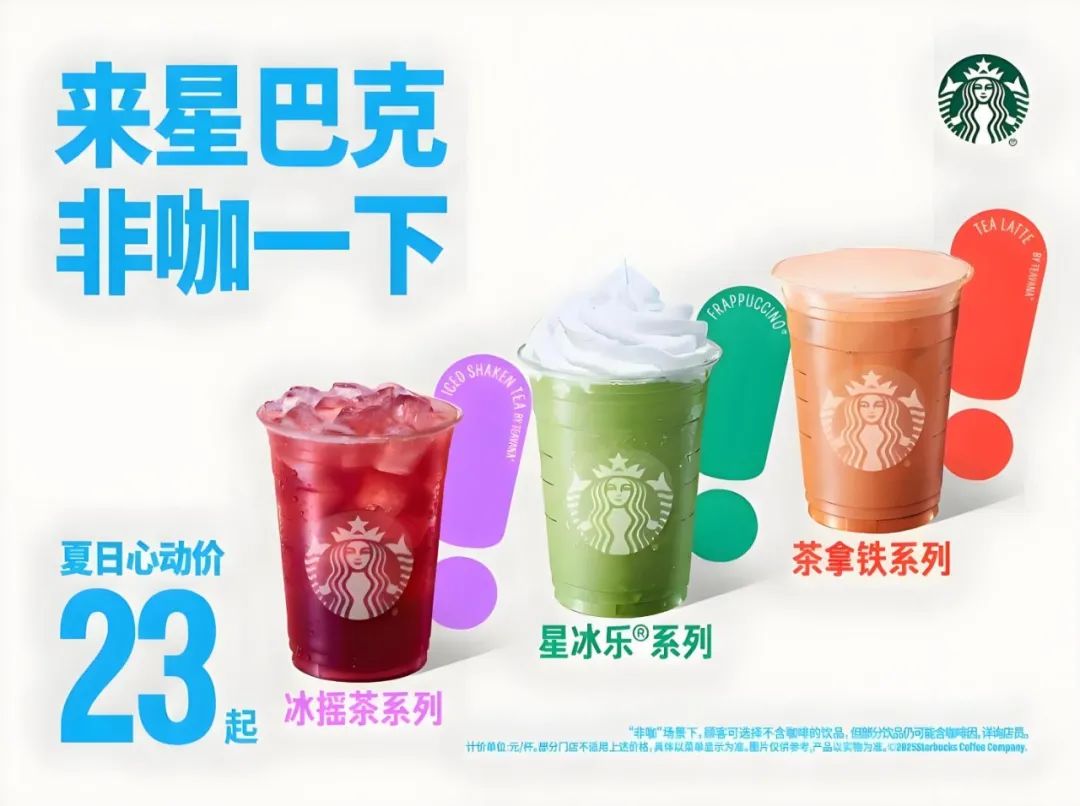
Core Viewpoint - Starbucks China is adopting a different strategy compared to other global markets, focusing on unique market conditions and competitive dynamics [1][5]. Group 1: Strategic Changes - Brian Niccol, the new CEO, aims to fundamentally change the company's strategy by streamlining the menu, reducing discounts, and slowing down new store openings to support transformation [2]. - Starbucks China is not included in the global adjustment plan, as the CEO acknowledges the intense competition in the Chinese market and the need for a clear growth strategy [3][4]. Group 2: Financial Performance - In the second fiscal quarter of 2025, Starbucks China's revenue reached $739.7 million, a 5% year-over-year increase, with same-store sales growing by 4%, reversing a downward trend [4]. - In contrast, North America's same-store sales declined by 4% during the same period, highlighting the importance of the Chinese market for the company [4]. Group 3: Pricing Strategy - On June 10, Starbucks China launched a "Summer Heart Price" promotion, reducing prices of certain non-coffee products by an average of 5 yuan, marking the first time the company has proactively lowered prices in over 20 years [6]. - The price adjustments are not considered a price war, as the discounted products still start at a minimum of 23 yuan, differentiating Starbucks from lower-priced competitors [7]. Group 4: Market Dynamics - The non-coffee product market in China is substantial, with projections estimating the ready-to-drink tea market to reach 368.9 billion yuan by 2025, surpassing the coffee market by 100 billion yuan [7]. - Starbucks is adopting a "coffee + non-coffee" dual-engine model to cater to diverse consumer preferences and enhance product offerings [8]. Group 5: Expansion Plans - Unlike the global strategy of reducing new store openings, Starbucks China plans to continue expanding, with a 9% year-over-year increase in store count in the second fiscal quarter of 2025 [8]. - The company is seeking partners to potentially increase its store count from approximately 8,000 to 20,000, indicating significant growth ambitions in the Chinese market [9][10]. Group 6: Long-term Commitment - Brian Niccol reiterated the immense growth potential in the Chinese market, emphasizing the company's long-term commitment to deepening its presence and development in the region [11].
星巴克降价5块钱有用的话,要瑞幸做什么
3 6 Ke· 2025-06-13 09:57
星巴克想让中国消费者坐回去。 早上七点半,上早班的杨楠点了一杯送到公司的库迪加浓冰美式,免配送费,消费共计8.9元——平台 外卖大战的背景下,这样的价格并不少见。 但如果要问最喜欢哪家连锁咖啡,杨楠的回答是星巴克,库迪、瑞幸则是"班味刷锅水",需要日复一日 地在工作时间服用,以维持头脑高效运转。某种意义上,库迪、瑞幸是为了别人喝,星巴克和旅行期间 探店的高价手冲才是为了自己喝。 杨楠对咖啡连锁品牌的认知在年轻"牛马"中很具代表性:瑞幸、库迪不好喝,但便宜;星巴克口味上过 得去,但贵。过去的很多年中,即便是中国连锁咖啡市场价格战最激烈的2023年,星巴克都在努力坚持 调性,不降价。 不过,竞争带来的增长压力切实存在。过去的两年中,星巴克在股价和财务数据上都表现不佳,2024年 9月上任的CEO倪睿安提出了"重返星巴克"计划,希望通过一系列举措,抑制星巴克在全球不断下滑的 业绩。 这样的大背景下,今年6月,一向拒绝降价的星巴克中国也宣布将下调部分非咖饮品的价格。而在被问 及降价是持续性还是夏季限时,其中国部负责人也松口表示:"未来我们将视顾客反馈,决定后续活动 计划。" 留住客户 自6月10日起,星巴克的三类饮品 ...
星巴克在华首降价,低至10元逼近瑞幸
3 6 Ke· 2025-06-13 08:13
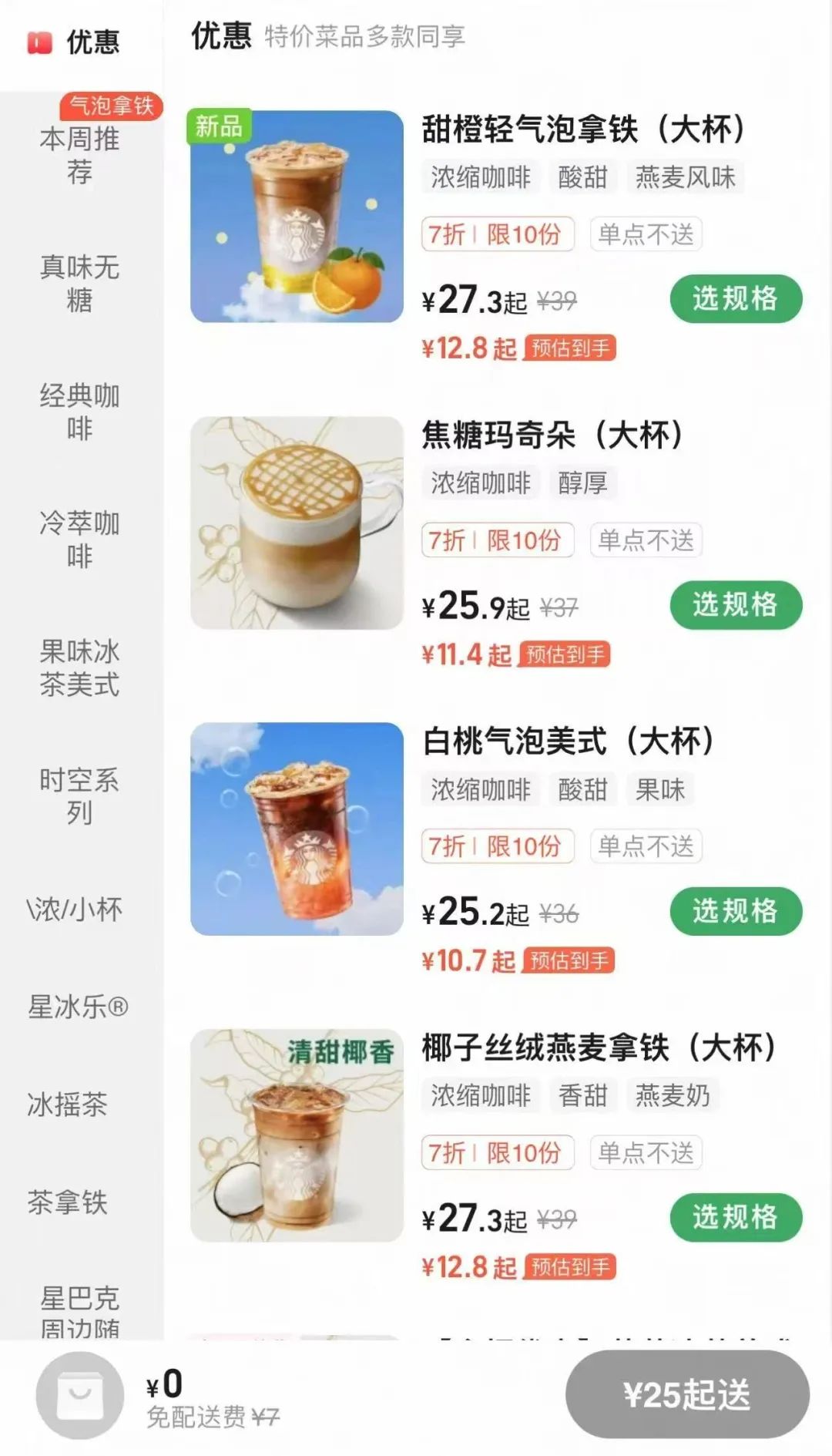
Core Viewpoint - Starbucks has made a rare price reduction on its non-coffee beverages in the Chinese market, with an average price drop of 5 yuan for several products, including Frappuccinos and iced teas, in response to intense competition from local brands and a price war in the beverage market [1][4][12]. Group 1: Price Reduction Strategy - The price reduction on non-coffee beverages is likely a preparation for the upcoming summer marketing campaign, as these products are key offerings for the season [5]. - Despite the 3-5 yuan price drop, consumer expectations for lower prices have not been met, with some products being offered at as low as 11 yuan on various platforms [6][8]. - Discounts and special offers have been introduced across multiple platforms, with some coffee products also included in the promotional pricing [8][11]. Group 2: Competitive Landscape - The coffee and tea market in China has become highly competitive, with local brands like Luckin Coffee and Kudi rapidly expanding and engaging in aggressive pricing strategies [4][12]. - Luckin Coffee has established a "9.9 yuan coffee" pricing strategy, while Kudi has introduced "8.8 yuan all-you-can-drink" offers, significantly impacting Starbucks' market position [12][20]. - The entry of delivery platforms has intensified the price competition, pushing beverage prices down to the 1-5 yuan range, which has altered consumer price expectations [4][12]. Group 3: Market Challenges - Starbucks is facing challenges in the lower-tier markets due to brand recognition issues and a mismatch between product pricing and local consumer purchasing power [20][22]. - The company's core coffee products remain priced higher than local competitors, limiting its competitiveness in the lower-tier market [20][22]. - Rising costs of raw materials, such as coffee beans, are putting additional pressure on the industry, further squeezing profit margins [22]. Group 4: Marketing and Consumer Engagement - Starbucks has attempted to engage consumers through collaborations with popular IPs, but these efforts have not generated significant buzz compared to local competitors' campaigns [20]. - The effectiveness of the recent price reductions and marketing strategies in attracting consumers remains uncertain, with ongoing discussions about potential further price adjustments for coffee products [22].
从星巴克到瑞幸,咖啡的“限定”降价谎言
3 6 Ke· 2025-06-13 01:41
Core Insights - Starbucks China has officially announced a price reduction for non-coffee beverages, with an average decrease of 2-6 yuan, marking the first large-scale direct price cut in its 25 years in China [1][3] - The price reduction is seen as a defensive strategy in response to market competition, particularly in the context of the ongoing beverage market rivalry, which includes not just coffee but also tea and convenience store offerings [3][6] Group 1: Price Reduction Strategy - The price cut is limited to non-coffee drinks such as Frappuccino, iced tea, and tea lattes, while coffee drinks remain unaffected, although consumers can still benefit indirectly by customizing their orders [1][3] - This move comes amid a competitive landscape where other brands, like Luckin Coffee, are also adjusting their pricing strategies, indicating a broader trend in the beverage market [3][11] - The reduction aims to enhance store efficiency and attract more customers during non-coffee sales periods, aligning with consumer demand for value [11][13] Group 2: Market Dynamics - The beverage market is currently experiencing heightened competition, with brands vying for consumer attention across various categories, leading to a zero-sum game where market share is at stake [6][11] - The price reduction is part of a larger trend in brand management this year, as companies seek to navigate the challenges posed by fluctuating raw material costs and changing consumer preferences [6][11] - The competitive landscape is further complicated by the rise of delivery services, which have shifted consumer habits and increased price sensitivity among customers [17][22] Group 3: Future Implications - Starbucks' strategy may lead to further price adjustments across its product lines as it seeks to maintain competitiveness in a rapidly evolving market [24] - The ongoing price war suggests that both Starbucks and Luckin Coffee may continue to explore aggressive pricing strategies to secure market share, despite the risks associated with such approaches [24][25] - The focus on enhancing store operational efficiency and expanding into lower-tier markets is crucial for both brands as they adapt to changing consumer demands and competitive pressures [13][16]

Starbucks (SBUX) Stock Slides as Market Rises: Facts to Know Before You Trade
ZACKS· 2025-06-12 22:46
Core Viewpoint - Starbucks is facing a decline in earnings per share (EPS) while revenue shows slight growth, indicating mixed performance ahead of its earnings disclosure [2][3]. Financial Performance - Starbucks closed at $94.32, down 1.12% from the previous trading session, while gaining 10.23% over the past month, outperforming the Retail-Wholesale sector's gain of 2.95% and the S&P 500's gain of 6.6% [1]. - The upcoming earnings disclosure is expected to show an EPS of $0.66, a decline of 29.03% year-over-year, with revenue anticipated at $9.29 billion, reflecting a 1.94% increase [2]. - For the entire year, earnings are forecasted at $2.53 per share, down 23.56%, with revenue projected at $36.89 billion, up 1.97% compared to the previous year [3]. Analyst Estimates and Ratings - Recent revisions in analyst estimates are crucial as they reflect near-term business trends, with positive revisions indicating a favorable business outlook [3]. - The Zacks Rank system, which evaluates estimate changes, currently rates Starbucks at 4 (Sell), with a recent 1.46% decrease in the consensus EPS estimate [4][5]. Valuation Metrics - Starbucks has a Forward P/E ratio of 37.67, significantly higher than the industry average of 23.8, indicating it is trading at a premium [6]. - The PEG ratio for Starbucks stands at 4.79, compared to the Retail-Restaurants industry's average of 2.53, suggesting a higher valuation relative to expected earnings growth [7]. Industry Context - The Retail-Restaurants industry is ranked 178 out of over 250 industries, placing it in the bottom 28%, which may impact investor sentiment [7][8].
Starbucks Stock: Culture Fix May Be Key to Long-Term Growth
MarketBeat· 2025-06-12 14:36
Core Viewpoint - Starbucks is undergoing a significant turnaround under new CEO Brian Niccol, with stock up 11% since April, but financial and cultural challenges may limit short-term gains [1][2]. Financial Performance - The company reported 8.8% year-over-year revenue growth, reversing three consecutive quarters of declines, although revenue remains below analyst forecasts [3]. - Earnings per share (EPS) continue to decline year-over-year, indicating ongoing challenges on the bottom line [4]. Market Strategy - Starbucks is focusing on China for growth, planning to implement average discounts of 70 cents on tea sales to gain market share, which may impact profit margins [4]. - The company is attempting to reclaim its brand power while navigating competitive pressures in the market [11]. Cultural Challenges - Starbucks has lost its first-mover advantage and is perceived as part of the establishment, facing internal and external cultural challenges, including union representation issues [5][6]. - Niccol's "Back to Starbucks" plan aims to restore the company's image as a "third place" between home and work, emphasizing a balance between mobile business and in-store experience [7][8]. Investment Outlook - Analysts have a 12-month stock price forecast of $98.12, suggesting a 2.86% upside, but the stock is better suited for gradual accumulation rather than aggressive entry due to ongoing cultural and financial uncertainties [9][12]. - Despite recent downgrades from analysts, the potential for long-term growth exists if the company can address its cultural issues and reclaim its brand identity [10][12].
餐饮月度专题:茶饮分化延续,多数品牌客单价环比企稳-20250612
ZHESHANG SECURITIES· 2025-06-12 13:34
Investment Rating - The industry investment rating is "Positive" [1] Core Insights - The differentiation in the tea beverage sector continues, with most brands stabilizing their average transaction value month-on-month [2] - The report highlights the net store opening trends and average transaction value trends across various brands in the tea beverage and western fast food sectors [3][4] Summary by Relevant Sections Tea Beverage Sector - Net store openings from January to May 2025 show significant variations among brands, with Mixue Ice City leading with 4,001 new stores (12% increase), while brands like Shuyi Burned Fairy Grass and Coco都可 experienced declines of 324 stores (-6%) and 282 stores (-7%) respectively [2] - The average transaction value for tea beverage brands shows mixed results, with some brands like Mixue Ice City and Black Dragon Hall experiencing a year-on-year decline of 2.1% and 6% respectively, while others like Tea Yanyue Color saw a slight increase of 3% [3][7] Western Fast Food Sector - The western fast food sector shows strong overall store expansion, with KFC and McDonald's adding 431 (4%) and 149 (2%) stores respectively, while brands like Wallace and Pizza Hut saw minimal changes [5] - Average transaction values for western fast food brands have shown slight declines, with KFC at -0.3% and Pizza Hut at -1.7% year-on-year [6] Coffee & Hot Pot Sector - The coffee sector, particularly Luckin Coffee, has shown robust growth with 1,604 new stores (7% increase), while hot pot brands like Haidilao and Jiumaojiu have seen slight contractions [9][10] - Average transaction values for coffee brands like Luckin Coffee and Starbucks have remained relatively stable, with minor fluctuations [11] Other Food Categories - The report indicates a contraction in the store count for brands in the pickled fish and snack sectors, with brands like Purple Swallow and Absolute Duck experiencing significant declines in store numbers [13][14] - Average transaction values in these categories have also faced pressure, with many brands reporting year-on-year declines [15]



又有40+曾经的“排队王”撑不住了...
创业邦· 2025-06-12 12:50
以下文章来源于赢商网 ,作者李玉玲 赢商网 . 这里有你需要的零售商业地产行业资讯、深度分析、知识和数据 来源丨赢商网(ID:winshang) 作者丨李玉玲 编辑丨熊舒苗 付庆荣 图源丨赢商网拍摄 品牌闭店潮,此起彼伏。 据赢商网不完全统计,今年 1-3月又有超过40家典型品牌进行闭店。 Gucci上海关2店、 茑屋书店 连撤 2店、永辉超市90天关273家店等消息,不断引发热议。 图源: 永辉超市 其中, 【永辉超市】 闭店最为激进,一季度门店数量较去年同期锐减 273家,2025 年计划关闭 200 -350家效益不佳的门店; 【永旺超市】 因财务亏损和租金压力 无奈 关闭部分门店; 【沃尔 玛】 一季度关了 3 家门店,过去五年其中国卖场门店总数减少了123 家;即将退市的 【人人乐】 一季度亏损7962万元,门店数量从巅峰时期的超百家缩水至仅剩32家。 困境之下,超市行业求变, 引入 "胖东来模式"成为流行解法 。 【永辉超市】 动作迅速,截至 今年 6 月13日已完成 100 家门店调改,计划 2025 年调改门店达 200 家左右,2026 年完成所有存量门 店调整 。【 物美超市】积极跟进,首 ...


星巴克降价,是瑞幸逼的吗?
东京烘焙职业人· 2025-06-12 08:51
Core Viewpoint - Starbucks has initiated a significant price reduction across its product range, marking the first major price cut in its 25 years in China, indicating the start of a new price war in the coffee sector [5][6][11]. Group 1: Price Reduction and Market Dynamics - Starbucks has lowered prices by approximately 5 yuan, bringing its price range down from 30 yuan to the 20+ yuan level [5][6]. - The price cut is a response to declining average transaction values, which have dropped for ten consecutive fiscal quarters [11]. - The coffee market is nearing saturation, with growth rates expected to decline from over 20% in 2024 to single digits in subsequent years [8][12]. Group 2: Competitive Landscape - The price war was initiated by Luckin Coffee and Kudi, with Luckin offering products as low as 6.9 yuan and Kudi at 3.9 yuan, prompting Starbucks to respond [6][8]. - The competition is not only among coffee brands but also includes tea brands, as they vie for market share in overlapping consumer segments [19][21]. - Smaller coffee brands and shops are facing significant challenges due to rising raw material costs and the inability to compete with larger chains on pricing and innovation [20]. Group 3: Strategic Implications - Starbucks is focusing on maintaining its brand positioning by selectively lowering prices on non-coffee products while keeping core coffee prices stable [18]. - The strategy aims to attract a broader consumer base without diluting the brand's premium image, positioning Starbucks against tea brands like Heytea and Bawang Chaji [18][22]. - The ongoing competition is seen as a precursor to a restructuring of the industry landscape, where brands that can effectively manage supply chain efficiencies and innovate will thrive [22].