Tesla(TSLA)

Search documents
马斯克在达沃斯上夸了中国
21世纪经济报道· 2026-01-24 13:40
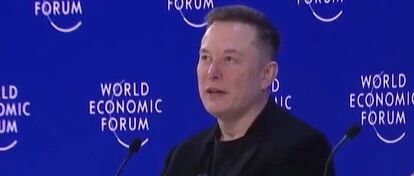
Core Viewpoint - Elon Musk emphasizes the concept of "Abundance" during his discussion at Davos, suggesting that a future with an overflow of goods and services is imminent. He outlines a clear path to achieving this abundance through advancements in robotics and AI [1][2]. Group 1: Robotics and AI Development - Tesla has updated its mission statement to focus on building a "remarkable abundant world," with a clear timeline for its humanoid robot, Optimus, to perform complex tasks by the end of this year and to be available to the public by the end of next year. Musk predicts that within three to five years, the number of robots will surpass the human population [1]. - Musk forecasts that by the end of this year or next, AI will surpass human intelligence, and by 2030, AI will be smarter than all humans combined. He presents a formula for economic output based on the productivity of robots and their quantity, suggesting that AI-driven robots will lead to explosive economic growth [2]. Group 2: Energy Supply Challenges - Musk identifies electricity supply as the primary constraint for AI and future developments, stating that while chip production is rapidly increasing, the energy grid's expansion is lagging significantly. He warns of a potential scenario where there are sufficient chips but insufficient electricity to power them [2]. - He proposes a solution to the energy issue by suggesting that a solar panel installation in Utah or Nevada could meet the entire electricity demand of the United States. Musk praises China's solar energy deployment, which exceeds 1,000 gigawatts annually, as a model for stable power supply [2]. Group 3: Space-Based Solutions - Musk introduces the idea of deploying solar-powered AI data centers in space, where solar energy efficiency is five times greater than on Earth, and operational costs could be significantly reduced with the advent of reusable spacecraft. He anticipates the first solar AI data centers to be launched within two to three years [3][4]. - This approach could bypass terrestrial limitations such as land use, electrical grid constraints, and environmental regulations, allowing for rapid advancements in energy and data processing capabilities [4].


机器人产业跟踪:特斯拉计划27年向公众销售人形机器人,产业速度较快,市场期待提升
Orient Securities· 2026-01-24 13:31
Investment Rating - The report maintains a "Positive" investment rating for the machinery equipment industry [6]. Core Insights - Tesla plans to sell humanoid robots to the public by 2027, with expectations for increased market interest and investment opportunities [3][9]. - The humanoid robot production capacity is set to accelerate, with Tesla aiming to produce 50,000 units in 2026 and ramping up to 1 million units by 2030 [9]. - Companies with strong manufacturing and operational capabilities are expected to gain higher market shares as humanoid robot sales increase and prices decrease [9]. Summary by Sections Industry Overview - The report highlights the rapid development of the humanoid robot industry, with Tesla's announcements indicating a faster-than-expected timeline for public sales [9]. Investment Recommendations - The report suggests several investment opportunities, including Top Group (601689, Buy), Sanhua Intelligent Control (002050, Buy), Wuzhou New Spring (603667, Buy), Hengli Hydraulic (601100, Not Rated), and Zhenyu Technology (300953, Buy) [3]. Market Expectations - The anticipated deployment of Tesla's humanoid robots in industrial settings by late 2026 is expected to enhance market expectations and create investment opportunities [3][9].
下周财经日历(1月26日-2月1日)
Di Yi Cai Jing· 2026-01-24 12:18
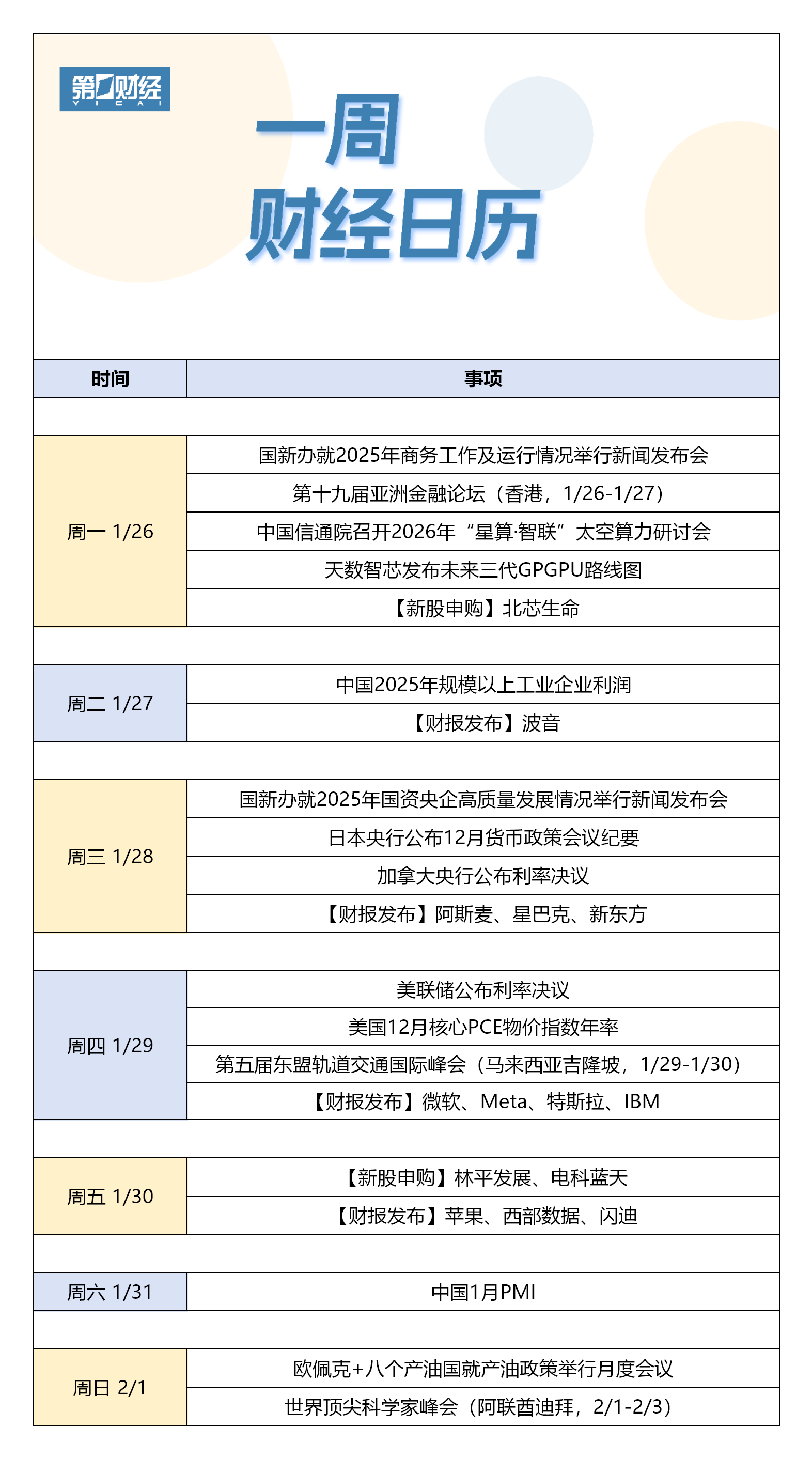
Group 1 - The Bank of Japan announced its monetary policy for December on January 28 [2] - The Bank of Canada announced its interest rate decision on January 28 [2] - Earnings reports were released by ASML and Starbucks on January 28 [2] Group 2 - The Federal Reserve will announce its interest rate decision on January 29 [2] - The U.S. core PCE price index for December will be released on January 29 [2] - Earnings reports will be released by Microsoft, Meta, and others on January 29 [2] Group 3 - New stock subscriptions for Linping Development and others will occur on January 30 [2] - Earnings reports will be released by Apple and Western Digital on January 30 [2] Group 4 - China's January PMI will be released on January 31 [2] - OPEC+ and eight oil-producing countries will discuss oil production policies on February 1 [2] - The World Summit of Top Scientists will take place in Dubai, UAE [2]



Investors came to Davos for AI. They left talking about Greenland
CNBC· 2026-01-24 12:12
Group 1: Optimism in Technology - The mood at Davos was notably optimistic regarding artificial intelligence, with discussions on "world models" and "physical AI" indicating a shift from hype to production, supported by significant capital availability [2][3] - Elon Musk's presentation on Tesla's vision for robotaxis and AI development reset the atmosphere, with predictions of widespread driverless robotaxis in the U.S. by the end of 2026 and AI potentially surpassing human intelligence this year [8][10] Group 2: Geopolitical Concerns - Conversations at Davos frequently shifted from technological advancements to geopolitical issues, including tariffs and the acquisition of Greenland, highlighting a growing sense of uncertainty in global investment rules [6][7][17] - Finance ministers emphasized the need for reassurance amidst geopolitical tensions, with South Africa's finance minister noting that the primary risk to the economy is the geopolitical situation [14][16] Group 3: Diverging Perspectives - The conference showcased two contrasting narratives: one focused on technological innovation and the other on navigating geopolitical uncertainty, often occurring within the same discussions [18] - Industry leaders like Joe Kaeser of Siemens Energy framed AI as an industrial opportunity, emphasizing Europe's potential in data and computing power to drive innovation [11][12]
Musk's $1 trillion pay package renews focus on soaring CEO compensation
CNBC· 2026-01-24 12:00
Core Insights - Elon Musk's pay package, potentially valued at up to $1 trillion, underscores the ongoing rise in CEO compensation despite stagnating worker pay and mixed shareholder rewards [2][3] - Musk's wealth, exceeding $660 billion, positions him as the richest individual globally, with his Tesla pay package reinstated and a potential SpaceX IPO on the horizon [3] - CEO compensation has surged by 1,094% over the past 50 years, contrasting sharply with a mere 26% increase in typical worker compensation [4] CEO Compensation Trends - The median total compensation for S&P 500 CEOs reached $17.1 million in 2024, marking a nearly 10% increase from 2023, with CEOs earning 192 times more than the average employee [5] - Stock awards constitute 72% of CEO pay packages in 2024, with their median value increasing by 15% that year [7] - Musk's pay package is entirely based on stock awards tied to performance milestones, with no base salary included [8][9] Performance and Pay Correlation - There is a weak correlation between CEO pay and company performance, as indicated by a 2021 MSCI study, which found that average-performing CEOs earned only 4% less than top performers [10][12] - The shift from stock options to stock awards aims to align CEO incentives with long-term company performance, although the effectiveness of this strategy remains debated [13] Employee Compensation Considerations - Some economists suggest increasing stock awards for employees to bridge the compensation gap between employees and CEOs, with Employee Stock Ownership Plans (ESOPs) being one potential solution [14][15] - Employee-owned businesses reportedly exhibit higher productivity and lower turnover rates, contributing to overall competitiveness [15][16]
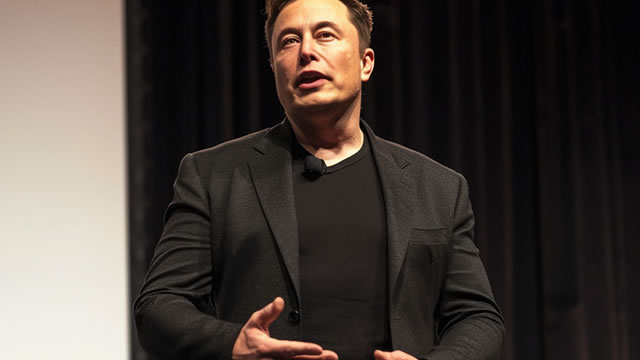
特斯拉Optimus机器人将进驻奥斯汀工厂 马斯克预测明年开售
Ge Long Hui· 2026-01-24 11:43
Core Insights - Tesla is advancing towards deploying its Optimus robots in factories, with Austin set to be the next training ground [1] - The company plans to start data collection at the Austin Gigafactory in February to train the humanoid robots [1] - Elon Musk indicated that the robots are currently performing simple tasks in factories and aims for them to execute more complex tasks by the end of the year, with public sales expected by next year [1] Data Collection and Training - Tesla has been collecting data and training Optimus prototypes at its Fremont factory for over a year [1] - To minimize production disruption, data collectors for Optimus are typically isolated from regular factory workers [1] Future Plans - The goal is to train Optimus to operate within the Texas factory environment [1] - Musk's timeline suggests that by the end of this year, the robots will be capable of more complex tasks, and public sales are anticipated by the end of next year [1]

Lemonade Introduces Autonomous Vehicle Insurance and Lowers Tesla FSD Rates
Yahoo Finance· 2026-01-24 11:06
Group 1 - Tesla, Inc. is recognized as one of the best lithium and battery stocks to invest in currently [1] - Lemonade has launched an autonomous vehicle insurance product that significantly reduces per-mile rates for Tesla's Full Self-Driving feature by approximately 50% [2] - Tesla's Shanghai plant has been adapted to produce Model Ys specifically for the Canadian market, benefiting from a substantial tax reduction on Chinese-made EVs from 100% to 6.1% [3] Group 2 - Tesla operates as a vertically integrated manufacturer of battery electric vehicles and develops advanced artificial intelligence software, including self-driving technology and humanoid robots [4]
特斯拉:购Model 3部分车型享8000元限时保险补贴;保时捷Panamera改款原型路测图曝光:升级灯组与雷达丨汽车交通日报
创业邦· 2026-01-24 10:43
Group 1 - Xiaopeng Motors' Vice President Gu Jie and his core team visited Dong'an Power, discussing mass production projects and next-generation engine technology development [2] - Tesla announced a limited-time insurance subsidy of 8,000 yuan for certain Model 3 purchases from January 24 to February 28, 2026 [2] - Ninebot Intelligent received its first autonomous vehicle operation license in the UAE, with its RoboVan fleet now fully operational, totaling 16,000 units globally [2] Group 2 - Porsche's Panamera facelift prototype was spotted during road testing, indicating potential upgrades in hybrid technology and performance features [2]

消息人士:特斯拉计划在得克萨斯州工厂开始训练擎天柱机器人。
Xin Lang Cai Jing· 2026-01-24 09:37
Group 1 - Tesla plans to begin training its Optimus robot at its Texas factory [1]
Tesla plans to start training Optimus at its Austin factory
Business Insider· 2026-01-24 09:27
Core Insights - Tesla is advancing towards deploying its humanoid robot, Optimus, in its factories, with the Austin Gigafactory set as the next training site, aiming for a February start date [1] - The company has been training Optimus prototypes in its Fremont factory for over a year, using data collected from factory workers to teach the robot to perform tasks [2][3] - CEO Elon Musk anticipates that by the end of this year, Optimus will be capable of more complex tasks, with plans to sell humanoid robots to the public by the end of next year [4] Group 1: Training and Development - Tesla has been collecting video data to train Optimus, moving away from teleoperation methods, which allows for rapid data collection without motion capture constraints [6] - Optimus trainers are equipped with specialized helmets and backpacks to facilitate data collection, although the practicality of these setups is still being evaluated [7] - The company has deployed two autonomous Optimus robots in its factories, showcasing its capabilities in tasks such as arranging batteries [5] Group 2: Production and Future Plans - Tesla is also updating several production lines at its factories, indicating ongoing construction and development efforts [8] - The company has faced challenges with the Cybertruck line, leading to reduced production hours and a shift of workers to the Model Y line due to disappointing sales [9]