TSMC(TSM)

Search documents
继续重点看好存储及先进封装投资机遇
2026-01-19 02:29
Summary of Conference Call Notes Industry Overview - The storage and advanced packaging industry is experiencing price increases, with companies like Powertech Technology, HwaCom Systems, and Nanya Technology operating at near full capacity, leading to price hikes of up to 30% expected by 2026, driven by rising raw material costs and client price increases [1][4][5]. Key Insights and Arguments - **Price Increase Potential**: Chinese mainland storage packaging companies such as Deep Technology's Peidun, HwaCom, Changdian Technology, Tongfu Microelectronics, and Huada Semiconductor have the potential to raise prices, although market expectations are currently insufficient [1][5]. - **Investment in Advanced Packaging**: SK Hynix's investment of $12.9 billion in an advanced packaging facility indicates a shift in focus towards post-process advanced packaging to enhance customer loyalty and bargaining power [1][6]. - **TSMC's Capital Expenditure**: TSMC has revised its 2026 capital expenditure forecast to $52-56 billion, with about 10% allocated for advanced packaging, raising market interest in advanced technologies like CoWoS [1][7]. - **Micron's Acquisition**: Micron's $1.8 billion acquisition of Powertech's facility is expected to contribute to production by mid-2027, reflecting sustained high demand for storage [1][8]. Market Dynamics - **Global Market Share**: The two major players hold approximately 10% of the global market share, while China's overall storage demand exceeds 30%, indicating significant growth potential for the Chinese market [1][9]. - **Focus on Key Companies**: Companies linked to the two major players, such as Jinghe, HwaCom, Deep Technology, and Tongfu Microelectronics, are highlighted as key investment opportunities due to their expected price adjustments [1][10]. Advanced Packaging Developments - **Domestic Capacity Breakthrough**: The domestic advanced packaging sector is entering a critical breakthrough phase, with expected improvements in yield and utilization rates by 2026, which will be crucial for valuation and profitability [1][11]. - **AI Chip Performance**: The performance of AI chips is heavily reliant on 2.5D/3D packaging, with domestic leaders like Huawei, Cambricon, and Haiguang expected to ramp up shipments [1][12]. Price Impact on Storage Backend Market - **Opportunities from Price Increases**: The price hikes in storage are creating significant opportunities, with major clients increasing orders and various product lines experiencing price increases ranging from single to double digits [1][13]. Equipment Sector Opportunities - **Testing Equipment Demand**: The expansion of domestic computing power and production lines is driving demand for testing equipment, which is crucial for advanced packaging [1][14]. Investment Recommendations - **Focus on Advanced Packaging**: There is a strong recommendation to invest in companies with key advanced packaging capabilities and those positioned to benefit from the domestic computing power support, such as Changdian Technology, Tongfu Microelectronics, and Deep Technology [1][15].

全球存储芯片-投资者反馈、台积电动态、现货价格、中国芯片厂商融资情况-Global Memory Tech- Investor feedback, TSMC,spot price, China chipmaker fundraisin
2026-01-19 02:28
Accessible version Global Memory Tech Weekly theme: Investor feedback, TSMC, spot price, China chipmaker fundraising Industry Overview US investor feedback: cautiously optimistic We met US investors across the West/East Coast areas. Most of them acknowledged that the current memory cycle is better than ever and confirmed great returns from their recent or a-while-ago investments. However, we also saw mixed sentiment—bullish on AI boom vs some concerns on record-high P/B (after 2-3 years' long share-price ra ...

台积电CapEx指引印证AI需求,关注算力产业链上游机遇 | 投研报告
Zhong Guo Neng Yuan Wang· 2026-01-19 02:15
Group 1: TSMC Performance and Projections - TSMC reported a net profit of NT$505.7 billion for Q4 2025, a year-on-year increase of 35.0%, exceeding market expectations of NT$467.0 billion [3] - The company anticipates a nearly 30% growth in sales (in USD) for 2026, driven by strong customer demand [3] - TSMC plans to increase its capital expenditure for 2026 to between $52 billion and $56 billion, indicating a significant rise in spending over the next three years [3] Group 2: Semiconductor Industry Trends - The semiconductor sector has seen substantial growth, with the Shenwan Electronics Secondary Index showing year-to-date increases of 16.51% for semiconductors and 13.30% for other electronics [1] - The 8-inch wafer foundry prices are expected to rise due to steady growth in AI-related Power IC demand and increased orders for 2026 [4] - The utilization rate of 8-inch wafer foundries is projected to improve, supported by rising demand for AI applications, which will drive both volume and price increases in the semiconductor supply chain [4] Group 3: Stock Performance of Key Companies - Notable stock performance this week includes TSMC up by 5.80%, while Qualcomm saw a decline of 10.33% [2] - Other companies like Micron Technology and Intel also experienced gains of 5.12% and 3.10% respectively, while major players like Apple and Tesla faced declines [2]
晶圆巨头,“放弃”八英寸
半导体行业观察· 2026-01-19 01:54
Core Viewpoint - The global foundry market is witnessing a shift as leading companies like TSMC and Samsung Electronics reduce traditional processes such as 8-inch wafer production, focusing instead on advanced nodes. This presents an opportunity for Chinese foundries like SMIC and Hua Hong Semiconductor to capture market share, especially with the rising demand for power semiconductors driven by the AI industry [1][2]. Group 1: Market Dynamics - TSMC has announced plans to close its 6-inch and 8-inch wafer production lines next year, while Samsung is also expected to cut some of its 8-inch wafer capacity. TrendForce predicts a 2.4% decline in global 8-inch wafer production this year due to these reductions [1]. - Despite lower single-chip output from 8-inch processes compared to the mainstream 12-inch processes, 8-inch production is favored for small-batch, multi-variety manufacturing, making it a key focus for smaller foundries [1]. - The demand for power semiconductors, primarily produced on 8-inch lines for home appliances, automotive, and data centers, is increasing due to the growth of AI, leading to a projected price increase of 5% to 20% for older process nodes this year [1]. Group 2: Chinese Foundries' Position - Chinese foundries are emerging as alternatives for 8-inch chip production, with companies like SMIC, Hua Hong Semiconductor, and Huazhong Microelectronics providing these services. Due to surging demand, Chinese foundries have raised 8-inch chip prices by approximately 10% [2]. - Hua Hong Semiconductor's 8-inch production lines are nearing full utilization, largely due to orders from leading automotive chip manufacturers like Infineon and ON Semiconductor [2]. - Analysts note that as the U.S. imposes restrictions on advanced semiconductors in China, Chinese firms are strengthening their capabilities in older nodes, solidifying their position in the 8-inch wafer foundry market [2]. Group 3: Industry Outlook - TSMC plans to invest between $52 billion to $56 billion in capital expenditures this year to meet AI market demands, exceeding market expectations by over 20%. The company has also raised its revenue growth target for 2029 from an annual average of 20% to 25% [2]. - Samsung is accelerating the production of 3nm and below process technologies to cater to the orders from major global tech clients [2]. - Ongoing semiconductor industry conflicts between the U.S. and China may pose risks, as global automakers are hesitant to rely on Chinese foundries for semiconductor production to mitigate dependency on Chinese components [2].


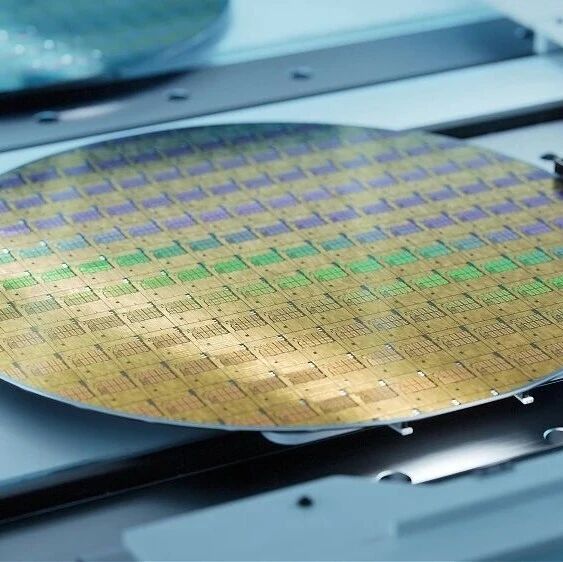
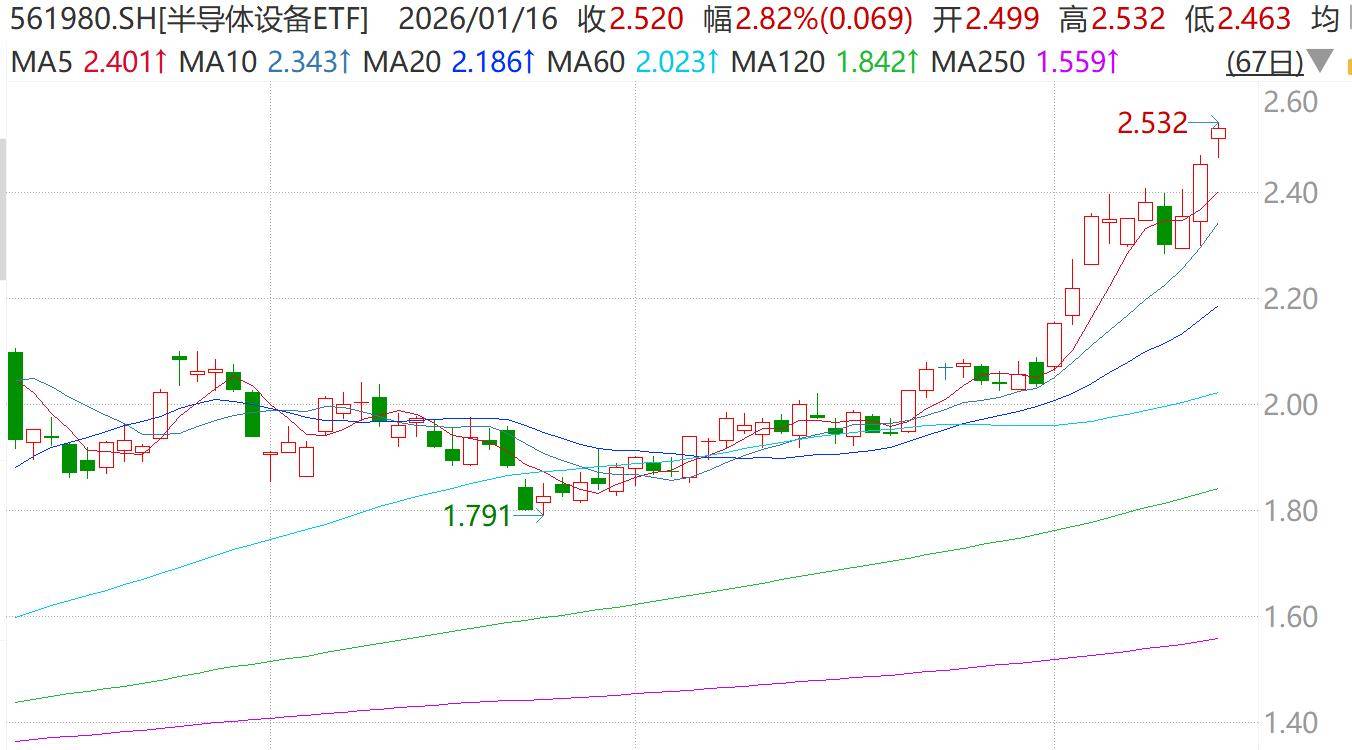
龙头超预期指引提振产业链,国产氢离子注入机成功突破,半导体设备ETF(561980)单日吸金超2亿元!
Sou Hu Cai Jing· 2026-01-19 01:50
Group 1 - TSMC's financial outlook exceeds expectations, significantly boosting global semiconductor capacity expansion for 2026, with various semiconductor industry chains rising globally [1][3] - TSMC reported a 35% year-on-year increase in net profit for Q4 2025, and capital expenditures for 2026 are expected to reach up to $56 billion, a 37% increase from 2025 [3][4] - The semiconductor equipment ETF (561980) has seen a net inflow of over 200 million yuan, with its scale and net value reaching new highs, surpassing 3.5 billion yuan [1][4] Group 2 - The average utilization rate for 8-inch wafers globally is projected to rise to 85-90% in 2026, significantly better than the 75-80% in 2025, driven by strong AI demand [3][4] - The semiconductor equipment ETF has shown a doubling in growth from 2025 to the present, with a maximum increase of nearly 670% since the last semiconductor cycle [5][6] - The top ten weighted stocks in the semiconductor index have a concentration close to 80%, including leading companies in etching equipment, multi-field equipment, and AI chip design, indicating strong potential for benefiting from domestic substitution growth [6]
What the U.S.-Taiwan deal means for the island's 'silicon shield'
CNBC· 2026-01-19 01:38
Core Insights - The U.S.-Taiwan deal aims to expand chip production capacity in the U.S., but analysts believe it will not fully reduce reliance on Taiwan's advanced semiconductors in the near term, keeping the "silicon shield" intact [1][5] Industry Overview - Taiwan is a dominant player in global chip production, with the Taiwan Semiconductor Manufacturing Company (TSMC) producing a significant portion of the world's advanced chips. Approximately one-third of global demand for new computing power is fabricated in Taiwan [2] Strategic Importance - Taiwan's central role in the semiconductor supply chain is crucial for maintaining its de facto autonomy and deterring potential Chinese aggression, a concept referred to as the "Silicon Shield" [3] Trade Deal Details - Under a recent trade agreement, the Taiwanese government will provide $250 billion in credit to its chip and technology companies to enhance production capacity in the U.S. Additionally, Taiwanese companies will receive higher quotas for tariff-free chip imports into the U.S. In exchange, the U.S. will reduce tariffs on most goods from Taiwan from 20% to 15% and eliminate tariffs on certain categories [4] Production Goals and Challenges - The objective is to relocate 40% of Taiwan's semiconductor supply chain to the U.S., but experts express skepticism about the feasibility of this plan due to Taiwan's strict policies on keeping advanced technology domestically [5] Technology Restrictions - Taiwanese authorities have implemented the N-2 rule, which restricts TSMC's overseas fabrication plants from operating technologies that are at least two generations behind those developed in Taiwan [6]

消息称台积电今年再在岛内投资建设4座先进封装设施
Sou Hu Cai Jing· 2026-01-19 01:15
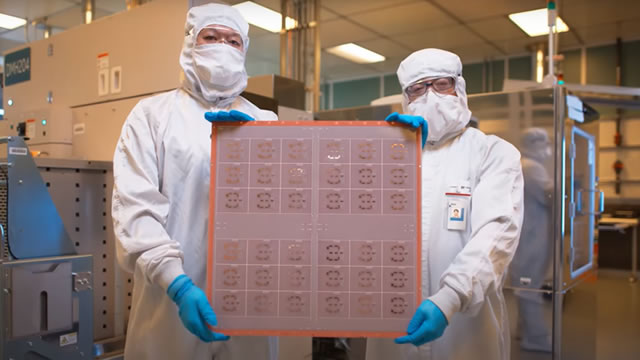
IT之家注意到,台积电在上周的季度法人说明会上曾表示,先进封装在 2025 年已为企业贡献一成营 收,同时未来增速将超过企业平均水平。在支出端,先进封装与掩膜制造和其它将占到台积电今年整体 资本开销的 10~20%。 考虑到台积电的新一波前端先进制程产能将在 2027~2029 年大面积上线,此时追加后端先进封装产能 有利于前后端产能协调同步。 IT之家 1 月 19 日消息,台媒《自由时报》本月 17 日报道称,台积电今年将再在岛内投资建设 4 座先进 封装设施以回应 AI 芯片客户的需求。这 4 座新厂将是嘉义科学园区先进封装二期的两座和南部科学园 区三期的两座,相关决定有望在本周官宣。 ...

中信建投:台积电2026年资本开支超预期,上调AI芯片收入增速
Xin Lang Cai Jing· 2026-01-18 23:55
Core Viewpoint - TSMC is expected to see significant revenue growth and improved profit margins by Q1 2026, driven by cost control, capacity increases, and favorable exchange rates, despite potential dilution from overseas expansion and new technology ramp-up [1] Revenue and Profitability - TSMC forecasts revenue between $34.6 billion and $35.8 billion for Q1 2026, with a median year-over-year growth of 37.9% and a quarter-over-quarter growth of 4.3% [1] - The expected gross margin is projected to be between 63% and 65%, with a median year-over-year increase of 5.2 percentage points and a quarter-over-quarter increase of 1.7 percentage points [1] Cost Control and Expansion - The improvement in gross margin is attributed to effective cost control, increased capacity, and better exchange rates, although overseas factory ramp-up is expected to dilute margins by 2%-3% initially and 3%-4% in later stages [1] - The introduction of 2nm technology is anticipated to begin ramping up in the second half of 2026, contributing to a gross margin dilution of 2%-3% for the year [1] Capital Expenditure and Demand Confidence - TSMC's significant upward revision of its capital budget for 2026 reflects management's confidence in the long-term demand for advanced processes and revenue growth [1] - Continuous communication with clients has validated the real application basis for AI-related demand, leading to an increase in revenue growth expectations for AI accelerators [1] AI and Semiconductor Expansion - From 2024 to 2029, TSMC expects a compound annual growth rate (CAGR) of 55%-59% for AI accelerator-related revenue, supported by technological differentiation and a broad customer base [1] - The demand for advanced processes driven by AI computing is initiating a new expansion cycle in semiconductor manufacturing, positively impacting key semiconductor process equipment and related supply chains [1]

格林大华期货早盘提示-20260119
Ge Lin Qi Huo· 2026-01-18 23:30
早盘提示 Morning session notice 更多精彩内容请关注格林大华期货官方微信 格林大华期货研究院 证监许可【2011】1288 号 2026 年 1 月 19 日 星期一 联系方式:yujunli@greendh.com | 板块 | 品种 | 多(空) | | | --- | --- | --- | --- | | | | | 【重要资讯】 | | | | | 1、台积电称,得益于全球人工智能行业的蓬勃发展,预计今年第一季度营收将同 | | | | | 比增长 40%,达到 358 亿美元。2026 年是强劲成长的一年,美元营收将增长接近 30%。 | | | | | 台积电管理层表示,客户发出了强烈的"需求信号",并直接联系公司寻求产能。 | | | | | 2、台积电表示,今年资本支出预估为 520 亿至 560 亿美元,同比大幅增长 27%至 | | | | | 37%,有望创下公司历史新高。台积电 Q4 的强劲业绩及 2026 年营收指引,清晰释 | | | | | 放出人工智能热潮将持续的信号,也重新燃起了投资者对 AI 需求韧性的信心。 | | | | | 3、美国知名资产管理 ...
By 2027, This Could Be One of the Most Important Stocks in Its Industry
The Motley Fool· 2026-01-18 22:05
Core Insights - The semiconductor manufacturing technology is crucial for the AI revolution and other significant trends, with Intel being a key player in the PC and server CPU market [1] - Intel's foundry business has not grown as anticipated, resulting in substantial financial losses for the segment [2] - Despite challenges, Intel's share price has surged over 150% in the past year due to investor optimism regarding new manufacturing processes and potential demand growth by 2027 [3] Company Overview - Intel operates a chip foundry unit that manufactures its designs and serves third-party customers, aiming to become a major provider of fabrication services [2] - The company has a market capitalization of $234 billion, with a current share price of $46.96 [5] Market Dynamics - Taiwan Semiconductor Manufacturing Company (TSMC) dominates the advanced chip fabrication market, accounting for over 90% of this segment, particularly for AI and next-gen technologies [4] - Intel faces a lengthy timeline to gain market share from TSMC, but geopolitical factors, particularly the risk of China invading Taiwan, could enhance Intel's prospects [6] Geopolitical Factors - China has set a target for 2027 to potentially regain control over Taiwan, which could disrupt TSMC's operations and impact global semiconductor supply chains [7] - The potential destabilization from China's actions could create favorable conditions for Intel's foundry business as the need for diversified semiconductor supply chains increases [8]