XPENG(XPEV)

Search documents
智驾的2025:辞旧迎新的一年
自动驾驶之心· 2026-01-04 01:04
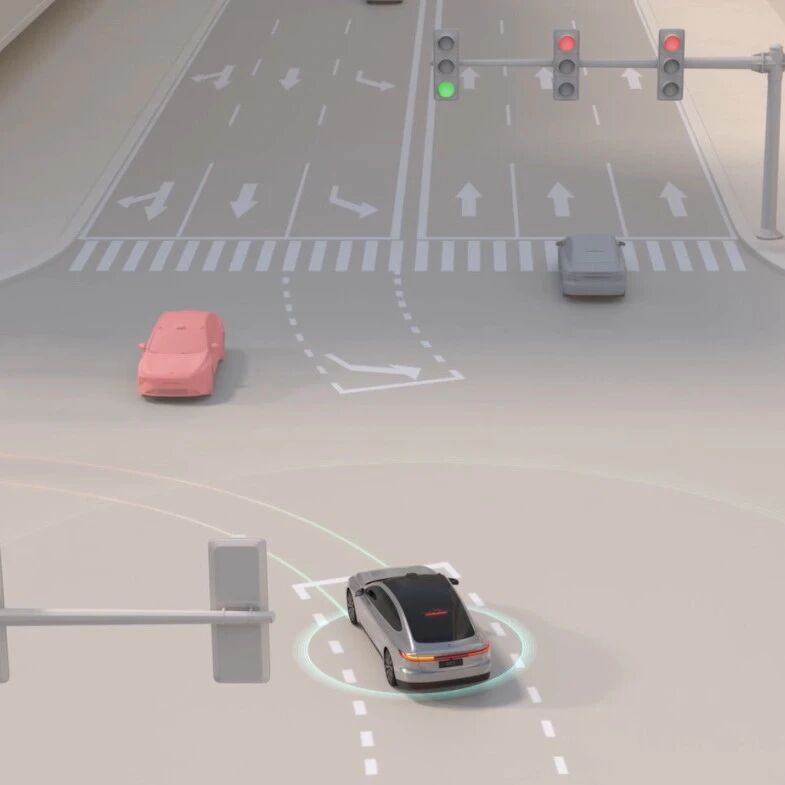
Core Viewpoint - The article discusses the evolution of the autonomous driving industry in 2025, highlighting the dual focus on technology proliferation and technical challenges, with traditional automakers pushing for accessibility and new players striving for technological advancements [4][5]. Group 1: Industry Trends - In 2025, traditional automakers like BYD, Geely, and Chery are leading the charge in making autonomous driving technology more accessible by integrating mid-level highway NOA features into vehicles priced over 100,000 yuan [4]. - New entrants and leading autonomous driving suppliers are focused on pushing the limits of technology, adhering to a model of annual technological iteration [4][5]. - The industry is witnessing a bifurcation, with one camp focused on accessibility and the other on technological challenges, particularly in the realm of algorithm development [4]. Group 2: Technological Advancements - The transition from "passive perception" to "active cognition" is marked by the introduction of world models, which represent a significant paradigm shift in autonomous driving technology [5][6]. - 2025 is characterized as a year of significant technological transition, with the widespread adoption of end-to-end systems and the emergence of world models and VLA (Vision-Language-Action) technologies [6][9]. - NIO is highlighted as a pioneer in the world model space, having launched its world model in 2024, transitioning from "perception-driven" to "cognition-driven" systems [5][6]. Group 3: Data Infrastructure and Chip Development - The importance of data infrastructure is emphasized, with companies like NIO benefiting from early investments in data collection and model training capabilities [7][8]. - The year 2025 is noted as a pivotal year for integrated hardware and software solutions, with companies like NIO and XPeng achieving self-developed chip integration [7][8]. - The article warns of the risks associated with outsourced chip development, contrasting it with NIO's genuine self-development efforts, which involve significant technical team investments [8]. Group 4: Regulatory and Market Dynamics - The issuance of L3 licenses is seen as a significant step towards the next phase of autonomous driving, indicating a shift from L2+ mass production to L3 and L4 capabilities [8][9]. - While traditional automakers have secured initial L3 licenses, their capabilities are questioned, suggesting that true advancements will come from new players and those with strong model capabilities [9][10]. - The ultimate value of autonomous driving technology is framed around enhancing driver convenience and significantly reducing traffic accidents, with a focus on safety as a primary goal [9].


2025年新势力成绩单出炉,零跑小米小鹏完成年度目标
3 6 Ke· 2026-01-04 00:37
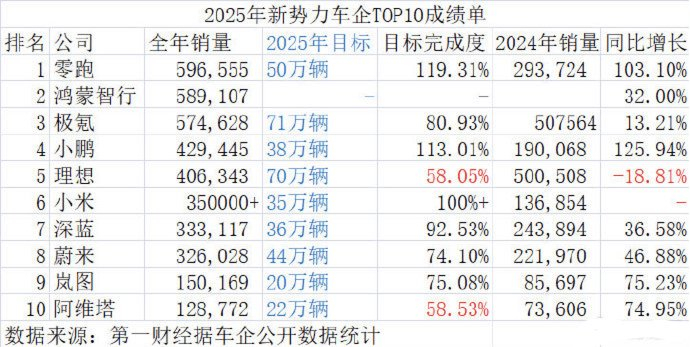
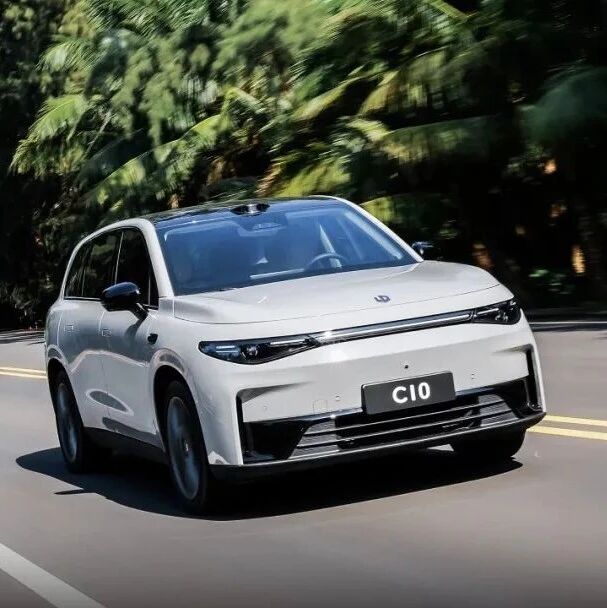
Core Insights - In 2025, only three new energy vehicle brands, Leap Motor, Xiaomi, and Xpeng, achieved their annual sales targets, with Leap Motor emerging as the top performer with nearly 600,000 units sold, exceeding its target by over 19% [1][4] - The performance of traditional leading brands, often referred to as "Wei Xia Li" (Weilai, Xiaopeng, and Li Auto), showed significant divergence, with Xpeng achieving a 125.94% year-on-year growth, while Li Auto experienced an 18.81% decline in sales [2] - State-owned enterprises like Changan and Dongfeng are also facing challenges in scaling their new energy vehicle brands, with Deep Blue and Avita struggling to meet their revised sales targets [3] Group 1: Performance of New Energy Vehicle Brands - Leap Motor sold 596,555 units, achieving a target completion rate of 119.31% and a year-on-year growth of 103.10% [4] - Hongmeng Zhixing delivered 589,107 units, marking a 32% increase year-on-year [1][4] - Zeekr, after merging with Lynk & Co, reported a total delivery of 574,628 units, but fell short of its target with an 80.93% completion rate [4] Group 2: Performance of Traditional Leading Brands - Xpeng sold 429,445 units, achieving a target completion rate of 113.01% and a year-on-year growth of 125.94% [2][4] - Li Auto's sales reached 406,343 units, but this represented a significant decline of 18.81% compared to the previous year, with a completion rate of only 58.05% against its initial target of 700,000 units [2][4] - NIO delivered 326,028 units, reflecting a year-on-year growth of 46.88%, but its main brand saw a decline in performance compared to the previous year [2][4] Group 3: Performance of State-Owned Enterprises - Deep Blue, a brand under Changan, sold 333,117 units, achieving a completion rate of 92.53% after revising its target down to 360,000 units [3][4] - Avita's sales remained low at 128,772 units, with a completion rate of only 58.53% against its target of 220,000 units [3][4] - Dongfeng's brand, Lantu, sold 150,169 units, achieving a completion rate of 75.08% [3][4]

瞄准5万亿美元市场:跨界布局机器人,时代的新共识
3 6 Ke· 2026-01-04 00:26
Core Insights - The Chinese robotics industry is poised for significant growth by the end of 2025, with humanoid robots transitioning from experimental concepts to practical applications, achieving over 50% growth and indicating a trillion-yuan industry on the horizon [1] - The entry of major players from various sectors such as automotive, electronics, and the internet into the robotics field marks a shift from niche exploration to widespread competition, creating a unique trend of "cross-industry integration" [1] Group 1: Market Dynamics - In the first eight months of 2025, the primary market financing in the robotics sector reached 38.624 billion yuan, 1.8 times the total for 2024, highlighting the blue ocean effect attracting significant investment [2] - The global industrial robot sales are projected to reach 542,000 units in 2024, with China accounting for 295,000 units, representing 54% of the global market [2] - By 2025, the Chinese robotics market is expected to exceed 150 billion yuan, capturing 35% of the global market share, with predictions suggesting the market for embodied intelligence could reach 400 billion yuan by 2030 and over a trillion yuan by 2035 [2] Group 2: Industry Trends - At least 20 automotive companies have entered the humanoid robot market by the end of 2025, with notable developments including Chery's humanoid robot Mocha and BYD's production line for core robot components [3] - The automotive industry's supply chain overlaps significantly with robotics, with a 60% compatibility rate, driving car manufacturers to invest in robotics as they view vehicles as "mobile intelligent robots" [3] - Home appliance manufacturers are transitioning from traditional manufacturing to smart ecosystems, with companies like Midea establishing dedicated innovation centers for humanoid robots and developing comprehensive R&D systems [7] Group 3: Strategic Shifts - The automotive sector is seen as a key player in the transition to robotics, with companies like Geely planning to invest 5 billion yuan over three years to develop critical components and establish an ecosystem covering all robotics applications [6] - Internet giants are leveraging their technological and capital advantages to enter the robotics space, with ByteDance and Huawei making significant investments in developing advanced robotic models and systems [8] - The competition in the robotics sector is viewed as a strategic restructuring driven by technological advancements, with companies aiming to activate existing technological capabilities and build new ecosystems [9] Group 4: Challenges Ahead - Despite the enthusiasm for entering the robotics market, cross-industry players face challenges such as adapting core competencies to the robotics field, where technology paths are still being defined [10] - The high precision and stability required for industrial applications pose significant challenges for companies transitioning from other sectors, as they may struggle to meet the diverse demands of various operational environments [11] - Cost remains a critical issue, with companies like BYD and GAC aiming to reduce the production cost of humanoid robots to below 200,000 yuan, which requires overcoming substantial supply chain and process optimization challenges [11]





新造车2025年复盘:零跑登顶,小鹏逆袭,理想遇挫
创业邦· 2026-01-03 10:22
Core Viewpoint - The 2025 sales data reveals a significant shift in the Chinese electric vehicle (EV) market, with new players like Leap Motor, Huawei's Homologous Intelligent Driving, and Xiaomi emerging as strong competitors against established brands like BYD and Geely [6][12]. Group 1: 2025 Sales Performance - BYD led the market with 4.6024 million units sold, achieving 100% of its target [7]. - Geely surpassed 3 million units, reaching 3.0246 million with a 39% year-on-year growth [7]. - Leap Motor emerged as the top new force with nearly 600,000 units sold, marking a 103% increase [8][12]. - Homologous Intelligent Driving ranked second among new forces with 589,100 units delivered, primarily driven by the Wanjie brand [8]. - Xiaomi entered the top five with over 400,000 units sold, leveraging its ecosystem and brand loyalty [17]. Group 2: Competitive Landscape - The competition among new forces has intensified, with Leap Motor, Homologous Intelligent Driving, and Xiaomi leading the charge, while traditional players like BYD and Geely maintain their dominance [10][12]. - The market is shifting from a focus on capturing the fuel vehicle market to a more competitive landscape where companies vie for each other's market share [10]. - The new forces are increasingly focusing on systemic capabilities rather than just product features or pricing [18]. Group 3: Strategic Insights - Leap Motor's success is attributed to its cost control and high component sharing rate, which allows it to offer competitive pricing while maintaining quality [15][18]. - Xiaomi's approach combines its consumer electronics experience with automotive production, achieving a gross margin of 26.4% in Q3 2025 [17]. - The high-end players like Ideal, Homologous Intelligent Driving, and NIO face challenges as the market shifts towards technology competition rather than just configuration [19][23]. Group 4: Future Outlook - The penetration rate of new energy vehicles is expected to exceed 60% in 2026, leading to intensified competition [10]. - Companies are setting ambitious sales targets for 2026, with Homologous Intelligent Driving aiming for 1 to 1.3 million units and Leap Motor targeting 1 million [10]. - The competition will evolve into a "value war," focusing on better battery performance, intelligent features, and overall vehicle quality [29][30].




一夜之间,金价突变!
Sou Hu Cai Jing· 2026-01-03 09:22
Market Performance - US stock market opened high but turned negative, with the Nasdaq initially rising over 1% before declining [1] - Chip stocks in the US saw a broad increase, with the Philadelphia Semiconductor Index rising over 4.5%, including significant gains from Nvidia, Intel, and ASML [2] - Major tech stocks such as Apple, Amazon, Microsoft, Google, and Netflix experienced declines [2] Chinese Stocks - The Nasdaq Golden Dragon China Index surged nearly 4%, with Baidu Group soaring over 12% [4] - iQIYI increased by over 9%, while other Chinese companies like GDS Holdings and JinkoSolar also saw significant gains [6] Hong Kong Market - The Hong Kong stock market opened strong, with the Hang Seng Index rising by 2.76%, the Hang Seng China Enterprises Index up by 2.86%, and the Hang Seng Tech Index increasing by 4.0% [6] - Sectors such as AI, semiconductors, commercial aerospace, electrical equipment, home appliances, and automotive showed strong performance throughout the day [6] Investment Outlook - Analysts suggest that the strong performance of Chinese assets at the start of 2026 indicates a continuation of the structural bull market from 2025, with a clear investment focus on hard technology represented by semiconductors, AI, and smart hardware, alongside policy-driven consumption in home appliances and automotive sectors [8] - The offshore RMB exchange rate against the US dollar strengthened, surpassing 6.97, reaching its highest level since May 2023 [8] Currency and Commodities - The performance of the RMB exchange rate is influenced by various factors including international environment, capital flows, and policy changes, with ongoing uncertainties regarding its future trajectory [9] - In precious metals, spot gold initially broke through $4,400 but later retraced most of its gains, while spot silver also saw a significant pullback [10]


【环球财经】中国插电式车型登顶以色列2025年汽车销量榜
Xin Hua Cai Jing· 2026-01-03 02:47
Core Insights - The Chery-produced plug-in hybrid compact crossover SUV, Jetour 7, is projected to be the best-selling vehicle in Israel for 2025, with total sales of 13,166 units, surpassing all gasoline, hybrid, and electric vehicle models [1] Group 1: Market Performance - Chinese automotive brands dominated the Israeli market in 2025, selling a total of 101,346 vehicles, significantly outpacing Korean brands, which sold 52,468 units, and Japanese brands, which sold 41,120 units [1] - In the pure electric vehicle segment, Chinese brands captured a remarkable 79.2% market share, with total sales of 46,075 units [1] Group 2: Leading Brands - BYD led the sales in the pure electric vehicle category with 8,134 units across 8 models, followed by Chery with 6,620 units and Xpeng with 6,114 units [1] - Other Chinese automotive companies, including Geely, Lynk & Co, Dongfeng, and Deep Blue, also achieved strong sales performance in the Israeli market [1]
“沸腾了”!中国资产,大爆发!
Zhong Guo Ji Jin Bao· 2026-01-03 00:20
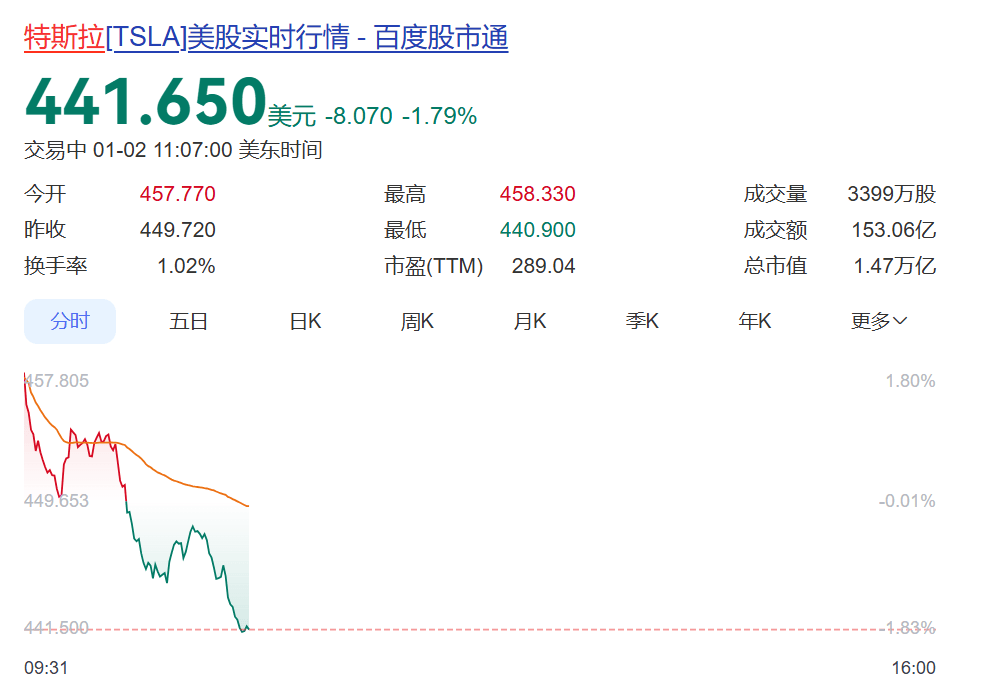
Market Performance - On January 2, 2026, U.S. stock markets showed mixed results with the Dow Jones Industrial Average rising by 0.66% to 48,382.39 points, and the S&P 500 increasing by 0.19% to 6,858.47 points, while the Nasdaq Composite fell by 0.03% to 23,235.63 points [1] - The Nasdaq Composite index was affected by declines in several major tech stocks, including Tesla down 2.59%, Microsoft down 2.21%, Amazon down 1.88%, Meta down 1.41%, and Netflix down 2.97% [2] Semiconductor Sector - The semiconductor sector experienced a significant rally, with the Philadelphia Semiconductor Index rising by 4%, driven by strong performances from AI chip stocks [5] - Notable individual stock performances included Micron Technology up over 10%, TSMC up 5.19%, Intel up 6.72%, and AMD up 4.35% [5][6] - TSMC received a U.S. government annual license to export chip manufacturing equipment to its Nanjing plant, which has garnered market attention [7] Chinese Stocks - Chinese stocks saw a strong performance on the first trading day of 2026, with the Nasdaq Golden Dragon China Index rising by 4.38% [8] - Key individual stock movements included Alibaba up 6.24%, NetEase up 7.22%, Baidu up 14.97%, and JD.com up 2.89% [10][11] Electric Vehicle Market - BYD topped the global electric vehicle sales chart, with approximately 2.26 million pure electric vehicles sold in 2025, marking a nearly 28% increase from 2024 [11] - Tesla's total vehicle deliveries for 2025 were approximately 1.64 million, slightly above market expectations of 1.6 million [12] Economic Indicators - The final value of the U.S. Manufacturing PMI for December 2025 was reported at 51.8, unchanged from expectations and the previous value, but down from 52.2 in November [13] - Despite manufacturers increasing production in December, the economic outlook for early 2026 appears less optimistic, with rising costs for U.S. businesses continuing to outpace those of competitors in other major economies [13]


XPeng Inc. (XPEV) Signs A Distributor For Mauritius And Declares Its Formal Entry In Qatar
Yahoo Finance· 2026-01-02 20:29
XPeng Inc. (NYSE:XPEV) is among the 9 Best Auto Stocks to Buy Now. XPeng Inc. (XPEV) Signs A Distributor For Mauritius And Declares Its Formal Entry In Qatar According to CnEVPost, on December 26, 2025, Xpeng announced its official debut in Qatar during a brand launch event in Doha, marking a new stage in its Middle East and Africa expansion. The business announced the impending local introduction of the P7+ sedan and unveiled its G9 and G6 SUVs during the event. Furthermore, the firm displayed products ...
NIO, XPeng & Li Auto Report December & Fourth-Quarter Delivery Results
ZACKS· 2026-01-02 16:45
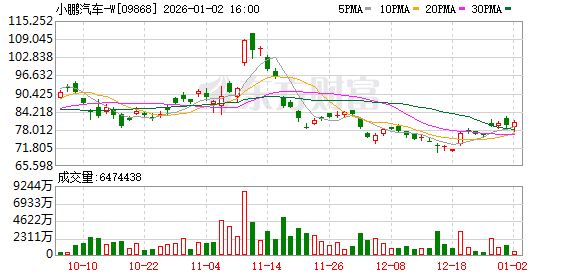
Core Insights - NIO, XPeng, and Li Auto, three major Chinese smart electric vehicle manufacturers, reported their delivery figures for December 2025 and the fourth quarter of 2025, showcasing varying performance levels among them [1]. NIO Performance - NIO achieved a record 48,135 vehicle deliveries in December 2025, reflecting a 54.6% year-over-year increase. The breakdown included 31,897 units from the premium NIO brand, 9,154 units from the ONVO brand, and 7,084 units from the FIREFLY brand [2]. - For the fourth quarter, NIO's deliveries reached a new high of 124,807 vehicles, marking a 71.7% increase from the previous year. The total deliveries for the full year 2025 were 326,028 vehicles, up 46.9% year-over-year, with cumulative deliveries reaching 997,592 units by December 31, 2025 [2]. XPeng Performance - XPeng delivered 37,508 vehicles in December 2025, which is a modest 2% year-over-year increase. The total deliveries for 2025 surged to 429,445 units, more than doubling from the previous year with a 126% increase [3]. - The company also reported overseas deliveries totaling 45,008 vehicles for the year, reflecting a 96% year-over-year increase as it expanded operations to 60 countries and regions by the end of 2025 [3]. Li Auto Performance - Li Auto delivered 44,246 vehicles in December 2025, a decrease from 58,513 units in the same month of 2024. The fourth-quarter deliveries amounted to 109,194 vehicles, with cumulative deliveries reaching 1,540,215 units as of December 31, 2025 [4]. - Throughout the year, Li Auto expanded its international presence by launching new models in Egypt, Kazakhstan, and Azerbaijan, and operated 548 retail stores in 159 cities, along with 561 service centers across 224 cities. The company also established 3,907 supercharging stations in China, comprising 21,651 charging stalls [5]. Stock Performance - Over the past year, shares of NIO and XPeng have increased by 10.2% and 73.2%, respectively, while shares of Li Auto have declined by 31.6% [6]. Zacks Rank - Currently, NIO, XPeng, and Li Auto all carry a Zacks Rank of 3 (Hold) [8].
小鹏汽车2025年全年交付量达42.94万台,同比增126%
Xin Jing Bao· 2026-01-02 13:43
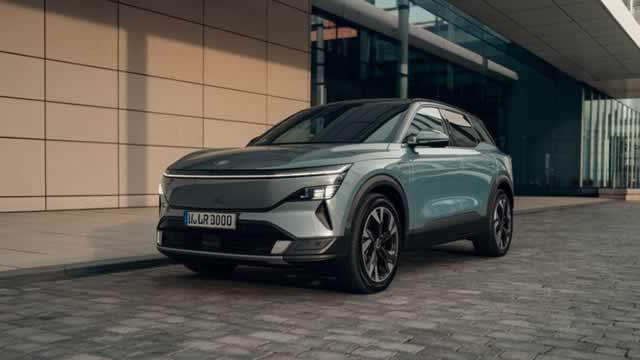
Core Insights - Xiaopeng Motors reported a total delivery of 429,445 new vehicles in 2025, marking a year-on-year increase of 126% [2] - In December 2025, the company delivered 37,508 new vehicles, achieving both month-on-month and year-on-year growth [2] - The total carbon reduction from the vehicles delivered in 2025 is estimated to exceed 6.61 million tons, equivalent to the carbon absorption of 110 million medium-sized trees over a decade [2]