海信

Search documents
AWE 2025:AI重塑家电生态,技术突破与市场困惑并存
雷峰网· 2025-03-26 00:45
Group 1 - The article emphasizes the importance of technological and value innovation in determining the future direction of the home appliance industry, especially in the context of the AWE 2025 event [2][29] - AWE 2025 showcased the deep integration of AI technology into home appliances, moving from basic interactions to a comprehensive ecosystem that enhances user experience [4][5] - Major brands like Samsung and Haier are leading the way in AI integration, creating smart home environments that respond to user needs in real-time [4][5] Group 2 - The article discusses the disparity in AI application effectiveness among brands, with leading companies leveraging advanced algorithms while smaller firms struggle with basic functionalities [7][8] - The rise of embodied intelligence in home appliances is highlighted, showcasing both advancements and limitations in current technology, such as the challenges faced by cooking robots in adapting to nuanced cooking styles [10][11] - The cost-effectiveness and practicality of embodied intelligence are questioned, as high-priced products may not attract consumer interest despite their advanced features [11] Group 3 - The entry of small appliance companies into the market is invigorating the traditional home appliance sector, with innovative products challenging established norms [13][14] - New entrants face significant hurdles, including the need to build service networks and establish brand recognition in a market dominated by giants like Gree and Midea [15][17] - The article notes that while new technologies can attract attention, their long-term viability and impact on the market remain uncertain [15][17] Group 4 - The article highlights innovations in traditional categories like air conditioning, where companies like Gree and Hisense are introducing advanced technologies to enhance user comfort [19][22] - The shift in refrigerator technology towards food management systems is noted, with brands like Hisense and Casarte integrating AI to provide personalized dietary recommendations [22] - The washing machine sector is experiencing a "drum revolution," with companies responding to consumer demand for more versatile washing solutions [23][24] Group 5 - The article concludes with a reflection on the industry's collective anxiety regarding technological innovation, questioning whether it should lead or adapt to consumer demand [29] - It suggests that the future of competition will hinge on the ability to create meaningful user experiences rather than merely showcasing advanced technologies [29]






AI家电,摆脱噱头?
虎嗅APP· 2025-03-24 23:55
Core Viewpoint - The article discusses the transformation of the home appliance industry towards AI integration, highlighting the shift from mere marketing gimmicks to practical applications of AI technology in products [4][8]. Group 1: AI Integration in Home Appliances - The current trend in "AI home appliances" can be summarized with two keywords: "scenario-based" and "non-intrusive" [4][5]. - Scenario-based AI applications allow appliances to monitor cooking states and provide real-time feedback, such as reminding users when to stir or adjust heat levels [4][11]. - Non-intrusive applications enable devices to operate independently without user intervention, such as smart locks that detect unusual activity and alert users [5][6]. Group 2: Innovations from Major Companies - Haier's "AI Eye" technology, showcased at the AWE 2025, integrates voice and visual recognition across various appliances, enhancing user experience by automating tasks like washing and cooking [10][11]. - Hisense's AI system covers air conditioning, laundry, and cooking, with innovations like adaptive sound and light adjustments based on user presence [17][19]. - Startups like MOVA are focusing on solving specific pain points, such as noise reduction in cleaning devices and intelligent floor cleaning solutions [20][22]. Group 3: Embodied Intelligence in Home Appliances - The concept of embodied intelligence is emerging in home appliances, with companies like Fotile showcasing robotic arms for cooking tasks [22][25]. - Haier is also exploring robotic arms for laundry, demonstrating potential for automation in household chores [26][30]. - The advancements in robotic technology indicate a future where embodied intelligence could become commonplace in home environments [31].
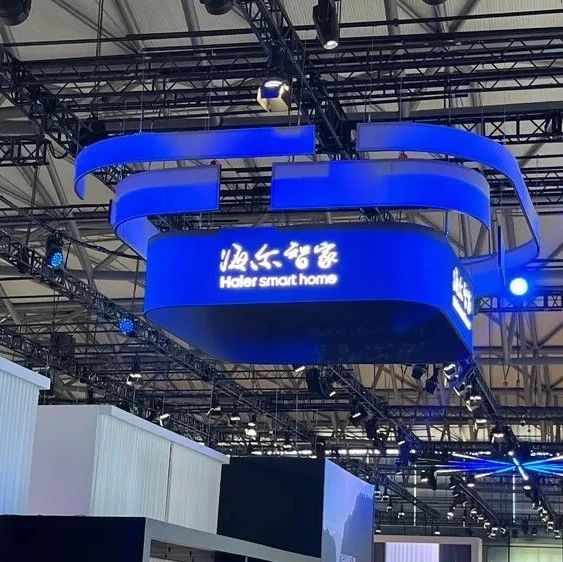
2025年中国AI家电行业发展白皮书 | 36氪研究院
36氪· 2025-03-19 13:07
Group 1 - The core viewpoint of the article emphasizes the transformative impact of AI large models, particularly DeepSeek, on the home appliance industry, enabling a shift towards intelligent and proactive services in smart home devices [1][15][24]. - The evolution of AI home appliances is categorized into three main stages: the voice interaction era ("hearing"), the perception decision era ("seeing"), and the autonomous action era ("doing"). The industry is currently in the second stage, characterized by significant breakthroughs in AI visual technology [2][16][27]. - The current "seeing" stage is marked by three revolutions in user experience, technology restructuring, and scene evolution, leading to a shift from passive response to proactive service [4][17][35]. Group 2 - User experience has evolved from operating appliances to having needs met seamlessly, driven by advancements in spatial, temporal, and emotional dimensions of interaction [5][36][39]. - Technological upgrades in AI appliances involve the integration of multimodal perception, cloud-edge collaboration, and adaptive optimization, enhancing autonomous decision-making capabilities [5][41][45]. - Scene evolution is facilitated by AI technology, enabling data intelligence and deep collaboration among devices, transitioning from isolated operation to interconnected smart scene ecosystems [5][48][49]. Group 3 - Haier Smart Home exemplifies the integration of AI technology, particularly through its "AI Eye," which enhances appliance functionality and creates a new standard for smart homes [6][58]. - The "AI Eye" technology allows appliances to possess proactive observational capabilities, enabling them to recognize user needs and environmental conditions, thus transitioning from passive to active service [7][59]. - Haier's comprehensive smart home solutions, such as the "1+3+5+N" model, illustrate the interconnectedness of various appliances, allowing for seamless collaboration across different home scenarios [5][50][60]. Group 4 - Future AI home appliances are expected to achieve full-scene autonomous collaboration and ubiquitous intelligence, reshaping lifestyles through a highly coordinated smart ecosystem [8][18]. - The integration of household robots is anticipated to enhance the capabilities of AI appliances, enabling them to perform complex tasks autonomously and redefine household management [8][32][33].
电子元器件周报:消费电子复苏有望持续强化,存储供需拐点确立涨价周期-2025-03-18
Great Wall Securities· 2025-03-18 13:17
Investment Rating - The report maintains an "Outperform" rating for the industry [1] Core Views - The storage supply-demand pattern is reaching a turning point, with multiple manufacturers initiating a price increase trend due to a shift towards supply shortages and structural demand growth, particularly driven by AI computing needs and new energy vehicles [4] - The TV panel prices continue to rise, with specific increases noted for various sizes, while storage product prices are also on the rise due to supply constraints and increased demand [4] - Recent consumer finance policies are expected to boost consumer electronics demand, with recommendations for companies like Huakin Technology, BOE Technology, and others [4] Summary by Sections Investment Recommendations - Recommended companies include Huakin Technology, BOE Technology, Deepin Technology, and others, with a focus on NAND Flash supply-demand improvements and price increases expected in the second half of the year [4] Market Observations - The PC market in mainland China is projected to grow by 3% in 2025, driven by government subsidies and new product launches [10] - The wearable device market in China is expected to see significant growth in 2025, with a 41% increase in sales driven by subsidy policies [12] - The global smart glasses market is anticipated to grow by 210% in 2024, primarily due to strong demand for Ray-Ban Meta smart glasses [13] Price Trends - TV panel prices have seen increases across various sizes, with specific dollar amounts noted for each size [29] - Storage prices are also rising, with DDR4 memory prices showing slight increases, and NAND Flash prices expected to rise due to supply constraints [30]
家电轻工+AI科技消费全梳理
2025-03-16 14:53
Summary of Key Points from Conference Call Records Industry Overview - The home appliance industry is actively embracing AI technology, with leading companies like Midea and Haier launching AI-integrated products such as Midea's DeepSeek smart air conditioner and Haier's AI refrigerator aimed at enhancing user experience and product value [1][2][4]. Core Insights and Arguments - AI applications in the home appliance sector focus on three main areas: integration with traditional major appliances, empowerment of innovative product categories (e.g., smart glasses, robotic vacuums), and participation in infrastructure support (e.g., computing power service leasing) [1][4]. - AI technology enables true smart home experiences through voice recognition, automated analysis, and personalized solutions, significantly enhancing user experience and product value. For instance, Midea's DT6 air conditioner saw a price increase of nearly 30% due to its AI features [1][6]. - Haier plans to unveil new AI-integrated products, including a smart home experience and AI refrigerator, at the AWE exhibition in 2025, while Gree's AI dynamic energy-saving air conditioner is expected to improve energy savings by 13.6% [1][8][10]. - The light industry is significantly impacted by AI, particularly in smart home products, smart glasses, toys, health and fitness, and robotic computing power, enhancing design, production, and product functionality [1][20]. Additional Important Content - Some home appliance companies are leveraging strong cash flows to enter the computing power leasing market, such as Yitian Smart's establishment of a 2,500P computing power service cluster in Gansu [2][19]. - Major white goods companies like Midea, Gree, and Haier are developing their AI models or collaborating with DeepSeek, indicating a strong trend towards AI integration in product offerings [2][4]. - The introduction of AI technology has led to significant price increases for new products, with air conditioners seeing price hikes of approximately 3,500 yuan, nearly 30% higher than previous models [7][6]. - Companies in the light industry, such as Oppein and Sofia, are implementing smart AI factories to enhance design and manufacturing processes, showcasing the broad applicability of AI across sectors [20][21]. - The AI technology's impact on the toy industry is emerging, with companies like Time Culture launching AI toys that provide emotional interaction and educational value [23][24]. - In the health and fitness sector, companies like Shuhua Sports and Kangliyuan are integrating AI into fitness equipment to monitor user data and provide personalized training recommendations [25][26]. This summary encapsulates the key developments and insights from the conference call records, highlighting the transformative role of AI in the home appliance and light industry sectors.
GPMI引领视听电子产业升级革新:超高清音视频接口技术洞察白皮书
艾瑞股份· 2025-03-16 11:55
Investment Rating - The report does not explicitly provide an investment rating for the industry Core Insights - The GPMI (General-Purpose Multimedia Interface) technology emerges as a revolutionary solution to meet the demands of the ultra-high-definition audio and video industry, addressing limitations of existing interface technologies [3][9] - GPMI technology offers seven significant advantages: bidirectional multi-stream, bidirectional control, high power supply, ecological compatibility, ultra-fast transmission, quick wake-up, and full-chain security, which collectively enhance user experience and drive innovation in the audio and video sector [3][37] - The GPMI ecosystem is supported by over 50 key industry partners, creating a comprehensive and organic industrial ecosystem that spans from terminal manufacturers to cable and connector manufacturers, content protection companies, chip developers, and standard-setting organizations [4][30] Summary by Sections 1. Development Overview - The report outlines the challenges and transformations in the audio and video industry, defining GPMI and its development history, along with relevant support policies [10][12] - GPMI integrates video transmission, data interaction, network connection, and power supply into one interface, providing a solid technical foundation for the audio and video industry [14][21] - The GPMI industry ecosystem is poised for commercialization, promising to unlock significant market potential and drive industry innovation [14][19] 2. Advantage Analysis - GPMI's seven core advantages include bidirectional multi-stream, bidirectional control, high power supply, ecological compatibility, ultra-fast transmission, quick wake-up, and full-chain security, which collectively address the limitations of traditional technologies [39][40] - The technology supports mixed bidirectional transmission of video and data streams, enhancing the richness of application scenarios [42] - GPMI's high power supply capability (up to 480W) simplifies device connections and enhances user experience [48][50] 3. Application Scenarios - GPMI technology is being applied in various fields, including smart TVs, interconnectivity of screens, and splicing screen applications, significantly improving audio and video transmission quality and efficiency [59][61] - The technology enables a simplified connection method for smart displays, allowing for a unified and efficient device interaction experience [61][62] - GPMI's implementation in smart TVs is exemplified by Haier's launch of the world's first GPMI-enabled smart TV, showcasing its potential in enhancing user experience and smart interconnectivity [61][62] 4. Future Outlook - The report predicts that GPMI will drive the evolution of the audio and video industry, with a focus on collaborative development among ecosystem partners and the establishment of a smart interconnected ecosystem [11][19] - GPMI's integration into existing USB ecosystems ensures a smooth transition and broad applicability across various devices and scenarios [54][55]
国家再投3000亿元加力两新政策 京东家电家居“超级国补日”为消费者补上加补
Zhong Guo Jing Ji Wang· 2025-03-15 03:42
Core Insights - The "trade-in for new" policy has gained significant attention during the recent National People's Congress, with the government allocating 300 billion yuan to support this initiative, doubling last year's budget of 150 billion yuan, which is expected to boost the domestic consumer goods market recovery [1] - JD.com has actively engaged in supporting the "trade-in for new" subsidies, enhancing its product offerings and services to provide consumers with a better experience [1][2] - The "Super National Subsidy Day" event by JD.com is set to feature over 3 million products from well-known brands, offering additional discounts alongside government subsidies [2] Company Initiatives - JD.com has launched various promotional activities, including interest-free installment plans and additional discounts, to maximize consumer benefits from the national subsidies [2] - The range of household appliances eligible for the trade-in subsidy has expanded from 8 categories last year to 12 this year, with local governments also introducing their own subsidy details [2][3] - JD.com has streamlined its trade-in service process, reducing the number of required visits for old product collection to 1-2 times, enhancing consumer convenience [3] Market Impact - The trade-in for new initiative is seen as a crucial measure to stimulate consumption and improve residents' quality of life, requiring robust supply chain integration and resource allocation [3] - JD.com has successfully activated economic activity in rural areas, with over 90% of counties having consumers participating in the trade-in program [3] - The collaboration between government policies and corporate efforts is expected to unleash greater economic benefits and consumer confidence, further supporting economic growth [3]


格力电器(000651):基本面向上+高分红+低估值,关注空调龙头反弹机会
China Securities· 2025-03-14 15:27
Investment Rating - The report maintains a "Buy" rating for Gree Electric Appliances, indicating an expected relative price increase of over 15% [10]. Core Views - Gree Electric Appliances is positioned favorably with multiple advantages including an upward trend in fundamentals, high dividends, and low valuation. The company is expected to benefit from the long-term national subsidy policy for high-end air conditioners, which has significantly boosted its retail market share since Q4 2024 [1][2]. - The introduction of the Jinghong air conditioner brand aims to penetrate the lower-tier market, leveraging Gree's strong brand reputation to create a second growth curve [1][9]. - Recent share purchases by the dealer group Jinghai Interconnect reflect a stabilization of channel relationships and confidence in Gree's long-term development [1][8]. - The report emphasizes the increasing focus on high dividend yields in the current investment environment, suggesting that Gree's low valuation presents a rebound opportunity [1]. Summary by Sections Market Dynamics - The long-term national subsidy policy has positively impacted the high-end air conditioning market, leading to a notable rebound in Gree's market share. The subsidy for high-efficiency air conditioners can reach up to 20%, stimulating consumer demand for high-performance products [2]. - Gree's market share showed a decline in the first three quarters of 2024 but rebounded by 2.00 percentage points in Q4, with further growth of 4.63% in January-February 2025 [2]. Financial Performance - Key financial metrics for Gree Electric Appliances are as follows: - Revenue (in million): 188,988.38 in 2022, projected to reach 232,403.65 by 2026, with a CAGR of approximately 5.35% [3]. - Net Profit (in million): 24,506.62 in 2022, expected to grow to 37,297.65 by 2026, reflecting a CAGR of about 7.72% [3]. - Gross Margin: Expected to increase from 26.04% in 2022 to 31.20% by 2026 [3]. - P/E Ratio: Projected to decrease from 10.39 in 2022 to 6.83 by 2026, indicating improving valuation [3]. Strategic Initiatives - Gree plans to launch the Jinghong air conditioner brand to target the engineering and low-price market segments, aiming to regain market share in the lower-tier market where competitors have been gaining ground [9]. - The company maintains a robust dividend policy, with a proposed dividend of 2.38 yuan per share for 2024, totaling 131.42 billion yuan, resulting in a dividend rate of 45.29% and a yield exceeding 6% [10]. Industry Outlook - The global air conditioning demand is expected to remain stable, with domestic sales projected to grow by 1.9% to 10.38 million units in 2025, driven by the national subsidy policy [7]. - Gree is well-positioned to benefit from the overall industry demand increase, particularly in the high-end segment [7].
2025年面板行业竞争格局:5大关键点需关注
WitsView睿智显示· 2025-03-12 06:44
Core Viewpoint - The global LCD panel industry is undergoing significant changes due to capacity expansion, technological iteration, and supply chain restructuring, with Chinese manufacturers like BOE and TCL Huaxing emerging as dominant players, reshaping the global landscape [1] Group 1: Industry Capacity and Market Share - Chinese panel manufacturers have increased their capacity share from 20% in 2016 to over 60% in 2024, and it is expected to exceed 70% by 2025 [1] - In the TV and monitor panel sectors, Chinese manufacturers account for over 60% of shipments, with a significant lead in the large-size market [1] - The market share of Chinese panel companies in the notebook panel segment is currently at 50%, indicating ongoing expansion that pressures South Korean and Taiwanese manufacturers [1] Group 2: Television Panel Market Dynamics - The demand for television panels is expected to remain stable, with 2024 TV shipments projected at approximately 197.8 million units, a year-on-year increase of about 1.2% [3] - Domestic brands like TCL and Hisense are rising in global rankings, now positioned as the second and third largest TV brands [4] - The average size of TV panels is projected to increase from 51.5 inches in 2024 to 52.2 inches in 2025, driven by growing demand for larger panels [5] Group 3: Production Strategies and Supply Chain - The importance of production control strategies is highlighted, especially in response to demand fluctuations, with a focus on maintaining supply-demand balance [6] - The average utilization rate of the industry is volatile, necessitating adjustments in production capacity to stabilize supply and demand [6] - Domestic companies are increasingly taking over the polarized film market as Japanese manufacturers exit, indicating a shift in the supply chain [9][10] Group 4: Mergers and Acquisitions - The market is witnessing significant consolidation, with LG Display's transfer of its Guangzhou factory to TCL Huaxing expected to drastically reduce LG's panel shipments while boosting TCL's [7] - Potential acquisition targets include the 8.6-generation line of Xi'an Rainbow Optoelectronics and Sharp's 10.5-generation line, which could enhance market concentration and bargaining power [8] Group 5: Overseas Expansion and New Technologies - Major panel manufacturers are expanding overseas production capacities in countries like Vietnam and Thailand to diversify supply chains and mitigate risks [12][14] - Chinese manufacturers are investing in new technologies, including Mini LED and OLED, to enhance their competitive edge in the market [18] - The industry is expected to focus on five core areas: production control, consolidation, domestic component supply chain enhancement, overseas capacity expansion, and new display technologies [19]

出海的尽头是非洲?实地考察东非机遇与挑战
吴晓波频道· 2025-03-10 15:02
Core Insights - The article highlights the significant opportunities for Chinese companies in Africa, particularly in sectors like construction, consumer goods, and technology, as the continent experiences rapid urbanization and industrialization [1][2][3] African Consumer Market - The construction industry in Africa is thriving, with Chinese building materials companies achieving high profit margins, such as 43.3% for Keda Manufacturing, which is significantly higher than domestic competitors [2] - The low urbanization level and fast urbanization rate in Africa present a unique opportunity for Chinese building material companies to expand and profit [2] - The consumer goods market, particularly in household appliances, is rapidly evolving, with rising incomes transforming previously luxury items into necessities [2][3] Internet and E-commerce Opportunities - The telecommunications and internet sectors in Africa are experiencing rapid growth, with companies like Transsion achieving a 30% increase in mobile phone shipments, securing a 50% market share [5] - The e-commerce market in Africa is projected to grow at an annual rate of 15.5%, reaching a market size of $40.758 billion by 2025, indicating a significant opportunity for Chinese brands to establish a strong presence [5][6] Strategic Layout and Local Adaptation - Chinese companies are encouraged to understand local market dynamics and establish a presence in Africa through partnerships and local manufacturing, as demonstrated by companies like Anqi Yeast and SHEIN [6][11] - The article emphasizes the importance of engaging with local governments and understanding investment policies to facilitate smoother market entry for Chinese enterprises [12] Conclusion - The article concludes that Africa represents a promising frontier for Chinese companies, with the potential for substantial growth and profitability as they navigate the unique challenges and opportunities presented by the continent [13]