宝马

Search documents
固态电池,外卖小哥可能要比你先用上了
汽车商业评论· 2025-08-18 23:04
Core Viewpoint - The automotive industry is eagerly awaiting solid-state batteries, with mass production timelines being pushed from 2025 to 2027, while semi-solid batteries are being introduced as a precursor to full solid-state technology [4][6][11]. Group 1: Semi-Solid Battery Developments - SAIC's MG4 model is set to feature a semi-solid battery version, with pricing to be announced in September and deliveries expected within the year [4]. - The semi-solid batteries for both MG4 and the delayed IM L6 Max are developed in collaboration between SAIC and Qingtao Energy, indicating a competitive landscape for early adoption [6]. - Hive Energy plans to supply semi-solid batteries for BMW's next-generation MINI models, with large-scale production expected by the end of 2026, marking a significant milestone in the industry [6]. Group 2: Technological Innovations - The first generation of semi-solid batteries from SAIC Qingtao utilizes traditional lithium iron phosphate and ternary materials, achieving a range of 1000 kilometers [8]. - The second generation of semi-solid batteries aims to improve safety, energy density, and lifecycle, with a reduction in liquid electrolyte content from 10% to 5% [8][10]. - Innovations in core materials and collaborative efforts between vehicle manufacturers and component suppliers are crucial for the successful commercialization of new battery technologies [10]. Group 3: Full Solid-State Battery Production Plans - The industry consensus suggests that full solid-state battery mass production is likely to commence around 2027, with various companies providing timelines that align closely with this date [11][12]. - Companies like Aulton and Guoxuan High-Tech are actively working on solid-state battery production lines, with Guoxuan achieving a 90% yield rate on its pilot line [11][12]. - SAIC Qingtao aims to achieve full solid-state battery production by 2026, with energy density targets exceeding 400Wh/kg [11][14]. Group 4: Alternative Applications for Solid-State Batteries - The demand for solid-state batteries is not limited to the automotive sector; applications in eVTOL and humanoid robots are emerging as significant opportunities [15][18]. - Companies like Hive Energy and Funeng Technology are already engaging with clients in these new fields, indicating a broader market potential for solid-state technology beyond traditional vehicles [15][18]. - The introduction of solid-state batteries in two-wheeled vehicles is also gaining traction, with companies like Tianneng launching new products that significantly enhance performance metrics compared to traditional lithium batteries [18].








天奇股份:智能装备业务引领扭亏 机器人布局筑牢增长后劲
Zheng Quan Shi Bao Wang· 2025-08-18 15:02
Core Viewpoint - The company has significantly improved its performance in the first half of 2025, achieving a revenue of 1.247 billion yuan and a net profit of 55.83 million yuan, marking a substantial turnaround from a loss of 78.51 million yuan in the same period last year, with a year-on-year increase of 171.11% [1] Group 1: Smart Equipment Business - The smart equipment segment has shown rapid growth, with revenue reaching 842 million yuan, a year-on-year increase of 23.22% [2] - The overseas business has been a key driver, generating 417 million yuan in revenue, a remarkable increase of 64.23%, accounting for 33.44% of total revenue, up from 19.36% in the previous year [2] - Major projects such as BYD's Indonesia project and BMW's Mexico project have accelerated delivery, contributing to revenue growth [2][3] Group 2: Lithium Battery Business - The lithium battery recycling segment has shown signs of improvement, with revenue of 137 million yuan, despite a year-on-year decline of 44.63% due to industry challenges [4] - The narrowing of losses in this segment is attributed to a temporary increase in cobalt prices due to export bans from the Democratic Republic of Congo [4] - New policies have been implemented to facilitate the import of recycled materials, providing a stable supply for the lithium battery recycling business [4] Group 3: Robotics Business - The company has established a humanoid robotics division to enhance its strategic layout in the robotics industry, focusing on technology collaboration and resource integration [5] - A joint venture with Beijing Galaxy General Robotics has been formed to develop robotic technology and applications [5] - The company aims to leverage its engineering capabilities and technological strengths to provide diverse solutions in intelligent manufacturing [6] Group 4: Industry Trends and Future Outlook - The automotive intelligent equipment and robotics sectors are in a high-growth cycle, with significant market opportunities arising from the transition to electric and intelligent vehicles [6] - The global humanoid robot market is projected to reach 1.24 million units by 2025, with China becoming a core engine in the global humanoid robotics supply chain [6] - The company is well-positioned to capitalize on industry growth and strengthen its competitive advantages through innovation and resource integration [6]

美国关税“迟迟未降”,欧日韩很焦虑
Hu Xiu· 2025-08-18 06:35
Group 1: Trade Agreements and Delays - Despite agreements reached by the UK, EU, Japan, and South Korea with the Trump administration regarding tariffs, companies are still waiting for the U.S. to fulfill its commitments [1] - Key terms of the trade agreements, particularly tariff reductions on core industries like automobiles and steel, have not yet been implemented, leading to losses in the billions for affected industries [2][6] - The U.S. administration has remained silent on the delays, causing uncertainty among allies about whether this is due to administrative sluggishness or more complex negotiation issues [3] Group 2: Impact on Japanese Automotive Industry - Japan's automotive sector is experiencing significant financial strain, with one manufacturer reportedly losing 1 billion yen per hour due to the current tariff levels [7] - Nissan has indicated that its estimated financial impact from tariffs would decrease from 450 billion yen to 300 billion yen if tariffs are reduced to 15%, but the lack of clarity on implementation timing complicates accurate forecasting [8] - Japanese trade negotiators are urging the U.S. to expedite the signing of administrative orders to alleviate the ongoing financial damage [7][8] Group 3: European Automotive Industry Concerns - The German automotive industry is facing escalating costs due to the lack of clarity and implementation of the trade agreement with the U.S., with costs already reaching "billions" [10][11] - The VDA is pressing for swift execution of the agreement to relieve the significant burdens on manufacturers and suppliers [10] - Delays in the agreement's implementation could lead to retaliatory actions from European manufacturers, particularly from Germany, Italy, and France [11] Group 4: South Korean Automotive Sector Challenges - South Korea's automotive industry is similarly affected, with the current 25% tariff still in place despite a new agreement that was supposed to lower it to 15% [12] - Exports of South Korean automobiles to the U.S. have dropped nearly 17%, and steel exports have decreased over 11% due to the anticipated tariffs [13] - Major South Korean automakers like Hyundai and Kia may face up to $5 billion in additional costs this year, even if tariffs are eventually reduced [13] Group 5: UK Steel Industry Struggles - The UK steel industry is under severe pressure as the U.S. has not yet reduced the 25% tariff on steel imports as agreed, causing significant concern among industry stakeholders [15][16] - UK Steel's representatives have noted a decline in U.S. orders due to uncertainty surrounding the steel agreement, with some manufacturers warning of potential closures if tariffs are not lifted [16] - Technical obstacles related to U.S. requirements for steel exports are complicating the situation, as some UK producers cannot meet the necessary conditions [17][19]
光弘科技(300735.SZ)收购AC公司落拓展全球化布局 汽车电子业务再进阶
Xin Lang Cai Jing· 2025-08-18 06:06
Group 1 - The domestic demand potential for new energy vehicles (NEVs) has been further stimulated by policies such as consumption promotion initiatives and expansion of "two new" measures, with July production and sales reaching 1.243 million and 1.262 million units, respectively, representing year-on-year growth of 26.3% and 27.4% [1] - NEVs accounted for 48.7% of total new car sales in July, and exports reached 225,000 units, showing a month-on-month increase of 10% and a year-on-year increase of 120% [1] - QFII's holdings in the automotive sector exceeded 1.3 billion yuan by the end of the first half of the year, indicating strong market interest in the automotive industry [1] Group 2 - Guanghong Technology (300735) has made significant strides in the automotive electronics sector, achieving revenue of 1.592 billion yuan in 2024, a substantial year-on-year increase of 126.47%, with this segment now accounting for 23.13% of total revenue [2] - The company has established itself as a key player in the automotive electronics supply chain, partnering with renowned brands such as BMW, Audi, and Huawei, and providing a wide range of automotive electronic components [2][3] - The recent acquisition of French EMS leader AC Company enhances Guanghong Technology's global manufacturing network, allowing for a more integrated approach to production and customer service across multiple continents [3] Group 3 - The acquisition of AC Company is expected to create synergies in production technology, service operations, and customer resource integration, thereby accelerating Guanghong Technology's expansion in the automotive electronics field [3] - The company is committed to increasing its investment in automotive electronics, driven by the dual forces of technological innovation and market demand, which are reshaping the industry landscape [4]
崔东树:7月全国乘用车厂商批发222万辆创当月历史新高
智通财经网· 2025-08-18 05:45
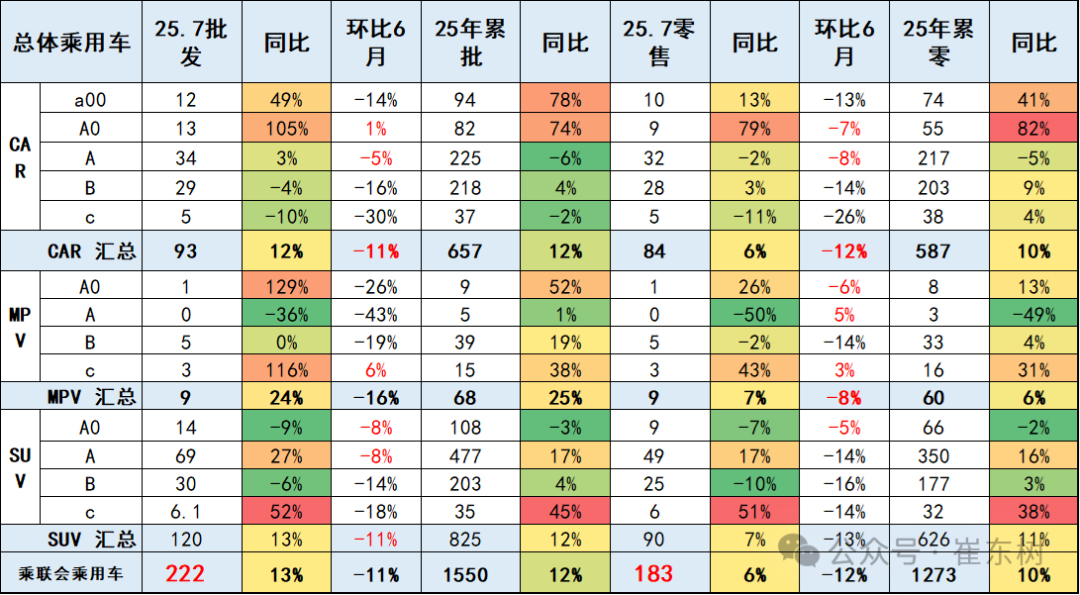
智通财经APP获悉,8月18日,崔东树发布2025年7月乘用车细分市场车型走势。7月全国乘用车厂商批发222万辆创当月历史新高,同比增长13%,环比下 降11%;1-7月全国乘用车厂商批发1,550万辆,同比增长12.4%。受零售调整的影响,7月乘用车批发同比增速比零售增速高7个百分点。7月自主车企批发 158万辆,同比增长20%,环比下降5%;主流合资车企批发44万辆,同比增长7%,环比下降21%;豪华车批发20万辆,同比下降16%,环比下降25%。 7月乘用车主力厂商总体批发格局持续变化,部分中段企业有逐步崛起迹象,如吉利汽车(00175)、东风日产、小鹏汽车(09868)、小米汽车、零跑汽车 (09863)等车企的环比表现较强。 | 总体乘用车 | | 25.7批 | 同比 | 环比6 | 25年累 | 同比 | 25.7零 | 同比 | 环比6 | 25年累 | 同比 | | --- | --- | --- | --- | --- | --- | --- | --- | --- | --- | --- | --- | | | | 发 | | 日 | 批 | | 售 | | 月 | 통 | | | a0 ...



协议宣布了,但美国关税“迟迟未降”,欧日韩很焦虑
Hua Er Jie Jian Wen· 2025-08-18 00:36
Group 1: Trade Agreements and Tariffs - Despite agreements reached by the UK, EU, Japan, and South Korea with the Trump administration regarding tariffs, key terms, especially for the automotive and steel industries, have not been implemented, leading to significant financial losses in these sectors [1][2][3] - Japan's automotive industry is facing losses of up to 1 billion yen per hour due to the ongoing 25% tariff, with Nissan estimating a reduction in impact from 450 billion yen to 300 billion yen if tariffs are lowered to 15% [2][3] - The EU and the US announced a new agreement on July 27, but the punitive tariffs on German automotive exports remain unchanged, causing costs to escalate into the billions [3][4] Group 2: Industry Impact and Costs - The German automotive industry has reported costs reaching "tens of billions" due to the unresolved tariff situation, with pressure mounting for swift implementation of agreements to alleviate burdens on manufacturers and suppliers [3][4] - South Korea's automotive sector is projected to face up to $5 billion in additional costs this year, even if tariffs are eventually reduced to 15%, due to weak demand and tightening subsidies [5][6] - The UK steel industry is suffering from the delay in tariff reductions, with concerns that if the 25% tariff is not eliminated, some producers may face closure by year-end [6]
唠嗑 | 人形机器人产业观察:一场跌跌撞撞的资本狂欢
Sou Hu Cai Jing· 2025-08-16 13:16
Core Viewpoint - The current state of humanoid robots is characterized by a significant gap between their technological capabilities and the high valuations they receive, leading to a sense of disconnection in the industry [4][5]. Group 1: Humanoid Robot Performance - Humanoid robots are struggling with basic tasks, often failing to perform effectively in real-world scenarios, which raises questions about their practical applications [2][4]. - The performance of humanoid robots is likened to a "high-scoring low-ability" student, excelling in certain areas but failing in others, such as endurance and practical execution [4][5]. Group 2: Investment and Valuation Discrepancies - There is a stark contrast in valuations between Chinese and international companies in the humanoid robot sector, with Chinese firms often receiving inflated valuations despite lacking advanced technology [5]. - Investment in humanoid robots is heavily skewed towards research and development, with many orders coming from academic institutions rather than practical applications in industries like manufacturing or healthcare [5]. Group 3: Industry Trends and Challenges - Major automotive companies are entering the humanoid robot market, but their motivations remain unclear, leading to skepticism about the sustainability of this trend [5]. - The industry is criticized for its focus on creating humanoid robots that mimic human physical traits rather than developing practical, functional robots that can assist in real-world tasks [5][6]. Group 4: Future Outlook - While the future may belong to robots, the current control and direction of development still lie with human operators, indicating a need for more grounded approaches in robot design and application [6].


2025济南电商主播大赛暨滨河新能源汽车城直播基地盛大启幕
Qi Lu Wan Bao· 2025-08-16 01:59
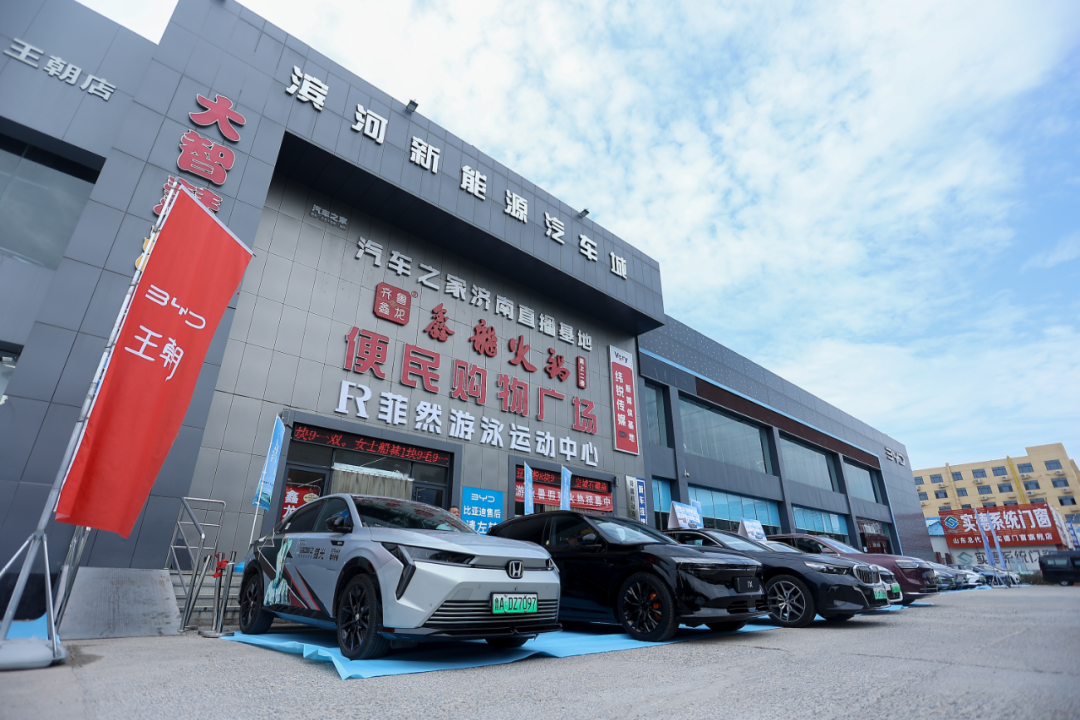
Core Viewpoint - The event "Live New Engine, Binhe New Momentum" marks the integration of live e-commerce and the new energy vehicle industry in Jinan, aiming to enhance the local e-commerce landscape and attract talent in the sector [1][3]. Group 1: Event Overview - The "2025 E-commerce Anchor Competition" was launched in Jinan, focusing on skill competitions, industry empowerment, and consumer experience [1][3]. - The event is part of Jinan's "Haiyou Skilled Talent Plan," aimed at discovering and nurturing excellent e-commerce anchors to invigorate the local e-commerce industry [3]. Group 2: Industry Participation - Major automotive brands such as BYD, Leap Motor, and Wuling Baojun participated in the event, showcasing their latest and most popular new energy models, including sedans, SUVs, and MPVs [6]. - The event featured attractive purchasing policies, including limited-time discounts and purchase subsidies, enhancing consumer engagement [8]. Group 3: Future Prospects - The successful hosting of the event is seen as a bold attempt to merge live streaming with the new energy vehicle sector, establishing a new landmark for car purchases in Jinan [8]. - The Binhe New Energy Vehicle City aims to leverage its platform advantages and integrate resources to contribute to the development of Jinan's new energy vehicle industry and the progress of the live streaming sector [8].

跨国车企利润为何集体大跌
Jing Ji Ri Bao· 2025-08-15 22:14
Core Viewpoint - Major multinational automotive companies have reported significant declines in net profits for the first half of the year, primarily due to increased tariffs and challenges in transitioning to electric vehicles [1][2][3] Group 1: Financial Performance - Volkswagen Group reported a revenue of €158.36 billion, a slight decrease of 0.3% year-on-year, with a net profit of €4.477 billion, down 38.36% [1] - Mercedes-Benz's net profit fell by 55.8% to €2.688 billion, Audi's net profit decreased by 37.5% to €1.346 billion, and BMW's net profit dropped by 29% to €4.015 billion [1] - Ford's net profit plummeted over 85% from $3.17 billion to $440 million, with second-quarter tariff-related losses reaching $800 million [2] - General Motors experienced a 21% decline in net profit to $4.68 billion, with second-quarter tariff losses of $1.1 billion [2] Group 2: Impact of Tariffs - Tariffs have been identified as a major factor impacting profits, with the U.S. government set to increase auto import tariffs to 25% by April 2025, significantly burdening multinational companies [1] - Audi reported losses exceeding €600 million due to U.S. tariffs on EU imports, while Honda noted a 50.2% decline in net profit to ¥196.6 billion in the second quarter [1] Group 3: Operational Challenges - Companies like Stellantis and Nissan were already facing operational difficulties before the tariffs, with Stellantis reporting a net loss of €2.256 billion compared to a profit of €5.647 billion the previous year [2] - Nissan's net loss for the second quarter was ¥115.8 billion, following a previous year's loss of ¥670.9 billion, prompting significant restructuring measures [2] Group 4: Transition to Electric Vehicles - The shift from internal combustion engines to electric vehicles is causing significant pressure on multinational companies, particularly in the competitive Chinese market [3] - The decline in fuel vehicle sales in China is impacting overall profitability, while electric vehicle sales are not yet at a scale to offset these losses [3] - Companies must balance maintaining fuel vehicle sales in markets outside China while investing in electric vehicle development to remain competitive [3]
【重磅深度】谁在坚持买油车?
东吴汽车黄细里团队· 2025-08-15 15:40
Core Viewpoint - The article discusses the reasons why car owners prefer gasoline vehicles over electric vehicles, highlighting factors such as cost-effectiveness, charging infrastructure, and concerns about battery technology and long-distance travel anxiety [4][5][29]. Group 1: Research Methodology - The research is based on a sample of 26 car owners from 7 major brands and 13 models, focusing on popular gasoline vehicles in various price ranges [3][11]. - The sample includes owners of Audi (A6L, Q5L), BMW (3 Series, 5 Series), Mercedes-Benz (GLC), Volkswagen (Sagitar, Passat, Tiguan L), Toyota (Corolla, RAV4, Camry), Nissan (Sylphy), and General Motors (Envision) [3][11]. Group 2: Reasons for Choosing Gasoline Vehicles - Nearly all interviewed car owners agree that gasoline vehicles offer high cost-performance, with many expressing a strong preference for them [4][11]. - Concerns about the long-term costs of electric vehicles, particularly regarding battery replacement after ten years, lead to skepticism about their overall affordability [4][11]. - Approximately 50% of respondents lack the conditions to install dedicated charging stations [4][11]. - Many owners believe that electric vehicle battery technology is not yet mature, contributing to their hesitance [4][11]. - Long-distance travel anxiety remains a significant concern for potential electric vehicle buyers [4][11]. Group 3: Perception of Electric Vehicle Advantages - While owners acknowledge that the per-kilometer cost of electric vehicles is lower, this advantage diminishes for those who drive less than 10,000 kilometers annually [5][11]. - Features such as aesthetics, smart driving, and additional comforts are seen as secondary benefits that do not outweigh the fundamental acceptance of electric vehicles [5][11]. Group 4: Preference for Luxury Brands (BBA) - Owners define luxury vehicles by their social attributes and trust in high-quality brands, with BBA (BMW, Benz, Audi) being recognized for their long-standing reputation [6][11]. - The willingness to consider electric vehicles from luxury brands often stems from previous experiences with BBA, where buyers may prioritize family needs or a change of taste [6][11]. Group 5: Factors Influencing Purchase Decisions - The primary factors influencing the purchase of gasoline vehicles include brand reputation, price, and practicality, with aesthetics and advanced driving features being less significant [28][29]. - The lack of charging infrastructure is the most cited reason for not purchasing electric vehicles, with 42% of respondents indicating this as a barrier [29][30]. - Concerns about battery technology and long-distance travel capabilities are also significant factors, with 15% and 12% of respondents citing these issues, respectively [33][35]. Group 6: Future Considerations for Electric Vehicle Purchases - Many respondents express a willingness to consider electric vehicles in the future, contingent upon improvements in charging infrastructure and vehicle quality [36][37]. - A common sentiment among respondents is to wait until electric vehicles have proven reliability and cost-effectiveness compared to gasoline vehicles [36][37].