蜜雪冰城

Search documents
高盛不裁员了
投资界· 2025-07-28 07:24
Core Viewpoint - Goldman Sachs has decided to halt large-scale performance-related layoffs this year due to a stronger-than-expected recovery in investment banking, particularly in stock trading revenues, which have set new records on Wall Street [1][6]. Group 1: Business Recovery - Goldman Sachs has seen a significant recovery in its investment banking business, with a total of $5.6 billion (approximately 40 billion RMB) in IPO and stock issuance transactions led by the firm this year, including notable companies like CATL and Mixue Ice City [1][3]. - The firm reported a second-quarter revenue of $14.58 billion, with earnings per share of $10.91, reflecting a year-on-year growth of 26.57% [3][4]. - Stock trading revenue reached $4.3 billion in the second quarter, exceeding analyst expectations by approximately $600 million and marking the highest quarterly trading profit in the company's history [4]. Group 2: Investment Banking Activity - Goldman Sachs' investment banking division has been particularly active, with announced merger and acquisition volumes up 30% year-on-year, surpassing the average of the past five years by 15% [4]. - The firm has completed 11 IPOs in the last three months, including significant listings like Circle and Chime, which have performed well post-IPO [4][5]. Group 3: Hong Kong Market Engagement - Goldman Sachs has been highly active in the Hong Kong IPO market, participating in 5 out of 6 IPOs exceeding $1 billion this year, solidifying its position as the top international investment bank in Hong Kong [10]. - The firm played a crucial role in several high-profile IPOs, including the $2.15 billion IPO of Bruker and the $2.33 billion IPO of Gu Ming, both of which saw overwhelming demand [8][9]. Group 4: Market Outlook - The firm anticipates continued growth in transaction volumes, supported by a 70% year-on-year increase in consulting revenue and a growing backlog of orders [5][6]. - The overall sentiment in the market is positive, with a notable increase in IPO applications in Hong Kong and a resurgence in the A-share market, indicating a potential new cycle of growth [12][14].



老铺黄金上半年业绩大增,但股价却“熄火”了
Di Yi Cai Jing· 2025-07-28 05:42
Group 1 - The core viewpoint of the article highlights that despite a sluggish domestic gold jewelry consumption in the first half of the year, Lao Pu Gold is experiencing significant growth, with projected sales performance for the first half of 2025 expected to increase by 240% to 252% year-on-year [1] - Lao Pu Gold anticipates achieving sales revenue (including tax) of approximately RMB 13.8 billion to 14.3 billion and a net profit of about RMB 2.23 billion to 2.28 billion for the first half of 2025, reflecting a year-on-year growth of approximately 279% to 288% [1] - The increase in revenue and net profit is attributed to the expanding brand influence, resulting in substantial growth in both online and offline store revenues, as well as continuous product optimization and innovation [1] Group 2 - Lao Pu Gold's stock price has surged from an initial public offering price of HKD 40.5 per share to HKD 1,100 per share, marking an increase of over 20 times, making it one of the best-performing stocks in the Hong Kong market [3] - However, since July 9, 2025, the stock price has been on a downward trend, dropping nearly 4% to HKD 735 [3] - UBS has reported that investor expectations for Lao Pu Gold's 2025 earnings range from RMB 4 billion to 6 billion, indicating a year-on-year growth of 170% to 300%, but these expectations may be overly optimistic due to potential risks such as gold price fluctuations and varying financial performance across stores [3] Group 3 - The ancient method gold market is becoming increasingly competitive, with major players like Chow Tai Fook, Caibai, Chow Sang Sang, and Luk Fook also entering the same product category [4]

启明创投于WAIC 2025再发AI十大展望:围绕基础模型、AI应用、具身智能等
IPO早知道· 2025-07-28 03:47
Core Viewpoint - Qiming Venture Partners is recognized as one of the earliest and most comprehensive investment institutions in the AI sector in China, having invested in over 100 AI projects, covering the entire AI industry chain and promoting the rise of several benchmark enterprises in the field [2]. Group 1: AI Models - In the next 12-24 months, a context window of 2 million tokens will become standard for top AI models, with more refined and intelligent context engineering driving the development of AI models and applications [4]. - A universal video model is expected to emerge within 12-24 months, capable of handling generation, reasoning, and task understanding in video modalities, thus innovating video content generation and interaction [6]. Group 2: AI Agents - In the next 12-24 months, the form of AI agents will transition from "tool assistance" to "task undertaking," with the first true "AI employees" entering enterprises, participating widely in core processes such as customer service, sales, operations, and R&D, thus shifting from cost tools to value creation [8]. - Multi-modal agents will increasingly become practical, integrating visual, auditory, and sensor inputs to perform complex reasoning, tool invocation, and task execution, achieving breakthroughs in industries such as healthcare, finance, and law [9]. Group 3: AI Infrastructure - In the AI chip sector, more "nationally established" and "nationally produced" GPUs will begin mass delivery, while innovative new-generation AI cloud chips focusing on 3D DRAM stacking and integrated computing will emerge in the market [11]. - In the next 12-24 months, token consumption will increase by 1 to 2 orders of magnitude, with cluster inference optimization, terminal inference optimization, and soft-hard collaborative inference optimization becoming core technologies for reducing token costs on the AI infrastructure side [12]. Group 4: AI Applications - The paradigm shift in AI interaction will accelerate in the next two years, driven by a decrease in user reliance on mobile screens and the rising importance of natural interaction methods like voice, leading to the birth of AI-native super applications [14]. - The potential for AI applications in vertical scenarios is immense, with more startups leveraging industry insights to deeply engage in niche areas and rapidly achieve product-market fit, adopting a "Go Narrow and Deep" strategy to differentiate from larger companies [15]. - The AI BPO (Business Process Outsourcing) model is expected to achieve commercial breakthroughs in the next 12-24 months, transitioning from "delivery tools" to "delivery results," and expanding rapidly in standardized industries such as finance, customer service, marketing, and e-commerce through a "pay-per-result" approach [15]. Group 5: Embodied Intelligence - Embodied intelligent robots will first achieve large-scale deployment in scenarios such as picking, transporting, and assembling, accumulating a wealth of first-person perspective data and tactile operation data, thereby constructing a closed-loop flywheel of "model - ontology - scene data," which will drive model capability iteration and ultimately promote the large-scale landing of general-purpose robots [17].

首创证券董事会通过H股上市议案,有望成为第14家"A+H"两地上市券商
Jin Rong Jie· 2025-07-27 18:04
Group 1 - The core viewpoint of the article highlights the significant progress in the refinancing sector for brokerages, particularly with the announcement from Shouchao Securities regarding its plan to issue H-shares and list on the Hong Kong Stock Exchange [1] - The move aims to enhance the company's capital strength and overall competitiveness, integrating international resources and increasing its global influence [1] - If successful, Shouchao Securities will become the 14th brokerage to achieve the "A+H" dual listing, further expanding this category [1] Group 2 - The Hong Kong stock market has shown strong financing vitality since 2025, with total equity financing reaching 291.64 billion yuan as of July 21, a 288.75% increase year-on-year [3] - Notable companies like Mixue Ice City, CATL, and Heng Rui Medicine have listed in Hong Kong, injecting new vitality into the market, creating favorable conditions for brokerages to choose Hong Kong for financing [3] - The performance of Hong Kong brokerages has also been impressive, with companies like China Galaxy and Dongfang Securities seeing over 60% gains this year, reflecting positive market expectations for Chinese brokerages [3] Group 3 - Shouchao Securities has a clear capital replenishment need, having raised approximately 1.932 billion yuan during its A-share listing on December 22, 2022 [4] - As of December 31, 2024, the company's equity stood at 13.229 billion yuan, ranking 54th in the industry, indicating relatively small capital size [4] - The company experienced a revenue of 2.418 billion yuan in 2024, a 25.49% year-on-year increase, and a net profit of 985 million yuan, up 40.49%, marking a historical high [4] - However, in Q1 2025, the company faced a decline in performance, with revenues of 432 million yuan, down 23.34% year-on-year, and net profits of 151 million yuan, down 31.42% [4] - This performance volatility underscores the limitations in the company's capital strength, and the H-share listing is seen as a means to enhance its risk resistance and provide more funding for business expansion [4]


暴涨90.17%!门店超过2.4万家,又一个赛道迎来资本狂欢
首席商业评论· 2025-07-27 03:29
Core Viewpoint - The esports hotel market in China has shown remarkable growth, with a market size reaching approximately 19 billion yuan in 2023 and a compound annual growth rate (CAGR) of 90.17% since 2018, indicating a potential for continued expansion in the coming years [3][4]. Group 1: Market Growth and Trends - The esports hotel market is projected to reach 30 billion yuan by 2025 and 80 billion yuan by 2029, with an annual CAGR exceeding 25% [3]. - The number of esports hotel locations has surpassed 24,000, reflecting a year-on-year growth of 28.5% [3]. - Major players in the industry, such as Home Inn and Wanda, are investing heavily in creating unique experiences, including high-end offerings and integrated entertainment options [6][17]. Group 2: Profitability Challenges - Despite the apparent growth, many esports hotel operators are struggling with profitability, with reports of ongoing losses leading some to consider closing their businesses [8]. - The industry's reliance on social consumption patterns means that many consumers prefer high-quality experiences, which are currently lacking in many mid-range esports hotels [10][13]. - The operational costs for esports hotels are significantly higher than traditional hotels due to the need for advanced gaming equipment and high-quality service [25]. Group 3: Consumer Preferences and Experience - The success of esports hotels hinges on their ability to provide a social and immersive experience, as many consumers seek venues that enhance their gaming and social interactions [10][11]. - High-end esports hotels are seeing a rise in demand, with over 24.74% of consumers willing to pay more than 300 yuan for premium accommodations [15]. - Innovative approaches, such as integrating gaming with other entertainment forms like escape rooms and board games, are being adopted to attract younger consumers [21]. Group 4: Industry Evolution and Future Outlook - The esports hotel sector is transitioning into a 3.0 era, focusing on creating comprehensive entertainment spaces that combine accommodation, social interaction, and gaming [18]. - Partnerships with gaming platforms and the incorporation of popular game IPs are seen as vital for enhancing customer engagement and driving revenue [20]. - The industry faces challenges related to high operational costs, including rent and equipment maintenance, which could hinder long-term profitability [25][29].

新茶饮猛攻,香飘飘预亏上亿
Zheng Quan Zhi Xing· 2025-07-25 21:09
Group 1 - The core viewpoint of the article highlights that the traditional milk tea brand Xiangpiaopiao is facing significant losses of nearly 100 million yuan amid the rapid rise of new tea beverage brands [1][2]. - Xiangpiaopiao's half-year performance report for 2025 indicates a projected revenue of approximately 1.035 billion yuan, a decrease of about 144 million yuan or 12.21% year-on-year [2]. - The decline in Xiangpiaopiao's performance is attributed to changes in external consumer environments, habits, and demands, which have pressured sales of traditional brewing products during peak seasons [2]. Group 2 - Since its listing in 2017, Xiangpiaopiao has experienced four years of year-on-year revenue and net profit declines out of eight years [2]. - The company's revenue growth rate has been declining since 2018, with a notable drop to -5.46% in 2020, marking a turning point in its performance [2]. - The traditional brewed milk tea market has seen a significant contraction, with its market size decreasing from 11.3 billion yuan in 2012 to 7.6 billion yuan in 2023, a decline of 32.7% [2]. Group 3 - Industry analysts indicate that the fast-moving consumer goods sector has entered a new phase where product strength is paramount, and reliance on marketing-driven growth is becoming less effective [3]. - Xiangpiaopiao is exploring new growth avenues by launching ready-to-drink products and conducting pop-up store events in various cities, although the impact on its core brewing business remains limited [3]. - The company is also increasing marketing efforts and resource support for its Meco juice tea and Lan Fang Yuan series to capture a share of the new tea beverage market [3].

福建三兄弟卖茶,要IPO了
创业家· 2025-07-25 10:04
Core Viewpoint - Baima Tea Industry is preparing for an IPO on the Hong Kong Stock Exchange, marking a significant step after multiple attempts to list on the A-share market. The company aims to leverage its extensive retail network and brand positioning to attract investors in a competitive market [4][24][29]. Group 1: Company Background - Baima Tea Industry was founded by three brothers from a century-old tea family in Anxi, Fujian, and has grown to over 3,500 stores, primarily through a franchise model [4][16]. - The company initially struggled with sales but pivoted to offer individually packaged tea bags to cater to younger consumers' preferences for convenience [9][10]. - By 2012, Baima Tea had nearly 1,000 stores and began to attract significant investment, leading to its listing on the New Third Board [10][21]. Group 2: Financial Performance - Baima Tea's revenue reached RMB 18.18 billion in 2022, RMB 21.22 billion in 2023, and RMB 16.47 billion in the first three quarters of 2024, with net profits of RMB 1.66 billion, RMB 2.06 billion, and RMB 2.08 billion respectively [18]. - The company relies heavily on marketing, with sales and marketing expenses accounting for over 30% of revenue, while R&D spending remains low [19]. Group 3: Market Position and Challenges - The tea industry in China faces challenges, including a lack of standardized quality and a predominance of small family-run businesses, which limits brand recognition and pricing power [27]. - Baima Tea's IPO journey reflects broader trends in the industry, as many traditional tea companies have struggled to go public, prompting a shift towards the Hong Kong market [24][26]. - The recent success of new tea beverage brands in the IPO market highlights a growing interest in innovative consumer companies, contrasting with the struggles of traditional tea brands [28].

月入1万,就能成大款:东南亚的消费狂欢
Hu Xiu· 2025-07-25 05:02
Group 1 - Indonesia is characterized by a young population with a median age of 29, compared to 38 in China and 50 in Japan, indicating significant potential for consumer market growth [4][6] - Indonesia's population of 280 million accounts for over one-third of Southeast Asia's total population, making it a key market for trade, especially as China's largest trading partner shifts to Southeast Asia [5][6] - The current GDP per capita in Indonesia is below $5,000, approximately 40% of China's, but the cultural context allows for a lower financial burden on consumers, leading to a higher effective purchasing power [7][8] Group 2 - Chinese brands, such as Miniso and Pop Mart, are successfully entering the Indonesian market, with Miniso opening its largest global store in Jakarta, showcasing a unique competitive advantage due to limited local manufacturing [11][14] - Pop Mart has seen rapid growth in Indonesia, leveraging popular IPs like Labubu, indicating a strong demand for unique products that are not readily available locally [18][20] - The presence of Chinese brands in Indonesia is still in its early stages, with many brands that have been phased out in China finding success in the Indonesian market [28][44] Group 3 - The e-commerce penetration in Indonesia is low due to high logistics costs and inefficiencies, leading to a strong preference for offline shopping experiences [31][32] - Local protectionism poses challenges for foreign companies, as the Indonesian government prioritizes local manufacturing and restricts cross-border e-commerce operations [33][39] - The local payment systems are underdeveloped compared to China's, with a lack of acceptance for popular Chinese payment platforms like Alipay and WeChat Pay [38][41]


咖啡茶饮新品频出、全球圈粉 茶饮市场持续扩张
Yang Shi Wang· 2025-07-25 03:07
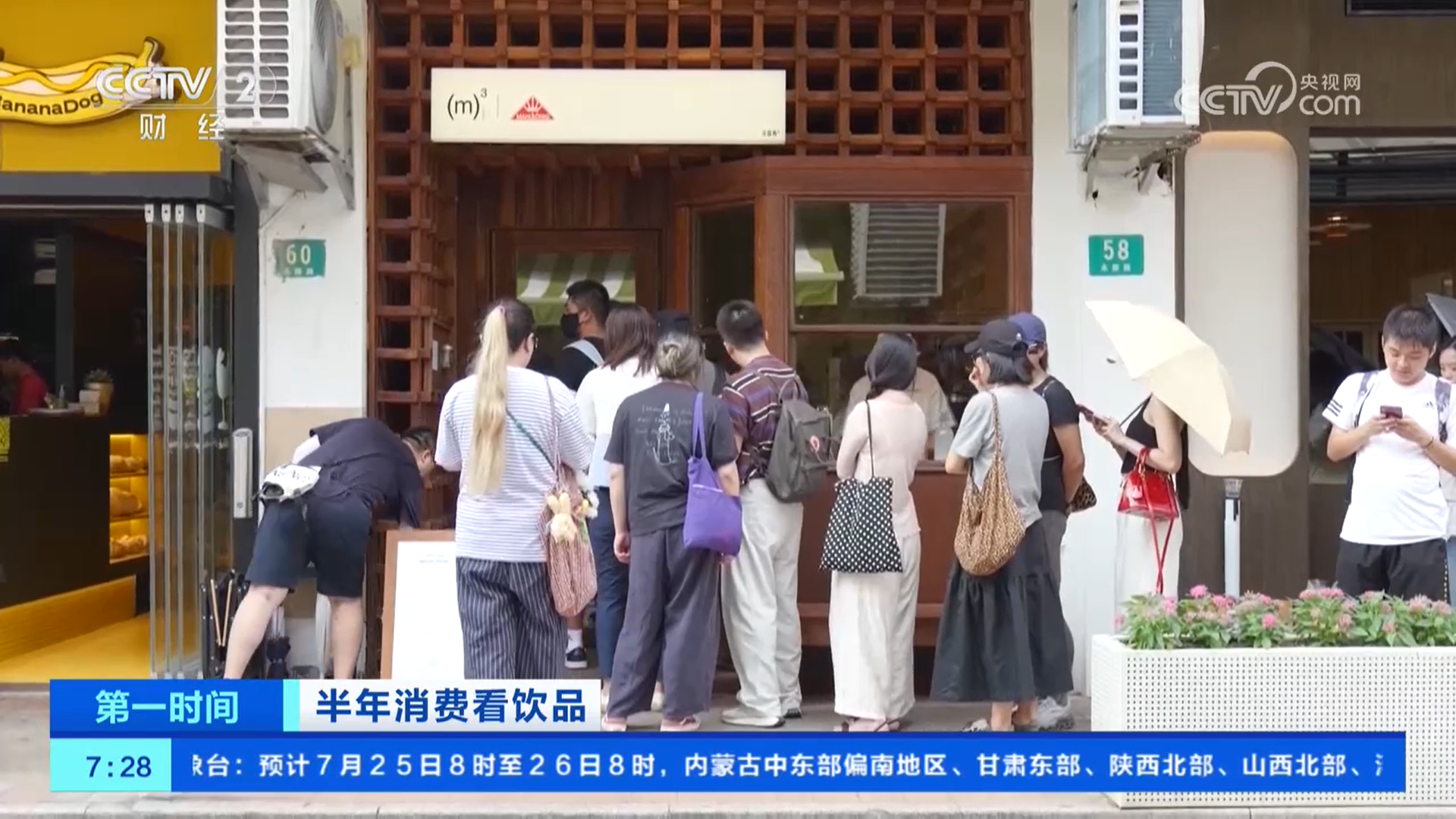
Group 1: Coffee Industry Insights - The coffee consumption trend is rising, with over 9,100 coffee shops in Shanghai, showcasing a diverse range of offerings from simple American coffee to creative specialty drinks [2][4] - A new coffee shop in Shanghai has gained popularity by offering unique frozen coffee drinks at an affordable price, attracting significant customer traffic [2][4] - A coffee brand that started from a small shop has expanded to over 800 locations in Shanghai, indicating strong growth in the coffee chain sector [4] - The rise of affordable coffee options and unique "village coffee" shops is contributing to the growth of the coffee market, with a notable presence in rural areas [5][7] - The coffee industry in China is projected to reach a market size of 313.3 billion yuan in 2024, with a year-on-year increase in per capita consumption of 33% [7] Group 2: Tea Industry Developments - The new tea drink sector is experiencing a surge in popularity, particularly among younger consumers, with a focus on health-conscious options [9][11] - The first half of the year saw a significant number of new tea drink companies going public, indicating a robust market environment [12] - The total number of tea drink outlets in China reached 116,978 by June, with a rapid introduction of new products, averaging 1.3 new items daily [12] - Chinese tea drink brands are expanding internationally, with a growing presence in markets like Southeast Asia, projected to reach a market size of 50 billion USD by 2028 [16] - The Chinese ready-to-drink tea market is expected to grow to 312.7 billion yuan in 2024, maintaining a growth rate of 20.97% [17]
在河南 遇见上合丨那么远 这么近——身边的上合故事
He Nan Ri Bao· 2025-07-25 00:35
Group 1 - The Shanghai Cooperation Organization Media Think Tank Summit was held in Zhengzhou, Henan from July 23 to 27, showcasing deepening exchanges and cooperation between Henan and member countries [4] - Henan's logistics capabilities are highlighted by the operation of the China-Europe Railway Express and TIR truck services, connecting the region with over 40 countries and 140 cities [5][7] - The China-Europe Railway Express from Zhengzhou has surpassed 15,000 trips, transporting over 12 million tons of goods valued at over $46 billion [7] Group 2 - The TIR truck service has emerged as a new international transport method, with 27 shipments of cross-border e-commerce goods sent to Moscow since its launch [8][10] - The Zhengzhou International Land Port has enhanced logistics efficiency, with significant growth in TIR truck shipments in the first half of 2023 [10] Group 3 - The expansion of the Mixue ice cream brand into Central Asia has seen strong local acceptance, with local customers making up 70% of the clientele in Kazakhstan [11][14] - Mixue has opened over 4,000 stores in 12 countries since its first overseas store in 2018, actively promoting Chinese tea culture [15][16] Group 4 - The Pingmei Shenma Group is investing in the Tajikistan coal industry, aiming to modernize operations and increase production capacity significantly [18][19] - The company has established a modern coal mine in Tajikistan, enhancing local energy production and fostering Sino-Tajik cooperation [19] Group 5 - Henan Yuguang Metallurgy Machinery has secured a significant contract with Kazakhstan's largest lead-acid battery manufacturer, increasing their order from 10 million to 50 million yuan [21][24] - The company has successfully built trust through multiple visits and technical exchanges, leading to a substantial increase in overseas business [25] Group 6 - The YTO tractor brand is gaining traction in Kazakhstan, with a local assembly plant producing tractors that meet local agricultural needs [27][28] - The assembly plant has improved production efficiency and is expected to increase output significantly in the coming years [28][29] Group 7 - The cultural export base in Kaifeng is facilitating the international promotion of Chinese cultural products, achieving over 1.3 billion yuan in trade with multiple countries [30][31] - The base has established a comprehensive cultural trade system, integrating various policy advantages to enhance cultural exchanges [31][32]