
华润啤酒

Search documents
茅台明晟ESG评级提升至A;泸州老窖下周分红|观酒周报
2 1 Shi Ji Jing Ji Bao Dao· 2025-08-03 03:24
Group 1: Industry Performance - A-share and Hong Kong stock market liquor companies have officially entered the semi-annual report period [1] - Guizhou Moutai's MSCI ESG rating has been upgraded from BBB to A, ranking second in the beverage industry in China [2] - The liquor, beverage, and refined tea manufacturing industry in Guizhou grew by 3.7% in the first half of 2025 [18] Group 2: Company Financials - Budweiser APAC reported revenue of $3.136 billion and EBITDA of $983 million for the first half of 2025, with a decline in key operating metrics compared to the previous year [3] - Heineken achieved revenue of €16.924 billion and operating profit of €1.433 billion in the first half of 2025, with a notable growth in authorized beer sales in China exceeding 30% [4][5] - Luzhou Laojiao announced a cash dividend of approximately ¥6.759 billion, distributing ¥45.92 per 10 shares [6] Group 3: Corporate Actions - Budweiser APAC is focusing on non-drinking channels and cost control measures to mitigate revenue and profit declines [3] - Jinwei Wine's controlling shareholder pledged 10 million shares, with a total of 75.36% of their shares now pledged [8][9] - The resignation of the former chairman of Shede Liquor, Ni Qiang, was announced, marking a significant leadership change [19] Group 4: New Product Launches - Kuaijishan plans to launch new products including 1743 raw yellow wine and pure five-year raw Shaoxing wine [13] - The new version of Langjiu will start accepting sales orders on August 11, 2025, with shipments beginning on August 25 [14] Group 5: Regulatory and Compliance - The Guizhou market supervision authority issued a reminder to liquor producers to maintain the reputation of Guizhou liquor and comply with production standards [15] - The Chongqing market regulatory authority reported that a beer was found to contain a harmful substance similar to Viagra, leading to the company's cancellation [12] Group 6: Management Changes - The resignation of the deputy general manager of Guyue Longshan, Lü Danlin, was announced [20] - Tianyoude Liquor has reappointed Lu Shuilong as deputy general manager, responsible for market strategy and business development [21]


食品饮料-食品饮料行业深度:新消费研究之三:即时零售应需而生,酒类品牌或
Sou Hu Cai Jing· 2025-08-02 12:27
Core Viewpoints - The liquor instant retail market is entering a rapid development phase, with significant room for channel penetration. Instant retail is defined as a "supply revolution" driven by consumer lifestyles, transitioning from "selling products" to "selling scenarios" [6][8] - The transformation of liquor channel models is accelerating, making the rapid development of instant retail a necessity. As the competition landscape for liquor stabilizes, consumers are increasingly pursuing price-performance ratios through diversified channels, leading to a contraction in traditional channel profits [7][10] - Liquor companies are actively embracing channel changes and expanding into instant retail and online channels. Instant retail is not just a sales channel but a way for liquor brands to integrate into residents' lifestyles, enhancing consumer engagement [7][10] Market Overview - The liquor instant retail market is projected to reach a scale of 36 billion yuan in 2024, with a penetration rate of approximately 1.8%. The growth potential remains vast, with estimates suggesting the market could reach 60-90 billion yuan by 2030 [6][20] - Instant retail channels are categorized into two main models: platform models that integrate resources (e.g., Meituan Flash Purchase) and self-operated models that maintain strong supply chain control [8][21] - The rapid growth of instant retail channels is driven by changing consumer lifestyles and the need for efficiency, with a focus on enhancing consumer experiences and meeting demand in lower-tier markets [10][20] Industry Opportunities - Instant retail creates opportunities for the liquor industry, such as serving as a trial ground for younger products and facilitating collaboration between liquor companies and platforms to co-create products [8][10] - The traditional profit margins in liquor channels are shrinking, prompting companies to adopt digital management and consumer-centric strategies to enhance efficiency [7][10] - The beer segment, with non-immediate consumption channels accounting for 60%, is also seeing a shift towards instant retail, which helps capture market share in lower-tier cities [10][20] Company Strategies - Major liquor brands are actively recruiting operators on multiple platforms, with companies like Moutai and Qingdao Beer launching new products and innovative sales models [7][10] - Companies are leveraging instant retail to enhance operational efficiency and product innovation, with a focus on high-end product offerings and consumer engagement [8][10] - The collaboration between liquor companies and platforms is expected to foster a more efficient and consumer-oriented sales environment, driving growth in the sector [7][10]


百威亚太上半年净利大跌24.4%:中国市场遭遇夹击,高端领域“腹背受敌”
Hua Xia Shi Bao· 2025-08-02 08:20
Core Insights - Budweiser APAC continues to show no signs of recovery in its performance, with sales, revenue, and net profit all declining in the first half of 2025 compared to the previous year, particularly in the Chinese market [2][3][4] - The company has faced ongoing pressure from a deteriorating external consumption environment and has shifted its strategic focus towards the popular 8-10 RMB price segment, although competitors like Yanjing Beer and China Resources Beer have already established a presence in this market [2][5][6] Financial Performance - In the first half of 2025, Budweiser APAC's sales volume was 4.363 billion liters, a year-on-year decrease of 6.3%, with revenue at $3.136 billion, down 7.7%, and net profit at $409 million, down 24.4% [3][4] - The company's revenue from the Western Asia-Pacific region, which includes China, accounted for $2.522 billion, representing 80.4% of total revenue, but also saw a decline of 8.3% year-on-year [3] Market Challenges - The Chinese market remains weak, with sales down 8.2% and net revenue down 10.2% in the first half of 2025, continuing a trend of over 10% declines in 2024 [4][5] - The new CEO, Cheng Yanjun, acknowledged that the poor performance in China is due to regional layout issues and weak on-premise channels, compounded by over-reliance on coastal provinces and a lack of expansion in non-on-premise channels [4][6] Competitive Landscape - The high-end beer market in China is facing significant competition, with brands like China Resources Beer and Qingdao Beer gaining market share, while Budweiser APAC's high-end strategy has been hindered by late entry into the sub-premium segment [5][6] - Analysts suggest that while Budweiser APAC's late entry into the 8-10 RMB price segment presents challenges, there are still opportunities to leverage the Harbin brand in non-on-premise channels [6][7] Strategic Adjustments - Budweiser APAC is reallocating resources from the super-premium segment to focus on the core++ (8-10 RMB) segment, with plans to invest more in the Harbin brand and enhance marketing efforts in non-on-premise channels [5][6] - The company aims to maintain brand premium and visibility through sports/IP marketing and to innovate differentiated products to meet consumer demands in the competitive landscape [7]
10家湾区国企上榜世界500强,5家广深国企“跑”进榜单
Sou Hu Cai Jing· 2025-08-02 08:16
Group 1 - The "Fortune" Global 500 list serves as a benchmark for measuring international competitiveness among enterprises, with 130 Chinese companies making the list this year, including 85 state-owned enterprises [1] - The threshold for entering the Global 500 has increased due to improved operating conditions for listed companies, highlighting the challenges faced by state-owned enterprises in terms of transformation and sustainable growth [1] - In the Guangdong-Hong Kong-Macao Greater Bay Area, there are 10 state-owned enterprises on the list, primarily located in Guangzhou, Shenzhen, and Hong Kong, with Guangzhou having the highest number [1] Group 2 - Among the 124 Chinese mainland companies on the list, 49 saw their rankings rise while 68 experienced declines, with most state-owned enterprises in the Greater Bay Area also facing ranking drops [2] - China Resources ranked 67th, improving by 5 positions, while China Electronics rose 8 places to 427th, marking its 15th consecutive year on the list [3] - GAC Group, which has been on the list for 13 years, fell 71 places to 252nd, reflecting broader challenges in the automotive industry despite rapid growth in electric vehicle production [4] Group 3 - Guangzhou Industrial Control, which debuted on the list in 2023, ranked 406th this year, maintaining stability despite external challenges [5] - Guangzhou Pharmaceutical Group ranked 459th and is the only Chinese company in the pharmaceutical sector to be listed, focusing on innovation and international expansion to maintain competitiveness [5] - Shenzhen Investment Holding is the only city-owned state enterprise from Shenzhen on the list, ranking 414th this year, with a focus on technology and finance [6]
百威亚太(01876):边际有改善,前路仍漫长
Haitong Securities International· 2025-08-01 15:10
Investment Rating - The report maintains a "Neutral" rating for Budweiser Brewing Co APAC with a target price of HK$7.90, while the current price is HK$8.09 [2][6]. Core Insights - The company is experiencing marginal improvements, but the recovery process is slower than expected, with total sales volume in 25H1 declining by 6.1% year-on-year and revenue decreasing by 5.6% year-on-year [3][10]. - The Chinese market continues to face challenges, with sales volume and revenue down by 8.2% and 9.5% respectively in 25H1, although there are signs of marginal improvement in Q2 [4][11]. - The South Korean market is undergoing structural adjustments, while the Indian market shows resilience with double-digit revenue growth in Q2 [5][12]. Financial Performance Summary - For 2024A, the company expects revenue of US$6.246 billion, with a projected decline of 8.9% year-on-year. The net profit is estimated at US$726 million, reflecting a decrease of 14.8% [2][9]. - The gross profit margin is projected to be 50.4% for 2024A, with a gradual increase to 51.1% by 2027E [2][9]. - The earnings per share (EPS) for 2025-2027 are estimated to be USD 0.05, USD 0.05, and USD 0.06 respectively [6][13]. Market Analysis - In the Chinese market, the on-premise channel remains weak, and the transformation is still in its early stages, with a focus on premium products in non-on-premise channels [4][11]. - The company has been actively managing inventory, achieving better-than-historical inventory levels by the end of Q2 2025, which supports future sales growth [4][11]. - In South Korea, the company implemented a price increase of 2.9% for core brands, but the market response was neutral, and overall performance remains under pressure [5][12]. Investment Recommendations - The report suggests that if the company can overcome challenges related to channel transformation and expense control, it may reverse the decline in market share in China, laying the groundwork for medium- to long-term recovery [6][13].
中国消费品7月价格报告:多数白酒批价回归平稳,液奶与啤酒折扣降低
Haitong Securities International· 2025-08-01 13:32
Investment Rating - The report assigns an "Outperform" rating to multiple companies in the consumer staples sector, including Guizhou Moutai, Wuliangye, Luzhou Laojiao, and others [1]. Core Insights - The report highlights that most baijiu wholesale prices have stabilized, with specific price changes noted for various brands. For instance, the price of Feitian Moutai (case) is 1915 yuan, down by 35 yuan from the previous month, and down 665 yuan year-on-year [3][9]. - Discounts on liquid milk and beer have decreased compared to previous months, indicating a shift in pricing strategies within the consumer goods market [5][22]. Summary by Sections Baijiu Pricing - Guizhou Moutai's prices for different products have shown a decline, with Feitian Moutai (case) at 1915 yuan, down 35 yuan month-on-month and 665 yuan year-on-year [3][9]. - Wuliangye's eighth-generation price is 930 yuan, stable compared to last month and unchanged year-on-year [4][9]. - Luzhou Laojiao's Guojiao 1573 remains at 860 yuan, unchanged from last month and down 40 yuan year-on-year [4][9]. Consumer Goods Discounts - The average discount rate for liquid milk has decreased to 79.1% from 73.8% at the end of June, while the median discount rate increased to 80.3% [5][22]. - Beer discounts have also seen a slight increase, with average and median rates at 83.6% and 87.0%, respectively, compared to 81.1% and 84.6% in late June [5][22]. - Discounts for infant formula and instant foods have remained stable, with average rates at 93.0% and 94.3%, respectively [7][22].




食品饮料行业深度:新消费研究之三:即时零售应需而生,酒类品牌或迎新机遇
Guoxin Securities· 2025-08-01 10:51
Investment Rating - The investment rating for the food and beverage industry, specifically for alcoholic beverages, is "Outperform the Market" [1]. Core Insights - The alcoholic beverage instant retail sector is entering a rapid development phase, with significant room for channel penetration. Instant retail is defined as a "supply revolution" and "efficiency revolution" driven by consumer lifestyles. Major platforms are increasing capital investment, suggesting a new development stage for local living, with instant retail platforms likely transitioning from "selling products" to "selling scenarios" [3][11]. - The market size for alcoholic beverage instant retail is projected to reach 36 billion yuan in 2024, with a penetration rate of approximately 1.8%. By 2030, the market could expand to between 60 billion and 90 billion yuan, driven by both supply and demand [3][17]. - The current instant retail channels are categorized into two models: platform models that integrate resources and self-operated models that maintain strong supply chain control [3][19]. - Alcoholic beverage companies are actively embracing channel transformation, with a focus on instant retail and online channels. This shift is seen as a crucial attempt for brands to integrate into consumers' lifestyles [3][4]. Summary by Sections 1. Development of Alcoholic Beverage Instant Retail - Instant retail is creating "all-weather scenarios" for consumers, accelerating supply-side development [7][11]. - The demand for alcoholic beverages in instant retail is increasing, particularly during nighttime hours, with younger consumers driving this trend [11][12]. 2. Necessity of Channel Transformation - The transformation of alcoholic beverage channels is deemed inevitable due to changing consumer lifestyles and the need for supply chain efficiency [3][31]. - The competition landscape for white and beer products is stabilizing, with consumers forming brand loyalty [3][4]. 3. Potential Opportunities and Highlights - Instant retail channels provide a testing ground for younger products, allowing companies to innovate with lower costs and better data feedback for product development [5][27]. - The shift towards high-end products in the beer sector is facilitated by instant retail, which allows for rapid turnover and the introduction of craft and fresh beer products [5][41]. 4. Accelerated Layout of Instant Retail Channels - Alcoholic beverage companies are increasingly investing in instant retail channels, viewing them as essential for integrating into consumer lifestyles [3][4]. - Companies like Moutai and others are actively recruiting operators on platforms like Meituan and Douyin to expand their consumer base [3][4]. 5. Profit Forecast and Investment Recommendations - Short-term impacts of instant retail on the competitive landscape of white and beer products may be limited, but long-term opportunities exist for companies that adapt to channel changes [4][5]. - Recommended stocks include Shanxi Fenjiu, Luzhou Laojiao, Guizhou Moutai, Yanjing Beer, and Chongqing Beer [4].
华润啤酒(00291) - 截至2025年7月31日止月份的月报表
2025-08-01 09:05
股份發行人及根據《上市規則》第十九B章上市的香港預託證券發行人的證券變動月報表 | 截至月份: | 2025年7月31日 | 狀態: 新提交 | | --- | --- | --- | | 致:香港交易及結算所有限公司 | | | | 公司名稱: | 華潤啤酒(控股)有限公司 | | | 呈交日期: | 2025年8月1日 | | | I. 法定/註冊股本變動 不適用 | | | FF301 第 1 頁 共 10 頁 v 1.1.1 FF301 II. 已發行股份及/或庫存股份變動 | 1. 股份分類 | 普通股 | | 股份類別 | 不適用 | | 於香港聯交所上市 (註1) | 是 | | | --- | --- | --- | --- | --- | --- | --- | --- | --- | | 證券代號 (如上市) | 00291 | | 說明 | | | | | | | 多櫃檯證券代號 | 80291 | RMB 說明 | | | | | | | | | | 已發行股份(不包括庫存股份)數目 | | | 庫存股份數目 | | 已發行股份總數 | | | 上月底結存 | | | | 3,244, ...
万科的理想国:合伙人模式
Hu Xiu· 2025-08-01 04:58
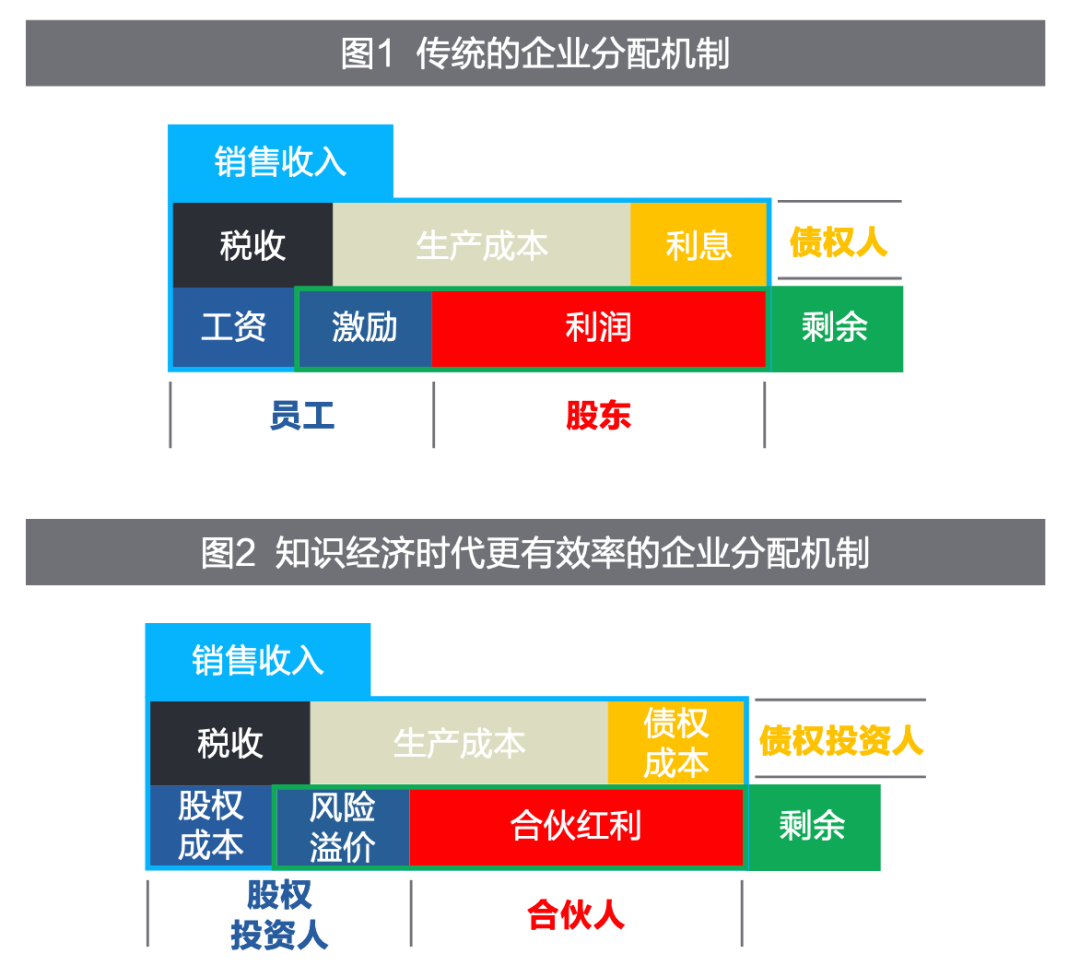
Core Viewpoint - The Vanke partnership system, introduced eleven years ago, aimed to address profit distribution issues within the company, enhancing employee motivation and aligning their interests with those of shareholders. However, the system has faced challenges, leading to questions about its effectiveness and the company's stock performance [1][3][21]. Group 1: Background and Context - The partnership system was designed to resolve the inherent conflicts between capital owners and labor, focusing on equitable profit distribution [2][3]. - Vanke is not the first to propose the "partner" concept; it was initially introduced by Jack Ma, with other companies like Alibaba and Xiaomi implementing similar systems earlier [4][5]. - The real estate industry, being capital-intensive and competitive, necessitates collaboration among many individuals and substantial investments, making traditional individual efforts insufficient [7][8]. Group 2: Partnership System Structure - The partnership system consists of four main components: the career partner stockholding plan, project co-investment plan, event partnership, and internal entrepreneurship, with the first two being the core [33]. - The career partner stockholding plan aims to align long-term interests between the company and its employees by allowing management to hold company shares, similar to a management buyout [34][35]. - The project co-investment plan requires management and key personnel to invest in projects, linking their compensation directly to project performance [43][44]. Group 3: Implementation and Results - The implementation of the partnership system led to a significant increase in Vanke's operating efficiency, with average dividends per share rising from 0.24 yuan before the system to 0.64 yuan afterward [54]. - The stock price of Vanke saw a notable increase during the initial years of the partnership system, reaching a high of 36.38 yuan per share by the end of 2017, nearly tripling from before the system's implementation [58]. - However, employee co-investment peaked at over 10 billion yuan but has since declined significantly, reflecting the challenges faced during the industry's downturn [61][64]. Group 4: Challenges and Future Outlook - The partnership system has faced significant challenges, with the stock price dropping below the initial investment levels, leading to potential disbandment of the partnership structure [64][66]. - Vanke announced plans to develop a new long-term incentive mechanism, signaling a shift away from the economic profit bonus system that had been in place for nearly thirteen years [66]. - The partnership system's initial goals of shared benefits and risk-sharing have been complicated by market conditions, leading to a reevaluation of its effectiveness and sustainability [69][71].

百威亚太上半年净利下滑24.4%;仁怀681家酒企兼并重组
Mei Ri Jing Ji Xin Wen· 2025-08-01 04:32
Group 1: Budweiser APAC Performance - Budweiser APAC reported a 24.4% decline in net profit to $409 million in the first half of 2025, facing challenges with both total sales and revenue decreasing [1] - In the Chinese market, Budweiser APAC experienced an 8.2% drop in sales and a 9.5% decrease in revenue, with revenue per hectoliter falling by 1.4% [1] - In contrast, Heineken's high-end products in China saw a sales growth exceeding 30%, indicating a strong performance in the same market [1] Group 2: Langjiu's Product Launch - Langjiu announced that the 2025 version of Langpai Lang will start accepting sales orders from August 11, with deliveries beginning on August 25 [2] - This move reflects Langjiu's proactive strategy to adapt to market changes towards younger and lower-alcohol products, reinforcing its market position through differentiated competition [2] Group 3: Restructuring in Renhuai's Liquor Industry - Renhuai city has successfully pushed for the merger and restructuring of 681 liquor enterprises, significantly reducing the number of production entities from 1,925 to 868 [3] - The comprehensive governance plan has led to a notable increase in industry concentration, optimizing the competitive landscape and potentially allowing leading companies to expand their market share [3] - The shift towards a more concentrated and high-quality development model in the liquor industry is expected to benefit long-term sustainability and may lead to a revaluation opportunity for key players [3]