微软

Search documents
24小时豪掷500亿美元:科技巨头为何集体重金押注印度?
Jin Shi Shu Ju· 2025-12-12 14:31
Group 1 - Major tech companies are investing heavily in India, attracted by its data center resources, talent pool, and digital user base, with Microsoft and Amazon committing over $50 billion in less than 24 hours [1] - Microsoft announced a $17.5 billion investment over four years to expand its infrastructure and integrate AI into national platforms, while Amazon plans to invest an additional $35 billion on top of its previous $40 billion investment [2] - India is ranked among the top four countries globally for AI vitality, alongside the US, China, and the UK, with GitHub reporting that Indian developers account for 24% of global project contributions [1][2] Group 2 - India has significant advantages in data center development, including lower electricity costs and growing renewable energy capacity, making it an attractive market for global cloud service providers [3] - The local demand for data centers is driven by the rise of e-commerce and potential new regulations for social media data storage, positioning India as a key market for AI spending in the Asia-Pacific region [3] - Global companies are expanding their data center capacities beyond traditional hubs like Mumbai and Chennai to cities closer to service bases, such as Bangalore, Hyderabad, and Pune [4]
广发基金刘玉:科技成长预计仍是主线 关注AI算力基础设施方向
Zhong Zheng Wang· 2025-12-12 13:12
Core Insights - The AI computing power sector is experiencing significant positive developments, with companies in the AI computing power chain being direct beneficiaries [1] - CPO (Coherent Photonic Optics) is identified as a core segment with high performance elasticity and certainty, benefiting from the capital expenditures of major overseas cloud giants like Microsoft, Google, and Meta [1] - The domestic computing power chain is accelerating its technological catch-up and market share increase under the strategy of self-control [1] Company Performance - Key players in the CPO industry include New Yisheng (300502), Zhongji Xuchuang (300308), and Tianfu Communication (300394), which have established strong competitive advantages through technology barriers and market share [1] - As of December 10, 2023, the stock price increases for these companies were 425%, 401%, and 263% respectively [1] - Funds heavily invested in these sectors, such as the Guangfa Emerging Growth Fund managed by Liu Yu, reported a year-to-date return of 73.41% as of December 10, 2023, and a cumulative return of 162.31% since October 2018 [1] Investment Strategy - The Guangfa Emerging Growth Fund's portfolio is heavily concentrated in the AI computing power sector, with over 25% of holdings in "Yizhongtian" and approximately 61% in the top ten holdings, including Industrial Fulian (601138) and Yingweike (002837) [2] - Liu Yu emphasizes a strategy focused on high performance certainty and significant future growth potential, adjusting the portfolio dynamically based on industry changes [2] - The AI industry is still in its early stages, with expected continuous demand growth for computing power infrastructure as AI models evolve and applications are implemented [2] Sector Focus - Liu Yu highlights three key sub-sectors within the computing power chain: 1. CPO (Optical Modules), with Nvidia planning to mass-produce CPO switches, leading to significant annual shipment growth [3] 2. OCS (Optical Circuit Switching), which offers high bandwidth and low latency, gaining attention due to Google's application in TPU architecture [3] 3. PCB (Printed Circuit Boards), crucial for AI server upgrades, with potential shifts in technology that require ongoing monitoring [3]
喜娜AI速递:今日财经热点要闻回顾|2025年12月12日
Xin Lang Cai Jing· 2025-12-12 11:46
Economic Policy - The Central Economic Work Conference held on December 10-11 in Beijing outlined the economic direction for 2026, emphasizing the need for increased counter-cyclical and cross-cyclical adjustments, continued implementation of proactive fiscal policy, and moderately loose monetary policy [2][7] - Key tasks include expanding domestic demand, strengthening industries, and promoting reforms, with an expected deficit rate of no less than 4% for the coming year and potential interest rate cuts of 1-2 times [2][7] Stock Market Performance - U.S. stock markets showed mixed results, with the Dow Jones Industrial Average rising by 1.34% to reach a historical high, while the Nasdaq fell by 0.25% due to disappointing Oracle earnings, which missed revenue expectations and raised spending forecasts, leading to a drop of over 10% in its stock price [2][7] - The S&P 500 index increased by 0.21%, while silver prices surged to a historical high, and gold also performed strongly [2][7] Company Updates - Moore Threads, after listing on the STAR Market, saw its stock price increase by 723.49% within five days, but issued a risk warning regarding potential irrational speculation and projected a net loss of at least 7.3 billion yuan for the year [2][7] - Pop Mart's market value has evaporated by over 200 billion HKD, attributed to a decline in the popularity of its Labubu product and concerns over revenue growth slowing down, despite high growth in Q3 [8] Commodity Market - Gold and silver prices soared, with New York gold surpassing 4,300 USD and domestic gold futures rising nearly 1%, while silver futures saw a peak increase of 6% [8] - The rise in precious metals is supported by expectations of interest rate cuts from the Federal Reserve and deteriorating employment data in the U.S. [8] Technology Sector Insights - There has been a surge in institutional research focused on storage chips, with brokers highlighting technology as a key investment theme for 2026, particularly in areas like storage chips and AI [8] - SoftBank's financial performance has been bolstered by its investment in OpenAI, but concerns arise due to the majority of profits being unrealized gains and the potential competition from Google's Gemini 3, which could challenge OpenAI's market position [9][10]
英伟达员工指微软数据中心冷却系统浪费资源
Xin Lang Ke Ji· 2025-12-12 11:22
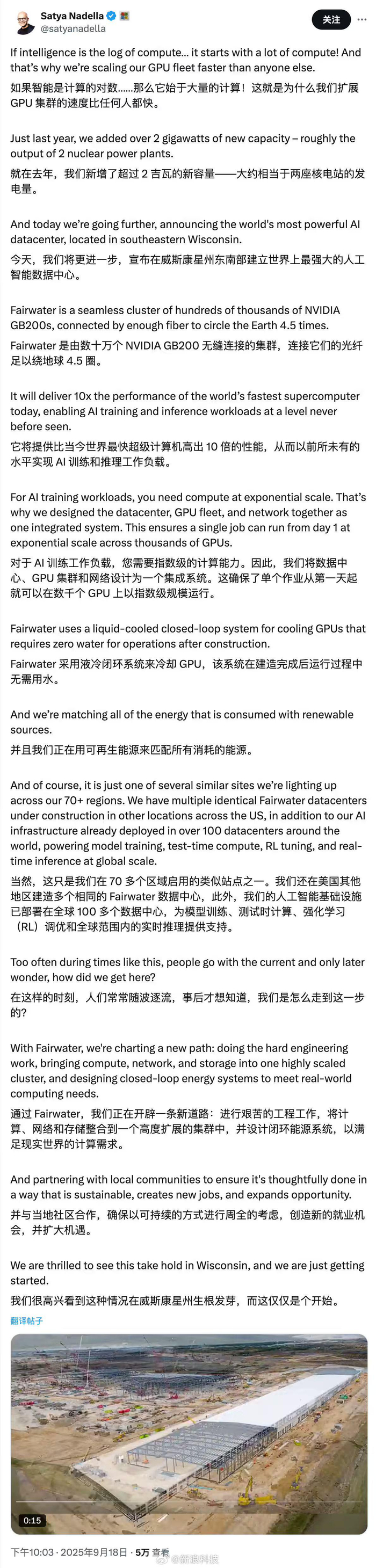
Core Viewpoint - Nvidia is providing its latest generation Blackwell chips to Microsoft for data centers, but there are concerns about the efficiency of Microsoft's cooling systems, which may be wasteful despite offering good resilience and fault tolerance [1]. Group 1: Nvidia and Microsoft Collaboration - Nvidia is deploying GB200 Blackwell systems for Microsoft, which is a major partner and investor in OpenAI [1]. - The installation includes two sets of GB200 NVL72 racks, each equipped with 72 Nvidia GPUs, highlighting the high-density GPU array's significant heat generation [1]. Group 2: Cooling Systems and Efficiency - The cooling method used by Microsoft involves liquid cooling for the servers, but the overall building cooling system appears to be inefficient due to its large scale and reliance on air cooling instead of water cooling [2]. - Air cooling consumes more energy but does not use water, which can raise public concerns about water resource management [2]. Group 3: Performance and Infrastructure - The Fairwater data center, consisting of interconnected Nvidia GB200 clusters, is designed to deliver ten times the performance of the fastest supercomputer currently available, enabling unprecedented levels of AI training and inference workloads [3]. - Fairwater employs a liquid-cooled closed-loop system that requires no water for operations after construction and matches all energy consumption with renewable sources [4][5]. Group 4: Expansion and Community Engagement - Fairwater is one of several similar sites being developed across over 70 regions, with multiple identical data centers under construction in the US, supporting AI infrastructure in more than 100 data centers globally [6][7]. - The company aims to integrate compute, network, and storage into a highly scaled cluster while designing closed-loop energy systems to meet real-world computing needs, and is committed to sustainable practices that create jobs and expand opportunities in local communities [8].



为何H200对华解禁,谷歌微软为何相继百亿投印度,SpaceX拟上市马斯克资产翻倍?
Sou Hu Cai Jing· 2025-12-12 10:53
Group 1: Nvidia H200 and US-China Relations - Nvidia's H200 AI chip is now allowed for export to approved customers in China, with a 25% revenue share for the US from these transactions [3] - The H200 is considered a perfect upgrade from the H100, but the latter still dominates the market due to its established presence [3] - The strategy allows Nvidia to maintain market dominance while profiting from tariffs on H200 sales to China [3] Group 2: SpaceX IPO Plans - SpaceX is accelerating its IPO plans, aiming for a valuation of $1.5 trillion, which could double Elon Musk's wealth to over $1 trillion [5][6] - This IPO is seen as a landmark event for the commercial space industry, potentially setting new valuation benchmarks and igniting further investment in space [5] - If successful, SpaceX would reclaim its title as the highest-valued private company, previously held by OpenAI [5] Group 3: OpenAI GPT-5.2 Release - OpenAI has released its latest model, GPT-5.2, which features three tiered products for different processing needs: Instant, Thinking, and Pro [8] - The update enhances multi-step reasoning, quantitative accuracy, and reliability in complex technical tasks [8] - This release is a strategic move to solidify OpenAI's position in the professional market while actively competing against global rivals [8] Group 4: Microsoft and Google's Investment in India - Microsoft announced a $23 billion investment plan, with $17.5 billion allocated to building AI infrastructure in India [10] - Google has also committed $15 billion to establish an AI hub in southern India, marking one of the largest AI initiatives globally [10] - The investments are driven by India's rapid economic growth, large population, and ambitions in the semiconductor and AI sectors [10] Group 5: Huawei's Market Share Recovery - Huawei has regained the top position in China's smartphone market, surpassing Apple with a market share of 27.81% compared to Apple's 17.12% [13] - The surge in Huawei's market share is attributed to the successful launch of the Mate 80 series, which sold 376,600 units in a week [13] - This marks a significant recovery for Huawei, ending Apple's dominance in the sales rankings for several months [13]


2026-2027年最强王者!巴菲特背书,光模块概念将继续新高!
Xin Lang Cai Jing· 2025-12-12 10:31
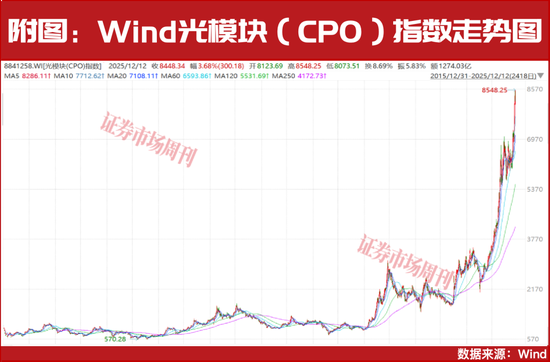
Core Viewpoint - The optical module sector is experiencing significant growth, with the Wind Optical Module (CPO) index reaching new highs and a strong demand forecast leading to a supply-demand imbalance that is expected to persist until 2027 [1][2][15]. Company Performance - Among 19 optical module stocks, 7 reached historical price highs in the past week, with 12 companies doubling their stock prices this year. Notably, Shijia Guangzi's stock surged over 500%, while Xinyi Sheng and Yuanjie Technology both exceeded 400% [4][18]. - In the third quarter of 2025, 16 companies in the optical module sector reported revenue and net profit growth, with Yuanjie Technology achieving a revenue of 383.25 million yuan, up 115.09%, and a net profit of 105.89 million yuan, up 19348.65% [8][9][10]. Industry Trends - The optical module industry is witnessing a "volume and price increase" scenario, with significant demand for 1.6T optical modules and stable pricing for 800G and lower products. This is driven by increased capital expenditures from global cloud providers and accelerated technological iterations among leading manufacturers [7][20]. - The AI industry is catalyzing growth in the optical module sector, with major companies like Google and Amazon enhancing their capabilities, which is expected to drive demand for optical modules significantly [6][20]. Financial Highlights - Zhongji Xuchuang, a leading player in the optical module market, reported a revenue of 250.05 billion yuan in Q3 2025, a 44.43% increase year-on-year, and a net profit of 71.32 billion yuan, up 90.05% [10][11]. - The company's overseas revenue has surged, with North American cloud providers projected to spend $330 billion in 2025, a 53% increase from the previous year, further boosting demand for high-speed optical modules [11].


SpaceX即将上市,“七巨头”变“八巨头”!纳指基金是否要布局?
Sou Hu Cai Jing· 2025-12-12 09:13
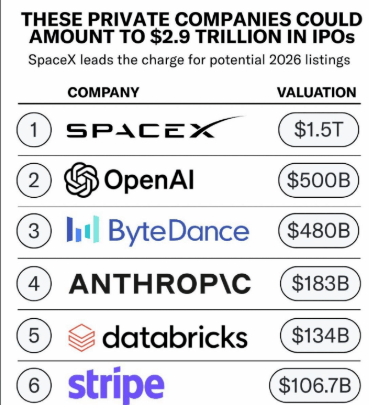
Group 1 - The "Nasdaq Seven Giants" refers to the seven largest tech growth companies in the US stock market, including Apple, Google, Amazon, and Nvidia, which collectively account for over 40% of the Nasdaq 100 index weight, making them core assets of Nasdaq [1] - Elon Musk confirmed that SpaceX plans to raise hundreds of billions through an IPO in 2026, with a target valuation of $1.5 trillion, potentially making it the largest IPO in history, surpassing Saudi Aramco's record [1][3] - If SpaceX successfully goes public, it is expected to drive the Nasdaq 100 index to unprecedented heights, especially with the recent interest rate cuts by the Federal Reserve, indicating continued favorable market liquidity [4] Group 2 - Current market capitalizations of the Nasdaq Seven Giants include Nvidia at approximately 4.396 trillion, Apple at 4.108 trillion, Google Class C at 3.785 trillion, and Microsoft at 3.593 trillion, among others [4] - Historical performance of the Nasdaq 100 index shows resilience, having recovered from significant downturns during the dot-com bubble, the 2008 financial crisis, and the COVID-19 pandemic, indicating the enduring value of the tech sector [5] - Various Nasdaq 100 index funds have been analyzed, with the top performers over the past year being E Fund Nasdaq 100 ETF (159696) with a return of 14.57% and China Merchants Nasdaq 100 ETF (159659) with a return of 14.54% [9][10] Group 3 - The analysis of Nasdaq 100 index funds highlights that E Fund Nasdaq 100 ETF has the best performance among peers, while China Merchants Nasdaq 100 ETF shows good tracking error control, making them suitable for investors seeking high returns with moderate risk [9][10] - The report emphasizes the importance of considering fund liquidity and management fees when selecting Nasdaq 100 index funds, with several funds having over 40 billion in assets [8] - Investors are advised to be cautious of potential premiums and restrictions on daily subscription amounts for certain Nasdaq ETFs due to foreign exchange quota limitations, suggesting a strategic approach to investment [12]
今年快收关了,股市收益率怎么样?
佩妮Penny的世界· 2025-12-12 03:42
Market Overview - The A-share and Hong Kong markets have been the best-performing globally this year, with average returns exceeding 20% despite recent profit pullbacks [1] - The Hang Seng Index has experienced a decline, with the peak drop around 8%, influenced by macroeconomic factors such as fluctuating interest rate expectations from the Federal Reserve and Japan [4][5] Sector Performance - Key sectors in the Hong Kong market, including e-commerce, AI, and new energy vehicles, are facing challenges, leading to reduced profitability and sales expectations [5] - The upcoming unlock of restricted shares in November and December, including significant companies like CATL and Hengrui Medicine, is expected to exert selling pressure on the market [5] Investment Opportunities - The Hang Seng Technology Index is currently valued at only 26% of its historical valuation, presenting a potential buying opportunity for investors looking to engage with technology and internet leaders [7] - For investors with access to overseas brokerage accounts, the U.S. stock market offers a wide range of investment options, with the S&P 500 being a historically strong asset class [9][12] ETF and Index Insights - The newly launched China Technology Innovation ETF (CNQQ) aims to capture the growth of Chinese tech companies, with a focus on those with significant R&D investments [13][14] - The ETF market in the U.S. is robust, with over $10 trillion in assets, providing various strategies and exposure to different sectors [9] Conclusion - The current market conditions suggest a cautious but optimistic outlook for both A-shares and U.S. equities, with potential for strategic investments in technology and growth sectors [16][18]
午后期货大跌!美股那边有新事情出来了
Sou Hu Cai Jing· 2025-12-12 02:32
Group 1: Federal Reserve and Market Reactions - The Federal Reserve lowered interest rates by 0.25% as expected, leading to increases in U.S. stocks, gold, and the FTSE A50 index [1] - Following the Fed's decision, Oracle released its quarterly earnings report, showing a 34% year-over-year increase in cloud business sales and a 68% increase in infrastructure revenue, although both figures fell short of market expectations [1][2] - Oracle's free cash flow was reported at -$13.1 billion, more than double the previous quarter, raising concerns about its heavy spending on AI and potential debt issues [1][2] Group 2: Oracle's Financial Performance and Market Impact - Oracle, known as the "AI leverage king," has seen its stock price drop 46% from its peak due to concerns over its reliance on debt to fund AI initiatives [2][3] - Major institutions have begun to lower Oracle's target price, negatively impacting other AI-related stocks such as Nvidia, TSMC, META, Microsoft, and Google, which all saw declines in after-hours trading [2] - The S&P 500 and Nasdaq 100 futures fell by 1% and 1.5%, respectively, contributing to a downturn in the A-share market, particularly affecting the optical module sector and the ChiNext index [2] Group 3: Oracle's CEO and Wealth Status - Larry Ellison, Oracle's CEO, is currently the second richest person in the world with a net worth of $283 billion, having briefly surpassed Elon Musk after announcing a $400 billion AI order [3] - However, the market later realized that Oracle could not support this order with its cash reserves and was relying on debt, leading to significant stock price declines and a drop in Ellison's wealth ranking [3]

芯片巨头,盘后大跌
Zheng Quan Shi Bao· 2025-12-12 00:32
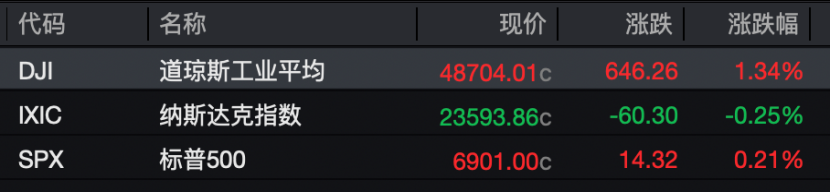
关注隔夜美股表现。 当地时间12月11日,美股三大指数涨跌不一,道指涨1.34%,纳指跌0.25%,标普500指数涨0.21%。大型科技股多数下跌,甲骨文财报不及预期致股价大 跌超10%。中概股同样涨跌互现,纳斯达克中国金龙指数微跌0.09%。 | 代码 | 名称 | 现价 | 涨跌 | 涨跌幅 | | --- | --- | --- | --- | --- | | DJI | 道琼斯工业平均 | 48704.01c | 646.26 | 1.34% | | IXIC | 纳斯达克指数 | 23593.86c | -60.30 | -0.25% | | SPX | 标普500 | 6901.00c | 14.32 | 0.21% | 大型科技股普跌,博通盘后大跌 当地时间周四,甲骨文股价下跌10.83%。据甲骨文2026财年第二财季财报,该财季公司云业务营收为80亿美元,同比增长34%,不及市场预期。此外,公 司预计2026财年年度资本开支将比原本预计的多出约150亿美元。甲骨文受到了市场对AI泡沫普遍担忧的波及,投资者担心科技公司正过度举债为数据中 心融资,而参与AI热潮的企业还通过巨额循环信贷相互关联,放 ...