江淮汽车

Search documents
2025年汽车行业研究报告
艾瑞咨询· 2025-11-24 00:05
Core Insights - The automotive industry is undergoing significant transformation, with domestic brands emerging as the primary growth engine, and new energy technologies reshaping value rules and pricing strategies [1][2][4] Group 1: Industry Overview - Domestic brands have become the sole growth driver in the automotive market, with a 20.3% year-on-year increase in sales from January to September 2025, contributing to a 9.2% overall market growth [2][4] - The shift towards new energy vehicles (NEVs) has redefined user pricing decisions, emphasizing product value over brand symbolism [4][6] - The competitive landscape is evolving, with a focus on cost reduction and efficiency as key challenges for businesses [9][12] Group 2: User Behavior and Decision-Making - The car purchasing decision cycle has shortened, with users conducting more detailed comparisons, particularly favoring technology and smart features in NEVs [1][48] - Users are increasingly engaging in diverse search behaviors, with a notable rise in interest for intelligent experience-related searches, which surged by 38% [50][51] - The average number of models searched per user has increased by 37.5%, indicating a trend towards more thorough comparisons before making a purchase [48][53] Group 3: Advertising and Marketing Trends - Overall advertising investment in the automotive sector has decreased compared to the previous year, with a notable contraction in the number of advertisers [12][14] - Baidu has emerged as a leading platform for automotive advertising, with a significant increase in mobile advertising investments [18][20] - The integration of AI in marketing strategies is reshaping how automotive companies engage with consumers, enhancing user experience and streamlining workflows [21][62] Group 4: AI and Content Strategy - Baidu's AI capabilities are transforming the automotive marketing landscape, enabling a more personalized and efficient user interaction experience [37][62] - The introduction of AI-generated content (AIGC) is significantly enhancing content creation and user engagement, with a marked increase in user reading volume by 34.4% [25][42] - Video content has become the most popular format among users, with a substantial increase in viewership, particularly for car reviews and purchasing recommendations [44][46]


从“生产工具”到“智能生态”,商用车依靠新技术如何破局?
第一商用车网· 2025-11-23 13:23
Core Viewpoint - The global automotive industry is undergoing a significant supply chain restructuring, with China emerging as a central hub for the incremental automotive supply chain, particularly in core areas such as batteries, chips, and software [1] Group 1: Smart Commercial Vehicle Development - The smartization of commercial vehicles is not merely a transfer of passenger vehicle technology but involves a deep understanding and redefinition of their "production tool" attributes [3] - The development of smart commercial vehicles is driven by a dual-track system: low-level intelligent driving is mandated by regulations, while high-level intelligent driving must return to the essence of business by reducing logistics costs and improving operational efficiency [4] - By 2028, the configuration rate of L2+ intelligent driving systems is expected to exceed 50%, with costs dropping to one-third of current levels, transitioning from an "expensive option" to a "standard value" [4] Group 2: Strategic Innovations and Collaborations - Companies like Jianghuai are adopting an open cooperation approach, collaborating with platforms like Huawei's MDC to create a flexible and cost-effective intelligent driving hardware base [4] - Geely emphasizes that if intelligent driving does not reduce the need for human drivers, its value will diminish, focusing on either enhancing safety through assisted driving or fully replacing drivers with autonomous systems [8] - Yutong highlights the importance of integrating smart technology into customer business flows to address real pain points, demonstrating successful applications in various scenarios such as urban logistics and sanitation [9] Group 3: Ecosystem and Infrastructure Development - The rise of smart commercial vehicles necessitates innovations in the maintenance and energy supply sectors, with companies like Jieneng New Energy addressing challenges in charging networks [11][15] - Jieneng's solutions include fast-charging systems capable of high outputs and exploring integrated zero-carbon park models, transforming commercial vehicles into key nodes in smart energy networks [15] - The introduction of AI-driven maintenance systems aims to enhance repair efficiency and democratize technical knowledge, allowing ordinary technicians to handle complex issues [13] Group 4: Industry Transformation and Future Outlook - The intelligent development of commercial vehicles marks a shift from isolated mechanical products to interconnected, intelligent, and efficient digital transport cores [17] - China's complete industrial chain, diverse application scenarios, and agile innovation mechanisms position it as a vital contributor to the global transformation of the commercial vehicle industry [17]


45辆公交车招标结果公布!
第一商用车网· 2025-11-23 13:23
Core Points - The procurement project for public transport vehicles in Zhuji has been successfully completed, with the announcement of the bidding results [1] - The procurement was organized by Zhuji Yueda Public Transport Co., Ltd. and was conducted through a single-source procurement method [1] - The bid was confirmed on November 20, 2025, and the evaluation committee has been established [3] Procurement Details - The procurement project name is "2025 Yueda Public Transport Vehicle Procurement Project" [1] - The procurement organization type is decentralized procurement entrusted agency [1] - The procurement method used was single-source [1] Evaluation and Contact Information - The evaluation committee members include Zhou Lijiang, Fu Wulin, Shou Zuping, Peng Zhanglin, Jiang Linyu, Li Qingguang, and representatives from the purchaser [3] - Contact information for the purchaser and the procurement agency is provided, including names and phone numbers [3] Announcement Period - The announcement is valid for three working days from the date of publication [3] Additional Information - Suppliers who believe their rights have been harmed by the bidding results can raise objections in writing within three working days from the announcement [4]
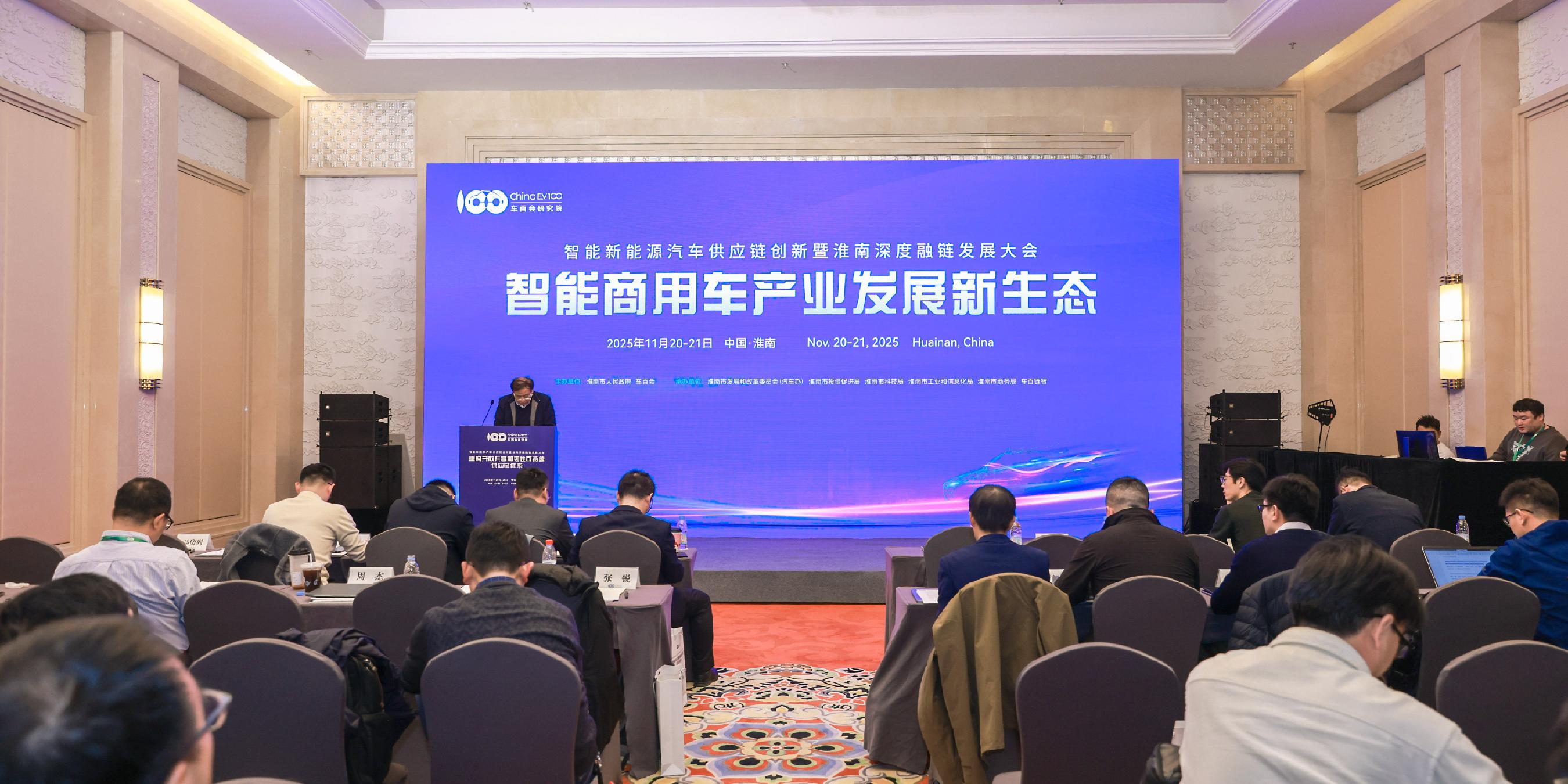
专家在智能新能源汽车供应链创新大会上表示:中国在全球汽车供应链中的地位加速提升
Ke Ji Ri Bao· 2025-11-23 12:10
Core Insights - China's role in the global automotive supply chain is becoming increasingly prominent, particularly in key component areas where it has become the center of global incremental automotive supply chains [1] - China's battery installation volume accounts for nearly 70% of the global total, maintaining a leading position for several consecutive years [1] - The automotive industry is undergoing unprecedented transformation, with a focus on reconstructing an open, shared, and resilient supply chain system [1] Group 1: Supply Chain Dynamics - The competition in the automotive industry fundamentally revolves around the supply chain system, with the strength of the industry being dependent on the robustness of components and the industrial ecosystem [1] - NIO emphasizes that technological innovation is essential for building core competitiveness and creating a true moat, collaborating with partners to tackle key technologies [2] - The automotive supply chain is facing challenges from shortened development cycles and demand fluctuations, with NIO having 17 partners in Huainan to reduce overall costs by 20%-30% [2] Group 2: Key Areas of Competition - Key areas of competition in the automotive supply chain include power batteries, chips, and software, which are critical for ensuring supply chain security [2] - Despite China's scale advantage in the power battery sector, challenges arise from upstream resource monopolies and rapid technological iterations [2] - The Chinese automotive chip industry is rapidly emerging, with companies like Horizon and Huawei becoming significant players, although the localization of many small chips needs to accelerate [2] Group 3: Future Outlook - The automotive supply chain is expected to evolve towards high-end, intelligent, green, and integrated directions, referred to as the "new four modernizations" [3] - By the end of the 14th Five-Year Plan, China's annual automotive production is projected to reach 40 million units, with domestic sales around 27-28 million units and overseas sales exceeding 12 million units, accounting for approximately 45% of the global total [3] - The proportion of Chinese components used in vehicles, referred to as "Chinese content," is expected to continuously increase, regardless of the vehicle's production location [3]
汽车行业周报(20251117-20251123):负beta消化过程中,看好汽车板块1Q26筑底/上行-20251123
Huachuang Securities· 2025-11-23 11:02
Investment Rating - The report maintains a "Buy" rating for the automotive sector, anticipating a bottoming and upward trend in Q1 2026 [1]. Core Insights - The automotive sector is currently experiencing a cooling sentiment due to the impact of trade-in quotas, with October retail sales falling below expectations and November expected to perform moderately. The fourth quarter is also anticipated to underperform previous market expectations. However, the sector is expected to find a bottom and begin to rise in Q1 2026, presenting potential investment opportunities for the upcoming year [1][2]. Data Tracking - In early November, the discount rate for vehicles increased to 10.0%, up by 0.4 percentage points month-on-month and 1.5 percentage points year-on-year. The average discount amount rose by 23,103 yuan, with significant fluctuations among major brands [3]. - In October, new energy vehicle deliveries from leading companies showed a notable increase for BYD, which delivered 442,000 units, a month-on-month increase of 11.5% but a year-on-year decrease of 12.1%. Other companies like Leap Motor and Xpeng also reported significant year-on-year growth [3][20]. - Traditional automakers also saw growth in October, with Geely's sales reaching 307,000 units, a year-on-year increase of 35.0% and a month-on-month increase of 12.5% [3][23]. Industry News - The report highlights several key developments in the automotive industry, including the launch of new models and significant sales figures for new energy vehicles. For instance, from November 1 to 16, the retail sales of new energy vehicles reached 554,000 units, a year-on-year increase of 2% [30][31]. - The report also notes the introduction of advanced technologies in new models, such as the Deep Blue L06 and the Xiaopeng X9, which feature cutting-edge battery systems and autonomous driving capabilities [30][31].





工信部公示智能网联汽车安全强制性国标,华为乾崑连发“两境”
Xinda Securities· 2025-11-23 08:47
Investment Rating - The investment rating for the automotive industry is "Positive" [2] Core Insights - The A-share automotive sector underperformed the market this week, with the Shanghai and Shenzhen 300 Index declining by 3.77% and the automotive sector falling by 4.89%, ranking 16th among A-share industries [2][8] - Key news includes the Ministry of Industry and Information Technology announcing mandatory national standards for intelligent connected vehicles, and Huawei's launch of two new models, "Yijing" and "Qijing," set to debut next year [21][22] - The report suggests focusing on companies such as BYD, Geely, Great Wall Motors, and others in the passenger vehicle segment, while recommending attention to commercial vehicle manufacturers like China National Heavy Duty Truck and FAW Liberation [2] Summary by Sections Market Performance - The automotive sector's performance this week saw a decline of 4.89%, placing it 16th among A-share industries [8][11] - The passenger vehicle segment experienced a drop of 5.94%, with Jianghuai Automobile and GAC Group leading the decline [5][17] - The commercial vehicle segment fell by 3.04%, with *ST Yaxing and Weichai Power showing the most significant gains [5][19] - The automotive parts sector decreased by 4.87%, with Daway Co. and Tianpu Co. leading the gains [5][20] Industry News - The Ministry of Industry and Information Technology has publicized mandatory national standards for intelligent connected vehicles, focusing on safety requirements for autonomous driving systems [21] - Huawei's new models, "Yijing" and "Qijing," are set to launch next year, with plans for annual new model releases [21] - The report highlights various collaborations and innovations in the industry, including support for battery swap models and local production plans in Europe by Magna with GAC and Xpeng [21][22] Upstream Data Tracking - The report includes tracking of key material prices such as steel, aluminum, and lithium carbonate, which are crucial for automotive manufacturing [24]
小鹏汽车第100万台整车下线,广州车展车企竞逐具身智能新赛道
KAIYUAN SECURITIES· 2025-11-23 05:41
Investment Rating - The investment rating for the automotive industry is "Positive" (maintained) [1] Core Views - The narrow passenger car retail market is expected to reach 2.25 million units in November 2025, with new energy vehicle penetration likely to exceed 60% for the first time [5][13] - The automotive sector has seen a decline, with the Shanghai and Shenzhen 300 index dropping by 3.77% and the automotive sector specifically declining by 5.09% [6][30] - The report highlights significant developments in the automotive industry, including the launch of new models and strategic partnerships among key players [5][15][19] Summary by Sections Industry News - The passenger car retail market is projected to be stable at 2.25 million units in November 2025, with a year-on-year decrease of 8.7% [13] - Guangzhou state-owned assets have taken over two subsidiaries of Evergrande Auto [14] - XPeng Motors has achieved a milestone with the production of its 1 millionth vehicle, indicating rapid growth in production capacity [15] - Geely's smart driving team is being integrated into a new joint venture, enhancing its capabilities in autonomous driving [16] - GAC's new luxury intelligent electric vehicle brand, in collaboration with Huawei, is set to launch in 2026 [17] Market Performance - The automotive sector's performance has been mixed, with the passenger vehicle index down by 5.22% and commercial vehicle index down by 4.04% [6][30] - The automotive parts sector also faced declines, with the index down by 5.43% [6][30] Investment Recommendations - For passenger vehicles, the report recommends investing in high-end domestic brands like Jianghuai Automobile and Seres, with Geely as a beneficiary [7] - In the automotive parts sector, companies like Desay SV and Zhejiang Xiantong are recommended due to their growth potential amid industry consolidation [7]


2025年10月中国货车进出口数量分别为0.03万辆和7.48万辆
Chan Ye Xin Xi Wang· 2025-11-23 02:22
Core Insights - The report highlights a significant decline in China's truck imports and a notable increase in exports for October 2025, indicating a shift in the market dynamics within the truck industry [1] Import and Export Data - In October 2025, China's truck imports totaled 0.03 thousand units, representing a year-on-year decrease of 26.6%, with an import value of 0.26 million USD, down 21% [1] - Conversely, truck exports reached 7.48 thousand units in October 2025, showing a year-on-year growth of 35%, with an export value of 13.73 million USD, an increase of 32.4% [1] Industry Context - The report is based on data from China Customs and is part of a broader market research initiative by Zhiyan Consulting, which specializes in industry research and investment insights [1]

热点 | 2025新汽车合作生态交流会议程出炉
汽车商业评论· 2025-11-22 23:49
Core Viewpoint - The article discusses the upcoming World New Auto Technology Collaboration Ecosystem Summit, highlighting the importance of collaboration in the automotive industry and the focus on new technologies and supply chain development [1][5][29]. Group 1: Event Overview - The summit will take place on December 5-6, 2025, at the Wyndham Grand Suzhou, featuring various sessions including keynote speeches, roundtable discussions, and professional exchanges [12][21]. - Keynote speakers include executives from major automotive companies such as Dongfeng Motor Group, SAIC Volkswagen, and Geely, addressing current challenges and future prospects in automotive technology collaboration [12][21]. Group 2: Themes and Discussions - The summit will cover various themes such as the current state of automotive technology collaboration, supply chain development, and the evolution of intelligent cockpit systems [13][19][25]. - Roundtable discussions will focus on topics like the new dynamics of supplier relationships in the Chinese automotive market and the long-term trends in new energy vehicle range extension systems [13][19]. Group 3: Awards and Recognition - The event will also feature the 10th Lingxuan Award ceremony, recognizing outstanding contributions in the automotive parts industry, with various categories including Excellent Award, Gold Award, and Popularity Award [26][28]. - The awards aim to highlight the achievements of supply chain leaders and promote innovation within the automotive sector [26][28].



商用车智能化闯关:成本、法规与场景落地的“三重门”
Jing Ji Guan Cha Wang· 2025-11-22 16:09
Core Insights - The core challenge in the commercial vehicle sector's transition to intelligence is the need for technology to translate into economic benefits, as safety and efficiency are the primary customer demands [2][3]. Group 1: Current Challenges - The cost of intelligent systems currently accounts for 15% of the total vehicle cost, with expectations to drop to 4% by 2028, but high initial investments remain a significant barrier to widespread adoption [2][3]. - The sales growth rate of new energy heavy trucks reached 180% in the first three quarters of 2024, with a penetration rate of 25%, yet the adoption rate of intelligent features is still below expectations [2]. - The logistics industry is shifting from being policy-driven to a dual drive of technology and market demands, necessitating urgent transformation in the commercial vehicle sector [2]. Group 2: Technological and Regulatory Pressures - There is a significant technological gap between commercial and passenger vehicles, with commercial vehicles having only dozens of TOPS compared to passenger vehicles' thousands [3]. - Regulatory inconsistencies and uncertainties pose risks for long-term strategic planning and large-scale investments in the commercial vehicle sector [3][4]. - The complexity of commercial vehicle scenarios, including diverse customer needs and extreme operational environments, presents additional challenges for the implementation of intelligent solutions [4]. Group 3: Ecosystem Integration and Value Reconstruction - The strategy for autonomous driving technology is shifting from full self-research to a more pragmatic, layered approach that emphasizes collaboration to reduce costs and enhance efficiency [5]. - Companies are increasingly focusing on ecosystem collaboration rather than isolated technological breakthroughs, with examples like 吉利's integration of software, hardware, and insurance systems to enhance operational efficiency [5]. - Data-driven solutions are becoming central to value creation, with companies like 吉利 utilizing flexible data collection systems to optimize operational costs and improve service delivery [6]. Group 4: Maintenance and Support Innovations - The high usage intensity and fault rates of commercial vehicles necessitate advanced maintenance solutions, as traditional repair knowledge is often outdated [6]. - Companies are leveraging AI to create intelligent maintenance systems that can accurately diagnose issues based on technician inputs, thereby improving repair efficiency [6].