成都银行

Search documents
A股午后走高,沪指突破3月高点创出年内新高
Xin Lang Cai Jing· 2025-06-25 06:23
Group 1 - The A-share market is experiencing a significant upward trend, with the Shanghai Composite Index reaching a new high for the year at 3442.6 points, surpassing the previous high of 3439.05 points set on March 19 [3] - The surge in the index is primarily driven by the performance of brokerage stocks, with nearly 10 stocks in the non-bank financial sector, including Nanhua Futures and Guosheng Financial Holdings, hitting the daily limit [3] - Major banks such as Industrial and Commercial Bank of China and Agricultural Bank of China also reached historical highs, indicating strong performance in the banking sector [3] Group 2 - Sectors such as military industry, semiconductor chips, and digital currency are showing significant gains, reflecting a broad-based market rally [4] - Analysts from Dongguan Securities suggest that while the domestic economy remains stable, the importance of boosting domestic demand is becoming more evident as the tariff suspension period ends in July and August [4] - The market is expected to maintain upward momentum, with a focus on financial, machinery, consumer goods, and TMT sectors for potential investment opportunities [4] Group 3 - According to Yang Chao, chief strategist at Galaxy Securities, the A-share market's liquidity is expected to remain stable and improve, with current valuations still low compared to mature overseas markets, indicating a favorable investment environment [4] - The market is anticipated to show a fluctuating upward trend in the second half of the year, with a shift towards large-cap stocks while still presenting opportunities in growth stocks [4] - Structural investment opportunities are highlighted in four key areas: safe assets, technological innovation, consumer goods, and mergers and acquisitions [4]


热点解读:长钱入市,基本面筑底,关注银行红利板块投资机会
Sou Hu Cai Jing· 2025-06-25 02:07
Core Viewpoint - The banking sector has shown strong performance in 2023, with a cumulative increase of 14.11% as of June 23, 2025, ranking first among 31 industries, driven by high dividend strategies and stable absolute returns amid global macro uncertainties [1] Group 1: Investment Trends - The banking sector features high dividend yields and low valuations, attracting long-term capital inflows [2] - Insurance capital continues to favor high-dividend equity assets, with bank valuations between 0.6-0.7 times, providing a cost-effective investment option [2] - Southbound funds have been actively buying Hong Kong and H-shares of banks, particularly state-owned banks, which have seen a significant increase in their market share [2] - Public funds are expected to increase their allocation to banks, with current allocation weights significantly lower than the sector's representation in the market [3] Group 2: Banking Fundamentals - The banking sector is expected to maintain a bottoming trend, with credit growth around 7%-8% and a gradual slowdown in the trend of deposit regularization [4] - The optimization of liability costs is expected to mitigate the impact of LPR cuts, leading to a narrowing of interest margin declines [4] - Non-interest income is showing marginal improvement, although other non-interest income sources are under pressure [4] - Asset quality remains stable, supported by ongoing government support for the real economy, although retail loan quality may face marginal deterioration [4] Group 3: Market Dynamics - The trading congestion indicators for banks have not reached previous highs, indicating room for further growth [5] - The trading volume and turnover rate of state-owned banks are significantly lower than previous market peaks, while city commercial banks are seeing increased activity [5] - Agricultural commercial banks have experienced a notable increase in trading activity, benefiting from recent market trends and index inclusions [5] Group 4: ETF Performance - The banking ETF (515020) has a dividend yield of 5.19%, a PE ratio of 7.21, and a PB ratio of 0.72 as of June 23, 2025 [6] - The Hong Kong Stock Connect Financial ETF (513190) has a dividend yield of 8.18%, a PE ratio of 6.48, and a PB ratio of 0.58 [6] - The Low Volatility Dividend ETF (159547) has a dividend yield of 5.29%, a PE ratio of 8.25, and a PB ratio of 0.84, with banks comprising 49.2% of the index [6]
又有银行转债或触发强赎
Zheng Quan Shi Bao· 2025-06-23 15:12
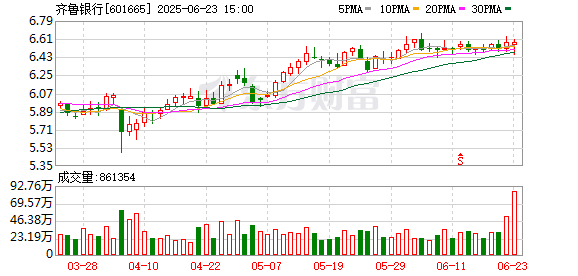
Core Viewpoint - The banking sector is experiencing a strong performance, leading to an accelerated conversion of convertible bonds into stocks this year, with several banks triggering redemption clauses for their convertible bonds [2][7]. Group 1: Convertible Bond Redemption - Qilu Bank announced that its stock price has been above 130% of the current conversion price for 10 out of the last 15 trading days, which may trigger the redemption clause for its convertible bonds [4]. - If Qilu Bank's stock price remains above 6.50 CNY (130% of the adjusted conversion price of 5.00 CNY) for 5 more trading days, the bank has the right to redeem the bonds at face value plus accrued interest [4][5]. - This year, five convertible bonds from various banks have exited the market due to triggering redemption clauses, including those from Suhang Bank, Chengyin Bank, Hangyin Bank, and Nanyin Bank [8]. Group 2: Market Trends and Implications - The continuous rise in bank stock prices has led to a significant reduction in the outstanding balance of Qilu convertible bonds, which currently stands at 60.87 billion CNY, with an unconverted ratio of 76.09% [4]. - The trend of convertible bonds exiting the market is expected to continue, with only seven remaining if Qilu's bonds are redeemed [8]. - Approximately 100 billion CNY of bank convertible bonds are anticipated to complete conversion this year due to rising stock prices [8]. Group 3: Capital Supplementation and Market Dynamics - Convertible bonds serve as a crucial tool for banks to supplement their core Tier 1 capital, with a strong incentive for banks to convert bonds into stocks to enhance capital adequacy [2][11]. - The adjustment of conversion prices, such as Qilu Bank's reduction from 5.14 CNY to 5.00 CNY, increases the likelihood of triggering redemption clauses [9]. - The acceleration of bond conversions, combined with a slow pace of new bond approvals and issuances, may lead to irrational price increases for remaining high-quality convertible bonds in the market [11].
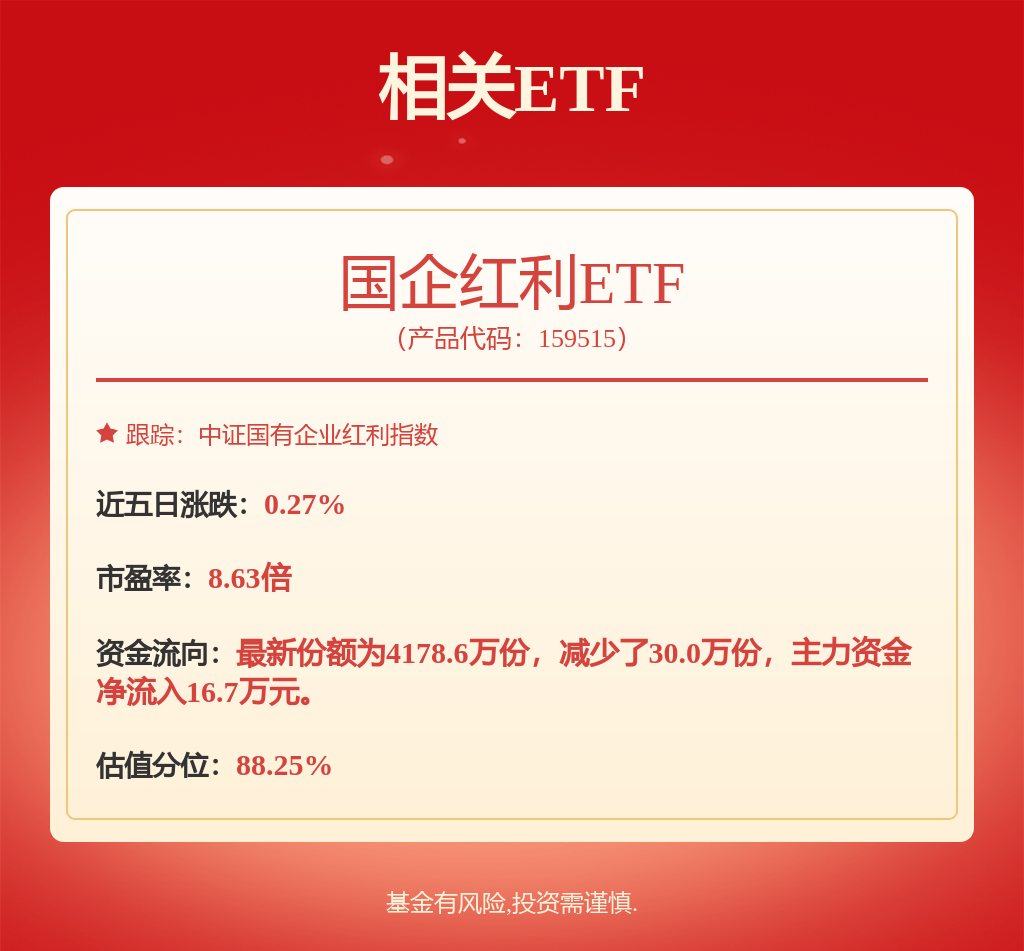
以伊紧张局势牵动原油市场,国企红利ETF(159515)涨0.27%
Sou Hu Cai Jing· 2025-06-23 05:46
Group 1 - The core viewpoint of the news highlights the impact of geopolitical tensions in Iran on global oil prices, particularly the potential closure of the Strait of Hormuz, which could lead to significant increases in oil prices [1][2] - As of June 23, Brent crude oil has risen by 20.6% this month, reaching $76.9 per barrel, the highest since February [1] - JPMorgan and Goldman Sachs have provided forecasts indicating that if the Strait of Hormuz is blocked, oil prices could spike, with Goldman Sachs predicting a potential peak of $110 per barrel if oil flow is significantly reduced [1] Group 2 - The National Enterprise Dividend Index (code 000824) combines themes of state-owned enterprises and dividend strategies, enhancing the effectiveness of investment strategies [2] - The National Enterprise Dividend ETF (159515) tracks the National Enterprise Dividend Index, which is expected to benefit from ongoing reforms in state-owned enterprises, improving profitability and operational efficiency [2] - The ETF is recommended for active consideration as it selects high-quality state-owned enterprises with strong profitability and low valuations [2]
红利低波ETF(512890)规模破180亿创历史新高 低利率震荡市成资金“避风港”
Xin Lang Ji Jin· 2025-06-20 04:34
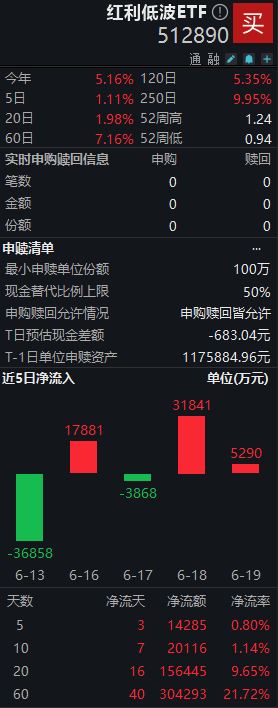
Core Viewpoint - The Hua Tai Pai Rui Dividend Low Volatility ETF (512890) has reached a record high in scale, reflecting strong investor demand for stable assets in the current market environment characterized by low interest rates and volatility [1][4]. Group 1: ETF Performance and Scale - As of June 20, the ETF rose by 0.42% to a price of 1.182 yuan, with a trading volume of 1.30 billion yuan [1]. - Year-to-date, the ETF has increased by 5.16%, and its 250-day increase is nearly 10% [1]. - The scale of the ETF reached 180.89 billion yuan on June 19, marking a 31.5% increase from 137.495 billion yuan on December 31, 2024 [1]. - Since the beginning of 2025, the scale has grown by 4.3 billion yuan, positioning it as a "fund magnet" in a volatile market [1]. Group 2: Investment Appeal - The ETF's high dividend yield of 6.21% and a low volatility characteristic make it an attractive option for investors seeking stable returns in a declining interest rate environment [2][3]. - The 10-year government bond yield has dropped to 1.64%, creating a significant yield spread of 3.96% compared to the ETF's dividend yield, placing it in the 93.35th percentile over the past decade [2]. Group 3: Underlying Factors Supporting Growth - The ETF has demonstrated a three-year annualized return of 13.59% with a maximum drawdown of -13.61%, showcasing its stability during market fluctuations [3]. - The ETF tracks the CSI Dividend Low Volatility Index, which employs a dual-factor stock selection strategy focusing on high dividends and low volatility, with significant representation from the financial sector [3]. - Regulatory support for increased dividend payouts from listed companies has bolstered the ETF's appeal, with many of its constituent stocks exhibiting strong dividend capabilities [4]. - The ETF's off-market linked funds have achieved monthly dividends for 21 consecutive months, making them among the most frequent dividend-paying ETF linked funds in the market [4].
开源证券晨会纪要-20250619
KAIYUAN SECURITIES· 2025-06-19 14:42
Macro Economic Insights - The Federal Reserve maintained interest rates at 4.25%-4.5% and will continue with the planned balance sheet reduction [6][7] - There is an increasing divergence within the Federal Reserve regarding interest rate cuts, with potential for 1-2 cuts in 2025, particularly in Q4 [8][9] - The Fed has adjusted its economic forecasts, lowering GDP growth predictions while raising inflation expectations [6][8] Banking Sector Analysis - The banking sector is expected to see stable operating performance in 2025, with revenue and net profit growth gradually recovering [16] - Non-bank deposits have significantly increased, with a cumulative addition of 2.6 trillion yuan in April and May, indicating a shift in deposit behavior [12][13] - Recommended banks include CITIC Bank and Everbright Bank, with beneficiaries such as Agricultural Bank of China and China Merchants Bank [16] Chemical Industry Insights - The supply of hydrochloric acid aminopropyl is characterized by an oligopolistic market, with major suppliers being domestic company Dayang Biological and US-based Hubei [20][22] - The global market demand for hydrochloric acid aminopropyl is estimated to be between 1,200 to 1,500 tons annually, with Dayang Biological's production expected to reach 614 tons in 2024 [20][22] - Geopolitical tensions, particularly in the Middle East, may disrupt supply chains, presenting potential price increases for hydrochloric acid aminopropyl [21][22]
固定收益专场 - 中信建投证券2025年中期资本市场投资峰会
2025-06-19 09:46
Summary of Key Points from Conference Call Records Industry or Company Involved - The conference call primarily discusses the **Chinese consumer market** and its evolving dynamics, as well as the impact of **AI revolution** on productivity and investment expectations in China. Core Points and Arguments 1. **Transition in Consumer Contribution**: The Chinese economy is transitioning from low to high consumer contribution, requiring businesses to analyze consumer behavior at a micro level and adapt marketing strategies accordingly [1][3][17]. 2. **Co-creation Model**: The concept of co-creation emphasizes the joint participation of suppliers and consumers in content creation, which is crucial for capturing consumer interest in modern consumption [1][6]. 3. **Importance of Sincerity**: Sincerity is becoming a key metric in supply-demand relationships, with suppliers needing to genuinely respond to consumer needs to build trust [1][7]. 4. **Significance of Intellectual Property (IP)**: IP is vital for protecting original content and fostering industry growth, with consumers increasingly valuing authentic and meaningful IP [1][11][16]. 5. **Multi-stage Consumer Demand**: The Chinese consumer market exhibits multi-stage characteristics, necessitating businesses to understand varying consumer needs and provide high-value products [1][19][17]. 6. **Cultural Factors**: Cultural depth and adaptability are critical for brands to succeed, as evidenced by the rise of tourism in cities leveraging game IP [1][23][13]. 7. **Emergence of High-Tech Products**: The high-quality consumer goods market is seeing a rise in innovative products that enhance user experience, despite higher price points [1][19]. 8. **Impact of AI on Productivity**: The AI revolution is expected to significantly enhance overall productivity and reshape investment expectations for Chinese assets [2][26][30]. 9. **Narrative Economics**: Changes in narrative economics are improving investor expectations for Chinese assets, moving them from undervaluation towards normalization [2][28]. 10. **Geopolitical Influences**: Global geopolitical events are reshaping investment strategies and asset allocation, particularly in the context of the ongoing US-China strategic competition [29][40]. Other Important but Possibly Overlooked Content 1. **Consumer Behavior Changes**: Current consumer behavior is shifting towards personalized preferences, leading to a "winner-takes-all" market dynamic [1][12]. 2. **Niche Markets**: The importance of niche markets is growing, with specific cultural products gaining significant attention and value [1][14][15]. 3. **Sustainable Development Trends**: The relationship between minimalism and sustainable brands is emerging, with consumers favoring eco-friendly products despite higher costs [1][20]. 4. **Brand Aggregation Effects**: Brand aggregation is influencing consumer behavior, as certain brands can attract loyal customers based on perceived quality [1][21]. 5. **Policy Support for Consumer-Friendly Environment**: Policies are being developed to create a consumer-friendly society, which also benefits suppliers by ensuring product safety and trust [1][22]. This summary encapsulates the key insights from the conference call, highlighting the evolving landscape of the Chinese consumer market and the broader implications of technological advancements and geopolitical dynamics.
对话银行:高股息的中流砥柱:银行的高歌能到几时?
2025-06-19 09:46
Summary of Conference Call on Banking Sector Industry Overview - The conference call focuses on the banking sector, particularly the performance and outlook of bank stocks in the context of macroeconomic factors and investment trends. Key Points and Arguments 1. Factors Supporting Bank Stock Performance - Bank stocks are benefiting from multiple factors including public fund reforms and increased allocation from insurance capital, which provide support to the funding environment [1][2][3] - High dividend yields and improved asset quality are attracting investors, with the expectation that the 10-year government bond yield may reach new lows, leading bank dividend yields to converge with bond yields [1][5] 2. Valuation and Financial Performance - The valuation of bank stocks has improved due to resilient balance sheets, with stable expansion in scale and asset quality pressures being less than expected [1][5] - Despite market skepticism regarding the authenticity of financial data, several indicators show that the actual situation is better than anticipated [1][5] 3. Specific Bank Performance - China Merchants Bank (招商银行) has demonstrated exceptional financial performance, with strong correlations among various indicators confirming its asset quality and financial stability [1][6] - The preference of institutional investors for selecting stocks based on economic conditions has led to lower allocations in the banking sector over the past few years [1][6] 4. Sustainability of Bank Stock Rally - The sustainability of the bank stock rally is attributed to the certainty of high dividends and the resilience of balance sheets [2][7] - Passive investment trends, such as the expansion of the national team and the CSI 300 ETF, have resulted in significant capital inflows into banks [2][7][8] 5. Market Dynamics and Investment Strategies - The call discusses the impact of passive funds on the banking sector, noting that passive funds have significantly increased their influence on bank stock pricing [12][20] - The new public fund assessment methods may lead to increased attention from active funds towards the banking sector, potentially creating new investment opportunities [10][11] 6. Insurance Capital Inflows - Insurance capital has been increasing its holdings in major banks, primarily due to declining government bond yields, which necessitate the pursuit of stable returns through bank stocks [16][17] 7. Risk Factors and Economic Conditions - The relationship between interest rate changes and bank stock performance is not particularly strong, indicating that the current rally logic may persist despite rising interest rates [19][20] - The potential impact of declining real estate prices on mortgage loan quality is discussed, with historical data suggesting that the relationship is not linear and that asset quality pressures remain manageable [27][28] 8. Recommendations for Investment - Investment in bank stocks should focus on those with resilient balance sheets, such as state-owned banks and local commercial banks, with specific recommendations including China Merchants Bank and other major state-owned banks [29] Additional Important Insights - The call highlights the differentiation within the banking sector, categorizing banks into state-owned, joint-stock, and rural commercial banks, each with unique growth paths and market positions [21][23] - The disparity in dividend performance between Hong Kong and A-share markets is attributed to strong inflows into Hong Kong stocks, driven by favorable valuation and yield differentials [24][25] This summary encapsulates the key insights and arguments presented during the conference call, providing a comprehensive overview of the current state and outlook of the banking sector.
5月央行信贷收支表要点解读:非银存款高增背后:同业扩表与存款搬家
KAIYUAN SECURITIES· 2025-06-19 07:49
Investment Rating - The industry investment rating is "Positive" (maintained) [1] Core Viewpoints - The report suggests a cautious optimism regarding retail risks, indicating that new regulations may still allow for adjustments [4] - The impact of debt reduction on credit may weaken, with funds continuing to be activated [4] - The current environment shows a significant increase in non-bank deposits, with major banks adding 2.6 trillion yuan in April and May [4] Summary by Sections Deposit Side - Major banks continue to see a significant increase in non-bank deposits, with a cumulative addition of 2.6 trillion yuan in April and May [4] - The report indicates a potential shift in deposits due to interest rate cuts, leading to a "migration effect" towards wealth management and other financial products [4][5] - There is a concern about the shortening of liability terms and reduced stability as banks prefer short-term deposits over long-term ones [5] Asset Side - Loan demand remains weak, with a shift from bill financing to short-term loans [6] - There is a notable increase in bond investments by small and medium-sized banks, suggesting a recovery in bond allocation demand if funding costs decrease [6] - The report highlights a potential preference shift towards credit bonds as the cost of interbank deposits decreases [7] Investment Recommendations - The report maintains a positive outlook on the banking sector, expecting stable growth in revenue and net profit in 2025 [8] - It recommends stocks with stable dividends, including Citic Bank and Everbright Bank, while also suggesting cyclical stocks like Suzhou Bank and others [8]
银行估值修复逻辑有望持续,国企红利ETF(159515)回调蓄势
Sou Hu Cai Jing· 2025-06-19 05:57
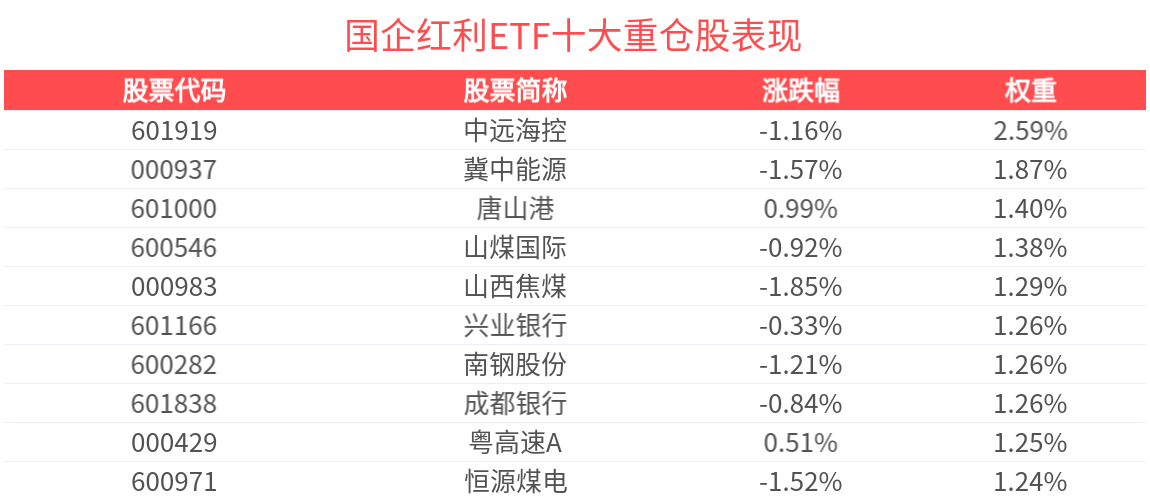
Group 1 - The China Securities State-Owned Enterprises Dividend Index (000824) decreased by 0.67% as of June 19, 2025, with mixed performance among constituent stocks [1] - The top-performing stocks included Furan Energy (002911) up 1.76%, Zhongnan Media (601098) up 1.69%, and Changjiang Media (600757) up 1.65% [1] - The worst-performing stocks were China Steel International (000928) down 2.74%, Hualing Steel (000932) down 2.67%, and Jinkong Coal Industry (601001) down 2.09% [1] Group 2 - The National State-Owned Enterprises Dividend ETF (159515) fell by 0.82%, with the latest price at 1.09 yuan [1] - The index reflects the overall performance of 100 listed companies selected for high cash dividend yields, stable dividends, and certain scale and liquidity [1] - The top five industries represented in the index are banking, coal, transportation, real estate, and media [1] Group 3 - At the 2025 Lujiazui Forum, eight significant financial opening policies were announced, focusing on promoting digital finance, expanding financial openness, and advancing the internationalization of the Renminbi [2] - Current policies are expected to have a greater impact on the funding side of banks rather than the investment side, leading to a more favorable outlook for interest margins in 2025 compared to 2024 [2] - The top ten weighted stocks in the China Securities State-Owned Enterprises Dividend Index as of May 30, 2025, include COSCO Shipping Holdings (601919) and Jizhong Energy (000937), with a combined weight of 15.83% [2]