OPPO

Search documents
NAND市场供不应求趋势有望持续
2025-11-16 15:36
Summary of Conference Call Notes Industry Overview - The NAND market is expected to remain in a state of supply shortage until 2026, indicating that the storage market growth cycle is not over [1][2] - The DRAM market is characterized by high levels of monopoly, with downstream manufacturers like Xiaomi, OPPO, and vivo having low inventory levels, suggesting potential price increases in mobile terminals [4] Key Companies and Performance - **Kioxia**: Reported Q2 2025 revenue of 448.3 billion JPY, a 30% increase year-over-year; non-GAAP operating profit of 87.2 billion JPY, exceeding company guidance but falling short of market expectations [2][6] - **SanDisk**: Q1 2025 revenue of $2.3 billion, a 20% year-over-year increase; Q2 revenue expected between $2.55 billion and $2.65 billion, with gross margin rising from 29.9% to 41-43% [2][6] - **Samsung**: Suspended pricing in October and raised memory prices by 30-60% [6] - **Domestic Companies**: Notable mentions include De Ming Li, Jiang Bo Long, Bai Wei Storage, and Shannon Chip Creation, which are expected to benefit from the upcoming price increase cycle due to strong inventory and procurement capabilities [5] Market Dynamics - Data centers are a significant growth driver for the NAND market, with AI development significantly increasing demand for data centers [6][7] - Companies like Hon Hai Precision and AMD are performing well, with Hon Hai's cabinet numbers increasing by 300% year-over-year and AMD expecting revenue growth exceeding 35% due to collaboration with OpenAI [8] Investment Recommendations - Focus on the LAND, D-LAN, and Norflash markets due to ongoing supply shortages; recommended companies include module-related firms [11] - Anticipate a tenfold increase in general AI computing power demand over the next decade, with opportunities across design, manufacturing, and testing sectors; key players include SMIC and Huahong Semiconductor [11] - AIPCB industry chain stocks are recommended as demand is expected to recover, with companies like Shenghong Technology and Hu Dian Co. being highlighted [11] Additional Insights - Tencent is increasing its capital expenditure in AI for 2025, indicating a robust investment strategy despite economic uncertainties; AI training model iterations are contributing to growth in gaming and advertising [9] - Domestic computing power development is lagging behind international counterparts, particularly in large voice service providers [10]


国常会部署增强消费品供需适配性;华为将发布AI领域突破性技术|周末要闻速递
21世纪经济报道· 2025-11-16 12:59
Group 1 - The State Council's meeting emphasized enhancing the adaptability of supply and demand in consumer goods to unleash consumption potential and facilitate economic circulation [1] - The meeting highlighted the importance of leading industrial upgrades through consumption upgrades and better meeting diverse demands with high-quality supply [1] - The focus is on accelerating the application of new technologies and models, particularly in key industries, to develop new products and value-added services [1] Group 2 - The Ministry of Finance is committed to strengthening counter-cyclical and cross-cyclical adjustments, determining deficit rates and debt scales based on changing circumstances [2] - The China Securities Regulatory Commission aims to enhance market resilience and stability, making the system more inclusive and attractive while improving the quality of listed companies [3] - The People's Bank of China announced an 800 billion yuan reverse repurchase operation to maintain ample liquidity in the banking system [4] Group 3 - The State Administration for Market Regulation released a draft for public consultation on antitrust compliance guidelines for internet platforms, aiming to clarify compliance responsibilities and promote fair competition [5][6] - The Ministry of Commerce and other departments issued a notice to strengthen management of second-hand car exports, particularly controlling new cars exported under the guise of second-hand vehicles [7] - The Shanghai Stock Exchange is monitoring stocks with severe abnormal fluctuations, including specific companies facing delisting risks [8][9] Group 4 - Several smartphone manufacturers have paused procurement of storage chips due to soaring prices, with some companies reporting DRAM inventory levels below three weeks [11] - Industrial Fulian responded to rumors of order downgrades, stating that current project progress and delivery schedules are normal [12] - Huawei is set to release breakthrough AI technology aimed at improving the efficiency of computing resource utilization [13] Group 5 - Samsung Electronics has raised contract prices for certain memory chips by up to 60% due to a shortage driven by the global AI data center construction boom [14] - Multiple airlines have announced free ticket changes for flights to Japan amid safety concerns, urging Chinese citizens to avoid travel to Japan [15] - The U.S. government has adjusted the "reciprocal tariffs" list, removing certain agricultural products from additional tariffs [17]


海量财经丨史上最长“双11”落幕:天猫剔除退款后成交达新高 获四年来全周期最好增长
Sou Hu Cai Jing· 2025-11-16 11:43
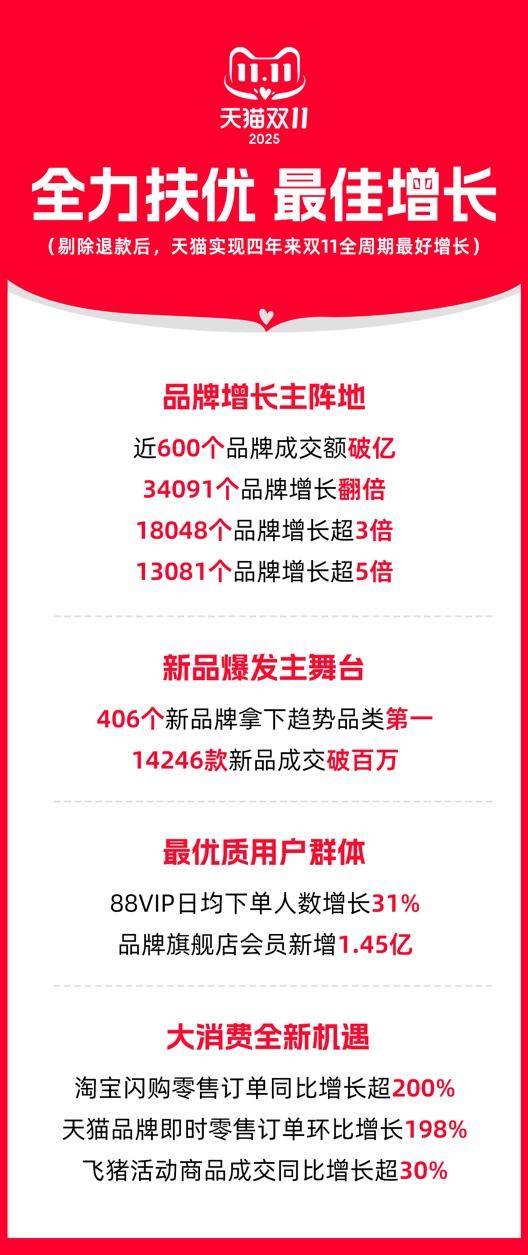
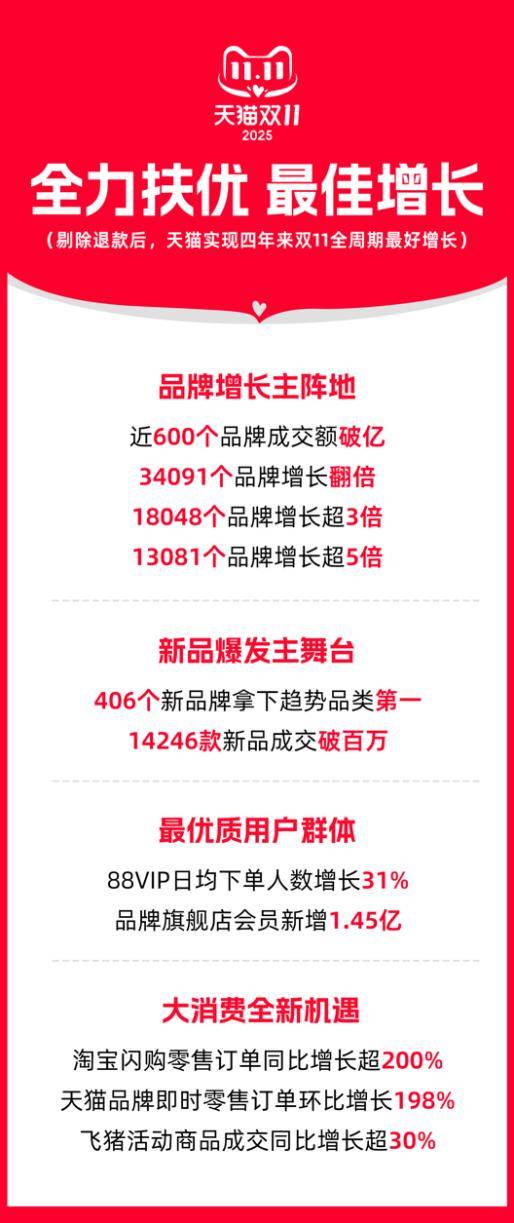
Group 1 - Tmall's "Double 11" event in 2025 achieved record growth, with nearly 600 brands surpassing 100 million in sales and 34,091 brands doubling their sales compared to last year [1][4] - Tmall's president, Jialuo, stated that the growth was driven by support for quality brands and original merchants, along with the largest consumer investment in the platform's history [1] - The event provided a significant platform for new and original brands, with 406 new brands ranking first in trending categories, and 26 new brands achieving over 100 million in sales [4] Group 2 - A total of 14,246 new products surpassed 1 million in sales during "Double 11," with 30% of products that exceeded 100 million in sales being new [4] - Tmall's 88VIP membership reached a new high, with daily order numbers increasing by 31% year-on-year, and 14.5 million new members added to brand flagship stores [4] - This year's "Double 11" marked the first event with full participation from Taobao's upgraded consumer platform and the comprehensive application of AI, leading to significant increases in sales and user engagement [5]

近600品牌成交破亿,超3万品牌增长翻倍!天猫“双11”四年来增长最佳
Sou Hu Cai Jing· 2025-11-16 09:38
Core Insights - Tmall's "Double 11" event in 2025 achieved its best growth in four years, with nearly 600 brands surpassing 100 million in sales and 34,091 brands doubling their sales compared to last year [1][3] - The event highlighted the success of new and original brands, with 406 new brands ranking first in trending categories and 26 new brands exceeding 100 million in sales [3][4] Brand Performance - Major brands such as Apple, Haier, Midea, Xiaomi, and Nike each surpassed 1 billion in sales during the event [1] - A total of 14,246 new products achieved over 1 million in sales, with a significant portion of these being new launches [3] Consumer Engagement - Tmall's 88VIP membership reached a new high, with daily order numbers increasing by 31% year-on-year and 1.45 million new members added to brand flagship stores [3][4] - The event saw the largest consumer investment in Tmall's history, with AI-driven strategies significantly boosting user engagement and order volume [4] Platform Innovations - This year's "Double 11" marked the first participation of Taobao's upgraded consumption platform and the full application of AI technologies [4] - Tmall's integration with Taobao led to record-breaking sales for travel services and a substantial increase in retail orders through Taobao Flash Sale [4]





国常会部署增强消费品供需适配性;华为将发布AI领域突破性技术
2 1 Shi Ji Jing Ji Bao Dao· 2025-11-16 09:19
Group 1 - The State Council meeting emphasized enhancing the adaptability of supply and demand in consumer goods to further stimulate consumption and promote economic circulation [1] - The meeting highlighted the importance of leading industrial upgrades through consumption upgrades and better meeting diverse demands with high-quality supply [1] - The focus will be on accelerating the application of new technologies and innovative models, particularly in key industries and fields, to develop new products and value-added services [1] Group 2 - The Ministry of Finance plans to strengthen counter-cyclical and cross-cyclical adjustments, determining deficit rates and debt scales based on changing circumstances [2] - The People's Bank of China announced an 800 billion yuan reverse repurchase operation to maintain ample liquidity in the banking system [4] Group 3 - The China Securities Regulatory Commission aims to enhance market resilience and stability, making the system more inclusive and attractive while improving the quality and value of listed companies [3] - The market supervision authority released a draft guideline for antitrust compliance for internet platforms, aiming to protect legal rights and maintain fair competition [5] Group 4 - Multiple smartphone manufacturers, including Xiaomi and OPPO, have paused storage chip purchases due to soaring prices, with some having inventory levels below three weeks [11] - Industrial Fulian denied rumors of order or outlook downgrades, stating that current project progress and delivery schedules are normal [12] - Huawei is set to release breakthrough AI technology that could significantly improve the utilization efficiency of computing resources [13] - Samsung Electronics raised contract prices for server memory chips by up to 60% due to supply shortages driven by the AI data center boom [14]
实探华强北丨“上午和下午的价格都不一样”,内存条炒成“黑金条”
Xin Lang Cai Jing· 2025-11-16 02:47
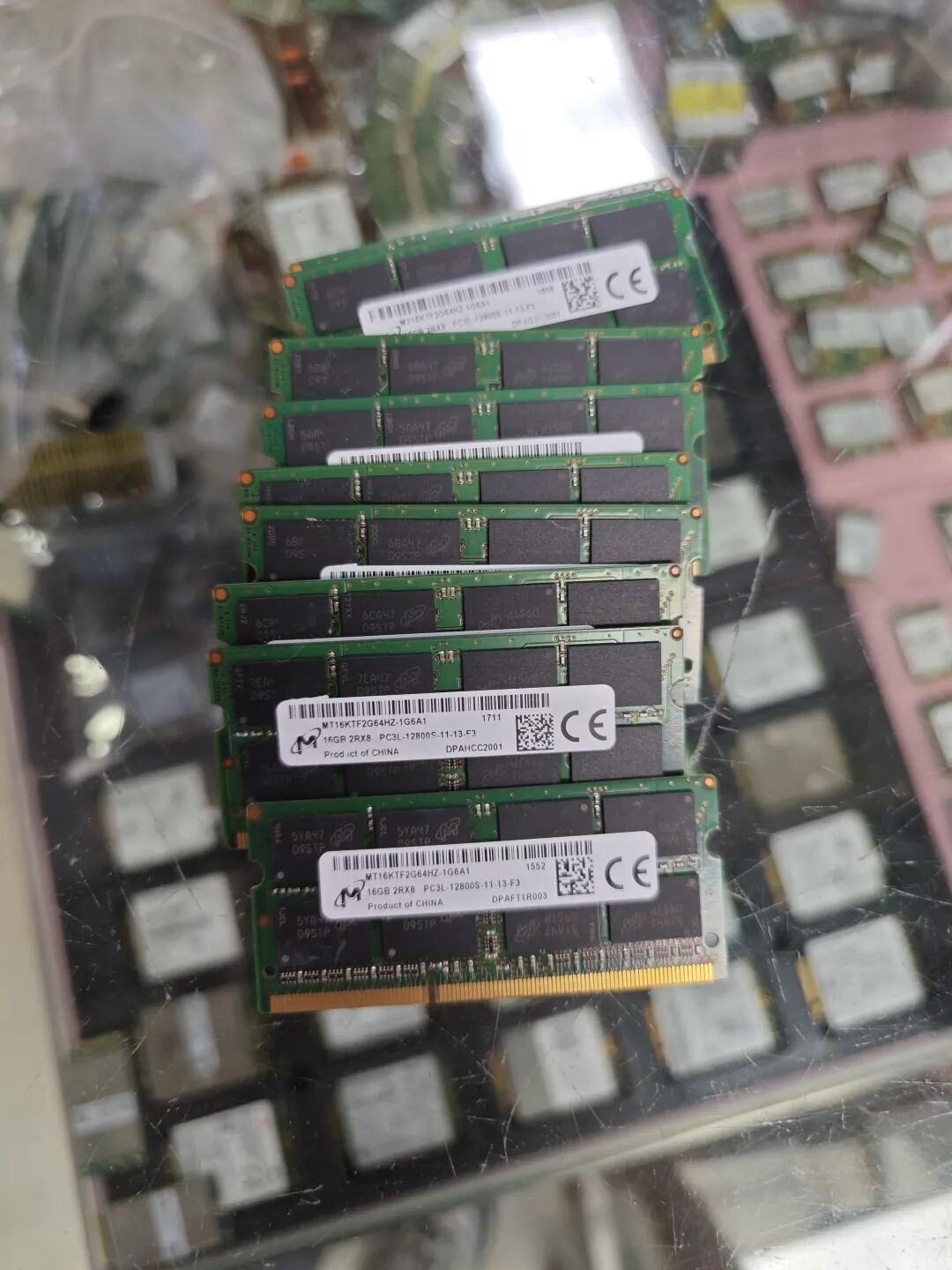
Core Viewpoint - The price of various storage products has significantly increased since April, with some products experiencing price hikes of up to three times, driven by supply shortages and rising demand, particularly from the AI sector [1][5][6]. Price Trends - Storage products, such as a 64GB LPDDR5 memory module, have seen prices rise from around 1,000 yuan to 4,200 yuan, marking a threefold increase [1]. - The price of a 16GB DDR4 memory module has increased from under 200 yuan at the beginning of the year to over 400 yuan by mid-November [2]. Market Dynamics - The surge in storage prices is attributed to a supply-demand imbalance, primarily influenced by significant capital investments in AI infrastructure by major tech companies like Alibaba and Tencent [5][6]. - The demand for high-end storage products, such as HBM and high-capacity DDR5, is outpacing supply as leading manufacturers prioritize these products over lower-margin items [6]. Impact on Consumer Electronics - The rising costs of storage components have led to increased prices for consumer electronics, with assembly costs for computers rising by at least 200 yuan, resulting in a noticeable decline in orders for assembled computers [7]. - Smartphone prices have also been affected, with models like the Redmi K90 series seeing price increases of up to 600 yuan due to higher storage costs [7]. Opportunities for Domestic Manufacturers - The current shortage in the storage market presents a valuable opportunity for domestic manufacturers to capture market share as global supply chains face disruptions [8].

国产首款eSIM手机在中国联通开售
Zhong Guo Qing Nian Bao· 2025-11-15 12:32
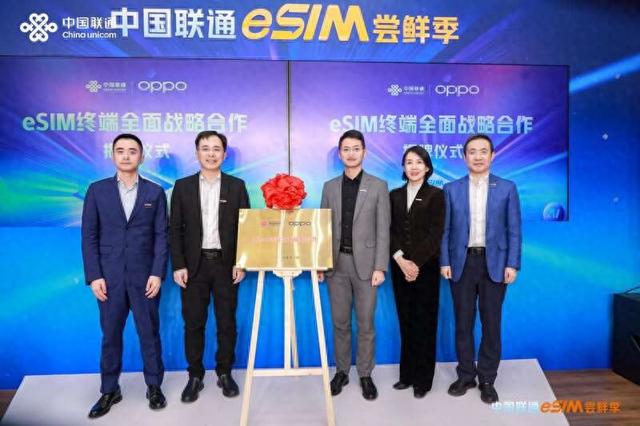
Core Insights - China Unicom launched the first domestic eSIM smartphone, the OPPO Find X9 Pro eSIM Satellite Communication Edition, marking a significant milestone in the eSIM market [1][3] Group 1: Product Launch - The OPPO Find X9 Pro supports both dual Nano-SIM slots and eSIM services, making it the first smartphone in the market to achieve "four cards dual standby" [3] - China Unicom introduced "three trial benefits" for this device, including a 200 yuan recharge, a blind box, and a commemorative plaque for the first batch of eSIM users [3] Group 2: User Demographics - The initial user profile for eSIM smartphones is characterized as "young, male, and high data demand," with 76% of users aged between 20 and 39 years [3] Group 3: Market Outlook - The release of the first eSIM smartphone is expected to drive rapid growth across all categories of eSIM terminals and promote the maturity of the domestic eSIM card and chip industry chain [3] - Monthly releases of eSIM smartphones are anticipated, covering all major mobile operating systems and mainstream phone brands [3] Group 4: Technological Integration - The integration of AI with eSIM technology is seen as a significant opportunity for innovation in terminal devices [3]

段永平最新深度访谈"你只要花5秒钟想一下这个事情,一辈子会省好多事"
雪球· 2025-11-15 04:31
Core Insights - The article discusses the investment philosophy and experiences of Duan Yongping, highlighting his unique approach to decision-making and investment strategies [4][9][72] Group 1: Investment Philosophy - Duan Yongping emphasizes the importance of understanding the business model and corporate culture before making investment decisions, using these as filters to determine whether to invest [30][31] - He believes that maintaining rationality is crucial in investment, as it allows for better decision-making even in uncertain situations [47][48] - The concept of "stop doing list" is introduced, where avoiding certain actions is seen as equally important as taking the right actions in business management [58][59] Group 2: Key Investment Decisions - Duan's decision to invest all his money in NetEase when its stock price was below $1 led to a 20-fold increase in just six months, showcasing his ability to identify undervalued opportunities [8][26] - He reflects on his investment in Kweichow Moutai, noting that despite its price drop, he did not sell because he could not find a better alternative to invest in [41][45] - The article mentions his limited number of investments, with only about ten significant ones over 20 years, indicating a focused and selective investment strategy [28][29] Group 3: Lessons from Mistakes - Duan acknowledges that he made mistakes, such as underestimating the speed of the smartphone market transition, which led to significant cash depletion in his company [19][20] - He stresses that the key lesson from his experience with NetEase is to only invest in industries one understands well, reinforcing the importance of knowledge in investment [53][72] - The article highlights that short-term gains do not equate to long-term success; principles and understanding are what ultimately protect investors [51][52] Group 4: Advice for Investors - Duan warns that stock trading is risky for most retail investors, suggesting that they should consider investing in index funds or established companies if they lack investment knowledge [54][55] - He emphasizes the need for investors to continuously evaluate opportunity costs and be ready to switch investments if a better option arises [46][72] - The article concludes with a practical question for investors: "If you sell, where will the money go?" This encourages thoughtful consideration before making investment decisions [68][70]



2025年天猫双11收官 剔除退款后成交创新高
Zheng Quan Shi Bao Wang· 2025-11-15 03:41
Group 1 - The core viewpoint of the articles highlights the significant growth and success of Tmall's Double 11 event in 2025, with nearly 600 brands achieving over 100 million in sales and many brands experiencing substantial year-on-year growth [1][2] - Tmall's president, Jialuo, stated that the event marked the best growth in four years, driven by strong support for quality brands and original merchants, as well as the largest consumer investment in the platform's history [1][2] - A total of 406 original brands achieved first place in trending categories during the event, with 26 new brands surpassing 100 million in sales and 188 new brands exceeding 10 million [1] Group 2 - This year's Double 11 was notable for being the first under the upgraded Taobao large consumption platform, with significant participation from Taobao Flash Sale and comprehensive AI application [2] - The integration of various platforms led to record-breaking sales for Fliggy, with a year-on-year growth of over 30%, and Taobao Flash Sale retail orders increasing by more than 200% compared to last year [2] - Tmall implemented the largest consumer investment in history and utilized AI "Smart Benefit Engine" for decision-making, resulting in an 86% increase in daily active users for brands [2]
存储芯片掀涨价风暴 传多家手机厂商暂停采购
Ju Chao Zi Xun· 2025-11-15 02:54
Core Viewpoint - The ongoing surge in storage chip prices, driven by increased demand from data centers due to the AI model wave, is causing major smartphone manufacturers to delay their procurement plans for storage chips, with inventory levels critically low [1][4]. Group 1: Impact on Smartphone Manufacturers - Major smartphone manufacturers like Xiaomi, OPPO, and vivo are facing inventory levels below two months, with some DRAM stocks even less than three weeks, leading to tough decisions on whether to accept price increases of nearly 50% from suppliers [1][4]. - The price increase in storage chips is expected to directly impact the retail prices of mid to high-end smartphones, with price hikes ranging from 100 to 500 yuan due to rising storage costs [5][6]. - Industry experts predict that the severity of the current memory price increase exceeds expectations, resulting in a "price storm" that will ultimately affect consumers [5][6]. Group 2: Supply Chain Dynamics - The supply side is tightening, with major manufacturers like Samsung halting DDR5 DRAM contract quotes and reducing NAND flash supply to drive prices up [4]. - Samsung has lowered its NAND wafer production target for this year from 5.07 million to approximately 4.72 million units, while SK Hynix has reduced its target from 2.01 million to about 1.8 million units, a decrease of around 10% [4]. - Panic buying has begun among North American tech companies, with some suppliers already having their NAND supply for next year fully booked [4]. Group 3: Broader Industry Implications - The cost of storage chips, which is the second-largest expense in smartphones after processors, typically accounts for 10% to 30% of the total device cost, significantly influencing retail pricing [5]. - TSMC has notified key clients like Apple that prices for advanced chips below 5nm will increase by 8% to 10% starting in 2026, compounding the cost pressures on flagship models [5]. - The current memory shortage is described as the most severe in 30 years, with predictions of a 50% increase in NAND prices and potential doubling of DDR5 prices [6].