
传音控股

Search documents
得印尼者得东南亚:中企扎堆掘金,会中文月薪近万
Di Yi Cai Jing· 2026-02-04 09:31
Core Insights - Indonesia represents a significant market opportunity, accounting for approximately 40% of Southeast Asia's market share, making it a strategic target for companies looking to expand in the region [4][14][19] Market Dynamics - Japanese brands dominated the Indonesian automotive market a decade ago with a 90% market share, which has now decreased to around 70% due to the rise of Chinese electric vehicles [1] - Indonesia is the largest single market in Southeast Asia, with a GDP and e-commerce scale representing about 40% and 50% of the region, respectively [4][14] - The internet penetration rate in Indonesia exceeds 70%, with a young population driving the digital economy [4][13] Investment Trends - Chinese direct investment in Indonesia is projected to reach $4.59 billion in 2024, marking a 46.5% year-on-year increase, positioning China as one of the top foreign investors in the country [7] - Companies like WOOK are successfully expanding from Indonesia to other Southeast Asian markets, indicating a trend of regional growth [8] Talent and Language - The demand for Chinese-speaking professionals in Indonesia has surged, with salaries for bilingual positions reaching up to 10,000 RMB per month [6][7] - The increasing number of Chinese companies in Indonesia has created a need for local talent who can bridge communication gaps [7] E-commerce Growth - TikTok has become the leading e-commerce platform in Indonesia, with its gross merchandise volume (GMV) surpassing $6 billion in the first half of the year, reflecting a growth of over 100% year-on-year [13] - The e-commerce market in Indonesia is expected to grow by over 14% by 2025, reaching approximately $71 billion [14] Strategic Insights - Companies that establish a foothold in Indonesia can leverage their success to expand into other Southeast Asian markets more easily [14][19] - The logistics and supply chain challenges in Indonesia can be navigated by focusing on key islands where the majority of the population resides [20] Consumer Behavior - There is a growing acceptance of new brands and business models in Indonesia, driven by the rapid development of e-commerce and social media [18] - The local market is witnessing a shift towards higher-quality products, providing opportunities for Chinese brands to compete effectively [18]


东鹏饮料登陆港交所,深圳南山再添一家“A+H”上市公司
Sou Hu Cai Jing· 2026-02-04 04:15
深圳商报·读创客户端记者 张国锋 2月3日,东鹏饮料(集团)股份有限公司正式在香港主板上市(股票代码09980.HK),成为深圳市、 南山区2026年首家以"A+H"模式(即同时在内地A股和香港H股上市)登陆资本市场的企业。 作为中国功能饮料领军者,东鹏饮料精准把握行业发展趋势,稳居功能饮料赛道领跑地位,同时紧扣健 康化、细分化消费需求构建多元化产品矩阵,推行"1+6"多品类战略,在巩固能量饮料核心优势的同时 推动东鹏"补水啦"等新品类快速成长,产品结构持续优化,第二增长曲线成效显著。 目前,东鹏饮料已构建覆盖全国近100%地级市的立体化销售网络,拥有3200余家经销商及430万家有效 活跃终端网点,触达不重复终端消费者超2.5亿。通过渠道精细化管理,确保产品高效触达全国市场, 这一广覆盖、深渗透的渠道体系,既助力产品动销与市场扩张,更成为企业抵御行业波动的核心竞争优 势。 此次港股上市是东鹏饮料全球化战略的重要起点。作为企业出海的关键举措,港股上市将为其国际化拓 展提供强大助力。目前东鹏饮料的产品已出口超30个国家和地区,印尼、越南等海外子公司落地运营, 海外产能与渠道布局同步推进;本次募集资金也将投向产能 ...


“非洲手机之王”传音去年净利预计“腰斩”
Nan Fang Du Shi Bao· 2026-02-03 23:16
Core Viewpoint - Transsion Holdings, known as the "King of African Mobile Phones," is facing significant challenges due to rising supply chain costs and intensified market competition, leading to a projected net profit decline of approximately 54.11% for 2025 compared to the previous year [1][2]. Financial Performance - The company anticipates a net profit attributable to shareholders of around 2.546 billion yuan for 2025, a decrease of about 3.003 billion yuan year-on-year [1][3]. - Expected total revenue for 2025 is approximately 65.568 billion yuan, down about 4.58% from 68.715 billion yuan in 2024 [3]. - The net profit excluding non-recurring items is projected to be around 1.904 billion yuan, reflecting a significant reduction of approximately 58.06% compared to the previous year [3]. Market Challenges - The decline in profitability is attributed to increased costs of components, particularly storage chips, which have seen price hikes due to a "super cycle" in the semiconductor industry [4]. - Despite maintaining over 40% market share in the African smartphone market, Transsion is facing heightened competition from Chinese brands like Xiaomi, Honor, and OPPO, which are increasing their presence in Africa [4]. Strategic Responses - To counteract market pressures, the company has increased its marketing and R&D expenditures, further impacting profit margins [4]. - Transsion is also dealing with multiple patent infringement lawsuits from major tech companies, adding to its operational challenges [5]. - In response to these pressures, the company has submitted an application for an IPO on the Hong Kong Stock Exchange, aiming to enhance its capital base and address global competition [7].

华福证券:AI服务器和高算力设施驱动高端PCB需求 核心主线聚焦高端PCB与材料龙头
智通财经网· 2026-02-03 02:36
智通财经APP获悉,华福证券发布研报称,2025~2026年,PCB行业整体供需紧平衡,结构性短缺尤为 突出。一方面,全球高阶PCB新增产能不及AI和高频高速市场需求,主流PCB公司产能受限于天然的扩 张周期、海外劳动力和基础设施瓶颈,短期内产能释放有限,供给释放滞后带来严重的供需缺口现象, 增量需求需要分散供应链来获得产能。核心主线聚焦高端PCB与材料龙头:重点关注价值量高、AI业务 进展领先、产能扩产积极的PCB龙头企业。把握供给短缺&材料涨价红利:2026年全行业产能、材料均 处于供应紧张格局,相关公司产品价格有望续涨,同时提升盈利能力有望攀升。 2026年国产算力放量大年,存储向上大周期,模拟复苏 国产算力产业链从2025年开始跑通,2026年或是国产算力芯片的放量大年(H200将于2026年进入国内市 场,这或会对国产算力发展有一定的影响),2026年建议关注寒武纪、海光信息、摩尔线程与沐曦股份 等国产算力AI算力芯片的投资机会; 全球存储芯片市场自2025年上半年起进入景气周期,价格持续攀升。美光CEO暗示这一轮"存储芯片超 级周期"有望延续至2027年,进一步表明全球布局AI的热潮之下存储芯片需 ...
电子:电子行业2026年度策略报告:AI与自主可控共振-20260202
Huafu Securities· 2026-02-02 14:55
行 业 华福证券 电子 2026 年 02 月 02 日 行 业 投 资 策 略 截止到 2025Q3,三星 25Q1-Q3 全球智能手机出货量达到 6060 万 台,市场份额达 19%,保持全球第一;苹果 25Q3 出货量为 5650 万台, 同比上升 4%,市场份额位列第二;其次为小米/传音/vivo。据环球网 援引IDC 报告显示 2025年全球智能手机出货量预计将达到 12.4 亿部, 2024-2029 年 CAGR=1.5%,呈现温和增长。展望 2026 年,我们持续看 好手机结构化升级带来的创新需求,包括潜望式镜头成为安卓/苹果高 端手机标配带来渗透率持续提升。 研 究 电子行业 2026 年度策略报告:AI 与自主可控共 振 投资要点: 预计 2026 年手机行业温和复苏,看好结构创新带来增量需求 证 券 研 随着国产算力需求的不断增加,先进制程的产能需求也不断提升。 中芯国际、华虹公司、长鑫存储等企业的先进制程制造产能预计不断 增加。成熟制程工艺各个制造商各有千秋,特色工艺投资机会显现。 芯联集成、晶合集成、赛微电子各自特色领域优势显著。内生增长以 及外延并购提升半导体设备覆盖率。半导体制造 ...
营收下滑,净利腰斩 “非洲之王”传音失速
Bei Jing Shang Bao· 2026-02-02 00:52
Core Viewpoint - Transsion Holdings, known as the "King of Africa" in the mobile phone industry, reported disappointing annual results for 2025, with significant declines in revenue and net profit due to rising supply chain costs and intensified competition in emerging markets [1][3]. Financial Performance - The company expects to achieve approximately 65.568 billion yuan in revenue for 2025, a decrease of 4.58% year-on-year [1]. - Net profit attributable to shareholders is projected to be around 2.546 billion yuan, down 54.11% compared to the previous year [1]. - The first quarter of 2025 saw a revenue decline of 25.45% and a net profit drop of 69.87% [3]. - By mid-year, revenue had decreased by 15.86%, with net profit down 57.48% [3]. - Despite a 22.6% revenue increase in the third quarter, cumulative revenue for the first three quarters still showed a decline of 3.33% [3]. Market Position and Competition - In the third quarter, Transsion achieved a 13.6% year-on-year increase in shipments, reaching 29.2 million units, making it one of the top five global smartphone manufacturers [5]. - However, the company struggled in other quarters, failing to appear in the top rankings during the first quarter and experiencing a 1.7% decline in the second quarter [5]. - In the African market, Transsion maintained a leading position with a 51% market share, but growth has slowed, with competitors like Xiaomi and Honor rapidly increasing their market presence [6]. Challenges in Emerging Markets - Transsion's attempts to replicate its African success in Southeast Asia and Latin America have faced significant challenges, with declining shipments and market share in these regions [7]. - The company reported a 19% year-on-year drop in shipments in the Latin American market during the third quarter [7]. Industry Challenges - Rising storage costs have become a common issue in the smartphone industry, significantly impacting Transsion's operations in price-sensitive emerging markets [8]. - The increase in DRAM prices has raised production costs across all price segments, with the lowest segment experiencing the most significant increase [8]. - The global smartphone shipment forecast for 2026 has been revised downwards, indicating a 2.1% decline, which disproportionately affects the low-price segment where Transsion operates [8][9].
净利腰斩 “非洲之王”传音失速
Bei Jing Shang Bao· 2026-02-01 15:55
Core Viewpoint - Transsion Holdings, known as the "King of Africa" in the mobile phone industry, reported disappointing annual results for 2025, with significant declines in revenue and net profit due to rising supply chain costs and intensified competition in emerging markets [1][3]. Financial Performance - The company expects to achieve approximately 65.568 billion yuan in revenue for 2025, a decrease of 4.58% year-on-year [1]. - Net profit attributable to shareholders is projected to be around 2.546 billion yuan, down 54.11% compared to the previous year [1]. - The first quarter saw a revenue decline of 25.45% and a net profit drop of 69.87% [3]. - By mid-year, revenue had decreased by 15.86%, with net profit down 57.48% [3]. - Despite a 22.6% revenue increase in the third quarter, cumulative revenue for the first three quarters still fell by 3.33% [3]. Market Position and Competition - In the third quarter, Transsion achieved a 13.6% year-on-year increase in shipments, reaching 29.2 million units, making it one of the top five global smartphone manufacturers [5]. - However, the company did not appear in the global top five rankings in other quarters, indicating instability in its market presence [5]. - In Africa, Transsion maintained a leading position with a 51% market share, but growth has slowed, with competitors like Xiaomi and Honor rapidly increasing their market presence [6][7]. Industry Challenges - Rising storage costs have become a common challenge in the smartphone industry, significantly impacting Transsion's operations in price-sensitive emerging markets [8]. - The increase in DRAM prices has raised production costs across all price segments, with low-end models experiencing the most significant cost hikes [8][9]. - The company faces pressure to maintain market share while exploring new growth avenues, making its future uncertain [9].
全年净利腰斩背后 “非洲之王”传音的怨与愁
Bei Jing Shang Bao· 2026-02-01 14:13
Core Viewpoint - Transsion Holdings, known as the "King of Africa" in the mobile phone industry, reported a disappointing annual performance for 2025, with significant declines in revenue and net profit due to rising supply chain costs and intensified competition in emerging markets [2][3]. Group 1: Financial Performance - The company expects to achieve approximately 65.568 billion yuan in revenue for 2025, a decrease of 4.58% year-on-year, equating to a drop of 3.147 billion yuan [2]. - Net profit attributable to shareholders is projected to be around 2.546 billion yuan, reflecting a substantial decline of 54.11%, or a reduction of about 3.003 billion yuan compared to the previous year [2]. - The non-recurring net profit saw an even steeper decline of 58.06% [2]. Group 2: Market Challenges - The decline in performance is attributed to a combination of rising storage chip prices impacting supply chain costs and increased competition in both local and global emerging markets [2][4]. - The first quarter of 2025 saw a revenue drop of 25.45% and a net profit plunge of 69.87%, indicating a significant early warning of ongoing pressure throughout the year [4]. - By the end of the third quarter, despite a seasonal revenue increase of 22.60%, cumulative revenue still showed a decline of 3.33% year-on-year [4][6]. Group 3: Competitive Landscape - In the global smartphone market, Transsion's performance was mixed, with a notable increase in third-quarter shipments of 29.2 million units, marking a 13.6% year-on-year growth, positioning it among the top five manufacturers [6]. - However, the company struggled in other quarters, failing to maintain a consistent presence in the global top rankings, reflecting instability in its competitive position [6][7]. - In the African market, while still leading with a 51% share, Transsion faced challenges from competitors like Xiaomi and Honor, who exhibited significantly higher growth rates [7][8]. Group 4: Cost Pressures - The rising cost of storage components has become a common challenge in the smartphone industry, particularly affecting Transsion's low to mid-range offerings, where price sensitivity is high [9][10]. - The increase in DRAM prices has raised production costs across all price segments, with low-end models experiencing the most significant increases [9]. - The inability to fully pass on these costs to consumers may lead to further profit compression or reduced shipments of lower-end models, exacerbating the company's operational pressures in emerging markets [10].
全年净利腰斩背后,“非洲之王”传音的怨与愁
Bei Jing Shang Bao· 2026-02-01 13:53
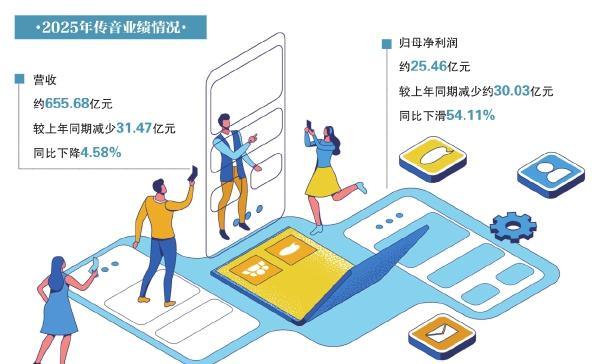
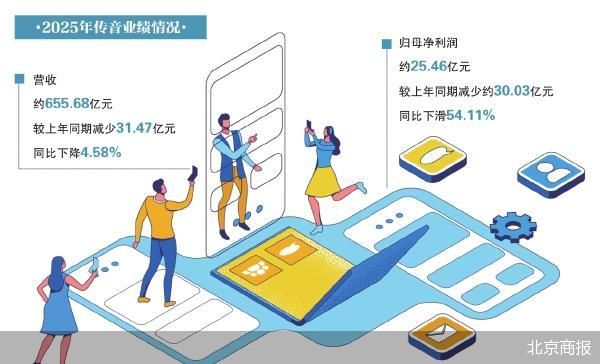
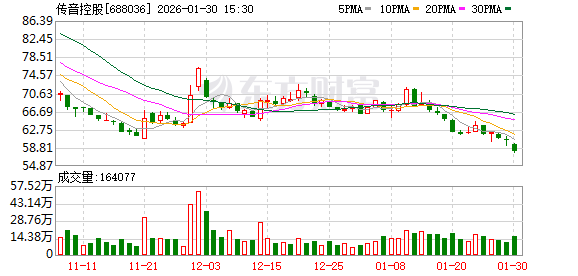
营收下滑,净利腰斩……素有手机行业"非洲之王"美称的传音控股,交出了一份堪称惨淡的年度答卷。 1月末,传音控股发布2025年年度业绩预告,披露了这份不尽人意的成绩单:公司年内预计实现营业收 入约655.68亿元,较上年同期减少31.47亿元,同比下降4.58%;归属于母公司股东的净利润约25.46亿 元,同比大幅下滑54.11%,较上年同期减少约30.03亿元,扣非净利润跌幅更是达到58.06%。 业绩大幅下滑背后,既有2025年贯穿全年的存储芯片涨价潮带来的供应链成本重压,也有非洲本土乃至 全球新兴市场的竞争加剧与拓展困境——前者让其利润空间被持续挤压,后者则让其核心市场基本盘承 压,曾经在新兴市场顺风顺水的传音,如今正被多重难题裹挟,前行脚步愈发沉重。 与此同时,资本市场的表现也未能给予传音更多支撑。为谋求补血,传音正在赴港布局A+H上市途 中,但其A股股价较历史峰值已蒸发大半。 资深产业经济观察家梁振鹏在接受北京商报记者采访时表示,传音的核心挑战在于维持硬件市场份额的 同时开拓新增长曲线。 但从现状看,旨在走出困境的突围之战愈发凶险,传音的未来依旧充满未知。 01.重压之下的一年 2025年的寒意,从一 ...
智能手机2026:变局中的挑战与曙光
3 6 Ke· 2026-02-01 06:26
Core Insights - The smartphone industry is experiencing a significant downturn in expected shipments for 2026, with major manufacturers like Xiaomi and OPPO reducing their forecasts by over 20% [1][2] - The decline in shipments is primarily attributed to rising storage chip prices and supply shortages, leading to a strategic shift towards higher-value products [2][6] Group 1: Industry Dynamics - In 2025, the global smartphone shipment reached 1.26 billion units, with a 1.9% year-on-year growth, while China's market saw a slight decline of 0.6% [3] - Huawei regained its position as the leading smartphone manufacturer in China with a shipment of 46.7 million units, capturing a market share of 16.4% [3] - Apple and Vivo closely followed Huawei, with shipments of 46.2 million and 46.1 million units, respectively, indicating a highly competitive landscape [3][4] Group 2: Market Challenges - The price of storage chips is expected to rise significantly, with a projected increase of 40% to 50% in Q1 2026, further impacting manufacturers' cost structures [6][8] - The cost increase is particularly pronounced in low-end models, which may deter price-sensitive consumers from upgrading their devices [7][8] Group 3: Future Trends - The integration of AI into smartphones is anticipated to be a major trend, with new AI-enabled smartphone shipments expected to reach 147 million units in China, accounting for over 50% of the market [9] - The development and application of 2nm chips are also on the horizon, promising enhanced performance and efficiency for future smartphones [10]

