宝马

Search documents
2027固态电池装车倒计时:设备订单放量在即,产业链布局窗口期开启
智通财经网· 2025-07-12 00:27
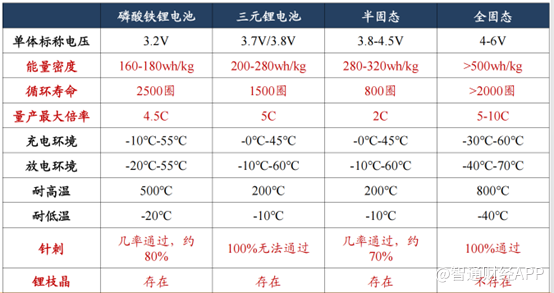
Core Viewpoint - The solid-state battery technology is rapidly advancing, with major global automakers and battery manufacturers announcing timelines for vehicle integration, indicating a shift towards high-performance lithium batteries that offer both high energy density and safety [1][3][15]. Group 1: Industry Developments - Major automakers like BYD, Toyota, and Volkswagen are planning to implement solid-state batteries in their vehicles between 2025 and 2030, with various companies setting specific timelines for small-scale production and testing [3][4]. - CATL is transitioning from semi-solid to solid-state batteries, aiming for small-scale production by 2027, while other companies like Guoxuan High-Tech and EVE Energy have similar timelines for their solid-state battery projects [3][4]. Group 2: Technical Advantages - Solid-state batteries can achieve energy densities exceeding 500 Wh/kg, significantly higher than traditional lithium batteries, which are nearing their theoretical limits [2][3]. - The solid-state battery technology addresses safety concerns associated with liquid batteries, such as thermal runaway, making it suitable for applications in electric vehicles, robotics, and energy storage [1][2]. Group 3: Market Potential - The global demand for solid-state batteries is expected to grow, driven by the increasing penetration of electric vehicles and advancements in low-altitude economy and renewable energy sectors [5][15]. - The market for solid-state battery equipment is projected to increase from 5-6 billion CNY per GWh to 2.5 billion CNY per GWh by 2029, indicating a significant reduction in production costs as technology matures [8][9]. Group 4: Material Innovations - The development of solid-state batteries is leading to advancements in materials, with a shift from graphite to silicon-based anodes, which have a theoretical capacity ten times higher than graphite [13][14]. - New electrolyte materials, including polymer, oxide, and sulfide, are being explored, each with distinct advantages and challenges, contributing to the ongoing evolution of solid-state battery technology [10][11][12].


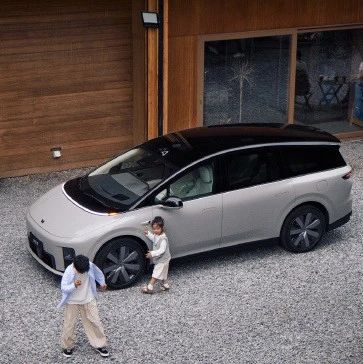
硬哥给了理想i8底盘表现是宝马i7的水平的预期
理想TOP2· 2025-07-11 13:20
Group 1 - The core viewpoint of the article highlights the comparison between the BMW i7 and the upcoming Li Auto i8, emphasizing the balance of performance and comfort in the i7 while noting its shortcomings in smart technology [1][2] - The Li Auto i8 is positioned as a superior alternative to the BMW i7, with expectations for advanced smart features and driving assistance systems [2] - The launch timeline for the Li Auto i8 includes the opening of reservations on July 17, a city tour starting on July 18, and a launch event on July 29 [2] Group 2 - The article encourages engagement through a WeChat group for in-depth discussions about Li Auto's long-term fundamentals, indicating a focus on community and investor relations [3]

芯片人去德国!一口气看两场行业大展
芯世相· 2025-07-11 10:16
Core Viewpoint - The article emphasizes the importance of exploring overseas markets for the chip industry, particularly in Europe, as a strategy for industry upgrade and sustained growth amidst intense domestic competition and technological innovation [3]. Group 1: Overview of the European Market Exploration - The chip industry is increasingly focusing on overseas markets, with "going abroad" seen as a new option for growth [3]. - A business investigation trip to Germany is planned from September 4 to September 14, focusing on key cities and major exhibitions like IFA and IAA [3][4]. - The IFA exhibition, one of the largest in the world, attracted over 1,800 exhibitors and more than 210,000 visitors from 138 countries in its last edition [4]. - The IAA exhibition, a key event in the global automotive industry, had 750 exhibitors from 38 countries and over 500,000 visitors [4]. Group 2: Activities and Engagements - The trip will include deep-dive salons and visits to renowned companies and universities, facilitating connections with local resources [6][7]. - Previous trips to Germany in 2018 and 2023 have built a strong resource network and experience in organizing industry-specific itineraries [10]. - The itinerary includes visits to significant cities like Berlin, Leipzig, Dresden, Stuttgart, and Munich, each representing key industrial characteristics [7]. Group 3: Exhibition Insights - IFA covers various aspects of consumer electronics, providing insights into market demands in Germany and globally [5]. - IAA encompasses the entire automotive supply chain, featuring major manufacturers and component suppliers, allowing for efficient identification of potential partners and projects [5]. Group 4: Company Visits and Learning Opportunities - The trip will include visits to notable companies such as GlobalFoundries and Mercedes-Benz, which are pivotal in the semiconductor and automotive sectors [19][20]. - Nexperia, a leading semiconductor company, and Fraunhofer, a model for integrating scientific research with industry, will also be part of the exploration [22][23].

亿纬锂能沈阳大圆柱电池基地进入试产阶段 与宝马掀开合作新篇章
Zheng Quan Ri Bao Wang· 2025-07-11 10:13
Group 1 - The "Leading Project" of Huizhou EVE Energy Co., Ltd. has officially entered the trial production phase, marking a significant advancement in the collaboration with BMW from technical synergy to industrial co-creation [1] - BMW's Vice President in China, Joerg Ghanbari, praised EVE Energy for its innovative capabilities, world-class quality standards, flexibility, and competitive cost advantages, which are key reasons for BMW's partnership [1] - The automotive industry is at a critical transformation point, and BMW views EVE Energy as a strategic partner in the paths of electrification, digitalization, and sustainability [1] Group 2 - The trial production of the "Leading Project" will initiate a new chapter in the collaboration, focusing on validating and debugging EVE Energy's self-developed high-speed assembly production line, which utilizes digital twin technology [2] - The goal is to optimize the entire line's processes, quality control, and operational experience in Shenyang, with plans to replicate these mature experiences in European factories in the future [2]

车圈一个月换了35名高管,六大车企集体换防,东风一口气调整600人
创业邦· 2025-07-11 09:21
Core Viewpoint - The automotive industry is experiencing a significant wave of executive changes, particularly among China's top six domestic automakers, reflecting an intensifying competitive landscape as the market approaches 2025 [5][8][36]. Group 1: Executive Changes in Domestic Automakers - Over the past month, 15 automakers have undergone executive changes, including major players like BYD, Geely, SAIC, Chery, Changan, and Great Wall [5][19]. - Notably, Chery has seen multiple rounds of adjustments, while Changan and SAIC have also made significant changes [5][6]. - The scale of personnel adjustments is particularly pronounced at Dongfeng, which has seen a turnover of around 600 employees [6][20]. Group 2: Impact on New Energy and Technology - New energy vehicle companies like Li Auto and NIO are also facing talent attrition, particularly among technical executives, as competition for skilled personnel intensifies [11][14]. - Li Auto has restructured its autonomous driving team, leading to the departure of key technical leaders, which may be attributed to escalating disagreements over technical direction [12][13]. - NIO's chief expert in technology planning has also left, indicating a broader trend of talent movement within the new energy sector [14][18]. Group 3: Strategic Adjustments Among Traditional Automakers - Traditional automakers are making aggressive changes to enhance strategic focus and management efficiency, with a notable emphasis on integrating software development teams [19][21]. - Dongfeng has established a new subsidiary to consolidate its three major brands, reflecting a commitment to enhancing its new energy business [20]. - Chery has undergone multiple organizational adjustments to strengthen its focus on new energy and intelligent driving [23][24]. Group 4: International Automakers' Executive Changes - International brands like Tesla and Volkswagen are also experiencing significant executive shifts, with a growing demand for local Chinese executives as they deepen their engagement in the electric vehicle market [31][35]. - Tesla's restructuring includes the direct involvement of CEO Elon Musk in managing sales in Europe and North America, indicating a strategic pivot in response to market challenges [32][33]. - Mercedes-Benz has appointed a new digital and communications vice president to enhance its market competitiveness, showcasing the importance of digital transformation in the automotive sector [35]. Group 5: Future Outlook - The recent executive changes across the automotive industry signal a preparation for an increasingly competitive environment in the second half of 2025, as companies adapt to rapid market shifts and technological advancements [36][38].




价格降幅超40%,玛莎拉蒂Grecale限时价38.88万元起引发热议
Cai Jing Wang· 2025-07-11 08:21
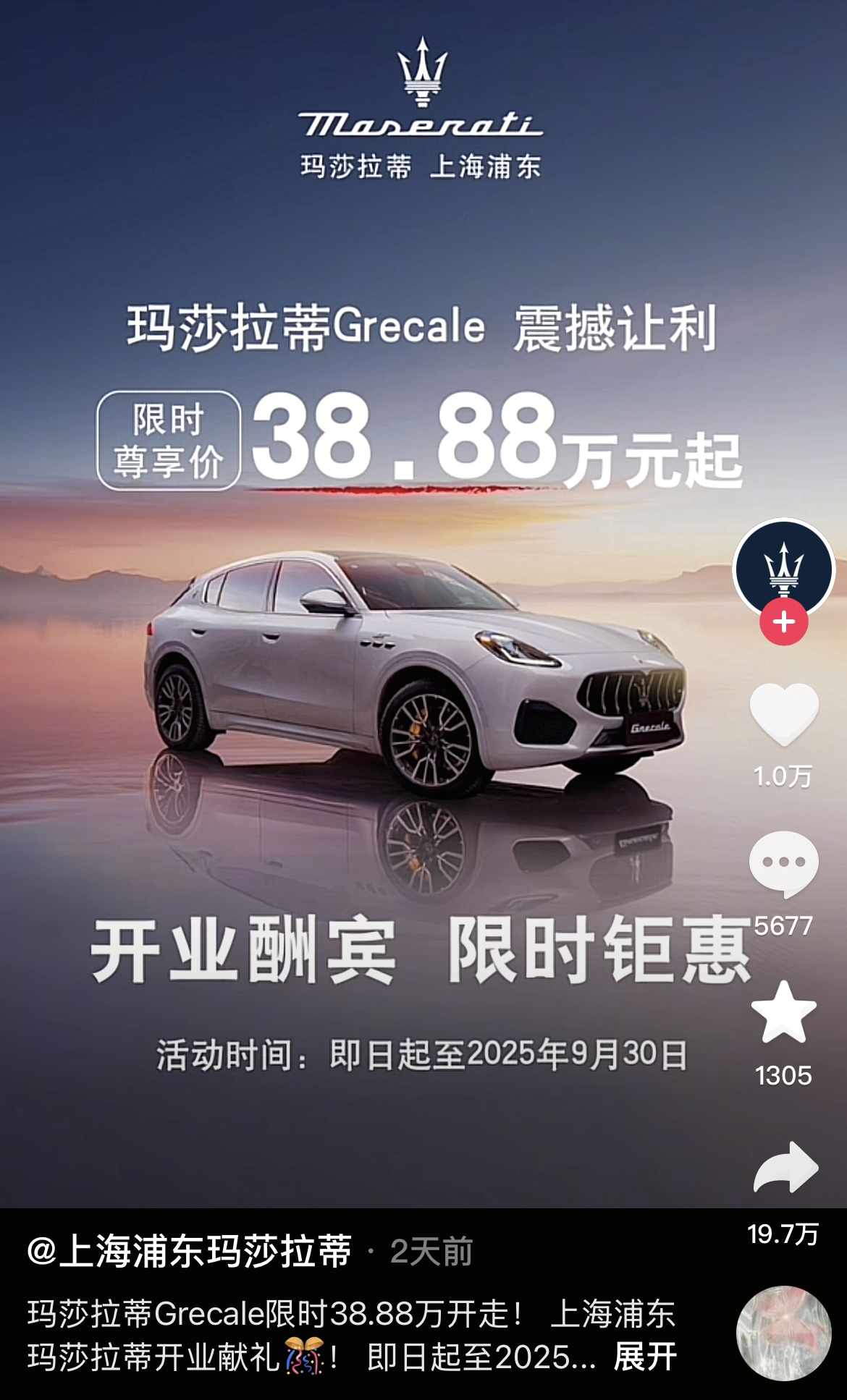
Core Viewpoint - Maserati is experiencing significant price reductions for its Grecale SUV model in China, reflecting broader challenges in the luxury automotive market due to changing consumer preferences and increased competition [1][4][5]. Group 1: Price Reduction and Sales Impact - Maserati's Grecale SUV is being offered at a promotional price of 388,800 yuan, a reduction of 262,000 yuan (over 40%) from the official starting price of 650,800 yuan [1]. - The promotional pricing is attributed to a drastic decline in sales, with the dealership reporting over 10 units sold within two days of the promotion [5]. - Maserati's sales in China have plummeted, with a forecasted total of 1,228 units for 2024, representing a 71% year-on-year decline [6]. Group 2: Market Dynamics and Competition - The decline in Maserati's sales is linked to several factors, including the rise of domestic electric vehicle brands and a slow transition to electric models by traditional luxury brands [4][6]. - The overall luxury car market in China is facing challenges, with a reported 33% drop in imported car sales in the first five months of 2025 [7]. - Maserati's performance is part of a broader trend affecting traditional luxury brands, as evidenced by declining sales figures across competitors like Bentley, Rolls-Royce, and Ferrari [10][12]. Group 3: Consumer Behavior and Market Trends - Changing consumer perceptions, particularly among younger buyers, are leading to a decreased willingness to pay a premium for luxury brands like Maserati [12]. - The luxury automotive market is undergoing structural changes, with a shift in demand towards electric vehicles and a growing preference for domestic brands [12].
赛道Hyper | 英特尔出售Mobileye股份:肌腠影响几何?
Hua Er Jie Jian Wen· 2025-07-11 03:00
Core Viewpoint - Intel is selling its stake in Mobileye for $900 million, which includes a direct buyback of $100 million, potentially leading to total proceeds of $1 billion. This move reflects Intel's strategic shift amidst challenges in the semiconductor and autonomous driving industries [1][2][3]. Group 1: Intel's Strategic Shift - Intel has faced significant challenges in recent years, particularly against competitors like AMD, Apple, and Nvidia, leading to a need for strategic adjustments under new CEO Chen Lifang [2]. - The sale of Mobileye shares is part of a broader strategy to optimize assets and focus on core business areas, particularly data center and AI chips, which are seen as future growth points [3][5]. Group 2: Mobileye's Market Position - Mobileye, acquired by Intel for $15.3 billion in 2017, has seen a decline in competitiveness as the market shifts towards fully autonomous driving solutions. The company has lowered its revenue expectations for 2024 to between $1.6 billion and $1.68 billion, down from previous estimates [3][5]. - Despite its challenges, Mobileye still has a cash flow, making it a target for asset optimization by Intel [3]. Group 3: Industry Dynamics - The sale of Mobileye shares highlights a shift in the automotive industry, where car manufacturers are increasingly seeking to regain control over technology and software, moving away from reliance on suppliers like Mobileye [8][10]. - The changing landscape indicates a move from a hardware-dominated model to one that emphasizes software and service revenues, with projections suggesting that by 2030, over 50% of automotive revenue will come from services and software [8][9]. Group 4: Future Implications - The transaction may signal the beginning of a broader industry reshuffle, as companies adapt to new market realities and seek to establish more flexible partnerships [11][12]. - The evolving dynamics suggest that smaller players may struggle to survive unless they can secure ongoing orders from car manufacturers or develop software monetization capabilities [12][13].


走出混沌 走向澄明 ——十大关键词复盘上半年车市
Zhong Guo Qi Che Bao Wang· 2025-07-11 02:00
Core Viewpoint - The automotive industry in China is experiencing rapid growth in new energy vehicles while facing challenges such as trade barriers and intense competition, leading to a need for reflection and adjustment [2] Group 1: Policy and Market Dynamics - The "Two New" policy was launched to stimulate the automotive market, expanding the scope of vehicle trade-in subsidies and increasing support for electric buses and battery updates [3] - By May 31, 2025, the number of applications for vehicle trade-in subsidies reached 4.12 million, indicating significant market response to the policy [3] Group 2: Global Trade Barriers - The automotive industry is facing escalating tariffs globally, with the U.S. imposing a 25% tariff on imported cars and key components, impacting the global supply chain [4] - Canada has also implemented a 100% tariff on Chinese electric vehicles, further complicating international trade for the automotive sector [4][5] Group 3: Technological Advancements - 2025 is projected to be the year of "universal intelligent driving," with major companies like BYD and Changan committing to equip all models with advanced driver-assistance systems [6] - The introduction of "megawatt charging" technology by companies like BYD and Huawei aims to significantly reduce charging times, enhancing user experience [13] Group 4: Regulatory Environment - Following a serious accident, the Ministry of Industry and Information Technology (MIIT) has intensified regulations on intelligent driving systems, emphasizing safety and accurate marketing [7][8] - New national standards for electric vehicle batteries are set to be implemented in July 2026, focusing on safety and performance [11] Group 5: Industry Competition and Consolidation - The automotive industry is experiencing a prolonged price war, leading to calls for fair competition and regulatory support to curb "involution" in the market [9] - Major automotive companies are beginning to shorten payment terms to suppliers, fostering a healthier industry ecosystem [10] Group 6: New Market Initiatives - The 2025 New Energy Vehicle Rural Promotion initiative aims to enhance sales in rural areas, with a diverse range of models being introduced to tap into this market [14]




美国电动汽车市场晴转阴
Zhong Guo Qi Che Bao Wang· 2025-07-11 02:00
Group 1 - The core viewpoint of the articles is that the recent tax and spending bill passed by the U.S. Congress, which significantly reduces tax rates and cuts subsidies for clean energy, poses a serious setback for the electric vehicle (EV) industry in the U.S. [2][3] - The bill eliminates federal tax credits for electric vehicle purchases starting September 30, which is expected to lower consumer interest in EVs [2][4] - The shift in U.S. climate and energy policy under the Trump administration has led to a decline in consumer willingness to purchase electric vehicles, marking a significant change in market dynamics [4][7] Group 2 - Data from S&P Global indicates that U.S. electric vehicle sales fell for the first time in 14 months in April, with a 4.4% year-over-year decline [5][6] - Tesla, as a market leader, has seen its sales drop significantly, with a 22% year-over-year decline in May, contributing to the overall downturn in the electric vehicle market [6] - Consumer interest in electric vehicles has decreased, with only 51% of Americans considering purchasing an EV by 2025, down from 59% in 2023 [7][8] Group 3 - Concerns over high maintenance costs, expensive prices, and inadequate charging infrastructure are primary reasons for the declining interest in electric vehicles among consumers [8] - The attractiveness of purchase subsidies has diminished, with only 39% of consumers considering tax credits as a motivating factor for buying an electric vehicle by 2025, compared to 60% in 2022 [8]

中国品牌欧销大增85% 锂电本土布局见效
高工锂电· 2025-07-10 10:41
Core Insights - The European automotive market is experiencing a significant shift towards hybrid vehicles, with plug-in hybrid electric vehicles (PHEVs) leading the growth, marking 2025 as a pivotal year for the industry [1][2][3] Group 1: Market Trends - In May 2025, the market share of hybrid vehicles (including HEVs and PHEVs) reached 43.3%, surpassing traditional fuel vehicles for the first time [1] - PHEV sales saw a robust year-on-year growth of 46.9%, nearly double the growth rate of battery electric vehicles (BEVs) at 25% [1] - The market share of pure electric vehicles is slowly increasing to around 15%, indicating a preference for hybrid solutions among European consumers [1] Group 2: Chinese Automakers' Performance - Chinese automotive brands achieved total sales exceeding 60,000 units in Europe in May 2025, marking an 85% year-on-year increase and a market share rise to 5.4%-5.9% from 2.9% [2][3] - BYD's registrations in the EU and UK surged by 397% in May, leveraging a strategy that combines pure electric and hybrid models to navigate impending tariffs on pure electric vehicles [2] - The export volume of Chinese PHEVs grew by 240% year-on-year in May 2025, significantly outpacing pure electric vehicle exports [3] Group 3: Strategic Shifts - Leading Chinese automakers are shifting focus from product exports to local production and ecosystem development in Europe [4] - BYD announced the establishment of its European headquarters in Hungary, with plans for manufacturing facilities to be operational by 2026-2027 [4] - A collaborative ecosystem for lithium battery production is emerging in Hungary, with major players like CATL and others establishing operations [4] Group 4: Competitive Landscape - European automakers are responding to the rise of hybrids by launching new generations of hybrid models, intensifying competition in the hybrid technology market [3] - Local manufacturers are introducing affordable pure electric models, with new entries priced between €15,000 and €30,000, which could stimulate consumer demand [6] - The market is transitioning into a post-subsidy era, presenting challenges in balancing production costs, supply chain resilience, and stringent carbon emission regulations [6]