
三星

Search documents
2025中国手机市场:苹果四季度第一,华为全年第一
Guan Cha Zhe Wang· 2026-01-14 05:38
Core Insights - The Chinese smartphone market is projected to see a slight decline in shipments, with approximately 75.78 million units expected in Q4 2025, representing a year-on-year decrease of 0.8% [1][2] - Apple leads in Q4 shipments with 16 million units, achieving a market share of 21.1%, while Huawei tops the annual rankings with 46.7 million units shipped [1][3] Q4 2025 Performance - Apple: 16 million units shipped, 21.1% market share, 21.5% increase year-on-year [2] - Vivo: 12 million units shipped, 15.8% market share, 8.8% decrease year-on-year [2] - OPPO: 11.6 million units shipped, 15.3% market share, 10.2% increase year-on-year [2] - Huawei: 11.1 million units shipped, 14.7% market share, 10.3% decrease year-on-year [2] - Xiaomi: 10 million units shipped, 13.2% market share, 18% decrease year-on-year [2] - Honor: 9.9 million units shipped, 13.1% market share, 6.1% decrease year-on-year [2] Annual Performance 2025 - Total shipments in China are estimated at 285 million units, down 0.6% from the previous year [3][4] - Huawei: 46.7 million units, 16.4% market share, 1.9% decrease year-on-year [4] - Apple: 46.2 million units, 16.2% market share, 4% increase year-on-year [4] - Vivo: 46.1 million units, 16.2% market share, 6.6% decrease year-on-year [4] - Xiaomi: 43.8 million units, 15.4% market share, 4.3% increase year-on-year [4] - OPPO: 43.4 million units, 15.2% market share, 2.1% increase year-on-year [4] Global Market Overview - Global smartphone shipments reached 1.26 billion units in 2025, with Apple (19.7% market share) and Samsung (19.1% market share) leading the market [5][6] - The global market is expected to face challenges in 2026 due to ongoing storage chip shortages, which may lead to a decline in shipments [6]




全国首条二维半导体工程化示范工艺线在沪点亮 国产半导体产业“换道加速”
Ke Ji Ri Bao· 2026-01-14 05:33
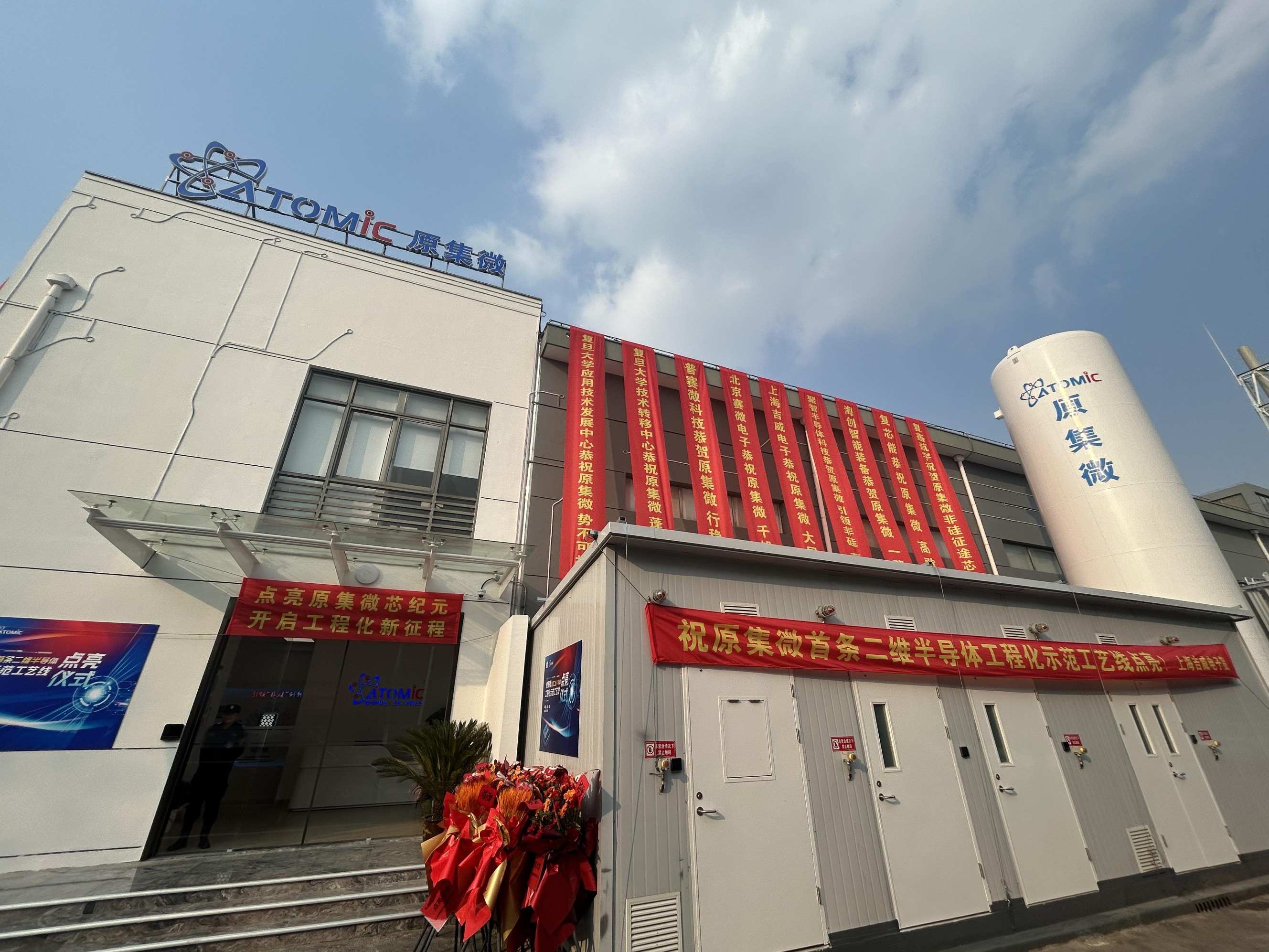
Core Viewpoint - The launch of China's first engineering demonstration line for two-dimensional (2D) semiconductors marks a significant step in transitioning technology from the laboratory to industrial application, indicating that the country is ready for large-scale manufacturing of 2D semiconductor technology [1][10]. Group 1: Company Overview - Original Micro Technology (Shanghai) Co., Ltd. is the first high-tech enterprise in China focused on the manufacturing of integrated circuits based on 2D semiconductors, founded by researcher Bao Wenzhong from Fudan University [3]. - The company successfully developed the world's first 32-bit RISC-V architecture microprocessor "Wuji" based on 2D semiconductor materials, which was published in April 2025 [3][5]. Group 2: Technological Advancements - The newly established demonstration line, covering approximately 1,000 square meters, is expected to achieve equivalent silicon-based 90nm CMOS processes and megabit-level memory by the end of this year [1][3]. - 2D semiconductors exhibit unique physical properties due to their atomic thickness, allowing for higher electron mobility and lower power consumption compared to traditional silicon-based semiconductors [4][5]. Group 3: Industry Context - The semiconductor industry has provided valuable experience for the development of 2D semiconductors, which are seen as a potential complement to silicon-based technologies [3][4]. - Major companies like Intel, Samsung, and TSMC have recognized 2D semiconductors as a core technology for extending Moore's Law beyond the 1nm node [5]. Group 4: Challenges and Future Outlook - Despite the advancements, the industry still faces challenges in material defects and the complexity of processing parameters, which require innovative solutions such as AI-driven optimization techniques [9]. - The successful operation of the demonstration line is viewed as a critical step towards establishing a robust ecosystem for 2D semiconductors in China, with expectations for continued development and integration into the semiconductor industry [10].
存储行业涨价潮持续 佰维存储净利预增至520%
2 1 Shi Ji Jing Ji Bao Dao· 2026-01-14 05:24
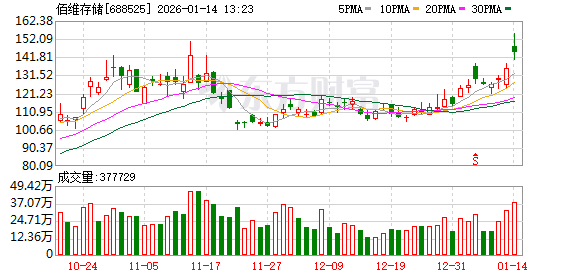
Core Viewpoint - Shenzhen Baiwei Storage Technology Co., Ltd. (688525.SH) has released its first performance forecast for 2025, indicating significant growth in both revenue and net profit, driven by a strong market for storage products and AI applications [2][4]. Revenue and Profit Forecast - The company expects to achieve revenue between 10 billion to 12 billion yuan in 2025, representing a year-on-year growth of 49.36% to 79.23% [4]. - For the fourth quarter of 2025, revenue is projected to be between 3.425 billion to 5.425 billion yuan, with a year-on-year increase of 105.09% to 224.85% and a quarter-on-quarter growth of 28.62% to 103.73% [4]. - Net profit attributable to the parent company is forecasted to be between 850 million to 1 billion yuan, reflecting a year-on-year growth of 427.19% to 520.22% [4]. - In Q4 2025, net profit is expected to be between 820 million to 970 million yuan, with a year-on-year increase of 1225.40% to 1449.67% and a quarter-on-quarter growth of 219.89% to 278.43% [4]. Market Dynamics - A strong price increase in the global storage market is anticipated in Q4 2025, with industry experts suggesting the onset of a "super cycle" driven by AI [2][4]. - The current macroeconomic environment has led to a decline in storage prices since Q3 2024, reaching a low point in Q1 2025, followed by a stabilization and recovery starting in Q2 2025 [4]. AI and Advanced Packaging - Baiwei Storage is maintaining rapid growth in the emerging AI edge sector and is enhancing its advanced packaging capabilities [5]. - The company is progressing well with its wafer-level advanced packaging projects, aligning with customer needs for integrated "storage + wafer-level advanced packaging" solutions [5]. Shareholder Activity - Prior to the profit forecast announcement, the company disclosed a share reduction plan by its major shareholder, the National Integrated Circuit Fund II, which plans to reduce its holdings by up to 9.3426 million shares, representing no more than 2% of the total share capital [6]. - The fund initially held 36.8854 million shares, accounting for 7.90% of the total share capital [6]. Continued Price Increases - The price increase trend in the storage market is expected to continue into Q1 2026, driven by the expansion of global data centers and strong demand for AI applications [7][8]. - Major storage chip manufacturers are shifting production towards high-end chips suitable for AI and data centers, leading to a tightening supply and rising prices [8]. Industry Trends - The storage industry is expected to benefit from the deep integration of AI applications across cloud, edge, and endpoint sectors, necessitating storage solutions with high capacity and performance [9]. - Baiwei Storage is focusing on R&D in chip design, advanced packaging, and testing equipment to meet the evolving demands of the AI era [9].
第一创业晨会纪要-20260114
First Capital Securities· 2026-01-14 04:11
Macroeconomic Overview - The U.S. December CPI data shows a year-on-year increase of 2.7%, matching expectations, while the previous month's value was also 2.7% [4] - The seasonally adjusted CPI increased by 0.3% month-on-month, consistent with expectations, while the previous month remained unchanged [4] - Core CPI year-on-year rose by 2.6%, slightly below the expected 2.7%, with a month-on-month increase of 0.2% [4] - The report indicates a reduction in inflationary pressure in the U.S., with investors anticipating that the Federal Reserve will maintain interest rates in January [4] Semiconductor Industry - Global semiconductor revenue is projected to reach $793 billion in 2025, reflecting a significant year-on-year growth of 21% [9] - The World Semiconductor Trade Statistics (WSTS) has revised its forecast to $772 billion, indicating a 22% year-on-year increase, confirming a strong market recovery [9] - NVIDIA is expected to exceed $100 billion in revenue, contributing over 35% to industry growth, while Samsung's revenue is projected at $73 billion, with a 10.4% overall growth [9] - The demand for AI-driven chips is identified as the primary growth driver, alongside robust demand for other semiconductor products [9] Advanced Manufacturing - The demand for space photovoltaic systems is surging, driven by China's application for 203,000 satellites and the rise of computing satellites [11] - Traditional solar wing technologies are deemed inadequate for large-scale networking due to high costs, with flexible gallium arsenide solar wings costing up to $1 billion for a single satellite [11] - HJT (Heterojunction Technology) is highlighted as a cost-effective solution with flexible characteristics suitable for increased power demands in satellites [11] - The market for HJT materials is expected to expand significantly, with a projected need for 2.94 million square meters of HJT components for every 1GW of capacity [11] Consumer Sector - Dongpeng Beverage's profit forecast indicates a year-on-year growth of over 30% for 2025, reflecting strong growth potential in the functional beverage and health drink segments [13] - The company's growth is supported by a multi-category strategy, with Dongpeng Special Drink as the core product and a strong performance from its second growth line, Water [14] - Enhanced channel execution and digital operations are noted as key competitive advantages, improving operational efficiency and supporting product expansion [14] - Cost optimization strategies are expected to sustain or enhance profit margins, with significant cost reductions in PET and sugar prices anticipated [14]
苹果登顶2025全球手机市场份额榜,三星和小米位列第二、三名
Xin Lang Cai Jing· 2026-01-14 04:08
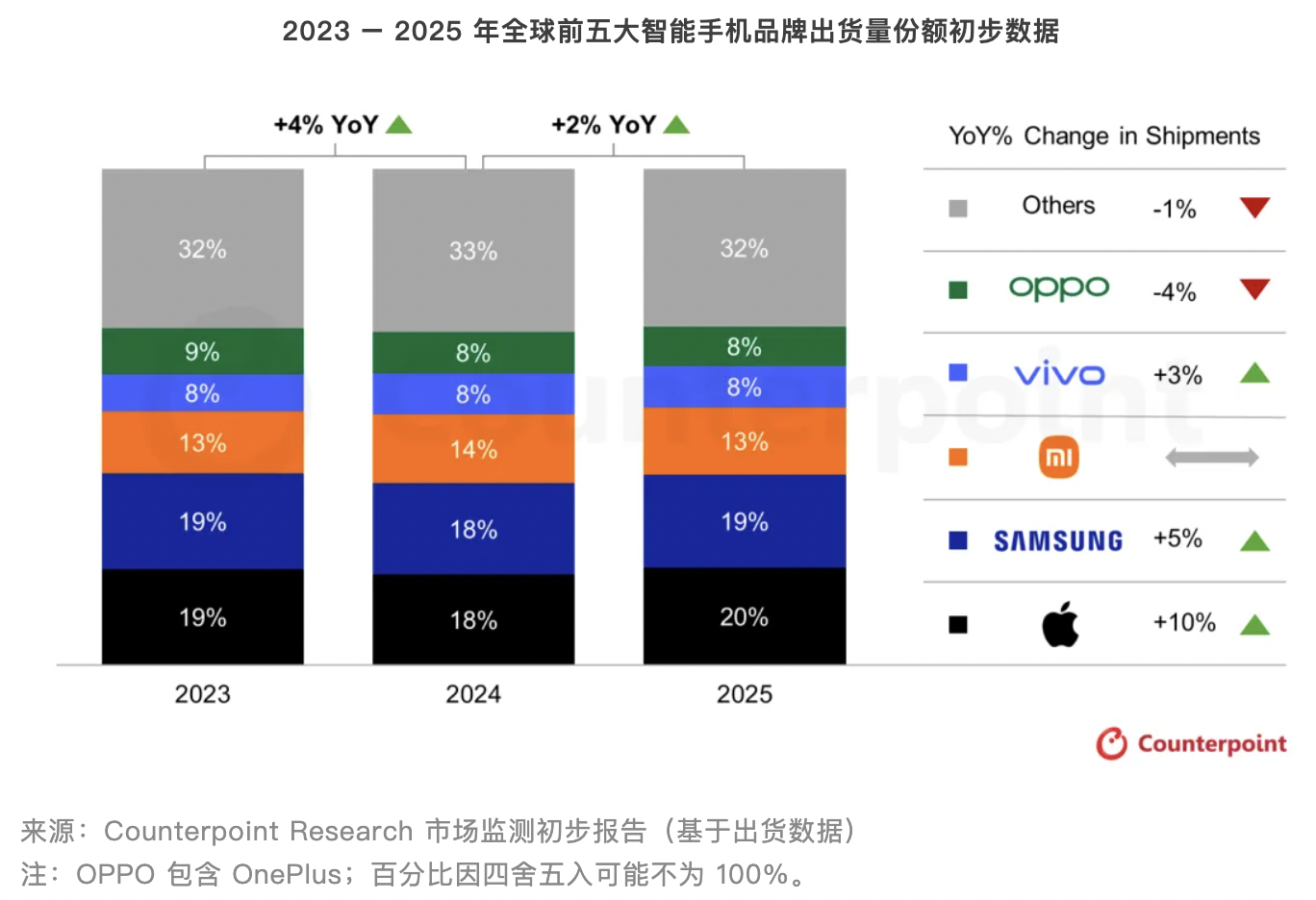
Group 1 - The global smartphone market is expected to see a second consecutive year of growth in 2025, with a 2% year-on-year increase in shipments, driven by high-end trends and the rising adoption of 5G devices in emerging markets [1] - Apple leads the market with a 20% share and a 10% year-on-year growth, making it the fastest-growing brand [1] - Samsung follows closely with a 19% market share, while Xiaomi holds the third position with 13% [1] Group 2 - In Q4 2025, smartphone shipments showed a modest increase of 1% year-on-year, impacted by previous inventory buildup [4] - Apple achieved a record high with a quarter of global shipments, supported by its expansion in emerging and mid-tier markets, and strong demand for the iPhone 17 series [4] - Samsung's growth is attributed to the demand for the Galaxy A series in the mid-range market and strong performance of the Galaxy Fold 7 and S25 series in the high-end market [4] Group 3 - Xiaomi maintained a stable performance with a 13% market share, supported by its high-end strategy and strong demand in emerging markets [5] - Vivo ranked fourth, achieving a 3% year-on-year growth due to its high-end strategy and strong execution in the Indian market [5] - OPPO experienced a 4% year-on-year decline in shipments, facing challenges in the Chinese and Asia-Pacific markets despite growth in India and the Middle East [5] Group 4 - The merger of realme with OPPO and OnePlus is expected to result in a combined market share of 11%, positioning them as the fourth-largest player in the global smartphone market [5] - The outlook for the smartphone market in 2026 is cautious, with a 3% downward revision in shipment forecasts due to supply shortages and rising prices [6] - Apple and Samsung are expected to remain resilient due to their strong supply chain capabilities and positioning in the high-end market, while Chinese brands focusing on lower price segments may face greater pressure [6]
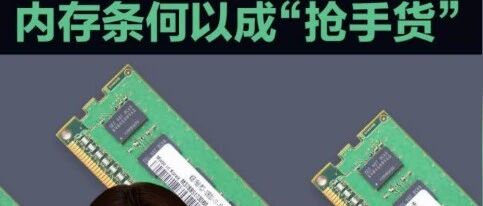
一盒=一套房?内存条何以成“抢手货”
21世纪经济报道· 2026-01-14 03:49
Core Insights - The global storage chip market has entered a "super bull market" phase, with DDR5 memory prices increasing over 300% since September last year, surpassing historical highs from 2018 [1] - Major players in the DRAM market, including Samsung, SK Hynix, and Micron, control over 90% of the market, leading to synchronized production decisions that significantly impact pricing [1][2] - The shift in production focus from DDR4 to HBM (High Bandwidth Memory) to meet the demands of AI computing has drastically reduced the supply of consumer-grade memory, driving prices up [2] Market Dynamics - The demand for HBM is driven by tech giants like Microsoft, Google, Alibaba, and Tencent, who are investing heavily in data centers for AI model training, requiring 8 to 10 times more memory than standard servers [2] - Over 80% of advanced production capacity is now allocated to the AI server market, leading to a significant supply shortage for consumer memory products [2] - The current pricing trend for ordinary memory is expected to remain high in the short term due to sustained AI demand and production focus on higher-margin products [3] Future Outlook - While short-term prices for ordinary memory are unlikely to return to previous low levels, historical trends indicate that prices will eventually decline due to cyclical overproduction once the AI investment frenzy stabilizes [3]

民调回升背后的务实抉择:中韩合作能否打通韩国能源转型堵点?
Zhong Guo Dian Li Bao· 2026-01-14 03:40
Group 1 - South Korean President Lee Jae-myung's first visit to China has significantly boosted his domestic approval rating to 60%, with diplomatic achievements being a key factor [1] - The visit resulted in the signing of numerous cooperation agreements, particularly in the energy sector, which is seen as crucial for regional cooperation in Northeast Asia [1][5] - Lee's administration emphasizes "pragmatic diplomacy," aiming to balance relations with major trading partners like China while maintaining security alliances with the U.S. and Japan [3][4] Group 2 - The visit included the signing of 15 government cooperation documents and 32 memorandums of understanding, highlighting the importance of energy cooperation [6][5] - Key South Korean companies such as Samsung, SK, Hyundai, and LG participated in the delegation, indicating a strong commitment to enhancing bilateral cooperation [6] - The agreements focus on renewable energy, including green hydrogen and sustainable aviation fuel, addressing South Korea's energy transition challenges [6][12] Group 3 - South Korea's energy security heavily relies on imports, with 84.6% of its energy supply coming from net imports, making international cooperation essential [10] - The collaboration with China is seen as a critical solution to South Korea's energy transition issues, leveraging China's experience in renewable energy projects [12] - The partnership is expected to create significant economic benefits by providing large-scale application scenarios for South Korean energy technologies in the Chinese market [12][13]
小鹏将组建海外本地化供应链团队;Phancy正式推出1300万像素AI智能眼镜丨智能制造日报
创业邦· 2026-01-14 03:38
Group 1 - Xiaopeng Motors plans to establish an independent overseas localized supply chain team in Europe and ASEAN by 2026, building on local production initiatives started in 2025, to enhance supply chain responsiveness and support its long-term strategy of "local roots, local production, global supply" [2] - According to Counterpoint Research, global smartphone shipments are expected to grow by 2% year-on-year in 2025, with Apple leading the market with a 25% share in Q4 2025, while Samsung holds a 17% share [2] - Phancy, a consumer electronics brand under Fan Shi Intelligent, has launched AI smart glasses equipped with a 13-megapixel camera, making it one of the few in the industry to achieve high pixel implementation [2] Group 2 - SK Hynix plans to invest approximately $12.9 billion (19 trillion KRW) to build a new advanced chip packaging factory, aimed at meeting the demand for artificial intelligence and initiating large-scale expansion, with construction set to begin in April and completion targeted by the end of 2027 [2]


车圈大佬预警!存储芯片、金属、电池价格全在涨!车企怎么办?|人民智行
Zheng Quan Shi Bao Wang· 2026-01-14 03:13
Core Insights - The automotive industry is facing unprecedented supply chain cost pressures due to rising prices of memory chips, metals, and batteries, which are significantly impacting manufacturing costs [1][4][10] - A predicted shortage of memory chips could lead to a supply satisfaction rate of less than 50% in 2026, exacerbating the cost challenges for automakers [2][8] - The competition for resources between the automotive sector and emerging industries like AI and energy storage is intensifying, leading to a resource squeeze on traditional manufacturing [4][11] Memory Chip Price Surge - The global DRAM market is experiencing its strongest price increase in history, with prices for DDR4 and DDR5 rising by 200-300% since last year [2][5] - High-end smart electric vehicles require significant storage, with demand for memory chips expected to reach TB levels, increasing costs per vehicle by hundreds to thousands of yuan [3][6] Impact of Metal Prices - Prices for key metals such as copper, silver, and lithium have been rising, contributing to increased costs in electric vehicle production [3][7] - The use of copper in electric vehicles is significantly higher than in traditional fuel vehicles, amplifying the cost impact [3][10] Supply Chain Challenges - Automakers are struggling to balance supply chain resilience with cost control, leading to potential price increases, configuration adjustments, and delivery delays [1][10] - The competition for high-end storage capacity is skewed in favor of AI companies, which are securing a majority of DRAM production capacity, leaving traditional industries with limited resources [5][6] Long-term Outlook - The supply chain crisis is expected to persist for 3-5 years, with automakers currently absorbing cost pressures without passing them on to consumers [8][10] - There is a growing recognition of the need for supply chain diversification and domestic production capabilities in the semiconductor industry [12][11] Strategic Responses - Automakers are exploring strategies such as long-term supply agreements and partnerships with local suppliers to mitigate risks associated with rising costs [11][12] - The industry may see a shift towards vertical integration, with companies considering in-house production of critical components like batteries and chips [12]


一盒=一套房?内存条何以成“抢手货”
2 1 Shi Ji Jing Ji Bao Dao· 2026-01-14 02:53
Core Insights - The storage chip market, particularly DDR5 memory, has seen a dramatic price increase, surpassing gold as a safe-haven investment for the first time in history [1][2] - The market is currently in a "super bull market" phase, with prices expected to rise an additional 40%-50% by Q1 2026 and another 20% in Q2 2026 [2] Group 1: Market Dynamics - The global storage chip market is highly concentrated, with Samsung, SK Hynix, and Micron controlling over 90% of the DRAM market [3] - These companies have collectively decided to reduce or halt production of DDR4 memory in favor of more profitable High Bandwidth Memory (HBM) used for AI applications [3][4] - The demand for memory in AI data centers is significantly higher, requiring 8 to 10 times more memory than standard servers, leading to increased competition among tech giants [3][4] Group 2: Supply and Demand - Over 80% of advanced production capacity is now directed towards AI server markets, resulting in a significant reduction in supply for consumer-grade memory [4] - The HBM market is expected to experience explosive growth by 2025, with prices for related products increasing by over 30% [4] - As long as AI demand remains high and production capacity is focused on high-margin products, prices for standard memory will likely remain elevated [4] Group 3: Long-term Outlook - Historically, memory prices are cyclical, and after periods of significant price increases, a downturn typically follows due to oversupply [4] - Once the current AI investment frenzy stabilizes, supply and demand for memory products are expected to rebalance, potentially leading to lower prices in the long term [4]