
宝马

Search documents
当年轻人爱上“嗑糖”,品牌该如何“产粮”?
Tai Mei Ti A P P· 2025-07-01 09:35
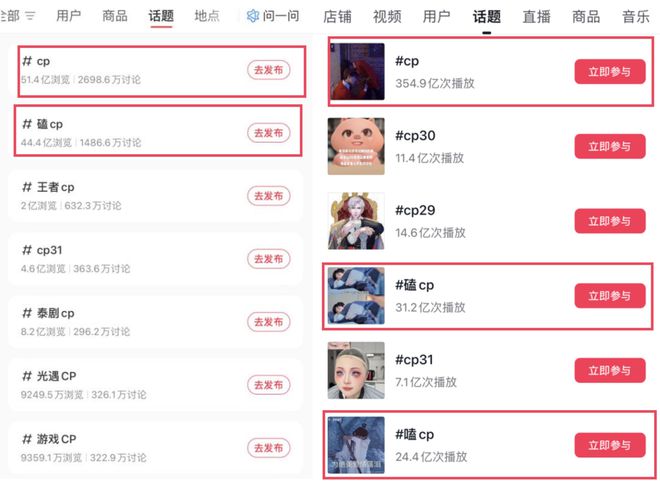
Core Insights - The article discusses the phenomenon of "CP" (couple pairing) among young people, highlighting its evolution into a cultural trend that influences emotional consumption and social interactions [1][2][3] - Brands are increasingly leveraging CP marketing to connect with young consumers, creating emotional resonance and community engagement [7][21] Group 1: CP Phenomenon - Young people are engaging in CP culture across various media, from traditional dramas to modern AI interactions, showcasing a limitless imagination in pairing characters [2][3] - The popularity of CP is reflected in significant social media metrics, with hashtags like CP and 嗑CP garnering billions of views and millions of discussions, indicating a widespread cultural phenomenon [3][5] - CP serves as a source of joy and emotional fulfillment for young people, providing an escape from the complexities of real-life relationships [5][6] Group 2: Brand Engagement Strategies - Brands are adopting CP marketing strategies to tap into the emotional engagement of young consumers, transforming their enthusiasm for CP into brand value [7][21] - Common strategies include leveraging existing CPs, inviting popular CP figures as brand ambassadors, and creating nostalgic campaigns that resonate with audiences [8][9][10] - Brands are also engaging in competitive CP marketing, where rival brands play off each other’s narratives to create buzz and engagement [18][20] Group 3: Recommendations for Effective CP Marketing - Successful CP marketing requires a natural alignment between the brand and the CP, ensuring that the partnership resonates with the target audience [22] - Content co-creation is essential for maximizing user-generated content (UGC) potential, allowing brands to engage consumers actively rather than passively [23] - Brands must carefully manage the frequency and tone of CP marketing to avoid consumer fatigue and maintain a positive brand image [24]

刚拿到中国稀土出口通行证,德国反手就对中国AI应用下达封杀令,德国这记“回马枪”捅的真准啊
Sou Hu Cai Jing· 2025-07-01 07:15
6月27日,德国数据保护专员梅克·坎普突然要求苹果和谷歌下架中国人工智能应用DeepSeek,理由是它"非法将用户数据传输至中国"。谷歌乖乖表示"正 在评估",苹果沉默装死。可你要是真以为这只是个数据隐私问题,那就太天真了。 也有网友说:谁封杀芯片,A1等,就立即取消该国的稀土配额,一克也不给。不能心慈手软,只要他们做初一,我们就一定做十五,对等反击。 就在两个月前,德国企业还为稀土急得跳脚。中国4月对钐、钆、铽等七类关键稀土实施出口管制,直接卡住了德国高端制造的脖子——他们71%的稀土 靠中国供应啊。结果你猜怎么着?宝马、大众这些德企火速拿到出口通行证,生产线保住了。可德国刚喘匀气,转身就朝中国AI捅刀子。这套"拿完资源 就翻脸"的操作,简直比变脸戏法还溜。 所谓"数据安全"的指控,根本站不住脚。DeepSeek明明在爱尔兰、新加坡设了数据中心,完全能做到"数据不出大欧洲区"。技术架构上采用混合专家系统 (MoE),用FP8混合精度训练,天生适合数据本地化。可德国监管机构压根不关心这些——他们要的只是一个封杀的理由罢了。 有网友说:中国也可以采用"突然死亡法"虽然给你发放了出口许可 但是也可以突然收回!这些 ...


BBA大幅降价 豪车格局要重新洗牌
Xi Niu Cai Jing· 2025-07-01 04:03
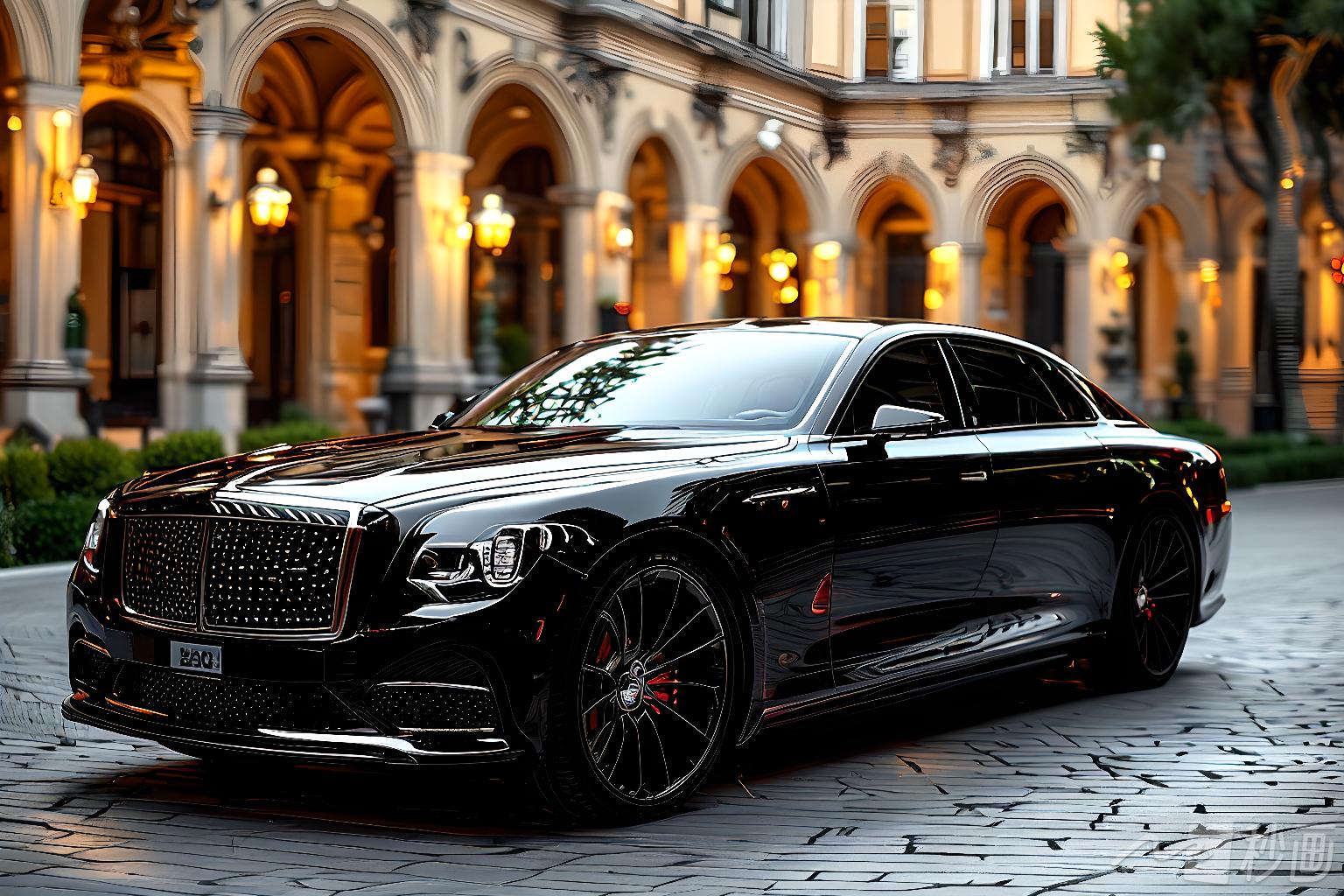
Core Viewpoint - The luxury automotive market, particularly the German trio of BBA (Benz, BMW, Audi), is experiencing a significant price drop due to the rise of electric vehicles and strong competition from domestic brands, leading to a collective price war that undermines their traditional premium positioning [3][4][6]. Price Cuts and Market Dynamics - Since 2025, BBA has engaged in aggressive price reductions, with Mercedes-Benz GLC seeing discounts up to 199,000 yuan, and the EQC dropping from 620,000 yuan to 220,000 yuan, a staggering decrease of 400,000 yuan [4][5]. - Audi's A4L has seen its price drop to the 200,000 yuan range, while the Q7's entry price has fallen below 500,000 yuan for the first time [4]. - BMW's 525Li has dropped to below 290,000 yuan, representing a 34% discount from its original price [5]. - The overall luxury car market is witnessing a collapse in pricing, with models like the Porsche Cayenne and Macan also seeing significant price reductions [5]. Impact of Electric Vehicles and Domestic Brands - The price decline is primarily driven by the competitive pressure from domestic electric vehicle brands, which are advancing rapidly in technology and market share [6][10]. - Domestic brands like Li Auto and AITO are offering advanced features that BBA's models lack, such as superior intelligent driving systems [7][8]. - BBA's sales in China are declining, with Mercedes-Benz down 7% to 683,600 units, BMW down 13.3% to 714,500 units, and Audi down 10.9% to 649,000 units in 2024 [10]. Challenges in Transformation - BBA is struggling with the transition to electric and smart vehicles, with significant investments required while their net profits are declining: Mercedes-Benz down 28.4%, BMW down 36.9%, and Audi down 33.1% [12]. - The lack of in-house battery production capabilities forces BBA to rely on expensive external suppliers, impacting their cost structure [12]. - BBA's attempts to collaborate with tech companies like Huawei for smart driving solutions may lead to a loss of brand identity and autonomy [13]. Strategic Responses - In response to the crisis, BBA plans to launch 36 new products from 2025 to 2027, with BMW aiming for a 20% efficiency improvement and Audi collaborating with Porsche on a new electric platform [11][12]. - Initial signs of recovery are noted, with models like the Audi Q4 e-tron and BMW i3 seeing increased orders after integrating advanced technologies [13]. Conclusion - The luxury car market's definition is shifting, and BBA's ability to reclaim its former status is increasingly uncertain, suggesting a potential long-term decline in brand value and consumer trust [14].
固德电材募资11.76亿闯关创业板,45岁董事长朱国来控制60.55%表决权
Sou Hu Cai Jing· 2025-07-01 01:55
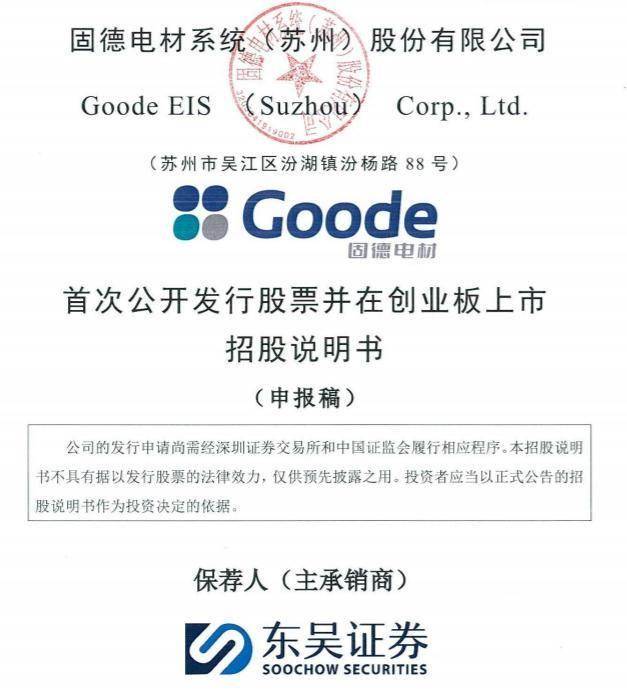
Core Viewpoint - Gude Electric Materials has received approval for its IPO on the ChiNext board, focusing on the development and production of thermal runaway protection components for electric vehicle batteries and high-performance insulation products [3] Company Overview - Gude Electric Materials was established in 2008 and specializes in thermal runaway protection solutions for electric vehicle batteries and electrical insulation products [3] - The company has become a first-tier supplier for several global automotive manufacturers and battery producers, establishing long-term partnerships with industry leaders such as General Motors, Ford, Stellantis, BMW, and CATL [3] IPO Details - The company plans to raise 1.176 billion yuan through its IPO, with allocations including 619 million yuan for the production of 725 million sets of thermal runaway protection components and R&D projects, 257 million yuan for the construction of a production base, and 300 million yuan for working capital [4] Financial Performance - The company’s total assets are projected to grow from 564.53 million yuan in 2022 to 1,083.17 million yuan in 2024, with net profit increasing from 64.23 million yuan to 166.01 million yuan over the same period [5] - The revenue is expected to rise from 475.10 million yuan in 2022 to 908.00 million yuan in 2024, indicating a strong growth trajectory [5] - The company’s return on equity is projected to increase from 22.58% in 2022 to 31.57% in 2024, reflecting improved profitability [5] Shareholding Structure - The controlling shareholder and actual controller of the company is Zhu Guolai, who holds 46.76% of the shares and controls a total of 60.55% of the voting rights through various entities [7] - Zhu Guolai has a significant role in the company's decision-making processes, serving as both the chairman and general manager [7]

固德电材创业板IPO获受理:年入9亿元,客户含宁德时代、宝马
Sou Hu Cai Jing· 2025-07-01 01:44
Core Viewpoint - Gude Electric Materials has initiated its IPO on the ChiNext board, focusing on the development and production of thermal runaway protection components for electric vehicle batteries and high-performance insulation products [3] Company Overview - Gude Electric Materials was established in 2008 and specializes in thermal runaway protection solutions for electric vehicle batteries and electrical insulation products [3] - The company has become a first-tier supplier for several global automotive manufacturers and battery producers, including General Motors, Ford, Stellantis, BMW, and CATL [3] IPO Details - The company aims to raise 1.176 billion yuan through its IPO, with 619 million yuan allocated for the production of 725,000 sets of thermal runaway protection components and R&D projects [4] - Additional funds include 257 million yuan for the construction of a production base for thermal runaway protection materials and 300 million yuan for working capital [4] Financial Performance - From 2022 to 2024, the company's revenue is projected to grow from 475 million yuan to 908 million yuan, with net profit increasing from 64 million yuan to 172 million yuan [5] - For Q1 2025, the company reported a revenue of 240 million yuan, a year-on-year increase of 35.46%, and a net profit of 48 million yuan, up 57.21% year-on-year [6] Sales and Market Presence - The company's foreign sales revenue has shown significant growth, with proportions of 15.50%, 28.82%, and 44.29% of total revenue over the past three years [6] - The company primarily conducts foreign sales in US dollars, indicating a strong international market presence [6]

车企的竞争逻辑变了?
Zhong Guo Qi Che Bao Wang· 2025-07-01 01:16
Group 1: Industry Trends - The automotive industry is experiencing a shift in competitive dynamics, with companies reassessing their strategies in response to market realities [2][3] - New energy vehicle (NEV) sales are increasing, with leading brands achieving monthly sales of 30,000 to 40,000 units, indicating a transition from a "10,000 club" to a higher competitive tier [2][3] - Traditional automakers are also seeing growth in NEV sales, with companies like Chery and Geely reporting significant year-on-year increases [3][4] Group 2: Sales Performance - BYD remains a dominant player in the NEV market, with May sales reaching 382,500 units, a 15% increase from the previous year [4] - In the first five months of the year, China's total NEV sales reached 5.608 million units, reflecting a stable growth trend despite a slowdown in the growth rate [4][6] - The competitive landscape is evolving, with a growing number of companies achieving substantial sales figures, indicating a shift towards a multi-strong market [5][6] Group 3: Fuel vs. Electric Vehicles - BMW has reduced its future production forecasts for electric vehicles by nearly 20%, signaling a strategic pivot towards fuel vehicles [6][7] - Many domestic brands are not abandoning fuel vehicles, with companies like Great Wall and Geely emphasizing continued investment in fuel technology [6][8] - The market penetration rate for NEVs has decreased from a peak of 53.7% to 48.7%, indicating a more balanced competition between fuel and electric vehicles [6][8] Group 4: R&D and Profitability - Companies are increasingly focusing on balancing scale, cost, and profitability, with R&D being a critical component in achieving this balance [10][11] - Leading companies are investing heavily in R&D, with significant year-on-year increases in spending, which correlates with improved sales performance [12] - The relationship between sales volume and profitability is emphasized, with larger sales volumes helping to spread costs and improve margins [11][12] Group 5: Future Outlook - The automotive market is expected to become more diversified, moving beyond price competition to focus on technology and innovation [15][16] - Companies are encouraged to explore niche markets and enhance product differentiation to drive future growth [15][16] - The industry is transitioning from a price-driven model to a value-driven approach, emphasizing the importance of technological innovation and collaboration [17]

中国技术成全球车企采购的“必选项”
Zhong Guo Xin Wen Wang· 2025-06-30 16:37
Group 1 - The global automotive technology leadership is rapidly shifting from West to East [1] - Chinese companies like XPeng have developed autonomous driving chips that surpass Nvidia's performance, attracting major clients like Volkswagen [2] - Traditional automakers are increasingly collaborating with Chinese tech firms to enhance their smart and electric vehicle transformations [3] Group 2 - Chinese automakers have achieved significant advancements in the new energy sector, outpacing traditional manufacturers who struggle with innovation [4] - The vast Chinese market provides ample opportunities for automotive companies to innovate and test new technologies [4] - Chinese firms have established a strong foothold in key areas such as battery technology and smart driving solutions, becoming essential suppliers for global brands [4] Group 3 - China is reshaping the global automotive innovation network, with multinational companies setting up major R&D centers in the country [5] - The experience and technology gained in China are vital for the transformation of global automotive companies [5] - China is transitioning from a technology-importing nation to a technology-exporting one, becoming a hub for innovation and industry standards [6]
全球竞争白热化!为何说TA距离上车还差“最后一公里”?
Zhong Guo Qi Che Bao Wang· 2025-06-30 07:54
Group 1 - The global competition for all-solid-state batteries is intensifying, with major automotive companies and related enterprises increasing R&D investments and planning mass production targets [2][3][4] - Toyota plans to mass-produce its all-solid-state battery by 2026, aiming for a driving range of approximately 1200 kilometers, which is 2.4 times longer than current models [3][4] - Other companies like Honda, Panasonic, and Sony are also actively developing all-solid-state battery technologies, with Honda planning to trial production in the coming years [3][4] Group 2 - South Korean companies such as Samsung SDI, LG Energy, and SK On are making significant progress in all-solid-state battery development, with LG Energy targeting mass production by 2026 [4] - Hyundai is also working on all-solid-state batteries, with plans to begin testing electric vehicles equipped with this technology around 2025-2026 [4] - The South Korean government is providing policy support and funding to promote the development and industrialization of all-solid-state battery technology [4] Group 3 - In the U.S., several tech companies are entering the all-solid-state battery market, collaborating with automakers like BMW and Ford to develop high-performance batteries [5] - Volkswagen Group in Germany is investing heavily in all-solid-state battery research, aiming for mass production by 2026 to enhance the competitiveness of its electric vehicles [5] - The German government is encouraging research in all-solid-state batteries through special funding initiatives [5] Group 4 - All-solid-state batteries offer significant advantages over traditional lithium-ion batteries, including higher energy density, improved safety, and better temperature adaptability [8] - The energy density of all-solid-state batteries is expected to exceed 400 Wh/kg, addressing consumer concerns about range anxiety in electric vehicles [8] - The solid-state design enhances safety by eliminating flammable liquid electrolytes and reducing risks associated with lithium dendrite formation [8] Group 5 - Despite the promising outlook for all-solid-state batteries, challenges remain in scaling production from laboratory to mass-market applications [9][10][11] - Technical hurdles include selecting the appropriate solid electrolyte technology, with options like sulfide, oxide, and polymer each having distinct advantages and disadvantages [9] - High production costs and low yield rates are significant barriers to commercial viability, necessitating advancements in manufacturing processes and quality control [10][11]


高通Nakul Duggal:以“骁龙数字底盘”驱动汽车行业创新,携手中国生态共塑出行未来
Huan Qiu Wang Zi Xun· 2025-06-30 07:12
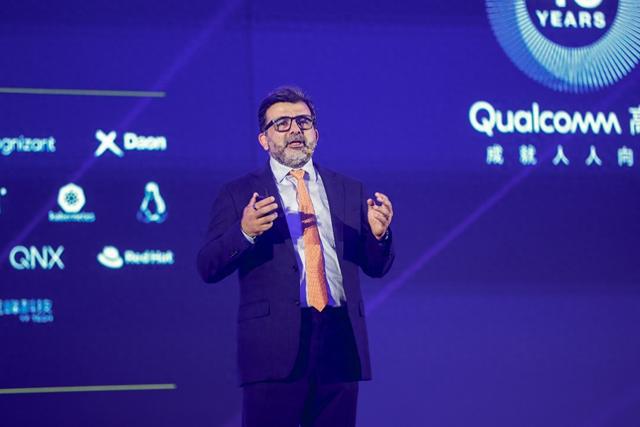
Core Insights - Qualcomm celebrates its 20 years in the automotive business and aims to leverage its "Snapdragon Digital Chassis" to drive industry transformation [3][5] - The company has established close collaborations with nearly all global automakers and numerous Chinese enterprises, witnessing explosive growth in the number of automotive manufacturers in China [3][5] Group 1: Automotive Business Development - Qualcomm has become the leading ecosystem supplier in the connected vehicle and infotainment systems sector, extending its leadership into cockpit and Advanced Driver Assistance Systems (ADAS) [3][5] - The company emphasizes the importance of ecosystem collaboration, partnering with major Chinese automotive manufacturers such as BAIC Group, Changan, and NIO [3][5] Group 2: ADAS and Safety - Qualcomm has focused on ADAS over the past two years, enhancing its competitiveness through superior chip performance, localized software support, and a comprehensive safety architecture [5][6] - The company has partnered with BMW to provide computer vision software and driving strategy stacks for the new generation of BMW models, set to launch in July 2025 [5][6] Group 3: Modular Architecture - Qualcomm is transitioning the automotive industry towards a centralized computing architecture, creating a highly complex, scalable, and modular framework that supports digital cockpit and ADAS functionalities [6][7] - The architecture's scalability allows for a range of vehicle models from entry-level to luxury, addressing market cost sensitivity [7] Group 4: Innovation and Market Impact - At the 2025 Shanghai Auto Show, over 100 vehicle designs or solutions based on Qualcomm's platform were showcased, highlighting the rapid implementation of its technology in China [9] - Qualcomm's strategy focuses on technological innovation and ecosystem collaboration, driving the automotive industry towards a smarter and safer future [9]

最高补贴1.6万元!大兴区发放1500万元汽车消费券
Bei Jing Ri Bao Ke Hu Duan· 2025-06-28 06:17
本次补贴针对个人消费者,按照燃油车与新能源车(含混合动力、增程式、纯电动、燃料电池电动车) 设定不同标准。燃油车补贴标准为:单车销售额20万元以下补贴1000元;20万元(含)至40万元补贴 3000元;40万元(含)至60万元补贴5000元;60万元(含)至100万元补贴10000元;100万元(含)以 上补贴15000元。新能源车补贴标准更高,对应上述相同销售额区间,分别补贴2000元、4000元、6000 元、11000元和16000元。 本次活动吸引众多知名汽车品牌积极参与,涵盖豪华、合资、自主及新能源等多领域品牌。经统计,参 与本次消费券活动的汽车品牌包括一汽奥迪、一汽大众、广汽传祺、广汽埃安、Jeep、奔驰、林肯、领 克、比亚迪、沃尔沃、腾势、宝马、极氪、捷豹路虎、一汽红旗等,大兴区超40家汽车经销商参与活 动,消费者可到店咨询享受购车补贴政策。 消费者可点击建行生活APP内活动规则查看详情,或致电客户服务热线95533咨询。此次发放汽车消费 券是大兴区真金白银惠及市民、激发汽车市场活力的重要举措,旨在有效提振区域汽车消费,推动大宗 商品消费稳定增长,助力消费提质升级。 转自:北京日报客户端 记者 ...