易方达

Search documents
边跌边买!资金加仓信号
Zhong Guo Zheng Quan Bao· 2025-11-09 23:43
Market Overview - The broad-based index ETFs were actively traded last week (November 3-7), with the A500 ETF from E Fund (159361) leading the trading volume, totaling nearly 130 billion yuan [1][5]. - The Hang Seng Technology ETF (513010) and other ETFs tracking the Hang Seng Technology Index saw a net inflow of over 7 billion yuan [2][7]. Sector Performance - The solar and new energy ETFs experienced a general increase of over 5%, with some ETFs rising more than 10% [4]. - Specific ETFs such as the Electric Grid Equipment ETF (159326) and various solar ETFs showed significant weekly gains, with the Electric Grid Equipment ETF rising by 10.92% [5]. Fund Flows - Overall, ETFs saw a net inflow of approximately 24 billion yuan last week, with notable inflows into sector-specific ETFs, particularly in the Hang Seng Technology and innovative pharmaceutical sectors [8][9]. - Defensive assets, including dividend low-volatility ETFs, attracted substantial capital, indicating a shift in market sentiment towards defensive sectors [8]. Future Outlook - The market is expected to maintain a stable and strong trend, supported by economic resilience, improved policy clarity, and favorable liquidity conditions [11][12]. - The focus on sectors such as solid-state batteries, AI, and humanoid robots is anticipated to drive future market performance, with significant developments expected in these areas [12].


凸显看好态度 多路资金竞相加码权益资产
Shang Hai Zheng Quan Bao· 2025-11-09 15:26
Group 1 - Multiple funds are increasing their investments in Chinese equity assets, with several newly launched equity funds raising over 3 billion yuan, indicating strong market interest [1][2] - The recent surge in equity fund issuance has led to a notable increase in the number of funds exceeding 3 billion yuan in size, with several funds selling out on the first day of issuance [2][3] - The performance of the A-share market has improved, enhancing investor sentiment and leading to a shift in household investment preferences towards public funds [3] Group 2 - Existing funds are also attracting significant inflows, with over 100 billion yuan flowing into ETFs, prompting some high-performing funds to impose purchase limits [4][5] - The net subscription amount for equity ETFs reached approximately 118.4 billion yuan since October, reflecting investor optimism about the market [4][5] - Notable inflows into securities-themed ETFs indicate a positive outlook among investors, with specific ETFs attracting substantial net subscriptions [5][6]
[11月9日]美股指数估值数据(全球股市下跌,原因为何;美股会有长熊市吗;全球指数星级更新)
银行螺丝钉· 2025-11-09 13:55
Group 1 - The global stock market experienced an overall decline this week, with the US market down by 1.59% and other global markets down by 0.58% [3] - The Asia-Pacific region saw significant volatility, particularly with declines in South Korea and Japan [4] - Chinese assets remained relatively strong, with the A-share CSI All Share Index rising by 0.63% for three consecutive weeks [6] Group 2 - The Hong Kong stock market outperformed the A-share market, with the Hang Seng Index increasing by 1.29% this week [7] - Chinese assets are currently valued slightly lower than the global market average, providing a degree of protection against potential downturns [8] Group 3 - Market fluctuations this week were primarily driven by uncertainty regarding the Federal Reserve's potential interest rate cuts in December [9] - The Federal Reserve did lower rates in October, but the decision for December remains uncertain [10] - Long-term expectations suggest that the Federal Reserve will continue to lower interest rates [11] Group 4 - The US stock market reached a high valuation at the end of October and early November, marking the first instance of overvaluation in the past year [12][13] - Following this, the Nasdaq 100 and S&P 500 indices have seen a valuation correction, returning to a normal but slightly elevated level [14][15] Group 5 - Current valuations in the US stock market are not particularly low, but they do not indicate a significant bubble [16] - Historical comparisons show that the Nasdaq's valuation during the 1990s internet bubble exceeded 100 times, whereas it currently hovers around 30 times [17] Group 6 - There are two types of bear markets: one occurring during economic recessions with slow or declining corporate earnings, and another during periods of normal economic growth with short bear markets [18] - The US stock market has experienced long bear markets following the bursting of bubbles, such as the 2000 internet bubble and the 2008 financial crisis [19][20] Group 7 - Despite the potential for future economic downturns and long bear markets, the US stock market has shown relatively good earnings growth in recent years, primarily experiencing short bear markets [24] - Current valuations in the US stock market are not low enough to present significant buying opportunities [25] Group 8 - A global stock market star rating chart indicates that the market was undervalued during previous periods in 2018, 2020, and 2022, with current ratings around 3.0 stars, suggesting a relatively low valuation [27] - The global stock index can be accessed through various funds, although there are currently no global stock index funds available in mainland China [29] Group 9 - The company has launched a "Global Index Advisory Portfolio" that diversifies investments across US, UK, Hong Kong, and A-share indices to track the global stock market [30] - There are limitations on the purchase amounts for overseas market funds, typically capped at around 100 yuan [32] Group 10 - A new edition of the book "The Long-Term Investment Secret" has been released, which has been influential in the investment field for over 30 years [35] - The book emphasizes that stocks are the best long-term investment vehicle and provides extensive data on asset class returns over the past two centuries [36]
人形机器人迎国内外密集催化,机器人ETF易方达(159530) 助力一键布局产业链龙头
Mei Ri Jing Ji Xin Wen· 2025-11-08 09:39
Core Insights - The recent Tesla shareholder meeting released multiple positive signals, including the approval of Elon Musk's compensation plan linked to humanoid robot delivery goals with over 75% support [1] - The technical advancements in the latest dexterous hand using tendon and multi-degree-of-freedom solutions were highlighted [1] - The production schedule for the Optimus humanoid robot was unveiled, with plans for a factory in Fremont to produce 1 million units annually and a production line in Texas for 10 million units per year [1] Industry Analysis - The humanoid robot's mass production has become a core KPI for Musk, alleviating previous market concerns and enhancing the growth potential of Tesla's supply chain in the A-share market [1] - The humanoid robot industry is transitioning from concept to reality, expected to continuously inject catalysts into related A-share stocks as the production timeline becomes clearer [1] - The Guozheng Robot Industry Index emphasizes humanoid robots, with nearly 80% of its component stocks focused on humanoid robots and core parts, indicating a stronger potential benefit from industry trends compared to similar indices [1] Investment Opportunities - The robot ETF, E Fund (159530), has reached a scale of 12.3 billion yuan, making it the largest ETF tracking this index, providing ample liquidity for investors to easily access the humanoid robot industry chain [1]


一只特别的二级债基,被机构猛买~
Sou Hu Cai Jing· 2025-11-07 15:41
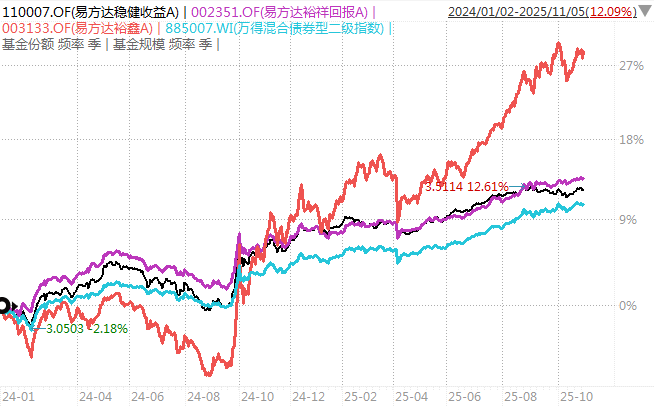
Core Insights - The article highlights a significant increase in the scale of secondary bond funds, with a growth of 374.7 billion units in Q3, representing a 56.9% increase. This trend indicates that many investors are entering the market through "fixed income+" products [1]. Group 1: Fund Growth Characteristics - Traditional large firms and emerging players are both experiencing growth. For instance, E Fund's secondary bond fund size increased from 98.8 billion to 128 billion, a rise of 29.2 billion. Meanwhile, new players like China Europe Fund and Yongying Fund also saw their secondary bond fund sizes grow by approximately 29 billion each in Q3 [2]. - There is a parallel growth in low-volatility and high-volatility "fixed income+" products. E Fund had three funds with growth exceeding 5 billion, including E Fund Stable Income and E Fund Yu Xiang Return, which saw increases of 9.9 billion and 5.9 billion respectively [3]. Group 2: Investment Strategy Insights - The article emphasizes the importance of selecting large firms for investment in secondary bond funds due to their superior risk control and professional talent pool. E Fund, for example, has a well-established team of experienced fund managers and has been a pioneer in multi-asset teams [4]. - A notable portion of the increased fund size is attributed to institutional investments, with over 90% of E Fund Yu Xin being held by institutions as of the second quarter [5]. Group 3: Investment Philosophy of Fund Managers - The investment philosophy of fund manager Hu Wenbo is characterized by two main principles: belief in mean reversion and the construction of a "anti-fragile" portfolio. This approach allows for potential gains to outweigh losses in volatile market conditions [6][13]. - Hu Wenbo's strategy includes increasing the allocation to convertible bonds, which rose from 8.4% to 14.82% in Q1 2024, and maintaining a high allocation of over 40% in subsequent quarters, contributing to the fund's strong performance [10][15]. Group 4: Performance Metrics - Under Hu Wenbo's guidance, E Fund Yu Xin achieved a return of 20.52% over the past year, ranking in the top 4% of its category, and a return of 17.44% year-to-date, also placing it in the top 4% [17].
二级债基规模破万亿,三季度激增近5000亿元
Mei Ri Jing Ji Xin Wen· 2025-11-07 07:41
Group 1 - The core viewpoint of the article highlights the significant growth in the scale of secondary bond funds, which saw an increase of nearly 500 billion yuan in the third quarter, reaching 1.3 trillion yuan by September 30 [1] - The low interest rate environment has led to increased market attention on fixed income enhancement strategy funds, including secondary bond funds, as they provide stable returns while allowing for potential higher returns through equity investments [1] - E Fund's Yu Xin (A/C: 003133/003134) is positioned as a medium to high volatility secondary bond fund, aiming for a favorable long-term risk-return ratio by maintaining a certain level of convertible bonds and a small allocation to stocks [1] Group 2 - Performance data shows that E Fund's Yu Xin achieved net value growth rates of 21.9%, 26.1%, and 38% over the past year, three years, and five years respectively, ranking in the top 5 among similar funds and significantly outperforming its benchmark [1]
半导体硬件股震荡调整,关注科创板50ETF(588080)等产品投资机会
Mei Ri Jing Ji Xin Wen· 2025-11-07 05:45
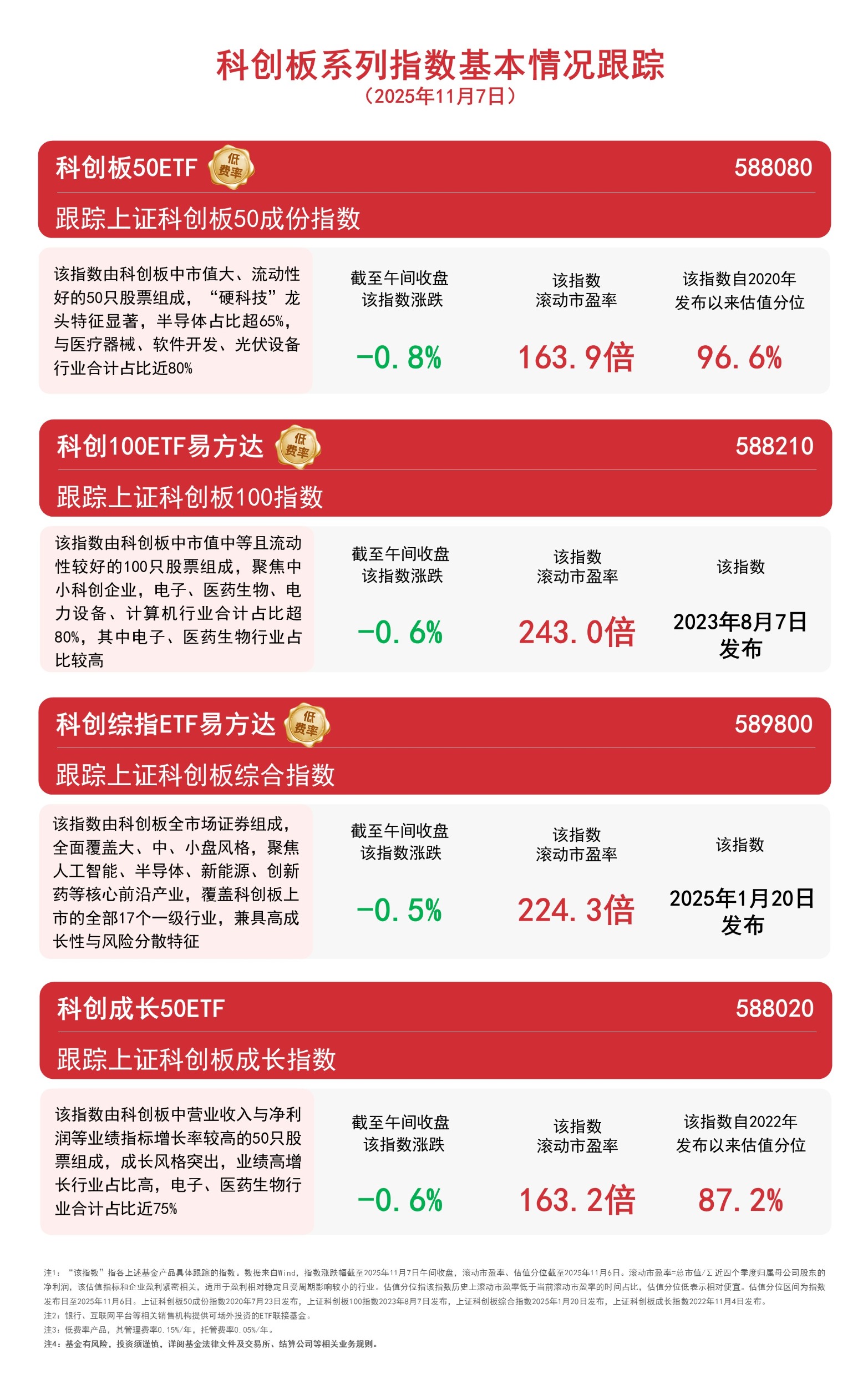
Group 1 - The core viewpoint of the article highlights the performance and characteristics of various STAR Market ETFs, focusing on their underlying indices and sector allocations [2][3][5] - The STAR 50 ETF tracks the STAR 50 Index, consisting of 50 large-cap stocks with significant liquidity, predominantly in the "hard technology" sector, with semiconductors accounting for over 65% and combined with medical devices, software development, and photovoltaic equipment making up nearly 80% [2] - As of the midday close, the STAR 50 Index had a rolling P/E ratio of 110 and experienced a price change of +0.8% [2] Group 2 - The E Fund STAR 100 ETF tracks the STAR 100 Index, which includes 100 medium-cap stocks with good liquidity, focusing on small and medium-sized innovative enterprises, with over 80% of its composition in electronics, pharmaceuticals, and power equipment [3] - The STAR 100 Index had a rolling P/E ratio of 243 and saw a price change of -0.6% as of the midday close [3] - The E Fund STAR Comprehensive Index ETF tracks the STAR Comprehensive Index, which encompasses all market securities in the STAR Market, providing a broad coverage of various stock styles [3]
大盘震荡微跌,关注A500ETF易方达(159361)、沪深300ETF易方达(510310)等配置价值
Mei Ri Jing Ji Xin Wen· 2025-11-07 05:44
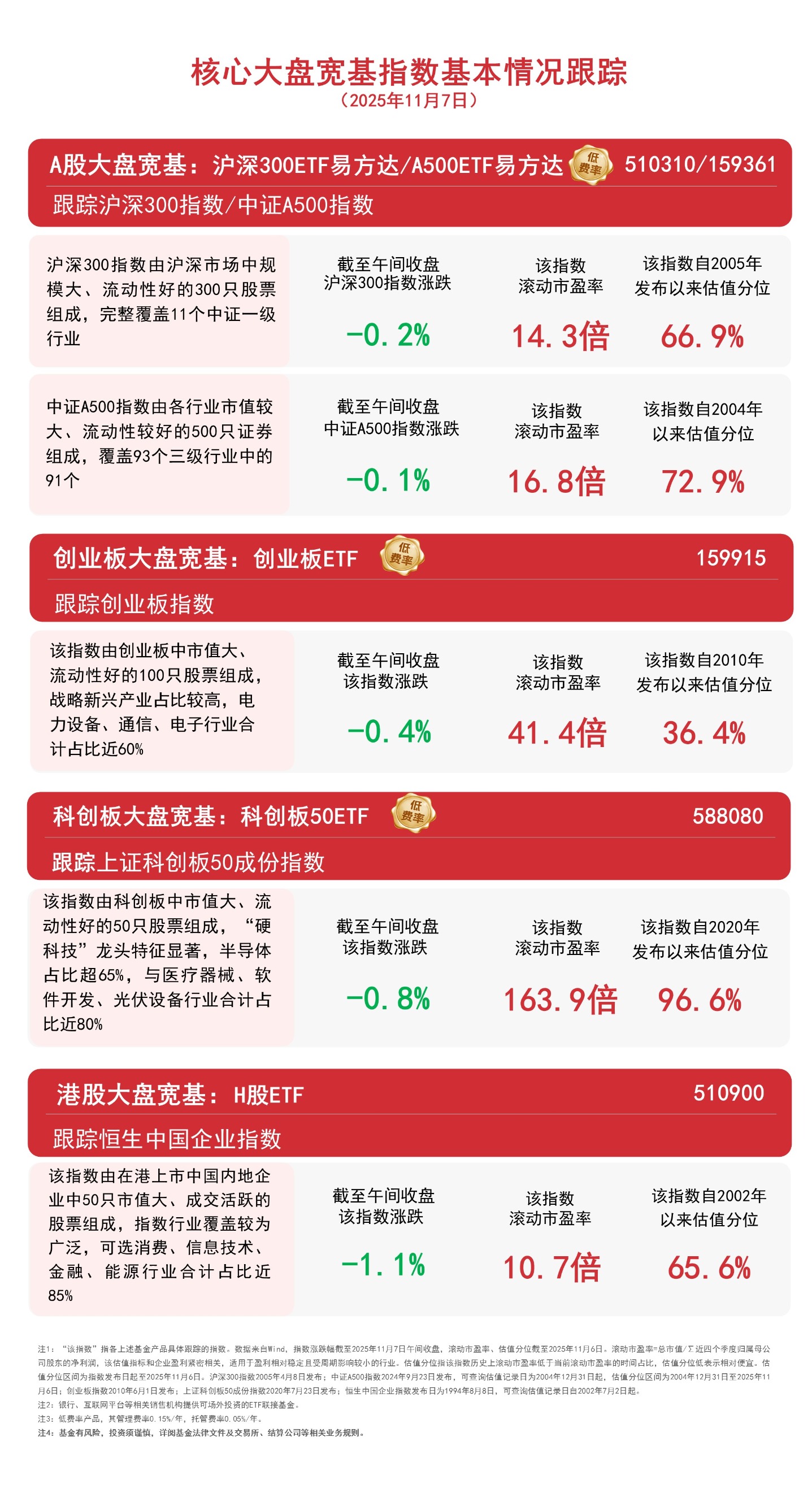
Market Overview - A-shares experienced a collective adjustment in the morning session, with the three major indices declining [1] - The ChiNext index fell by 0.4%, the Shanghai and Shenzhen 300 index decreased by 0.2%, and the CSI 500 index dropped by 0.1% [1] - The Hang Seng China Enterprises Index declined by 1.1%, while the Shanghai Stock Exchange Science and Technology Innovation Board 50 Index fell by 0.8% [1] Sector Performance - The organic silicon, chemical, photovoltaic equipment, Hainan Free Trade Zone, battery, PEEK raw materials, and energy metals sectors showed notable gains [1] - Conversely, sectors such as the Soca concept, gaming, securities, and humanoid robot concepts faced significant declines [1] - In the Hong Kong market, photovoltaic and non-ferrous metals sectors performed well despite the overall market pullback, while semiconductor and hardware equipment sectors saw declines [1] Index Details - The Shanghai and Shenzhen 300 Index consists of 300 stocks with good liquidity and large market capitalization, covering 11 first-level industries, with a rolling P/E ratio of 14.3 times [3] - The CSI 500 Index includes 500 securities with large market capitalization and good liquidity, covering 91 out of 93 third-level industries, with a rolling P/E ratio of 16.8 times [3] - The ChiNext Index is composed of 100 stocks with high market capitalization and liquidity, primarily in strategic emerging industries, with nearly 60% of its composition in electric equipment, communication, and electronics, and a rolling P/E ratio of 41.4 times [3] - The STAR Market 50 Index includes 50 stocks with significant market capitalization and liquidity, prominently featuring "hard technology" leaders, with over 65% in semiconductors and a rolling P/E ratio of 163.9 times [5] - The Hang Seng China Enterprises Index consists of 50 large-cap, actively traded stocks from mainland China listed in Hong Kong, covering a wide range of industries, with nearly 85% in consumer discretionary, information technology, finance, and energy, and a rolling P/E ratio of 10.7 times [5]
红利板块窄幅震荡,红利ETF易方达(515180)、红利低波动ETF(563020)等产品获资金持续布局
Sou Hu Cai Jing· 2025-11-07 04:56
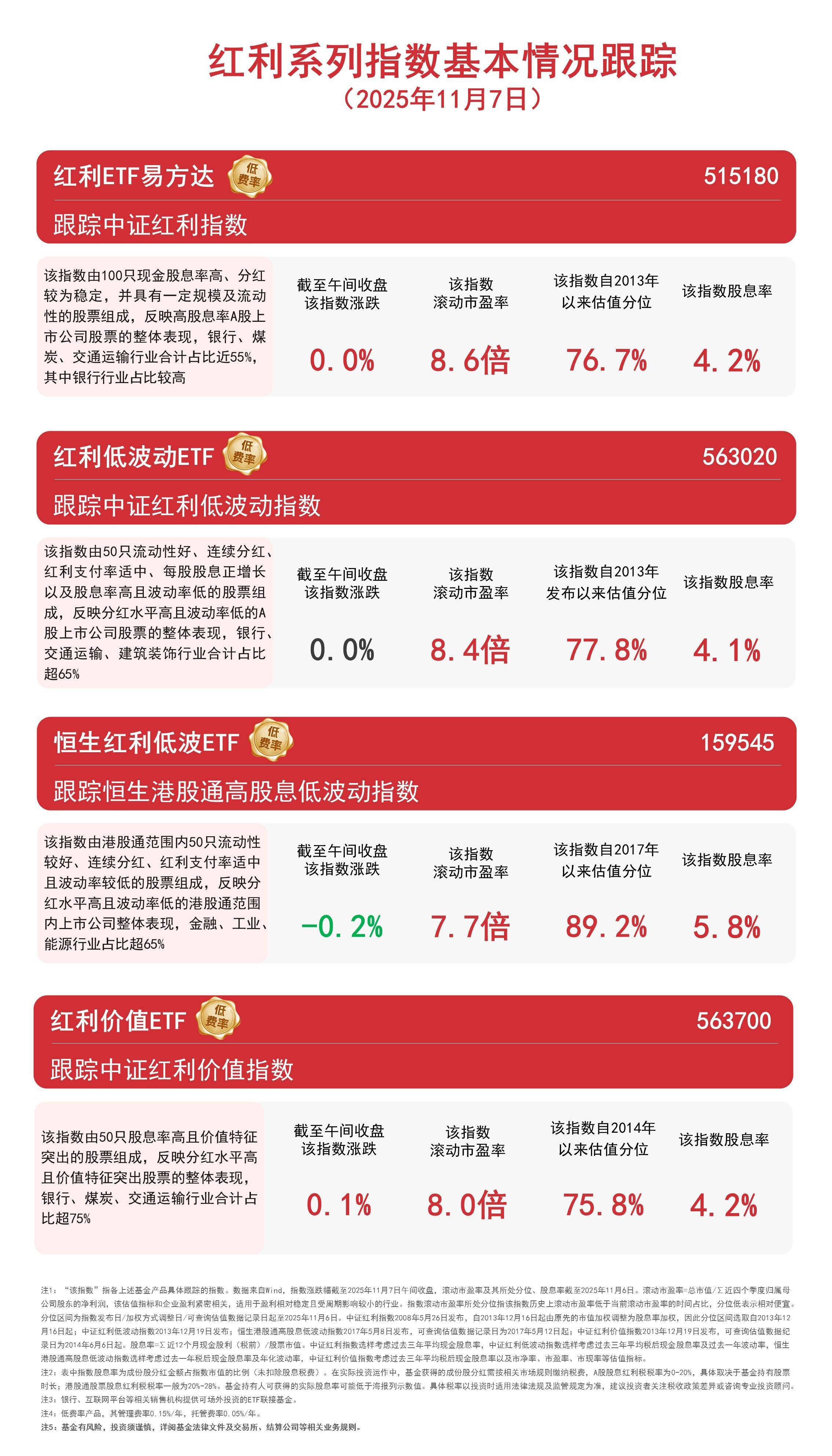
Core Viewpoint - The dividend sector is experiencing slight fluctuations, with various indices showing minimal changes, while specific ETFs are attracting significant capital inflows [1][3][5]. Group 1: Market Performance - The CSI Dividend Value Index increased by 0.1%, and the CSI Dividend Index rose by 0.04% as of the midday close [1]. - The CSI Dividend Low Volatility Index remained nearly flat, while the Hang Seng High Dividend Low Volatility Index decreased by 0.2% [1]. - The Hang Seng Dividend Low Volatility ETF (159545) saw a net subscription of nearly 20 million units in half a day, marking a total net inflow exceeding 200 million yuan over the past six trading days [1]. Group 2: ETF Inflows - The Hang Seng Dividend Low Volatility ETF (159545) is not the only one attracting attention; the E Fund Dividend ETF (515180) and the Dividend Low Volatility ETF (563020) also received significant capital, with each seeing net inflows exceeding 300 million yuan over the past week [1]. - The overall trend indicates a strong interest in dividend-focused ETFs, reflecting investor preference for stable income amid market fluctuations [1]. Group 3: Index Composition - The indices mentioned are composed of stocks that have good liquidity, consistent dividend payments, moderate dividend payout ratios, positive growth in earnings per share, and low volatility [3][5]. - The sectors contributing significantly to these indices include banking, transportation, and construction, which together account for over 65% of the composition in the A-share market [3]. - In the Hong Kong stock market, financial, industrial, and energy sectors also represent over 65% of the composition in the relevant indices [5].
市场早盘低开回升,中证A500指数下跌0.11%,3只中证A500相关ETF成交额超29亿元
Sou Hu Cai Jing· 2025-11-07 04:15
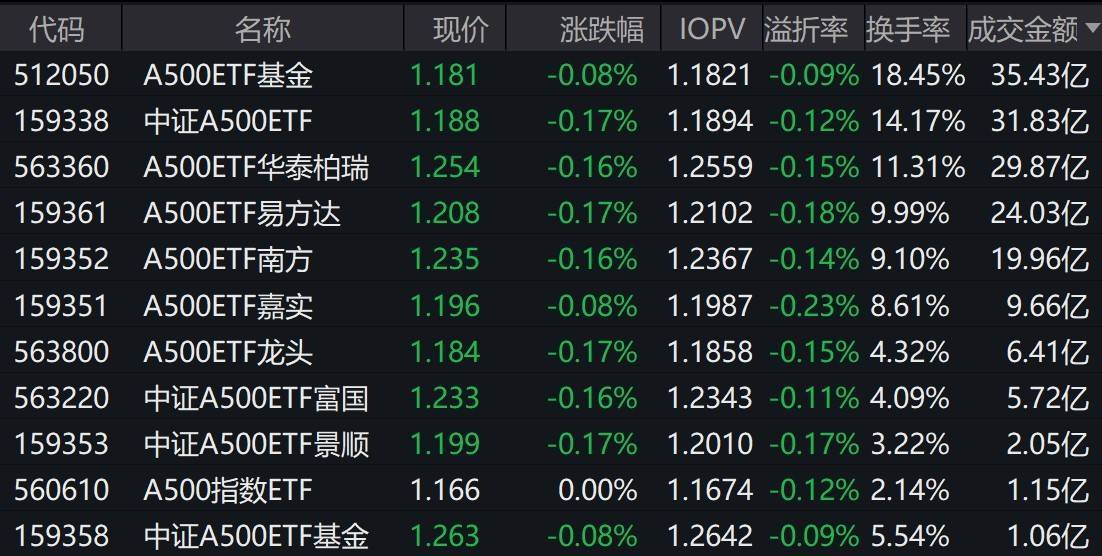
Market Overview - The market opened lower but rebounded, with the three major indices briefly turning positive, while the CSI A500 index fell by 0.11% [1] - The chemical sector continued to strengthen, with the Hainan sector showing repeated activity, and the organic silicon sector experiencing a collective surge. Conversely, multiple stocks in the robotics sector declined [1] ETF Performance - As of the morning close, ETFs tracking the CSI A500 index saw slight declines. Notably, 11 CSI A500-related ETFs had transaction volumes exceeding 100 million yuan, with 3 surpassing 2.9 billion yuan. The transaction amounts for A500 ETF Fund, CSI A500 ETF, and A500 ETF Huatai Baichuan were 3.543 billion yuan, 3.183 billion yuan, and 2.987 billion yuan, respectively [1][2] Investment Strategy - A brokerage firm indicated that the current market style in A-shares is expected to be more balanced than in the third quarter. The firm suggests focusing on: 1. New momentum industries represented by technology growth and high-end manufacturing, which are expected to remain core sources of prosperity and should be explored for expansion opportunities [1] 2. Balanced allocation, as policies like "anti-involution" take effect and domestic demand recovers, leading to marginal improvements in certain cyclical sectors. Key areas to watch include those benefiting from supply-side optimization and structural demand growth, capitalizing on their valuation recovery potential [1]