
伊利股份

Search documents
当巨头像创业者奔跑:伊利“豆王”引爆敏捷增长新范式
2 1 Shi Ji Jing Ji Bao Dao· 2025-11-06 11:03
Core Insights - The emergence of the "Bean King" green bean ice cream has revitalized the cold drink market, achieving over 86 million yuan in sales within five months and becoming a top seller at Sam's Club [1][15][17] Group 1: Product Development - The product was developed in response to Sam's Club's request for a green bean ice cream, showcasing a collaborative effort between Yili and Sam's [3][4] - Yili's research team utilized data analysis to understand consumer preferences, leading to the innovative combination of fresh milk and green beans [5][11] - The final product features over 19% whole green beans and more than 35% high-quality fresh milk, providing a unique texture and flavor [11][12] Group 2: Market Performance - Initial sales projections were around 15 million yuan, but the product sold out within a week, indicating strong consumer demand [15][16] - The "Bean King" captured 32% of Sam's ice cream market share, significantly outperforming competitors [17][18] - The product's repurchase rate is 2.3 times higher than that of regular new products, highlighting its popularity [17] Group 3: Strategic Collaboration - The success of the "Bean King" led to a three-year strategic partnership between Yili and Sam's, marking a significant breakthrough for Yili in emerging channels [19][20] - Both companies benefited from the collaboration, creating a win-win situation for consumers and businesses alike [19] Group 4: Organizational Efficiency - Yili completed the product development process in just three and a half months, significantly faster than the industry average [22] - The company adopted an agile organizational model, allowing for rapid decision-making and collaboration across departments [28][29] - The success of the "Bean King" has prompted Yili to implement similar agile processes for future product developments [29]


需求收缩,乳业价格战加剧?
2 1 Shi Ji Jing Ji Bao Dao· 2025-11-06 10:10
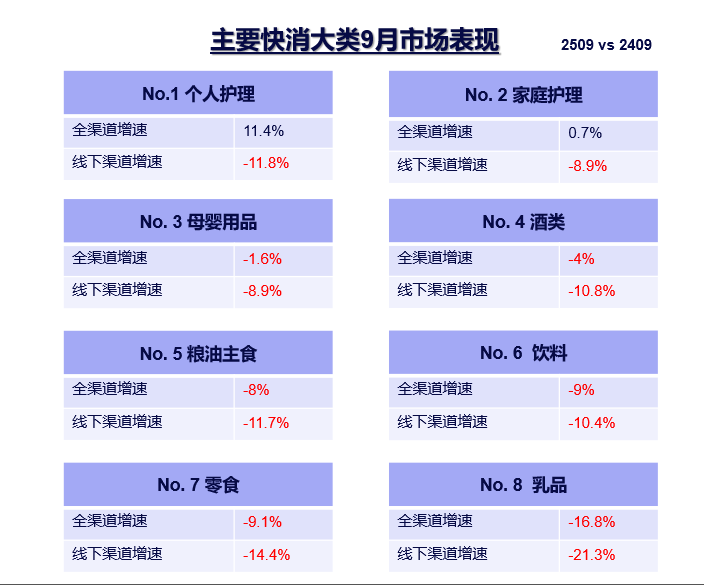
Core Insights - The dairy industry is experiencing a continuous decline in demand, with a 16.8% year-on-year drop in overall sales across all channels in September, and a 21.3% decline in offline sales [1][8]. Company Performance - In Q3, Yili's revenue decreased by 1.70% to 28.631 billion yuan, while Bright Dairy's liquid milk revenue fell by 8.44% to 3.54 billion yuan, and San Yuan Dairy's liquid milk revenue dropped by 4.42% to 2.917 billion yuan [1]. - Yili attributes the sales decline to weak macro consumption and abundant raw milk supply, leading to intense price competition within the industry [1]. Pricing Strategies - A price war is ongoing in the dairy sector, with significant price reductions observed in various milk products. For instance, the price of bagged San Yuan fresh milk dropped from 2.9 yuan to 2.6 yuan, and 450ml bottled fresh milk prices fell from 13 yuan to 6.9 yuan [1]. - Yili plans to maintain a balance in the market by introducing quality-price ratio products and providing support to channels to stimulate end-user sales, aiming to preserve the health of the industry ecosystem [3]. Inventory Management - Yili is implementing a light inventory management strategy to mitigate risks for distributors, who are also cautious in their stocking due to demand uncertainties, resulting in a continued decline in revenue from ambient liquid milk [2].


需求收缩,乳业价格战加剧?丨消费参考
2 1 Shi Ji Jing Ji Bao Dao· 2025-11-06 09:57
Group 1: Dairy Industry Overview - The dairy market has experienced a significant decline in demand, with overall sales down 16.8% year-on-year in September, and offline sales down 21.3% [1] - Major dairy companies reported revenue declines in Q3, with Yili's revenue down 1.70% to 28.631 billion yuan, Bright Dairy's liquid milk revenue down 8.44% to 3.54 billion yuan, and San Yuan Dairy's liquid milk revenue down 4.42% to 2.917 billion yuan [1] - A price war is ongoing in the dairy industry, with significant price reductions observed in various milk products [1] Group 2: Yili's Strategy and Market Position - Yili has adopted a light inventory management strategy to maintain channel health and mitigate risks for distributors, leading to cautious stocking behavior among distributors [2] - Yili aims to avoid exacerbating the price war while focusing on product innovation and marketing strategies to meet consumer demand [2] Group 3: Market Conditions and Future Outlook - The macroeconomic environment remains weak, contributing to intense price competition in the dairy sector due to ample raw milk supply [1][2]

湖北省赤壁市市场监督管理局食品安全监督抽检信息公告 (2025年第9期)
Zhong Guo Zhi Liang Xin Wen Wang· 2025-11-06 09:06
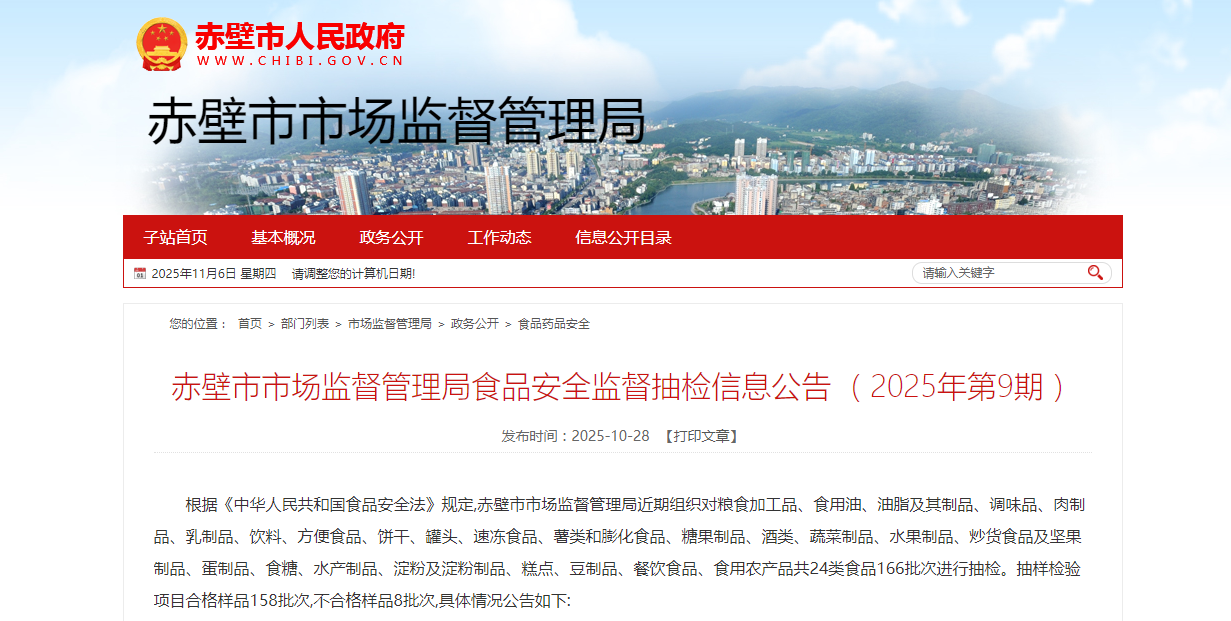
Core Viewpoint - The article reports on the recent food safety inspection conducted by the Market Supervision Administration of Chibi City, revealing that out of 166 food samples tested, 158 were compliant while 8 were found to be non-compliant, highlighting ongoing food safety concerns in the region [4]. Summary by Category Food Categories Inspected - A total of 24 food categories were inspected, including grain products, edible oils, seasonings, meat products, dairy products, beverages, convenience foods, snacks, canned foods, frozen foods, and more [4]. Inspection Results - Out of 166 samples tested: - 158 samples were compliant - 8 samples were non-compliant - Breakdown of non-compliant samples: - Catering food: 29 samples tested, 7 non-compliant - Edible agricultural products: 29 samples tested, 1 non-compliant - Grain products: 11 samples tested, all compliant - Edible oils and fats: 3 samples tested, all compliant - Seasonings: 3 samples tested, all compliant - Meat products: 8 samples tested, all compliant - Dairy products: 4 samples tested, all compliant - Beverages: 7 samples tested, all compliant - Convenience foods: 6 samples tested, all compliant - Snacks: 2 samples tested, all compliant - Canned foods: 2 samples tested, all compliant - Frozen foods: 4 samples tested, all compliant - Potato and puffed foods: 8 samples tested, all compliant - Candy products: 2 samples tested, all compliant - Alcohol: 6 samples tested, all compliant - Vegetable products: 8 samples tested, all compliant - Fruit products: 2 samples tested, all compliant - Nuts and seeds: 3 samples tested, all compliant - Egg products: 1 sample tested, all compliant - Sugar: 1 sample tested, all compliant - Aquatic products: 2 samples tested, all compliant - Starch and starch products: 3 samples tested, all compliant - Pastries: 19 samples tested, all compliant - Bean products: 3 samples tested, all compliant [4].
食品饮料2025年三季报总结:白酒主动释放压力,速冻迎来行业拐点,软饮、零食量贩高景气维持
China Post Securities· 2025-11-06 05:06
Industry Investment Rating - The investment rating for the food and beverage industry is "Outperform" [1] Core Insights - The report highlights that the liquor sector is actively releasing pressure on financial statements, with the industry gradually bottoming out. The frozen food sector is witnessing a turning point, while the soft drink and snack sectors maintain high levels of prosperity [3][4][30] Summary by Sections 1. Liquor - The liquor sector's total revenue for the first three quarters of 2025 was CNY 319.23 billion, a year-on-year decrease of 5.76%, with net profit down 6.85% to CNY 122.67 billion. In Q3 alone, revenue fell 18.38% to CNY 78.48 billion, and net profit dropped 22.00% to CNY 28.09 billion [14][28] - High-end liquor brands like Moutai showed stable growth, while others like Wuliangye and Luzhou Laojiao faced significant declines. Moutai's revenue grew by 9.28% year-on-year, while Wuliangye's fell by 10.26% [17][19] - The second-tier liquor brands, such as Fenjiu, showed resilience with a revenue increase of 5.00%, while others like Shui Jing Fang and Shede experienced declines [26][22] 2. Soft Drinks - The soft drink sector saw significant growth, with companies like Dongpeng Beverage reporting a 34.13% increase in revenue year-on-year. The energy drink segment, particularly, showed robust growth [30][31] - The introduction of new flavors and products, such as Dongpeng's summer limited edition, contributed to the sustained high growth rates in this sector [30] 3. Dairy Products - The dairy sector, led by Yili, maintained stable performance despite high base effects, with significant growth in milk powder and cold drink products. New Dairy's low-temperature products continued to show double-digit growth [4][31] 4. Frozen Foods - The frozen food industry is experiencing a turning point, with companies noting that the price war has peaked. The focus is shifting towards rational competition and value [7][30] 5. Snacks - The snack sector is undergoing strategic adjustments, with member stores and instant retail becoming key growth channels. The overall consumption environment remains weak, but the snack sector is adapting with targeted strategies [7][30]




蒙牛上一次是如何超越伊利的?
Sou Hu Cai Jing· 2025-11-06 02:12
Core Insights - The article discusses the rise and fall of Mengniu Dairy in comparison to Yili, highlighting key events and strategies that led to Mengniu's initial success and subsequent challenges in maintaining its market position [2][6][22]. Group 1: Historical Context - In 1999, Mengniu was founded by Niu Gensheng and nine other founders after he resigned from Yili due to management disagreements [1]. - Mengniu started with a sales revenue of only 40 million yuan in 1999 and achieved remarkable growth, surpassing Yili's sales by 2007 [6][5]. Group 2: Marketing and Branding Strategies - Mengniu's initial branding strategy involved positioning itself as the "second brand of Inner Mongolia dairy," leveraging Yili's reputation to gain market traction [3]. - The company utilized event marketing, such as associating with the Shenzhou V manned space mission, which significantly boosted its brand image and sales, increasing from 1.67 billion yuan in 2002 to 4.07 billion yuan in 2003, a growth of over 144% [11]. - Mengniu's entertainment marketing strategy, including sponsoring the "Super Girl" talent show, helped increase its sales from 800 million yuan to 3 billion yuan in just one year [13]. Group 3: Product Innovation and Supply Chain Management - The launch of the premium milk brand "Te Long Su" in 2005 allowed Mengniu to capture the high-end market, with sales exceeding 5 billion yuan in 2006 [15][17]. - Mengniu established large-scale dairy farms and adopted advanced feeding technologies, significantly increasing milk production per cow and addressing supply chain challenges [18][20]. Group 4: Competitive Dynamics - In 2008, both Mengniu and Yili faced significant losses due to a systemic risk event, but Mengniu's losses were lower due to different inventory management strategies [6][9]. - After 2009, Mengniu's growth rate began to lag behind Yili, which regained its position as the market leader by 2011 [7]. Group 5: Future Outlook - The article emphasizes the need for Mengniu to leverage historical successes and adapt to current market conditions to reclaim its leading position in the dairy industry [22][23]. - The new leadership under Gao Fei is expected to bring a renewed focus and strategic vision to Mengniu, drawing from past experiences to navigate future challenges [10][24].


聚焦“吃喝”产业链:食品饮料ETF天弘(159736)近10日“吸金”近1.2亿元,农业ETF天弘(认购代码:512623)重磅发行中
2 1 Shi Ji Jing Ji Bao Dao· 2025-11-06 02:00
Group 1: Market Performance - The three major indices opened higher on November 6, with the Shanghai Composite Index up 0.10%, the Shenzhen Component Index up 0.37%, and the ChiNext Index up 0.60% [1] - The Tianhong Food and Beverage ETF (159736) rose by 0.28%, with a premium trading rate of 0.06% [1] - As of November 5, the Tianhong Food and Beverage ETF had a latest circulating scale of 5.622 billion yuan, ranking first among food and beverage ETFs in the Shenzhen market [1] Group 2: Fund Flows - The Tianhong Food and Beverage ETF experienced net inflows for 9 out of the last 10 days, accumulating nearly 120 million yuan [1] - The ETF tracks the CSI Food and Beverage Index, focusing on leading stocks in high-end and mid-range liquor, as well as segments like beverages, dairy, and condiments [1] Group 3: Agricultural Sector - The Tianhong Agricultural ETF (subscription code: 512623, listing code: 512620) officially launched on November 3, with fundraising set to end on November 7, 2025 [1] - This ETF tracks the CSI Agricultural Index, which selects 50 stocks covering sectors such as breeding and agricultural chemicals, including leading companies like Muyuan and Haida [1] Group 4: Industry Insights - Guizhou Province's Commerce Department is soliciting opinions on transforming "selling liquor" into "selling lifestyle," encouraging innovation in product offerings and service methods in retail and dining sectors [2] - As of October 30, over 90% of the autumn grain harvest has been completed nationwide, with the Northeast region nearing completion and expected to achieve a good harvest [2] Group 5: White Liquor Market Analysis - Guosen Securities reports that the white liquor market is facing pressure on both volume and price due to tightening regulations on public consumption and business banquets [3] - The report indicates that the worst period for white liquor sales pressure has passed, with expectations for demand recovery in the future [3] - Guosen Securities suggests focusing on stable industry leaders and high-quality stocks with long-term growth potential due to ongoing structural upgrades and channel strategy optimization [3]




华泰证券今日早参-20251106
HTSC· 2025-11-06 01:40
Key Insights - The report discusses the potential bubble in AI investments, indicating that the AI sector may be transitioning from the acceleration phase to the frenzy phase, with signs of irrational valuations and performance under expectations [2][4][5] - The report highlights the resilience of Chinese exports, which grew by 6% year-on-year in Q2 despite tariffs reaching 145%, and anticipates continued strong growth in exports through 2026 [4] - The report emphasizes the strong performance of large brokerage firms, with a 62% year-on-year increase in net profit for the first nine months of 2025, driven by asset expansion and increased investment activity [8] - The report notes the positive outlook for the airline industry, particularly for China National Aviation, as it benefits from improving supply-demand dynamics [11] - The report indicates that Spotify's revenue for Q3 2025 reached €4.272 billion, a 7% year-on-year increase, with a strong performance in user growth and profitability [12] - The report mentions that YUM China achieved a revenue of $3.2 billion in Q3 2025, reflecting a 4% year-on-year growth, supported by strong same-store sales [19] Group 1: AI Sector - The report outlines concerns regarding the AI bubble, suggesting that the sector is moving towards a potential frenzy phase characterized by irrational valuations [2][5] - It notes that AI-related investments contributed approximately 1 percentage point to U.S. economic growth in the first half of 2025, indicating significant economic impact [5] Group 2: Chinese Exports - The report highlights the resilience of Chinese exports, which grew by 6% year-on-year in Q2 2025, despite high tariffs [4] - It anticipates that the structural improvements in the export sector will continue to support growth through 2026 [4] Group 3: Brokerage Firms - The report indicates that large brokerage firms experienced a 62% increase in net profit year-on-year for the first nine months of 2025, driven by asset growth and increased investment activity [8] - It suggests that the operating environment for brokerages is improving, with enhanced performance elasticity and sustainability [8] Group 4: Airline Industry - The report discusses the positive outlook for China National Aviation, which is expected to benefit from improving industry supply-demand dynamics [11] - It highlights the company's recent engagement with investors regarding operational performance and future growth strategies [11] Group 5: Spotify - The report states that Spotify's Q3 2025 revenue reached €4.272 billion, a 7% year-on-year increase, with strong user growth and profitability [12] - It emphasizes the company's ongoing innovation in content and product features, which are expected to drive future growth [12] Group 6: YUM China - The report notes that YUM China achieved a revenue of $3.2 billion in Q3 2025, reflecting a 4% year-on-year growth, supported by strong same-store sales [19] - It highlights the company's effective cost management and expansion strategies as key drivers of its performance [19]
茅台“王炸”级利好突袭!资金持续左侧布局,食品ETF(515710)近10日吸金超2.5亿元!
Xin Lang Ji Jin· 2025-11-06 01:09
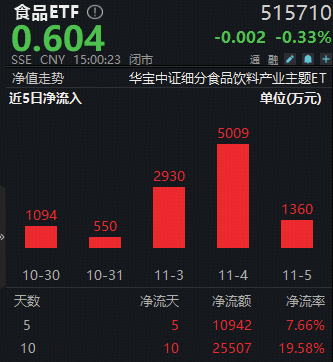
Group 1 - Guizhou Moutai announced a share buyback plan with a total amount between 1.5 billion and 3 billion yuan, with a maximum buyback price of 1887.63 yuan per share [1] - The company also plans to distribute a cash dividend of 23.957 yuan per share, totaling approximately 30 billion yuan, subject to shareholder approval [1] - Analysts suggest that the combination of share buyback and high dividends indicates Moutai's strategic approach to market value management, enhancing earnings per share and providing cash returns [1] Group 2 - The food and beverage sector is currently at a historical low valuation, making it a favorable time for investment [3] - The food ETF (515710) has seen significant net inflows, indicating increased investor interest in the sector [1][3] - A report from CICC predicts that the white liquor industry will see improvements in 2026, with demand expected to recover as policy impacts diminish [4] Group 3 - A report from GF Securities highlights that leading liquor companies are showing resilience despite performance pressures in Q3 [5] - The food ETF (515710) tracks a diversified index, with a significant portion allocated to high-end liquor stocks, indicating a strategic investment approach [5] - Investors can also consider food ETF linked funds for exposure to core assets in the food and beverage sector [5]
养乐多的“健康”支点,摇晃了
3 6 Ke· 2025-11-06 00:20
Core Insights - Yakult is facing significant operational challenges in China, as evidenced by the closure of its first factory in Guangzhou on November 30, following the shutdown of its Shanghai factory in December 2023. This indicates a strategic shift to optimize production and resource management [1][3][4] Company Overview - Yakult entered the Chinese market in 2002 and quickly gained popularity with its "small red bottle" product. The Guangzhou factory, established in June 2002, was the first in China, with a total production capacity of 6 million bottles per day across three factories [2][3] Recent Developments - The closure of the Guangzhou factory is part of a broader strategy to enhance competitiveness and sustainability in the Chinese market. The company aims to consolidate its operations from three factories to two to improve production efficiency and resource allocation [3][4] Sales Performance - Yakult's sales have significantly declined, with daily sales in the first half of 2025 reported at 447.2 million bottles, a slight increase from 426.7 million bottles in the same period of 2024, but still far below the peak of 760.9 million bottles [4][6] - The average sales volume for the Guangzhou factory in early 2025 was 149 million bottles per day, a stark contrast to 282 million bottles in 2021 [4] Market Competition - The competitive landscape has intensified, with domestic giants like Mengniu and Yili increasing their market share, further squeezing Yakult's position. The overall market for yogurt drinks has seen a decline in both average price and market share from 2022 to 2024 [4][6][9] Industry Challenges - The yogurt drink category has been experiencing sluggish growth, with a downward trend in both average price and market share among leading brands, including Yakult, Mengniu, and Wahaha [6][8] - Yakult's health claims, once a strong selling point, are losing credibility among consumers who now perceive the product as overly sweet and less healthy due to high sugar content [8] Innovation and Product Development - Despite attempts to innovate with new product lines, such as low-sugar options and flavored variants, Yakult has struggled to break out of the traditional yogurt drink category, limiting its growth potential [7][8] - The company has not effectively addressed changing consumer preferences, which has hindered its ability to compete against emerging local brands that are diversifying their product offerings [9][10]