
易方达基金

Search documents
利润增幅跑输规模,降费潮下华夏基金ETF“一哥”位次承压
Sou Hu Cai Jing· 2026-02-12 06:41
Core Insights - The article highlights the competitive landscape of the ETF market, focusing on the performance and challenges faced by China Asset Management Co., Ltd. (华夏基金) as it navigates fee reductions and market pressures [2][4]. Group 1: Financial Performance - In 2025, 华夏基金 reported operating revenue of 9.626 billion yuan, a year-on-year increase of 19.86%, and a net profit of 2.396 billion yuan, with an increase of 11.03% [3]. - The total assets of 华夏基金 reached 222.46 billion yuan, with total liabilities of 71.51 billion yuan, and the management asset scale surpassed 3 trillion yuan, reaching 3.014484 trillion yuan, a growth of 22% compared to the previous year [3]. - The growth in management scale over three years was significant, with an increase of nearly 1.2 trillion yuan, from 1.823564 trillion yuan in 2023 to 2.464531 trillion yuan in 2024, and then to 3.014484 trillion yuan in 2025 [3]. Group 2: Market Position and Competition - 华夏基金 maintains its position as the leading ETF provider with an ETF management scale of 892.67 billion yuan, accounting for 42% of its total managed public products, and a growth of 35.55% in 2025 [4][8]. - However, competitors like 易方达基金 are closing the gap, with an ETF management scale of 794.91 billion yuan, representing a growth of 32.08% [4][8]. - The reliance on ETF products is increasing for 华夏基金, which faces significant pressure from the ongoing fee reduction trend in the industry, as many competitors have lowered their management fees to the minimum level of 0.15% [4][6]. Group 3: Fee Structure and Market Dynamics - The ETF market is experiencing a fee reduction trend, with 27.2% of the 1,400 existing ETFs having management fees at the lowest tier of 0.15% [6]. - Among the top fund management companies, 华夏基金 has a lower proportion of ETFs with the minimum management fee, with only 27.5% of its ETFs at this rate, compared to 52.9% for 易方达基金 [8]. - The competitive landscape indicates that while fee rates are not the sole factor in attracting investors, they are increasingly significant in a low-interest-rate environment, impacting the profitability of fund management companies [8].


热门赛道,获加仓
Zhong Guo Ji Jin Bao· 2026-02-12 05:49
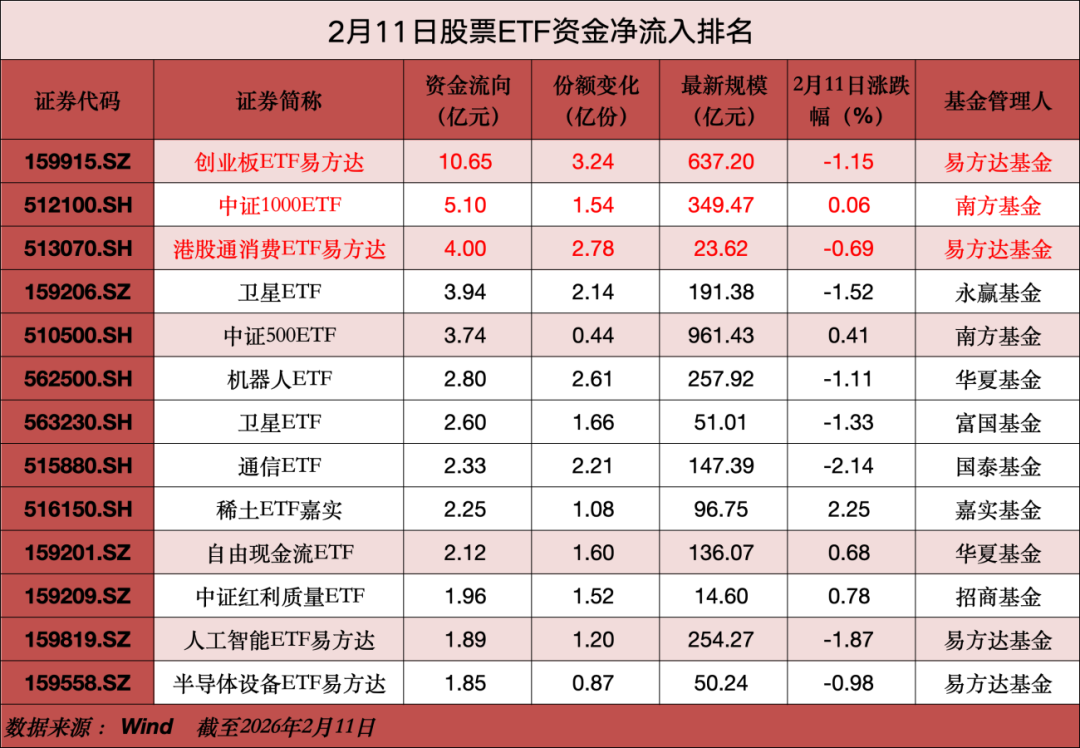
Core Viewpoint - The A-share market is experiencing mixed performance with significant inflows into the ChiNext and satellite industry ETFs, indicating a shift in investor sentiment towards these sectors as the market prepares for the upcoming holiday season [1][2]. ETF Fund Flows - As of February 11, the total scale of 1,339 stock ETFs in the market reached 4.19 trillion yuan, with an overall net outflow of 236 million yuan on that day [2]. - The ChiNext index ETF saw the most significant net inflow of 1.14 billion yuan, while the CSI A500 index ETF experienced a notable net outflow [3]. - The satellite industry also attracted substantial investment, with a net inflow of 890 million yuan on February 11 [3]. Notable ETF Performances - The top-performing ETFs included: - E Fund ChiNext ETF with a net inflow of 1.065 billion yuan [4]. - Southern CSI 1000 ETF with a net inflow of 510 million yuan [5]. - Yongying Satellite ETF with a net inflow of 394 million yuan [4]. - In the past five days, the Hang Seng Technology Index ETF saw inflows exceeding 6 billion yuan, and the SGE Gold 9999 Index ETF attracted over 4.2 billion yuan [3]. Outflows in Broader Market - The broad-based ETFs experienced a net outflow of 755 million yuan, with the CSI A500 ETF leading the outflows at 1.605 billion yuan [6][7]. - The new energy sector also faced significant outflows, totaling 820 million yuan [8]. Market Outlook - The market is expected to focus on macroeconomic data and industry trends post-holiday, with a potential shift towards structural changes in trading logic [9]. - Analysts suggest that the core growth assets are currently at historical median valuations, providing a potential for valuation recovery, while the technology sector remains strong amid ongoing innovations [10].
上证基金评级分析2026年第1期:股混基金超额收益效应回落,债基持券评级中枢上移
Shanghai Securities· 2026-02-12 04:20
Performance Analysis - In Q4, the average return of heavily held stocks in mixed funds was 2.84%, outperforming the average return of all A-shares at 2.62% and the CSI 800 component stocks at 1.04%[1] - Among 31 first-level industries, 22 industries' heavily held stocks outperformed their benchmark industry indices, with an average excess return of 1.87%[1] - The performance of stock funds in Q4 showed a decline of 2.11%, underperforming the CSI All Share Index which increased by 1.01%[6] Fund Rating Overview - A total of 9,215 funds were included in the three-year rating, with 1,379 (14.96%) rated as five-star funds[5] - For the five-year rating, 5,265 funds were included, with 738 (14.91%) rated as five-star funds[5] Risk Management and Efficiency - The risk-return efficiency of bond funds improved significantly, with a notable increase in returns and a decrease in volatility[21] - The average return of pure bond funds was 0.52%, outperforming the total wealth index of bonds at 0.33%[10] Market Timing Ability - The average stock position for equity funds increased by 0.99 percentage points to 91.19%, while mixed funds increased by 1.42 percentage points to 74.29%[19] - The bond fund's holding level decreased by 0.49 percentage points, indicating poor allocation effectiveness[19] Long-term Performance Tracking - Since 2015, the three-year return of five-star ordinary stock fund combinations was 296.11%, compared to only 67.35% for the CSI All Share Index[3] - The probability of five-star funds maintaining performance in the top 40% of their category within 6 months to 1 year is approximately 60%[29]
谁在主导这场公募FOF的千亿狂欢?
阿尔法工场研究院· 2026-02-12 04:06
Core Viewpoint - The public fund of funds (FOF) is undergoing a silent revolution, with significant growth in both market acceptance and product diversity, leading to a resurgence in investment opportunities and strategies [5][6][7]. Group 1: Market Dynamics - The average return of public FOFs over the past year is 17.9%, with top products capturing over 90% of this return, and the market size expected to exceed 244.1 billion by the end of 2025 [6]. - In just over a month, 36 new FOFs were launched, with several products raising over 4 billion in their initial offerings, making FOFs the third-largest issuance category this year after mixed and index funds [9]. - The liquidity of new FOF products has significantly increased, with holding periods reduced to 3 or 6 months, reflecting a shift in investment strategy towards more diversified asset classes [10][11]. Group 2: Structural Changes - The recognition of FOFs by institutional investors has risen, with the proportion of institutional holdings increasing from 16.34% at the end of 2024 to 26.82% by the end of 2025, a notable increase of 10.48 percentage points [12]. - The growth in institutional investment is primarily driven by mixed-asset FOFs, which are expected to support a second growth curve for FOFs [13]. Group 3: Historical Context - FOFs in China began in 2017 but faced challenges during the 2018 bear market, leading to a lack of investor confidence due to poor performance and management practices [15][16]. - The recovery in the stock market in 2019 marked the beginning of a prosperous phase for FOFs, with significant growth in both the number and size of pension-related FOF products [17][18]. - By the end of 2021, the size of FOFs surged from 10.7 billion at the end of 2018 to 210 billion, representing a growth of 1862% [19]. Group 4: Competitive Landscape - The competitive landscape for FOF management has shifted, with the concentration of top managers decreasing slightly, as new players emerge in the market [24][26]. - By the end of 2025, E Fund has become the largest FOF manager with 21.1 billion, surpassing previously dominant firms, indicating a significant shift in market preferences towards diversified and multi-strategy FOFs [25]. Group 5: Sales and Distribution Innovations - The sales model for FOFs is evolving, with banks like China Merchants Bank and China Construction Bank playing a crucial role in driving growth through innovative distribution strategies [27][28]. - The "TREE Long-term Plan" by China Merchants Bank and the "Dragon Profit Plan" by China Construction Bank have successfully launched multiple FOF products, significantly boosting the overall market size [28][30]. Group 6: Future Outlook - The public FOF sector is transitioning into a phase characterized by mature strategies, empowered channels, and diverse demand, with expectations for continued growth driven by institutional investment and evolving wealth management needs [33].


两市ETF两融余额增加8.15亿元丨ETF融资融券日报
2 1 Shi Ji Jing Ji Bao Dao· 2026-02-12 02:42
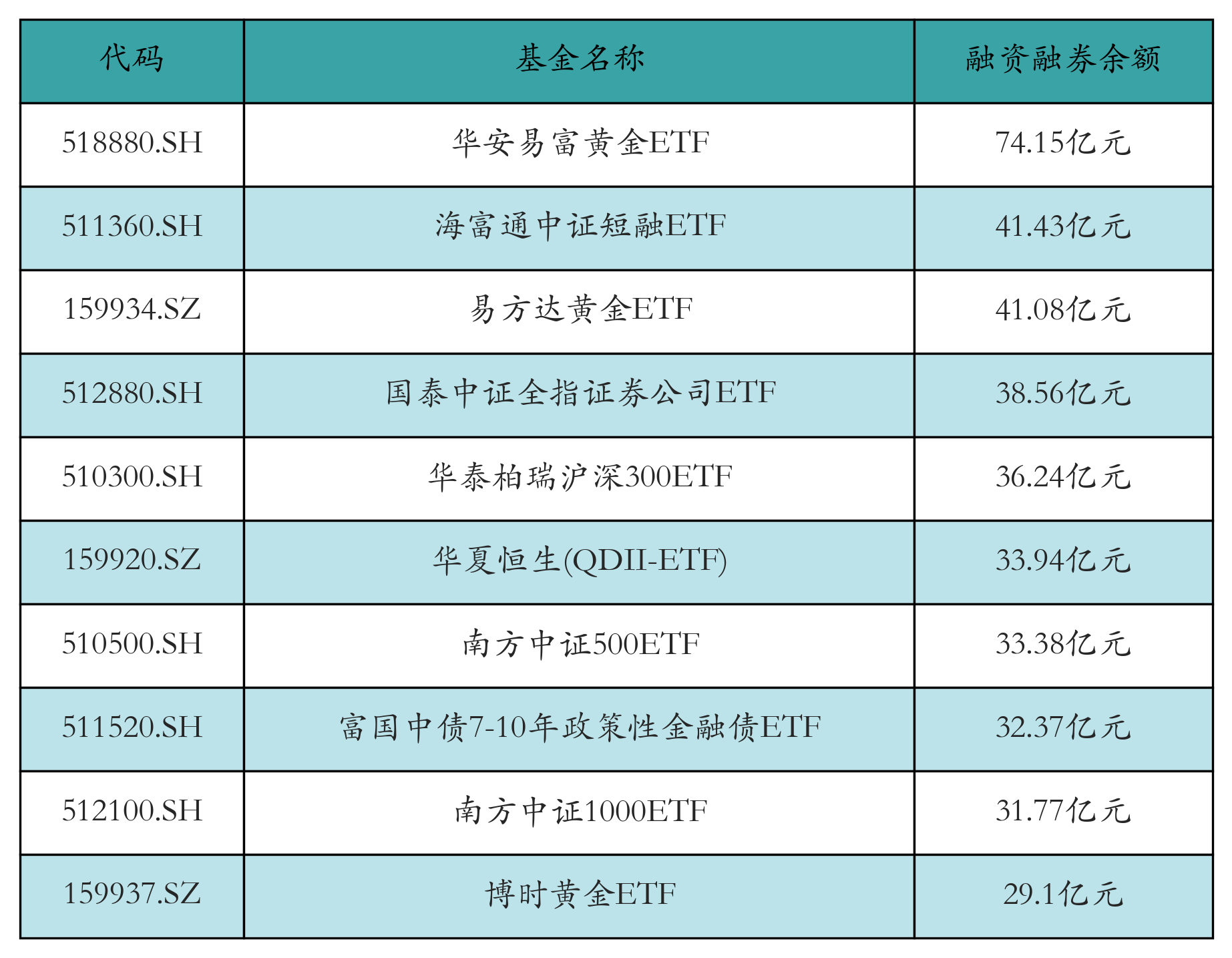
Market Overview - As of February 11, the total ETF margin balance in the two markets reached 120.816 billion yuan, an increase of 0.815 billion yuan from the previous trading day [1] - The financing balance was 113.285 billion yuan, up by 0.829 billion yuan, while the securities lending balance decreased by 14.0281 million yuan to 7.531 billion yuan [1] - In the Shanghai market, the ETF margin balance was 85.082 billion yuan, increasing by 0.754 billion yuan, with a financing balance of 78.506 billion yuan, up by 0.757 billion yuan, and a securities lending balance of 6.577 billion yuan, down by 3.1301 million yuan [1] - In the Shenzhen market, the ETF margin balance was 35.733 billion yuan, increasing by 61.4517 million yuan, with a financing balance of 34.779 billion yuan, up by 72.3496 million yuan, and a securities lending balance of 0.954 billion yuan, down by 1.0898 million yuan [1] ETF Margin Balance - The top three ETFs by margin balance on February 11 were: - Huaan Yifu Gold ETF (7.415 billion yuan) - Haifutong CSI Short Bond ETF (4.143 billion yuan) - E Fund Gold ETF (4.108 billion yuan) [2] ETF Financing Buy Amount - The top three ETFs by financing buy amount on February 11 were: - Haifutong CSI Short Bond ETF (3.131 billion yuan) - Bosera CSI Convertible Bond and Exchangeable Bond ETF (0.869 billion yuan) - Huatai-PB South East Asia Hang Seng Technology Index (QDII-ETF) (0.743 billion yuan) [4] ETF Financing Net Buy Amount - The top three ETFs by financing net buy amount on February 11 were: - Haifutong CSI Short Bond ETF (1.224 billion yuan) - Fuguo 7-10 Year Policy Financial Bond ETF (0.147 billion yuan) - E Fund ChiNext ETF (0.139 billion yuan) [6] ETF Securities Lending Sell Amount - The top three ETFs by securities lending sell amount on February 11 were: - Southern CSI 500 ETF (16.4511 million yuan) - Bosera CSI Convertible Bond and Exchangeable Bond ETF (15.6204 million yuan) - Huatai-PB CSI 300 ETF (13.3722 million yuan) [7]
2.12犀牛财经早报:“春节档”银行花式“抢客”理财
Xi Niu Cai Jing· 2026-02-12 01:39
Group 1 - The inquiry transfer market is experiencing rapid growth, with 12 A-share listed companies implementing share transfers since 2026, and many institutions reporting floating profits exceeding 30% [1] - Public and private funds are actively participating in the inquiry transfer market, indicating a shift towards a more stable and regular share transfer mechanism in China's capital market [1] - The banking sector is engaged in a competitive marketing push for wealth management products ahead of the Chinese New Year, reflecting operational pressures due to declining interest rates and a scarcity of quality assets [1] Group 2 - Regulatory scrutiny in the capital market has intensified, with a focus on misleading statements and financial fraud, resulting in a significant increase in penalties and investigations [2] - As of February 11, 2026, 13 listed companies and their actual controllers have been investigated, with an average of one company being penalized every three days [2] - The total dividend amount distributed by listed companies before the Spring Festival has reached a record high of 348.8 billion yuan, surpassing the previous year's total [2] Group 3 - Several retail companies have announced adjustments to service arrangements and delivery fees during the Spring Festival, indicating a trend of increased costs for consumers [3] - The automotive industry is shifting from a "policy-driven" approach to a "product-driven" strategy, focusing on consumer demand and innovation for high-quality development [4] - Some companies in the photovoltaic industry are halting or delaying investment projects due to changing market conditions, indicating a transition towards market consolidation [4] Group 4 - xAI has seen significant talent turnover, with two co-founders leaving the company, raising concerns about the stability of its core team [5] - Tesla is also experiencing a wave of executive departures, with a recent announcement from a vice president marking the latest in a series of high-profile exits [5] - Apple is facing challenges in upgrading its Siri virtual assistant, with delays in the release of anticipated features due to software issues [5] Group 5 - Over ten real estate companies have undergone executive changes since the beginning of 2026, reflecting strategic adjustments in response to business needs [5] - Estée Lauder has filed a lawsuit against Walmart for selling counterfeit products, highlighting ongoing issues with brand protection in the retail sector [6][7] - 聚能磁体 has initiated the IPO process, indicating a move towards public listing and capital raising [7]
基金早班车丨公募齐声看好持股过节,历史胜率与政策环境共振
Sou Hu Cai Jing· 2026-02-12 00:43
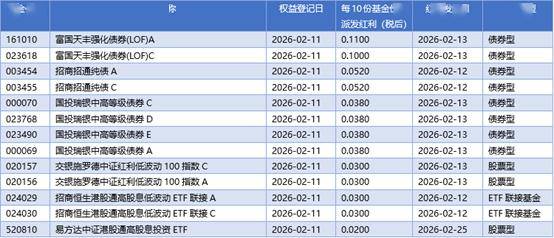
Trading Insights - As the Spring Festival approaches, the focus on "holding stocks or cash" resurfaces, with multiple public funds suggesting that holding stocks during the holiday has a higher success rate based on historical data, policy environment, and capital flow analysis [1] - Institutions indicate that market volatility during the long holiday is manageable, and a spring rally is anticipated post-holiday, recommending maintaining a moderate position to capture potential "red envelope market" opportunities [1] - On February 11, A-shares showed mixed performance, with the Shanghai Composite Index closing up by 3.62 points (0.09%) at 4131.99 points, while the Shenzhen Component Index fell by 49.69 points (0.35%) to 14160.93 points, and the ChiNext Index decreased by 35.80 points (1.08%) to 3284.74 points; trading volume in both markets dropped below 2 trillion yuan for the first time in 31 trading days, with over 3200 stocks declining [1] Fund News - On February 11, no new funds were launched, while 13 funds distributed dividends, primarily bond funds, with the highest dividend payout from the Fuguo Tianfeng Enhanced Income Bond Fund at 0.1100 yuan per 10 shares [2] - Since February, broad-based ETFs have experienced net outflows, although at a slowing pace, while thematic industry ETFs showed internal differentiation; cross-border ETFs have become a major attraction, with total scale reaching 1 trillion yuan, and ETFs linked to the Hang Seng Technology Index nearing 200 billion yuan, indicating sustained investor interest in the Hong Kong tech sector [2] - Ahead of the Spring Festival, market risk appetite has turned cautious, with public funds focusing more on safety margins and allocation space; long-term underweight stocks are seeing a recovery trend, driven by weak reduction motivation, significant expectation gaps, and the resonance of dividend strategies, becoming core targets for capital allocation [2]
易方达基金 专业守护长期陪伴 写好银发答卷
Sou Hu Cai Jing· 2026-02-12 00:20
Core Viewpoint - The article emphasizes the importance of developing pension finance as a key strategy to address population aging and enhance the multi-tiered pension security system in China [2][5]. Group 1: Investment Capability - The company has maintained a long-term stable investment capability, which is crucial for the sustainable development of pension finance [3]. - As of the end of 2025, the average annualized net value growth rate of the company's actively managed equity funds since its establishment is 13.75%, while its pure bond funds have an average annualized net value growth rate of 6.13% since their first issuance in 2008 [4][6]. - The company has established a specialized pension management model that emphasizes centralized leadership, professional division of labor, and unified coordination, leveraging its platform resources and core research capabilities [5]. Group 2: Pension Asset Management - By the end of 2025, the company managed over 1.2 trillion yuan in various pension assets, positioning itself as a significant provider of long-term capital in the market [6]. - The company has nearly 22 years of experience in pension investment and is one of the few public fund institutions with a full license for pension business, managing various types of pension funds including social security funds and enterprise annuities [7]. - As of the third quarter of 2025, the company ranked first in the number of enterprise annuity portfolios managed (428) and second in the scale of enterprise annuity portfolios (332.6 billion yuan) [8]. Group 3: Technological Integration - The company actively integrates financial technology with pension finance, utilizing big data, artificial intelligence, and AIGC to enhance investment management and customer service processes [5]. - The implementation of intelligent monitoring and risk warning mechanisms allows for dynamic tracking of portfolio performance and optimization of asset allocation decisions [5]. Group 4: Investor Education and Service - The company aims to provide a warm and patient service for investors in the pension finance sector, establishing a comprehensive service matrix that includes online and offline support [10]. - It has developed various educational materials and activities to enhance investor understanding of pension finance, including articles, videos, and community engagement initiatives [11]. - The company has also conducted public welfare activities to promote financial knowledge and fraud prevention among the elderly, reinforcing its commitment to safeguarding pension funds [11].
陈光明持有睿远股权降至47.57%,公募基金股权激励年末动作不断
Sou Hu Cai Jing· 2026-02-12 00:10
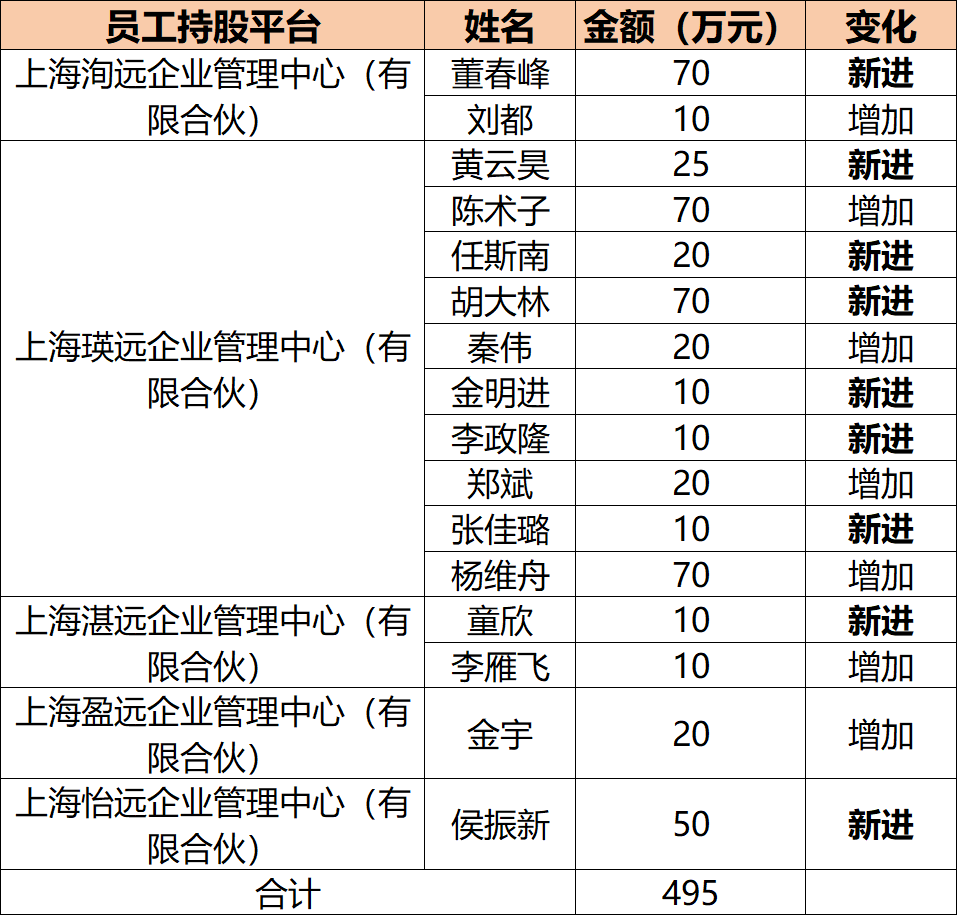
智通财经记者 | 韩理 基金公司股权激励又有新动向。 公募大佬陈光明旗下的睿远基金再次进行了股权激励。公告显示,公司注册资本由人民币1亿元增加至人民币1.0495亿元。其中,公司现有股东上海盈远企 业管理中心(有限合伙)、上海洵远企业管理中心(有限合伙)、上海怡远企业管理中心(有限合伙)、上海湛远企业管理中心(有限合伙)、上海瑛远企 业管理中心(有限合伙)以现金出资方式向公司增资合计人民币495万元。公告同时也表示,目前这一增资事项已完成,公司股东不变,上述新增注册资本 均已实缴。 值得注意的是,此次睿远基金的增资与其他公募不同,并非是为公司"输血",而是通过员工持股平台让员工增持,更类似对员工的股权激励。这一次是睿远 基金进行了第四轮股权激励,那么此次到底又新增了哪些人? 智通财经从天眼查梳理发现,在2025年11-12月中,上述提及的几个有限合伙公司,均有变化。 | 员工持股平台 | 姓名 | 金额(万元) | 变化 | | --- | --- | --- | --- | | 上海淘远企业管理中心(有 | 重春峰 | 70 | 新进 | | 限合伙) | 刘都 | 10 | 增加 | | 上海瑛远企业管理 ...
立足询价转让阵地 公私募“打折扫货”
Zhong Guo Zheng Quan Bao· 2026-02-11 20:23
Core Viewpoint - The inquiry transfer market in China's A-share market is experiencing rapid growth, with significant participation from both public and private funds, indicating a potential for becoming a foundational mechanism for share circulation in the capital market [1][3][5]. Group 1: Market Growth and Participation - Since 2026, 12 A-share listed companies have implemented inquiry transfer of shares, with various public and private fund institutions participating as buyers [1][3]. - The inquiry transfer market is expected to expand further, serving as a crucial bridge between the primary and secondary markets, enhancing market stability and supporting technological innovation [1][3]. - In 2025, the number of companies conducting inquiry transfers increased to 180 from just 12 in 2021, highlighting the market's rapid expansion [4]. Group 2: Performance and Returns - Many institutions participating in inquiry transfers have reported floating profits exceeding 30%, with 11 out of 12 companies involved seeing their stock prices rise above the initial transfer price [3][4]. - For example, Jiangbolong's transfer price was 212.09 yuan per share, with a closing price of 284.14 yuan, resulting in a floating profit rate of approximately 34% [3]. - The average return from inquiry transfers is projected to be 49.52% by the end of 2025, outperforming competitive public offerings [4]. Group 3: Strategic Insights - Inquiry transfers are becoming a significant strategy for public funds to achieve excess returns, with distinct risk-return characteristics compared to traditional private placements [5]. - The lower cost and higher efficiency of inquiry transfers allow investors to build positions more quickly, with returns primarily driven by price discounts and market valuation changes upon release [5]. - Future focus areas for investment strategies include sectors like semiconductors, AI hardware, and domestic software, where leading companies show enhanced visibility and growth certainty [6].