
格力电器

Search documents
人民日报:乘势而上 接续推进中国式现代化建设
Xin Lang Cai Jing· 2025-11-23 23:34
Group 1 - The forum emphasized the coexistence of strategic opportunities and risks, highlighting the need for proactive measures in the face of increasing uncertainties [1] - The 20th Central Committee's fourth plenary session outlined strategies for building a strong domestic market and accelerating the establishment of a high-level socialist market economy [1] - The focus on expanding international circulation and enhancing high-level openness aims to create a new landscape of win-win cooperation, ensuring that development initiatives remain under national control [1] Group 2 - China Enterprises are encouraged to adopt a market-oriented approach, integrating into a unified national market while prioritizing long-term value over short-term gains [1] - The emphasis on developing new productive forces highlights the importance of integrating technological and industrial innovation to build a modern industrial system [1] - Companies are urged to strengthen their role in technological innovation and optimize supply chains [1] Group 3 - The global market presents vast development opportunities, making international expansion a necessary strategy for Chinese enterprises [1] - The establishment of a comprehensive service platform for mainland enterprises going abroad is a key focus for companies like Huoyingdong Group [1] - There is a strong emphasis on innovation and collaboration between different sectors, particularly in the Guangdong-Hong Kong region [1] Group 4 - Gree Electric Appliances has made significant advancements in mastering key core technologies across various product categories, emphasizing the importance of sustained focus on independent innovation [1] - The autonomous driving industry in China is in a critical phase, requiring collaboration between government and enterprises across multiple dimensions, including standards, infrastructure, and data security [1] - The need for a cohesive approach to build a globally competitive ecosystem in the autonomous driving sector is highlighted [1]
乘势而上 接续推进中国式现代化建设 ——第二十届中国经济论坛综述
Ren Min Ri Bao· 2025-11-23 23:17
Core Viewpoint - The forum emphasizes the importance of high-quality development as the primary task during the "14th Five-Year Plan" period, aligning with the spirit of the 20th Central Committee's Fourth Plenary Session [2][5]. Group 1: High-Quality Development - High-quality development is identified as the main theme and primary task for the "14th Five-Year Plan" period, focusing on technological self-reliance and green transformation [2][5]. - The forum participants discussed the need for a modern industrial system and the importance of enhancing the material and technological foundation for modernization [5][6]. Group 2: Regional Development and Innovation - Guangdong is positioned as a leader in reform and opening up, with a focus on creating new advantages and breakthroughs in its development strategy [3][4]. - The integration of technology and industry is highlighted as essential for the transformation and upgrading of manufacturing in Guangdong, particularly in strategic emerging industries [6][7]. Group 3: International Cooperation and Market Integration - The forum stresses the need for China to actively engage in international cooperation and competition, enhancing its market-oriented approach and creating a favorable business environment [7][8]. - The importance of aligning with international high-standard trade rules and promoting a transparent and predictable institutional environment is emphasized [6][7]. Group 4: Technological Innovation - The necessity for companies to focus on core technology development and innovation is underscored, with examples from companies like Gree Electric Appliances showcasing advancements in key technologies [8]. - The discussion includes the role of artificial intelligence and the need for collaborative efforts in establishing standards and infrastructure to enhance competitiveness in the global market [8][9].
乘势而上 接续推进中国式现代化建设
Ren Min Ri Bao· 2025-11-23 22:20
Group 1 - The 20th China Economic Forum was held in Guangzhou, focusing on "Chinese-style modernization and the 14th Five-Year Plan economic outlook" [2] - High-quality development is emphasized as the primary task during the 14th Five-Year Plan period, with discussions on how to achieve this goal [3][4] - Guangdong is highlighted as a leader in reform and opening up, with expectations for it to drive high-quality development [3][4] Group 2 - The forum discussed the need for a new quality of productivity, emphasizing the importance of strategic emerging industries and the integration of digitalization and green transformation [5][6] - Participants stressed the importance of developing a modern industrial system and enhancing self-reliance in technology during the 14th Five-Year Plan [6][7] - The need for a favorable institutional environment for high-quality development was highlighted, including aligning with international trade rules [7][8] Group 3 - The forum underscored the importance of maintaining control over development and enhancing international cooperation and competition [8][9] - Chinese enterprises are encouraged to adopt a market-oriented approach and focus on long-term value rather than short-term gains [9][10] - The significance of mastering core technologies and promoting innovation was emphasized, with examples from various companies showcasing their advancements [9][10]


全面深化改革开放,推动高质量发展
Ren Min Ri Bao· 2025-11-23 22:20
Group 1 - China's manufacturing sector is showing three new development characteristics: achieving breakthroughs in the entire chain of technological innovation, transitioning from processing trade to a domestic and international integrated industrial chain, and forming a higher level of openness under the domestic circulation framework [1] - The added value of China's manufacturing industry accounts for nearly 30% of the global total, with significant advancements in ten key manufacturing sectors, achieving "five leading and five parallel" positions [1] - There are three identified shortcomings in China's manufacturing: high resource consumption, low profit margins, and lower total factor productivity compared to developed countries [1] Group 2 - The "14th Five-Year Plan" emphasizes the development of new quality productivity, focusing on strategic emerging industries and future industries, which is expected to drive over one trillion yuan in investment [3] - The plan also highlights the importance of digitalization, intelligence, and green transformation in traditional industries, as well as the rapid development of the productive service sector as a foundation for high-quality manufacturing [3] Group 3 - The Guangdong-Hong Kong-Macao Greater Bay Area is positioned as a crucial driver for China's modernization and deep participation in global governance [10] - The economic scale of the Greater Bay Area has surpassed that of New York and San Francisco Bay Areas, and it is expected to become a leading global economic and innovation center by 2035 [10] - Key initiatives include building a collaborative innovation system, promoting efficient application of technological achievements, and enhancing the international competitiveness of the service sector [11] Group 4 - The development of the autonomous driving industry requires collaboration between government and enterprises, focusing on standards, infrastructure, and data security [9] - The autonomous driving sector has achieved over 10 million kilometers of public road driving during the "14th Five-Year Plan" period, enhancing consumer willingness to engage in offline activities [9] Group 5 - The deep-sea technology sector in China has made significant advancements, transitioning from merely entering the deep sea to possessing important detection capabilities [17] - The development of long-term observation systems is essential to address challenges in deep-sea exploration, with projects like the cold spring ecosystem research facility underway [18]
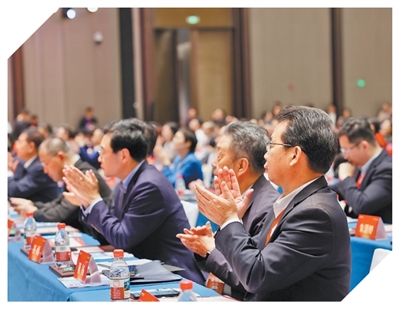
公募基金投资逻辑深度重构: “主题投资”风行一时 “全市场选股”暂避锋芒
Zheng Quan Shi Bao· 2025-11-23 21:45
Core Viewpoint - The investment style of public funds has shifted from core assets to high-growth stocks under the backdrop of economic transformation, moving from "full market stock selection" to "thematic investment" strategies [1][3][10] Group 1: Shift in Investment Strategies - Public funds previously favored large-cap stocks like Sany Heavy Industry and Kweichow Moutai, achieving significant returns through a diversified portfolio [2] - The "full market stock selection" strategy has become less prominent, with thematic products dominating annual performance rankings [2][3] - Changes in the investment environment, including economic deceleration and structural adjustments, have led to a decline in the profitability of traditional consumer and manufacturing leaders [3][5] Group 2: Rise of Thematic Investment - Thematic funds have gained popularity due to structural opportunities concentrated in high-growth sectors, outperforming traditional industries [5][6] - Thematic investment allows investors to engage with long-term trends more intuitively, simplifying complex macro and industry logic [6][9] - The focus on specific high-growth sectors, such as AI and innovative pharmaceuticals, has led to significant capital inflows and heightened competition among funds [4][5] Group 3: Challenges of Thematic Investment - Thematic investment requires deeper industry understanding and foresight, raising the bar for fund managers [7][8] - The need for rigorous valuation and risk management frameworks is critical, as concentrated portfolios can be significantly impacted by individual stock performance and market events [8][12] - The complexity of managing risks in highly concentrated portfolios necessitates advanced strategies to maintain overall risk within acceptable limits [8][12] Group 4: Future of Investment Strategies - The "full market stock selection" strategy is not expected to disappear, as it offers unique advantages in capturing structural opportunities across various sectors [10][11] - The market's aesthetic preferences will continue to evolve, but the fundamental capabilities of "full market stock selection" will remain relevant [11] - Thematic investment can lead to high volatility and potential reputational risks for fund companies, emphasizing the need for careful asset allocation and risk management [12]
指数基金产品研究系列报告之二百五十八:中银中证全指自由现金流ETF:兼顾价值与盈利的中长期投资工具
Shenwan Hongyuan Securities· 2025-11-23 14:41
1. Report Industry Investment Rating No information provided in the report. 2. Core View of the Report The report focuses on the Bank of China CSI All - Share Free Cash Flow ETF, a passive index fund under the Bank of China Fund. The CSI All - Share Free Cash Flow Index, the underlying index of the fund, is a SmartBeta index that combines value and profitability. The index has advantages in terms of industry distribution, dividend yield, valuation, profitability, and performance. The ETF has achieved excess returns while closely tracking the index, and the current fund manager has rich experience in index fund management [1]. 3. Summary According to the Directory 3.1中证全指自由现金流指数:兼顾价值与盈利的SmartBeta指数 - **Index Introduction**: The CSI All - Share Free Cash Flow Index (932365.CSI) selects 100 listed company securities with high free cash flow rates to reflect the overall performance of securities of companies with strong cash - flow generation capabilities. It was based on December 31, 2013, with a base point of 1000 [6]. - **Component Stock Analysis**: The index has a balanced industry distribution, relatively concentrated in household appliances, non - ferrous metals, and transportation. Market capitalization is concentrated in small - and medium - cap stocks, with companies with a market cap of less than 100 billion accounting for 30% [11]. - **Dividend Yield Analysis**: The dividend yield of the index is between that of the CSI 300 and the CSI Dividend Index. As of November 14, 2025, it was about 3.83%, higher than the CSI 300's about 2.56% but lower than the CSI Dividend Index's about 4.22% [15]. - **Valuation Level**: The PE valuation has an advantage, and the high PB reflects high profitability. As of November 14, 2025, the PE - TTM was about 13.39 times, lower than the CSI 300's 14.24 times, and the PB - LF was about 1.94 times, higher than the CSI 300's 1.48 times [19]. - **Profitability Level**: The ROE of the index is expected to remain stable at around 14% from 2025 to 2027, higher than the CSI 300 (about 11%) and the CSI Dividend Index (about 9%). Net profit is expected to increase steadily from about 490 billion yuan in 2025 to over 560 billion yuan in 2027 [24]. - **Performance Analysis**: In the past nearly six years, the cumulative return of the index was 207.13%, with an annualized return of 21.98%, outperforming the CSI 300 and the CSI Dividend Index. It also had excess returns in multiple years and showed strong defensive capabilities in 2022. The Sharpe ratio was 1.02, indicating high risk - adjusted returns [28]. 3.2中银中证全指自由现金流ETF(563760)介绍 - **Product Introduction**: The Bank of China CSI All - Share Free Cash Flow ETF is a passive index fund under the Bank of China Fund. It was established on May 21, 2025, listed on June 6, 2025, with an issue size of 388 million yuan. It uses the full replication method for investment [33]. - **Excess Returns and Close Tracking**: Since its establishment on May 21, 2025, the ETF has achieved excess returns over its performance benchmark. The net value has been above the CSI Cash Flow Index. The average daily tracking deviation is under control, with the average absolute value of daily tracking deviation less than 0.05%, and the annualized tracking error in the statistical period was 1.23%, significantly lower than the control targets [35]. - **Introduction of the Current Fund Manager**: Mr. Zhao Jianzhong, a finance master, is the Assistant Vice - President of the Bank of China Fund. He has 10.45 years of investment management experience, has managed 19 funds in the past, and currently manages 13 funds, including various index products [42].
一个亿,还是“小目标”吗?
虎嗅APP· 2025-11-23 03:00
Core Viewpoint - The concept of "one billion as a small goal" has shifted from an optimistic aspiration to a more pragmatic approach in the context of changing economic conditions and wealth accumulation challenges in China [2][25]. Group 1: Historical Context and Wealth Accumulation - The phrase "one billion small goal" originated from a 2016 interview with Wang Jianlin, emphasizing the importance of setting achievable financial targets [2][3]. - Over the past decade, real estate has been a significant driver of wealth for urban families in China, with housing accounting for 60%-70% of urban household wealth [4][5]. - The average total assets of urban households were reported at 3.179 million yuan, with a housing ownership rate of 96% [4]. Group 2: Market Changes and Real Estate Decline - The real estate market experienced a downturn starting in 2021, with prices in first-tier cities returning to 2016 levels, leading to significant wealth evaporation for many families [6][7]. - Many homeowners who purchased at high prices now face negative equity, where their property value is less than their remaining mortgage [7]. Group 3: Future Wealth Goals and Investment Strategies - Achieving a billion yuan requires substantial initial capital and long-term investment strategies, with realistic projections showing it could take decades to reach such a goal [10][11]. - The focus for most individuals should shift from unrealistic billion-yuan targets to more attainable wealth accumulation strategies, such as investing in personal skills and practical job opportunities [13][19]. - Long-term investment in stocks and diversified assets is recommended, with historical data showing significant returns from equity investments over time [16][17][24]. Group 4: Retirement and Pension Concerns - The aging population in China poses challenges for the pension system, necessitating early and strategic personal investment planning to ensure financial security in retirement [14][19]. - The government is implementing measures to address pension shortfalls, including the transfer of state-owned shares to social security funds [15]. Group 5: Conclusion and Call to Action - The previous perception of "one billion" as an easily attainable goal has been challenged by market realities, prompting a reevaluation of personal financial strategies [25]. - Individuals are encouraged to develop realistic financial plans and take proactive steps towards wealth management to improve their future quality of life [25].
京东自营店和官方旗舰店有啥差别,选哪个最划算?10年老用户揭秘,很多人都不清楚
Sou Hu Cai Jing· 2025-11-22 10:13
Core Insights - The article discusses the differences between JD's self-operated stores and official flagship stores, highlighting their operational models, pricing strategies, and customer service experiences [1][3][15] Group 1: Operational Models - JD's self-operated stores purchase and sell products directly, managing inventory and logistics through their own system, ensuring fast delivery and standardized service [3][4] - Official flagship stores are managed by brand owners, who control the sales and inventory, leading to potential variations in product authenticity and service quality [3][5] Group 2: Pricing Strategies - Pricing varies significantly between the two types of stores; JD's self-operated stores often offer lower prices for electronics due to bulk purchasing, while official flagship stores may have better deals on apparel due to flexible pricing strategies [4][8] - A comparison of 50 popular products revealed that pricing advantages fluctuate based on product type and brand collaboration with JD [4][8] Group 3: Customer Service - JD's self-operated stores provide standardized customer service, including policies like "7-day no-reason return" and "30-day price protection," which are consistently enforced [4][5] - Customer service in official flagship stores can be inconsistent, with some brands offering excellent support while others may have slower response times [5][9] Group 4: Logistics and Delivery - JD's self-operated stores utilize JD Logistics, ensuring fast and reliable delivery, especially in major cities where same-day delivery is common [7][8] - Official flagship stores may use various logistics providers, leading to variability in delivery speed and service quality [7][8] Group 5: Product Quality and Promotions - JD's self-operated products undergo quality checks, reducing the likelihood of counterfeit goods, while official flagship stores may offer exclusive or limited-edition items [8][11] - Promotional strategies differ, with JD's self-operated stores aligning with major sales events, while official flagship stores may have unique promotions at different times [8][12] Group 6: Consumer Decision-Making - Consumers are advised to consider product type, price sensitivity, service needs, and purchase frequency when choosing between the two store types [9][12] - Observing price fluctuations and promotional activities can help consumers make informed purchasing decisions [9][11] Group 7: Industry Trends - The lines between JD's self-operated and official flagship stores are blurring as brands adopt direct supply models, leading to more unified pricing and service standards [11][12] - The rise of new retail models emphasizes the integration of online and offline services, enhancing the overall shopping experience for consumers [12][13]


《2025/11/17-2025/11/21》家电周报:海尔机器人与 INDEMIND 达成战略合作,比依股份定增获批-20251122
Shenwan Hongyuan Securities· 2025-11-22 08:39
Investment Rating - The report indicates a positive investment outlook for the home appliance sector, highlighting that the sector outperformed the Shanghai and Shenzhen 300 Index during the week [3][4]. Core Insights - The home appliance sector is experiencing a shift with strategic partnerships, such as Haier Robotics collaborating with INDEMIND to advance embodied robots in home applications [8]. - The report emphasizes three main investment themes: the value and growth potential of leading white and black appliance companies, the technological advancements in core component manufacturers, and the increasing penetration of new consumer categories like cleaning appliances [26][30]. Summary by Sections Market Performance - The home appliance sector index fell by 2.3%, while the Shanghai and Shenzhen 300 Index dropped by 3.8%, indicating a relative outperformance of the sector [3]. - Key companies like Aupu Technology, Zhejiang Meida, and Supor showed positive growth, while Joyoung, Beilong, and Biyi experienced significant declines [4]. Industry Dynamics - Haier Robotics and INDEMIND signed a strategic cooperation agreement to enhance the application of embodied robots in home settings, leveraging Haier's data and supply chain capabilities alongside INDEMIND's AI technology [8]. - Biyi Electric received approval from the China Securities Regulatory Commission for a specific stock issuance, indicating potential capital expansion [9]. Sales Data - In October, sales of cleaning appliances like robotic vacuums and washing machines saw significant year-on-year increases, with robotic vacuum sales up 36.01% and washing machine sales up 60.11% [26]. - Personal care products also showed varied performance, with hairdryer sales slightly increasing while prices decreased, and electric shaver sales rising significantly [30]. Investment Themes - The report identifies three main investment lines: - **Dividend and Growth**: Leading white and black appliance companies are characterized by low valuations, high dividends, and stable growth, making them attractive investments [26]. - **Technology**: Core component manufacturers are diversifying into emerging tech fields like robotics and data center cooling, presenting new growth opportunities [26]. - **International Expansion**: The report highlights the growing demand for cleaning appliances in international markets, particularly in Southeast Asia and South America [26]. Macro Economic Environment - As of November 21, 2025, the USD to RMB exchange rate has decreased by 1.40% since the beginning of the year, which may impact import costs for the home appliance sector [36].





估值周报:最新A股、港股、美股估值怎么看?-20251122
HUAXI Securities· 2025-11-22 08:01
A-share Market Valuation - The current PE (TTM) for the A-share market is 16.10, with a median of 13.51 and a maximum of 30.60[12] - The PE (TTM) for the Shanghai Composite Index is 13.95, while the CSI 300 is at 13.11[9] - The PE (TTM) for the ChiNext Index is significantly higher at 48.76, indicating a growth-oriented market segment[12] Hong Kong Market Valuation - The Hang Seng Index has a current PE (TTM) of 11.48, with a median of 10.29 and a maximum of 22.67[60] - The Hang Seng Technology Index shows a higher PE (TTM) of 20.97, reflecting the tech sector's growth potential[60] US Market Valuation - The S&P 500 has a current PE (TTM) of 28.09, with a median of 21.13 and a maximum of 41.99[84] - The NASDAQ Index is at 39.93, indicating a strong valuation in the tech-heavy index[92] Sector Valuation Insights - Non-bank financials, food and beverage, and non-ferrous metals sectors in A-shares are currently at historically low PE levels[22] - The technology sector, including computing and electronics, is at historically high PE levels, suggesting potential overvaluation[22] Risk Premium Analysis - The equity risk premium (ERP) for the A-share market has fluctuated, with a current value indicating a risk-averse market environment[16]