圆通速递

Search documents
无人配送爆发前夜:翻倍上量、售价“砍半”与格局挑战
2 1 Shi Ji Jing Ji Bao Dao· 2025-07-02 13:14
Core Insights - The rapid expansion of the express delivery market is driving the adoption of Level 4 (L4) autonomous driving technology, particularly in logistics, which is seen as a breakthrough application scenario for the technology [1][2][10] - Major players in the industry are targeting significant sales growth, with many companies aiming to double their sales figures this year [2][10] - The shift towards autonomous delivery vehicles is primarily due to the stable and predictable nature of express logistics routes, which allows for significant cost savings and efficiency improvements [4][5] Industry Dynamics - The commercial viability of L4 autonomous driving has been slow to materialize, but the logistics sector is emerging as a key area for exploration and implementation [3][10] - Companies like Baidu and others have pivoted towards express logistics after initial challenges in other applications, indicating a trend towards focusing on low-speed, stable environments for autonomous vehicles [3][4] - The cost savings associated with using autonomous delivery vehicles can be substantial, with estimates suggesting a reduction of 30%-50% in delivery costs [4][5] Market Opportunities - The potential market for autonomous delivery vehicles in the express logistics sector is estimated to be around 36.6 billion yuan [10] - The industry is witnessing a surge in demand for autonomous vehicles, with companies like Jiushi and others planning to significantly increase production capacity in response to market needs [8][10] - The collaboration between logistics companies and technology providers is crucial for developing reliable and safe autonomous vehicles, with partnerships being formed to enhance product development and market reach [12] Competitive Landscape - Leading express delivery companies such as SF Express and Zhongtong Express are actively investing in autonomous delivery vehicles, with plans to scale their fleets significantly in the coming years [6][10] - The entry of new players from adjacent markets, such as WeRide, indicates increasing competition in the autonomous logistics space, although the transition from other applications may pose challenges [13] - The industry is currently characterized by a lack of unified regulatory standards, with local regulations dictating the deployment of autonomous vehicles, which could impact market dynamics [11][12]
交运行业25Q2业绩前瞻:内需持续改善,海外受多因素扰动
ZHESHANG SECURITIES· 2025-07-02 10:56
Investment Rating - The industry rating is "Positive" (maintained) [7] Core Viewpoints - The domestic demand continues to improve while overseas factors are causing disturbances [1][2] - In the aviation sector, the second quarter shows improved performance due to high passenger load factors and a significant drop in oil prices [1] - The express delivery sector is experiencing double-digit growth in volume, but intense price competition is affecting profitability [3][11] - The shipping industry is facing volatility in freight rates due to tariffs and geopolitical conflicts [4][5][10] Summary by Sections Aviation and Airports - In Q2 2025, the cumulative ASK (Available Seat Kilometers) for major airlines shows growth compared to the same period in 2024, with increases of 5% to 12% [1] - The average oil price for aviation kerosene in Q2 2025 is 5475 RMB/ton, down 9% from Q1 and down 17% year-on-year [1] - Passenger throughput at major airports like Shanghai and Guangzhou has recovered to 109% and 115% of 2019 levels, respectively [2] Express Delivery - The express delivery volume reached 787.7 billion pieces in the first five months of 2025, a year-on-year increase of 20.1% [3] - The industry revenue for express delivery in the same period was 592.46 billion RMB, up 10.3% year-on-year [3] - Price competition has intensified, particularly affecting franchise express companies, while leading companies like SF Express continue to show robust growth [11] Shipping - In Q2 2025, VLCC (Very Large Crude Carrier) freight rates averaged 42,000 USD/day, a year-on-year increase of 7% [4] - The CCFI (China Containerized Freight Index) dropped to 1156 points, down 20% year-on-year, while the SCFI (Shanghai Containerized Freight Index) fell to 1685 points, down 36% year-on-year [5] - The dry bulk shipping market remains weak, with the BDI (Baltic Dry Index) at 1465 points, down 21% year-on-year [5] Cross-Border Logistics - The average air freight rate index for outbound shipments from Shanghai in Q2 2025 is 4479 points, down 5% year-on-year [8] - The coal import volume at Ganqimaodu port was 6.28 million tons, a year-on-year decrease of 6% [6] High Dividend Stocks - The report suggests that the declining yield on ten-year government bonds will benefit dividend-paying stocks [12] - Recommendations include logistics and highway companies, as well as port and railway stocks [12]
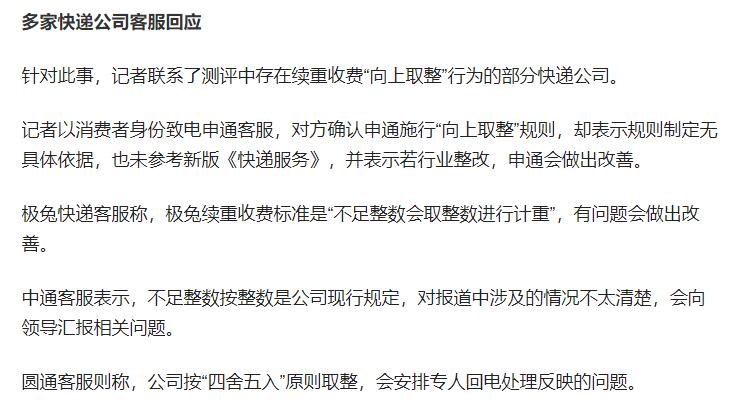
11.01kg收取12kg费用,你的快递正被收取空气费
3 6 Ke· 2025-07-02 10:04
Core Viewpoint - The express delivery industry has been exposed for a long-standing practice of "rounding up" charges, which is illegal and harms consumers, similar to issues seen in other sectors like markets and sanitary products [1][3][4]. Group 1: Industry Practices - The practice of "rounding up" in the express delivery sector has been ongoing for years, with many companies admitting to this behavior [5][7]. - A recent evaluation found that half of the eight major express companies engaged in "rounding up" during weight-based billing [4][5]. - Complaints about this practice have been recorded since at least 2020, indicating it is not a new issue [7][9]. Group 2: Financial Implications - The "rounding up" rule allows express companies to charge for "air weight," significantly increasing their profits without corresponding costs [16][18]. - With an estimated 500 billion packages handled annually, even a small increase in charges can lead to substantial profits, potentially exceeding hundreds of millions [16][18]. - The average additional charge per package, when applied to a large volume, can result in significant revenue for companies, highlighting the economic motivations behind this practice [16][20]. Group 3: Regulatory Context - New national standards for express services were introduced in December 2023, which require accurate weight measurement and billing, yet many companies have not complied [14][20]. - The "rounding up" practice is deemed illegal under existing consumer protection laws, which require transparency in pricing [21][22]. - The ongoing use of such practices reflects a lack of accountability and responsibility within the industry, potentially leading to a decline in consumer trust [21][24]. Group 4: Consumer Impact - Complaints related to express delivery services have surged, with a significant increase in issues reported, including disputes over shipping costs [22][24]. - The rise in complaints indicates a growing dissatisfaction among consumers, which could threaten the long-term viability of companies relying on such practices [22][24].


中通快递加码航空货运:Q1收入增速放缓,市场份额持续流失,散件市场“内卷”加剧
Zheng Quan Zhi Xing· 2025-07-02 06:06
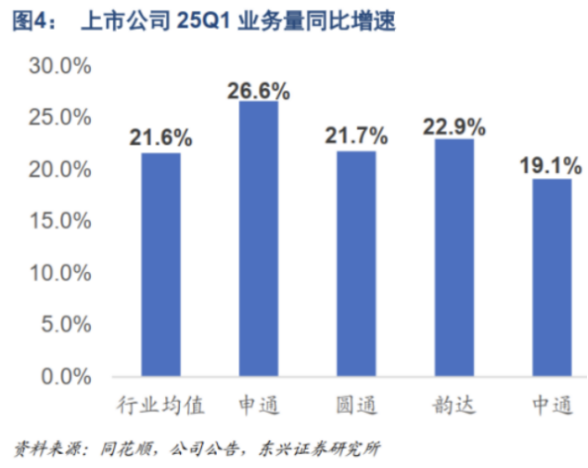
Core Viewpoint - Zhongtong Express is accelerating its air freight layout to address declining market share and slowing revenue growth, transitioning from an agency model to a self-operated system, which poses higher operational and cost control demands [1][2][3] Group 1: Air Freight Business Transition - Zhongtong Airlines has completed its registration with a capital of 600 million yuan, focusing on public air transport and logistics services [2] - The establishment of a domestic cargo airline is a key part of Zhongtong's full industry chain layout, with plans to invest 11 billion yuan in the cargo airline project [2][3] - The shift to a self-operated air freight model aims to enhance route planning and transportation efficiency but comes with significant operational challenges, including high costs for aircraft procurement and maintenance [3] Group 2: Market Share and Revenue Trends - In 2024, Zhongtong's single ticket revenue increased by 2.7% to 1.28 yuan, making it the only company in its sector to see an increase, despite a decline in market share [4][5] - The company's market share fell to 19.4% in 2024, a decrease of 3.5 percentage points, marking the first time it dropped below 20% since 2020 [5] - In Q1 2025, Zhongtong's single ticket revenue decreased by 8.46% to 1.19 yuan, while its business volume grew by 19.1% to 85.39 billion pieces, still lagging behind competitors [5][8] Group 3: Expansion into Parcel Market - Zhongtong is actively expanding its parcel business, reporting a 46% year-on-year increase in parcel volume, with a goal of reaching 8.4 million parcels per day by 2025 [9][10] - The parcel market offers higher profit margins compared to traditional e-commerce deliveries, but it is becoming increasingly competitive, leading to price wars [10] - Challenges in the parcel market include the presence of "scalpers" who negotiate lower prices, further squeezing profit margins for legitimate operators [10]
圆通速递(600233) - 圆通速递股份有限公司关于第二期股票期权激励计划2025年第二季度自主行权结果暨股份变动的公告
2025-07-01 10:18
证券代码:600233 证券简称:圆通速递 公告编号:临 2025-048 本次股票期权自主行权情况:公司第二期股票期权激励计划第二个行权 期可行权数量为 3,140,000 份,行权有效期为 2024 年 7 月 5 日至 2025 年 6 月 5 日,行权方式为自主行权。2025 年 4 月 1 日至 2025 年 6 月 30 日,无激励对象实施行权;截至 2025 年 6 月 30 日,激励对象累计自主 行权且完成股份过户登记共 1,488,701 股,占可行权数量的 47.41%。 一、股票期权自主行权概况 根据《圆通速递股份有限公司第二期股票期权激励计划(草案)》等相关规 定,经圆通速递股份有限公司(以下简称"公司")于 2024 年 6 月 13 日召开的 第十一届董事局第十一次会议及第十一届监事会第十次会议审议通过,第二期股 票期权激励计划第二个行权期的行权条件已经成就,符合条件的股票期权行权数 量为 3,140,000 份,行权起始日期为 2024 年 7 月 5 日,行权终止日期为 2025 年 6 月 5 日,行权所得股票可于行权日(T 日)后的第二个交易日(T+2 日)上 市交易;行权 ...
推进长三角物流走廊的货运电动化,上海需顶层设计,整体规划
Xin Lang Cai Jing· 2025-07-01 08:27
Core Viewpoint - The rapid advancement of electric freight transportation in intercity logistics and urban delivery is driven by large-scale facility updates and the construction of charging infrastructure along highways, with significant government support and policy initiatives aimed at promoting energy integration in transportation [3][4][10]. Group 1: Policy and Market Dynamics - The Chinese government aims for electric energy to account for 10% of the transportation sector's terminal energy consumption by 2027, with pure electric vehicles becoming mainstream by 2035 [3]. - Shanghai has implemented substantial subsidies for new energy heavy trucks, with a subsidy standard of 630 RMB/kWh and a maximum subsidy of 280,000 RMB for early scrapping and new purchases [5][6]. - As of June 2025, Shanghai plans to update or add approximately 13,000 trucks annually, with the market being significantly influenced by these subsidies [5]. Group 2: Infrastructure and Operational Challenges - There is a notable shortage of medium and heavy-duty charging and swapping facilities in Shanghai, with only about 300 charging stations available for the current demand of approximately 1,800 electric heavy trucks [9][12]. - The initial cost of purchasing electric trucks is high, and profitability depends on stable routes and low electricity prices, with operational costs potentially being 50% lower than diesel [6][9]. - The logistics sector is actively exploring the construction of charging facilities, with companies recognizing the importance of transitioning to electric trucks for cost reduction [12][13]. Group 3: Strategic Recommendations - The government should focus on top-level design for green freight, coordinating the planning of charging facilities with vehicle purchase subsidies to stimulate market activity [10][14]. - Utilizing idle industrial land for charging infrastructure and establishing flexible leasing terms could enhance facility availability [14]. - The integration of digital tools in logistics operations is essential for optimizing the use of charging facilities and ensuring efficient logistics processes [15][16].

趋势研判!2025年中国无人驾驶物流车行业全景速览:在政策与技术的共同驱动下,无人物流车的发展势不可挡,行业有望迎来爆发式增长[图]
Chan Ye Xin Xi Wang· 2025-07-01 01:16
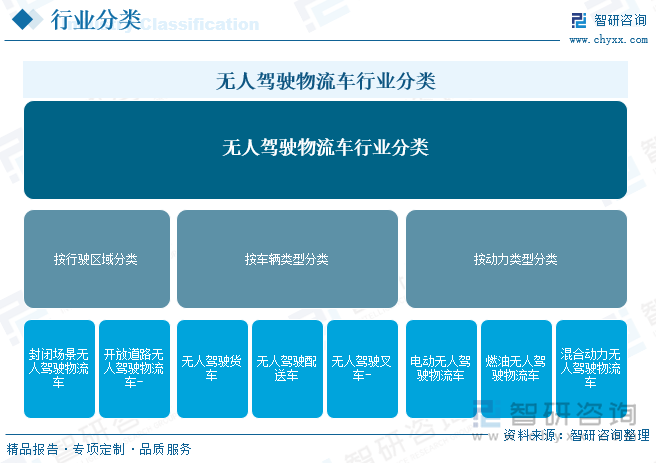
Core Viewpoint - The development of autonomous logistics vehicles in China is expected to experience significant growth, driven by advancements in technology and supportive government policies, with market value projected to reach 594.8 billion yuan by 2030 [1][4][19]. Industry Definition and Classification - Autonomous logistics vehicles are defined as logistics transport tools equipped with self-driving capabilities, utilizing advanced sensor technology, AI, and communication technology for automated driving and delivery [2]. - These vehicles can be categorized based on driving area (closed scene vs. open road), vehicle type (cargo trucks, delivery vehicles, forklifts), and power type (electric, fuel, hybrid) [2]. Current Development Status - The market for autonomous logistics vehicles in China is growing significantly, with an expected industry output increase of 43.9 billion yuan by 2025 and a potential market size of 594.8 billion yuan by 2030 [4][19]. - In 2024, autonomous logistics vehicles are projected to account for approximately 50% of urban logistics delivery, 29% of urban last-mile delivery, 11% in mining transport, and 10% in port transport [6]. Industry Chain - The upstream of the autonomous logistics vehicle industry includes core technologies and components such as LiDAR, cameras, AI chips, and high-precision positioning modules [8]. - The midstream involves the manufacturing and system integration of autonomous logistics vehicles, while the downstream includes applications in traditional express delivery, warehousing, and specific scenarios like ports and airports [8]. Competitive Landscape - The autonomous logistics vehicle market in China is still in a developmental phase, with increasing competition as companies invest in R&D and collaborate with academic institutions [15]. - Key players in the market include New Stone Technology, Hangshen Intelligent, Jiusi Intelligent, JD Logistics, and Yika Intelligent Vehicle [15][17]. Development Environment - Relevant Policies - The Chinese government has introduced various supportive policies to foster the growth of the autonomous logistics vehicle industry, enhancing the environment for its development [12][14]. - Policies have been established to promote the application of autonomous vehicles in logistics, including guidelines for testing and commercial demonstration in specific environments [14]. Development Trends - The Chinese government emphasizes the application of autonomous driving technology in logistics as part of its national strategic planning, indicating a strong future growth trajectory for the industry [19].
心暖了,就更有方向(记者手记)
Ren Min Ri Bao· 2025-06-30 22:11
如今,在快递员、网约配送员、网约车司机等新就业群体中,越来越多的人提交入党申请书。但是,他 们"人在云端、车轮不停",让传统的会议室党课、固定的组织生活模式显得"水土不服"。怎么办?关键 要把"暖人心"落细落实。 笔者曾跟踪采访一名街道干部。他常在配送站"蹭"骑手们的休息间隙,蹲在路边耐心倾听他们的烦心 事:抢单的焦虑、莫名被罚的委屈、孩子上学难照顾的无奈……"车轮上的烦恼",他都一一记在本子 上。这看似平常的"蹲下"与"倾听",传递着满满的尊重与诚意。 "暖人心"贵在办实事。如今,在街头巷尾,总能看到大大小小的"暖心驿站",里面不仅提供免费充电、 热水、应急药品,还有律师咨询、心理疏导、技能培训等,切实解决新就业群体急难愁盼问题。这些友 好的场景、看得见的关怀,是焐热人心的关键。 "我志愿加入中国共产党……"日前,在圆通速递湖南省区第一党支部的活动室,5名快递员面对党旗, 庄严宣誓。他们说得实在:"党和政府惦记着我们。入了党,更要好好服务大伙。"朴实的话语道出深刻 的道理:党建工作就是做人心的工作。心暖了,人自然就聚起来了。 《 人民日报 》( 2025年07月01日 19 版) (责编:杨光宇、胡永秋) ...
无人物流车八问:物流新质生产力破局者
HTSC· 2025-06-30 11:11
Investment Rating - The report maintains an "Overweight" rating for the transportation and logistics industry [5]. Core Insights - The commercialization of unmanned logistics vehicles is driven by industry demand, technological advancements, policy support, and new business models. The last mile delivery in the express delivery sector, which accounts for about 60% of total costs, presents significant cost reduction opportunities compared to other logistics segments [12][22]. - The current primary application scenarios for unmanned logistics vehicles include last-mile delivery from distribution points to collection stations, which corresponds to a market space of approximately 36.6 billion RMB. The report anticipates that by 2030, the incremental market value for various autonomous driving scenarios will reach 745.9 billion RMB [2][13]. Summary by Sections Industry Demand - The express delivery industry is experiencing a prolonged price war, with average prices dropping by 8.2% year-on-year in the first five months of 2025, leading companies to seek cost reductions in last-mile delivery, which constitutes over 50% of total costs [23][26]. Policy and Technology - The report highlights that national strategies and local policies are increasingly supportive of unmanned logistics vehicles, with road rights being opened up for testing and application. This regulatory environment is crucial for the growth of unmanned logistics vehicles [39][41]. - Technological advancements in autonomous driving are making unmanned logistics vehicles more viable, with successful mass production by leading companies driving down costs [12][22]. Cost Reduction Potential - If 30% of delivery volume is handled by unmanned logistics vehicles, express delivery companies could see a cost reduction of approximately 4%. The cost of using unmanned vehicles for delivery is significantly lower than traditional methods, with a cost of 0.067 RMB per delivery compared to 1 RMB for manual delivery [13][34]. Market Size and Growth - The potential market size for unmanned logistics vehicles in the express delivery sector is estimated at around 36.6 billion RMB, representing only 4.9% of the total market. The report projects substantial growth in the overall market for autonomous driving applications, with various segments contributing to a total incremental value of 745.9 billion RMB by 2030 [12][13]. Competitive Landscape - The report suggests that the automation of last-mile delivery could lead to a redistribution of profits within the express delivery industry, favoring well-capitalized and well-managed leading companies. The competitive landscape is expected to shift as companies leverage unmanned logistics vehicles to enhance efficiency and service quality [4][14].
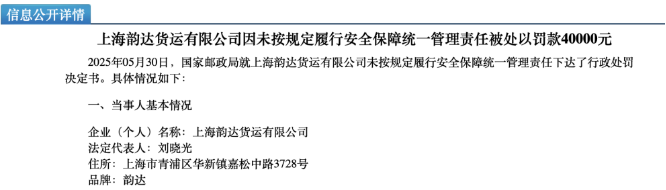
韵达股份:Q1净利跌超两成,加盟商管理顽疾难改,业务量增速掉队
Zheng Quan Zhi Xing· 2025-06-30 08:35
Core Viewpoint - Yunda Holdings (002120.SZ) faces significant challenges in franchise management, leading to regulatory penalties and a decline in market position, as it has been surpassed by competitors in revenue and business volume [1][4][7]. Franchise Management Issues - The National Postal Administration has penalized Yunda Holdings for allowing fraudulent promotional materials to enter its delivery channels, resulting in fines for 58 franchise stores and the parent company [2][5]. - The company has acknowledged its shortcomings in managing franchisees and has initiated internal investigations and corrective measures to enhance compliance and operational oversight [4][6]. Market Position and Competition - Yunda Holdings has lost its position as the second-largest express delivery company in China, falling behind YTO Express in 2023, and is now engaged in a fierce competition with Shentong Express for the third position [1][7]. - The gap in business volume between Yunda and Shentong has narrowed significantly, with only 39 million parcels separating them as of May 2024 [1][7]. Revenue and Business Volume Trends - In May 2025, Yunda reported a revenue of 4.415 billion yuan, a year-on-year increase of 6.75%, while its business volume reached 2.303 billion parcels, up 12.78% [8]. - Despite aggressive pricing strategies, Yunda's single parcel revenue has declined by 5.42%, indicating that price competition alone is insufficient for maintaining market share [8]. Profitability Challenges - In Q1 2025, Yunda's net profit fell by over 22%, marking the first decline in five quarters, attributed to competitive pressures and declining parcel prices [10]. - The company's cost control measures have not yielded the expected results, as revenue growth has not translated into profit growth, highlighting the need for improved operational efficiency and service quality [9][10].