奔驰

Search documents
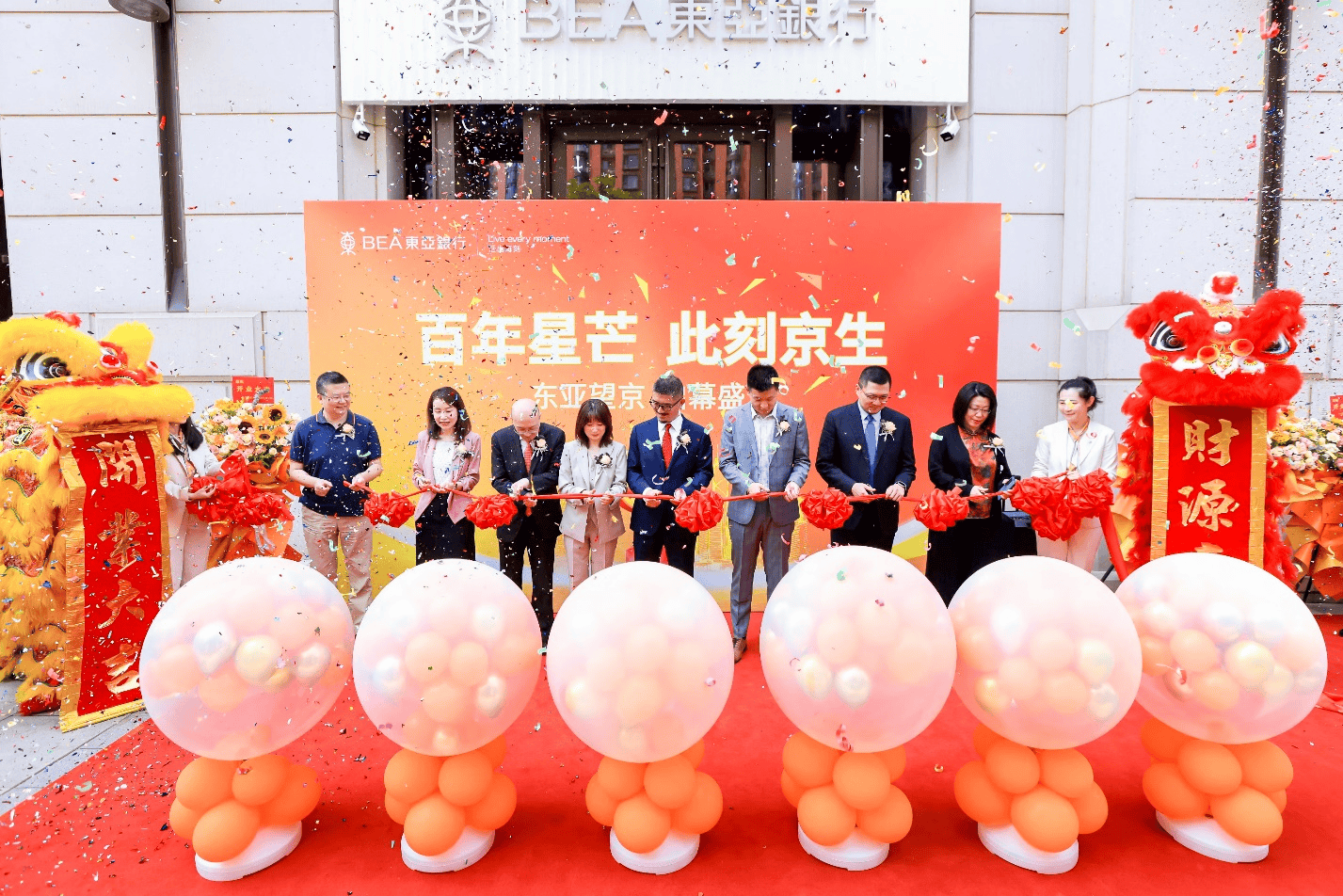
东亚中国首家新形象零售旗舰行焕新亮相 北京朝阳望京支行正式开幕
Sou Hu Wang· 2025-06-18 06:53
Core Insights - East Asia Bank (China) Limited has officially opened its flagship retail branch in Beijing's Chaoyang Wangjing area, showcasing a renewed brand image and commitment to providing exceptional wealth management solutions for clients at different life stages [1][2] Group 1: Branch Opening and Location - The Wangjing branch is strategically located in Beijing's second central business district, benefiting from tax incentives and talent attraction policies, and is surrounded by numerous multinational company headquarters and innovation centers [1] - The branch aims to enhance customer experience through an upgraded layout and optimized service processes, aligning with the trend of intelligent and specialized banking services [1][2] Group 2: Service Offerings and Team - The branch features modern financial service concepts, including private wealth management rooms and spaces for customized events, enhancing interaction between clients and financial advisors [2] - A youthful and professional financial advisory team, equipped with extensive cross-border financial knowledge, is positioned as a core competitive advantage, capable of delivering personalized and comprehensive financial solutions [2] Group 3: Future Commitment - The opening of the Wangjing branch marks a significant step in East Asia Bank's transformation journey, with a continued commitment to providing high-quality and comprehensive financial services under the brand promise of "Live Every Moment" [2]


弘则科技-小米新品玄戒O1芯片和yu7汽车怎么看
2025-06-18 00:54
Summary of Xiaomi's Conference Call Industry and Company Overview - The conference call discusses Xiaomi's advancements in technology and product offerings, particularly focusing on self-developed chips and their impact on the high-end smartphone and automotive markets [1][3][5]. Key Points and Arguments 1. **Self-Developed Chips**: Xiaomi has launched its self-developed chips to enhance core technology, improving competitiveness against brands like Apple, Samsung, and Huawei, especially in the high-end smartphone market [1][3]. 2. **Product Performance**: The Xiaomi 15S Pro, equipped with the new chip, has met performance expectations, indicating a successful initial attempt at optimizing hardware performance [5]. 3. **Automotive Expansion**: Xiaomi plans to release a new SUV in 2025, targeting users of high-end brands like Apple and BBA (Benz, BMW, Audi), focusing on aesthetics, performance, and technology [1][9]. 4. **Market Recovery**: Following significant events such as stock market declines and tariff issues, Xiaomi's stock has shown recovery due to better-than-expected financial results, indicating a return to fundamental trends [2]. 5. **Production Capacity**: The first phase of Xiaomi's automotive factory is fully operational, with an expected annual output of 28,000 to 29,000 vehicles. Future phases could increase total capacity to 900,000 to 1,000,000 vehicles [3][10]. 6. **High-End Market Strategy**: Xiaomi's strategy includes a focus on high-end products, with significant growth potential in overseas markets, while domestic competition remains intense [11]. 7. **Long-Term Investment in Technology**: Despite facing potential sanctions, Xiaomi's investment in chip technology is seen as a long-term strategy to overcome technological bottlenecks and enhance product competitiveness [7][8]. 8. **Future Product Launches**: The upcoming SUV is positioned similarly to the previously launched sedan, with a price range of 250,000 to 300,000 yuan, competing primarily with Tesla in the electric vehicle market [9]. Other Important Insights - **Technological Integration**: Xiaomi aims to integrate its self-developed chips across various devices, including wearables and vehicles, to create a seamless smart ecosystem [5][6]. - **Global Competitiveness**: By enhancing its core technology and product offerings, Xiaomi is positioning itself to compete more effectively on a global scale, particularly in the high-end segment [6][11]. - **Market Dynamics**: The automotive market in China is still evolving, presenting both challenges and opportunities for Xiaomi as it seeks to establish itself in this competitive landscape [11].
21辟谣|宝能汽车被清算解散?公司回应:经营正常
2 1 Shi Ji Jing Ji Bao Dao· 2025-06-17 11:07
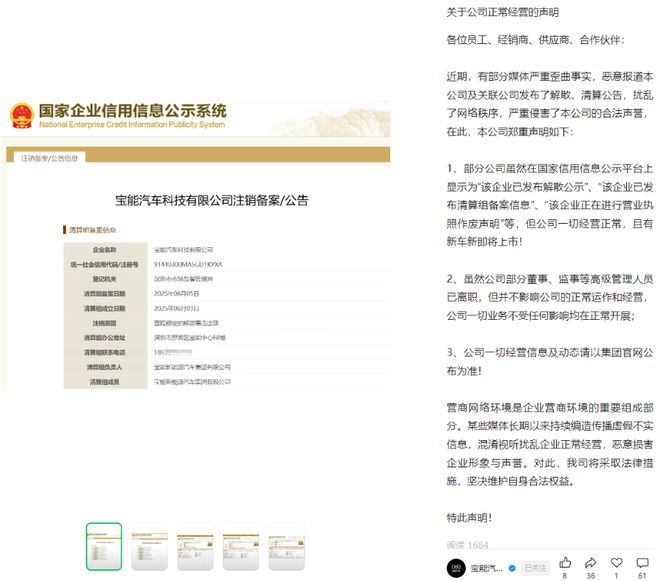
6月17日,《辟谣财知道》注意到,宝能汽车客户服务中心发布声明称,近期,有部分媒体歪曲事实, 恶意报道公司及关联公司发布了解散、清算公告,扰乱了网络秩序,侵害了公司的合法声誉。 宝能汽车表示,部分公司虽然在国家信用信息公示平台上显示为"该企业已发布解散公示"、"该企业已 发布清算组备案信息"、"该企业正在进行营业执照作废声明"等,但公司一切经营正常,且有新车即将 上市。 此外,该公司表示,虽然部分董事、监事等高级管理人员已离职,但并不影响公司的正常运作和经营, 公司一切业务不受任何影响,均在正常开展。 图片来源:宝能汽车客户服务中心 对于最新造车进展,宝能发布的月报显示,4月25日至26日,宝汽集团管理层组织项目、造型、研发、 制造、销售等40余人参观上海车展。重点参观了比亚迪、吉利、华为、大众、奔驰、宝马等整车企业, 以及博世、地平线、Momenta、鸿蒙等先进智能辅助驾驶零部件企业,重点关注了新设计、新造型、新 产品、新工艺,以及三电系统、智能驾驶、线控底盘等先进技术。 值得一提的是,尽管宝能汽车方面透露将有新车发布,但其官方微博在2023年就已停更,宝能招聘官网 上一次发布招聘信息还是在2024年8月, ...
今年5月汽车召回盘点 丨共召回221354辆 国产奥迪A6L召回100899辆
Cai Jing Wang· 2025-06-17 10:07
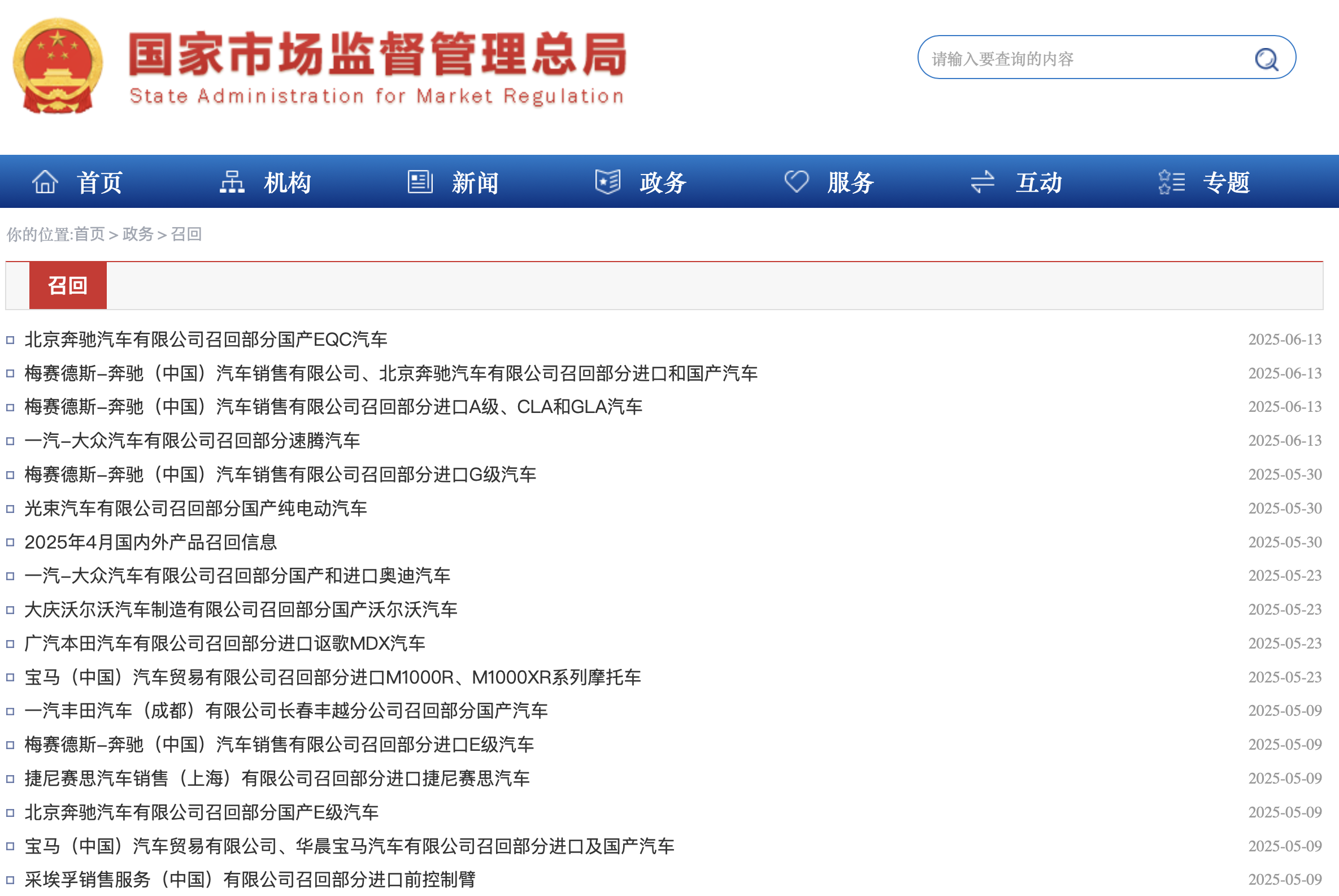
Core Insights - As of the end of May this year, China has implemented a total of 3,149 vehicle recalls, affecting 120 million vehicles [1] - In May alone, there were 12 recalls, totaling 221,354 vehicles, with German brands accounting for the majority of recalls [1][5] Recall Statistics - The most recalls in May were from German brands, with 7 recalls totaling 194,500 vehicles [5] - Specific brands involved include Mercedes-Benz, BMW, and Audi, with notable models such as the E-Class and X5 [5][10] - Japanese brands, including Toyota and Honda, had 2 recalls totaling 14,208 vehicles [7] Reasons for Recalls - Electrical system issues were the most common reason for recalls, accounting for 76.5% of the total recalls in May, with 169,294 vehicles affected [8] - Engine-related issues accounted for 12.1% of recalls, affecting 26,846 vehicles, while body and interior issues made up 5.6% with 12,465 vehicles [8][10] Industry Implications - Recalls are mandated by national regulations for vehicles with quality defects, and companies are responsible for free replacements [4] - While recalls can mitigate immediate losses, they may negatively impact brand reputation and consumer trust [4] - The increasing complexity of automotive electronics and software is leading to a higher incidence of recalls related to electrical systems [8]
20万的BBA,不能再降了
商业洞察· 2025-06-17 09:28
Core Viewpoint - The article discusses the significant price reductions of the "34C" models (BMW 3 Series, Audi A4L, and Mercedes-Benz C-Class) amidst a price war in the automotive industry, highlighting the challenges and implications for luxury brands in maintaining their market position and brand value [2][14]. Group 1: Price Reduction Details - The current lowest prices for the "34C" models have dropped below 200,000 yuan, with specific examples showing the Mercedes-Benz C200L priced at 167,400 yuan in Beijing, a significant reduction from its original price of 334,800 yuan [5][12]. - Audi A4L's entry-level model has also seen prices fall below 200,000 yuan, with some regions reporting prices as low as 180,000 yuan, although higher-end models remain above 230,000 yuan [7][12]. - BMW's 325Li has reportedly dropped below 200,000 yuan, but actual sales remain low as consumers prefer higher-powered models like the 330Li [8][12]. Group 2: Market Dynamics and Consumer Behavior - The price cuts have led to a decline in sales for the "34C" models, with projected sales for 2025 showing significant drops for the Mercedes-Benz C-Class and Audi A4L, with year-on-year declines of 16% and 27% respectively [15]. - Consumers are increasingly looking for higher-spec models or alternative brands, as the luxury appeal of the "34C" diminishes with lower pricing [14][15]. - The article notes that while the price reductions may attract buyers, they also risk diluting the brand's luxury image and could lead to a loss of market share to more innovative competitors [14][20]. Group 3: Strategic Responses from BBA - In response to the price war, BBA (BMW, Benz, Audi) is shifting focus away from low-end models, with plans to discontinue entry-level vehicles like the BMW 1 Series and Mercedes-Benz A-Class [20][21]. - BBA is also investing in new models and technology, with Audi planning to launch several new vehicles in the coming years, including the A5L and electric models under the AUDI brand [21][23]. - The companies are collaborating with tech firms to enhance their digital offerings and improve customer experience, indicating a strategic pivot towards innovation and technology integration [22][23].

【深度分析】2025年5月份全国乘用车市场深度分析报告
乘联分会· 2025-06-17 08:43
Overall Market - The narrow passenger car production and sales situation for May 2025 shows a total production of 2,279,242 units and wholesale of 2,316,347 units, with retail sales reaching 1,938,079 units [6][10] - The year-on-year growth for narrow passenger cars is 13.1% in production and 13.1% in wholesale, while retail sales have increased by 13.7% [10][12] Vehicle Category Segmentation - The market share changes among different vehicle categories indicate that sedans, MPVs, and SUVs have varying growth rates, with SUVs showing a year-on-year growth of 17.8% in wholesale [15][18] - The total market share for sedans is 50.1%, while MPVs account for 4.6% and SUVs for 45.0% [15][18] Country Segmentation - The market share changes by country show that domestic brands have a significant presence, with a total retail sales of 1,938,079 units, reflecting a year-on-year growth of 13.7% [23][24] - The German brands have seen a decline in retail sales, with a year-on-year decrease of 4.5% [23] Brand Positioning Segmentation - The market share for different brand categories shows that mainstream joint ventures hold a significant portion, while luxury brands like BMW and Audi are also notable players [28][31] - The total retail sales for luxury brands have decreased by 18.1% year-on-year, indicating a challenging market environment for high-end vehicles [28][31] Price Positioning Segmentation - The market share for vehicles priced above 300,000 yuan is 12.0%, while those below 300,000 yuan dominate with 88.0% [36][37] - The year-on-year growth for vehicles priced below 300,000 yuan is 11.5%, indicating strong demand in the lower price segment [36][37]
金融价取消致购车价格上涨?有4S店称“北京社保用户不受影响”
第一财经· 2025-06-17 02:00
Core Viewpoint - Recent regulatory actions to halt high-interest and high-rebate automotive financing are expected to tighten terminal price discounts for automotive brands, leading to potential price increases for various models [1][2]. Group 1: Regulatory Changes - Regulatory bodies in regions such as Beijing, Sichuan, and Henan have mandated banks to reduce car loan rebate ratios to below 4%, with annual interest rates decreasing from 6.5% to 3.2% [3]. - The adjustments in policies are rapidly affecting the terminal market, with significant price increases observed for models like the BMW i3 and reductions in discounts for mainstream models such as the Mercedes-Benz C-Class and Audi A4L [4]. Group 2: Market Dynamics - The luxury car market has seen substantial price fluctuations due to intense competition, with dealerships relying on after-sales and automotive finance for profitability rather than new car sales [2]. - The "high-interest high-rebate" model, where banks provide significant loan rebates to dealers, has led to a distorted pricing system and hidden financial risks in the market [2][4]. Group 3: Consumer Impact - Current market conditions still offer considerable discounts, with models like the BMW 3 Series and Audi A4L having discounts up to 13.2 million and 14.8 million respectively, despite the tightening of financing options [4]. - While high rebates have temporarily benefited consumers, the long-term sustainability of such practices is questioned, as they may degrade the service capabilities of financial institutions and ultimately affect car sales [4]. Group 4: Industry Trends - The automotive industry is experiencing a shift away from chaotic price wars, with various industry bodies advocating for a reduction in "involution" and a move towards sustainable and high-quality development [5].
专家访谈汇总:蚂蚁入局稳定币
阿尔法工场研究院· 2025-06-16 13:05
Group 1: Stablecoin Legislation and Market Impact - Hong Kong's Stablecoin Regulation officially legislated, effective August 2025, marking the first clear regulatory framework for stablecoins, providing institutional support for the digital financial ecosystem [1] - The initial market reaction indicates a concentration of funds on compliant technology service providers, reflecting a "regulatory-driven, technology realization" phenomenon [1] - Investors should focus on companies in Hong Kong with compliance application capabilities, technical reserves, and regulatory experience, as these firms will likely enter the regulatory "whitelist" and gain long-term advantages [1] - The essence of stablecoins lies not in their value but in their ability to reconstruct the "USD liquidity path," bypassing SWIFT and traditional banking systems, transforming USD into on-chain circulating assets [1] - Companies like Hengsheng Electronics, Tianyang Technology, and Sifang Chuangxin, while not issuers, are expected to become the "foundation" of the on-chain financial system, providing core functions such as payment channels, identity verification, and custody auditing, leading to valuation leaps [1] Group 2: Ant Group's Strategy in Stablecoin Ecosystem - Ant Group's international and digital technology arms are targeting stablecoin license applications from both cross-border fund operations and underlying technology infrastructure perspectives, showcasing a dual approach in the global stablecoin ecosystem [2] - Ant International processes over $1 trillion annually in cross-border transactions, with $300 billion already operating through blockchain technology; successful conversion to stablecoin clearing paths could support explosive growth in practical scenarios [2] - Ant Digital Technology is focusing on building the necessary underlying service capabilities for future stablecoin circulation through technology sandboxes and RWA (Real World Asset tokenization) [2] - The Hong Kong Stablecoin Regulation sets high regulatory standards, including a minimum capital requirement of HKD 25 million and 100% reserve custody, which Ant has already navigated through regulatory sandbox tests [2] - Ant's established payment network and international cooperation position it favorably to embed stablecoins into core scenarios such as cross-border e-commerce, overseas remittances, and international fund pool management [3] Group 3: Industrial Metals Trading Opportunities - In April 2025, Trump's proposed reciprocal tariff policy triggered a panic sell-off in industrial metals; however, a subsequent 90-day implementation delay released "negotiation signals," leading to a rebound in the non-ferrous sector, which has returned to pre-tariff levels [3] - Despite recent signs of a temporary easing in US-China trade relations, the 24% reciprocal tariff remains in place, and with strong inflation/employment data from Europe and the US, the difficulty of mid-term favorable outcomes increases [3] Group 4: Automotive Industry and Recall Issues - On June 13, 2025, Mercedes-Benz announced three recall notices in one day, involving 16,100 vehicles across multiple models, including EQC, A-Class, CLA, GLA, C-Class, GLC SUV, S-Class, and EQE [4] - In a competitive landscape for smart electric vehicles, user reputation and product safety are critical for repeat purchases, and frequent recalls significantly diminish brand premium [4] - BMS system errors may expose integration and testing inadequacies between Mercedes-Benz and partners like CATL, highlighting the need for investors to focus on suppliers with advantages in system stability and safety design [5] Group 5: Internet Television Subscription Regulations - In mid-June 2025, China's National Radio and Television Administration initiated a special governance on automatic renewal of internet television subscriptions, addressing consumer pain points such as "deduction without reminder" and "complex cancellation" [6] - The previous model of "default renewal + hidden cancellation" was a primary monetization method for internet TV platforms, with some OTT platforms relying on "renewal forgetfulness" to maintain user retention [6] - New regulations require user "active consent + advance reminder," likely leading to a significant decline in renewal rates, particularly affecting marginal paying users and inactive user groups [6] - Smaller OTT integrators and content providers may exit due to cost pressures, while platforms with compliance capabilities and mature user operation systems (e.g., Mango TV, CCTV Video, Aurora TV) are better positioned to adapt [6]
中国稀土影响零件本地化,印度被迫放宽条件
Guan Cha Zhe Wang· 2025-06-16 09:02
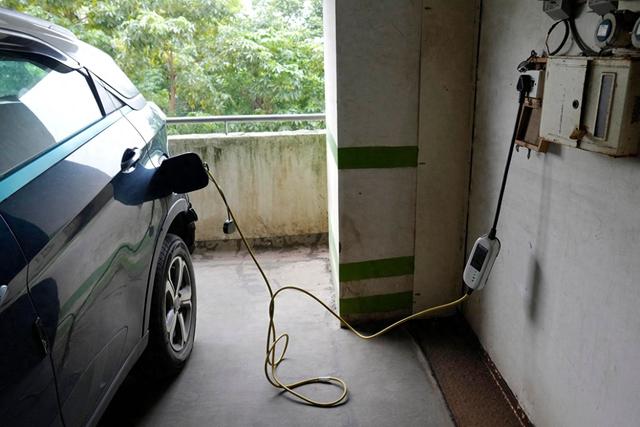
此前于6月2日,印度发布了"旗舰电动汽车政策",对在印电动汽车企业提供进口关税降至15%的优惠政 策,每年最多可依此销售8000辆汽车。不过,该政策要求企业需在印度投资至少4.15亿卢比(约合人民 币3465万元)建设本地工厂,并在规定时间内达到相应的本地化生产比例,其中三年内要实现25%的本 地化生产,五年内提升至50%。 在居民楼中充电的印度电动汽车 视觉中国 此外,获得批准的车企第四年的最低收入不得低于500亿卢比(约合人民币42亿元),第五年不得低于 750亿卢比(约合人民币62.6亿元)。未达标者将面临最高3%的罚款,罚款金额基于收入缺口。 【文/观察者网 潘昱辰 编辑/高莘】据彭博社报道,据知情人士透露,由于中国对稀土出口的管制,印 度对电动汽车制造商和供应商50%的本地化率目标正遭受更大质疑,印度政府计划放宽这一要求,以使 得汽车制造商更容易获取激励,来吸引更多投资。 而随着中国对稀土出口的管制,印度汽车制造业同样受到掣肘,其实现50%本地化率的目标更是遥遥无 期,因而印度政府正计划放宽这一目标,以吸引更多投资。 另据彭博社引述知情人士的话透露,印度外交秘书唐勇胜6月12日在新德里与中国副外长孙 ...

高溢价跨界并购!果链巨头加码汽车智能装备
2 1 Shi Ji Jing Ji Bao Dao· 2025-06-16 05:12
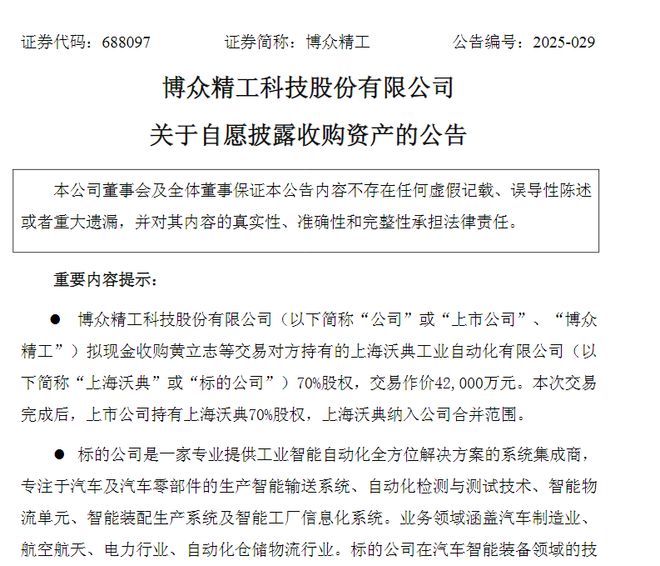
Group 1 - The core point of the article is that Bozhong Precision (688097.SH) announced a cash acquisition of 70% equity in Shanghai Wodian Industrial Automation Co., Ltd. for 420 million yuan, marking its strategic entry into the automotive intelligent equipment sector [1][3] - Shanghai Wodian specializes in providing comprehensive industrial automation solutions, focusing on intelligent conveyor systems, automated testing technologies, and smart logistics units for the automotive industry [3] - The acquisition is expected to create synergies with Bozhong's existing business, which primarily focuses on consumer electronics, semiconductors, and digital equipment [4] Group 2 - Shanghai Wodian has shown strong financial performance, with projected net profits of 31.73 million yuan and 38.57 million yuan for 2023 and 2024, respectively, and a net profit of 12.64 million yuan for the first quarter of 2025 [3] - The valuation of Shanghai Wodian's total equity was assessed at 600 million yuan, representing a 352% increase compared to its net assets of 133 million yuan at the end of 2024 [3] - The acquisition will result in approximately 360 to 362 million yuan of goodwill, which may pose a risk of impairment if Shanghai Wodian's performance does not meet expectations [3] Group 3 - Bozhong Precision is currently facing performance pressures, with a projected 2.66% decline in net profit for 2024 and a revenue drop of 0.8% in the first quarter of 2025, resulting in a net loss exceeding 30 million yuan [5] - The company has a cash reserve of approximately 1.202 billion yuan against short-term liabilities of about 1.23 billion yuan, indicating potential liquidity challenges [5] - The acquisition includes performance commitments, requiring Shanghai Wodian to achieve a cumulative net profit of no less than 185 million yuan from 2025 to 2027, averaging over 60 million yuan annually [5]