
阿特斯

Search documents
阳光电源20250710
2025-07-11 01:05
Summary of the Conference Call for 阳光电源 Company Overview - **Company**: 阳光电源 (Sungrow Power Supply Co., Ltd.) - **Industry**: Energy Storage and Renewable Energy Key Points and Arguments Valuation and Market Sentiment - 阳光电源's valuation is at a historical low of approximately 10 times PE, primarily due to market concerns regarding U.S. energy storage policies, tariffs, and the global energy storage system integration landscape, although the actual impact is manageable [2][4][18] - The company has effectively negotiated with clients to share costs related to U.S. tariffs, achieving its target of 8GWh shipments to the U.S. market, thus rendering the market risk negligible [5][6] U.S. Policy Impact - The Inflation Reduction Act (IRA) has a relatively mild impact on Chinese companies, with subsidies gradually tapering off, allowing Chinese firms to still sell products in the U.S. market [7] - The U.S. tariff changes have led to a temporary halt in shipments, but subsequent negotiations have resulted in a manageable tariff rate of around 40% [5][6] Domestic Policy Changes - The introduction of Document 136 in China has raised quality requirements for energy storage, which is expected to improve the domestic competitive landscape, benefiting 阳光电源 [2][8] - The anti-involution policy is anticipated to enhance market dynamics, moving from policy-driven to market-driven growth, which could normalize profit levels for companies [17] Industry Dynamics - The energy storage system integration sector faces high failure rates, with over 60% of faults occurring during the integration phase, highlighting the need for strong capabilities in system design and delivery [10] - Companies like 阳光电源 that possess AC delivery capabilities can command higher profit margins compared to those only selling DC components [14] Future Profitability and Growth - 阳光电源 is projected to achieve profits of 14.4 billion, 17.2 billion, and 20.7 billion yuan from 2025 to 2027, with year-on-year growth rates of 30%, 20%, and 20% respectively [18] - The company is expected to see significant growth in its second-quarter performance, driven by a strong first-quarter shipment volume of 12 GWh and revenue of approximately 10 billion yuan [16] Competitive Advantages - 阳光电源's strong performance in battery cell compatibility ensures industry pricing power and delivery efficiency, leading to long-term cost advantages [15] - The company is also focusing on developing customized products in collaboration with suppliers to enhance its competitive edge [14] Market Position - 阳光电源 stands out in the energy storage sector, showing resilience in both absolute value and growth rate, with a strong presence in multiple ETFs and positive market sentiment [3] Additional Important Insights - The definition of "commenced projects" is relatively lenient, allowing companies to secure new orders and lock in ITC subsidies without being affected by foreign entity policies [9] - The increasing importance of grid-forming energy storage solutions emphasizes the need for companies with strong PCS (Power Conversion System) capabilities, positioning 阳光电源 favorably in the market [13]

山西证券研究早观点-20250711
Shanxi Securities· 2025-07-11 00:34
Core Insights - The report highlights the implementation of the Stablecoin Regulation in Hong Kong, which aims to create a robust regulatory framework for stablecoins and digital assets, enhancing financial stability [6][7] - The report discusses the advancements in the AI computing sector, particularly the deployment of CoreWeave's GB300 systems, which are expected to significantly enhance AI processing capabilities [9][10] - The report emphasizes the progress in the biopharmaceutical sector, particularly the promising results from clinical trials of PD-1/VEGF dual antibodies for various cancers, indicating a strong potential for market growth [12][14] - The report notes the financial turnaround of Aisuke Co., which achieved profitability in Q2 2025, driven by strong sales of its ABC components and improved operational efficiency [16][17] - The report tracks the pricing trends in the photovoltaic industry, indicating structural price declines in battery cells and modules, while highlighting the competitive advantages of Aisuke's ABC technology [19][20][21] Industry Commentary - The banking sector is undergoing regulatory changes with the introduction of stablecoin regulations in Hong Kong, which is expected to foster a healthier digital asset ecosystem [6] - The communication industry is witnessing significant developments with CoreWeave's deployment of AI computing systems, which is anticipated to drive capital expenditure and investment opportunities [9][10] - The biopharmaceutical industry is experiencing advancements in cancer treatment, particularly with the PD-1/VEGF dual antibodies showing promising clinical trial results [12][14] - The renewable energy sector, particularly solar energy, is facing pricing pressures, but companies like Aisuke are leveraging innovative technologies to maintain competitive advantages [19][20][21] Company Analysis - Aisuke Co. has reported a significant turnaround in its financial performance, achieving profitability in Q2 2025, attributed to strong demand for its ABC components and improved operational efficiencies [16][17] - The report indicates that Aisuke's ABC technology is recognized as a leading solution in the photovoltaic industry, with continuous improvements in efficiency and market share [20][21] - The report suggests that Aisuke's strategic focus on high-value markets and operational efficiency will position it favorably for future growth in a competitive landscape [16][17]
新能源出海波折不断,光伏、储能或迎来命运“分水岭”
Tai Mei Ti A P P· 2025-07-10 10:06
Core Viewpoint - The solar and energy storage industries are seen as pioneers for Chinese companies going global, with energy storage evolving at a faster pace than solar [2] Subsidies and Capacity - The "Big and Beautiful" Act, signed by Trump, significantly alters the landscape for renewable energy subsidies in the U.S., marking a major setback for the industry [4] - The Inflation Reduction Act (IRA) previously allowed for a 30% cost subsidy for residential solar projects until 2035, but the new act limits subsidies to projects completed by December 31 of this year, with all subsidies ending by 2026 [4][5] - Chinese solar companies, such as LONGi Green Energy and JinkoSolar, have invested over $2 billion in U.S. solar factories, but the new policies threaten their profitability and market demand [5][6] - The act includes restrictions on "foreign entities," specifically targeting Chinese companies, which could jeopardize existing subsidies for solar projects [6] - In contrast, energy storage projects face less severe impacts from the new legislation, with tax credits remaining intact until 2036 [7] Tariffs and Prices - The reintroduction of "reciprocal tariffs" by the Trump administration is expected to create uncertainty for Chinese solar exports, which have already been affected by previous tariffs [8][9] - Chinese solar manufacturers are increasingly looking for new overseas production bases, such as Indonesia, to circumvent U.S. tariffs [10] - The energy storage sector appears to be less affected by tariffs, with the U.S. still relying on external supply chains, primarily from China [10][11] Market Outlook - Despite the challenges, the energy storage market is expected to maintain stability and growth, with ongoing policy support and technological advancements [11] - The rapid changes in the geopolitical landscape pose risks for energy storage companies as they expand internationally, necessitating lessons learned from the solar industry's experiences [11]

各行业如何“反内卷”?
一瑜中的· 2025-07-07 15:00
Core Viewpoint - Recent market focus on supply-side reform highlights the need to address "involution" in key industries such as photovoltaics, lithium batteries, new energy vehicles, and e-commerce platforms, with various sectors facing fundamental pressures [2][10] Industry Analysis 1. Policy Direction - "Involution" competition includes low-price competition, homogenization, and excessive marketing from enterprises, as well as unfair local government policies and market barriers [4] - Key industries targeted for "anti-involution" measures include photovoltaics, lithium batteries, new energy vehicles, and e-commerce platforms [4][10] - Measures to combat "involution" involve coordinated efforts on both supply and demand sides, government behavior regulation, and industry self-discipline [4] 2. Current Industry Status - **Photovoltaics**: Prices are weak, with a June index showing a year-on-year decline of 11.8%. However, production remains strong, with a 18.3% increase in solar cell output from January to May [5][13] - **Automobiles**: Increased low-price competition is evident, with sales discount rates rising to 25.2% in June. This trend may lead to intensified price wars among manufacturers [5][18] - **Steel**: Production decreased by 1.7% year-on-year from January to May, while prices remain weak, with a 13.4% decline in steel prices from January to June [5][23] - **Cement**: Production fell by 4% year-on-year, and prices have weakened, with a June index showing a 2.4% decline [5][26] - **Pork**: Production is strong but prices are weak, with net profits per pig dropping significantly, indicating the industry is nearing losses [5][29] 3. Anti-Involution Measures - **Photovoltaics**: Industry self-discipline is emphasized, with major manufacturers collectively reducing production by 30% and signing self-regulatory agreements [8][14] - **Automobiles**: Self-regulation is key, with companies like BYD halting aggressive pricing strategies and standardizing supplier payment terms [8][18] - **Steel**: A combination of self-discipline and administrative guidance is being implemented, with industry associations urging companies to manage production and cash flow effectively [8][24] - **Cement**: Measures include industry self-discipline and media supervision to ensure compliance with production standards and to recognize compliant companies [8][27] - **Pork**: Administrative guidance is being utilized, with reports of government requests for major producers to control breeding and market supply [8][30]



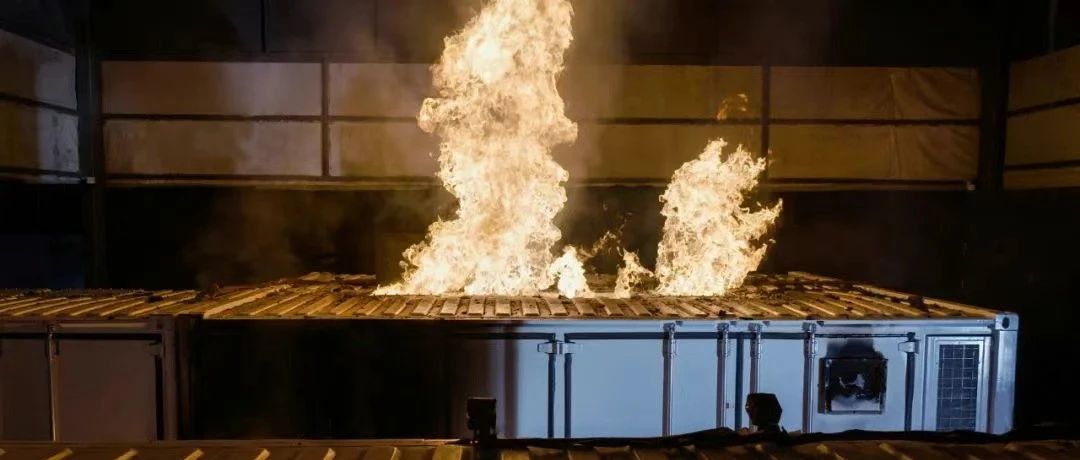
13企“烧舱”!这把“大火”会烧到工商储吗?
行家说储能· 2025-07-07 11:12
Core Viewpoint - The article discusses the increasing importance of large-scale fire testing for energy storage systems, which is becoming a mandatory requirement under the upcoming 2026 NFPA 855 standard, shifting from an optional practice to a necessary entry threshold for the industry [1][13]. Group 1: Participation in Fire Testing - A total of 13 energy storage companies, including major players like Envision, Fluence, and BYD, have engaged in large-scale fire testing (LSTF) [1][2]. - The majority of these companies are energy storage system integrators, with a notable presence in the overseas market [2][3]. - The testing has expanded from primarily top-tier companies to include second and third-tier brands, indicating a broader industry engagement [3]. Group 2: Testing Equipment and Standards - Most of the tested equipment consists of containerized energy storage systems, with SigenStack from Sige New Energy being the only exception focusing on commercial energy storage [4]. - The testing is primarily based on standards such as CSA C-800, CSA TS-800, and UL 9540A, with the latter being updated to separate large-scale fire testing as a core guideline [12][13]. Group 3: Testing Conditions and Results - The testing conditions are rigorous, often involving multiple battery units placed in close proximity, with systems charged to 100% state of charge (SOC) and fire suppression systems disabled [9][10]. - Companies have reported varying results, with some achieving significant control over thermal runaway and fire spread, such as Envision maintaining low temperatures in adjacent units during testing [10][16]. - The costs associated with these tests are substantial, with some companies like Sungrow estimating expenses around 30 million yuan for a single test [6]. Group 4: Future Implications - As the NFPA 855 standard is implemented, large-scale fire testing will become a critical requirement for energy storage companies, serving as a testament to their technical capabilities and financial strength [13][14]. - The current lack of similar standards in domestic markets raises questions about whether large-scale fire testing will become a technical barrier in the industry [14].
各行业如何“反内卷”?
Huachuang Securities· 2025-07-07 10:45
宏观研究 证 券 研 究 报 告 【宏观快评】 各行业如何"反内卷"? ❖ 核心观点 近期市场对供给侧改革的关注升温,参照综合求是、人民日报、工信部等官方 表态,反内卷的重点行业或包括光伏、锂电、新能源汽车、电商平台等。结合 数据可得性与行业进展,我们重点关注 5 个产业,近期其基本面均面临一定压 力,例如光伏价格偏弱但生产端持续偏强、汽车销售折扣率再度提升、钢铁水 泥价格仍然偏弱、生猪行业临近亏损等。从其反内卷措施来看,以行业自律、 行政指导、舆论监督为主,按照约束力排序,或是钢铁>生猪>汽车>水泥>光 伏,关注后续落地进展。 ❖ 一、政策如何定调? 什么是"内卷式"竞争?参考求是中的界定,既包括企业端的低价竞争、同质 化竞争、与过度宣传营销,也包括政府端的"制造…不公平非普惠的优惠政策"、 "不顾地方产业基础和资源禀赋情况,盲目上马新兴产业、重点产业"、"保护 本地市场、扶持本地企业,设置或明或暗的市场壁垒"。 主要涉及哪些行业?综合求是、人民日报、工信部等官方表态,反内卷的重点 行业或包括光伏、锂电、新能源汽车、电商平台等。 如何"反内卷"?参照求是《深刻认识和综合整治"内卷式"竞争》的阐述, 反内卷需 ...
“BMS第一股”高特电子创业板闯关:5年估值翻十倍
鑫椤储能· 2025-07-07 08:24
Core Viewpoint - The article highlights the rapid growth of the global energy storage market in 2024, with new installations reaching 188.5 GWh, a year-on-year increase of 80%. However, it also points out the intense competition within the market, particularly for companies like Gaote Electronics, which is preparing for its IPO after significant growth in valuation and strategic partnerships with major state-owned enterprises [2]. Group 1: Company Development - Gaote Electronics has evolved significantly since its inception in 1998, initially focusing on high-precision online monitoring of lead-acid batteries, which faced challenges due to market preferences for cheaper alternatives [5][6]. - The company shifted its focus to the battery management system (BMS) for lithium batteries around 2010, but faced stiff competition from major battery manufacturers who developed their own BMS products [10][15]. - In response to the challenges in the BMS market, Gaote pivoted towards the energy storage sector around 2020, leveraging its extensive experience in battery monitoring to develop innovative solutions [19][22]. Group 2: Market Trends and Opportunities - The energy storage market has seen explosive growth due to the increasing installation of wind and solar power, driven by national carbon neutrality goals, with annual installations rising from 48.1 GW in 2015 to 357.8 GW in 2024, reflecting a compound annual growth rate of 24.98% [18]. - Gaote's strategic shift to energy storage BMS has proven successful, with revenue growing from 346 million to 919 million from 2022 to 2024, representing a compound annual growth rate of 63.3% [28]. - The company has maintained a market share of over 30% in the third-party energy storage BMS market for three consecutive years, positioning itself as a leader in the industry [29]. Group 3: Technological Innovations - Gaote has developed advanced technologies such as a 1500V chip-level bidirectional active balancing BMS module, which reportedly increases energy storage station returns by over 20% [22]. - The company's second-generation BMS core chip GT2818 is notable for its ability to synchronize the collection of voltage, temperature, and safety valve parameters, significantly reducing the risk of thermal runaway [22]. - The combination of chip technology and active balancing has become a core competitive advantage for Gaote in a market characterized by increasing homogenization [26]. Group 4: Future Outlook - The article suggests that the future of energy storage BMS will shift from hardware performance to a focus on data precision and algorithm efficiency, prompting Gaote to expand into software services [32]. - Gaote's ability to adapt to industry changes and its strategic partnerships with leading battery manufacturers and system integrators position it well for continued success in the evolving energy storage landscape [34].

阿特斯光伏储能双轮驱动平抑周期 利润优先不追求出货量逆势赚22亿
Chang Jiang Shang Bao· 2025-07-06 22:32
Core Viewpoint - The photovoltaic equipment industry, particularly in silicon materials and components, is experiencing widespread losses, but the company, Arctech (688472.SH), stands out as an exception with strong profitability despite industry challenges [1][3]. Financial Performance - In 2024, Arctech achieved operating revenue of 46.165 billion yuan, a year-on-year decrease of approximately 10%, and a net profit attributable to shareholders of about 2.2 billion yuan, down 22% year-on-year [1][5]. - The company's gross profit margin for the component business was 12.75% in 2024, maintaining profitability despite a decline from 16% in 2023 [2][7]. - Among 68 photovoltaic equipment companies in A-shares, Arctech was the only company with a net profit exceeding 1 billion yuan, with a net profit of 2.247 billion yuan in 2024 [3][5]. Business Strategy - Arctech employs a dual-driven strategy focusing on both photovoltaic and energy storage sectors, which has helped mitigate the impact of industry cyclicality [1][5]. - The company has adjusted its component shipment strategy, prioritizing profit over shipment volume, and has actively reduced output to maintain financial health [7][8]. - In 2024, the revenue from the component and energy storage businesses was 31.483 billion yuan and 9.738 billion yuan, respectively, with their proportions shifting from 82.49% and 3.64% in 2023 to 68.20% and 21.09% in 2024 [5][6]. Market Position - Arctech's energy storage business has rapidly grown, with shipments reaching 6.5 GWh in 2024, a year-on-year increase of 505.28%, and is expected to continue expanding in 2025 [8]. - The company has established a strong presence in overseas energy storage markets, leveraging its early mover advantage in North America, Europe, and Australia [8]. Future Outlook - Arctech plans to be cautious with domestic capacity expansion, focusing on energy storage and high-profit overseas markets [11].

规格提级后光伏反内卷成效终可期,继续看好风电、固态、特高压
SINOLINK SECURITIES· 2025-07-06 08:36
Investment Rating - The report maintains a positive outlook on the photovoltaic and wind energy sectors, emphasizing the importance of supply chain integration and government policies [1][5][24]. Core Insights - The photovoltaic industry is undergoing a "de-involution" movement, with significant government intervention expected to address low-price competition and excess capacity [5][24]. - The wind energy sector is projected to maintain a robust installation capacity of over 100GW in 2026, despite a slowdown in bidding activity [1][12][24]. - The report highlights the importance of government policies, such as the U.S. "Big Beautiful Act," which alleviates uncertainties for solar and storage exports to the U.S. [1][3][5]. Summary by Sections Photovoltaic & Energy Storage - The "de-involution" initiative in the photovoltaic sector has reached a high level, with government meetings signaling strong administrative intervention to address pricing issues and capacity clearing [5][24]. - Supply chain integration is crucial, particularly in the silicon material segment, which is central to the current capacity surplus [5][24]. - The report anticipates a recovery in silicon prices, contingent on the downstream price transmission capabilities and collective self-discipline within the industry [5][24]. Wind Energy - The domestic price of onshore wind turbines has shown a recovery trend in Q2, with expectations for continued strong installation capacity in 2026 [1][12][24]. - The report notes that even with a slowdown in bidding, historical data suggests that installation figures will remain stable due to previously approved projects [12][24]. - The central government has reiterated its commitment to promoting orderly development in offshore wind energy [1][12][24]. Electric Grid - Recent approvals for high-voltage direct current projects indicate significant investment potential, with expected project investments exceeding 500 billion and 170 billion yuan for specific projects [2][14][15]. - The report highlights the anticipated increase in equipment bidding for high-voltage projects, projecting a breakthrough of 500 billion yuan in 2025 [15][17]. Lithium Battery - The report emphasizes the long-term potential of lithium metal anodes, which can achieve higher energy densities compared to traditional materials [2][18][24]. - It suggests a focus on leading companies in various processing routes for lithium metal anodes, as well as solid-state battery technologies [18][24]. Hydrogen and Fuel Cells - The extension of tax credits for hydrogen projects in the U.S. provides a critical window for industry development [3][23]. - The European Union's new framework for clean industrial support is expected to accelerate the deployment of green hydrogen projects [3][23]. Investment Recommendations - The report recommends specific companies across various sectors, including photovoltaic glass manufacturers, battery cell producers, and offshore wind cable suppliers, highlighting their potential for recovery and growth [24].
山西证券研究早观点-20250703
Shanxi Securities· 2025-07-03 01:05
Key Insights - The report highlights an active new stock market in June 2025, with a total of 6 new stocks listed, and 33 stocks recorded positive growth over the past six months, representing 71.74% of the new listings [6][7] - In the coal industry, there is a significant decline in coal imports, with May 2025 showing a year-on-year decrease of 17.75% and a month-on-month decrease of 4.73%, indicating a trend of accelerated contraction [8][11] - The report discusses the innovative drug IBI363, which has shown promising clinical benefits in treating immune-resistant non-small cell lung cancer (NSCLC), colorectal cancer, and melanoma, with significant survival gains reported [10][12][15] Market Trends - The domestic market indices showed slight declines, with the Shanghai Composite Index closing at 3,454.79, down 0.09%, and the Shenzhen Component Index at 10,412.63, down 0.61% [4] - The coal import data indicates a continuous negative growth trend, with all coal types experiencing varying degrees of decline, except for a slight increase in thermal coal imports from Australia [8][11] Industry Commentary - The report provides insights into the coal industry's expansion behavior, particularly focusing on the "mining king" phenomenon, which reflects the market's attention on coal mining rights and their impact on asset pricing [14][16][17] - The report emphasizes the importance of resource pricing in guiding the valuation of coal companies, suggesting that companies with strong performance support and undervalued stocks should be closely monitored [18] Investment Recommendations - The report suggests focusing on coal companies that are significantly undervalued, particularly those with minimal non-coal business exposure, such as Panjiang Coal and Yancoal [18] - For the innovative drug IBI363, the report indicates a strong potential for market success due to its clinical efficacy in previously hard-to-treat cancers, which may attract investor interest [10][12][15]