牧原股份

Search documents
西部证券晨会纪要-20251119
Western Securities· 2025-11-19 02:29
Group 1: Automotive Industry - Junsheng Electronics - The report highlights that Junsheng Electronics (600699.SH) is positioned to benefit from the growing demand for automotive safety and electronics as the industry moves towards greater intelligence [9][10] - Projected total revenue for Junsheng Electronics from 2025 to 2027 is expected to reach 635.8 billion, 700.2 billion, and 771.6 billion CNY, with year-on-year growth rates of 14%, 10%, and 10% respectively [9] - The company is expected to achieve net profits of 15.2 billion, 19.2 billion, and 24.7 billion CNY during the same period, with growth rates of 59%, 26%, and 29% [9] Group 2: Agricultural Industry - October Rice Field - October Rice Field (09676.HK) operates in a large and continuously growing kitchen staple industry, focusing on brand differentiation and high-value product development [11][12] - The company is expected to see revenue growth from 69.94 billion to 99.39 billion CNY from 2025 to 2027, with year-on-year growth rates of 22%, 21%, and 18% [12] - The projected net profit for the same period is expected to increase significantly from 6.03 billion to 8.61 billion CNY, with growth rates of 195%, 19%, and 20% [12] Group 3: Swine Industry Dynamics - In October 2025, the number of pigs slaughtered by listed companies reached 18.81 million, representing a year-on-year increase of 30.28% and a month-on-month increase of 23.03% [17][18] - The cumulative revenue for listed pig companies from January to October 2025 was 246.6 billion CNY, showing a year-on-year increase of 4.33% [6][18] - The average selling price of pigs in October 2025 decreased by 34.66% year-on-year, leading to a decline in revenue despite increased sales volume [19][18]

远景发布绿电直连方案,旭阳率先打造负极材料标杆项目
起点锂电· 2025-11-18 10:24
Core Insights - The article discusses the launch of the world's largest AI-driven power system by Yuanjing at the 2025 Chifeng Zero Carbon Industry Conference, aimed at facilitating the green transformation of industries through integrated solutions for energy sources, networks, loads, storage, and direct green electricity connections [2] Group 1: Green Electricity Direct Connection - The green electricity direct connection is identified as a crucial pathway for the zero-carbon transformation in the chemical industry, enhancing the proportion of green energy and reducing energy costs while providing a "green passport" for export-oriented enterprises [5] - Yuanjing's AI power system offers more economical, stable, and greener electricity for various sectors, including chemicals, steel, and new materials, transforming renewable energy into a driving force for industrial development [4] Group 2: Project Implementation and Achievements - The integrated source-network-load-storage project developed in collaboration with Xiangfu Technology under the Xiyang Group has become a benchmark for green electricity direct connection, supplying 580,000 kW of green electricity for a production capacity of 200,000 tons of negative electrode materials, with over 60% of electricity sourced from green energy [4] - The Yuanjing Chifeng green hydrogen and ammonia project is noted as the world's largest, achieving 100% green electricity direct connection and utilizing a 2GW-level independent AI power system for dynamic coupling of the entire "wind-solar-storage-hydrogen-ammonia" chain [8][10] Group 3: Technological Innovations - The AI power system integrates the "Yuanjing Tianji" meteorological model and the "Yuanjing Tianshu" energy model, covering planning, forecasting, scheduling, and operation stages, with capabilities for global perception, real-time scheduling, and self-learning [10] - The system has demonstrated a 10% improvement in power prediction accuracy and a 20% reduction in electricity costs through high-precision power forecasting and intelligent scheduling, effectively addressing the challenges of renewable energy volatility [12]


为了让你吃上现炒,老乡鸡们开始用机器人颠勺了
36氪· 2025-11-18 09:53
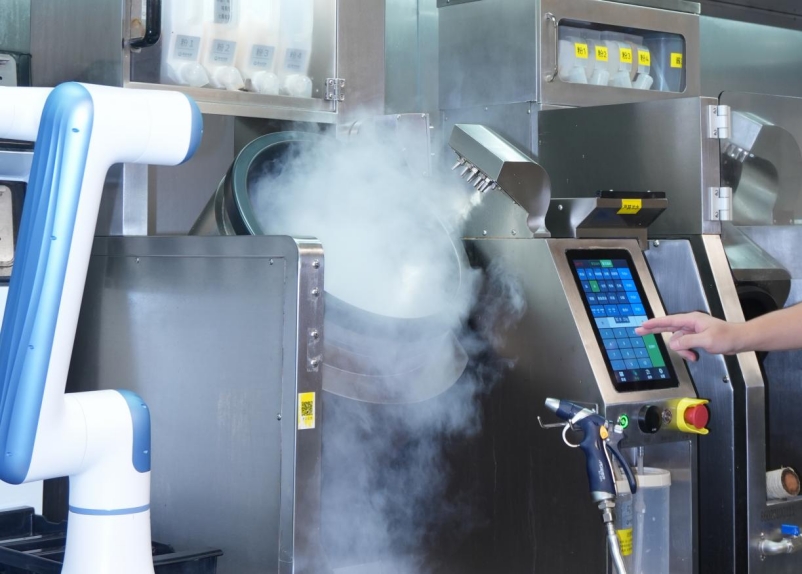
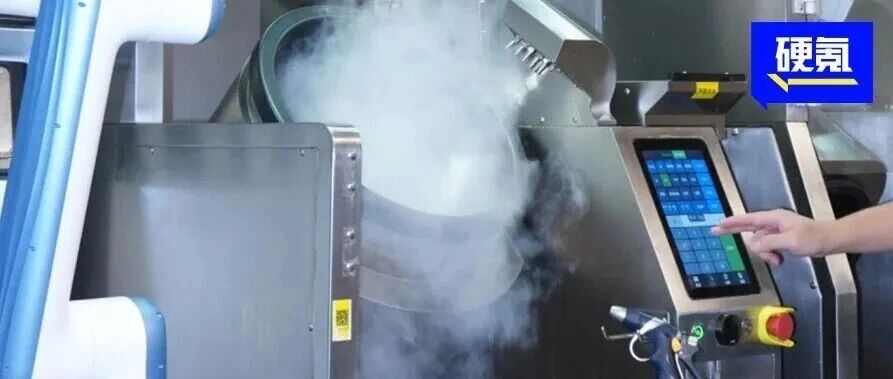
Core Viewpoint - The article discusses the increasing adoption of cooking robots in the restaurant industry, driven by the need for efficiency and quality in food preparation, especially following the backlash against pre-prepared meals [6][13]. Group 1: Industry Trends - The restaurant industry is experiencing a transformation with the introduction of cooking robots, which can significantly enhance cooking speed and maintain food quality while reducing labor costs [7][19]. - The shift from traditional cooking methods to automated solutions is a response to the challenges of balancing speed, taste, and cost in food service [7][10]. - The backlash against pre-prepared meals has led to a surge in interest from restaurants in implementing cooking robots, with inquiries increasing nearly tenfold in the past month [7][13]. Group 2: Technological Advancements - Cooking robots utilize advanced technology, including multi-sensor systems and intelligent temperature control algorithms, to replicate the cooking techniques of skilled chefs [16][19]. - These robots can achieve precise temperature adjustments and consistent stirring, which are critical for traditional Chinese cooking [13][16]. - The integration of AI-driven platforms allows restaurants to customize cooking processes based on local tastes and dish characteristics, enhancing the overall dining experience [16][19]. Group 3: Cost Efficiency - The cost of a medium-sized cooking robot is approximately 60,000 yuan, with a lifespan of 8-10 years and a monthly operating cost of around 600 yuan, leading to significant savings in labor costs compared to traditional chefs [19]. - Over an 8-year period, a cooking robot can help reduce operational costs by 680,000 to 1,340,000 yuan, making it a financially attractive option for restaurants [19]. - The implementation of cooking robots in corporate cafeterias, such as those at major companies like Goer Group, has resulted in improved efficiency and reduced food waste by over 70% [26][28]. Group 4: Market Adoption - Major companies, including Goer Group and Muyuan Foods, are increasingly adopting cooking robots to meet the high demands of their employee dining services while ensuring food safety and quality [21][25]. - The trend indicates a broader acceptance of automation in food preparation, with robots becoming a key player in both restaurant kitchens and corporate dining facilities [26][28].


农林牧渔行业报告(2025.11.9-2025.11.16):四季度供应压力仍大,关注产能去化情况
China Post Securities· 2025-11-18 09:00
Industry Investment Rating - The investment rating for the agriculture, forestry, animal husbandry, and fishery industry is "Outperform the Market" [1] Core Viewpoints - The industry is experiencing significant supply pressure in the fourth quarter, with a focus on capacity reduction [5][19] - The overall market performance shows that the agriculture sector has risen by 2.70%, ranking 8th among 31 primary industries [12][14] - The pig price continues to decline, with an average price of 11.56 CNY/kg as of November 14, 2025, indicating ongoing supply pressure [5][16] - The white feather chicken market is stabilizing, with prices for chicken seedlings at 3.7 CNY/piece and broiler prices at 3.55 CNY/kg as of November 14, 2025 [27] Summary by Sections Market Review - The agriculture sector has shown resilience, with the agriculture, forestry, animal husbandry, and fishery index rising while the broader market indices fell [12][14] - Key sub-sectors such as agricultural product processing and animal vaccines have seen significant price increases [14] Livestock Industry Chain Tracking Pigs - The average pig price has decreased by 0.31 CNY/kg over the week, with ongoing supply pressures expected to persist [5][16] - The average loss for self-bred pigs is 115 CNY per head, while for purchased piglets, it is 206 CNY per head, indicating increasing financial strain [17] - Capacity reduction is anticipated to accelerate due to low prices and regulatory pressures [19] White Feather Chicken - The price of chicken seedlings remains stable, with a profit of approximately 0.8 CNY per piece [27] - The supply of grandparent stock has decreased significantly, with a 19.01% reduction compared to the previous year [27][30] Planting Industry Chain Tracking - Sugar prices have slightly rebounded, with an average price of 5660 CNY/ton as of November 14, 2025 [35] - Soybean prices have increased, with Brazilian soybeans at 4123 CNY/ton, reflecting a 1.8% rise [35] - Corn prices have shown slight fluctuations, averaging 2211 CNY/ton, up by 12 CNY/ton [36]
农林牧渔行业月报:猪价持续下行,宠物食品“双十一”表现亮眼-20251118
Zhongyuan Securities· 2025-11-18 08:59
Investment Rating - The report maintains an "Outperform" rating for the agriculture, forestry, animal husbandry, and fishery industry [1]. Core Views - The report highlights a continued decline in pig prices and strong performance in pet food sales during the "Double Eleven" shopping festival [1]. - The industry is currently trading at lower price-to-earnings (P/E) and price-to-book (P/B) ratios compared to historical averages, indicating potential for valuation recovery [1]. Summary by Sections Market Review - In October 2025, the agriculture, forestry, animal husbandry, and fishery index rose by 0.19%, outperforming the CSI 300 index, which had a return of approximately 0% [8][11]. - The pet food sector experienced a decline, while the wood processing sector showed strong gains [11]. Livestock Farming Data Tracking - Pig prices continued to decline in October 2025, with an average price of 11.52 yuan/kg, down 11.46% month-on-month and 34.77% year-on-year [16]. - The average price for white feather broilers was 3.38 yuan/jin, showing a slight decrease of 0.29% month-on-month and 7.65% year-on-year [26]. Pet Food Sales Performance - During the "Double Eleven" period in 2025, total sales of pet food reached 9.4 billion yuan, a year-on-year increase of 59.3% [35]. - Pet food exports in September 2025 totaled 30,500 tons, up 18.78% year-on-year, while the cumulative export amount from January to September was 1.057 billion USD, down 3.73% year-on-year [32][35]. Investment Recommendations - The report suggests focusing on companies such as Muyuan Foods, Pulaike, QiuLe Seed Industry, GuaiBao Pet, ZhongChong Co., and Petty Co., all rated as "Buy" [1].


生猪行业动态跟踪报告(月度):10月上市猪企出栏量同环比均增加,售价同环比走低-20251118
Western Securities· 2025-11-18 06:34
Investment Rating - The industry investment rating is "Overweight" [5][26] Core Insights - In October 2025, the total slaughter volume of listed pig companies reached 18.8143 million heads, representing a year-on-year increase of 30.28% and a month-on-month increase of 23.03%. The increase is attributed to higher supply during the consumption peak season and significant capacity expansion in 2024 [10][11] - The average selling price of pigs in October 2025 decreased by 11.85% month-on-month and 34.66% year-on-year, primarily due to abundant supply and weak demand during the peak season [20][21] - The cumulative revenue of listed pig companies from January to October 2025 was CNY 246.6 billion, reflecting a year-on-year increase of 4.33%, despite lower average selling prices compared to the previous year [12][11] Summary by Sections Slaughter Volume - In October 2025, listed pig companies accelerated their slaughter volume, achieving a total of 18.8143 million heads, with significant increases from leading companies such as Muyuan Foods, Wens Foodstuffs, and New Hope Liuhe [10][11] - The cumulative slaughter volume from January to October 2025 was 158 million heads, with a year-on-year increase of 21.25% [11] Revenue and Pricing - The revenue for listed pig companies in October 2025 was CNY 23.729 billion, showing a year-on-year decrease of 16.36% but a month-on-month increase of 9.62% [2][11] - The average selling price for pigs in October 2025 was CNY 11.57 per kilogram, down 34.66% year-on-year [20][21] Weight and Demand - The average weight of pigs slaughtered in October 2025 was 106.17 kg per head, which is an increase of 1.08% month-on-month and 3.65% year-on-year, indicating strong demand for heavier pigs during the consumption peak [20][21]


2026年农林牧渔行业投资策略:布局周期,掘金成长
Shenwan Hongyuan Securities· 2025-11-18 06:00
Core Insights - The report emphasizes the cyclical nature of the pig farming industry, indicating that the downward cycle is nearing its end, with a potential upward turning point expected in 2026 [3][19] - The pet economy remains a key growth area, highlighting investment opportunities in niche sectors [4] Group 1: Industry Overview - The agricultural sector, particularly the pig farming segment, is experiencing a downturn, with 2025 expected to see continued losses, leading to a price bottom in the first half of 2026 [5][19] - The chicken farming sector is also under pressure, with expectations of supply-side stabilization and demand recovery in 2026 [20] - The cattle farming sector is projected to face a supply contraction starting in 2026, which may last until 2027 [21] Group 2: Investment Opportunities - The pet food industry is anticipated to maintain its growth trajectory, with leading companies increasing their market share despite challenges in export performance [5][4] - The blueberry market in Yunnan is expected to see profit realization from 2024 to 2025, with growth potential continuing into 2026-2027 [5] - The artificial cultivation of Cordyceps is gaining traction as natural production declines, with early movers in this space likely to see performance improvements [5] Group 3: Key Companies to Watch - The report identifies several key companies for investment consideration, including Muyuan Foods, Wens Foodstuff Group, DeKang Agriculture, TianKang Biological, and others in the pet food sector [5]


短线防风险 112只个股短期均线现死叉
Zheng Quan Shi Bao Wang· 2025-11-18 04:10
Market Overview - The Shanghai Composite Index closed at 3949.83 points, with a decline of 0.56% [1] - The total trading volume of A-shares reached 1,296.161 billion yuan [1] Technical Analysis - A total of 112 A-shares experienced a death cross, where the 5-day moving average fell below the 10-day moving average [1] - Notable stocks with significant distance between their 5-day and 10-day moving averages include: - Shanshui Bide (300844) with a distance of -1.40% - Yingboer (300681) with a distance of -1.28% - Yake Technology (002409) with a distance of -1.06% [1] Individual Stock Performance - Shanshui Bide (300844) saw a decline of 6.62% with a trading turnover rate of 3.31% [1] - Yingboer (300681) decreased by 2.30% with a turnover rate of 2.45% [1] - Yake Technology (002409) fell by 0.20% with a turnover rate of 2.33% [1] - Other notable declines include: - Bohai Automobile (600960) down by 3.53% - Western Gold (601069) down by 2.80% [1] Additional Stock Movements - Stocks such as Muyu (002714) and Qinglong (002457) showed slight increases of 0.80% and -3.28% respectively [2] - The stock performance of various companies indicates a mixed sentiment in the market, with several stocks experiencing declines while a few managed to gain [2]


养殖ETF(516760)回调蓄势,机构看好左侧布局机会
Sou Hu Cai Jing· 2025-11-18 03:38
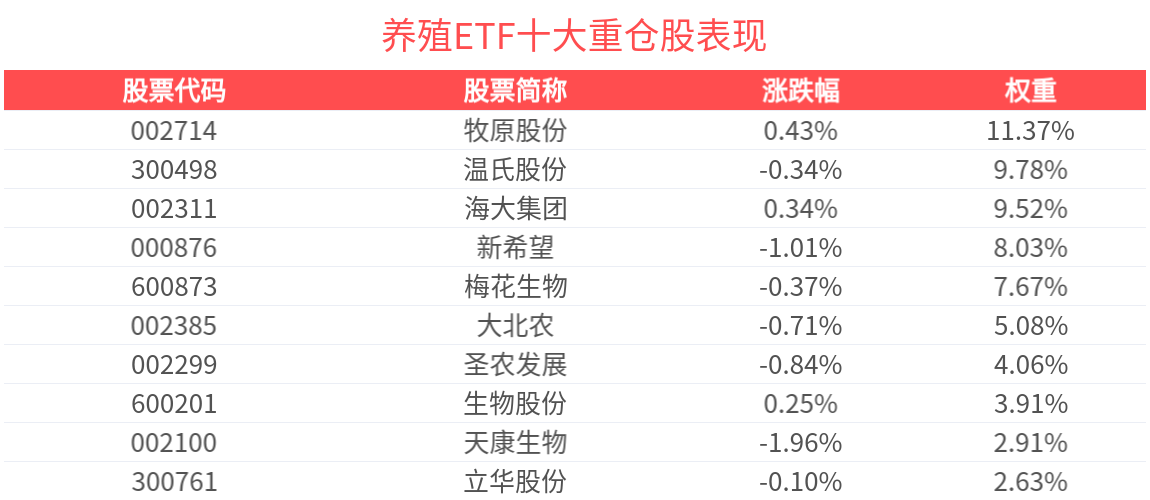
Core Insights - The swine industry is experiencing significant losses, with the average selling price of live pigs dropping to 11.56 yuan/kg, leading to a loss of 71.95 yuan per head for self-bred pigs [1] - Analysts suggest that the current oversupply and weak demand may result in a "non-peak" season for pork prices in Q4, indicating potential investment opportunities in the sector [1] - The industry is expected to undergo capacity reduction, which may lead to an upward adjustment of pork price levels by 2026, benefiting low-cost producers [1] Group 1: Market Performance - As of November 18, 2025, the China Livestock Breeding Index (930707) showed mixed performance among its constituent stocks, with Muyuan Foods (002714) leading with a 0.43% increase [1] - The Livestock ETF (516760) was quoted at 0.7 yuan [1] - The top ten weighted stocks in the index accounted for 65.58% of the total index weight, indicating a concentration in a few key players [2] Group 2: Stock Performance - The stock performance of key companies includes: - Muyuan Foods (002714): +0.43%, weight 11.37% - Haida Group (002311): +0.34%, weight 9.52% - Biological Shares (600201): +0.25%, weight 3.91% - Other notable declines include New Hope (000876): -1.01% and Tian康 Biological (002100): -1.96% [4]


为了让你吃上现炒,老乡鸡们开始用机器人颠勺了
3 6 Ke· 2025-11-18 01:32
Core Insights - The restaurant industry is experiencing a shift towards automation, particularly with the adoption of cooking robots, as traditional methods face challenges in efficiency and cost control [1][5][10] Group 1: Industry Trends - The recent backlash against pre-prepared meals has led to a significant increase in interest for cooking robots, with inquiries from restaurants rising nearly tenfold in the past month [1] - The evolution of the restaurant industry has moved from reliance on chef skills to a focus on high cost-performance and quality, indicating a need for innovation in food preparation [2][5] - The introduction of cooking robots is seen as a solution to the challenges of maintaining food quality while improving service speed and reducing labor costs [5][10] Group 2: Technological Advancements - Cooking robots can precisely control cooking temperatures and automate processes, which helps maintain the flavor and quality of dishes while reducing human error [5][8] - The technology includes multi-sensor systems and intelligent temperature control algorithms, allowing for real-time adjustments and consistent cooking results [7][10] - Companies like Zhigu Tianchu are providing customized software solutions that enable restaurants to tailor cooking programs to local tastes, enhancing the versatility of robotic cooking [8] Group 3: Cost Efficiency - The cost of a medium-sized cooking robot is approximately 60,000 yuan, with a lifespan of 8-10 years and a monthly operating cost of around 600 yuan, significantly lower than the salary of a human chef [10] - Over an 8-year period, using cooking robots can save restaurants between 680,000 to 1,340,000 yuan in labor costs [10] - The implementation of cooking robots in corporate cafeterias has improved food safety and reduced labor-intensive tasks, addressing the dual challenges of cost and quality in employee meals [11][15] Group 4: Market Adoption - Major companies, including Muyu and Foxconn, are adopting cooking robots to enhance their food service operations, reflecting a broader trend in the industry [1][4] - The integration of cooking robots in large-scale dining settings, such as factory cafeterias, has proven effective in meeting high demand while minimizing food waste by up to 70% [15]