宝马

Search documents
旧秩序在坍塌
汽车商业评论· 2025-05-11 15:41
Core Viewpoint - The article discusses the transformation of the Chinese automotive industry, highlighting how domestic brands like Geely are redefining market standards and challenging traditional luxury brands through innovative technology and competitive pricing [2][8][19]. Group 1: Market Dynamics - The Geely Galaxy Star 8, priced between 115,800 to 155,800 RMB, is positioned in the C-segment, competing with luxury brands like Audi A6L, which has a price range of 427,900 to 656,800 RMB, showcasing a significant price disparity [2][3]. - The sales of C-segment vehicles in 2024 are expected to be dominated by eight traditional luxury brands, with a total sales volume of 486,000 units, indicating a concentrated market [2][3]. - The article notes a shift in consumer perception, where cars are increasingly viewed as a third living space rather than just a means of transportation, particularly with the rise of electric vehicles [16][18]. Group 2: Technological Advancements - Chinese brands are not merely following the lead of joint venture brands but are establishing new standards in technology, product offerings, and pricing strategies [8][19]. - The Galaxy Star 8 includes advanced features such as a seven-layer structure design for seats, heating and cooling functions, and high-end audio systems, which were previously exclusive to luxury vehicles [9][11]. - The article emphasizes that the technological advancements and features offered by Chinese brands are often superior to those of traditional luxury brands at a fraction of the price [8][11]. Group 3: Consumer Engagement - The development of the Geely Galaxy Star 8 involved extensive communication with users to ensure the vehicle met their needs, illustrating a shift towards user-driven product development [24][25]. - The article highlights the importance of understanding local consumer preferences, with Chinese brands adapting their designs and features to better suit domestic market demands [18][22]. - The concept of "co-creation" with users is emphasized, where feedback directly influences product design and features, leading to a more tailored consumer experience [24][25]. Group 4: Competitive Landscape - The emergence of large SUVs like the Lynk & Co 900, which has a price range of 289,900 to 396,900 RMB, signifies a shift in the market where previously niche segments are now being aggressively targeted by Chinese brands [13][15]. - The article notes that the rapid growth of large SUVs in China is driven by changing consumer needs and preferences, with several domestic brands now offering models exceeding 5.2 meters in length [15][16]. - The competitive landscape is evolving, with traditional luxury brands facing challenges from agile Chinese manufacturers that are quick to adapt to market trends and consumer demands [22][25].



摩托车行业专题研究:隆鑫通用:自主品牌出海,成长空间广阔
Tianfeng Securities· 2025-05-11 10:23
Industry Rating - The industry investment rating is maintained at "Outperform the Market" [1] Core Viewpoints - The report highlights the growth potential of Longxin General's self-owned brand, VOGE, in international markets, driven by product strength, cost performance, and brand recognition [3][21] - The company has successfully developed popular models such as CU525 and DS525, with a strong presence in the European market where high displacement motorcycles are in demand [3][28] - The report emphasizes the company's robust cash flow and the complete digestion of impairment pressures, which positions it well for future growth and potential dividend increases [4][68] Company Overview - Longxin General has two main business segments: motorcycles, contributing over 70% of revenue, and general machinery, contributing around 20% [2] - The motorcycle segment includes various brands and products, with a focus on high-displacement models [2][27] Financial Performance - From 2021 to 2024, the motorcycle business's revenue contribution increased from 57.9% to 75.4%, with total revenue growing from 130.58 billion to 168.22 billion [15][20] - The net profit for 2024 is projected to be 11.2 billion, reflecting a year-on-year increase of 93% [20] Market Dynamics - The European motorcycle market is characterized by a high proportion of high-displacement models, with 60.9% of motorcycle consumption in Italy being over 250cc in 2024 [28] - The trend of consumer downgrading in Europe is expected to benefit Chinese brands like VOGE, which offer higher cost performance compared to Japanese and European competitors [35][36] Strategic Developments - The integration of Longxin General and Zongshen New Manufacturing is expected to enhance collaboration in supply chain, engine technology, and market channels [5][79] - The company has established a strong marketing presence in Europe, with 1,165 overseas outlets, including 876 in Europe, enhancing brand recognition [52]
隆鑫通用:自主品牌出海,成长空间广阔
Tianfeng Securities· 2025-05-11 07:12
Industry Rating - The industry investment rating is maintained at "Outperform the Market" [1] Core Viewpoints - The report highlights the growth potential of Longxin General's self-owned brand, VOGE, in international markets, driven by product strength, cost performance, and brand recognition [3][21] - The company has successfully developed popular models such as CU525 and DS525, with a comprehensive product range covering various motorcycle categories [3][27] - The European market presents high value, with a significant proportion of motorcycle consumption in higher displacement categories, indicating an opportunity for Chinese brands to capture market share due to their cost advantages [28][35] Company Overview - Longxin General has two main business segments: motorcycles, contributing over 70% of revenue, and general machinery, contributing around 20% [2] - The motorcycle business includes the VOGE brand, non-road sports motorcycles, and collaborations with BMW [2] Financial Performance - From 2021 to 2024, the motorcycle business's revenue contribution increased from 57.9% to 75.4%, with total revenue growing from 130.58 billion to 168.22 billion [15][20] - The company reported a significant increase in net profit, with a year-on-year growth of 93% in 2024, attributed to revenue growth and reduced impairment losses [20][27] Strategic Developments - The integration of Longxin General and Zongshen New Manufacturing is expected to enhance collaboration in supply chain, engine technology, and market channels [5][79] - The company has a strong cash position, with 77 billion in cash as of Q1 2025, providing a solid foundation for future growth and potential dividend increases [4][68] Market Dynamics - The report notes a trend of consumption downgrade in Europe, where consumers are increasingly opting for lower-priced brands, benefiting Longxin General's competitive pricing strategy [35][36] - The company's marketing efforts and extensive distribution network in Europe have led to increased brand recognition, particularly in Italy and Spain [52][53]
【多彩新论】“五一”假期“人从众”背后是经济信心
Sou Hu Cai Jing· 2025-05-10 18:13
Group 1 - The "May Day" holiday serves as a window to observe the vitality and potential of the Chinese economy, reflecting public confidence in economic development [2][4] - During the "May Day" holiday, domestic travel reached 314 million trips, a year-on-year increase of 6.4%, indicating a greater willingness to travel [2] - Total spending by domestic tourists amounted to 180.269 billion yuan, up 8% year-on-year, showing increased consumer spending [2] Group 2 - In Guizhou province, popular tourist sites experienced crowding and capacity limits, highlighting the high demand for travel [3] - The confidence in the economic outlook is attributed to a long-standing cultural heritage and resilience in the face of challenges [4][5] - The Chinese economy is likened to a vast ocean, capable of withstanding external pressures and showcasing significant domestic consumption potential [6] Group 3 - The emergence of domestic 5G smartphones and advancements in chip technology demonstrate China's ability to innovate despite external challenges [7] - The travel boom during the "May Day" holiday reflects not only economic vitality but also social harmony and community spirit [7][8] - The overall travel trends and spending patterns during the holiday provide insights into the broader economic and social landscape of China [8]

SiC开始加速批量上车
Xin Lang Cai Jing· 2025-05-10 04:36
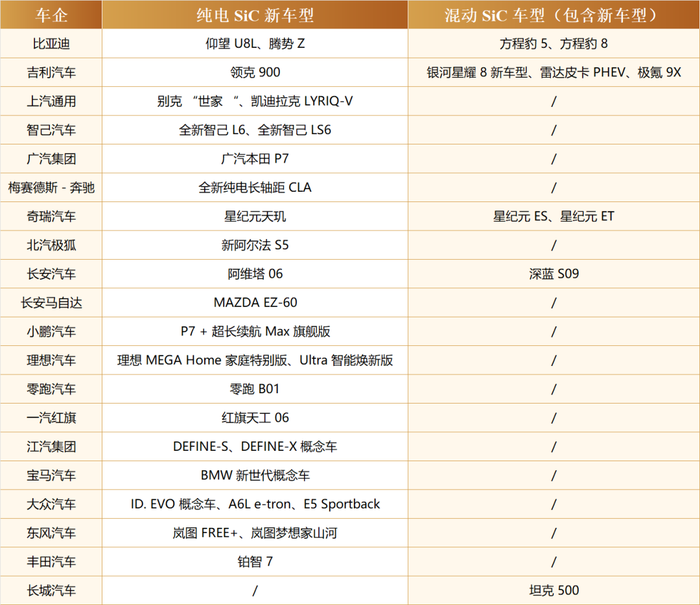
Core Insights - Silicon Carbide (SiC) technology is becoming a key driver in the development of the electric vehicle (EV) industry, enhancing performance and enabling technological innovation [1][6] - The application of SiC technology is expanding across various vehicle price ranges, from high-end luxury models to mass-market options, with power levels ranging from 150kW to 645kW [1][2] - Over 30 new SiC models were showcased at the recent Shanghai Auto Show, indicating rapid development and widespread adoption of SiC technology in the EV sector [4][5] Group 1: SiC Technology Adoption - SiC technology is now a core element for differentiation among automakers in the EV market, covering models priced between 100,000 to 1,500,000 yuan [1] - Notable models utilizing SiC include Volvo's ES90, which features a 370kW electric motor and a 111kWh battery, and Dongfeng's N7, which offers a 200kW motor with 400 km range from a 10-minute charge [2][3] - The introduction of SiC in BMW's i5 eDrive35L has increased its range by up to 47 km, showcasing the efficiency benefits of SiC technology [2] Group 2: Performance and Efficiency Benefits - SiC materials exhibit superior properties compared to traditional silicon, including three times the bandgap width, ten times the breakdown voltage, and five times the thermal conductivity [6] - The use of SiC in electric drive inverters significantly reduces switching losses by 75% and improves efficiency by 3%-5%, while also minimizing the size of components [7] - SiC devices enhance the efficiency of onboard chargers (OBC), achieving over 98% charging efficiency and reducing the need for cooling systems [8] Group 3: Market Trends and Future Outlook - The hybrid vehicle segment is increasingly adopting SiC technology, with predictions indicating that the Chinese hybrid market could exceed 20 million vehicles by 2030 [9] - The application of SiC technology is expanding beyond passenger vehicles into commercial vehicles, with Tier 1 suppliers exploring its use in heavy-duty trucks [10] - The rise of domestic EV manufacturers has led to a significant increase in the number of Chinese companies in the global automotive supply chain, with a notable presence in battery and electric drive systems [11][12]
专访裕太微车载事业部总经理郝世龙:芯片企业与车企从“供需”到“共生”
2 1 Shi Ji Jing Ji Bao Dao· 2025-05-10 00:12
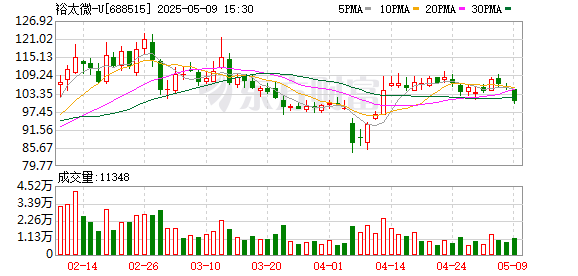
Core Viewpoint - The automotive industry is transitioning from distributed to domain-centralized architectures, with Ethernet becoming the backbone for in-vehicle communication, leading to a surge in demand for automotive Ethernet chips [2][3]. Group 1: Market Demand and Product Development - The market for automotive Ethernet chips is expected to explode in the next one to two years due to the increasing consensus on building domestic supply chains and enhancing product competitiveness [3]. - The latest automotive Ethernet TSN switch chips, YT9908 and YT9911, support multiple TSN protocols and include advanced security features, indicating a focus on high-performance communication solutions [3]. - Currently, the usage of Ethernet chips in vehicles is limited, with approximately 10 PHY chips and 1 to 4 switch chips per vehicle, but this is projected to increase significantly as smart vehicle technology evolves [3][4]. Group 2: Technological Evolution and R&D Investment - The evolution of automotive electronic architectures is driven by the demand for high bandwidth, low latency, and reliable communication, particularly for advanced driving assistance systems and smart cabins [4]. - The company plans to accelerate the development of next-generation automotive chips by 2025 to support higher bandwidth and multi-domain integration, with R&D expenses projected to reach 294 million yuan in 2024, accounting for 74.1% of revenue [4][5]. Group 3: International Expansion and Market Trends - The company began its international expansion in 2023, achieving overseas revenue of 73.76 million yuan in 2024, a growth of 157.84% compared to 2023, with a focus on major automotive manufacturers in Europe [5]. - The domestic market for automotive communication chips, particularly Ethernet chips, has a low localization rate of about 5%, attributed to the recent standardization of Ethernet technology and the high safety requirements for automotive applications [6][7]. Group 4: Industry Collaboration and Integration - The relationship between automotive manufacturers and chip companies is evolving from a supply-demand dynamic to deeper collaboration, particularly in the development of automotive Ethernet chips [7][8]. - The changing perceptions of domestic chip manufacturers among automotive OEMs have improved, with increased acceptance of new products over recent years [8]. - The international landscape presents opportunities for domestic chip manufacturers to enhance self-sufficiency in the supply chain, although the core focus remains on technology, product quality, and service to capture market share [9].

拆解车企财务“成绩单”:涨跌中暗藏玄机
Zhong Guo Jing Ji Wang· 2025-05-09 13:30
Group 1 - The global automotive industry is showing varied financial results as major companies release their 2024 annual reports and Q1 2025 reports, with some leading domestic companies achieving both revenue and profit growth, indicating strong resilience in development [1] - The asset-liability ratio has become a focal point of concern in the automotive industry, especially given the high debt levels among major global automakers, with many reporting ratios above 60% [2][3] - The automotive industry, characterized by heavy assets and long cycles, typically has high asset-liability ratios due to significant upfront investments and slow returns, which is a common trait shared with the semiconductor industry [2] Group 2 - A declining asset-liability ratio can indicate healthy operations for automotive companies, as seen with BYD, which reduced its ratio from 77% in Q3 2024 to 70% in Q1 2025, suggesting a potential drop to the 60% range within the year [3] - Total liabilities are not the sole measure of a company's debt burden; the distinction between interest-bearing and non-interest-bearing liabilities is crucial, with the latter being operational debts that do not incur interest [4] - Major international automakers like General Motors and Mercedes-Benz have significant interest-bearing liabilities, while domestic companies like BYD show lower reliance on such debts, with only 5% of its total liabilities being interest-bearing [4]
去年中国前十大互联网公司利润均增长;丰田预计财年利润缩水,因为关税和汇率影响;沪上阿姨上市首日涨40%丨百亿美元公司动向
晚点LatePost· 2025-05-09 07:11
Group 1: Internet Companies Performance - In Q1 2024, the top ten internet companies in China saw significant profit growth, except for NetEase, which only grew by 1% [1] - Baidu and NetEase were the only companies in the top ten to experience a decline in market value, with Baidu down 12.6% and NetEase down 1.6% [1] - Baidu's core advertising revenue continues to decline, and its user engagement is being affected by competitors like Quark and Douyin [1] Group 2: Toyota's Sales and Financial Outlook - Toyota expects its global automotive sales to reach 11.2 million units in FY 2025, a 2% increase from the previous year [2] - The company anticipates a 1% increase in revenue to 48.5 trillion yen (approximately 2.4 trillion RMB) but a 21% decrease in operating profit to 3.8 trillion yen (approximately 189.6 billion RMB) [2] Group 3: Market Performance of Beverage Brands - Hu Shang A Yi's stock surged over 40% on its first trading day, marking it as the fifth tea brand to go public in Hong Kong [3] - The company has over 9,000 stores in China, with a significant presence in lower-tier cities [3] Group 4: Alibaba's Stake in Wanda Film - Alibaba's affiliate plans to reduce its stake in Wanda Film by up to 1.3927%, potentially cashing out over 300 million RMB, but facing a loss exceeding 50% on its initial investment [4] Group 5: Nintendo's Profit Decline and Future Plans - Nintendo reported a 43.2% drop in net profit for the fiscal year ending March, totaling approximately 13.9 billion RMB [5] - The company expects a recovery in profit growth to 7.6% in the next fiscal year, driven by the upcoming release of the Switch 2 [5] Group 6: Anheuser-Busch's Sales and Profit Trends - Anheuser-Busch experienced a 2.2% decline in total sales in Q1, but managed a 7.9% increase in operating profit to 4.855 billion USD [6] - The company reported a 9.2% drop in sales in the Chinese market, which was more significant than the overall industry decline [6] Group 7: BMW's Financial Results - BMW's Q1 revenue fell by 7.8% to 33.76 billion euros, and net profit decreased by 26.4% to 2.17 billion euros [8] - The company delivered 586,000 vehicles in Q1, a slight decline of 1.4%, with a notable 17% drop in the Chinese market [8] Group 8: Li Auto's New Model Launch - Li Auto launched its 2025 L series models, featuring upgrades in driver assistance technology while maintaining the same pricing as the previous year [9] Group 9: Apple Watch Market Trends - Apple Watch shipments are projected to decline by 19% in 2024, marking five consecutive quarters of shrinkage, while competitors in the high-end segment are growing [7] Group 10: AI Chip Policy Changes - The Trump administration plans to revoke Biden-era restrictions on AI chip exports, indicating a shift in U.S. policy towards AI technology [10][11]



人形机器人泡沫破裂?独角兽达闼停摆,硅谷明星 Figure 陷“造假”风波
3 6 Ke· 2025-05-09 01:51
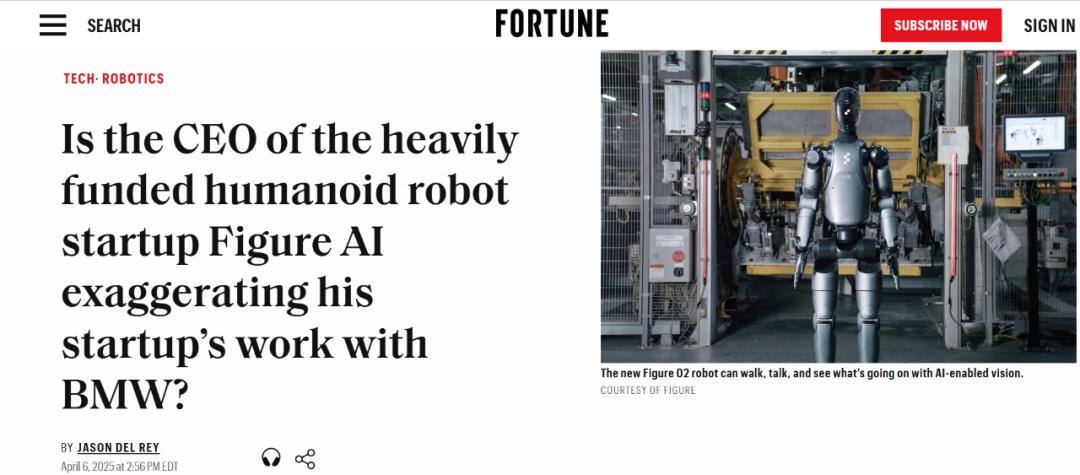
Core Insights - The competition in the humanoid robot industry is increasingly focused on the speed of B-end scenario implementation and C-end cost control capabilities [1][15] - Recent events indicate a bubble burst in the humanoid robot sector, highlighted by the operational crisis of the well-known unicorn, Dalu Robotics, and trust issues surrounding the high-valued company Figure in Silicon Valley [1][2] Company Analysis - Figure AI has faced scrutiny for allegedly exaggerating its partnership with BMW, raising questions about its product deployment capabilities [2][3] - The initial perception of Figure AI as a leader in the humanoid robot space was challenged by findings that only one Figure robot was operational at BMW's South Carolina plant, performing limited tasks [3][4] - Figure AI's CEO, Brett Adcock, has made bold claims about the company's capabilities, which have not been substantiated by BMW's statements, indicating a disconnect between marketing and actual operational progress [4][5] - Figure AI's strategy includes a focus on B-end markets, targeting industries such as manufacturing, logistics, and retail to provide flexible labor solutions [9][11] - The company aims to reduce the cost of humanoid robots to a few hundred dollars per month to enhance economic feasibility, although specific pricing details remain undisclosed [9][11] Industry Trends - The humanoid robot industry is at a critical stage of commercialization, with various companies adopting different business models, primarily focusing on B-end applications [9][12] - Companies like Tesla's Optimus are also pursuing B-end applications while exploring C-end markets, with a focus on reducing hardware costs and optimizing production strategies [12] - Local government initiatives are increasingly supporting the humanoid robot sector, with over 70 billion yuan in state funds being allocated to promote technology development and commercialization [15]

全网吐槽的反人类设计,车企这回听劝了
3 6 Ke· 2025-05-09 01:18
Core Viewpoint - The automotive industry is witnessing a resurgence of physical buttons in vehicle designs, indicating that manufacturers are beginning to listen to consumer feedback regarding usability and safety concerns associated with touchscreens [1][20][22]. Group 1: Industry Trends - The trend of replacing physical buttons with touchscreens has been prevalent, with manufacturers emphasizing digital cockpit designs and larger screens, which have increased from 12 inches to 17 inches [1][20]. - Major automakers, including Volkswagen, Porsche, and Hyundai, are now reintroducing physical buttons, acknowledging that the previous reliance on touchscreens was a significant mistake [1][20][22]. - The 2023 Shanghai Auto Show highlighted this shift, with various companies announcing their commitment to integrating physical controls back into their vehicles [1][20][22]. Group 2: Consumer Feedback and Safety Concerns - Consumers have consistently criticized the safety and practicality of touchscreen controls, with reports indicating that operations can take an average of 22 seconds and have high error rates [3][19]. - A study by the UK Transport Research Laboratory found that using touchscreen systems can increase driver reaction times by 53% to 57%, significantly more than the effects of driving under the influence [16][19]. - The National Highway Traffic Safety Administration (NHTSA) reported that 18.7% of distraction-related accidents were linked to touchscreen operations, emphasizing the need for physical controls [19]. Group 3: Cost and Design Considerations - The shift towards touchscreens was partly driven by cost reduction strategies, as integrating functions into a single touchscreen can lower manufacturing costs compared to traditional button designs [8][7]. - However, the perceived high-tech appeal of large screens often masks the underlying cost-saving motives, with screens being procured for as low as $50 [8][7]. - The automotive industry is now recognizing that a balance between physical buttons and touchscreens is essential for optimal user experience and safety [24][22].