红旗连锁

Search documents
一般零售板块1月12日涨2.46%,居然智家领涨,主力资金净流出2.57亿元
Zheng Xing Xing Ye Ri Bao· 2026-01-12 09:04
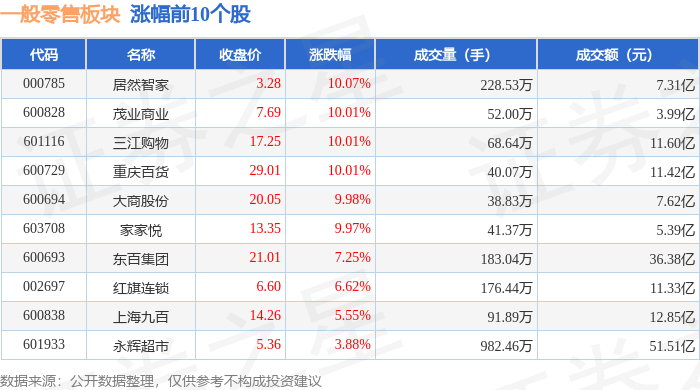
Core Viewpoint - The general retail sector experienced a significant increase of 2.46% on January 12, with Juran Zhijia leading the gains, reflecting positive market sentiment in the retail industry [1]. Group 1: Market Performance - The Shanghai Composite Index closed at 4165.29, up by 1.09% [1]. - The Shenzhen Component Index closed at 14366.91, up by 1.75% [1]. - Juran Zhijia's stock price rose to 3.28, marking a 10.07% increase, with a trading volume of 2.2853 million shares and a transaction value of 731 million yuan [1]. Group 2: Individual Stock Performance - Other notable performers included: - Maoye Commercial, closing at 7.69 with a 10.01% increase and a trading volume of 520,000 shares [1]. - Sanjiang Shopping, closing at 17.25 with a 10.01% increase and a transaction value of 1.16 billion yuan [1]. - Chongqing Department Store, closing at 29.01 with a 10.01% increase and a transaction value of 1.142 billion yuan [1]. - Dashang Co., closing at 20.05 with a 9.98% increase and a transaction value of 762 million yuan [1]. Group 3: Capital Flow - The general retail sector saw a net outflow of 257 million yuan from institutional investors, while retail investors contributed a net inflow of 299 million yuan [2]. - The capital flow for key stocks included: - Sanjiang Shopping had a net inflow of 277 million yuan from institutional investors, while retail investors had a net outflow of 130 million yuan [3]. - Juran Zhijia experienced a net inflow of 206 million yuan from institutional investors, with retail investors seeing a net outflow of 125 million yuan [3]. - Dashang Co. had a net inflow of 151 million yuan from institutional investors, with retail investors experiencing a net outflow of approximately 794 million yuan [3].


利好!这一板块快速走高,多股涨停!
Zheng Quan Ri Bao Wang· 2026-01-12 05:47
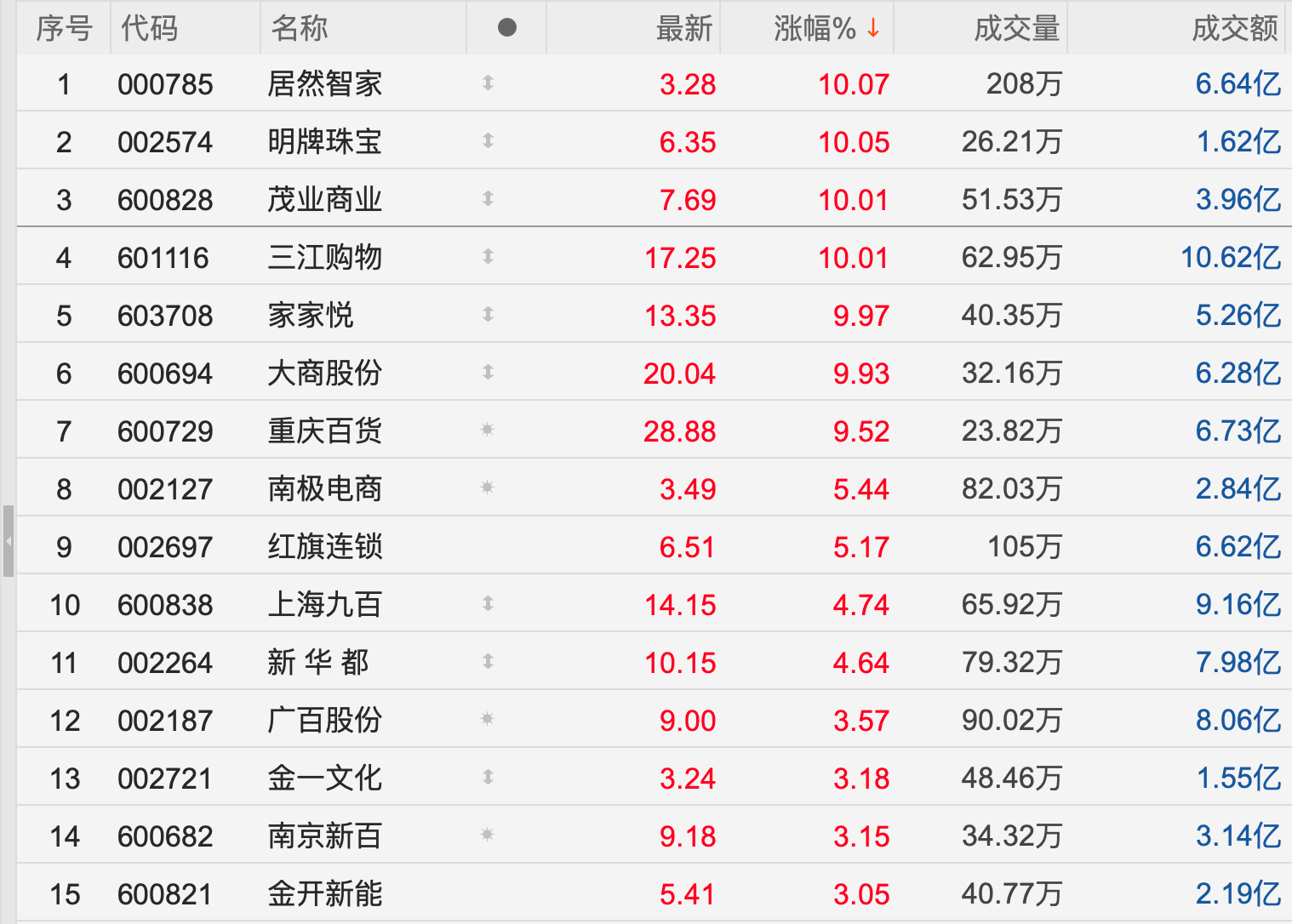
Core Viewpoint - The retail sector in the A-share market experienced a strong rally, with multiple retail stocks hitting the daily limit up, driven by supportive government policies aimed at boosting consumption [1][3]. Group 1: Market Performance - Several retail stocks, including Juran Smart Home, Mingpai Jewelry, and Maoye Commercial, saw significant price increases, with Maoye Commercial closing at 7.69 yuan after hitting the limit up for two consecutive days [1][2]. - Other notable performers included Dazhong Shares, Chongqing Department Store, and Antarctic E-commerce, contributing to a collective upward movement in the retail sector [1]. Group 2: Policy Support - The National Business Work Conference held on January 10-11 emphasized the implementation of special actions to boost consumption by 2026, which is expected to inject strong momentum into the retail industry [3]. - The conference outlined plans to cultivate new growth points in service consumption and optimize policies for upgrading consumer goods, directly benefiting traditional department stores and chain supermarkets [3]. Group 3: Consumer Behavior Trends - According to a report by NielsenIQ, the Chinese retail market is entering a critical restructuring phase, where the focus will shift from foot traffic and price subsidies to meeting consumers' relevant product and emotional needs [3][4]. - Consumer behavior is evolving from "buying products" to "buying lifestyles," with an increasing emphasis on experience and quality, as 68% of respondents value atmosphere in stores and 54% are willing to pay a premium for quality [4]. Group 4: Future Outlook - The retail industry is expected to accelerate its transformation towards a more intelligent, personalized, and experiential model, driven by policy support, consumption upgrades, and technological innovation [4][5]. - Experts suggest that as the special actions to boost consumption are implemented, the retail sector may enter a new phase of development, highlighting the importance of companies that align with industry trends and actively pursue transformation [5].

宏观深度报告:“该省省、该花花”——中国消费的“K型分化”
Sou Hu Cai Jing· 2026-01-12 02:42
Core Insights - The report highlights a significant "K-shaped differentiation" in China's consumption market, driven by changes in income structure and demographic shifts, leading to a polarization between high-end quality consumption and high-cost performance consumption [1][5][12]. Group 1: Manifestations of Consumption "K-shaped Differentiation" - From the consumer perspective, "K-shaped differentiation" is evident in the choice of consumption scenarios, product selection, and service consumption. Traditional malls are losing appeal, while high-end luxury malls and low-cost platforms like Pinduoduo are gaining traction [1][14][17]. - Sales at Beijing SKP reached a record 26.5 billion yuan in 2023, with an annual compound growth rate of approximately 7.5% from 2019 to 2024, contrasting with negative growth in overall retail sales in Beijing [14][15]. - Pinduoduo has emerged as a significant player in the low-cost consumption scene, leveraging a subsidy model to offer high cost-performance products, appealing to consumers' desire for value during uncertain economic times [17][21]. - In terms of product choices, brands like Labubu are gaining popularity for their emotional value, while brands like Mixue Ice City are preferred for their cost-effectiveness [17][19]. - Service consumption shows a clear "K-shaped differentiation," with some consumers opting for luxury customized travel experiences, while others prefer budget-friendly travel options that maximize value [18][19]. Group 2: Reasons for Consumption "K-shaped Differentiation" - The demand side is influenced by generational changes, with Generation Z and younger seniors becoming the main consumer groups, shifting their focus from practicality to emotional value and cost-effectiveness [2][24][25]. - The macro policy shift towards "investing in people" has encouraged consumers to prioritize emotional value in their purchasing decisions, moving away from a sole focus on practical utility [28][29]. - On the supply side, increased competition in a saturated market has led retailers to adopt dual-track strategies, offering both high-end and low-cost products to meet diverse consumer needs [30][31]. Group 3: Theoretical Implications of Consumption "K-shaped Differentiation" - The "K-shaped differentiation" represents a fundamental shift in traditional consumption theory, where the focus has moved from a utilitarian perspective to a dual-value approach that emphasizes both emotional and practical value [2][32][36]. - The utility function in the "K-shaped differentiation" model suggests that consumers are willing to pay higher prices for products that provide significant emotional value, while also accepting lower emotional value if the practical utility and price are favorable [33][34]. - Retailers' supply curves have shifted from a traditional upward slope to a "U-shaped" curve, indicating that both high-end luxury and low-cost products are more profitable, while mid-range products face challenges due to price competition [34][35].

红旗连锁1月9日获融资买入8576.97万元,融资余额4.22亿元
Xin Lang Cai Jing· 2026-01-12 01:40
Core Viewpoint - Hongqi Chain's stock price increased by 3.00% on January 9, with a trading volume of 817 million yuan, indicating positive market sentiment despite a net financing outflow [1] Financing Summary - On January 9, Hongqi Chain had a financing buy-in amount of 85.77 million yuan and a financing repayment of 112 million yuan, resulting in a net financing outflow of 26.01 million yuan [1] - As of January 9, the total financing and securities lending balance for Hongqi Chain was 423 million yuan, with the financing balance accounting for 5.01% of the circulating market value, indicating a high level compared to the past year [1] - The company had a securities lending repayment of 4,500 shares and a securities lending sell-out of 7,700 shares on January 9, with a sell-out amount of 47,700 yuan [1] Business Performance Summary - As of December 10, the number of shareholders for Hongqi Chain was 68,600, an increase of 5.19%, while the average circulating shares per person decreased by 4.93% [2] - For the period from January to September 2025, Hongqi Chain reported an operating income of 7.11 billion yuan, a year-on-year decrease of 8.48%, and a net profit attributable to shareholders of 383 million yuan, a year-on-year decrease of 1.89% [2] - Since its A-share listing, Hongqi Chain has distributed a total of 1.56 billion yuan in dividends, with 926 million yuan distributed over the past three years [2] Shareholding Structure Summary - As of September 30, 2025, Hong Kong Central Clearing Limited was the fourth largest circulating shareholder of Hongqi Chain, holding 35.23 million shares, a decrease of 19.98 million shares compared to the previous period [2] - The Southern CSI 1000 ETF ranked as the tenth largest circulating shareholder, holding 6.23 million shares, a decrease of 250,500 shares compared to the previous period [2]

从破产边缘到百亿市值,东北网红家族的“高端”之路
3 6 Ke· 2026-01-11 07:22
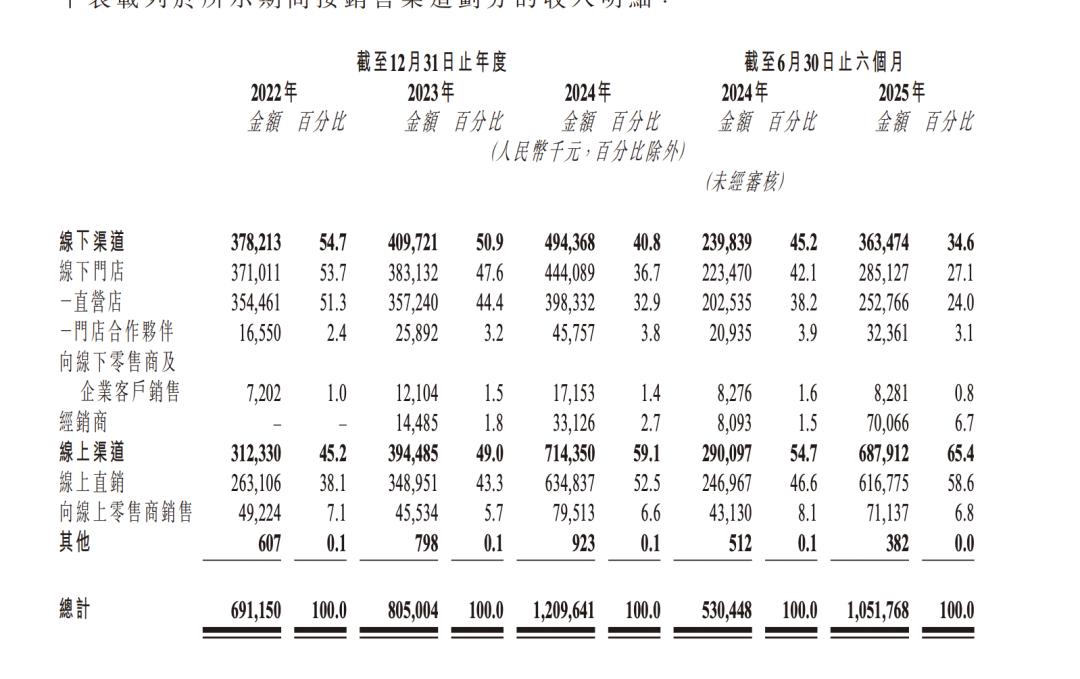
Core Viewpoint - Lin Qingxuan has successfully listed on the Hong Kong Stock Exchange, becoming the first high-end domestic skincare brand to do so, amidst a wave of consumer company IPOs expected by 2025 [1][2]. Company Overview - Lin Qingxuan was founded in 2003 during the SARS outbreak, initially starting with handmade soaps priced at 25 yuan each. The brand shifted towards high-end products with the launch of camellia oil in 2014 [2]. - The company has a notable shareholder base, including brands like Youngor and global beauty giant L'Oréal [2]. Market Position - Lin Qingxuan is positioned as a leader in the high-end domestic skincare market, ranking first among Chinese high-end domestic skincare brands and being the only domestic brand in the top 15 high-end skincare brands in China [15]. - The brand has established a high pricing strategy, similar to that of other high-end brands like Maogeping, and has created a unique market segment for domestic beauty products [4][15]. Financial Performance - On its first trading day, Lin Qingxuan's stock price rose by 9.3%, closing at 85 HKD per share, with a total market capitalization of approximately 11.9 billion HKD [2]. - Revenue figures from 2022 to the first half of 2025 show a compound annual growth rate (CAGR) of 51.2%, with online revenue increasing from 45.2% in 2022 to 65.4% in the first half of 2025 [11][12]. - The gross profit margin has consistently remained above 81%, with core products like camellia oil achieving a gross margin of 86.2% [17]. Sales and Marketing Strategy - Lin Qingxuan has adopted a unique family-based influencer marketing strategy, leveraging the founder and family members to create a content-driven approach to attract customers [13]. - The company has invested heavily in sales and distribution, with cumulative expenses reaching 2.263 billion yuan from 2022 to the first half of 2025, accounting for 55.2% of revenue in the first half of 2025 [20]. Store Expansion - The number of Lin Qingxuan stores has grown from 366 in 2022 to 554 by mid-2025, with over 95% of these located in shopping malls across major cities [18][19].
奶茶店开始“卖饭”?蜜雪、古茗、阿嬷都盯上这门生意
3 6 Ke· 2026-01-10 04:52
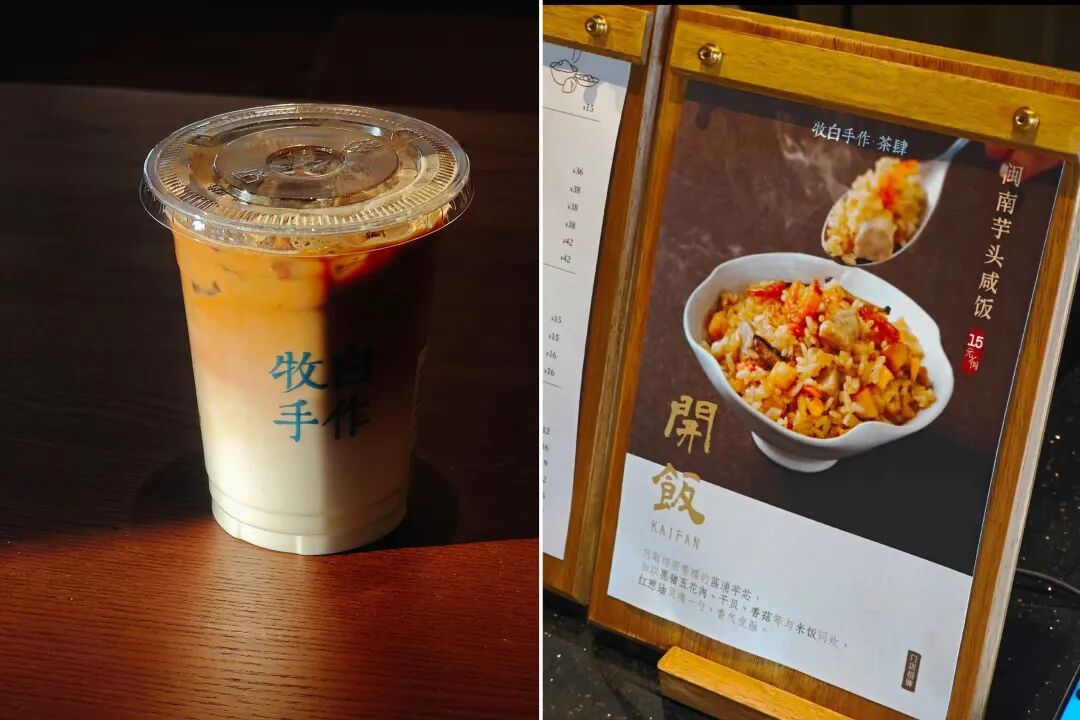
Core Insights - The trend of beverage shops selling food items, particularly rice dishes, is gaining traction, with brands like Mubaishou and A-Ma Handcrafted leading the way in this new market segment [1][3][7] Group 1: New Product Offerings - Mubaishou has introduced a new dish, Min Nan Taro Rice, priced at 15 yuan, which has received positive feedback for its flavor and value [3] - A-Ma Handcrafted has also attracted attention by offering rice dishes, although they primarily sell a rice sauce for customers to pair with rice [7][18] - The beverage industry is increasingly integrating food offerings, moving from simple snacks to full meal options, targeting breakfast and lunch markets [8][13] Group 2: Market Strategy - Brands are redefining their business models by creating new store formats that emphasize the combination of beverages and meals, enhancing customer experience [14][16] - Companies like Nayuki are launching new store concepts focused on light meals, aiming to cater to the lunch crowd with affordable options [17] - The strategy of offering food items is seen as a way to increase average transaction value and enhance brand presence in consumers' daily lives [20][21] Group 3: Industry Trends - The beverage sector is witnessing a shift towards food offerings as a response to market competition, with brands looking to expand their product categories and consumer touchpoints [21][24] - Successful integration of food and beverage offerings often relies on light processing or strong synergy between products, with many brands still exploring this model [24] - Despite the growing trend, food sales currently represent a small percentage of total revenue for many beverage brands, indicating that the fusion of drinks and meals is still in its early stages [24]
50万开店,1年半回本,这个快餐巨头要和蜜雪、瑞幸抢加盟商
3 6 Ke· 2026-01-09 03:55
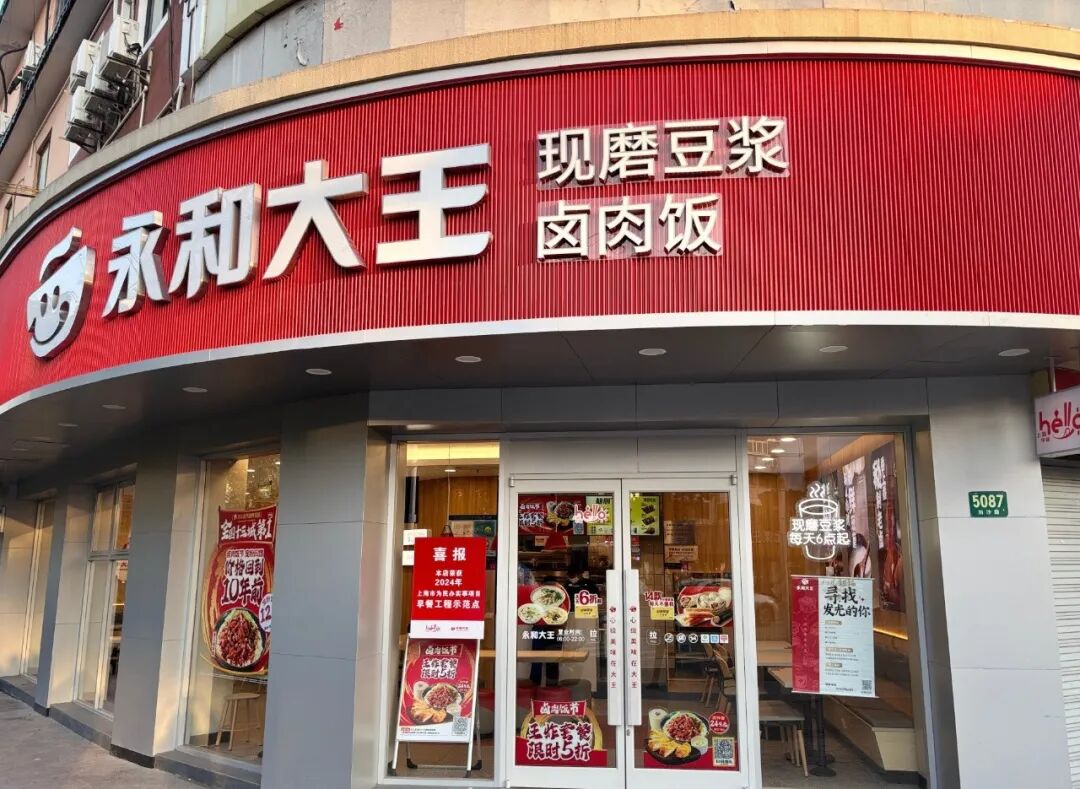
Core Viewpoint - Jollibee Foods Corporation, the parent company of "Yonghe Dawang," plans to spin off its international business into a new entity named Jollibee Foods International, aiming for a U.S. stock exchange listing by the end of 2027. This move is part of a strategy to enhance growth and operational efficiency in overseas markets, particularly in China [1][7]. Group 1: Business Performance and Strategy - Jollibee's international business has shown strong performance, with same-store sales growth of 6.2% in Q3 2025, outperforming competitors like McDonald's and Domino's Pizza [4]. - In China, same-store sales growth reached 8.0%, driven by the expansion of third-party delivery platforms and improved dine-in performance [4]. - The company adopted a "price for volume" strategy, resulting in a 26% increase in transaction volume, which offset an 11% decline in average transaction value [6]. Group 2: Expansion and Market Positioning - Jollibee's expansion strategy includes a focus on a light-asset model, primarily through franchising, with 77% of the 754 new stores opened in the first nine months of 2025 being franchise locations [8][11]. - The introduction of the "Super Value Model" has reduced the investment payback period from 2.5-3 years to approximately 1.5 years, lowering the investment cost per store significantly [11]. - The company is strategically selecting locations in second-tier cities, focusing on residential areas to reduce rental costs and extend operating hours [11][12]. Group 3: Brand Management and Future Outlook - Jollibee is cautious with its brand "Tian Haowang," pausing expansion due to intense competition in the casual dining sector, while focusing on profitability in existing markets [12]. - The company aims to leverage its international business's scale post-spin-off to enhance profitability, similar to trends seen in other multinational restaurant chains [13].
中国咖啡市场“变阵”拉开序幕
Zheng Quan Ri Bao· 2026-01-07 17:05
Core Insights - The Chinese coffee market is experiencing intense competition, shifting from price wars to a focus on supply chain management, digital operations, and penetration into lower-tier markets [1][2][9] - The transformation in coffee consumption culture is evident, with coffee evolving from a "social consumption" to a "daily consumption" product [1][2] Market Dynamics - Domestic brands like Luckin Coffee have disrupted the market traditionally dominated by international players such as Starbucks and Costa by leveraging delivery and digital ordering models [2][3] - The proportion of consumers drinking coffee during daily activities has reached 47.89% [2] - The per capita annual coffee consumption in China is projected to rise from 6 cups in 2016 to 22 cups by 2024, with significant growth in second and third-tier cities [2] Brand Expansion - Major coffee brands such as Luckin, Kudi, and others have surpassed 10,000 stores, with Luckin nearing 30,000 locations [3] - Starbucks operates approximately 8,000 stores in China after 26 years, while some mid-tier brands have seen slower growth or even a decline in store numbers [3] Strategic Shifts - International brands are seeking strategic partnerships and restructuring to adapt to the changing market landscape, with Starbucks forming a joint venture with Boyu Capital to enhance local market expertise [8] - The competition is shifting from brand premium to efficiency and scale, with domestic brands likely to dominate the market [4] Pricing Trends - Coffee prices have been declining, with average consumer spending on coffee dropping from 41 yuan in September 2023 to 26 yuan by September 2025 [6] - The percentage of coffee shops with prices below 15 yuan has increased from 29.8% to 36.9% within a year [6] Challenges and Innovations - Coffee brands face challenges such as high costs, price pressures, and severe product homogeneity, leading to decreased consumer loyalty [7] - Brands are exploring various strategies to enhance value, including launching budget sub-brands and utilizing technology to reduce costs [7] Supply Chain Importance - The competition is increasingly focused on supply chain integration, with companies aiming to control costs and ensure quality from sourcing to retail [9][10] - Fluctuations in coffee bean prices have prompted brands to secure long-term procurement agreements and invest in roasting facilities to stabilize costs [9][10] Future Outlook - The coffee industry is expected to undergo a "de-bubbling" reshuffle, leading to increased market concentration and the emergence of brands that leverage unique supply chains and localized operations [11] - The market is transitioning from price-driven competition to efficiency-driven value competition, emphasizing the need for brands to establish comprehensive value chains [11]


一般零售板块1月7日跌0.36%,翠微股份领跌,主力资金净流出3.46亿元
Zheng Xing Xing Ye Ri Bao· 2026-01-07 08:58
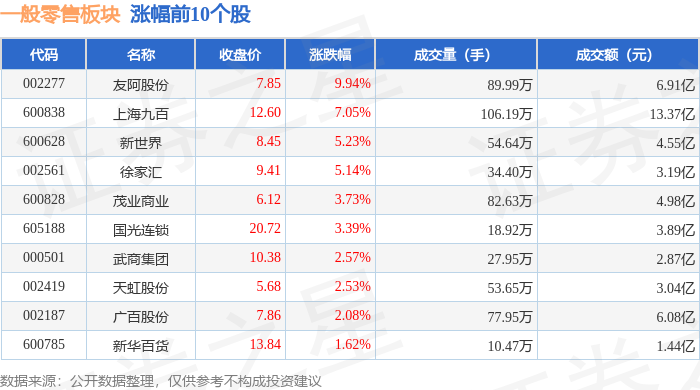
Market Overview - The general retail sector experienced a decline of 0.36% on January 7, with Cuiwei Co. leading the drop [1] - The Shanghai Composite Index closed at 4085.77, up 0.05%, while the Shenzhen Component Index closed at 14030.56, up 0.06% [1] Stock Performance - Notable gainers in the general retail sector included: - Youa Co. (002277) with a closing price of 7.85, up 9.94% and a trading volume of 899,900 shares, totaling 6.91 billion yuan [1] - Shanghai Jiubai (600838) closed at 12.60, up 7.05% with a trading volume of 1,061,900 shares, totaling 13.37 billion yuan [1] - New World (600628) closed at 8.45, up 5.23% with a trading volume of 546,400 shares, totaling 4.55 billion yuan [1] Fund Flow Analysis - The general retail sector saw a net outflow of 346 million yuan from institutional investors, while retail investors contributed a net inflow of 145 million yuan [2] - The top stocks by net inflow from retail investors included: - Youa Co. with a net outflow of 91.06 million yuan from retail investors [3] - Shanghai Jiubai with a net outflow of 5.84 million yuan from retail investors [3] - New World with a net outflow of 3.12 million yuan from retail investors [3]


高端酸奶的“泡沫” ,破了
3 6 Ke· 2026-01-06 12:13
Core Insights - The high-end consumer goods industry has entered a "deep winter" in 2025, leading to widespread price reductions across various brands, including luxury cars, beauty products, and alcoholic beverages, with price drops exceeding 20% from peak levels [1] - The dairy industry, particularly high-end products, has also experienced significant price cuts, with reductions ranging from 30% to 50%, and some products seeing drops as high as 70% [1][3] Group 1: Market Dynamics - The decline in demand for high-end dairy products is not due to a general aversion to premium goods, but rather a failure of traditional brands to engage consumers effectively [4][5] - Consumers have become more rational and discerning, focusing on product quality and effectiveness rather than marketing narratives [5][6] Group 2: Marketing Strategies - Traditional marketing approaches, such as high-profile sponsorships and storytelling, are becoming less effective in reaching today's consumers, who are more skeptical and have diverse media consumption habits [9][10] - Brands like 越秀辉山 and Blueglass have struggled with outdated marketing strategies, leading to penalties and diminished brand reputation [7][8] Group 3: Product Differentiation - The dairy sector faces challenges in product differentiation, as many offerings are similar in taste and nutritional content, making it difficult to justify premium pricing [13][14] - To succeed, brands must find ways to enhance perceived value, such as emphasizing unique nutritional benefits or superior sourcing practices [17][27] Group 4: Future Opportunities - The aging population is expected to increase demand for high-quality nutritional products, presenting a cyclical opportunity for brands like 越秀辉山 to innovate and improve their offerings [28][29] - Companies should focus on modernizing marketing strategies and ensuring product quality to remain competitive in a changing market landscape [18][26]