Wolfspeed

Search documents
This Wolf Isn't Dead Yet: Initiating Wolfspeed Stock With A Buy
Seeking Alpha· 2025-05-27 14:24
Core Insights - Wolfspeed, Inc. (NYSE: WOLF) experienced significant volatility last week, initially facing challenges but then rebounding sharply, indicating potential investment opportunities for those looking to capitalize on momentum [1]. Company Performance - The recent fluctuations in Wolfspeed's stock price suggest a recovery phase, which may attract investors seeking to benefit from the upward momentum [1]. Market Context - The commentary reflects a broader market perspective, emphasizing the importance of momentum in investment strategies, particularly in the technology sector [1].



三大美股指数周度下跌超2%,特朗普称6月1日起将对欧盟征收50%关税
Soochow Securities· 2025-05-27 04:35
Market Performance - The three major US stock indices fell by over 2% last week, with the S&P 500 down 2.6%, the Dow Jones down 2.5%, and the Nasdaq down 2.5%[5] - The Hang Seng Index and Hang Seng China Enterprises Index rose by 1.1% and 1.4%, respectively[5] Key Economic Events - President Trump announced a 50% tariff on the EU starting June 1, citing slow negotiation progress and criticizing EU automotive policies[4] - US existing home sales fell by 0.5% in April, with a seasonally adjusted annualized sales total of 4 million units, down 2% year-on-year[4] - The US Manufacturing PMI rebounded to 52.3, marking a three-month high[4] Corporate Highlights - Oracle plans to invest approximately $40 billion in Nvidia chips to support its new data center for OpenAI[1] - Baidu reported Q1 2025 revenue of 32.5 billion yuan, a 3% year-on-year increase, with core revenue up 7%[9] - BYD's electric vehicle sales in Europe surpassed Tesla for the first time, and the company will enter the Hang Seng Tech Index next month[12] Risks - The report highlights risks including macroeconomic fluctuations, geopolitical tensions, and currency volatility[2]
特朗普喊话访华,王毅已在北京密会美国贵客,12州反水起诉白宫
Sou Hu Cai Jing· 2025-05-26 15:33
Core Viewpoint - The article discusses the unprecedented "triple variation" in China-U.S. relations as of 2025, highlighting the contrasting approaches of the Trump administration and China's diplomatic responses [1][3]. Group 1: Diplomatic Engagements - Trump has expressed willingness to visit China to discuss economic and diplomatic issues, yet China has not formally responded, emphasizing the need for equal respect and formal diplomatic processes [3]. - Chinese Foreign Minister Wang Yi's meeting with U.S. Asia Society President Kevin Rudd signals a nuanced approach, welcoming unofficial communication while criticizing U.S. hegemonic actions [5]. - The dual communication channels established by China, involving both unofficial and official dialogues, reflect a mature and restrained diplomatic strategy [5]. Group 2: Legal and Economic Implications - A coalition of 12 U.S. states has filed a lawsuit against the Trump administration, accusing it of illegally imposing tariffs under the guise of a national emergency, which could have significant economic repercussions [7]. - The economic impact of tariffs is highlighted, with the coalition representing 30% to 40% of U.S. GDP, indicating that the costs of tariffs ultimately fall on American consumers and businesses [7]. - The lawsuit represents a structural conflict between federal and state powers, as the Constitution grants tariff authority to Congress, while Trump has used emergency declarations to bypass legislative processes [9]. Group 3: Future Trends in China-U.S. Relations - The article predicts three major trends in the ongoing China-U.S. competition: an escalation of the tech war, the normalization of tariff conflicts, and a restructuring of global order through China's initiatives like the "BRICS+" mechanism [11]. - China's advancements in self-innovation in areas like 5G and rare earths are expected to mitigate the effects of U.S. technological restrictions [11]. - The article concludes that if the Trump administration continues its tariff-centric approach, it may ultimately find itself isolated in the evolving global landscape [11].
中科曙光与海光信息宣布战略重组;TI、高通等呼吁免除半导体关税;DDR4价格涨幅大于DDR5…一周芯闻汇总(5.19-5.25)
芯世相· 2025-05-26 04:30
Core Insights - The article discusses significant developments in the semiconductor industry, highlighting government support for foreign investment in key sectors and the impact of tariff policies on major semiconductor companies [9][10][12]. Industry Trends - The Ministry of Commerce supports foreign investment projects in integrated circuits, biomedicine, and high-end equipment manufacturing, prioritizing them in major foreign investment project lists [9]. - Major U.S. semiconductor companies, including Intel and Qualcomm, are urging the Trump administration to exempt semiconductor tariffs, warning that such tariffs could harm the U.S. semiconductor industry [10][12]. - SEMI reports a 27% year-on-year increase in global semiconductor capital expenditure for Q1 2025, driven by investments in advanced logic and high-bandwidth memory technologies [11]. Company Developments - TSMC and Intel submitted letters opposing tariffs on semiconductor production equipment, citing potential cost increases and project delays [10]. - A strategic restructuring was announced between Zhongke Shuguang and Haiguang Information, aiming to enhance the information industry landscape [12]. - Weir Shares plans to issue H-shares and list on the Hong Kong Stock Exchange to accelerate internationalization and enhance competitiveness [12][14]. - Xiaomi unveiled its first self-developed flagship SoC, the Xuanjie O1, utilizing TSMC's 3nm process technology [13]. Market Dynamics - TrendForce indicates that DDR4 prices are rising faster than DDR5 prices due to anticipated supply tightening [20]. - The five major NAND Flash manufacturers are implementing a 10%-15% production cut to address oversupply, which is expected to support a rebound in storage prices [21]. - The demand for HBM4 products is expected to increase manufacturing costs significantly, with a projected premium exceeding 30% due to design complexities [20]. Strategic Moves - Foxconn is investing €250 million to establish Europe's first FOWLP factory, focusing on advanced semiconductor packaging and testing [18]. - Wolfspeed is preparing to file for bankruptcy due to unresolved debt issues, seeking Chapter 11 protection [16]. - Samsung Electronics plans to expand its 1c DRAM production capacity, with investments expected to be completed by the end of the year [17].


1200亿,一个半导体鼻祖破产
投资界· 2025-05-24 07:51
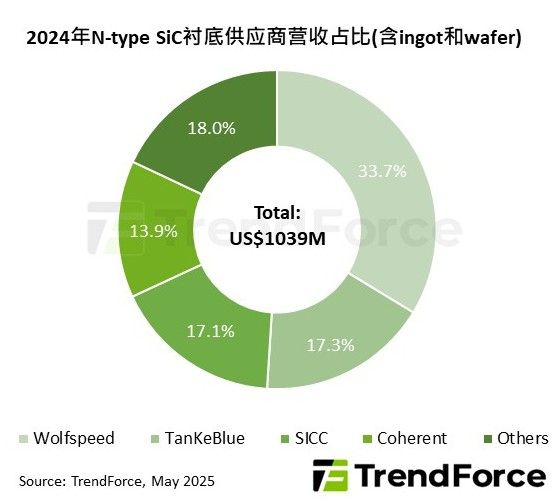
Core Viewpoint - Wolfspeed, a leading American silicon carbide wafer manufacturer, is reportedly on the verge of bankruptcy, with its stock plummeting 60% in a single night, highlighting the challenges faced by the company in a competitive market dominated by Chinese counterparts [1][4]. Company History - Founded in 1987 as Cree, Wolfspeed pioneered silicon carbide technology, launching the first commercial silicon carbide wafer in 1991 and becoming a major player in the blue LED market [3][6]. - The company rebranded to Wolfspeed in October 2021, focusing on third-generation semiconductors, and saw its stock reach a peak of $139, with a market cap of $16.5 billion (approximately 120 billion RMB) [6][10]. Market Challenges - The decline in Wolfspeed's fortunes can be attributed to aggressive expansion strategies that overlooked market dynamics, particularly the slower-than-expected electrification of the automotive market in Europe and the U.S. [9][10]. - The company's flagship Mohawk Valley plant, which cost over $5 billion, generated only $7.8 million in revenue in the latest fiscal quarter, with a projected capacity utilization of just 25% by the end of 2024 [10][11]. Financial Situation - Wolfspeed's debt has reached approximately $6.5 billion, with annual interest payments of about $800 million, while cash reserves stand at only $1.3 billion [10][11]. - The company's stock has fallen 33% year-to-date, with an 85% decline projected for 2024, leading to a current share price of just over $1 [10][11]. Competitive Landscape - Despite holding a 33.7% market share in the global silicon carbide substrate market in 2024, Wolfspeed faces increasing competition from Chinese firms like Tankeblue and SICC, which have gained significant market shares of 17.3% and 17.1%, respectively [13][14]. - Chinese manufacturers have been able to reduce costs significantly, with 6-inch substrate prices dropping to 30% of international levels, further pressuring Wolfspeed's market position [13][14]. Industry Trends - The rise of Chinese companies in the third-generation semiconductor space reflects a broader trend of China's increasing dominance in advanced manufacturing, supported by a robust domestic market and a shift from a "demographic dividend" to an "engineer dividend" [15].

Wolfspeed,何以至此?
半导体行业观察· 2025-05-23 01:21
Core Viewpoint - Wolfspeed is facing significant challenges despite being a leader in the SiC (Silicon Carbide) sector, with potential bankruptcy looming as the company restructures to improve operational efficiency and financial health [1][3]. Group 1: Company Overview - Wolfspeed has been a pioneer in the SiC field since the 1990s, introducing various sizes of SiC substrates [1]. - The company opened its first 8-inch wafer fab, Mohawk Valley Fab (MHV), in 2022, aiming to be the sole mass producer of SiC devices on this platform by 2025 [1]. - Currently, Wolfspeed's power SiC devices account for approximately 20% of its business, generating around $100 million in revenue in 2020 [3]. Group 2: Market Position and Challenges - By 2024, Wolfspeed's power SiC device revenue is projected to exceed 50% of its total income, growing nearly fourfold to approximately $400 million, positioning it as the fourth largest globally [3]. - The company is struggling to maintain revenue levels in 2024 due to a slowdown in the electric vehicle market, which is impacting the growth of the equipment segment [5]. - The rise of Chinese SiC substrate manufacturers has led to a significant drop in SiC wafer prices, decreasing by 30% in 2024, which has further complicated Wolfspeed's market position [6]. Group 3: Strategic Moves and Future Outlook - Wolfspeed has divested its LED and RF device businesses to focus on power SiC, indicating a potential for further business segmentation [9]. - The transition from a materials company to a device company presents high barriers, and significant capital expenditures will be necessary for future development [9]. - The strategic value of Wolfspeed's assets remains high, particularly in the context of U.S. national security and supply chain independence, as it operates the only fully automated 8-inch high-volume wafer fab owned by a U.S. company [9].
碳化硅龙头股价一夜暴跌60%背后:产业洗牌进行时
2 1 Shi Ji Jing Ji Bao Dao· 2025-05-22 12:05
Core Viewpoint - Wolfspeed, a leading silicon carbide substrate company, has seen its stock price plummet over 78%, raising concerns about potential bankruptcy due to ongoing losses and increased competition in the silicon carbide market [1][5]. Company Performance - Wolfspeed's stock price peaked at $142.33 per share during 2021-2022 but has now dropped to $1.28 per share, indicating a significant decline [1]. - The company reported a net loss of $286 million for the third fiscal quarter of 2025, despite a revenue of $185 million, which represents an 8% year-over-year decline [8]. - The Mohawk Valley wafer plant, which was expected to be a key revenue driver, achieved only a 20% utilization rate by June 2024, with projections to reach 25% by the end of 2024 [5][8]. Market Position and Competition - Wolfspeed's market share in silicon carbide substrates has decreased from approximately 80% to 33.7% from 2018 to 2024, with Chinese companies like TanKeBlue and SICC gaining significant ground [2]. - The company faces intense price competition, with silicon carbide substrate prices reportedly halving over a three-year cycle, diminishing Wolfspeed's technological advantages [9][10]. - The global market for N-type silicon carbide substrates is projected to decline by 9% in 2024, largely due to weakened demand in the automotive and industrial sectors [11]. Industry Dynamics - The silicon carbide industry is experiencing a shift, with increased competition from both domestic and international players, particularly in China, which is seen as a key market for silicon carbide applications [11][12]. - Domestic Chinese companies are reportedly more efficient and responsive compared to their overseas counterparts, which may enhance their competitive position in the market [11]. - The transition from 6-inch to 8-inch wafers has been debated, with concerns about yield and cost implications, impacting Wolfspeed's strategic decisions [7]. Financial Support and Future Outlook - Wolfspeed is expected to receive $750 million in funding from the U.S. government and an additional $750 million from a consortium of investors, totaling $2.5 billion in anticipated capital [8]. - The company is undergoing management changes to improve its financial situation, including the appointment of a new CEO and board members with experience in the semiconductor industry [7][8].
Wolfspeed:破产可能导致股权损失
美股研究社· 2025-05-22 11:43
Core Viewpoint - Wolfspeed, a silicon carbide semiconductor solutions provider, is facing a potential bankruptcy filing within weeks, leading to a significant drop in its stock price by over 60% [1][5]. Financial Situation - The company has a total debt of $6.65 billion, with various convertible notes and senior notes contributing to its financial burden [2]. - Despite having $1.3 billion in unrestricted cash, the uncertainty surrounding the $750 million CHIPS Act funding complicates its refinancing efforts for $3.1 billion in convertible debt [1][2]. Debt Structure - The debt includes multiple convertible notes with varying interest rates, and a significant portion is held by secured lenders led by Apollo Global Management [2][3]. - Unsecured creditors, including major customer Renesas Electronics, have provided $2 billion in unsecured refundable deposits, but they may face substantial losses [3]. Bankruptcy Considerations - The company is exploring a pre-packaged bankruptcy plan, which may prioritize secured and unsecured lenders over common stockholders [4][6]. - If an agreement with lenders is not reached, Wolfspeed may file for bankruptcy without a restructuring support agreement, potentially leading to a court-confirmed plan despite creditor opposition [4]. Impact on Shareholders - Common stockholders are at risk of losing their investments, as the company's low enterprise value diminishes recovery prospects for unsecured creditors [5][6]. - Analysts suggest that existing shareholders may ultimately bear the brunt of the losses, leading to a "strong sell" rating for Wolfspeed's stock [5].

Wolfseed可能破产助力缓解国内SiC价格竞争压力
First Capital Securities· 2025-05-22 06:34
Investment Rating - The industry investment rating is "Recommended," indicating a positive outlook for the industry fundamentals and expected outperformance against the benchmark index [29]. Core Insights - Wolfspeed, a leading global supplier of SiC substrates, is reportedly preparing to file for bankruptcy, which has led to a significant drop in its stock price by over 50% [3][4]. - In contrast, Tianyue Advanced, a domestic SiC substrate company, is projected to achieve approximately $240 million in revenue for 2024, representing a 41% year-on-year growth, and has reported a net profit of 179 million RMB, marking its first annual profit from core operations [8][9]. - The report highlights that domestic companies have gained a significant cost advantage over Wolfspeed, with Tianyue Advanced's gross margin improving from -5.8% to 24% from 2022 to 2025, while Wolfspeed's gross margin has declined from 34.1% to -17.1% during the same period [9][19]. Summary by Sections Section 1: Wolfspeed's Financial Struggles - Wolfspeed's revenue for the first three quarters of fiscal 2025 was $560 million, down approximately 8% year-on-year, with a net loss of about $950 million, marking a 37.7% increase in losses compared to the previous year [3][4]. - The company's total assets were reported at $7.57 billion, with net assets dwindling to approximately $210 million and cumulative losses reaching about $3.87 billion [5][6]. Section 2: Domestic Competitors' Advancements - Domestic companies have made significant strides in SiC substrate production, with Tianyue Advanced achieving mass production of 8-inch substrates and planning to launch 12-inch substrates in 2024 [14][17]. - Other domestic firms, such as ShuoKe Crystal and TianKe HeDa, are also showcasing advancements in 12-inch SiC substrates, indicating that domestic players are catching up with international competitors [14][17]. Section 3: Market Dynamics and Price Competition - The global market for N-type/conductive SiC substrates is projected to reach $1.04 billion in 2024, with a year-on-year decline of about 9%. Wolfspeed holds a market share of approximately 33.7%, while TianKe HeDa and Tianyue Advanced hold shares of 17.4% and 17.1%, respectively [18][19]. - If Wolfspeed files for bankruptcy, it is expected to alleviate current price competition pressures in the SiC substrate market, benefiting domestic manufacturers significantly [18][19]. Section 4: Long-term Demand Outlook - The report expresses optimism regarding the long-term growth of SiC chip demand, primarily driven by the electric vehicle sector, which accounts for about 70% of the demand, and the renewable energy sector, which exceeds 10% [23][25].

新增2条8英寸SiC产线,有望年底通线
行家说三代半· 2025-05-22 05:58
Core Viewpoint - The article discusses the advancements in the silicon carbide (SiC) industry, highlighting new production lines and technological developments in both China and Singapore, which are expected to enhance the capabilities and applications of SiC products in various sectors, particularly in electric vehicles and power electronics [2][4][8]. Group 1: New Production Lines - Zhuzhou CRRC is set to launch an 8-inch SiC wafer production line by the end of 2025, with construction starting in November 2024 and equipment installation expected in the second half of 2025 [2][4]. - Singapore's A*Star is establishing an 8-inch SiC wafer open research line aimed at accelerating SiC innovation, which will be the world's first industrial-grade production line of its kind [6][8]. Group 2: Technological Developments - Zhuzhou CRRC has developed a third-generation fine planar gate SiC product and is advancing towards fourth and fifth-generation technologies, with key products including 3300V high-voltage planar gate SiC MOSFETs and 1200V fine planar gate SiC MOSFETs [3]. - The company’s SiC MOSFETs cover voltage levels from 650V to 6500V, suitable for high-frequency and high-power density systems, with applications in electric vehicles and UPS systems [3]. Group 3: Market Applications - Zhuzhou CRRC's SiC products are being utilized in various sectors, including photovoltaic applications and charging infrastructure, with significant potential for mass production in the new energy vehicle market by 2025 [3][4]. - The open research line in Singapore is expected to benefit local companies, particularly startups, by providing a centralized platform for SiC wafer development and trial production [8].