
格力电器

Search documents
中国品牌向新而行 阔步迈向高质量发展 ——2025中国品牌论坛综述
Ren Min Ri Bao· 2025-11-02 22:46
自2015年起,由人民日报社发起的中国品牌论坛已成功举办11届。本届论坛设主论坛和"2025金融高质 量发展报告会""推动教育高质量发展主题研讨会"两个平行分论坛。 人民日报社副总编辑方江山主持论坛开幕式时表示,在习近平总书记关于"三个转变"重要指示精神指引 下,越来越多的中国品牌持续向新而行,成长为高品质高品位的"国货之光"。当前,中国品牌正展现出 非同寻常的韧性和活力,从一个侧面日益展现出中国式现代化的非凡魅力和美好前景。 习近平总书记指出,"推动中国制造向中国创造转变、中国速度向中国质量转变、中国产品向中国品牌 转变""因地制宜发展新质生产力,打造更多叫得响的品牌"。 10月29日,由人民日报社主办的2025中国品牌论坛在河北雄安新区举行,全国人大常委会副委员长雪克 来提·扎克尔出席并致辞。雪克来提·扎克尔表示,品牌是高质量发展的重要象征,是国家竞争力的集中 体现。进入新时代以来,中国品牌的数量迅速增加、质量显著提升,在全球的知名度、美誉度和影响力 与日俱增,品牌高质量发展取得可喜成绩,品牌强国建设迈出坚实步伐。"十五五"时期,我们要全面贯 彻党的二十大和二十届历次全会精神,聚焦实施质量强国战略,扎实开 ...
中国品牌向新而行 阔步迈向高质量发展
Ren Min Wang· 2025-11-02 22:21
Core Viewpoint - The 2025 China Brand Forum emphasizes the importance of brand development as a symbol of high-quality growth and national competitiveness, highlighting the significant progress made in the quality and recognition of Chinese brands on a global scale [8][9][14]. Group 1: Brand Development and Quality - The forum aims to create a platform for discussing the progress and strategies in brand development, focusing on the transition from "Made in China" to "Created in China" and from "Chinese speed" to "Chinese quality" [9][10]. - The number of Chinese brands has rapidly increased, with notable improvements in quality, recognition, and influence globally, marking a solid step towards building a strong brand nation [8][14]. - The manufacturing sector has maintained its position as the largest globally for 15 consecutive years, with a product quality compliance rate of 93.93% [11]. Group 2: Government and Institutional Support - Various government departments and institutions are actively promoting brand building as a strategic support for high-quality development, with initiatives aimed at enhancing the competitiveness of brands [12][13]. - The National Market Supervision Administration is implementing a quality-driven strategy to improve product quality and foster a favorable environment for brand development [12]. - The Ministry of Industry and Information Technology is helping enterprises enhance their competitiveness through quality standards and brand initiatives [11]. Group 3: Innovation and Sustainability - Innovation is identified as a crucial driver for brand development, with companies like China Changan Automobile Group focusing on technological advancements and sustainable practices [21][22]. - The emphasis on green development is evident, with companies integrating eco-friendly practices into their brand strategies, such as Southern Power Grid's commitment to clean energy [16]. - The importance of cultural elements in brand identity is highlighted, with companies leveraging traditional Chinese culture to enhance brand value [24]. Group 4: Internationalization and Market Expansion - Chinese brands are increasingly focusing on international markets, with significant contracts signed in countries involved in the Belt and Road Initiative, showcasing the global reach of Chinese enterprises [23]. - Companies like China Energy Construction Group and China Railway are establishing a strong international presence through major infrastructure projects [23]. - The internationalization of brands is seen as essential for building world-class enterprises, with plans for extensive market expansion in Southeast Asia and beyond [23]. Group 5: Future Outlook - The forum participants express optimism about the future of Chinese brands, emphasizing the need for sustained efforts in brand building to achieve greater global recognition [20][19]. - The collective belief is that the next five years present valuable opportunities for enhancing the quality and strength of Chinese brands, contributing to the modernization of China [20].

公募重仓股25年进化史赛道在变,穿越牛熊“主心骨”未变
Zheng Quan Shi Bao· 2025-11-02 18:10
Core Insights - The public fund's top ten heavy stocks have undergone structural changes, reflecting the evolution of China's economic transformation over the past 25 years, transitioning from industrial to consumer and now to technology-driven sectors [1][8] - The shift in heavy stock industries indicates a response to China's economic transition, with each phase representing a different investment focus aligned with national strategies [6][8] Heavy Stock Evolution - From 2000 to 2010, the top heavy stocks were dominated by cyclical stocks like steel and finance, mirroring the characteristics of industrialization and urbanization [1][2] - Notable examples include China Unicom and China Merchants Bank, which consistently ranked among the top heavy stocks, highlighting the strong profitability of the banking sector during this period [1][2] - From 2010 to 2020, consumer stocks took over, with Kweichow Moutai becoming a benchmark for the consumer era, reflecting the trend of rising household income and consumption upgrades [2][3] - Since 2020, technology and high-end manufacturing have emerged as the new focus, with CATL surpassing Kweichow Moutai as the top heavy stock, showcasing the advantages of the new energy sector [3][4] Stock Selection Logic - The correlation between net profit growth and stock price increases underscores the importance of fundamentals in stock selection [4][5] - For instance, New East Wisdom's net profit growth of 284.38% led to a stock price surge of 318.74% in 2025, demonstrating the strong relationship between performance and valuation [4][5] - The evolution of price-to-earnings ratios and total market capitalization reflects the market's dynamic re-evaluation of company values, with technology stocks commanding higher valuations due to growth potential [5][6] Industry Concentration Trends - The concentration of heavy stocks has shifted from a focus on cyclical industries to a more diversified approach, indicating a strategic move towards risk management and alpha generation across various sectors [6][8] - The top heavy stocks now encompass a range of sectors, including electrical equipment, communications, and electronics, with a notable decrease in the dominance of any single industry [6][8] Future Outlook - The industry landscape for heavy stocks is expected to continue evolving in line with national strategic directions and industrial upgrades, with technology-driven sectors remaining at the forefront [8] - Companies that align with the pulse of the times are likely to maintain their appeal to public funds, as evidenced by the sustained interest in both traditional and emerging sectors [8]



公募重仓股25年进化史 赛道在变,穿越牛熊“主心骨”未变
Zheng Quan Shi Bao· 2025-11-02 18:05
Core Insights - The evolution of public fund holdings from 2000 to 2025 reflects significant structural changes in the Chinese economy, transitioning from industrial sectors to consumer-driven industries, and now to technology and high-end manufacturing [1][10] Group 1: Historical Trends in Heavyweight Stocks - From 2000 to 2010, public funds primarily invested in cyclical stocks like steel and finance, mirroring the industrialization and urbanization phases of China [2] - Key stocks during this period included China Unicom and China Merchants Bank, which highlighted the focus on communication and banking sectors as essential infrastructure [2] - By 2010, the focus shifted to consumer sectors, with Kweichow Moutai emerging as a leading stock, reflecting the rise of consumer spending and income growth [3] Group 2: Current Trends in Heavyweight Stocks - Since 2020, technology and high-end manufacturing have become the new focal points for public fund investments, aligning with national strategies for innovation and carbon neutrality [4] - CATL has become the top heavyweight stock, with a market value of 2071.04 billion yuan and a net profit growth of 36.2% in the first three quarters of 2025 [4] - Semiconductor and communication companies like Zhongji Xuchuang and Xinyi Sheng have also entered the top rankings, indicating a robust growth trajectory in the tech sector [4] Group 3: Performance Metrics - There is a strong correlation between net profit growth and stock price increases among the top holdings, with New Yi Sheng showing a net profit growth of 284.38% and a stock price increase of 318.74% in 2025 [5] - Historical examples, such as the performance of China Merchants Bank and Kweichow Moutai, further illustrate the importance of high profitability in driving stock performance [5] Group 4: Valuation Dynamics - The evolution of price-to-earnings ratios and total market capitalization reflects changing market perceptions of company value, with Kweichow Moutai's P/E ratio rising from 21.37 in 2005 to 56.3 in 2020 [6] - In contrast, tech stocks like Cambrian's P/E ratio approached 500 by 2025, indicating a willingness to pay a premium for growth potential [6] Group 5: Concentration and Diversification - The concentration of holdings has shifted from a focus on financial and steel sectors in 2007 to a more diversified approach in 2025, with significant representation from various industries [7] - This trend indicates a strategic shift towards seeking alpha returns across multiple sectors, reducing reliance on any single industry [7] Group 6: Future Outlook - The historical trajectory of public fund holdings underscores the importance of aligning with economic trends, with future investments likely to continue focusing on technology and high-end manufacturing [8][9] - The ongoing emphasis on innovation and industry upgrades suggests that companies aligned with national strategic directions will continue to attract public fund investments [9][10]
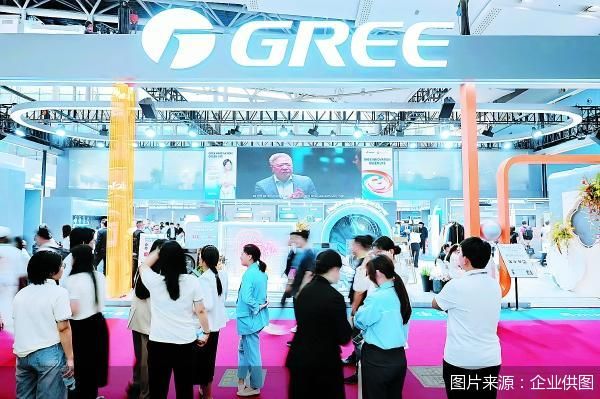
格力提前“入冬”?
Bei Jing Shang Bao· 2025-11-02 16:01
Core Viewpoint - Gree Electric Appliances has reported a significant decline in both revenue and net profit for the third quarter, highlighting the company's internal struggles and external challenges in a tough market environment [1][3]. Financial Performance - For the first three quarters of the year, Gree's revenue was 137.18 billion yuan, a year-on-year decrease of 6.5%, while net profit attributable to shareholders was 21.461 billion yuan, down 2.27% [3]. - In the third quarter alone, Gree's revenue dropped to 39.855 billion yuan, with a year-on-year decline of 15.09%, and net profit fell to 7.049 billion yuan, down 9.92% [3]. - The company's heavy reliance on air conditioning, which accounted for 78.38% of its revenue in the first half of the year, means fluctuations in this core business directly impact overall performance [3]. Industry Context - The air conditioning industry is currently facing a downturn, with domestic production and retail sales both experiencing significant declines [3]. - Data from Aowei Cloud Network indicates that in November, domestic air conditioning production fell by 19.8% year-on-year, and retail sales dropped by 21.2% [3]. Competitive Landscape - The air conditioning market is characterized by intense competition and product homogeneity, making it difficult for companies to differentiate themselves [4]. - Xiaomi's new smart home appliance factory in Wuhan poses a direct threat to Gree, as it shifts from an OEM model to in-house production, enhancing supply chain efficiency and product quality [6][7]. - Xiaomi's recent financial performance shows a significant increase in revenue from IoT and consumer products, with air conditioning sales growing over 60% year-on-year [7]. Strategic Considerations - Gree needs to address both internal challenges and external competition to regain market momentum, focusing on inventory reduction and demand recovery [8]. - The company must innovate in channel strategies and ecosystem development to navigate the current market difficulties and seek growth opportunities [8].

营收净利双降,格力提前“入冬”
Bei Jing Shang Bao· 2025-11-02 13:25
Core Viewpoint - Gree Electric Appliances has reported significant declines in revenue and net profit for the third quarter of 2025, highlighting the company's struggles amid a challenging industry environment [3][4]. Financial Performance - For the first three quarters of 2025, Gree achieved revenue of 137.18 billion yuan, a year-on-year decrease of 6.5%, and a net profit attributable to shareholders of 21.461 billion yuan, down 2.27% [3]. - In the third quarter alone, Gree's revenue was 39.855 billion yuan, reflecting a more severe decline of 15.09% year-on-year, while net profit dropped by 9.92% to 7.049 billion yuan [3]. Industry Context - The air conditioning industry is currently in a downturn, with retail sales in September 2025 down 21.2% year-on-year, and production for domestic sales and exports also experiencing significant declines [4]. - The industry faces challenges such as product homogenization and intense competition, which complicate consumer decision-making [4]. Competitive Landscape - Gree's heavy reliance on air conditioning, which accounted for 78.38% of its revenue in the first half of 2025, makes it particularly vulnerable to fluctuations in this segment [3]. - Xiaomi's new smart appliance factory in Wuhan poses a direct threat to Gree, as it shifts from an OEM model to in-house production, enhancing supply chain efficiency and product quality [5][6]. Future Outlook - Despite current challenges, analysts suggest that Gree still has growth potential through continued focus on air conditioning and heating, as well as expansion into new energy sectors [5]. - To overcome internal and external pressures, Gree needs to innovate in channels and ecosystem development to regain growth momentum [7].
25W43周观点:直补趋势化,AI赋能商家降本增效,即时零售贡献新增量-20251102
Huafu Securities· 2025-11-02 11:49
Investment Rating - The report maintains a rating of "Outperform the Market" for the home appliance sector [7]. Core Insights - The Double Eleven shopping festival has seen an earlier start and extended duration this year, with major platforms like Kuaishou, JD, and Douyin initiating pre-sales as early as October 7, 2025 [14][16]. - Direct subsidy trends have become prominent, simplifying promotional strategies and focusing on direct price reductions across platforms [14][16]. - AI tools are increasingly empowering marketing operations, helping merchants reduce costs and improve conversion rates through precise customer targeting and efficient ad spending [3][16]. - The instant retail market is expected to contribute significantly to this year's Double Eleven sales, with platforms like Taobao and JD enhancing their local life services and promotional strategies [4][20]. Market Performance Data - The home appliance sector experienced a weekly increase of 1.2%, with specific segments showing varied performance: white goods up 1.6%, black goods down 0.3%, small appliances up 1.1%, and kitchen appliances up 2.7% [26]. - Key brands in the home appliance sector have shown significant sales growth, particularly in 3C digital and AI innovation products, with order volumes for major categories increasing over 70% year-on-year [20][21]. Segment Tracking - The report highlights the performance of various segments within the home appliance industry, noting that brands like Haier and Midea have faced challenges in sales, particularly in offline channels [37][40][41]. - The small appliance segment has shown resilience, with brands like Joyoung and Supor reporting positive sales growth in specific product categories [40]. - Kitchen appliances have also seen varied performance, with brands like Boss and Huadi experiencing significant fluctuations in sales figures [41].
超预期股票精选策略跟踪周报-20251102
Xiangcai Securities· 2025-11-02 11:46
Group 1 - The core viewpoint of the report highlights the performance of active quantitative funds, with a median return of 0.09% for the week of October 24-31, 2025, compared to a -0.43% return for the CSI 300 Index and a 0.41% return for the Wind All A Index [4][9]. - For the year, the median return of active quantitative funds stands at 28.88%, outperforming the CSI 300 Index at 17.94% and the Wind All A Index at 26.38% [4][9]. - The report indicates that the top-performing active quantitative funds for the week had returns between 3% and 6%, primarily concentrated in the electric equipment sector, while the underperforming funds had returns between -2% and -5%, mainly focused on the electronics sector [4][10]. Group 2 - The report details the performance of the "Super Expectation Stock Selection Strategy," which constructs a stock pool based on net profit exceeding expectations and analyst expectations [6][15]. - For the week of October 24-31, 2025, the strategy yielded a return of -0.98%, underperforming the benchmark Wind All A Index, which returned 0.41%, resulting in an excess return of -1.39% [6][17]. - Year-to-date, the strategy has achieved a return of 46.11%, significantly outperforming the benchmark index's return of 26.38%, leading to an excess return of 19.73% [6][21]. Group 3 - The report identifies that the top 30 selected stocks for November 2025 are concentrated in the machinery and equipment sector, with the highest return for the year being 116.30% from Cangge Mining (000408.SZ), categorized under non-ferrous metals [6][22][27]. - The report emphasizes the importance of the "Post-Earnings-Announcement Drift" phenomenon, which indicates that stock prices continue to drift in the direction of earnings surprises for some time after the announcement [6][15].
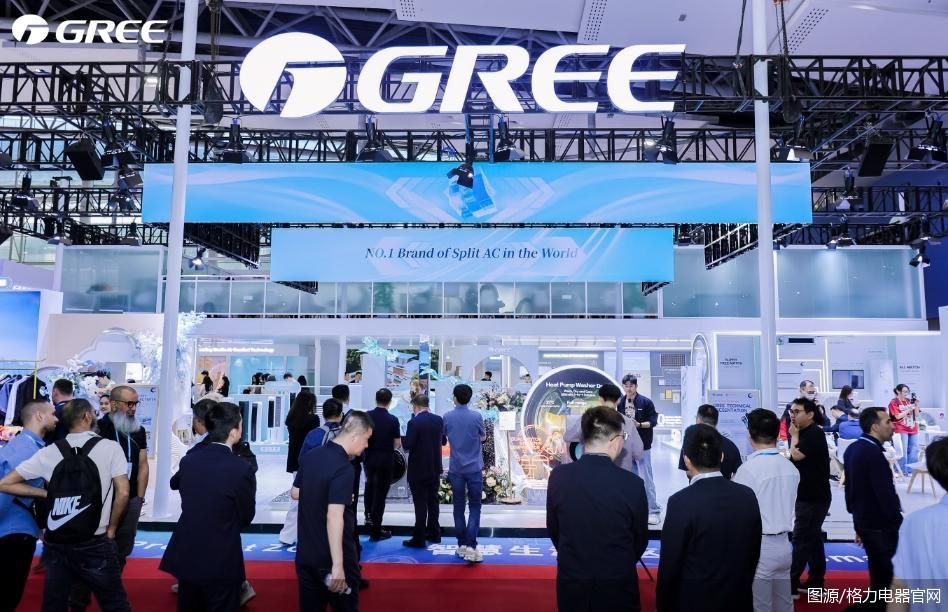
格力电器(000651):Q3业绩落地,宣布中期分红
Western Securities· 2025-11-02 11:28
Investment Rating - The investment rating for the company is "Buy" [4] Core Views - The company reported a revenue of 137.18 billion yuan for Q1-Q3 2025, a year-on-year decrease of 6.5%, and a net profit attributable to shareholders of 21.46 billion yuan, down 2.3% year-on-year. In Q3 2025, the revenue was 39.86 billion yuan, a decline of 15.1% year-on-year, with a net profit of 7.05 billion yuan, down 9.9% year-on-year, which was below expectations [1][2][4] - The air conditioning business continues to face pressure, with industry data showing a decline in the company's revenue compared to the overall market performance. The company is experiencing challenges due to increased competition in the low-end market and ongoing channel adjustments [1][2] - The company maintains its long-term competitive advantages and is actively expanding its online market presence through the Jinghong brand, aiming to cover a full price range [1][2] Financial Performance - The gross profit margin for Q3 2025 decreased by 0.27 percentage points, while the profit margin attributable to shareholders increased by 1.0 percentage points to 17.7% [2] - The company announced an interim dividend of 1 yuan per share, totaling 5.59 billion yuan [2] - Revenue projections for 2025-2027 are 179.8 billion yuan, 186.1 billion yuan, and 195.6 billion yuan, with net profits of 30.91 billion yuan, 32.60 billion yuan, and 34.49 billion yuan respectively [2][9] Valuation Metrics - The projected P/E ratios for 2025-2027 are 7.3, 7.0, and 6.6 respectively, indicating a favorable valuation despite short-term disturbances [2][9] - The company’s return on equity (ROE) is projected to decline from 27.2% in 2023 to 19.1% in 2027 [9]
海尔智家(600690):业绩表现亮眼,长期成长性依旧
Haitong Securities International· 2025-11-02 09:33
Investment Rating - The report maintains an "Outperform" rating for Haier Smart Home with a target price of RMB 36.16, based on a current price of RMB 26.81 [2][15]. Core Insights - Haier Smart Home has demonstrated outstanding performance with a revenue of RMB 234.05 billion for Q3 2025, reflecting a year-on-year growth of 9.98%, and a net profit of RMB 17.37 billion, up 14.68% year-on-year [4][10]. - The company's gross profit margin reached 27.2%, a slight increase of 0.1 percentage points year-on-year, indicating improved profitability driven by a high-end brand strategy [11]. - Domestic revenue growth for the first three quarters of 2025 was 9.5%, with Q3 showing a growth rate of 10.8%. The air conditioning segment saw revenue growth exceeding 30% in Q3 [12][13]. - Internationally, Haier's overseas revenue grew by 10.5% in the first three quarters, with a quarterly growth of 8.3% in Q3, supported by a localized operation strategy [13][14]. Financial Performance Summary - Revenue projections for Haier Smart Home are as follows: RMB 303.47 billion for 2025, RMB 314.74 billion for 2026, and RMB 331.79 billion for 2027, with respective growth rates of 6%, 4%, and 5% [3][9]. - Net profit estimates are RMB 21.18 billion for 2025, RMB 23.81 billion for 2026, and RMB 26.71 billion for 2027, maintaining a growth rate of approximately 12% annually [3][9]. - The diluted EPS is projected to be RMB 2.26 for 2025, RMB 2.54 for 2026, and RMB 2.85 for 2027, with a P/E ratio decreasing from 15 in 2025 to 10 in 2027 [3][9].
