五矿资源

Search documents
多只资源类基金,翻倍
3 6 Ke· 2026-01-21 11:48
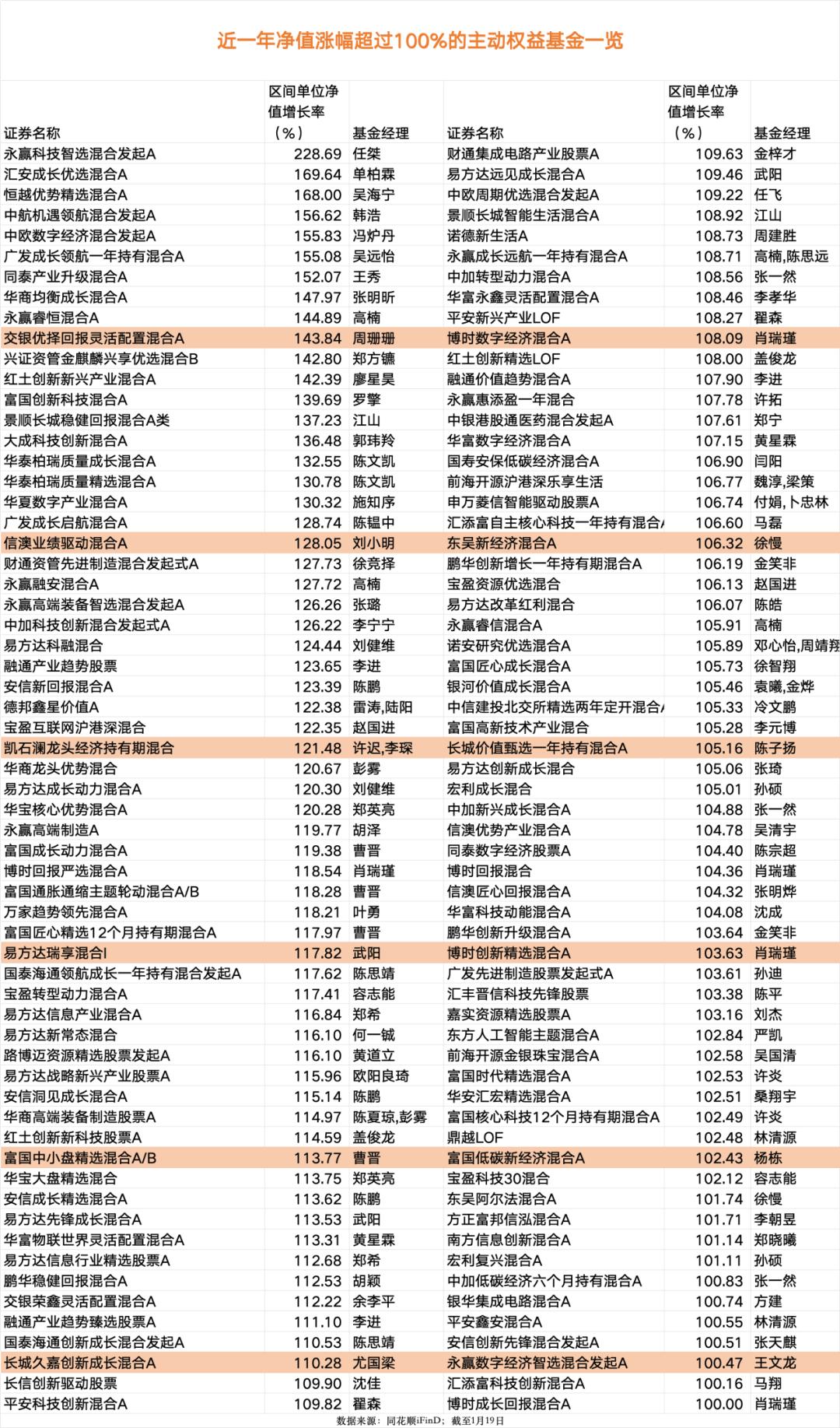
Group 1 - The core viewpoint of the articles highlights the significant performance of the non-ferrous metal sector, which surged by 89.38% in 2025, making it the top performer in the A-share market. The sector continues to attract attention in 2026 due to rising prices of gold, silver, copper, and aluminum [1][2][9] - The number of equity funds with doubled performance has increased significantly, with 75 active equity funds achieving this milestone by the end of 2025, and many resource-related funds showing strong performance in 2026 [2][3] - The data indicates that as of January 19, 2026, 176 public funds had a unit net value growth rate exceeding 100% over the past year, with a notable focus on non-ferrous and resource sectors [3][6] Group 2 - Several active equity funds have adjusted their portfolios to focus on resource and non-ferrous sectors, with some funds reporting over 100% growth in net value over the past year. For instance, the Longview Value Selection fund achieved a growth rate of 105.16% [4][8] - Fund managers are optimistic about the resource sector, citing factors such as global monetary easing, increased demand from AI data centers, and supply-side uncertainties as drivers for the sector's growth [9][10] - The top five commodities favored for investment in 2026 include copper, aluminum, lithium carbonate, gold, and small metals like tungsten, with a focus on high-growth and high-elasticity targets [10]

五矿资源(01208)深度研究 长风破浪会有时——打造中资国际矿业和全球资源旗舰
东方财富· 2026-01-21 10:25
Investment Rating - The report assigns an "Add" rating for the company, marking its first coverage [6]. Core Views - The company is positioned as a leading diversified copper producer under China Minmetals, aiming to achieve a copper production target of over 1 million tons by 2030 [6][21]. - The Las Bambas copper mine is identified as a "global resource flagship," with the "Heart of Bambas" strategy expected to stabilize its cash flow [6][5]. - The company is set to benefit from the integration of the Khoemacau copper mine and the expansion of the Kinsevere mine, which are anticipated to enhance copper production and profitability [6][5]. Summary by Sections Company Overview - The company operates as the core international mining platform of China Minmetals, focusing on a diversified portfolio of copper and zinc assets, with operations in Australia, South America, Africa, and North America [5][14]. - The company aims to leverage its expertise in both Chinese and international markets to diversify its resources and products [17]. Las Bambas Copper Mine - The Las Bambas mine, with a 62.5% ownership, is among the top ten copper mines globally, with significant copper reserves [5][18]. - The mine has faced community-related issues affecting production, but the implementation of the "Heart of Bambas" strategy is expected to restore stable cash flow [5][6]. Kinsevere Copper Mine - The Kinsevere mine, fully owned by the company, is transitioning from high-grade oxide ore to sulfide ore, with an expansion project expected to extend its operational life until 2035 [5][6]. Khoemacau Copper Mine - The Khoemacau mine, located in Botswana, is a large, long-life copper mine with significant production potential, aiming to increase its output from 50,000 tons to 130,000 tons by 2028/2029 [5][6]. Australian Zinc Mines - The Dugald River and Rosebery mines provide stable cash flow, with the Dugald River being one of the top ten zinc mines globally, expected to see a 401% increase in EBITDA in 2024 [5][6]. Financial Projections - The company forecasts revenues of $4.48 billion in 2024, growing to $7.91 billion by 2027, with net profits projected to rise from $162 million in 2024 to $1.17 billion in 2027 [7].
五矿资源(01208):深度研究:长风破浪会有时:打造中资国际矿业和全球资源旗舰
East Money Securities· 2026-01-21 09:48
Investment Rating - The report assigns an "Accumulate" rating for the company, marking its first coverage [2][6]. Core Views - The company is positioned as a leading diversified copper producer under China Minmetals, with a goal to achieve a copper production target of over 1 million tons by 2030 [5][22]. - The Las Bambas copper mine is identified as a "global resource flagship," with the "Heart of Bambas" strategy expected to stabilize its cash flow [6][49]. - The company anticipates significant growth from the Khoemacau copper mine in Botswana and the expansion of the Kinsevere copper mine, contributing to a positive outlook for the copper segment [6][49]. Summary by Sections Company Overview - The company operates as the core international mining platform of China Minmetals, focusing on a diversified portfolio of copper and zinc assets, with operations in Australia, South America, Africa, and North America [5][14]. - The company aims to leverage its expertise in both Chinese and international markets to diversify resources and products [17]. Key Assets - Las Bambas Copper Mine: Holds a 62.5% stake, with a production capacity ranking among the top ten globally. The mine has faced community issues affecting output but is expected to stabilize with the new community management strategy [5][6]. - Kinsevere Copper Mine: Fully owned, transitioning from high-grade oxide to sulfide mining, with an expansion project expected to extend its operational life to 2035 [5][6]. - Khoemacau Copper Mine: A significant long-life copper mine in Botswana, with plans to increase production capacity from 50,000 tons to 130,000 tons by 2028/2029 [5][6]. - Australian Zinc Mines: The Dugald River and Rosebery mines provide stable cash flow, with significant EBITDA growth expected in 2024 [5][6]. Financial Projections - The company forecasts revenues of $4.48 billion in 2024, growing to $7.91 billion by 2027, with net profits projected to rise from $162 million in 2024 to $1.17 billion in 2027 [7][6]. - The expected P/E ratio for 2026 is 14.2, indicating a favorable valuation compared to projected earnings growth [6][7]. Strategic Initiatives - The company is actively pursuing acquisitions, including a proposed purchase of Brazilian nickel assets, which would enhance its portfolio and diversify its metal exposure [6][52]. - The strategic focus includes optimizing the asset portfolio and enhancing financial flexibility to support growth initiatives [6][53].
2025年四季度,永赢基金旗下多只“智选”系列产品规模大涨
Zhong Zheng Wang· 2026-01-21 06:14
Group 1 - Yongying Fund's public funds reported significant growth in several actively managed equity products in Q4 2025, particularly the "Smart Selection" series, with notable increases in assets under management (AUM) exceeding 8 billion yuan for both Yongying Pioneer Semiconductor Smart Selection and Yongying High-end Equipment Smart Selection, reaching over 9 billion yuan by the end of 2025 [1] - Yongying Technology Smart Selection also saw an increase of nearly 4 billion yuan in Q4 2025, with its AUM surpassing 15 billion yuan by year-end [1] - The Yongying High-end Equipment Smart Selection A fund achieved a remarkable return of 56.42% in Q4 2025 [1] Group 2 - Fund manager Gao Nan indicated that the fund's strategy focuses on bottom-up stock selection, emphasizing company growth potential and earnings realization, while aiming to diversify industry concentration [2] - The fund also considers stocks with solid fundamentals, safety margins, and potential for improvement, optimizing its structure by evaluating various factors including safety margins and market trends [2] - Due to the growth in AUM, the fund has increased its focus on mid to large-cap companies, prioritizing mid-term certainty and safety margins [2]
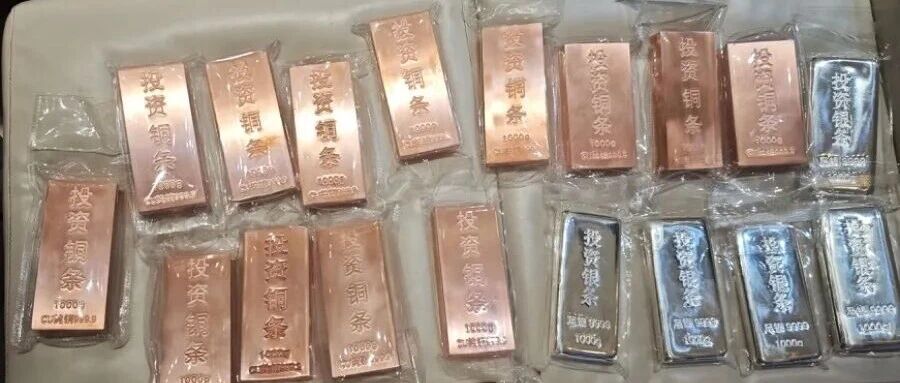
投资铜条首现深圳水贝:1千克卖180元 回收仅80元 商家直呼不建议买
2 1 Shi Ji Jing Ji Bao Dao· 2026-01-20 11:42
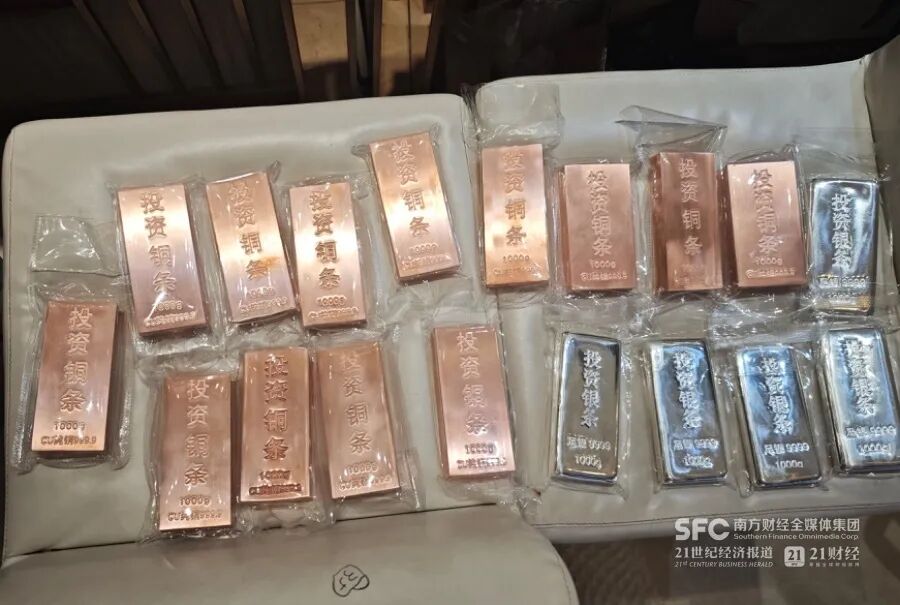
Core Viewpoint - The emergence of "investment copper bars" has sparked controversy and discussion, despite copper being primarily an industrial metal with limited investment value [1][5]. Group 1: Market Observations - Investment copper bars were found in the Shui Bei market, priced at 180 yuan per kilogram, with a recovery price of approximately 80 yuan, indicating a significant discrepancy between selling and recovery prices [3][5]. - The price of these copper bars fluctuated, reaching around 250 yuan before settling between 180 and 190 yuan [3][9]. - The market for copper bars appears to be driven by consumer interest, despite warnings from sellers against purchasing them as investments [2][3]. Group 2: Economic Implications - The phenomenon of investment copper bars raises questions about consumer behavior and market dynamics, as it does not align with traditional economic theories regarding investment commodities [5][6]. - The concept of "Giffen goods" and "Veblen goods" is discussed, suggesting that copper bars may be perceived as a form of entertainment spending rather than serious investment [5][6]. - The rise in copper prices, attributed to industrial demand and market speculation, has led to increased interest in copper-related investments, despite the metal's primary industrial use [8][9]. Group 3: Price Trends and Market Performance - Copper prices have been on the rise, with significant increases noted in both domestic and international markets, reaching historical highs [8][9]. - Recent market trends indicate strong performance in copper mining stocks, with notable gains for companies like Jiangxi Copper and others in the sector [9][10]. - Analysts predict continued upward pressure on copper prices due to tight supply conditions, despite potential short-term adjustments [10].
投资铜条首现深圳水贝:1千克卖180元,回收仅80元,商家直呼不建议买
2 1 Shi Ji Jing Ji Bao Dao· 2026-01-20 11:18
Core Viewpoint - The emergence of "investment copper bars" has sparked controversy and discussion, despite copper being primarily an industrial metal with limited investment value [2][3][4]. Group 1: Market Dynamics - Investment copper bars are being sold at prices around 180 yuan per kilogram, with a recovery price of approximately 80 yuan, indicating a significant disparity between selling and recovery prices [3][4]. - The price of copper bars has fluctuated, with a recent peak of 250 yuan per bar before settling between 180 and 190 yuan [3][4]. - The copper market has seen a strong performance, with copper prices rising approximately 2.85% year-to-date, reaching around 10.12 million yuan per ton [9][10]. Group 2: Economic Implications - The phenomenon of investment copper bars raises questions about consumer behavior and market dynamics, as it does not align with traditional economic theories [4][10]. - The concept of "Giffen goods" and "Veblen goods" is discussed, suggesting that copper bars may be perceived as a form of entertainment spending rather than a serious investment [7][8]. - The recent surge in copper prices has been attributed to industrial demand and concerns over supply, particularly in relation to potential tariffs on copper imports to the U.S. [9][10]. Group 3: Industry Trends - The copper mining sector has shown strong stock performance, with companies like Jiangxi Copper and Luoyang Molybdenum seeing significant price increases [11]. - The market is witnessing a trend where companies related to copper products, such as the cultural and creative product company "Copper Master," are seeking to enter the capital market [11]. - Analysts remain bullish on copper prices, with expectations of reaching historical highs, despite short-term pressures from market adjustments [11].




投资铜条首现深圳水贝:1千克卖180元,回收仅80元,商家直呼不建议买
21世纪经济报道· 2026-01-20 11:12
Core Viewpoint - The emergence of "investment copper bars" has sparked controversy and discussion, despite copper being primarily an industrial metal with limited investment value [1][6]. Group 1: Market Observation - Investment copper bars were found in the Shui Bei market, priced at 180 yuan per kilogram, with a recovery price of approximately 80 yuan, indicating a significant discrepancy [4][6]. - The price of these copper bars fluctuated, reaching up to 250 yuan before settling between 180 and 190 yuan [4]. - The market for copper bars appears to be driven by consumer interest, despite merchants advising against their purchase for investment purposes [2][4]. Group 2: Economic Analysis - Copper is classified as a non-precious metal, typically priced by the ton rather than the gram, which complicates its positioning as an investment product [3][6]. - The concept of "Giffen goods" and "Veblen goods" is discussed, suggesting that copper bars may not fit neatly into these categories, as they do not serve as essential goods or luxury items [6][7]. - Behavioral economics suggests that consumers may categorize spending on copper bars as "entertainment" rather than serious investment, indicating a trend towards novelty rather than traditional investment logic [7]. Group 3: Price Trends and Market Dynamics - Since November, copper prices have been on the rise, with significant increases noted in both domestic and international markets [11][13]. - As of January 20, copper prices reached approximately 10.12 million yuan per ton, with year-to-date increases of about 2.85% [11]. - Recent market dynamics, including potential tariffs and supply concerns, have influenced copper pricing and investment behavior, leading to a notable interest in copper-related stocks [13][14]. Group 4: Industry Implications - The rise of investment copper bars may reflect a broader trend of "consumption downgrade" in precious metal investments, as consumers seek alternative options amid rising prices of gold and silver [6][11]. - The performance of copper mining stocks has been strong, with significant price increases observed in companies like Jiangxi Copper and Zijin Mining [11][14].
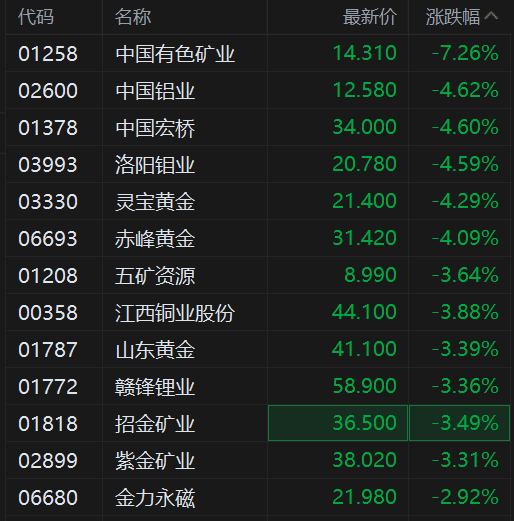
港股异动丨有色金属股齐跌 美银指金属需求的增长已不再具有周期性特征
Ge Long Hui· 2026-01-20 02:31
Group 1 - The core viewpoint of the news highlights a collective decline in Hong Kong's non-ferrous metal stocks, with significant drops observed in companies such as China Nonferrous Mining, China Aluminum, and China Hongqiao, among others [1] - The report mentions a strategy proposed by Bank of America, suggesting investment in non-AI tech stocks that benefit from the AI boom, focusing on sectors like electrification, infrastructure, and metals [1] - Bank of America identifies metals such as copper, silver, lithium, aluminum, and nickel as key beneficiaries of the growing demand driven by the restructuring of energy infrastructure across economies [1] Group 2 - Specific stock performance data shows China Nonferrous Mining down 7.26%, China Aluminum down 4.62%, and China Hongqiao down 4.60%, among others, indicating a broader trend of declines in the sector [2] - Other notable declines include Luoyang Molybdenum down 4.59%, Lingbao Gold down 4.29%, and Chifeng Jilong Gold down 4.09%, reflecting a significant downturn in the non-ferrous metal market [2] - The overall trend indicates that multiple companies in the non-ferrous metal sector, including Jiangxi Copper and Zijin Mining, experienced declines of over 3%, suggesting a challenging market environment [2]

超级铜周期的宏观与产业全维度解析
2026-01-19 02:29
超级铜周期的宏观与产业全维度解析 20260118 摘要 AI 科技革命和发达国家再电气化是本轮铜周期核心驱动力,打破了传统 经济增长与铜价、通胀预期与铜价之间的关联性,预示着铜需求的结构 性转变。 人工智能全产业链对铜需求旺盛,数据中心耗电量巨大,新兴产业如智 能家居、新能源汽车、人形机器人等均需大量精炼金属,构成对铜价的 强劲支撑。 全球面临人口老龄化、债务扩张及逆全球化挑战,各国为维持经济稳定 采取非常规手段,战略资源如精炼金属的供应链安全至关重要,铜作为 战略金属,价格有上涨空间。 2025 年全球主要铜矿因事故、缺电等问题导致增产不及预期,预计 2026 年全球重点铜矿企业产量仍将维持低增速,供应紧张局面难以缓 解。 铜矿企业资本开支水平较低,且资本开支一般领先供应增速 5-8 年,预 计 2026 年至 2030 年的增速仍将维持较低水平,好资源越来越少,新 发现的大型矿床寥寥无几,加之国际环境下资源民族主义抬头、政策不 确定性升高,使得开发周期延长。 Q&A 近年来铜价的上涨引起了广泛关注,能否从宏观角度分析一下超级铜周期的背 景和原因? 从二战以来,我们经历了三轮超级铜周期。第一轮是二战后的重 ...
别只盯着铜,铝时代可能要来了
阿尔法工场研究院· 2026-01-19 02:02
Core Viewpoint - The shift from copper to aluminum is not merely a cost-cutting tactic but a strategic response to global resource changes, geopolitical tensions, and technological advancements, fundamentally altering the supply-demand dynamics and long-term pricing logic of copper and aluminum [4][24]. Group 1: Supply Chain and Market Dynamics - Recent months have seen a dramatic surge in copper prices driven by a global supply chain crisis, with a current supply-demand gap of 500,000 tons in the copper market [5]. - The copper industry faces significant challenges, including a high dependency on foreign resources, with over 80% of copper ore being imported, which poses risks to supply chain security [9][10]. - In contrast, China dominates the aluminum sector, with projected electrolytic aluminum production reaching 44.0046 million tons in 2024, accounting for 58% of global output [12]. Group 2: Strategic Shift to Aluminum - The transition to aluminum from copper has evolved into a national strategy aimed at ensuring industrial security, as highlighted by government initiatives promoting aluminum consumption in various applications [13]. - The copper-aluminum price ratio has reached a 20-year high, with the current ratio at 4.21, significantly exceeding the traditional economic threshold of 3.5, making aluminum a more attractive alternative [17][20]. - The cost advantages of using aluminum over copper are substantial, with potential savings of 20%-25% in air conditioning and 30%-40% in electric vehicles [20][34]. Group 3: Technological Advancements - The evolution of aluminum as a substitute for copper has progressed through four key phases: from early exploration (2015-2018) to technological breakthroughs (2019-2022), followed by large-scale validation (2023-2025), and finally to widespread adoption in the future [25][28][30]. - Innovations in aluminum processing, such as the introduction of silicon-sulfur neutralization technology, are expected to significantly reduce China's reliance on imported bauxite from 90% to below 50% [21][22]. Group 4: Capital Market Implications - The disparity in price movements between copper and aluminum suggests that the aluminum sector is poised for growth, while copper may face a demand ceiling due to the rise of aluminum as a substitute [35][37]. - The shift towards aluminum is expected to attract more global capital, as the supply-demand balance for aluminum transitions from loose to tight, enhancing its financial attributes [38]. Group 5: Future Outlook - The transition from copper to aluminum reflects broader changes in global resource dynamics and energy transitions, with aluminum's lightweight and recyclable properties making it essential in green industries [39]. - The future landscape will likely see copper and aluminum coexisting, each serving distinct roles in high-performance and cost-sensitive applications, thereby reshaping the competitive dynamics of the manufacturing sector [39][40].