
贵州茅台

Search documents
保乐力加2026财年半年业绩营收、利润双降;贵州茅台在毕节成立销售公司丨酒业早参
Mei Ri Jing Ji Xin Wen· 2026-02-25 01:12
NO.1保乐力加半年业绩营收、利润双降 近日,保乐力加发布2026财年半年报显示,报告期内集团营收52.6亿欧元,同比下降14.9%。2025年下 半年的有机利润下降7.5%。在2026财年第一季度(7月至9月),集团销售额下滑7.6%,而在此前,其 2025财年全年营收已录得3%的降幅。从产品看,旗下马爹利干邑与哈瓦纳俱乐部朗姆酒均出现两位数 跌幅。从区域看,中国市场上半年有机销售额大幅下降28%,主要受宏观经济调整和高端干邑(马爹 利)渠道库存调整的影响。 点评:保乐力加2026财年半年报营收与利润双降,中国市场销售额大跌28%,凸显海外烈酒在华深度调 整。核心受高端干邑渠道去库存、消费需求走弱拖累,叠加连续下滑,印证全球烈酒行业承压。对公司 而言,短期盈利与渠道修复压力加大,需加速库存出清与本土化调整。 NO.22026年春节养生露酒成酒类市场大黑马 据中国酒业协会官方微信,2026年春节,养生露酒成为酒类市场最大黑马,线上规模同比增长。产品方 面,新一代养生露酒"去药化"成效显著,青梅、玫瑰、枸杞等风味成为主流,口感柔和,更易被年轻消 费者接受。劲酒、椰岛鹿龟酒等头部品牌推出春节限定小瓶装,适配家庭小 ...

又双叒崩了,26年消费还有戏吗?
3 6 Ke· 2026-02-25 00:13
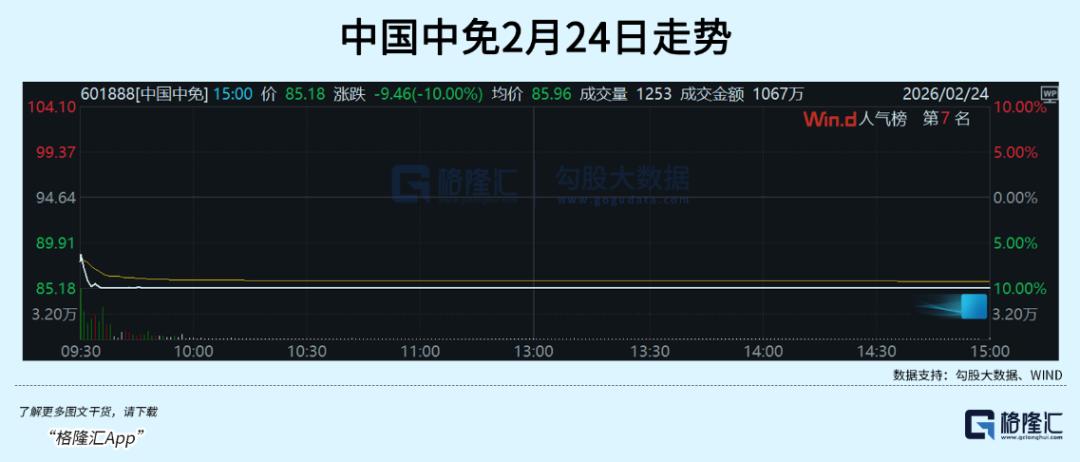
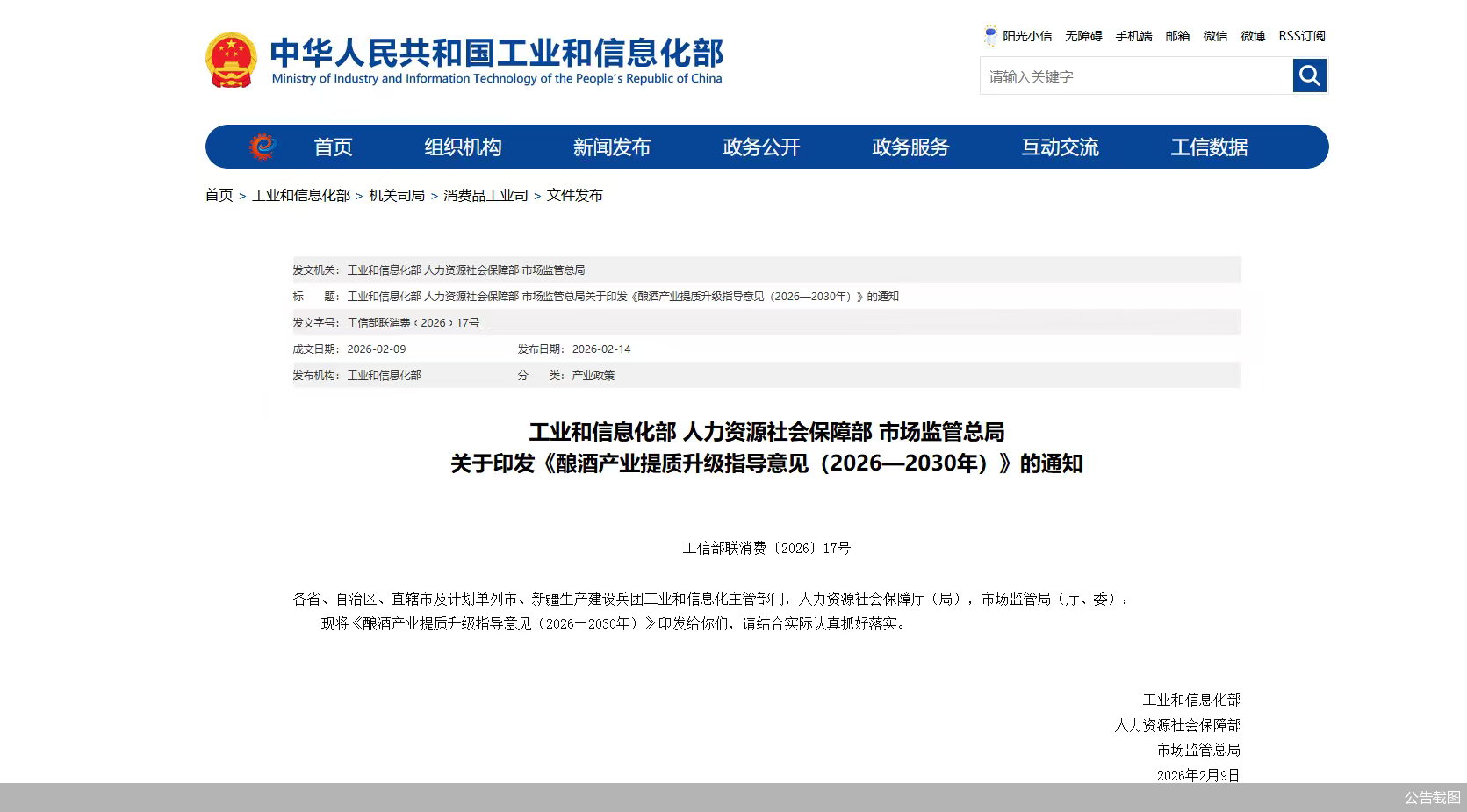
2月24日,A股喜气洋洋,迎来马年的开门红,但拿着消费的,脸绿得发青,不说白酒高开低走,就是原来走得像模像样,俨然有老登带头大哥之势的中 免都封死跌停,以致公司都要出来回应。 自从23年春节来,消费已经连续四年春节没见过好脸色了,也连续四年没啥行情了。许多投资人觉得科技股已经涨很久了,对26年的消费是抱有期待的, 而现实又给了老登投资人一盆冷水。 当前是消费的至暗时刻,还是漫漫长夜继续?我们可以先来看一下消费的数据面。 史上最长的春节消费数据如何? 春节是一个消费旺季,但落到我们投资上,其实主要是白酒和社服,后者包括免税、酒店、餐饮、出行等相关数据。 春节占白酒一年消费量的很大一部分,26年春节的白酒消费继续不给力,整体动销下滑了10-15%,不过临近春节前夕有所恢复。 茅台的批价持续往上走,站上了1700,除了茅台外,表现好的有五粮液,节前一周一些区域的动销恢复正增长,批价和春节成交价为780元+和800元+, 略超预期。但这个略超预期,终究是市场预期本来就低带来的,并不是白酒表现好了。分价格带看,中间的次高端是表现最差的一档,高不成低不就。 节前收盘后官方出了一个文件,三部门联合印发了《酿酒产业提质升级指 ...


当老师傅遇上AI 酒业“十五五”路径划定
Bei Jing Shang Bao· 2026-02-24 17:03
Core Viewpoint - The joint issuance of the "Guidance on Quality Improvement and Upgrading of the Brewing Industry (2026-2030)" marks the beginning of a high-quality development path for China's liquor industry, focusing on enhancing raw material supply, technological innovation, and optimizing industry structure [1] Group 1: Upstream Development - The guidance emphasizes the shift from a "procurement mindset" to a "planting mindset" in the liquor industry, highlighting the importance of strengthening raw material supply and cultivation bases [2] - Key tasks include promoting the cultivation of specific brewing raw materials such as sorghum, barley, and wine grapes, and encouraging collaboration between universities, research institutions, and enterprises for high-yield, flavor-rich varieties [2][3] - The construction of raw material bases will focus on quality precision and customized varieties, leveraging biotechnology to meet diverse flavor needs [3] Group 2: Intelligent Manufacturing - The guidance prioritizes the "promotion of intelligent transformation," indicating that smart brewing will enhance traditional techniques rather than replace them [4] - Support for AI applications in various production processes aims to improve efficiency and quality control, with initiatives for smart manufacturing solutions and infrastructure development [4][5] - Companies like Wuliangye and Gujing Gongjiu are already implementing advanced technologies, such as 5G networks and AI decision-making models, to enhance production efficiency and accuracy [5] Group 3: Downstream Channel Innovation - The guidance encourages innovation in sales models, promoting a shift from traditional wholesale to brand agency and chain operations, as well as the development of new retail formats like community e-commerce and live streaming [7] - The liquor industry's immediate retail market is projected to exceed 50 billion yuan in 2024, with a growth rate of over 35%, indicating a significant shift in consumer purchasing behavior towards instant delivery [7] - Companies are increasingly adopting direct-to-consumer strategies through live streaming and community marketing, reducing reliance on traditional distribution networks [8] Group 4: Cultural and Cross-Industry Integration - The guidance supports the integration of brewing culture into various lifestyle products, indicating a broader cultural value of liquor beyond just consumption [8] - The emphasis on "brewing industry +" suggests a focus on cross-industry collaborations and the creation of original intellectual properties [8]


中国必需消费品_新年专家电话会议_白酒_茅台、五粮液重回复苏轨道;乳制品定价自律但表现平淡-China Consumer Staples_ LNY expert calls_ Spirits_ Moutai_Wuliangye pivoting to recovery path; Dairy saw disciplined pricing yet unexciting
2026-02-24 14:16
Summary of Key Points from the Conference Call on China Consumer Staples: Spirits and Dairy Industry Overview - The conference call focused on the spirits and dairy sectors in China, particularly in the Hunan province, highlighting the performance of major brands like Moutai, Wuliangye, and Mengniu. Spirits Sector Moutai - Feitian Moutai's retail sales volume increased by over 20% year-on-year during the Chinese New Year (CNY) period, exceeding expectations despite shipment controls on non-standard SKUs [1][9] - Moutai 1935 showed mild growth, outperforming other products in the Moutai series [1][9] - The wholesale price of Feitian Moutai rose to approximately Rmb1,700, with channel inventory remaining stable at around 0.5 months [1][9] - The expert anticipates that Moutai could bottom out around mid-2026 if retail sales momentum remains strong [2][6] Wuliangye - Common Wuliangye experienced mid-single-digit percentage retail volume growth in early February, gaining market share from Guojiao 1573 due to enhanced affordability [1][9] - The effective ex-factory price for Common Wuliangye decreased to around Rmb810, with expectations of further reductions [1][9] - The company achieved a 40% prepayment target by the end of CNY, although this pace is slightly slower than the previous year [1][9] Luzhou Laojiao - Guojiao 1573's retail volume dropped by approximately 30% during the CNY period, facing challenges in maintaining wholesale price stability [1][8] - Luzhou Laojiao is under pressure to stabilize prices amid declining demand [2][6] Other Brands - Brands like Fen Wine, Yanghe, Jiugui, and Shede saw broad-based sales declines of 15-20% [1][14] - Fen Wine's Qinghua series experienced a low-teens percentage decline, while Bofen remained slightly positive [1][14] Dairy Sector - Both Yili and Mengniu reported positive sell-in shipments during January, but holiday sell-through saw a slight decline due to weakening gifting demand [1][12] - Premium products like Satine and Deluxe outperformed basic white milk, indicating a shift in consumer preference [1][12] - Mengniu's sales decline narrowed to low-single digits compared to low-teens last year, aided by a lower comparison base [1][12] - The expert remains cautious about 2026 full-year sell-in targets, suggesting a more realistic outlook of flat to -5% for Yili and +6% for Mengniu [1][12] Beverages Sector - Nongfu's small-pack water and sugar-free tea registered high-single-digit percentage sell-through growth, while large-pack volume doubled due to strong promotions [1][13] - CR Beverages and Wahaha experienced declines in water sales, indicating competitive pressures [1][13] - Eastroc is on track to meet its 20% sales growth target, with energy drinks growing just under 15% [1][16] Inventory and Prepayment Insights - Moutai and Wuliangye maintain low channel inventories of 0.5 to 1 month, while other upper-mid-end brands face over 2.5 months of inventory [1][11] - Prepayment progress for various brands is lagging behind last year, with Wuliangye and Laojiao showing slower prepayment paces [1][14] Conclusion - The spirits sector shows a divergence in performance, with Moutai leading and Wuliangye following, while other brands face significant challenges. The dairy sector is experiencing a shift towards premium products, and the beverage sector is consolidating with strong growth from Nongfu. Overall, cautious optimism is noted for the upcoming periods, with varying recovery timelines across brands.




中国白酒追踪器_2026 年农历新年零售销售略好于预期;茅台、五粮液领衔的超高端品类表现强劲-China Spirits Tracker_ 2026 LNY retail sales slightly better than expected; Resilient super premium with Moutai-Wuliangye
2026-02-24 14:16
Summary of Key Points from the Conference Call Industry Overview - The conference call focuses on the **Chinese spirits industry**, particularly during the **2026 Lunar New Year (LNY)** period, highlighting retail sales trends and brand performances. Key Insights and Arguments 1. **LNY Consumption Sentiment**: - Pax mobility during the LNY holiday increased by approximately **9% year-over-year (yoy)**, with a total of **5.3 billion** trips recorded during the Chunyun window from February 2 to 20 [1] - Strong homecoming flows led to robust on-premise activity, with daily average sales of key retail and catering enterprises rising by **10.6% yoy** over the first two holiday days and **8.6% yoy** in the first four days [1] 2. **Retail Trends**: - Overall spirits retail demand declined by **10-15% yoy**, influenced by a high base from 2025, but the trend stabilized compared to the decline seen during the Mid-Autumn festivals [2] - Super-premium brands like **Moutai** and **Wuliangye** showed resilience, with **Feitian** sell-through up by **10-20%+ yoy** and **Common Wuliangye** recovering to near 2024 LNY volumes [2] 3. **Brand Performance**: - **39-degree Wuliangye** achieved double-digit retail sales growth, while **Fen wine's Bofen** and regional brands like **Yingji's Dongcang 6** performed well due to banquet trends [2] - Mass-market SKUs priced under **RMB 300** per bottle outperformed, particularly those under **RMB 100**, which saw positive retail growth [2] 4. **Pricing Trends**: - Wholesale prices for super-premium brands trended stronger, with **Feitian original case** wholesale price increasing by **RMB 160-195/bottle** year-to-date [2] - Significant pricing pressure was observed for SKUs priced between **RMB 600-800**, with **Junpin Xijiu** wholesale price dropping below **RMB 600** [2] 5. **Post-LNY Factors to Monitor**: - The trajectory of wholesale prices into the Lantern Festival slack period, especially for super-premium SKUs [2] - Retail channel replenishment orders over the next two weeks as holiday sell-through data becomes clearer [2] - Distributor prepayment progress, which is currently slower than the pace seen in 2025 LNY, except for Moutai, which is at **35-40%** [2] Additional Important Insights 1. **Regional Performance**: - Regions like **Sichuan** and **Henan** showed relative resilience, with retail sales down approximately **10%**, driven by super-premium brands amid banquet and gifting demand recovery [7] - **Anhui** mass-market products under **RMB 200** performed solidly due to banquet demand, with a **15% yoy decline**, which was better than pre-LNY expectations [7] 2. **Consumption Scenarios**: - Banquet and family-gathering occasions drove incremental volume, while gifting remained strong only for top-tier brands [8] - Commercial and government-related consumption remained at a structural low, putting sustained pressure on mid-tier brands [8] 3. **Wholesale Price Summary**: - Original case **Feitian Moutai** wholesale price increased by **RMB 10** to **RMB 1,700**, while **Common Wuliangye** and **Guojiao 1573** prices remained stable [9] 4. **Market Dynamics**: - The spirits market is experiencing a **dumbbell trend**, favoring super-premium and mass-market segments while the upper-mid segment remains weak [2] 5. **Valuation and Risks**: - The report outlines various valuation methodologies and key risks for major companies in the spirits sector, including potential regulatory changes and competition dynamics [45] This summary encapsulates the critical insights from the conference call, providing a comprehensive overview of the current state and trends within the Chinese spirits industry during the 2026 Lunar New Year period.

中国-香港消费 - 农历新年后餐饮及黄金珠宝渠道调研要点ChinaHong Kong Consumer-Post-CNY F&B and Gold & Jewelry Channel Check Takeaways
2026-02-24 14:16
Summary of Conference Call on China/Hong Kong Consumer Sector Industry Overview - The conference call focused on the China/Hong Kong Consumer sector, particularly in the Food & Beverage (F&B) and Gold & Jewelry categories, reflecting an improvement in demand during the Chinese New Year (CNY) holiday season, aligning with market expectations and previous channel checks [1][9]. Key Insights by Category Liquor - **Moutai and Wuliangye (WLY)**: Both brands experienced year-to-date (YTD) growth due to lower pricing, with Moutai's Feitian orders for Q1 completed at 40% of the annual budget. Moutai's sales increased by 30% YTD, while WLY saw a 10% increase after price adjustments [3][11]. - **Laojiao**: This brand opted for stable pricing, resulting in a 30% decline in volume YTD [3][11]. - **Price Sensitivity**: Demand for low-end liquor (Rmb100-300) and high-end products (Moutai and WLY) grew, while other price ranges declined [3]. Dairy - **Yili**: Reported a 3% sales growth in liquid milk, with a growth target of 4-6% for 2026 [4][11]. - **Mengniu**: Achieved 1-2% growth in liquid milk sales [4][11]. Beer - **Budweiser**: Experienced a narrowing decline, with a target of -5% or above for 2026 [4][11]. - **Heineken**: Reported growth of 20% in 2025, with a target of 15% or above for 2026 [4][11]. - **On-Trade vs. Off-Trade**: The on-trade/off-trade mix shifted to 58%/42% from 63%/37% previously, indicating a change in consumer purchasing behavior [11]. Beverages - **Nongfu Spring**: Achieved a 12.5% growth in water sales, with a focus on larger bottle sizes and sugarless tea, which grew by 26% [4][11]. - **Tingyi/UPC**: Saw flat or declining sales YTD [4][11]. Gold & Jewelry - **Chow Tai Fook (1929.HK)**: Reported positive same-store sales growth (SSSG) in 12 franchise stores, driven by increased sales volume but lower average ticket size, averaging around Rmb5,000 compared to Rmb10,000-15,000 last CNY [5][11]. Additional Observations - Overall demand improved better than expected due to longer CNY holidays, warm weather, and improved consumer sentiment. However, consumers remain price-sensitive, leading to a binary performance among brands, particularly in liquor and beverages [9]. - The distributor's retail sales grew by 5.6% year-over-year from the beginning of the year to February 15, 2026, despite a softening in per capita spending [11]. Conclusion - The feedback from the distributor indicates a gradual recovery in the consumer sector, with preferences shifting towards value-oriented products. The outlook for the first half of 2026 remains cautiously optimistic, with a preference for sectors such as restaurants, beer, IP products, dairy, and OEM apparel [9].
白酒春节动销符合预期,分化延续
INDUSTRIAL SECURITIES· 2026-02-24 14:13
行业点评报告 | 食品饮料 证券研究报告 行业评级 推荐(维持) 报告日期 2026 年 02 月 24 日 相关研究 【兴证食饮】餐饮链克危寻机,同时关 注食品春节备货-2026.01.21 【兴证食饮】保健品行业:赛道长青, 新消费重构增长逻辑-2026.01.12 分析师:沈昊 S0190525010006 shenhao@xyzq.com.cn 投资要点: 请阅读最后评级说明和重要声明 1/3 ⚫ 春节动销符合预期,高端突出,大众价格带表现稳健。根据渠道反馈,春节白酒动销普 遍下滑 10-20%,边际改善,整体表现符合此前预期。分区域看,经济基础、饮酒氛围 好的河南、四川、华东等市场反馈动销下滑约 10%左右,山东、安徽等市场下滑幅度约 20%。分场景看,受禁酒令影响商务宴请依旧承压,礼赠需求有所恢复,自饮及中低端 宴席需求相对稳健。春节期间,不同价格带动销表现有所分化,高端表现突出,i 茅台 上线普飞刺激需求,100-200 元大众价格带动销平稳,而次高端价格带承压较大、春节 期间动销下滑约 20%左右。 ⚫ 茅台市场化改革初步显效,基本面表现好于预期。茅台以消费者为中心,积极推进市场 化转型,强化 ...
三部门联合推动 酒业“十五五”行动密码在哪儿
Bei Jing Shang Bao· 2026-02-24 13:45
随着三部门联合印发《酿酒产业提质升级指导意见(2026—2030年)》(以下简称《指导意见》),中国酒业为期五年的高质量发展路径正式开启。2月24 日,北京商报记者从工业和信息化部官网获悉,工业和信息化部、人力资源社会保障部、市场监管总局三部门联合印发《指导意见》,从增强原料供给保障 能力、提升产业科技创新水平、调整优化产业结构、转变产业发展方式、发展新模式新业态、加强品牌文化赋能、完善产业支撑体系七大方面勾勒出21 项"重点任务"。当新技术、新理念、新模式从文本走向实践,中国酿酒产业正站在一个从"传统酿造"向"现代智造"跨越的历史关口。 筑牢上游"第一车间" 在酿造行业,品质的起点不在车间,而在田间。《指导意见》明确提出,丰富酿酒专用原料、强化原料种植基地建设以及完善联农带农机制,标志着酿酒产 业对上游产业链的掌控正在从"采购思维"转向"种植思维"。 《指导意见》显示,加强高粱、大麦、酿酒葡萄、酿酒青稞等特色酿酒原料品种培育推广,支持适宜酿酒的新原料种类拓展。鼓励高校、科研机构与企业联 合攻关,培育转化率高、风味物质富集、抗逆性强的专用原料品种。加强对本土酿酒微生物菌种的筛选与开发应用,提升生产菌株与加工工 ...
多部门“催更”茶酒产业新国潮
Mei Ri Jing Ji Xin Wen· 2026-02-24 12:06
Core Insights - The Ministry of Industry and Information Technology (MIIT) has released guidelines for the wine and tea industries aimed at quality improvement and upgrading from 2026 to 2030, emphasizing the importance of these traditional sectors in economic growth and cultural promotion [2] Group 1: Wine Industry Guidelines - By 2028, the wine industry aims to optimize its layout, enhance the role of production areas and parks, and cultivate over three traditional wine production areas with annual revenues exceeding 100 billion yuan, and more than ten characteristic wine parks with revenues over 10 billion yuan [1] - The guidelines highlight the need to adapt to consumer trends such as personalization, health, and fashion, encouraging the development of craft beers, specialty wines, and ready-to-drink products [4] - The focus on product innovation is seen as essential to address the issue of excess inventory in the wine industry, with new product categories expected to create real consumption scenarios and expand market opportunities [5] Group 2: Tea Industry Guidelines - The tea industry aims to cultivate over five tea industry clusters with annual revenues exceeding 10 billion yuan by 2028, along with several leading enterprises with revenues over 5 billion yuan [1] - The guidelines stress the importance of adapting to trends in youth consumption, promoting refined product development, and expanding tea applications into sectors like home goods, cosmetics, and health [3] - The tea industry is projected to achieve a total scale of 1.5 trillion yuan by 2030, with a focus on digitalization and green development [1] Group 3: Smart Transformation - Both industries are encouraged to accelerate smart technology integration, with the tea industry focusing on digital transformation across all processes, while the wine industry aims to enhance smart applications in procurement, production, and quality management [6] - Smart transformation is expected to help the wine industry reduce costs and improve efficiency, particularly during periods of price pressure, by optimizing production based on sales data [6][7] - Leading companies in the wine sector are already investing in digital initiatives, such as Moutai's establishment of a 2 billion yuan digital fund to enhance AI and big data capabilities [7]
白酒股节后无缘“开门红”,春节动销整体下滑但符合预期,机构看好后市复苏
Mei Ri Jing Ji Xin Wen· 2026-02-24 11:35
2月24日,农历马年首个交易日。虽然大盘飘红,但白酒板块却并未迎来"开门红"。万得白酒指数 (866051)早盘高开,随后震荡走低,截至收盘下跌1.32%,多只个股跌幅超过2%。拉长时间看,年初 至今该指数已累计回调3.67%。 尽管行业整体仍处在需求偏弱、渠道库存承压的调整期,但在多家投资机构看来,白酒板块已步入周期 底部区域,对2026年迎来边际修复持乐观态度。也有分析认为,以茅台为代表的超高端品牌,凭借稳健 的基本面和近期批价企稳回升的走势,正成为市场信心的核心锚点。 与此同时,行业分化将愈发显著。 国泰海通证券訾猛团队认为,白酒行业已进入本轮周期底部,渠道情绪已观察到修复迹象,景气改善、 批价上涨、库存去化等边际变化以及宏观政策对股价有较强催化。 《每日经济新闻·将进酒》记者在近期的走访中也感受到市场逐步企稳的迹象。一家酒类连锁零售机构 终端店负责人告诉记者,和往年相比,销售还略有增加。茅台、五粮液、国窖1573和往年差不多,红花 郎15明显比往年卖得好。 动销的边际改善,最终也将传导至价格端。第三方报价平台显示,飞天茅台原箱当前市场批价约1700 元/瓶,较2月初上涨70元/瓶,较年初上涨约150元 ...