京东集团

Search documents
实测一句话点外卖!千问打通支付宝背后 AI付时代来了
Bei Jing Shang Bao· 2026-01-15 14:42
Core Insights - The launch of "AI Pay" by Alipay marks a significant advancement in integrating AI with payment systems, allowing users to make purchases through simple voice commands [1][5][8] Group 1: AI Integration and Functionality - The Qianwen App has fully integrated with the Alibaba ecosystem, enabling AI-driven functionalities such as food delivery, shopping, and travel bookings [1][3] - Users can place orders by simply stating their requests, with the app automatically processing payments through Alipay without needing to switch applications [3][5] - The integration includes over 400 AI service functions, enhancing user experience and streamlining the payment process [1][4] Group 2: User Experience and Feedback - Initial user experiences indicate a smooth and efficient process, although some users reported minor issues with order accuracy [3][6] - The AI Pay system significantly reduces the steps required for payment, with a claim of over 60% fewer steps compared to traditional methods [5][6] Group 3: Market Implications and Future Prospects - Analysts suggest that the integration of AI Pay represents a transformative shift in the payment industry, potentially reshaping competitive dynamics [4][8] - The expansion of AI Pay's application scenarios is expected to facilitate the growth of the intelligent economy, with future developments likely to include public services and third-party platforms [7][8] - The success of AI Pay will depend on addressing user trust concerns and ensuring the accuracy of AI commands to prevent errors in transactions [9][10]


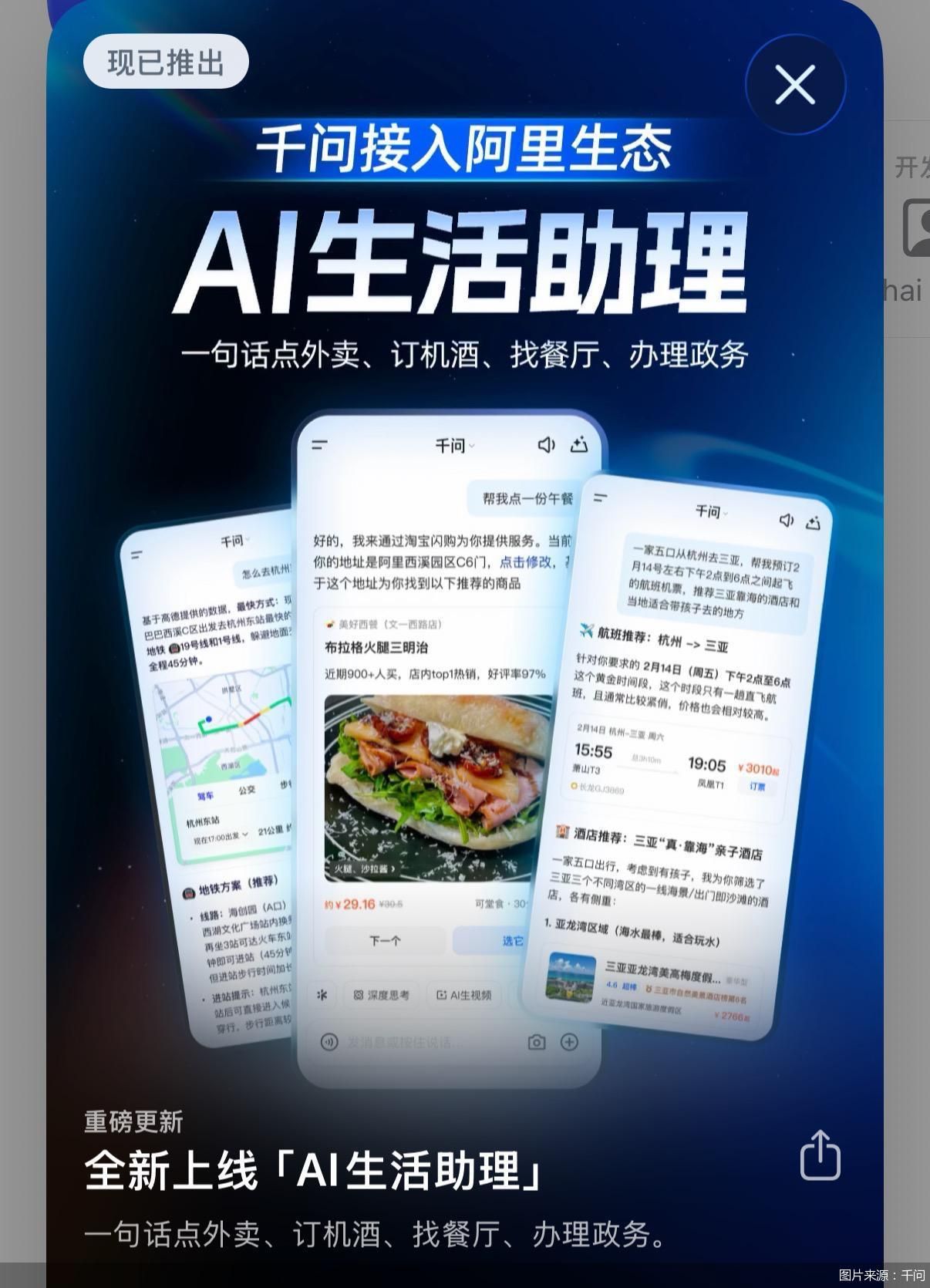
京东集团-SW(9618.HK)25Q4前瞻:Q4国补退坡影响带电增速 外卖单量稳健亏损环比改善
Ge Long Hui· 2026-01-15 14:28
Core Viewpoint - The company expects a slight year-on-year increase in total revenue for Q4 2025, with a Non-GAAP net profit of approximately 480 million yuan, despite challenges in the electric product category due to subsidy reductions and high base effects [1][3]. Revenue Summary - Q4 revenue growth is pressured by the decline in subsidies for electric products, leading to a double-digit year-on-year decrease in this category, particularly affecting home appliances and digital products [2][3]. - Daily necessities and third-party (3P) revenue are expected to maintain double-digit growth in Q4, supported by healthy performance in supermarkets, fashion home goods, and health categories [2][3]. Profitability Summary - The company's Non-GAAP net profit for Q4 is projected to be around 480 million yuan, with a decline in retail operating profit attributed to subsidy reductions, changes in product mix, and increased costs from staff salary raises [3]. - Profitability is expected to improve in 2026, aided by continued government subsidies for appliance replacements and an expanded scope for digital product subsidies [2][3]. New Business Performance - The new business segment is expected to reduce losses in Q4, with improvements in delivery volume and user engagement (UE) for the takeaway service, indicating a stable overall performance [3]. Investment Recommendation - Given the impact of subsidy reductions on revenue and profit, the company has adjusted its Non-GAAP net profit forecasts for 2025-2027 to 26.4 billion, 32.7 billion, and 51 billion yuan respectively, with a target price of 125-150 HKD per share based on a 10-12x PE for 2026 [3].

立德树人、资源扩容、产教融合……2025德州教育亮点足
Qi Lu Wan Bao· 2026-01-15 14:28
一是立德树人根本任务深化落实。推动大中小学思政课一体化建设,擦亮"爱家乡德州"思政品牌。实 施"大德之州、德润未来"德育工程,市县家校社协同育人"教联体"实现全覆盖,积聚同向力、画好同心 圆。狠抓五育融合,推行学生体质强健、美育浸润、劳动养成、心理健康提升等行动计划,强化"无体 育、不教育"理念,家校协同落实好中小学生每天综合体育活动2小时要求,新增全国青少年校园足球特 色学校15所。成立全市大中小学心理健康课程联盟,健全学生艺术教育长效机制,心理健康教育、艺术 教育多次被《中国教育报》等媒体报道。 二是优质教育资源扩容增面。新建改扩建中小学14所,中小学55人以上大班额实现"动态清零",高中阶 段学位供给率达100%。学前教育公办率、普惠率分别达到62.85%、95.03%。集团化办学实现义务教育 学校全覆盖,十二年一贯制集团化办学架构初步搭建。实施薄弱环节改善与能力提升项目82个,集并小 规模学校70个,乡村教育振兴稳步推进。 三是服务地方发展能力大幅提升。围绕主导产业和标志性产业链,优化专业设置,动态调整专业点38 个,产业专业匹配度达85%以上。深入推进产教融合,建成产教联合体、共同体11个,推广"订 ...
电商低价战要停了?2026新规一出,商家欢呼消费者却慌了?
Sou Hu Cai Jing· 2026-01-15 14:12
Core Viewpoint - The article discusses the ongoing price wars in the e-commerce sector and the upcoming regulations in 2026 aimed at curbing unfair practices, suggesting a shift in focus from price competition to product quality and service improvement [1][7]. Group 1: E-commerce Price Wars - E-commerce platforms have been engaged in aggressive price competition, initially promoting "lowest prices" but later resorting to complex discount strategies that confuse consumers [3][5]. - The tactics have included penalties for merchants who do not comply with price competition, leading to a chaotic environment for both consumers and businesses [5][7]. Group 2: Regulatory Changes - New regulations set to take effect in April 2026 will prohibit forced price reductions and the coercion of merchants regarding pricing, aiming to eliminate "dark box operations" in the industry [7][10]. - These regulations are seen as a significant move to protect merchants and restore fair competition in the e-commerce landscape [7][10]. Group 3: Shift in Consumer Preferences - A significant portion of consumers (27.8%) prioritize product quality over low prices, indicating a shift in consumer behavior away from price-centric purchasing [10]. - The previous cycle of price competition has been described as a "vicious cycle," where low margins hinder innovation, and the new regulations are expected to allow businesses to focus on improving products and services instead [10].
助力当家产品“行天下” ,制造业大省广东政府牵头带货
Di Yi Cai Jing· 2026-01-15 13:46
Core Viewpoint - Guangdong is leveraging government-led initiatives to enhance regional industrial strengths and promote consumption through innovative channels like live-streaming e-commerce [2][3] Group 1: Government Initiatives - The "Guangdong Goods Going Global" spring campaign was launched on January 15 in Foshan, focusing on the home appliance sector, with over 1,900 provincial enterprises participating [2] - The campaign aims to boost revenue for industrial chain companies and promote consumption upgrades through new channels [2] Group 2: Industry Participation - Major brands such as Midea, Gree, Galanz, and Hisense participated in the live-streaming sales event, showcasing a variety of products [2] - The event received support from over 10 major commercial platforms, including Alibaba International, JD.com, and Douyin, as well as numerous offline supermarkets [2] Group 3: E-commerce and Consumer Engagement - The chairman of Xinxuan Group emphasized that live-streaming e-commerce not only generates sales but also empowers quality industries and domestic brands [3] - The event highlighted the importance of e-commerce channels, with companies like Mofei Technology noting strong consumer interest in their products, even in prototype form [3] Group 4: Future Plans - The Guangdong Provincial Department of Industry and Information Technology plans to organize 12 online promotional events covering various manufacturing sectors, including home appliances, mobile phones, clothing, food, smart devices, automobiles, and beauty products [3]
实测一句话点外卖!千问打通支付宝背后,AI付时代来了
Bei Jing Shang Bao· 2026-01-15 13:15
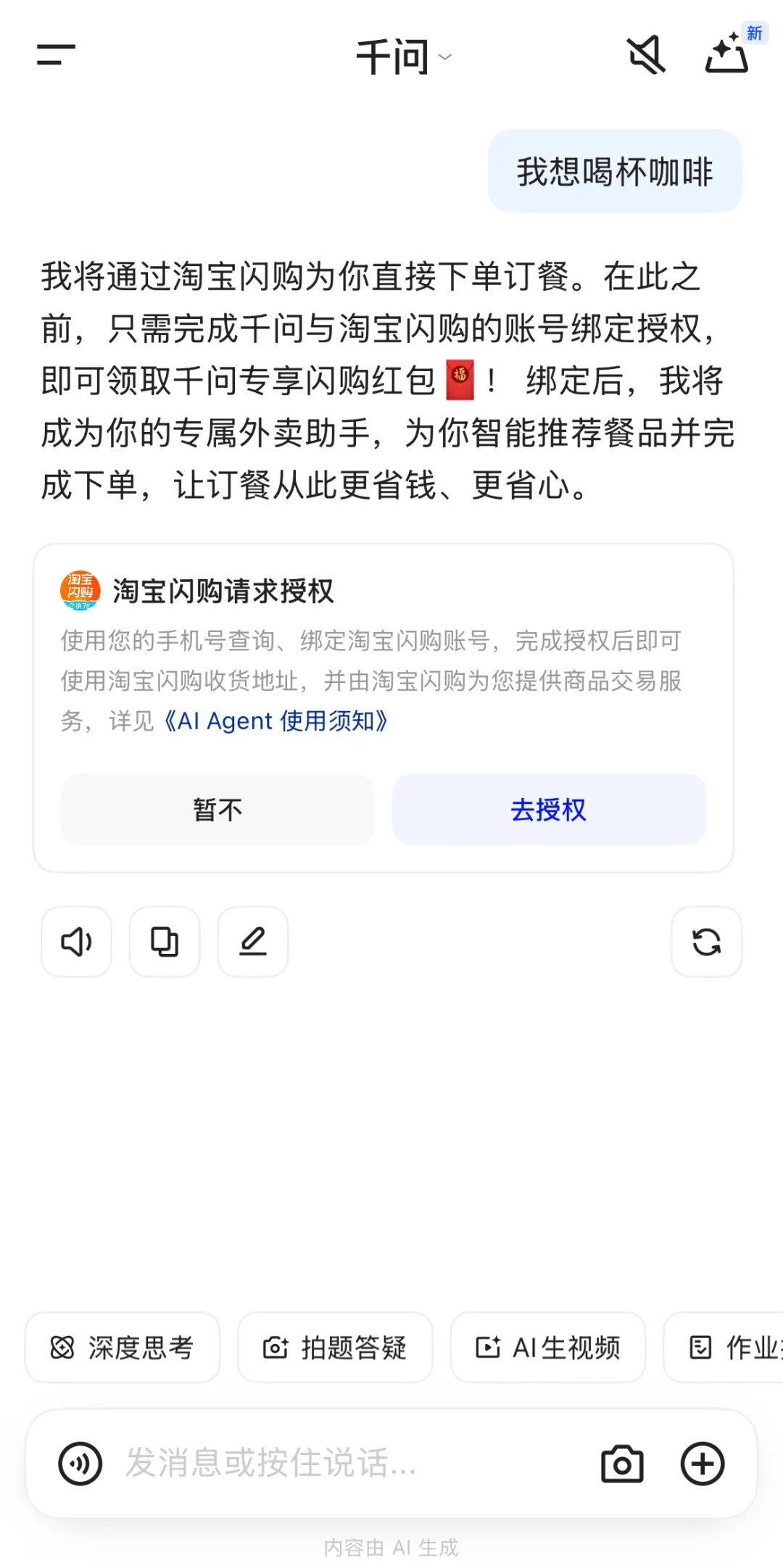
从2025年9月宣布推出国内首个"AI付",到如今通过千问App打通阿里生态,支付宝AI付再迎新进展。 实测一句话下单,全程AI秒级支付 一句话点外卖、订酒店、找餐厅,你体验过吗?1月15日,千问App重磅更新,全面接入淘宝闪购和支付宝AI付。 当天,北京商报记者实测发现,用户下载千问App后,只需给出"帮我点杯奶茶"指令,系统在绑定淘宝闪购并获取授权后,便可瞬时调用淘宝闪购的本地生 活资源,自动匹配就近门店、生成订单,消费者只要点击"选它",即可通过支付宝AI付完成付款。不久后,淘宝闪购骑手就将奶茶送至现场。 1月15日,千问正式接入阿里生态,定位为AI生活助理,北京商报记者注意到,其目前已全面接入淘宝、支付宝、淘宝闪购、飞猪、高德等阿里生态业务, 实现点外卖、买东西、订机票等AI购物功能,并向所有用户开放测试,此次升级将上线超400项AI办事功能。 以AI外卖功能为例,北京商报记者实测发现,用户只需给千问App下达一句话指令"帮我点杯奶茶",千问App可迅速回应,调用淘宝闪购下单,用户同意用 户协议,开通AI付服务后,即可无需任何跳转在端内完成AI支付。 "体验很丝滑,支付也很流畅。"多位北京地区消费者第 ...
王嘉尔《MAGICMAN 2》内地版专辑在京东独家首发
Zheng Quan Ri Bao· 2026-01-15 12:40
(文章来源:证券日报) 据悉,此次《MAGICMAN 2》内地版专辑的制作和发售由京东新品联合京东文娱品类全程参与,为专 辑版权方提供了"策划-设计-生产-宣推-销售"的全链条C2M定制服务。 业内人士看来,王嘉尔《MAGICMAN 2》内地版专辑选择在京东独家首发,这不仅是对京东新品首发 实力的印证,更是其深入音乐产业的体现。京东依托超级供应链的能力及优势,整合平台资源与数据能 力,与艺人团队紧密合作,从专辑制作、IP衍生品开发到营销与销售,不仅为版权方提供了C2M全链路 定制能力与营销支持,更充分体现了京东在新品孵化与创新的领先能力。 1月15日11:00,京东独家首发王嘉尔《MAGICMAN 2》内地版专辑,包括CD版和黑胶唱片两种版 本。 ...
全国首家机器人6S店营业额已达2000万元
21世纪经济报道· 2026-01-15 12:10
Core Viewpoint - The article highlights the rapid growth of Shenzhen's "first store economy," particularly focusing on the emergence of technology-driven retail spaces, such as the world's first robot 6S store, which has generated significant consumer interest and revenue [1][3]. Group 1: Robot 6S Store Performance - The world's first robot 6S store has achieved a total revenue of 20 million yuan within six months of opening and has signed contracts for six franchise stores, attracting approximately 300,000 customers, with over 30% being international visitors [1][3]. - The store operates under a unique 6S model, which includes leasing and customization services, providing a comprehensive lifecycle service system for robots [3][6]. Group 2: Technology First Stores - Shenzhen has seen a surge in technology first stores, with an average of one new store opening daily from 2022 to 2024, showcasing the city's commercial vitality and innovation capabilities [1][3]. - The article mentions various technology first stores, including a humanoid robot-themed store that integrates AI robots into the retail experience, enhancing customer interaction and service [3][6]. Group 3: Impact on Consumer Behavior - Technology first stores are becoming key drivers of foot traffic and consumer spending, with the humanoid robot-themed store attracting over 2,000 visitors daily, doubling on weekends [8][10]. - These stores are effective in targeting high-net-worth individuals and young families, significantly increasing customer dwell time by 1-2 hours [10][11]. Group 4: Industry and Market Dynamics - The introduction of technology first stores is facilitating the connection between technology, industry, and consumer markets, accelerating the adoption of innovative products like 3D printers and robots [11][12]. - The article emphasizes the need for continuous innovation and adaptation in the retail landscape, as many technology first stores face challenges in sustaining operations due to high costs and market readiness [15][16]. Group 5: Government and Market Support - The Shenzhen government is actively promoting the first store economy, aiming to add over 1,000 new stores within the year and providing financial incentives for brands to establish a presence in the city [16][18]. - Market players are also collaborating to enhance the consumer experience, integrating technology stores with other retail formats to create a more engaging shopping environment [16][18].

阿里甩出王炸,千问打通电商外卖,流量格局要变天?
3 6 Ke· 2026-01-15 11:38
Core Insights - Alibaba's Qianwen App has launched "AI shopping" capabilities, integrating with various Alibaba ecosystem services like Taobao, Alipay, and Fliggy, allowing users to order food, shop, and book flights [1] - Qianwen App is positioned as the "world's first AI assistant capable of completing complex real-life tasks," surpassing previous AI shopping functionalities introduced by ChatGPT and Gemini [1] - The app has achieved over 100 million monthly active users within two months of launch, indicating strong user engagement and adoption [1] Group 1: AI Shopping Functionality - Qianwen App allows users to place orders directly through Taobao Flash Purchase, providing a seamless experience for ordering items like coffee [2][21] - The app can generate personalized shopping recommendations based on user needs, utilizing Alibaba's extensive product database and review system [22] - Users can complete the entire shopping process, from decision-making to payment, within the app, enhancing convenience [22] Group 2: Market Position and Strategy - The launch of Qianwen App is part of Alibaba's strategy to establish a new AI super entry point in the competitive landscape of e-commerce and consumer services [1] - The app's capabilities are designed to address complex consumer scenarios, such as planning trips or selecting products based on specific needs, thereby transforming shopping into a natural outcome of solving life scenarios [27] - The integration of AI with Alibaba's existing services aims to create a comprehensive "life operating system," enhancing user experience and operational efficiency [33] Group 3: Competitive Landscape - Other major players like OpenAI and Google are also developing AI shopping functionalities, with OpenAI introducing product recommendations and instant checkout features [29][30] - The competitive response from companies like JD.com and Douyin indicates a trend towards integrating AI capabilities within existing ecosystems to enhance user engagement and transaction efficiency [32] - The current AI e-commerce landscape is characterized by two main approaches: open protocols and ecosystem-based enhancements, with Alibaba focusing on the latter [33]
银发人群洞察报告:3.51亿活跃人群带来三大变化,商机持续涌现……
Tai Mei Ti A P P· 2026-01-15 10:18
Core Insights - The active user base of the silver-haired population in China reached 351 million by November 2025, marking a year-on-year growth of 5.8% [2][12] - This demographic is transitioning from passive internet users to deeply engaged participants, with average monthly usage time increasing to 135 hours and usage frequency to 1,345 times, reflecting growth rates of 11.1% and 6.5% respectively [15][14] Group 1: User Engagement and Behavior - The silver-haired population's engagement has led to a shift in active usage patterns, with a peak activity rate of 75.4% around 4 PM, indicating a preference for off-peak usage times [17] - There is a notable change in application usage across different sectors, with online video consumption rising by 63.5% year-on-year, while short video usage declined by 2% [2] - The adoption of AIGC and smart living applications is increasing, showcasing a growing acceptance of technology among this demographic [2] Group 2: Consumption Patterns - The proportion of silver-haired individuals with moderate online consumption willingness has reached 48.9%, an increase of 2.1% year-on-year [3] - Key areas of growth in active user numbers include mobile gaming (16%), travel services (15.4%), smart devices (13.5%), life services (13.1%), and office business applications (10.4%) [3] - Major e-commerce platforms like Taobao, Pinduoduo, and JD.com have seen significant user engagement from this demographic, with Taobao's active user count reaching 205 million [3] Group 3: Health and Lifestyle - The silver-haired population is increasingly focusing on health management, utilizing health management apps for monitoring key health indicators like blood sugar and blood pressure [37] - There is a growing interest in health and wellness products, with a shift towards proactive health management rather than reactive medical care [37] Group 4: Digital and Technological Adoption - The silver-haired demographic is embracing higher-end smartphones, with 46.6% of users opting for devices priced above 3,000 yuan, reflecting a 9.1% increase [23] - This group is also becoming content creators, leveraging platforms like Douyin and Kuaishou, with active user numbers reaching 214.58 million and 106.74 million respectively [56] Group 5: Emotional and Social Engagement - The silver-haired population is increasingly engaging in social and emotional consumption, with a strong preference for nostalgic and light social gaming experiences [46] - Travel services tailored for this demographic are on the rise, with platforms like Ctrip and Tongcheng Travel seeing significant growth in user engagement [43]