
比亚迪

Search documents
全球科技行业:智驾Tier1:技术普惠风犹劲,扬帆出海踏浪疾
SPDB International· 2026-01-19 10:24
Investment Rating - The report gives an "Overweight" rating for the intelligent driving Tier 1 industry [3][7][10]. Core Insights - The intelligent driving sector is experiencing rapid growth, driven by the expansion of domain controllers as the core decision-making component of intelligent driving systems. The market for intelligent driving domain controllers is expected to reach RMB 428.4 billion by 2029, with China accounting for nearly 40% of this market [3][7][10]. - Domestic automakers are pushing for "intelligent driving equality," which is leading to a significant increase in the penetration rate of intelligent driving domain controllers. The penetration rate reached 27.6% from January to October 2025 [10]. - The report highlights the potential for domestic Tier 1 suppliers to expand into international markets due to their technological advantages and cost efficiencies [3][10]. Summary by Sections Industry Overview - The automotive industry is undergoing a transformation driven by the evolution of supply chains and the integration of intelligent driving technologies. The shift from traditional supply chain structures to more integrated and collaborative models is evident [11][15][16]. Current Industry Status - The penetration rate of advanced driver-assistance systems (ADAS) in new energy vehicles has significantly increased, with L2 and above ADAS installation rates reaching 87% in the first ten months of 2025, up 19.5 percentage points year-on-year [44][50]. - The report notes that the market for high-level intelligent driving features is expanding, with a notable increase in the availability of models equipped with Navigate on Autopilot (NOA) capabilities [44][48]. Market Outlook - The report anticipates continued growth in the intelligent driving sector, with domestic brands expected to capture over half of the market share for intelligent driving domain controllers by the end of 2025 [10][33]. - The report emphasizes the importance of technological advancements and the integration of AI in driving automation, which is expected to create new growth opportunities in the robotics sector [10][34]. Competitive Landscape - The competitive landscape for intelligent driving Tier 1 suppliers is evolving, with domestic players gaining market share and establishing themselves as key players in the industry [3][10]. - The report covers three specific companies: Youjia Innovation (2431.HK), Desay SV (002920.CH), and Zhixing Technology (1274.HK), all of which are given a "Buy" rating [3][10][8].
谁是“中国汽车第一城”?
Jing Ji Guan Cha Bao· 2026-01-19 10:19
Group 1: Automotive Industry Landscape in China - The competition for the title of "China's Automotive Capital" has evolved from mere production volume to a comprehensive contest of development models and industrial ecosystems by 2025 [1][2] - Chongqing has secured the title of "China's Automotive Capital" for 2025 with an annual production of approximately 2.788 million vehicles, marking a 9.7% increase, and a significant growth in new energy vehicle (NEV) production [2][3] - The Chengdu region, while not leading in production, has achieved rapid growth through collaborations with major companies like FAW and Volkswagen, indicating a strategic shift towards leveraging existing industrial bases [2][4] Group 2: Regional Developments in the Automotive Sector - The Yangtze River Delta, particularly Hefei, has emerged as a strong player in the NEV sector, achieving the highest NEV production in the country by November 2025, with a total of 1.246 million units produced [7][8] - Hefei's growth is attributed to its "investment-driven" model, which has attracted significant projects from major automotive players, enhancing its position in the NEV market [8][9] - The Greater Bay Area, particularly Guangzhou and Shenzhen, has seen a shift in automotive production dynamics, with Shenzhen overtaking Guangzhou in 2024, while Guangzhou faces challenges in transitioning from traditional fuel vehicles to electric and smart vehicles [11][12] Group 3: Strategic Collaborations and Innovations - The collaboration between local companies like Seres and tech giants such as Huawei has been pivotal for Chongqing's automotive growth, leading to significant sales and product price increases [3][4] - Chengdu's strategy of forming partnerships with established brands like Volkswagen to create new local brands, such as the New Jetta, reflects a pragmatic approach to industrial development [4][5] - The Long Triangle region has initiated a collaborative framework to enhance the global competitiveness of its NEV sector, indicating a shift towards cooperative strategies among cities [10] Group 4: Challenges and Future Outlook - The automotive industry in China faces challenges such as the sustainability of Seres' high-end market position and the successful transition of the New Jetta brand to electric vehicles [6] - The competitive landscape is evolving, with cities needing to adapt to the changing dynamics of the automotive market, including the need for innovation and collaboration to maintain relevance [9][14] - Guangzhou's automotive sector is under pressure to balance the transition from traditional vehicles to new energy models while addressing the mismatch in its supply chain [12][14]


15股今日获机构买入评级
Zheng Quan Shi Bao Wang· 2026-01-19 10:13
Group 1 - 15 stocks received buy ratings from institutions today, with South China Precision and Shenling Environment being newly covered by institutions [1] - Among the stocks rated, Siyi Electric and Shenghong Technology received the highest attention, each with 2 buy ratings [1] - The average increase for stocks with buy ratings was 0.71%, outperforming the Shanghai Composite Index, with notable gainers including Jianghuai Automobile, Longxin General, and South China Precision [1] Group 2 - Seven stocks among those rated have released annual performance forecasts, with Shenghong Technology expecting a net profit growth of 277.68%, followed by WuXi AppTec and Longxin General with expected growths of 102.65% and 53.84% respectively [1] - The automotive industry is the most favored, with four stocks including Jianghuai Automobile and BYD listed among the buy-rated stocks, while the pharmaceutical and machinery sectors also received attention with two stocks each [1]


【快讯】每日快讯(2026年1月19日)
乘联分会· 2026-01-19 09:07
Domestic News - Canada will import 49,000 electric vehicles from China, reducing tariffs from 100% to 6.1%, with a long-term goal of having over 50% of imported vehicles priced below 35,000 CAD (approximately 180,000 RMB) within five years [3] - In December, China's total retail sales of consumer goods reached 45,136 billion RMB, a year-on-year increase of 0.9%, with retail sales excluding automobiles growing by 1.7% [4] - Shanghai's 14th Five-Year Plan emphasizes the development of smart connected new energy vehicles through soft-hard collaboration and digital intelligence [5] - Hebei province plans to enhance electric vehicle charging infrastructure, aiming to build 1,200 high-power charging stations by 2027 [6] - Chery held its 2026 AI conference, showcasing advancements in AI technology across various vehicle models [7] - Li Auto's 2025 driving assistance report indicates a user base of 1.505 million, with a total mileage of 6 billion kilometers [8] - Lynk & Co's 30,000th vehicle rolled off the production line, with plans to expand into Latin America and the Middle East [9] - BYD opened its first brand center in Tanzania, introducing multiple electric vehicle models [10] International News - Indonesia's new car sales increased by nearly 18% year-on-year in December 2025, reaching 94,100 units, driven by incentives for electric vehicle imports [12] - Israel approved a ride-hailing bill allowing Uber and Lyft to operate, aimed at reducing taxi fares [13] - Germany plans to introduce subsidies of up to $7,000 for electric vehicle purchases to boost the market [14] - Maruti Suzuki will invest $3.9 billion to build a new factory in Gujarat, India, increasing production capacity by up to 1 million vehicles annually [15] Commercial Vehicles - Times Qi Ji and Ping An Leasing signed a strategic cooperation agreement to promote 5,000 electric heavy trucks [17] - The UK government announced a substantial subsidy program for electric trucks, with a total budget of £318 million [18] - Iveco and PlusAI are testing autonomous trucks in Spain, equipping them with SAE Level 4 technology [19] - A proposal was made in Jinan to establish regulations for the operation of unmanned delivery vehicles [20]


路透:加拿大恢复进口中国产电动汽车 特斯拉有望抢先获益
Feng Huang Wang· 2026-01-19 09:01
Group 1: Core Insights - Tesla is expected to benefit from Canada's cancellation of a 100% additional tax on Chinese electric vehicles, as the company has already established a sales network and started exporting cars from its Shanghai Gigafactory to Canada [1][2] - Canada will provide an annual quota of 49,000 units for Chinese electric vehicles, which will enjoy a 6.1% most-favored-nation tariff rate, with the quota potentially increasing to 70,000 units over five years [1] - The agreement stipulates that half of the quota is reserved for vehicles priced below CAD 35,000 (approximately USD 25,000), which does not include any Tesla models [1] Group 2: Competitive Advantage - Tesla has a first-mover advantage in exporting vehicles to Canada, having modified its Shanghai factory to produce the Model Y specifically for the Canadian market [2] - The number of cars imported from China to Vancouver surged by 460% in 2023, reaching 44,356 units, largely due to Tesla's exports [2] - Tesla has established a network of 39 stores in Canada, while competitors like BYD and NIO have yet to set up local sales channels, giving Tesla a significant advantage in marketing and distribution [4] Group 3: Market Opportunities - The new agreement may provide a buffer for Chinese brands, allowing them to explore entry-level vehicle markets in Canada, particularly appealing to the large Chinese-Canadian community [5] - Canadian officials are interested in exploring joint ventures with Chinese companies to leverage technology for local electric vehicle production [6]

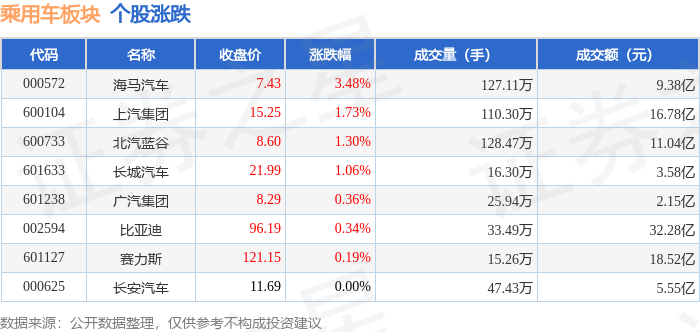
乘用车板块1月19日涨0.68%,海马汽车领涨,主力资金净流入6355.93万元
Zheng Xing Xing Ye Ri Bao· 2026-01-19 08:52
Group 1 - The passenger car sector increased by 0.68% on January 19, with Haima Automobile leading the gains [1] - The Shanghai Composite Index closed at 4114.0, up 0.29%, while the Shenzhen Component Index closed at 14294.05, up 0.09% [1] - Key stocks in the passenger car sector showed varied performance, with notable increases in stocks like Haima Automobile (3.48%) and SAIC Motor (1.73%) [1] Group 2 - The net inflow of main funds in the passenger car sector was 63.56 million yuan, while retail investors experienced a net outflow of 45.99 million yuan [1] - Haima Automobile had a significant main fund net inflow of 73.46 million yuan, while retail investors saw a net outflow of 86.47 million yuan [2] - BYD experienced a net outflow of 88.17 million yuan from main funds, indicating a negative trend in investor sentiment [2]






TSLA vs. BYDDY: What's the Better Long-Term Play?
The Motley Fool· 2026-01-19 08:34
Core Insights - The electric vehicle (EV) market is currently led by Tesla and BYD, each employing distinct strategies to enhance shareholder value while showcasing long-term durability and innovation [1] Tesla Overview - Tesla aims to transition from being solely an electric vehicle manufacturer to a recognized software company, focusing on full self-driving capabilities, robotics, AI, and energy storage [2] - Tesla's stock is highly valued, with a trailing price-to-earnings ratio exceeding 300 and a market cap of $1.4 trillion, reflecting investor confidence in CEO Elon Musk's ability to deliver on future innovations [3] BYD Overview - BYD is rapidly expanding internationally, leveraging a vertically integrated model that allows it to compete effectively on price, with vehicles available in over 100 countries [4][6] - BYD's stock trades at a premium but is less expensive than Tesla's, with a market cap of $140 billion and a 16% increase in stock value over the past 12 months [5][6] Investment Perspectives - Tesla is viewed as a higher-risk investment with greater long-term upside potential due to its innovative pivot, appealing to investors with a higher risk tolerance and longer time horizon [7] - BYD is considered a more stable investment option, focusing on affordable electric cars and steady growth, making it suitable for investors with lower risk tolerance [7]
拓普集团(601689):汽车平台型龙头跨域进化,机器人有望构建新增长曲线
NORTHEAST SECURITIES· 2026-01-19 08:13
Investment Rating - The report maintains a "Buy" rating for the company [4]. Core Insights - The company has evolved from a single component supplier to a comprehensive solution provider in the automotive parts sector, with a strong focus on R&D and strategic positioning in emerging markets [1][2]. - The company is well-positioned to benefit from the growing humanoid robot market, leveraging its core competencies in actuator technology [3]. - The financial forecast indicates a steady increase in net profit from 28.95 billion CNY in 2025 to 42.70 billion CNY in 2027, with corresponding PE ratios decreasing from 44.84 to 30.40 [3]. Summary by Sections Company Overview - The company is a leading automotive parts manufacturer with a diversified product range, including shock absorption systems, interior and exterior trim systems, lightweight chassis components, and intelligent driving systems [1][2]. - It has established a global presence with 26 production bases and 7 R&D centers, maintaining strong partnerships with major clients like Tesla and BYD [1]. Business Structure - The company's business model is supported by two main pillars: traditional advantages in interior components and chassis systems, and emerging sectors such as thermal management and automotive electronics [2]. - The thermal management segment has rapidly expanded since its inception in 2020, with innovative products like the integrated heat pump module [2]. Robotics and Future Growth - The humanoid robot market is projected to reach a trillion-dollar scale, with the company positioned as a key supplier of actuators, benefiting from its technological synergies and global manufacturing capabilities [3]. - The company aims to leverage its existing automotive client relationships to penetrate the robotics market effectively [3]. Financial Performance - The company has shown robust revenue growth, with a projected increase in operating income from 19.70 billion CNY in 2023 to 43.01 billion CNY in 2027, reflecting a compound annual growth rate of approximately 19.41% [7]. - Despite short-term profit pressures due to increased R&D investments, long-term profitability is expected to improve as new capacities come online and market share in thermal management grows [20][25].

汽车行业周报:低增长之年,追寻高质量发展
Guoyuan Securities· 2026-01-19 05:45
Investment Rating - The report maintains a "Recommended" investment rating for the automotive industry, indicating that the industry index is expected to outperform the benchmark index by more than 10% [6]. Core Insights - The automotive industry is entering a phase of low growth, with a focus on high-quality development opportunities. Key areas of interest include high-growth automotive companies and structural opportunities within the supply chain, particularly in commercial vehicles and automotive technology [4][34]. - The China Association of Automobile Manufacturers (CAAM) forecasts that total vehicle sales in China will reach 34.75 million units in 2026, representing a year-on-year growth of 1%. Passenger vehicle sales are expected to grow by 0.5%, while commercial vehicle sales are projected to increase by 4.7% [3][35]. - New energy vehicles (NEVs) are anticipated to play a crucial role in driving industry growth, with expected sales of 19 million units in 2026, reflecting a significant year-on-year growth of 15.2% [3][35]. Summary by Sections 1. Weekly Market Review (January 10-16, 2026) - The automotive sector index increased by 0.49%, outperforming the Shanghai and Shenzhen 300 index by 1.06 percentage points. The automotive services sector saw the highest growth at 4.51% [12][15]. 2. Weekly Data Tracking (January 10-16, 2026) - From January 1-11, 2026, retail sales of passenger vehicles in China totaled 328,000 units, a 32% decrease year-on-year. Wholesale figures were 381,000 units, down 40% year-on-year [20][21]. 3. Industry News (January 10-16, 2026) - Significant developments include partnerships for advanced driving technologies and the introduction of new vehicle models by major manufacturers, indicating ongoing innovation in the sector [25][29][31]. 4. Key Manufacturer Sales Rankings (2025) - BYD led the passenger vehicle market with sales of 4.55 million units, followed by Geely and Chery. In the NEV segment, BYD also dominated with a market share of 29.7% [23][24]. 5. Future Outlook - The report emphasizes the importance of macroeconomic policies and industry governance in sustaining growth. The focus will be on maintaining competitive advantages in electric and intelligent vehicle technologies [34][36].

汽车行业周报:低增长之年,追寻高质量发展-20260119
Guoyuan Securities· 2026-01-19 05:23
Investment Rating - The report maintains a "Recommended" investment rating for the automotive industry, indicating a positive outlook for certain segments within the sector [6]. Core Insights - The automotive industry is expected to experience low growth in 2026, with total vehicle sales projected to reach 34.75 million units, reflecting a year-on-year increase of 1%. Passenger vehicle sales are anticipated to grow by 0.5%, while commercial vehicle sales are expected to rise by 4.7%. The new energy vehicle (NEV) segment is projected to grow significantly, with sales expected to reach 19 million units, a 15.2% increase year-on-year, highlighting its role as a key growth driver [3][35]. - The report emphasizes the importance of macroeconomic policies and GDP growth targets in influencing vehicle sales, particularly in the passenger vehicle segment. The report suggests that sustained policy support is crucial for maintaining sales momentum [3][35]. Summary by Sections 1. Weekly Market Review (January 10-16, 2026) - The automotive sector index increased by 0.49%, outperforming the Shanghai Composite Index by 1.06 percentage points. The automotive services sector saw the highest gains, with a 4.51% increase [12][15]. 2. Weekly Data Tracking (January 10-16, 2026) - Retail sales of passenger vehicles from January 1-11 totaled 328,000 units, a 32% decrease year-on-year. Wholesale figures showed a similar trend, with 381,000 units sold, down 40% year-on-year. The NEV market also faced declines, with retail sales of 117,000 units, down 38% year-on-year [20][21]. 3. Industry News (January 10-16, 2026) - Key developments include partnerships for advanced driving technologies and initiatives to promote autonomous vehicle testing in regions like Hong Kong. Additionally, the report highlights the ongoing negotiations between China and the EU regarding electric vehicle trade, which could stabilize market conditions [25][28][30]. 4. Investment Recommendations - The report suggests focusing on structural opportunities within the automotive sector, particularly high-growth companies and regions, as well as the recovery of commercial vehicles and advancements in automotive technology [4].