
卡游

Search documents
东北证券:情绪消费驱动潮玩 Z世代主导新格局
Zhi Tong Cai Jing· 2025-08-25 07:09
Core Insights - The rise of emotional consumption and the "millet economy" are key drivers, with the Gen Z demographic leading to over 500 million participants in the pan-second dimension market by 2024, and a market size of approximately 600 billion yuan, including a millet economy worth over 150 billion yuan [1] - The trend in the collectible toy market is expected to reach 110 billion yuan by 2027, with a competitive landscape characterized by "one strong and many strong" players, where Pop Mart leads the industry, while foreign brands like Lego and Bandai hold significant market shares [1] Market Segmentation - In the toy segment, blind boxes, building toys, and card games are leading the growth of the collectible toy industry, with blind boxes driven by unknown stimuli and IP value, targeting a consumer base that is 75% female and primarily Gen Z, with a projected market size of 58 billion yuan by 2025 [1][2] - Building toys are designed for all age groups, activating both parent-child and adult scenarios, with a market size expected to reach 64 billion yuan by 2028, led by domestic brand Blokus [1][2] - Card games focus on a younger demographic (ages 8-15) and are dependent on parental spending, with a projected market size of 44.6 billion yuan by 2029, where Card Game occupies a leading position [1][2] Competitive Landscape - Leading companies such as Pop Mart, Blokus, and Card Game are driving industry development through differentiated competition, with Pop Mart focusing on IP incubation and blind box mechanisms, Blokus targeting children's educational scenarios, and Card Game emphasizing children's social interaction [3] - Pop Mart maintains strong channel control primarily through direct sales, while Blokus is shifting from online direct sales to a dealer-centric model, and Card Game is also focusing on a dealer model but is experiencing channel contraction [3] - Financially, Pop Mart is enhancing its brand premium with a projected gross margin of 66.8% and an adjusted net profit margin of 26.1% in 2024, while Blokus has improved its inventory turnover days from 137 to 46, achieving a turnaround in adjusted net profit margin from -107.9% to 26.1% [3] International Insights - Successful overseas companies demonstrate that a multi-faceted business ecosystem centered around IP is crucial, with Disney leveraging its IP across films, parks, and merchandise, Bandai focusing on vertical IP and high-precision models, and Sanrio expanding its "cute economy" through light asset character licensing [4]


IP为王,多元品类百花齐放的大时代
NORTHEAST SECURITIES· 2025-08-24 05:14
Investment Rating - The report rates the industry as "Outperform" [6] Core Insights - Emotional consumption and the rise of the "Guzi economy" are driving the growth of the trendy toy market, with the Z generation leading a new landscape. By 2024, the population of the pan-2D community in China is expected to exceed 500 million, with a market size of approximately 600 billion yuan, and the Guzi economy alone surpassing 150 billion yuan [1][24] - The trendy toy industry is characterized by a "one strong, many strong" pattern, with Pop Mart leading the industry, while foreign brands like LEGO and Bandai hold a certain market share. Domestic brands such as Blok and Card Game are also experiencing rapid growth, with IP operation and overseas market expansion being key future directions for the industry [1][4] Summary by Sections 1. Emotional Consumption and the Rise of Trendy Toys - Emotional consumption has emerged as a new economic driver, with trendy toys becoming a significant social label for consumers. These toys provide emotional value, helping to alleviate anxiety and affirm consumer identity [22][23] - The Guzi economy, which focuses on IP-derived peripheral products, is deeply integrated with 2D culture, creating a vibrant narrative and emotional connection for consumers [23][24] - The market for trendy toys is expected to grow significantly, with the pan-entertainment toy market projected to exceed 1 trillion yuan by 2029, and the trendy toy market reaching 110 billion yuan by 2027 [1][36] 2. Growth Drivers: Blind Boxes, Building Toys, and Card Games - Blind boxes are driven by the thrill of the unknown, with a market size expected to reach 580 billion yuan by 2025. The consumer base is predominantly female, with 75% of buyers being women, and the Z generation pushing for a shift towards mid-to-high-end products [2][67] - Building toys are designed for all age groups, with a market size projected to reach 640 billion yuan by 2028. Local brand Blok leads this segment, focusing on educational aspects [2][3] - The card game market, driven by rarity and low pricing, is expected to reach 446 billion yuan by 2029, with Card Game holding a dominant position [2][3] 3. Competitive Landscape and Key Players - Leading companies such as Pop Mart, Blok, and Card Game are driving industry development through differentiated competition. Pop Mart focuses on IP incubation and blind box mechanisms, while Blok emphasizes educational scenarios through building blocks [4][5] - The market is becoming increasingly concentrated, with Pop Mart holding a 28% market share in the blind box segment. The CR5 of the blind box market is expected to rise from 38% in 2020 to 50% in 2024 [76] 4. International Expansion and Lessons from Overseas - The report highlights the importance of IP-driven multi-business ecosystems, as seen in successful overseas companies like Disney and Bandai. These companies leverage their IP across various platforms, creating a robust business model [4][56] - Chinese toy companies are actively expanding into international markets, with significant growth in exports to the US and Central Asia. This diversification is crucial for mitigating risks associated with reliance on single markets [56][57]
淡马锡,投了叶国富
3 6 Ke· 2025-08-22 08:35
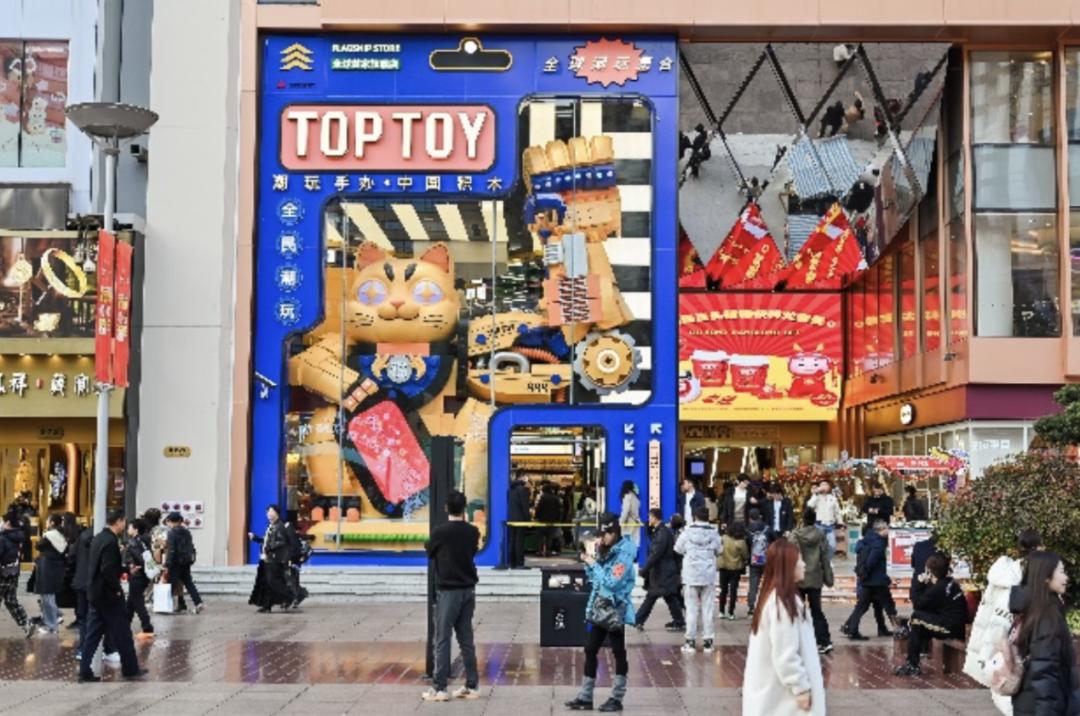
Core Insights - Miniso's subsidiary TOP TOY has secured strategic financing led by Temasek, achieving a post-investment valuation of approximately HKD 10 billion, indicating strong market recognition for its position in the global toy market [1][4][5] - TOP TOY's revenue for Q2 reached RMB 400 million, reflecting a year-on-year increase of 87%, and the brand is projected to become a new growth driver for Miniso [4][5] - The rapid expansion of TOP TOY, with 293 stores currently and plans for over 1,000 stores globally in the next five years, highlights the brand's aggressive growth strategy [2][4] Company Overview - TOP TOY, launched in late 2020, operates independently under Miniso and focuses on trendy toys, having over 10,000 SKUs across various categories [2][4] - The brand's global strategy includes opening stores in countries like Thailand, Indonesia, and Malaysia, with a goal of achieving over 50% of sales from international markets [4][5] - Miniso is evaluating the potential for a separate IPO for TOP TOY, which could further enhance its market presence [5][8] Market Context - The toy market, particularly the trendy toy segment, is experiencing significant growth, with competitors like Pop Mart achieving record performance and a market capitalization exceeding HKD 420 billion [1][9] - The competitive landscape is evolving, with various companies in the toy sector preparing for IPOs, indicating a robust interest in the market [10][11] - The rise of interest in IP-driven products among younger consumers is driving the growth of the toy industry, positioning companies that can effectively engage this demographic for future success [11]

淡马锡,投了叶国富
投资界· 2025-08-22 07:22
Core Viewpoint - The article highlights the booming trend of trendy toys, particularly focusing on the strategic financing of TOP TOY, a brand under Miniso, which has received significant investment from Temasek, leading to a post-investment valuation of approximately 10 billion HKD [2][5]. Group 1: TOP TOY's Growth and Market Position - TOP TOY reported a revenue of 400 million RMB in Q2 this year, marking an 87% year-on-year increase, and its total revenue for the first half of 2025 reached 740 million RMB, a 73% increase [8]. - The brand has expanded its store count to 293, with 98 new stores opened year-on-year, and plans to continue its aggressive expansion strategy [6][8]. - TOP TOY is exploring the possibility of a separate IPO, with aspirations to achieve this within three years, indicating a strong growth trajectory [9]. Group 2: Market Dynamics and Comparisons - The trendy toy market is experiencing significant growth, with competitors like Pop Mart achieving record performance, reporting a 204.4% year-on-year revenue increase to 13.88 billion RMB in the first half of 2025 [15]. - TOP TOY differentiates itself from Pop Mart by focusing on the secondary creation of major IPs, while Pop Mart primarily develops its own IPs [16]. - The article notes a growing consensus in the investment community that capturing the Z generation market is crucial for future success, as evidenced by various new entrants and IPOs in the trendy toy sector [18].

消费股狂欢:错过大热门,基金们如何反思与布局新赛道
Sou Hu Cai Jing· 2025-08-22 01:25
Core Insights - The article highlights the unexpected success of consumer companies in the Hong Kong stock market, particularly focusing on Laopu Gold, which thrived post-IPO despite initial skepticism from primary market investors [1][3]. Group 1: Company Performance - Laopu Gold, founded 14 years ago, made a strategic decision to list in Hong Kong instead of waiting for the A-share market, despite having no prior financing [1]. - Black Ant Capital was the only firm to invest in Laopu Gold during its Pre-IPO round, leading with a valuation of 5.225 billion RMB and investing 175 million RMB [3]. - After its IPO, Laopu Gold's stock price surged, benefiting from rising gold prices and becoming a standout in the Hong Kong consumer sector [3][4]. Group 2: Market Dynamics - The changing sentiment in the Hong Kong market has been a key driver for the rising stock prices of consumer companies, with a decrease in IPO candidates in the A-share market and increased acceptance of consumer firms in Hong Kong [4]. - The influx of foreign capital and the strength of the RMB have revitalized the Hong Kong market, making it an attractive destination for consumer companies [4]. - Companies like Laopu Gold, Pop Mart, and Blukoo have shown similar trends, where they were undervalued before listing but gained significant investor interest post-IPO [3][4]. Group 3: Investor Reflection - The success of these consumer companies has prompted primary market investors to reflect on their conservative investment strategies and the rapid changes in market dynamics [4]. - The article suggests that consumer companies that can address consumer pain points and offer unique value propositions are likely to become market stars in the future [5].

今年最赚钱的三家消费公司,大基金们押错了两个|深氪
3 6 Ke· 2025-08-21 11:47
Core Insights - The article discusses the surprising rise of Lao Pu Gold, which saw its stock price increase by 12 times since its IPO, despite being overlooked in the primary market [1][4] - The company transitioned from seeking an A-share listing to pursuing a Hong Kong IPO, attracting significant investment from Black Ant and Yu Garden [1][3] - A key turning point was the release of a mid-year report showing a nearly 200% year-on-year profit increase, which led to a surge in investor interest [3][4] Investment Dynamics - Initial interest in Lao Pu Gold was low, with only a few investors participating in the Pre-IPO round, highlighting a lack of understanding of the company's potential [1][2] - The IPO saw overwhelming demand, with retail subscriptions oversubscribed by over 580 times and institutional subscriptions nearly 12 times, indicating a shift in market sentiment [4][15] - The company's market capitalization reached HKD 11.3 billion on its listing day, doubling its valuation from the Pre-IPO round in just six months [4][18] Market Trends - The article notes a broader trend in the Hong Kong market, where consumer stocks have become increasingly popular, with significant inflows from foreign capital [12][16] - The sentiment shift is attributed to a combination of factors, including expectations of U.S. interest rate cuts and a growing confidence in Chinese assets [12][13] - The consumer sector, particularly non-essential goods, has seen a surge in interest, with companies like Bubble Mart and Honey Snow Ice City also experiencing significant market success [17][18] Investment Reflections - Many investors expressed regret over missing opportunities in companies like Lao Pu Gold, indicating a broader issue of understanding emerging consumer brands [5][6][9] - The article highlights a pattern where successful consumer companies were often overlooked in the primary market, leading to missed investment opportunities [9][19] - The narrative emphasizes the importance of recognizing and adapting to changing market dynamics, particularly in the consumer sector [30][32]
今年最赚钱的三家消费公司,大基金们押错了两个|深氪
36氪· 2025-08-21 08:40
Core Viewpoint - The article discusses the unexpected rise of consumer companies in the Hong Kong stock market, highlighting the missed investment opportunities in companies like Laopoo Gold and others, which were undervalued in the primary market but later became stars in the secondary market [4][10][14]. Group 1: Laopoo Gold's Journey - Laopoo Gold, which saw its stock price increase 12 times since its listing, was initially overlooked in the primary market, with its founder deciding to switch from A-shares to Hong Kong shares [4][5]. - The company received a significant investment from Black Ant at a valuation of 5.225 billion RMB, marking it as the only lead investment in its Pre-IPO round [5][6]. - Despite a lack of interest from other investors, Laopoo Gold's mid-year report showed a nearly 200% year-on-year profit increase, leading to a surge in demand during its IPO, with retail subscriptions oversubscribed by over 580 times [9][10]. Group 2: Market Sentiment and Investment Trends - The article notes a shift in market sentiment, with a growing interest in consumer stocks, particularly in the context of rising gold prices and strong consumer demand [10][20]. - The influx of foreign capital into Hong Kong, driven by expectations of U.S. interest rate cuts and a more favorable view of Chinese assets, has contributed to the bullish sentiment in the market [22][24]. - The consumer sector has become the most active in Hong Kong IPOs, with significant oversubscription rates, indicating a strong appetite for well-performing consumer companies [24][25]. Group 3: Missed Opportunities and Reflections - Several venture capitalists expressed regret over missing investment opportunities in Laopoo Gold and other consumer brands, reflecting a broader trend of underestimating emerging consumer companies [12][14]. - The article highlights that many successful consumer companies were not recognized in the primary market, with investors often focusing on more traditional sectors like tea drinks, which were easier to understand [36][37]. - The narrative emphasizes the importance of recognizing and investing in innovative consumer brands that create new categories, as opposed to following established paths [46][49].


从看不懂到投不进:大基金为何集体错判泡泡玛特、老铺黄金和卡游|深氪
36氪未来消费· 2025-08-21 08:17
Core Viewpoint - The article discusses the contrasting fortunes of companies in the Hong Kong stock market, particularly focusing on the success of "Lao Pu Gold" and the missed investment opportunities by venture capitalists in the primary market [2][3]. Group 1: Lao Pu Gold's Journey - Lao Pu Gold, which saw its stock price increase by 12 times since its listing, was initially overlooked in the primary market, with no prior funding rounds before its IPO [4][5]. - The company received a significant investment from Black Ant at a valuation of 52.25 billion RMB, marking a rare entry into the investment round [5][6]. - Despite the initial lack of interest, the company's mid-year report showed a nearly 200% year-on-year profit increase, leading to a surge in demand during its IPO, with retail subscriptions oversubscribed by over 580 times [9][10]. Group 2: Market Sentiment and Investment Decisions - The article highlights a shift in market sentiment, where previously overlooked companies like Lao Pu Gold became highly sought after, leading to significant regret among investors who missed the opportunity [11][12]. - The investment community's failure to recognize the potential of companies like Lao Pu Gold and others in the consumer sector is emphasized, with many expressing regret for not investing [13][14]. - The article notes that the consumer sector, particularly non-essential goods, has become the hottest area for investment, with significant inflows from both domestic and foreign capital [20][24]. Group 3: The Changing Landscape of Consumer Investment - The article outlines how the consumer market has evolved, with companies like Bubble Mart and Lao Pu Gold emerging as leaders, while traditional sectors like tea drinks faced challenges [19][35]. - It discusses the competitive landscape, where companies that innovate and create unique products are more likely to succeed, contrasting with those that follow existing trends [44][45]. - The narrative also touches on the varying backgrounds of founders in the consumer space, which influences investor perceptions and decisions [45][46].

新消费洞察:Labubu热度暂褪,下一个“泡泡玛特”是谁?
点拾投资· 2025-08-20 10:59
Core Viewpoint - The article highlights the rapid growth and market dominance of KAYOU, a leading player in the collectible card game industry in China, emphasizing its impressive financial performance and strategic positioning in the entertainment toy market [5][20]. Group 1: Company Overview - KAYOU, founded in 2011, experienced significant growth after acquiring the Ultraman IP in 2018, leading to a diverse portfolio of popular IPs and products [13]. - The company reported a revenue of over 10 billion RMB in 2024, with a net profit exceeding 4.4 billion RMB, showcasing a year-on-year growth rate of 278% and 378% respectively [7][16]. - KAYOU holds a market share of 21.5% in the broader entertainment toy market and 71.1% in the collectible card segment, making it the market leader [8][18]. Group 2: Financial Performance - KAYOU's revenue surged from 2.3 billion RMB in 2021 to 10.06 billion RMB in 2024, with a compound annual growth rate (CAGR) of 64% [16]. - The net profit increased from 795 million RMB to 4.466 billion RMB during the same period, with a net profit margin rising from 35% to 44% [16]. - The gross profit margin for KAYOU reached 67.3% in 2024, indicating strong profitability compared to industry peers [16][35]. Group 3: Market Position and Competitive Landscape - The collectible card game market in China is still in its early stages, with low per capita spending compared to Japan and the US, suggesting significant growth potential [33]. - KAYOU's unique position in the market is characterized by its focus on collectible cards, while competitors like LEGO and Pop Mart focus on different product categories [19]. - The company has established a robust distribution network with 217 distributors and 351 KAYOU centers across China, contributing to its revenue growth [27][29]. Group 4: Strategic Advantages - KAYOU's competitive edge lies in its effective "IP-Product-Channel" model, allowing for comprehensive value creation from content development to commercialization [22]. - The company has a diverse IP portfolio, including 70 IPs, which reduces reliance on any single IP and enhances revenue stability [23][24]. - KAYOU's product range is expanding, with collectible cards accounting for over 80% of revenue, while other toys and stationery are gaining traction [13][25]. Group 5: Growth Drivers - The growth of KAYOU is driven by the increasing popularity of collectible card games, with a projected market size of 446 billion RMB by 2029 [33]. - The company is focusing on international expansion, leveraging its IPs to enter overseas markets, particularly in Southeast Asia [34]. - KAYOU's profitability is expected to surpass that of competitors like Pop Mart, indicating strong financial health and growth potential [35][36].
潮玩行业研究框架 泡泡玛特&52toys
2025-08-18 01:00
Summary of the Call Transcript on the Trendy Toy Industry Industry Overview - The trendy toy market was initiated by Hong Kong artists, integrating art and fashion elements, with diverse forms including figurines, sculptures, and blind boxes [1][2] - The broad definition of trendy toys includes collaborations with IPs from films, anime, and games, catering to specific enthusiasts [1][3] - The blind box segment has rapidly gained popularity due to low consumer and cognitive barriers, high adaptability, and hidden design features [1][4] Key Insights - **Consumer Demographics**: The core audience for trendy toys is aged between 15 and 40, with a higher proportion of female users, although the overall gender ratio is becoming more balanced [1][6][8] - **Market Size and Growth**: The domestic trendy toy market is expected to exceed 100 billion yuan by 2026, with blind boxes showing high growth rates. The IP toy market is projected to be around 700 billion yuan, with building and assembly toys accounting for about 30% [1][11][12] - **Market Competition**: The market is fragmented, with LEGO leading at 12 billion yuan GMV, followed by Pop Mart at 8.7 billion and Brook at 2.5 billion. The top ten companies hold about 50% of the market share [1][13] Success Factors for Trendy Toy Companies - **Traffic IP**: Successful companies leverage high-traffic IPs, typically character designs rather than content-based, due to their higher commercialization potential [4][5] - **Product Quality**: High-quality products are essential, requiring effective design and supply chain barriers [5] - **Social Media and Secondary Market**: Effective social media marketing enhances brand visibility, while a convenient secondary market facilitates transactions [5] - **Entertainment and Interaction**: Creating engaging purchase experiences and interactive scenarios increases consumer entertainment value [5] Consumer Needs in Blind Box Purchases - **Value for Money**: Consumers seek affordable and easily accessible products [7] - **Emotional Connection**: There is a desire for self-identity, curiosity, and social recognition through collecting [7][6] - **Social Interaction**: Collecting and trading through social platforms fosters community engagement [7] IP Acquisition and Market Dynamics - **IP Acquisition**: The domestic market primarily acquires IP through self-incubation and collaborations with independent artists, with IP accounting for a small percentage of GMV [10] - **Future Trends**: The market is still in its early stages, with potential for structural changes and innovation in product categories [12] Company Strategies - **Pop Mart's Expansion**: Pop Mart is expanding its IP matrix and product categories, with plans to open 320 stores next year, increasing its overseas presence significantly [2][16][21] - **52TOYS Strategy**: 52TOYS focuses on a combination of self-owned and licensed IPs, with a significant portion of revenue coming from external IPs [22][23] Sales Channels and Revenue - **Diverse Sales Channels**: Both companies are diversifying their sales channels, with a significant reliance on distributors while also expanding direct-to-consumer (D2C) models [24][21] - **Revenue Projections**: 52TOYS generates 70-80% of its revenue from licensed IPs, with a focus on static blind boxes and figurines [23] Future Outlook - **IPO Plans**: The companies are preparing for potential IPOs, with Pop Mart expected to file in Hong Kong, aiming for a listing in 2025 or 2026 [26]