
微软

Search documents
布米普特拉北京投资基金管理有限公司:微软探索数据中心供电新布局
Sou Hu Cai Jing· 2026-02-13 17:03
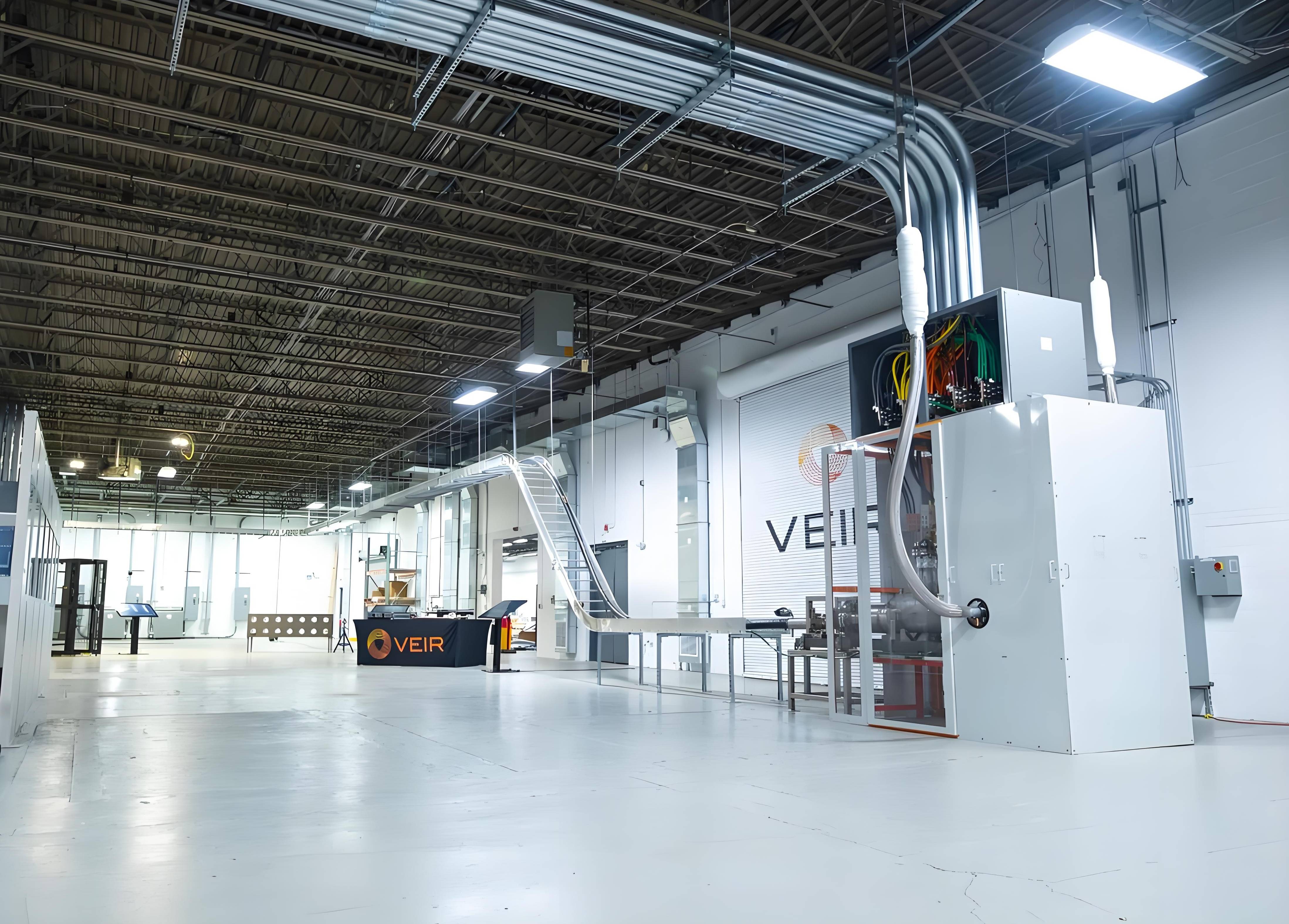
微软正将目光投向高温超导技术,以破解人工智能算力扩张带来的数据中心供电瓶颈。该企业近日在官方博客中披露,正评估将高温超导电缆引入数据中心 供电体系,这项以"零电阻"传输电能的成熟技术,如今在经济性与制造层面已具备超大规模场景落地潜力。 这一布局使微软数据中心在电力、网络与热管理三大战略方向形成完整创新拼图。此前该企业已在空心光纤与微流体冷却技术上取得进展,高温超导的加入 补齐了电力传输环节的关键短板。 成本仍是超导电缆大规模应用的核心障碍。高温超导带材通常采用稀土钡铜氧化物制备,材料与制程成本高昂。同时运行过程中需液氮持续冷却,增加系统 复杂度。然而这一瓶颈正因人工智能与核聚变产业的交汇而出现转机。 传统数据中心及绝大多数能源基建至今仍依赖铜导线。电流通过铜线时每一步都会遭遇电阻,不仅产生热量、限制传输容量,还推高冷却负担。高温超导电 缆则完全不同:在液氮冷却至极低温的环境下,电流实现零电阻流动,不发热、无电压衰减,且体积与重量较同等传输能力的铜缆可缩小约十倍。 微软全球基础设施营销总经理表示,主要在两类场景推动高温超导技术落地。在数据中心内部,更纤细的电力排线可极大提升机架布局灵活度,打破当前供 电布局对算 ...


FTC升级对微软反垄断调查,向竞争对手质询云与AI业务
Ge Long Hui A P P· 2026-02-13 16:22
Core Viewpoint - The Federal Trade Commission (FTC) is accelerating its investigation into Microsoft regarding potential illegal monopolization in the enterprise computing market through its cloud software and AI products, including Copilot [1] Group 1: Investigation Details - The FTC has recently issued civil investigative demands to Microsoft's competitors in the commercial software and cloud computing markets [1] - These demands include inquiries about Microsoft's licensing and other business practices [1] - At least six companies have received such requests, which are akin to civil subpoenas [1] Group 2: Evidence Gathering - The FTC is seeking evidence to demonstrate that Microsoft makes it more difficult for customers to use competitors' cloud services alongside products like Windows and Office [1] - The agency has also requested information regarding Microsoft's bundling of AI, security, and identity software with products such as Windows and Office [1]
闪迪重挫5%,美股半导体深夜下跌,应用材料飙升12%,黄金白银强势反弹
2 1 Shi Ji Jing Ji Bao Dao· 2026-02-13 16:02
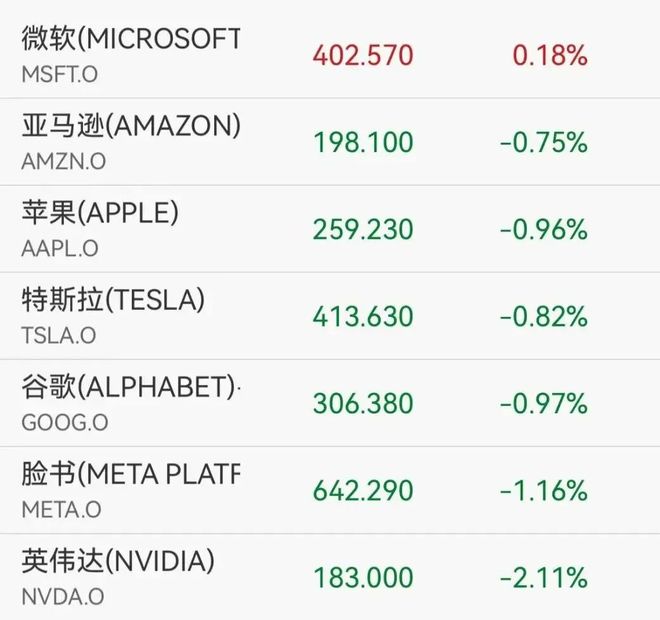
记者|江佩霞 见习记者林芊蔚 编辑|刘巷 北京时间2月13日,美股三大指数开盘集体下跌,截至发稿,纳指跌0.29%,道指跌0.16%,标普500指 数跌0.08%。今晚,美国公布重磅通胀数据,交易员对美联储6月实施降息的概率预期大幅攀升至83%。 大型科技股多数下跌,谷歌、Meta跌约1%,英伟达跌超2%。 | 微软(MICROSOFT | 402.570 | 0.18% | | --- | --- | --- | | MSFT.O | | | | 亚马逊(AMAZON) | 198.100 | -0.75% | | AMZN.O | | | | 苹果(APPLE) | 259.230 | -0.96% | | AAPL.O | | | | 特斯拉(TESLA) | 413.630 | -0.82% | | TSLA.O | | | | 谷歌(ALPHABET)· | 306.380 | -0.97% | | GOOG.O | | | | 脸书(META PLATF | 642.290 | -1.16% | | META.O | | | | 英伟达(NVIDIA) | 183.000 | -2.11% | | ...
闪迪重挫5%,美股半导体深夜下跌,应用材料飙升12%,黄金白银强势反弹
21世纪经济报道· 2026-02-13 15:56
记者|江佩霞 见习记者林芊蔚 中概股多数下跌,纳斯达克中国金龙指数跌0.7%,世纪互联跌超6%,叮咚买菜、爱奇艺、阿里巴巴、百度集团跌2%。 编辑|刘巷 北京时间2月13日,美股三大指数开盘集体下跌,截至发稿,纳指跌0.29%,道指跌0.16%,标普500指数跌0.08%。 今晚,美国公布重磅通胀 数据,交易员对美联储6月实施降息的概率预期大幅攀升至83%。 大型科技股多数下跌,谷歌、Meta跌约1%,英伟达跌超2%。 | 微软(MICROSOFT | 402.570 | 0.18% | | --- | --- | --- | | MSFT.O | | | | 亚马逊(AMAZON) | 198.100 - | -0.75% | | AMZN.O | | | | 苹果(APPLE) | 259.230 | -0.96% | | AAPL.O | | | | 特斯拉(TESLA) | 413.630 | -0.82% | | TSLA.O | | | | 谷歌(ALPHABET). | 306.380 | -0.97% | | GOOG.O | | | | 脸书(META PLATF | 642.290 | - ...

美股中概股,集体下跌
第一财经· 2026-02-13 14:49
大型科技股多数下跌,闪迪跌超4%,英特尔、英伟达、谷歌跌超1%。 | 名称 | 涨跌幅 ▲ | 现价 | | --- | --- | --- | | 闪进 | -4.26% | 603.455 | | 脸书(META PLATFORMS) | -1.69% | 638.810 | | 英特尔(INTEL) | -1.69% | 45.695 | | 英伟达(NVIDIA) | -1.21% | 184.680 | | 谷歌(ALPHABET)-A | -1.03% | 305.820 | | 留校(CISCO) | -1.07% | 74.200 | | 亚马逊(AMAZON) | -0.80% | 197.995 | | 苹果(APPLE) | -0.77% | 259.715 | | 博通(BROADCOM) | -0.55% | 329.365 | | 高通(QUALCOMM) | -0.45% | 137.840 | | 特斯拉(TESLA) | -0.22% | 416.135 | | 微软(MICROSOFT) | -0.16% | 401.190 | | 奈飞(NETFLIX) | -0.07% ...

1480亿美元的赌注:为何高盛认为市场误读了微软的资本开支?
Hua Er Jie Jian Wen· 2026-02-13 13:19
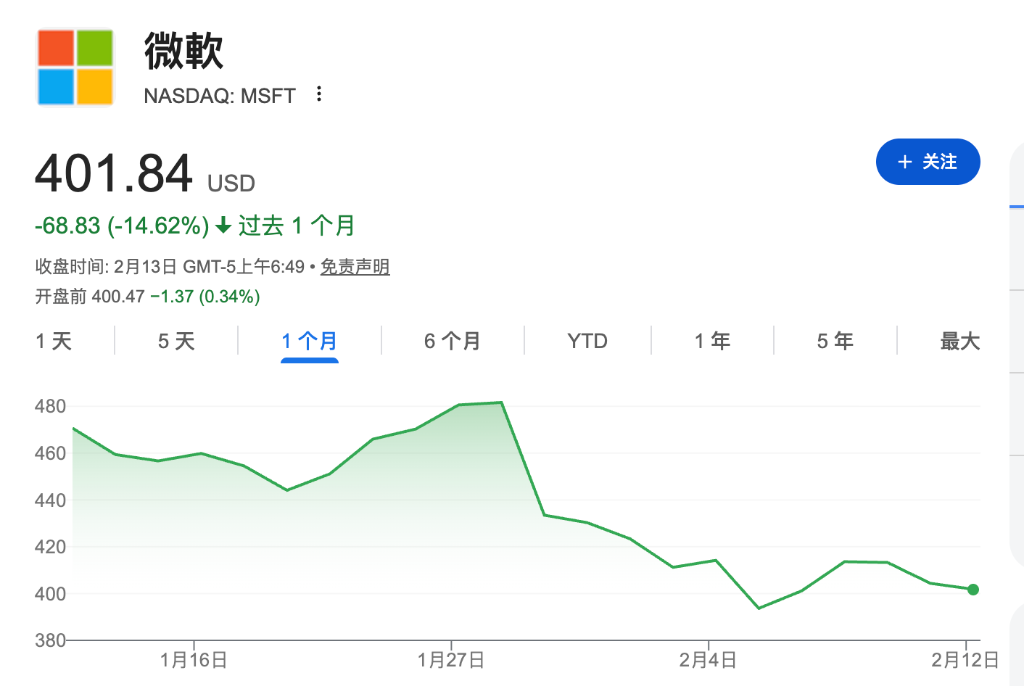
Core Viewpoint - Microsoft has seen a 15% decline in stock price since the earnings report on January 28, primarily due to concerns over increased capital expenditures without a corresponding rise in Azure growth guidance and competition from new AI tools in the Office 365 business [1] Group 1: Capital Expenditure and Azure Growth - Microsoft is adjusting its computing power allocation, increasing the share for internal research and Copilot from approximately 10% to 20% [3][5] - For fiscal year 2026, capital expenditures are projected to reach $148 billion, a 400% increase from fiscal year 2022 [3] - Current computing power allocation is about 70% for Azure and 30% for Copilot and internal research, with new GPU allocations approaching a more balanced 60/40 split [6] Group 2: Iceberg Model of Computing Investment - Goldman Sachs introduced an "iceberg analogy" to explain Microsoft's computing capital expenditure strategy, distinguishing between visible investments that directly impact Azure and Office 365 and invisible investments crucial for long-term strategy [4] - If all new computing capacity is allocated to Azure, its growth rate could exceed 40%, indicating a strategic postponement of some growth potential for long-term investments [4][10] Group 3: Drivers of Increased Internal Allocation - Four structural factors are driving the increased demand for Microsoft's computing power, leading to a significant evolution in capital expenditure structure [7] - Azure AI computing power accounts for the largest share, with a multiplier of 4-5 times for "computing power/quarterly new revenue," translating to $0.20 to $0.25 in revenue for every $1 of capital expenditure [8] Group 4: Copilot Investment Strategy - Microsoft is positioning Copilot as a cost-effective enterprise-level LLM solution, priced at approximately $30 per user per month, compared to ChatGPT Enterprise at $60 [12] - Copilot is beginning to make a substantial contribution to M365 commercial cloud revenue, projected to reach $89 billion in fiscal year 2026 [13] - The adoption rate of Copilot is increasing among both internal employees and external customers, driving up computing power consumption [9]
三大维度透视:中概、港科缘何走弱?
Ge Long Hui· 2026-02-13 05:17
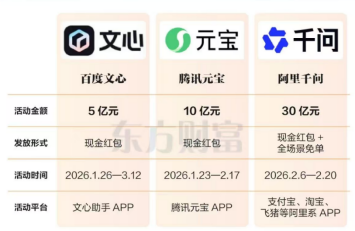
Group 1: Market Performance - Hong Kong tech stocks faced a setback, with Alibaba down 2.33%, Tencent down 1.68%, and Baidu down over 4% [1] - The decline in Chinese concept stocks and Hong Kong tech sector is attributed to macroeconomic factors and global liquidity tightening [1] Group 2: Macroeconomic Factors - The expectation of global liquidity tightening has increased, influenced by the hawkish nomination of the new Federal Reserve chairman and strong U.S. non-farm payroll data [1] - The performance of large U.S. tech stocks has been weak, with concerns over AI disruption and increased capital expenditures affecting market sentiment [1] Group 3: Competitive Landscape - Intense competition in the AI sector has led to significant strategic investments by companies like Tencent, Alibaba, and ByteDance, which are eroding short-term profits [2] - The ongoing AI arms race and competition in instant retail are forcing companies to increase operational and capital expenditures, impacting mid-term EPS growth [2] Group 4: Fundamental Performance - The cyclical business performance is subdued, with a 2.3% year-on-year growth in GMV for online physical goods in Q4 2025, indicating potential revenue pressure for e-commerce platforms [4] - The AI narrative lacks solid performance support, as increased capital expenditures have not yet translated into expected profit growth [4] Group 5: Capital Flows - Recent data shows significant capital inflows into the Hong Kong market, with foreign net inflows of $1.88 billion as of February 4, 2023 [5] - Southbound capital has been actively buying Hong Kong stocks, with a net purchase of over 5.1 billion yuan in three days during early February [5] Group 6: Valuation and Investment Opportunities - The current P/E ratio of the Hong Kong tech index is 23.93, which is below the five-year average, indicating potential value for investors [7] - Analysts believe that the recent volatility in the Hong Kong tech sector is primarily due to liquidity shocks, with the fundamental investment logic remaining intact [8]
刚刚,一个2.6万亿AI独角兽诞生,英伟达微软押注,马斯克急了
3 6 Ke· 2026-02-13 02:28
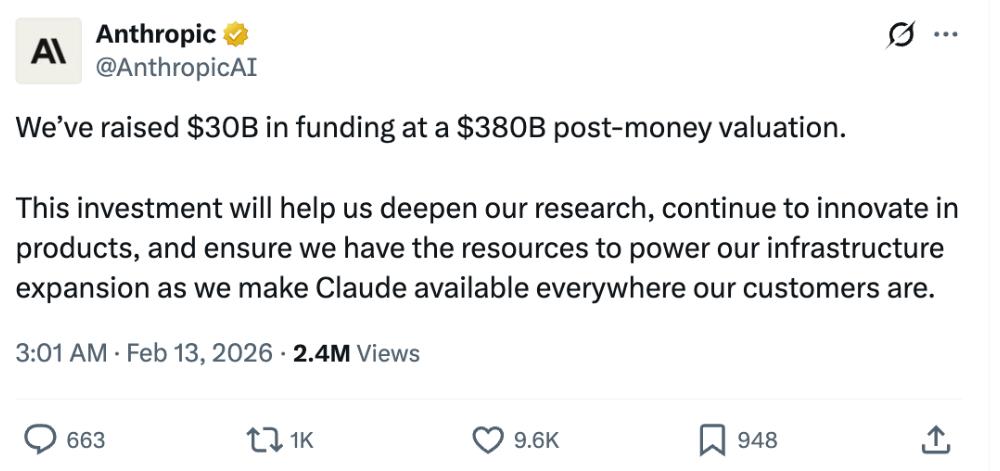
Core Insights - Anthropic has completed a $30 billion Series G funding round, achieving a post-money valuation of $38 billion and an annual recurring revenue of $14 billion, with an average growth rate exceeding 10 times over the past three years [1][2]. Funding and Investment - The funding will support advanced research, product development, and infrastructure expansion, with Claude being the only AI model available on major cloud platforms: Amazon Web Services, Google Cloud, and Microsoft Azure [2]. - Key investors in this round include the Ontario Teachers' Pension Plan and Coatue, along with significant contributions from firms like Blackstone, Goldman Sachs, JPMorgan, and Sequoia Capital [4][5]. Customer Growth and Revenue - The number of Claude customers spending over $100,000 annually has increased sevenfold in the past year, with over 500 clients now spending more than $1 million annually, including 8 out of the top 10 Fortune 500 companies [6]. - Claude Code, launched in 2025, has generated over $2.5 billion in annual recurring revenue, doubling its growth since early 2026, and now accounts for more than half of total revenue [6][11]. Product Development and Features - Anthropic has released the Claude Opus 4.6 model, which features a 1 million token context window, enhancing its capabilities in long-context queries and reasoning [7][10]. - Claude Code has become a popular tool among developers, allowing for automated engineering tasks and code management, with a graphical UI version called Cowork launched to cater to non-technical users [9][10]. Market Position and Strategy - Unlike OpenAI's consumer-focused approach, Anthropic emphasizes the B2B market, achieving significant commercial success with a focus on transforming technological advancements into market advantages [11]. - The company is preparing for an IPO, potentially in 2026, having engaged legal and investment banking firms for preliminary preparations [10].
微软:解析外部与内部资本开支的应用场景
2026-02-13 02:18
12 February 2026 | 4:03PM EST Equity Research Microsoft Corp. (MSFT) Microsoft is down ~15% since its 1/28 report, primarily for two reasons: 1) upward revisions to capex without upward revisions to Azure, resurfacing questions on ROI and Azure's competitive positioning relative to peers; and 2) ongoing debate on whether the knowledge worker applications business (Office 365) is disintermediated with new AI competition, such as Claude Cowork. We focus our analysis here on the first concern: capex ROI. Micro ...
AI“超级代理”大战打响!四大赛道全面铺开,OpenAI、Anthropic正挑战微软们的软件帝国
Hua Er Jie Jian Wen· 2026-02-13 02:01
Core Insights - Major AI companies like OpenAI and Anthropic are launching enterprise-level AI products that challenge existing enterprise software markets, prompting traditional software vendors like Microsoft and Salesforce to accelerate their own AI tools and management platforms [1][2] Group 1: Competitive Landscape - The competition involves four main product categories: browser-based agents, computer-operable agents, agent-building tools, and agent management consoles [1][2] - OpenAI and Google provide browser-based agents capable of executing multi-step tasks, while Anthropic's Cowork and Google's Gemini Computer Use are examples of computer-operable agents [2] - Agent-building tools such as Salesforce's Agentforce and Google's Gemini Enterprise allow clients to create agents that can access various enterprise applications [2] - The agent management console market features competitors like Microsoft's Agent 365 and OpenAI's Frontier, raising questions about the necessity of multiple consoles for clients [2] Group 2: Adoption Challenges - Despite the promising outlook, new agent technologies face significant challenges before widespread adoption, including security concerns and usability issues [3] - Companies like OpenAI and Anthropic indicate that their computer-operable agents are still in research preview, suggesting they are not yet ready for large-scale enterprise deployment [3] - Hilton's CTO Onkar Birk expressed caution in adopting new subscriptions, highlighting the complexity and investment required for developing customer support agents [4] Group 3: Traditional Software Companies' Response - OpenAI's strategy involves positioning its agent command technology above traditional enterprise "record systems," which are critical for storing business data [5] - Traditional enterprise application companies like Salesforce and Microsoft have not yet taken steps to block AI agents from accessing or modifying data within their systems [5] - There is a recognition that traditional companies are utilizing technologies from OpenAI and Anthropic to support their own agents, even as these AI firms promote their competitive tools [5] Group 4: Market Dynamics - Snowflake, a database company, has released a product supported by AI models from OpenAI and Anthropic, enabling clients to develop agents for searching and retrieving business metrics [6] - The competitive landscape is characterized by high stakes, with industry leaders feeling pressure to either achieve a $1 trillion valuation or face potential failure [6]


