蔚来

Search documents
首批L3车型获准上路,自动驾驶“拐点”来了?丨财经早察
2 1 Shi Ji Jing Ji Bao Dao· 2025-12-17 12:44
Core Insights - The first batch of L3 conditional autonomous vehicles in China has received operational permits, marking a significant milestone in the country's autonomous driving era [1] Group 1: Definition and Implications of L3 - L3 level represents conditional automation where the system can fully take over driving tasks in specific scenarios, allowing the driver to temporarily disengage [2] - A key revolutionary aspect of L3 is the shift in responsibility from the driver to the vehicle manufacturer in case of accidents caused by system failures, as per regulations effective in 2025 [2] Group 2: Companies Involved - The first two companies to receive L3 permits are Changan Automobile and BAIC's Arcfox, with Changan focusing on congested scenarios and BAIC targeting high-speed efficient travel [3] - Both companies' vehicles will initially be operated by specific service entities rather than being sold directly to consumers, reflecting a cautious approach by regulatory authorities [3] Group 3: Market Opportunities - The launch of L3 vehicles provides a first-mover advantage for Changan and BAIC, with other manufacturers like BYD, NIO, and GAC likely to accelerate their efforts to obtain similar permits [4] - Transitioning from L2 to L3 involves significant hardware advancements, benefiting core components such as intelligent driving domain controllers and automotive-grade chips [4] - The shift in responsibility will necessitate the development of new insurance products, accident assessment processes, data security regulations, and maintenance systems [4]

首批L3车型获准上路,自动驾驶“拐点”来了?
2 1 Shi Ji Jing Ji Bao Dao· 2025-12-17 12:36
Group 1 - The first batch of L3 conditional autonomous vehicles in China has received operational permits, marking a significant milestone in the country's autonomous driving era [1][3] - L3 level automation allows the system to take over driving tasks in specific scenarios, enabling drivers to temporarily disengage from their responsibilities, with the caveat that they must be ready to take control in complex situations [2][3] - The shift in liability from the driver to the vehicle manufacturer in the event of an accident due to system failure is a revolutionary aspect of L3, establishing a legal foundation for "machine drivers" [2][3] Group 2 - The first two companies to receive L3 permits are Changan Automobile and BAIC's Arcfox, with Changan focusing on congested scenarios and BAIC targeting high-speed efficient travel [3][4] - The initial deployment of these vehicles is limited to specific routes and operated by designated companies rather than individual consumers, reflecting a cautious approach by regulatory authorities [3][4] - The launch of L3 vehicles is expected to accelerate advancements in core hardware, such as intelligent driving domain controllers and automotive-grade chips, as well as the development of new ecosystems and service models in the automotive industry [4]
2025年30-40万新能源汽车终端优惠车型盘点
Zhong Guo Neng Yuan Wang· 2025-12-17 11:47
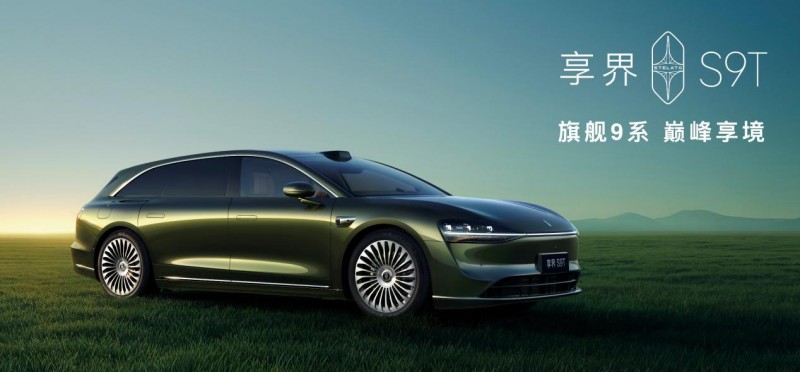
Core Insights - The popularity of travel cars in the domestic market has significantly increased, with a focus on convenience, versatility, and appealing design among consumers [1] - The price range of 300,000 to 400,000 yuan has become a key budget segment for high-quality travel cars, with competition centered around space, long-range performance, intelligent driving assistance, and cabin experience [1] Group 1: Enjoy S9T - The Enjoy S9T is the first travel car from Hongmeng Zhixing, combining elegance and spaciousness, equipped with advanced technologies such as Huawei's ADS 4 and a new platform [4] - It features 30 storage spaces and a trunk capacity of 729L, expandable to 1677L, accommodating large items like golf bags and bicycles [4] - The vehicle offers a range of smart features, including a smart cockpit with multiple screens and advanced audio systems, enhancing user interaction and convenience [5] Group 2: Performance and Safety - The Enjoy S9T boasts a 0-100 km/h acceleration time of 3.95 seconds and a braking distance of 33.95 meters, with enhanced stability and comfort [6] - It has a maximum range of 801 km for the pure electric version and 1305 km for the range-extended version, with efficient energy consumption [6] - The vehicle is equipped with comprehensive safety features, including a collision avoidance system and a robust body structure, ensuring high safety standards [7][8] Group 3: NIO ET5T - The NIO ET5T maintains a family design with a hatchback style, offering battery options of 75 kWh and 100 kWh, with a range of 530-700 km [10][11] - It supports NIO Assisted Driving capabilities and features a minimalist interior with a focus on comfort and usability [10] Group 4: Mercedes-Benz E-Class - The Mercedes-Benz E-Class travel version emphasizes luxury and driving quality, featuring the MBUX intelligent system and a range of engine options [12] - While it lacks in energy efficiency and smart features compared to newer models, it remains attractive for its brand reputation and craftsmanship [12] Group 5: Purchase Recommendations - For urban commuting and weekend trips, the Enjoy S9T is recommended due to its smart features and flexibility [13] - For family users considering long-distance travel, the NIO ET5T is a viable alternative, though it is slightly less comprehensive in smart features [13] - For those prioritizing traditional luxury and driving experience, the Mercedes-Benz E-Class is still appealing despite its limitations in energy efficiency [13] Group 6: Next Steps for Consumers - Consumers are advised to visit offline stores for real vehicle experiences, focusing on trunk space and driving assistance performance [16] - Evaluating the suitability of pure electric or range-extended powertrains based on personal usage and charging conditions is recommended [16] - A thorough assessment of financial options, delivery timelines, and after-sales service policies is essential for overall cost evaluation [16]

L3上路,妥了
36氪· 2025-12-17 11:45
Core Viewpoint - The approval of L3-level conditional autonomous driving vehicles marks a significant step towards the commercialization of autonomous driving in China, transitioning from testing to official road use under specific conditions [8][9][10]. Group 1: Approval Details - The Ministry of Industry and Information Technology (MIIT) has approved two L3-level autonomous vehicles: Changan SC7000AAARBEV and BAIC Alpha S6, allowing them to operate under specific conditions in designated areas of Chongqing and Beijing [5][6][16]. - The Changan vehicle can achieve autonomous driving at speeds up to 50 km/h in congested traffic and on specific roads in Chongqing, while the BAIC vehicle can operate at speeds up to 80 km/h on certain highways in Beijing [17][19]. Group 2: Significance of Approval - This approval signifies the transition of autonomous vehicles into a "certified era," indicating that L3-level vehicles are now recognized for their operational capabilities under real-world conditions [8][12]. - The distinction between "product approval" and "testing licenses" is crucial, as the former indicates a higher level of regulatory recognition and the ability to operate on public roads [10][11][12]. Group 3: Future Implications - The approval is part of a gradual process that began with policy discussions in 2022, leading to the current stage where L3 and L4 vehicles can be tested under specific conditions [26][28]. - The industry anticipates a rapid increase in L3 vehicle approvals, with many companies setting 2026 as a target for widespread deployment of L3 autonomous driving technology [30][31][32].


最后15天,明年起购置税退坡,20万元档车辆或多付1万元
3 6 Ke· 2025-12-17 11:38
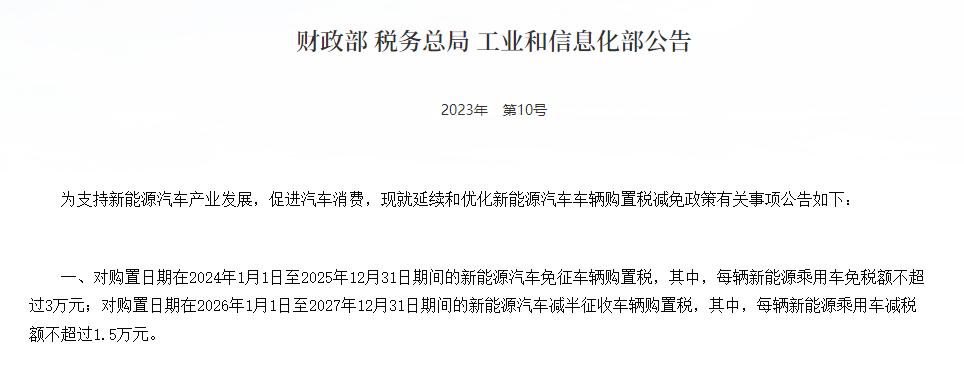
Group 1 - The core issue in the automotive market is the impending reduction of the new energy vehicle purchase tax from full exemption to a 50% reduction starting January 1, 2026, which could increase costs for vehicles priced around 200,000 yuan by nearly 10,000 yuan [1][3][4] - The "trade-in" policy is extended but lacks clarity in implementation, with low lottery rates for subsidies in cities like Shanghai, diminishing the benefits for consumers [1][2] - Over 20 brands, including Li Auto, NIO, and Zeekr, have introduced purchase tax subsidy policies, with some offering up to 15,000 yuan, but these often come with conditions such as loan completion by a specific date [1][4][8] Group 2 - Data indicates a decline in new energy vehicle retail sales, with a 17% year-on-year drop in the first seven days of December, highlighting the tension among automakers, consumers, and policies [2][11] - The current purchase tax policy is the last year of full exemption, with a maximum tax reduction of 15,000 yuan per vehicle under the new 5% tax rate [3][4] - The financial performance of automakers varies significantly, with companies like Xiaomi and Leap Motor showing strong growth and profitability, while others like Li Auto face declining sales [8][10] Group 3 - The market is witnessing a split among consumers, with some eager to take advantage of current tax benefits while others prefer to wait for technological advancements like solid-state batteries [11][12][14] - The Shanghai government has not announced any changes to the green license plate policy, which continues to support new energy vehicle purchases [6][10] - The competitive landscape is shifting, with traditional automakers like BYD maintaining strong sales while newer entrants struggle with profitability [10][11]
欧盟撤销全面电动化计划
Di Yi Cai Jing· 2025-12-17 11:29
Group 1: Core Views - The European Commission proposed a new amendment to relax the 2035 ban on the sale of fuel and diesel vehicles, changing the carbon emission reduction target from 100% to 90% [1] - Major automotive companies such as Mercedes-Benz, BMW, Stellantis, Volkswagen, and Renault support this amendment, citing high costs of electric vehicles and insufficient charging infrastructure as barriers to achieving the expected electric vehicle penetration by 2035 [1] - There are opposing views from companies like Volvo and Polestar, which argue that changing the ban could hinder the electric transition and lead to a lag behind other countries [1] Group 2: Market Trends - The global automotive market, including Europe, is undergoing an electrification transformation, with fuel vehicles losing market share to hybrid and electric vehicles [2] - According to ACEA data, new car registrations in the EU increased by 1.4% year-on-year in the first ten months of 2025, with hybrid vehicle registrations rising to 3.11 million, accounting for 34.6% of the market [2] - The market share of gasoline vehicles decreased from 34% to 27.4%, while pure electric vehicle registrations reached approximately 1.47 million, growing from 13.2% to 16.4% year-on-year [2] Group 3: Growth of Plug-in Hybrid Vehicles - The registration of plug-in hybrid vehicles in the EU surged to 819,200 units, with a market share of 9.1%, up from 7% the previous year [3] - Significant growth was observed in Spain (109.6%), Italy (76.5%), and Germany (63.4%) for plug-in hybrid vehicle sales [3] - Chinese automaker BYD reported substantial sales growth in the EU, with a 452.3% increase in Spain and a 647.5% increase in Germany [3] Group 4: Challenges for Traditional Automakers - Traditional automakers like Ford and Stellantis experienced a decline in sales, with Stellantis reporting a 6% drop in the first ten months of the year [4] - These companies face challenges in electric vehicle sales and rely heavily on external supply chains for key components like batteries [4] - German Chancellor Merz and Volkswagen CEO Oliver Blume expressed skepticism about the feasibility of a complete ban on internal combustion engines by 2035 [4] Group 5: Long-term Electrification Goals - The EU's new proposal includes a policy to support small electric vehicles, offering a reward mechanism for manufacturers that assemble small electric vehicles and battery packs in the EU [5] - Renault welcomed the new plan, emphasizing the need to accelerate the promotion of electric vehicles and the introduction of small electric cars [5][6] - Volkswagen described the new proposal as economically reasonable, highlighting the special support for small electric vehicles as a positive development [6]

蔚来公布,缺芯了
半导体芯闻· 2025-12-17 10:31
Core Viewpoint - NIO has announced a change in the technical solution for the rear entertainment expansion feature of the new ES8 due to a shortage of supply for the required chips, effective from December 22, 2025, to ensure vehicle delivery [1] Group 1: Changes in Features - The new ES8 will no longer support local video playback via USB drives, although lossless music playback and wireless screen mirroring will remain unaffected [1] - The ability to output the vehicle's screen to an external display via the USB-C port in the armrest will also be discontinued, but data input and wired screen mirroring will still be supported, with a maximum resolution of 1080P [1] Group 2: Compensation Measures - NIO will provide a one-time compensation of 15,000 points to users who lock in the new ES8 with the new technical solution before December 31, 2025, credited to the primary user's account within three days of vehicle delivery [1] - Users can opt for the original technical solution after chip supply improves by paying 12,000 points or 1,200 yuan for retrofitting [1] Group 3: Chip Development and Strategy - NIO's founder, Li Bin, announced the successful application of the self-developed 5nm automotive-grade intelligent driving chip, Shenji NX9031, in multiple models, marking a significant milestone in NIO's chip strategy [7] - The Shenji NX9031 chip is noted for its high performance, equivalent to four NVIDIA Orin-X chips, and is designed to support long-term upgrades of intelligent driving algorithms and software [10] - NIO aims to ensure that its intelligent driving chips can operate safely under extreme conditions and provide high bandwidth and processing power for a decade [8] Group 4: Challenges and Achievements - NIO faced significant challenges during the chip development process, including the abrupt termination of a partnership, but managed to overcome these obstacles and advance the project ahead of schedule [9] - The successful first-time tape-out of the Shenji NX9031 chip is a notable achievement, as it is the first automotive-grade 5nm chip to be mass-produced and deployed in vehicles [10] - NIO's commitment to self-research and development in chip technology is seen as a long-term strategy to enhance competitiveness in the automotive industry [11]


A股,放量上攻!多股尾盘直线涨停!
Xin Lang Cai Jing· 2025-12-17 09:55
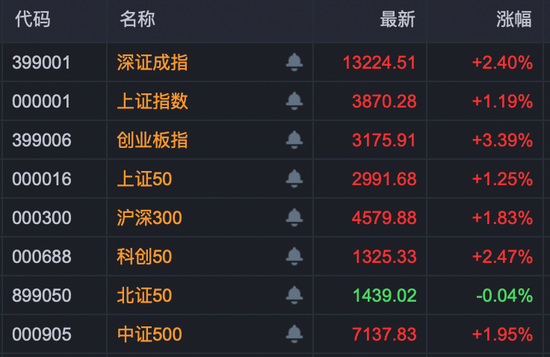
炒股就看金麒麟分析师研报,权威,专业,及时,全面,助您挖掘潜力主题机会! 今日(12月17日)午后,A股放量大幅上攻,创业板指大涨3.39%,创近2个月来最大单日涨幅,深证成 指、科创50也均涨逾2%,上证指数、沪深300、上证50等亦涨超1%,市场成交温和放大至1.83亿元。 万和证券认为,市场将震荡上行,"反内卷"政策有效推动市场竞争持续优化,扩内需、保民生等政策落 地带来供需关系的改善,建议关注消费行业的投资机会。此外,高技术制造业继续位于扩张区间,且明 显高于制造业总体水平,行业支撑作用持续显现,建议关注受益于政策和业绩驱动的集成电路、商业航 天板块。 市场热点方面,大金融午后集体异动拉升成为市场上涨主要动力。券商股在13:30左右开始放量,板块 指数约40分钟就由绿盘转为大涨近3%。华泰证券盘中一度冲击涨停,股价创2015年6月以来10年半新高 (复权,下同),收盘涨幅收窄至6.09%;兴业证券、广发证券等涨幅居前。 同一时段,保险板块指数也放量拉升,一度涨近4%,创历史新高。板块内所有个股上涨,中国太保、 新华保险逼近历史最高点,中国人寿、中国平安创年内新高。 银行板块指数午后也一度涨逾1%,多元 ...



2026报名启动 | “生物基行业的奥斯卡”,什么是新叶奖?
合成生物学与绿色生物制造· 2025-12-17 07:49
Core Viewpoint - The New Leaf Award, a prestigious global award in the bio-based industry, has launched its 2026 registration, aiming to recognize and showcase innovative products and companies in the sector [2]. Group 1: Award Categories - The New Leaf Award features four main categories: Innovation Materials Award, Innovation Application Award, Innovation Industry Solutions Award, and Most Commercially Valuable Award [4][22]. Group 2: Registration Timeline & Process - Registration for the 2026 New Leaf Award starts on December 1, 2025, and ends on March 13, 2026. The initial online voting will take place from March 16 to March 22, 2026, followed by online presentations and expert reviews from March 23 to March 27, 2026. The award ceremony will be held on May 21, 2026, during the 11th Bio-based Conference [6][9]. Group 3: Evaluation Criteria - The evaluation criteria for the awards include: - Innovation in Technology: 30% for Innovation Materials Award, 10% for Innovation Application Award, 20% for Innovation Industry Solutions Award - Innovation in Application: 10% for Innovation Materials Award, 30% for Innovation Application Award, 20% for Innovation Industry Solutions Award - Functionality: 25% for Innovation Materials Award, 25% for Innovation Application Award, 30% for Innovation Industry Solutions Award - Commercial Value: 20% for Innovation Materials Award, 20% for Innovation Application Award, 15% for Innovation Industry Solutions Award - Sustainability: 15% across all categories [10]. Group 4: Benefits of Participation - Participating companies will receive free publicity through the award process, which includes access to over 100 industry communication groups and a large audience for brand exposure. Award-winning companies will also be invited to the award ceremony, where they will receive a high-end trophy and certificate in front of industry leaders [11][12].

西城商界畅谈服贸会影响力,多维赋能区域经济高质量发展
Bei Jing Shang Bao· 2025-12-17 07:10
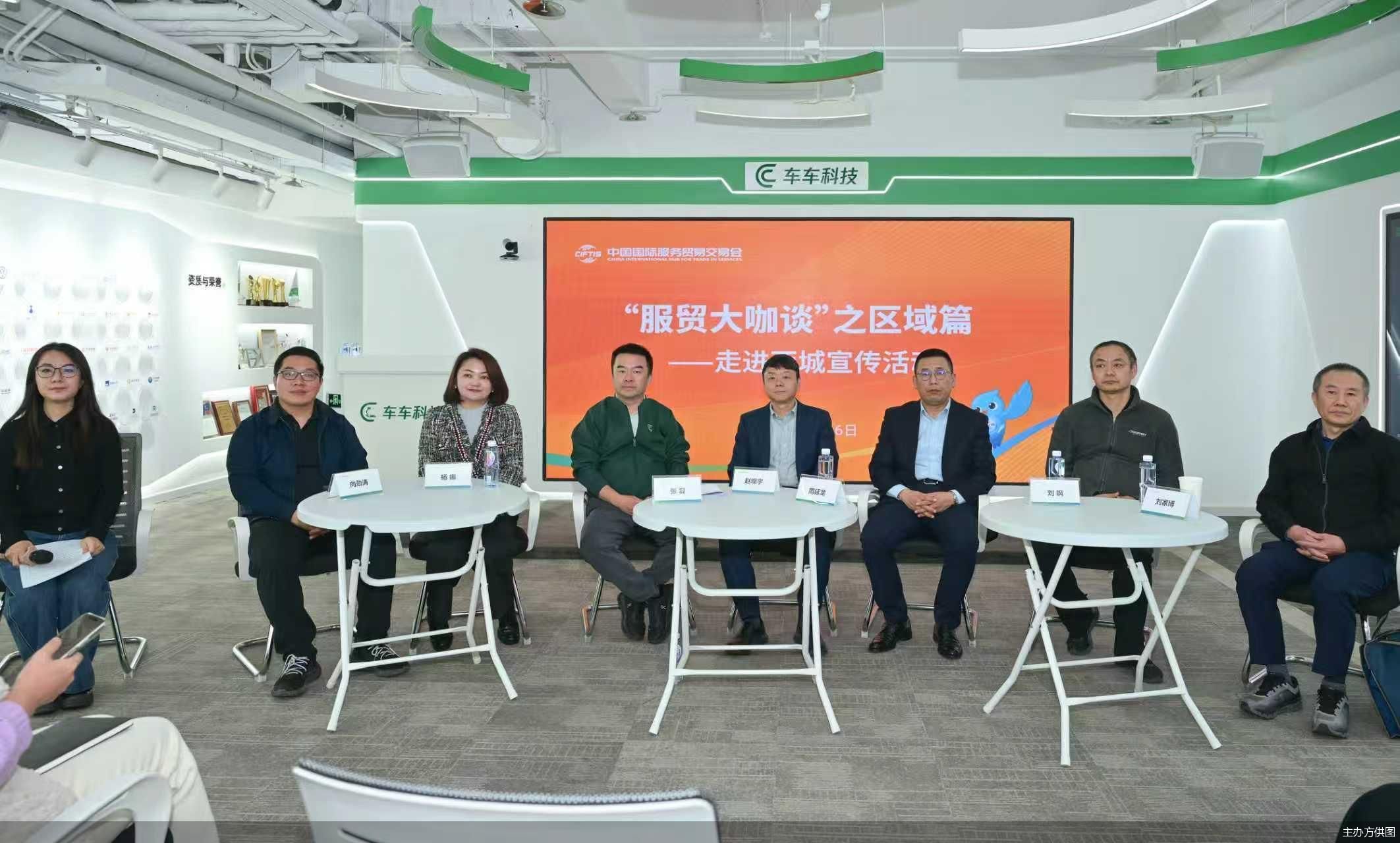
Core Insights - The China International Fair for Trade in Services (CIFTIS) serves as a multi-functional platform for regional economic development, showcasing opportunities for investment and international cooperation [3][4]. Group 1: Economic Development and Investment - The CIFTIS has been pivotal for the Xicheng District, acting as a "showcase window," "cooperation bridge," and "growth engine," with pre-scheduled investment amounts exceeding $16.5 billion, marking a 71.5% increase from the previous year [3]. - The district launched the "Central-Local Cooperation: Going Global Navigation Plan" during the fair, facilitating partnerships between Chinese enterprises and foreign companies, particularly in the Middle East [3]. Group 2: Support for Traditional Brands - Xicheng District is enhancing its commercial districts and supporting traditional brands through targeted upgrades and innovative actions, including the "Old Brand Renewal" initiative [4]. - The fair has allowed traditional brands like Quanjude to connect with younger consumers through innovative products, showcasing the blend of heritage and modern consumer preferences [7]. Group 3: Digital and Financial Technology - Cheche Technology aims to expand its digital insurance services internationally, leveraging the overseas sales networks of Chinese electric vehicle brands [5]. - LianDong YouShi, a fintech company, is focusing on providing localized solutions for developing countries, aligning with the Belt and Road Initiative [6]. Group 4: Innovation in Food and Beverage - Zhang Yiyuan is launching a new tea brand, "Yuan Lai Shi Cha," at the fair, emphasizing innovation while maintaining traditional values, particularly in jasmine tea [8]. - Huatiandish's participation in the fair has allowed it to test innovative business models and integrate technology into its offerings, enhancing customer engagement [9]. Group 5: Brand Image and Cultural Value - Caibai has utilized its five-year participation in the fair to enhance its brand image and cultural value, positioning itself as a platform for cross-border cooperation [10]. - The fair serves as a significant venue for Chinese brands to narrate their stories and promote Eastern aesthetics on a global stage [10].