三星

Search documents
玻璃基板,量产前夜
半导体行业观察· 2025-12-28 02:49
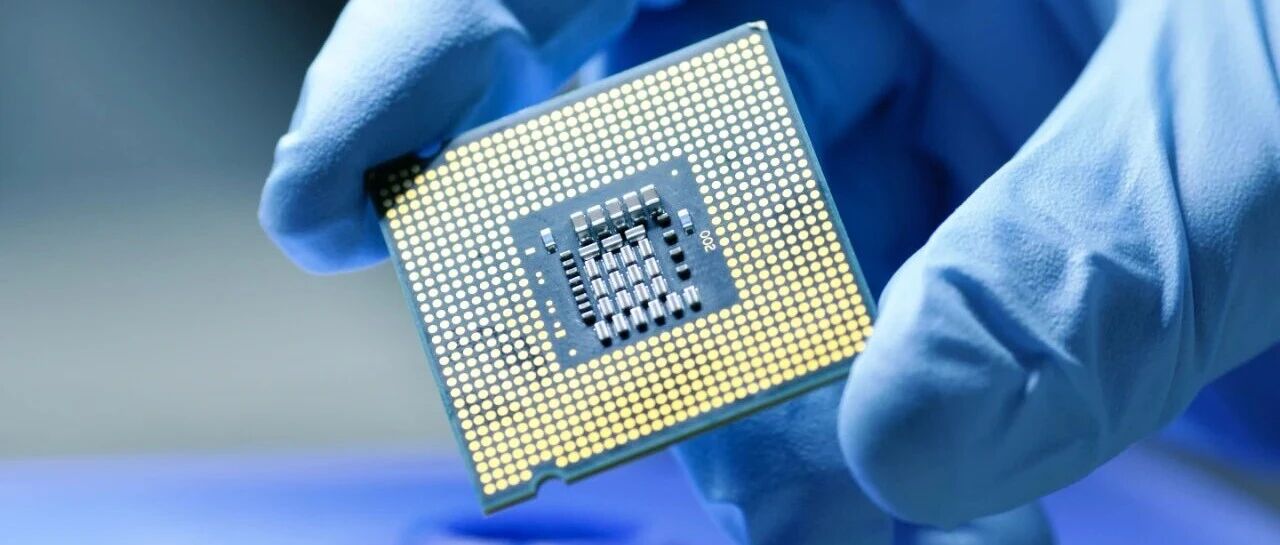
Core Viewpoint - The semiconductor industry is shifting from process competition to packaging innovation, with glass substrates emerging as a key material to overcome performance bottlenecks in advanced packaging [1][2]. Group 1: Industry Dynamics - Major companies like Samsung, Intel, AMD, and Nvidia are actively exploring glass substrates for next-generation chip development, indicating a strategic focus on this material [1]. - Recent developments include Japan's Rapidus exploring glass substrate technology and Samsung's plans to establish a joint venture with Sumitomo Chemical for glass substrate production [1][2]. Group 2: Advantages of Glass Substrates - Glass substrates offer significant advantages over traditional organic substrates and silicon interposers, including lower dielectric loss, excellent thermal stability, and high flatness [3][4]. - The electrical performance of glass substrates is superior, with signal transmission loss at 10GHz being only 0.3dB/mm, and dielectric loss reduced by over 50% compared to organic substrates [4]. - Glass substrates can achieve a thermal expansion coefficient (CTE) of 3-5ppm/°C, matching silicon chips and reducing warpage by 70% during thermal cycling [4]. Group 3: Types of Glass Substrates - Glass substrates are categorized into glass interposers and glass core substrates, each serving different roles in advanced packaging scenarios [3][6]. - Glass interposers are primarily used in 2.5D packaging, enabling high-density interconnections between multiple chips [6]. - Glass core substrates are aimed at 3D packaging and chiplet integration, providing a stable solution for increasing chip sizes and I/O counts [8]. Group 4: Industry Competition - The competition in the glass substrate market is intensifying, with companies like Intel, Samsung, TSMC, and new entrants like Rapidus and Absolics making significant investments and strategic moves [12][14][20]. - Intel has invested over $1 billion in developing glass substrate technology and aims for large-scale application by 2026-2030 [12][13]. - Samsung is pursuing a dual-line strategy, focusing on both rapid commercialization and long-term technological breakthroughs in glass substrates [14][15]. Group 5: Challenges and Barriers - The glass substrate industry faces challenges in scaling production, with many companies still in the early stages of development and validation [34][39]. - Key technical challenges include the efficiency and yield of TGV (Through Glass Via) processes, high-density wiring, and bonding reliability [35][41]. - Cost remains a significant barrier, with the production costs of glass substrates being substantially higher than traditional organic substrates, limiting their application in price-sensitive markets [39][40]. Group 6: Domestic Developments - Domestic companies in China are actively pursuing opportunities in the glass substrate market, leveraging their expertise in glass processing and precision manufacturing [23][30]. - Companies like BOE and Wog Glass are making strides in developing glass substrates for semiconductor packaging, with plans for mass production and technological advancements [24][25]. - The establishment of industry alliances and collaborations between academia and industry is fostering innovation and addressing common technical challenges in the glass substrate sector [30][31].





年终盘点|2025年全球彩电市场微跌,中国双雄进一步逼近三星
Di Yi Cai Jing· 2025-12-28 02:36
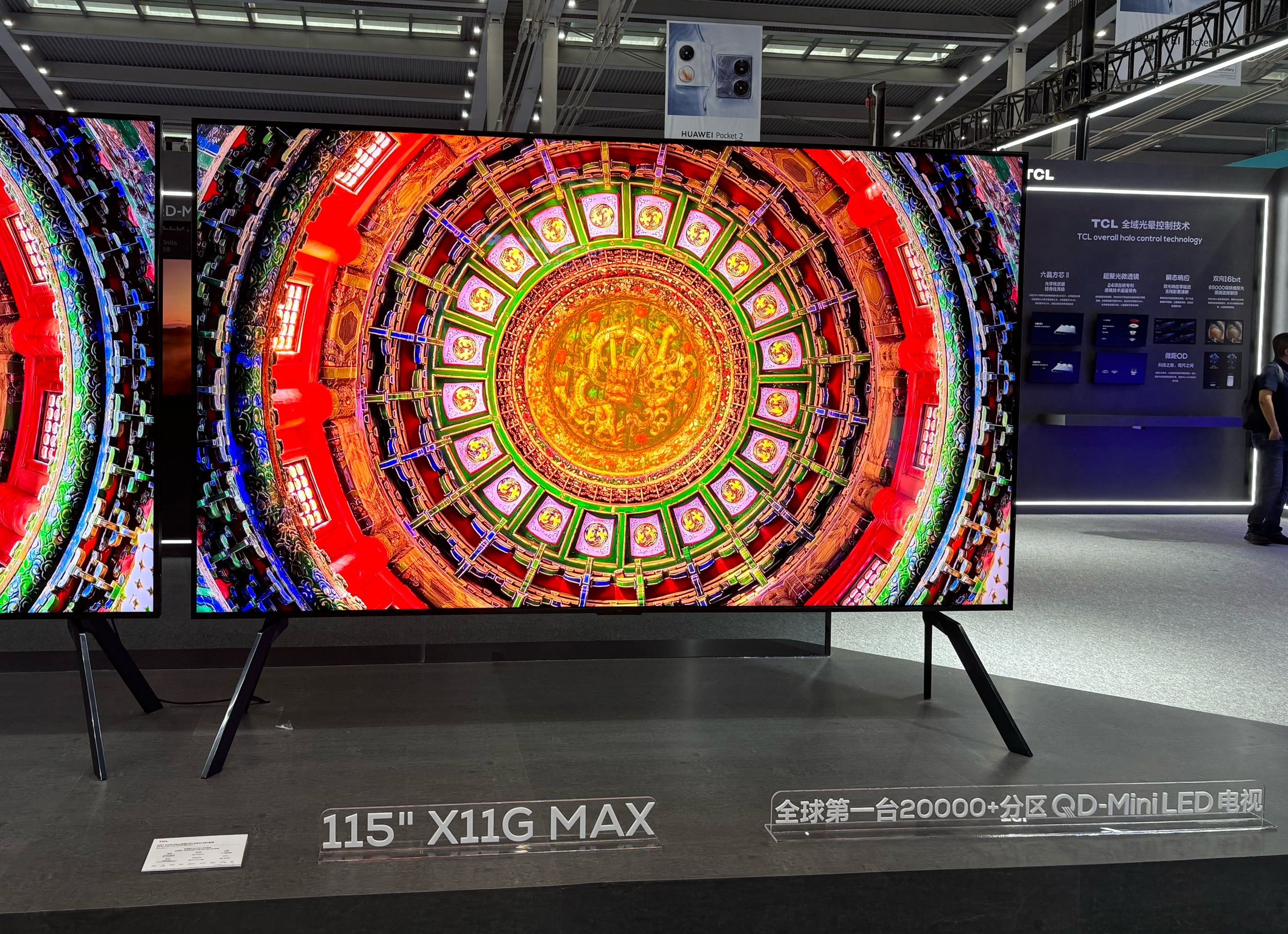
Core Insights - The market share gap between TCL, Hisense, and Samsung in the global TV market has narrowed to 2.2 and 2.7 percentage points respectively [1] Group 1: Market Trends - Despite a slight decline in overall global TV sales, leading Chinese companies are gaining market share, with TCL and Hisense approaching Samsung's dominance [4] - Global TV shipment volume is projected to decrease by 0.7% to 221 million units in 2025, while TCL's shipments are expected to grow by 5.4% to 30.41 million units, increasing its market share to 13.8% [4] - Hisense is projected to ship 29.26 million units in 2025, a 1.4% increase, raising its market share to 13.3% [4] Group 2: Mini LED Opportunity - The global TV market is under pressure, but there is significant growth potential in Mini LED TVs, with shipments expected to rise by 57.8% to 12.39 million units globally in 2025 [5] - In China, Mini LED TV shipments are projected to surge by 92.7% to 8.02 million units, capturing a market share of 23.9% [5] - TCL and Hisense are capitalizing on this opportunity, with TCL's Mini LED TV shipments increasing by 153.3% to 2.24 million units in the first three quarters of the year [6] Group 3: Competitive Landscape - Samsung's global TV shipment volume is expected to remain stable at 35.27 million units in 2025, with a slight market share increase of 0.1% to 16% [6] - The competitive advantage of Samsung over Chinese brands is diminishing, as Hisense is set to launch RGB-Mini LED TVs, prompting responses from Samsung and Sony [6] - Chinese brands are increasingly challenging the dominance of Korean brands in the high-end TV market, particularly with the rise of Mini LED technology [6] Group 4: Supply Chain and Market Expansion - Changing tariff policies are impacting manufacturing bases in China and Southeast Asia, affecting retail prices and consumer demand [7] - TCL and Hisense are expanding their market presence in North America and Europe while leveraging production capabilities in Vietnam, Brazil, and Mexico to mitigate tariff impacts [7] - Hisense is enhancing its localized operations and expanding production capacity in Vietnam to target Southeast Asia and the EU markets [8] Group 5: Brand Performance - Chinese brands like TCL, Hisense, Xiaomi, and others are gaining market share, while Japanese brands like LG and Sony are experiencing declines [9] - TCL and Hisense are positioned to challenge for the top global TV sales spot within three years, driven by technological advancements and market strategies [11] - The upcoming 2026 sports events, including the World Cup and Winter Olympics, are expected to boost TV demand, with TCL and Hisense sponsoring these events [10]
短短24小时,特朗普计划加征新税,给中方18个月期限,中方全球发声
Sou Hu Cai Jing· 2025-12-27 23:37
Group 1 - The U.S. government announced a 0% tariff on Chinese semiconductors, delaying actual tariffs until June 2027, indicating a political maneuver rather than a genuine trade war escalation [1][3][5] - The U.S. is concerned about rising inflation and the impact of tariffs on domestic industries reliant on Chinese chips, particularly in the automotive and electronics sectors [3][12] - The announcement reflects a strategy of "strategic ambiguity," aiming to project strength domestically while avoiding direct conflict with China [5][12] Group 2 - China's strong response is backed by significant trade surpluses, with a record surplus exceeding $1 trillion in the first 11 months of 2025, undermining U.S. expectations of reshaping trade dynamics through tariffs [7][15] - China has made substantial progress in semiconductor self-sufficiency, increasing its self-sufficiency rate from 15% in 2018 to 26% in 2023, particularly in mature process chips [9][13] - U.S. tech companies face a dilemma, needing to balance government restrictions with the necessity of the Chinese market, as evidenced by NVIDIA's recent licensing situation [11][12] Group 3 - The ongoing chip competition has exposed fractures in U.S. alliance strategies, with countries like South Korea receiving exemptions to continue expanding in China [13] - China's advancements in semiconductor technology, including the development of the RISC-V architecture and competitive pricing in silicon wafers, position it favorably in the global market [13][15] - China's export diversification strategy has reduced its reliance on the U.S. market, with exports to the U.S. now accounting for only 14.7% of total exports, enhancing its resilience in trade negotiations [15]
缺货冲击 2026年智能手机出货量不乐观
Jing Ji Ri Bao· 2025-12-27 23:07
Core Insights - The smartphone industry is expected to face a decline in shipment volume in 2026, shifting from a previously projected growth of 0.1% in 2025 to a decrease of 2% due to rising storage costs and supply shortages [1] - The impact of storage shortages will be most severe on mid-tier and lower-tier smartphone brands, while leading brands like Apple and Samsung will experience relatively less impact due to their stronger bargaining power and supply chain capabilities [1] - The overall market is anticipated to experience a "volume reduction and price increase" scenario, prompting brands to adjust their product strategies towards higher-margin models to maintain profitability [2] Group 1 - The global smartphone shipment volume is projected to decline by 2% in 2026, influenced by rising storage costs and supply shortages [1] - Mid-tier and lower-tier smartphone brands will face significant market pressure due to their weaker bargaining power compared to leading brands [1] - Samsung's existing storage capacity positions it favorably in the competitive market, minimizing the impact of storage shortages on its smartphone supply [1] Group 2 - Apple, with an annual production of approximately 80 to 90 million iPhones, has a strong supply chain bargaining power, resulting in a lesser impact from storage shortages [1] - The smartphone industry will likely shift towards higher-priced models to offset rising costs, leading to a reduction in the proportion of lower-margin mid-tier products [2] - The market dynamics will necessitate a strategic shift in sales approaches for all brands, particularly in the mid to low-end smartphone segments [2]
英伟达收购Groq,SK海力士预计26年1月交付12层HBM4最终样品
Guotou Securities· 2025-12-27 15:17
Investment Rating - The industry investment rating is "Outperform the Market - A" [4] Core Insights - Nvidia's acquisition of Groq for approximately $20 billion aims to enhance its capabilities in AI inference computing and strengthen its competitive position against rivals like Google's TPU [1] - SK Hynix is set to deliver the final samples of its next-generation 12-layer HBM4 memory to Nvidia in early January 2026, with plans for mass production to begin in March 2026 [2] - SMIC has announced a price increase of about 10% for certain foundry services, particularly focusing on the 8-inch BCD process platform, reflecting rising demand and costs in the semiconductor industry [3] Industry Performance - The electronic sector has shown a relative return of 3.7% over the past month and an absolute return of 6.8% [6] - The semiconductor sub-sector has a PE ratio of 100.63 times, indicating a high valuation compared to historical averages [40] - The electronic industry index has increased by 4.96% in the past week, ranking 4th out of 31 sectors [31] Investment Recommendations - Recommended stocks in the semiconductor sector include SMIC, Hua Hong Semiconductor, and Northern Huachuang [10] - In the consumer electronics sector, suggested stocks include Lixun Precision and Suzhou Tianmai [10]


AR眼镜第一案,究竟在争什么?
虎嗅APP· 2025-12-27 13:34
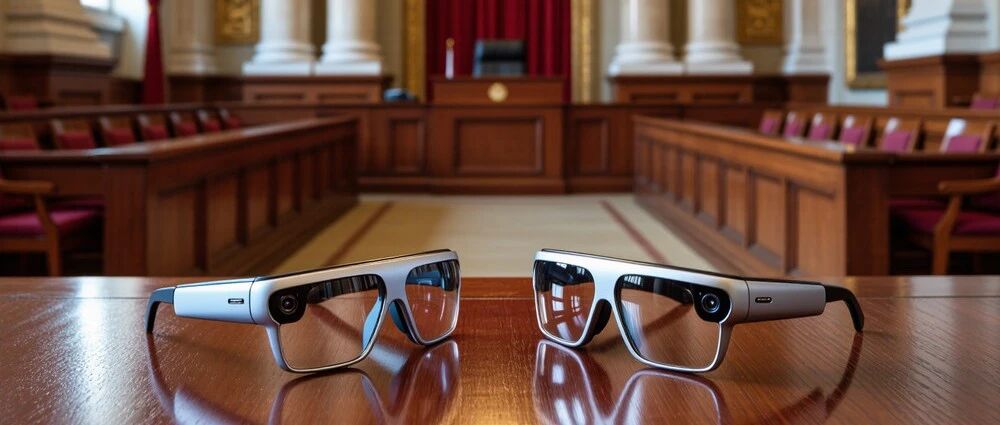
Core Viewpoint - The ongoing patent dispute between XREAL and VITURE highlights the increasing importance of intellectual property in the AR glasses industry, revealing deeper technological complexities beyond surface-level applications [2][5][21]. Group 1: Patent Dispute Overview - A German court ruled that VITURE's AR glasses infringed on XREAL's European patent EP3754409B1, leading to a temporary sales ban on VITURE's products in Germany [2][14]. - The patent EP3754409B1 is crucial for consumer-grade AR glasses, focusing on optical module design that enhances light transmission efficiency and reduces stray light [7][13]. Group 2: Technological Implications - The patent describes an optical structure that utilizes a dichroic film to selectively reflect and transmit polarized light, achieving an 82% light transmission efficiency and a 40% reduction in stray light [13]. - XREAL's technology innovations aim to create lightweight AR glasses with superior display quality, addressing challenges such as comfort, display performance, and AI integration [17][19]. Group 3: Industry Context and Future Outlook - The AR glasses market is characterized by high complexity and a lack of dominant products, leading to an increase in patent disputes as companies navigate technological overlaps [4][16]. - XREAL has strategically focused on foundational optical technologies, accumulating over 800 patents, including 133 related to core optical components for AR glasses, positioning itself for future competitive advantages [18][23].
TCL李东生:将中国制造产业优势,扩展到全球
2 1 Shi Ji Jing Ji Bao Dao· 2025-12-27 10:58
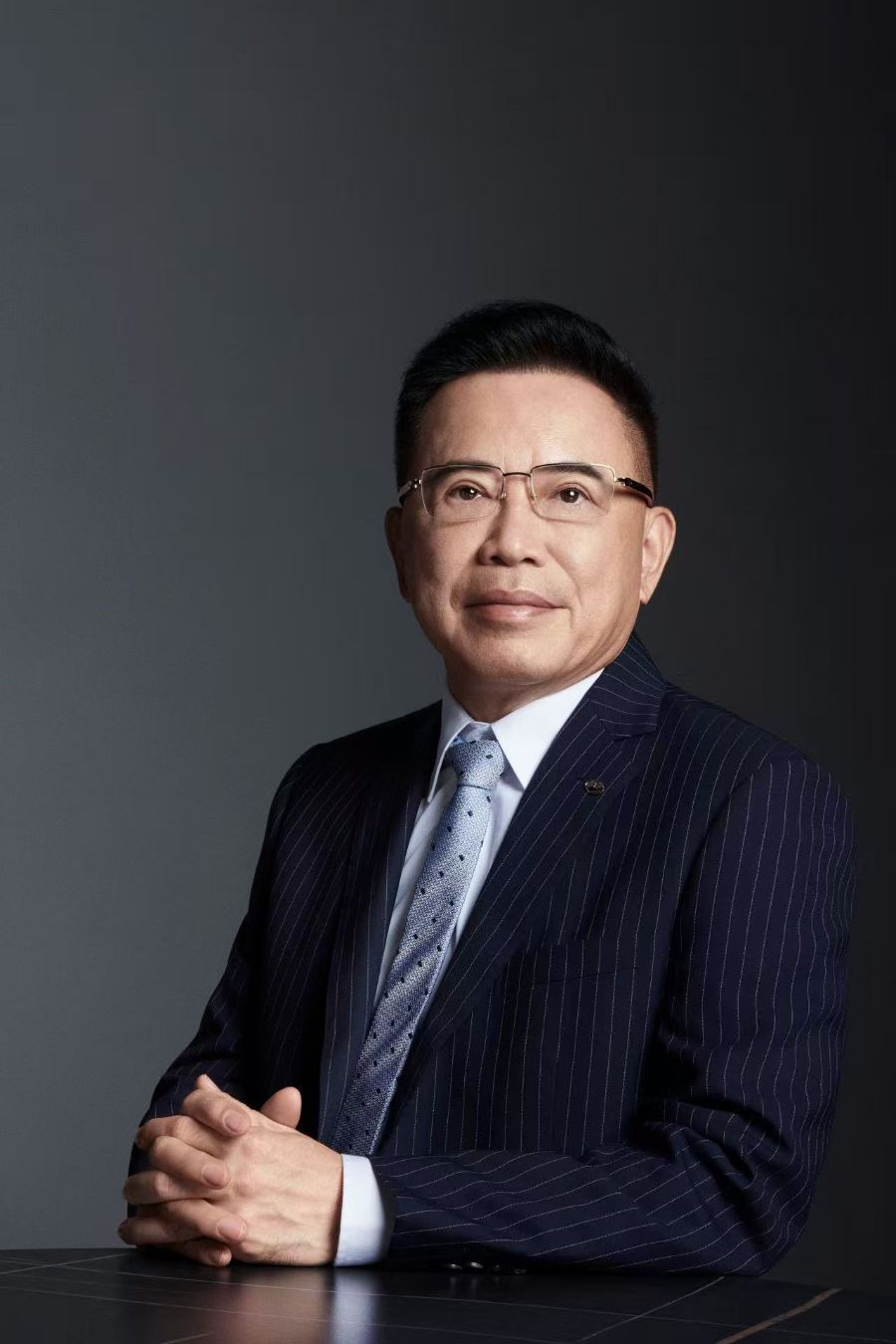
Core Viewpoint - Tijuana, located on the US-Mexico border, is emerging as a critical hub for cross-border manufacturing and trade, with a focus on electronics, automotive, and medical devices, as global supply chains are restructured, making Mexico a key destination for Chinese companies like TCL [1][10] Group 1: Globalization and Market Strategy - TCL's approach to globalization is not merely market expansion but involves long-term planning around industrial capabilities and organizational structure, establishing regional operational centers to enhance its global operational system [4][5] - The company aims to create five localized TCL entities globally, enhancing brand influence and supporting global business expansion through local production and supply chains [4][5] - TCL's overseas sales now account for 60% of its smart terminal business, indicating that international markets are crucial for revenue and profit growth [5][11] Group 2: Challenges and New Cycles - TCL identifies two overlapping new cycles: a new global economic pattern and a technological transformation, both presenting challenges and opportunities for Chinese enterprises [5][6] - The shift towards localization and regionalization in global trade rules is reshaping the global economic landscape, which could benefit Chinese companies while also posing challenges [5][10] Group 3: Industrial Capability Building - The logic of overseas expansion is shifting from mere production to collaborative capability building, with TCL focusing on establishing local supply chains and enhancing local manufacturing capabilities [7][9] - TCL's manufacturing base in Mexico, particularly the MOKA factory, has evolved from initial capacity expansion to enhancing profitability, with an annual production capacity now reaching approximately 3 million units [8] Group 4: New Trade Ecosystem - The global manufacturing system is characterized by interdependence among industries and economies, with recent trade tensions complicating this ecosystem, yet fostering industrial development in countries like Mexico and Vietnam [10][11] - Chinese companies, including TCL, are playing a pivotal role in this new trade ecosystem, enhancing their survival and competitiveness in the global market [10][11] Group 5: Competitive Landscape - The competition in the consumer electronics market is intensifying, with TCL emerging as a leading player, facing challenges from both domestic and international brands [11][12] - The necessity for Chinese companies to engage in international competition is underscored by domestic market pressures and the need for differentiation in global markets [11][12]

集邦咨询预测 DDR5 内存价格再涨 45%!2026 年电脑恐迎“史上最贵”的一年
Xin Lang Cai Jing· 2025-12-27 10:24
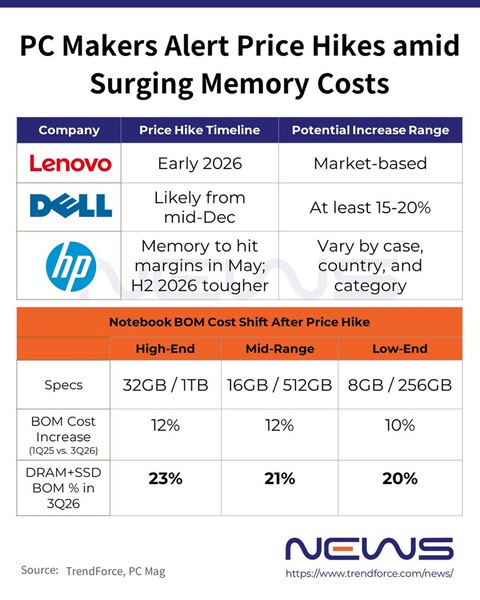
Core Insights - Major laptop manufacturers like Lenovo and HP are likely to delay their new product launches in 2026 due to a historic memory shortage impacting their product roadmaps [1] - The cost of core components is rising significantly, leading brands to reassess their release plans to avoid inventory buildup and high pricing risks [1] - The SSD prices are increasing due to AI monopolizing NAND flash supply, with DDR5 memory prices expected to rise by 45% by the end of 2026, making storage components account for 23% of total laptop material costs [1] Group 1: Price Hikes and Cost Implications - Lenovo plans to increase prices by at least 15-20% starting from mid-December 2025, with high-end models potentially seeing price hikes of up to 30% to maintain profit margins [2] - The BOM (Bill of Materials) cost for high-end laptops is expected to increase by 12% from Q1 2025 to Q3 2026, with DRAM and SSD components making up 23% of the BOM in 2026 [2] Group 2: Manufacturer Strategies - Dell and Framework have announced upcoming price increases, while ASUS considered producing DDR5 memory in-house but later denied this rumor [3] - Custom PC brand Maingear is encouraging customers to send in their own memory modules for assembly, although this unconventional method may not yield significant cost savings [3] Group 3: Market Outlook - The PC market, after a strong growth in 2025 driven by Windows 11 upgrade demands, is expected to face a sharp decline in 2026 due to the exhaustion of upgrade incentives and delayed new product launches [5] - Analysts predict a decrease in laptop sales in 2026 as consumer purchasing power declines and new product availability diminishes [5]


21专访|TCL李东生:将中国制造产业优势,扩展到全球
2 1 Shi Ji Jing Ji Bao Dao· 2025-12-27 10:05
Core Viewpoint - Tijuana, located on the US-Mexico border, is emerging as a critical hub for global manufacturing and trade, particularly for electronics, automotive, and medical devices, as companies like TCL expand their production bases in response to global supply chain restructuring [2][3] Group 1: Globalization and Business Strategy - TCL's approach to globalization is not merely market expansion but involves a long-term strategy focused on industrial capabilities and organizational structure, with a systematic upgrade of its global operations [3] - The company aims to establish five regional centers globally, enhancing local production, assembly, and supply chains to increase brand influence and business value [3] - TCL's overseas sales now account for 60% of its smart terminal business, highlighting the importance of international markets for revenue and profit growth [3] Group 2: Challenges and New Cycles - The current global landscape presents two overlapping challenges: a new cycle in global economic and trade patterns and a technological transformation cycle [5] - The shift towards localization and regionalization in global trade is creating both opportunities and challenges for Chinese enterprises, including TCL [5] - The rise of artificial intelligence and green development is reshaping business models and necessitating a focus on sustainability for Chinese companies [5][9] Group 3: Industrial Capability and Local Integration - The logic of overseas expansion is shifting from mere production to collaborative capability building, emphasizing the construction of supply chains and R&D capabilities [6] - TCL's strategy includes establishing local supply chains and manufacturing bases, as seen in its operations in Vietnam and Poland, which integrate local resources and talent [6][7] - The MOKA factory in Tijuana has evolved from a production facility to a key player in the local industrial ecosystem, enhancing its profitability and operational capacity [7] Group 4: New Trade Ecosystem - The global manufacturing system is characterized by interdependent relationships among industries and economies, which are being reshaped by recent trade dynamics [10] - Chinese companies, including TCL, are playing a crucial role in developing new trade ecosystems in countries like Mexico and Vietnam, enhancing their competitiveness in the global market [10][11] - The expansion of Chinese enterprises into international markets is driven by domestic pressures and the need to compete with multinational corporations [11][12] Group 5: Future Outlook - Participation in international competition is essential for Chinese companies to overcome growth limitations and achieve global leadership [12] - The ongoing evolution of globalization is complex and decentralized, requiring companies to focus on capabilities, organization, and resilience in their international strategies [12]
美丽废物还是年轻人潮品?一款迷你AI手机靠情绪价值众筹千万
36氪· 2025-12-27 09:48
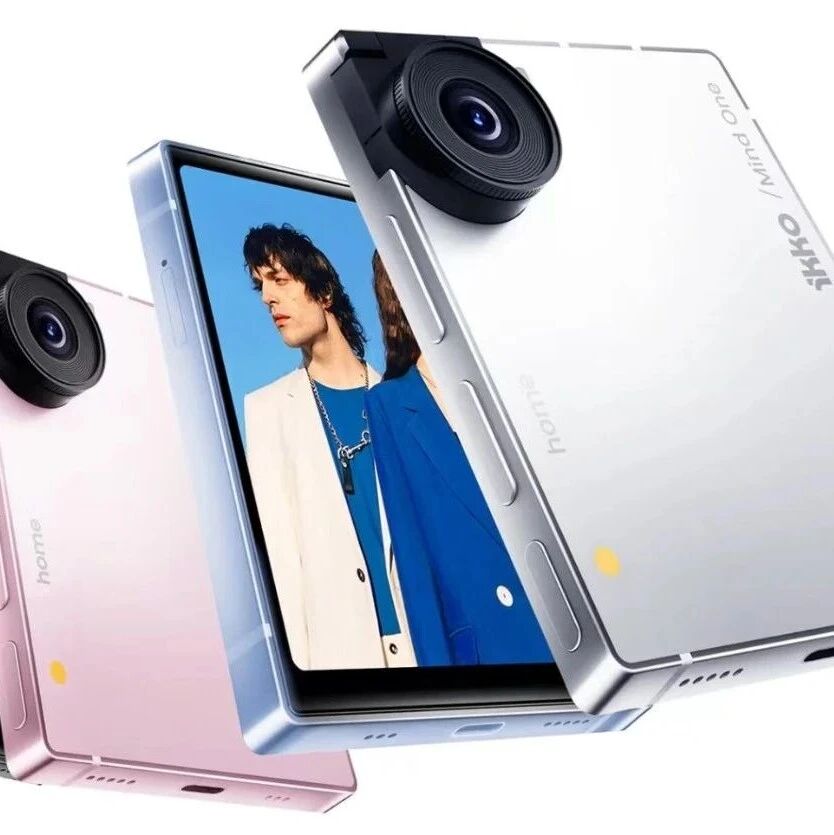
Core Viewpoint - The article discusses the emergence of a niche AI smartphone, the IKKO Mind One Pro, which has successfully raised over 11.5 million HKD on Kickstarter, highlighting a shift in the smartphone industry towards catering to specific user needs rather than competing with mainstream devices [6][8]. Group 1: Product Features and Design - The IKKO Mind One Pro features a unique 4.02-inch square AMOLED display, making it approximately half the size of traditional smartphones, and includes a 50-megapixel 180-degree rotating camera [12][14]. - It employs a dual-system design with Android 15 for a complete app ecosystem and a lighter IKKO AI OS focused on minimizing distractions, which includes AI tools for translation and voice transcription [14][15]. - The device's compact size and innovative design challenge the prevailing trend of large screens in smartphones, positioning it as a supplementary device rather than a primary one [13][14]. Group 2: Market Position and Business Model - IKKO's strategy targets niche users, capitalizing on the emotional value of unique design and functionality, which contrasts with the more generic offerings from larger brands [11][24]. - The business model incorporates a subscription service for AI functionalities, potentially allowing for a more integrated hardware-software experience, although the viability of this model in the broader smartphone market remains uncertain [16][25]. - The article suggests that the AI smartphone market may evolve into a dual structure, with major brands competing at the top and smaller niche players innovating at the bottom [25]. Group 3: Challenges and Industry Trends - Despite its innovative approach, the IKKO Mind One Pro faces skepticism regarding its practicality and performance, particularly due to its use of an older MediaTek Helio G99 processor and a relatively small battery capacity of 2,200 mAh [20][21]. - The article notes that as AI capabilities become more integrated into mainstream smartphones, smaller brands like IKKO may struggle to differentiate themselves in the AI application space [22][21]. - The future of AI smartphones may hinge on addressing unmet design and emotional needs, rather than solely focusing on technical specifications [24][26].