浦发银行

Search documents
资本优化提速 多家银行赎回优先股
Zheng Quan Ri Bao· 2025-10-22 16:44
Core Viewpoint - The recent trend of banks redeeming preferred shares is a strategic response to operational pressures and aims to optimize capital efficiency, reshaping the underlying logic of capital management in the banking industry [1][3]. Group 1: Redemption Plans - Major banks, including state-owned and joint-stock banks, have initiated significant preferred share redemption plans, with some banks redeeming amounts reaching billions [1][2]. - Shanghai Bank plans to fully redeem 200 million preferred shares worth 20 billion yuan by December 2025, while Hangzhou Bank and Ningbo Bank plan to redeem 10 billion yuan each [2]. Group 2: Drivers of Redemption - The core drivers for the concentrated redemption of preferred shares are cost optimization and the need for capital structure adjustment [3]. - High dividend rates of previously issued preferred shares (5% to 6.5%) have become a financial burden in the current low-interest environment, prompting banks to replace them with lower-cost instruments [3][5]. Group 3: Capital Structure Transformation - The increasing redemption of high-yield preferred shares and restrictions on new issuances are leading banks to shift towards issuing lower-cost capital instruments such as perpetual bonds and subordinated debt [4]. - The market acceptance of these lower-cost capital tools is rising, providing banks with favorable conditions for capital replacement [4][6]. Group 4: Long-term Implications - The concentrated redemption of preferred shares is expected to diversify capital tools, with banks likely to favor flexible instruments like perpetual bonds and explore innovative options like convertible capital bonds [5]. - The capital management philosophy is shifting from "scale expansion" to "quality first," focusing on capital efficiency and optimizing risk-weighted assets [5][6]. - Regulatory upgrades may lead to improved capital tool rules, encouraging proactive capital management in the banking sector [5].
农行市值达2.75万亿元领涨银行股,估值修复行情能否持续
Di Yi Cai Jing· 2025-10-22 13:16
Core Viewpoint - The A-share banking sector has shown strong performance, with Agricultural Bank of China (ABC) reaching a historical high in stock price and market capitalization, indicating a significant valuation recovery in the banking sector [1][2]. Group 1: Agricultural Bank of China Performance - On October 22, ABC's stock price closed at 8.09 yuan, marking a historical high and a total market capitalization of 2.75 trillion yuan, with a price-to-book ratio of 1.06, breaking the long-standing "below book value" situation of state-owned banks [1][2]. - ABC has experienced a "14 consecutive days of gains" trend, with a year-to-date increase of 51.05%, significantly outperforming Industrial and Commercial Bank of China (ICBC), which has a year-to-date increase of 12.14% [2]. - The stock's strong performance is attributed to high dividend yields from quality assets and stable earnings, which provide solid support for the stock price [2]. Group 2: Factors Driving Valuation Recovery - The recovery in the banking sector's valuation is driven by three main factors: sustained inflow of long-term capital, stabilization of fundamentals, and a shift in market style [4]. - Long-term capital inflows, particularly from insurance companies, asset management companies (AMCs), and industrial capital, have provided robust purchasing power for bank stocks [4][5]. - The fundamental recovery is reflected in improved revenue growth and profitability forecasts for listed banks, with expected revenue growth of 1% and profit growth of 1.5% for the first three quarters of 2025 [5]. Group 3: Market Conditions and Investor Sentiment - The market's perception of bank stocks has shifted, with a historical tendency to undervalue banks at a price-to-book ratio below 1, now being reassessed due to the banks' operational resilience and compounding effects [3]. - The recent increase in global risk aversion, particularly following U.S. trade policy announcements, has led to a defensive shift towards bank stocks, which are characterized by low valuations and high dividends [6]. - Analysts suggest that the banking sector is entering a bottoming phase, with expectations of a more certain investment window in the fourth quarter and early next year, despite ongoing uncertainties in performance and external environments [7].

共探资管行业高质量发展新路径 “全球资产管理中心上海国际活动周2025”财富管理专场在沪举办
Zhong Zheng Wang· 2025-10-22 11:56
Core Insights - The "Global Asset Management Center Shanghai International Event Week 2025" focuses on the theme of "Asset Management and Wealth Management Cycle Driven by New Opportunities" to address the transformation needs of asset management institutions in the new era [1][2] - Shanghai is positioning itself as a global asset management center, leveraging historical advantages and market factor aggregation to enhance wealth management and asset management practices [1] Group 1: Industry Trends - The asset management industry in China is experiencing a mismatch with technological demands, particularly in equity financing, where private equity funds have a higher participation rate [1] - The shift in the industry is moving from "scale growth" to "value creation" and from homogeneous expansion to differentiated professional capability building [2] Group 2: Company Initiatives - Shanghai Trust emphasizes the integration of asset management and wealth management, adhering to the principle that "technology makes finance more inclusive" [2] - Shanghai Trust's transformation journey has led to a breakthrough of 1.3 trillion yuan in assets under management, focusing on creating a wealth management trust account system and innovative asset management product systems [2] Group 3: Strategic Recommendations - The industry is encouraged to optimize investment stages and exit channels, particularly through private equity funds, and to convert insurance asset management into long-term capital for technological innovation [1] - There is a call for the establishment of a supportive environment for technological innovation, utilizing strategic scientists and optimizing exit mechanisms and regulations [1]

迪瑞医疗:控股股东解除质押4560.02万股
Guo Ji Jin Rong Bao· 2025-10-22 08:31
Core Viewpoint - The company announced that its controlling shareholder, Huade Xinrun, has released the pledge on 45.6002 million shares, which accounts for 59% of its holdings and 16.72% of the company's total share capital [1] Summary by Relevant Sections - **Shareholder Actions** - Huade Xinrun has released the pledge on 45.6002 million shares, effective from April 15, 2024, to October 20, 2025 [1] - After the release of the pledge, Huade Xinrun will have no pledged shares remaining [1] - **Shareholding Structure** - Huade Xinrun currently holds a total of 77.2884 million shares, representing 28.34% of the company's total share capital [1]

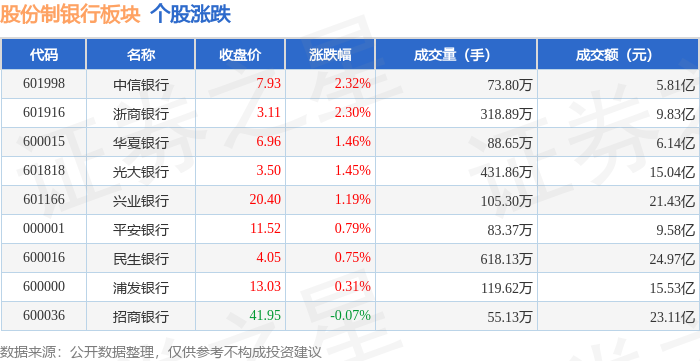
股份制银行板块10月22日涨0.78%,中信银行领涨,主力资金净流出3.55亿元
Zheng Xing Xing Ye Ri Bao· 2025-10-22 08:19
证券之星消息,10月22日股份制银行板块较上一交易日上涨0.78%,中信银行领涨。当日上证指数报收于3913.76,下跌0.07%。深证成指报收于 12996.61,下跌0.62%。股份制银行板块个股涨跌见下表: | 代码 | 名称 | 收盘价 | 涨跌幅 | 成交量(手) | 成交额(元) | | --- | --- | --- | --- | --- | --- | | 66109 | 中信银行 | 7.93 | 2.32% | 73.80万 | 5.81亿 | | 601916 | 浙商银行 | 3.11 | 2.30% | 318.89万 | 9.83亿 | | 600015 | 华夏银行 | 6.96 | 1.46% | 88.65万 | 6.14亿 | | 601818 | 光大银行 | 3.50 | 1.45% | 431.86万 | 15.04亿 | | 601166 | 兴业银行 | 20.40 | 1.19% | 105.30万 | 21.43亿 | | 000001 | 平安银行 | 11.52 | 0.79% | 83.37万 | 9.58亿 | | 600016 | 民生银行 | 4 ...






几次牛市的回顾以及本次的比对
雪球· 2025-10-22 08:08
Group 1 - The article reviews historical bull markets in China and their ending reasons, highlighting the concerns of investors regarding the sustainability of the current bull market [3][4] - The bull market from 1996 to 2000 ended due to high valuations, policy shifts from supporting the market to regulating it, and an oversupply of stocks following state-owned share reductions [3][4] - The 2005-2007 bull market was characterized by simultaneous high economic growth and stock market performance, driven by currency appreciation and a favorable economic environment [3][4] Group 2 - The 2014-2015 bull market was fueled by interest rate cuts, leading to a surge in bank stocks and subsequently other sectors, but ended due to regulatory tightening and external currency pressures [4][5] - The article suggests that the end of the A-share bull market is closely related to policy changes, with a current need for a bull market to stimulate the economy and manage local government debt [6][7] - The relationship between A-shares and the USD exchange rate is emphasized, indicating that a strengthening USD could lead to capital outflows from China, potentially ending the bull market [7]

股债分化格局下:两款“固收+权益”产品三季度涨超10%
2 1 Shi Ji Jing Ji Bao Dao· 2025-10-22 07:52
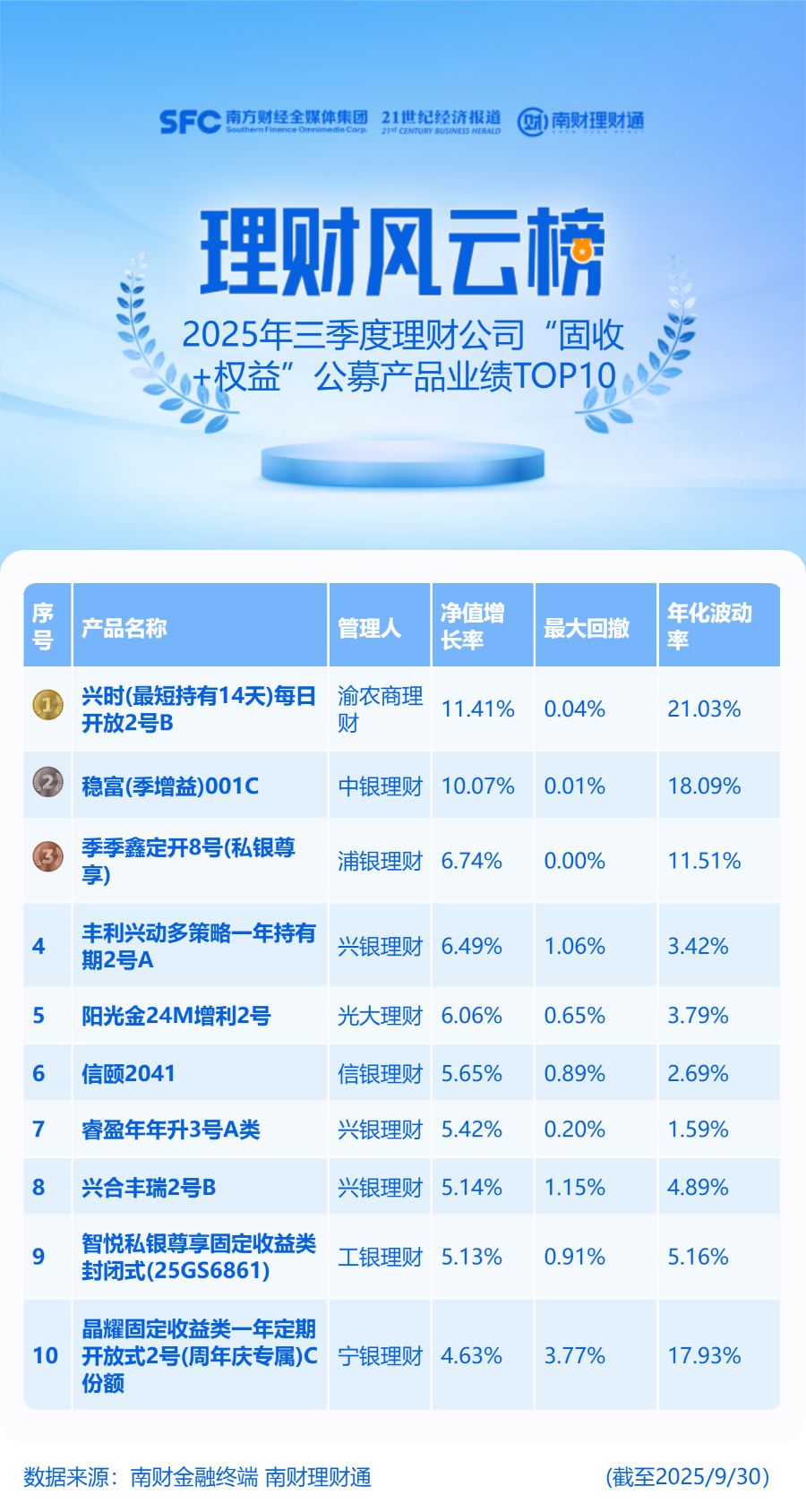
Overall Performance - In Q3 2025, the capital market exhibited significant differentiation due to the "stock-bond seesaw" effect, with the equity market performing strongly while the bond market faced overall pressure [5] - The A-share market experienced a notable upward trend, with the CSI 300 index rising by 17.90% and the Wind All A index increasing by 19.46%, while the ChiNext index surged over 50%, highlighting a growth style dominated by sectors such as artificial intelligence and technology [5][6] Product Analysis - The "fixed income + equity" products generally had conservative equity positions, with many products holding less than 2% in equities, resulting in limited impact from the stock market's rise [6] - The top 10 products listed primarily came from eight wealth management companies, with the top two products achieving net value growth rates exceeding 10% and exhibiting low maximum drawdowns [6][7] - The top-ranked product, "Xing Shi (Minimum Holding 14 Days) Daily Open 2B" from Yunnan Rural Commercial Bank Wealth Management, was positioned to allocate 0-20% in equity assets but held no equity assets as of Q2 2025, with over 51.33% of its assets in cash and bank deposits [6][7] - The second-ranked product, "Stable Wealth (Quarterly Increment) 001C" from Bank of China Wealth Management, had a bond asset ratio of 71.22% as of June 2025, with a significant portion of its holdings in financial bonds, corporate bonds, and private placement bonds [7] - Looking ahead to Q4, the market sentiment remains relatively optimistic towards the equity market, while the bond market may present short-term trading opportunities after the Q3 correction, although further declines in yields are expected to be limited [7]
浦发银行代发系统“靠浦薪”在京焕新发布
Zheng Quan Ri Bao Wang· 2025-10-22 06:51
Core Insights - The "Kao Pu Xin" payroll system was launched by SPD Bank's Beijing branch, showcasing a significant achievement in its digital strategy [1] - The platform integrates financial technology with ecological collaboration to enhance digital transformation for enterprises in the capital [1] Group 1: System Features - The upgraded "Kao Pu Xin" payroll system addresses key pain points such as slow payroll processing, complicated salary inquiries, and challenges in meeting personalized needs [1] - The system offers a lightweight, ready-to-use service that supports enterprises in achieving digital operational services, particularly aiding small and medium-sized enterprises in their digital transformation [1] Group 2: Operational Efficiency - The introduction of electronic contracts eliminates the need for in-person signing, significantly improving signing efficiency [1] - The "smart salary calculation" feature automates complex payroll management, making it more precise and efficient [1] - Customized solutions for specific scenarios, such as accounts for migrant workers and flexible employment settlements, ensure compliance with policies and enhance fund security [1]

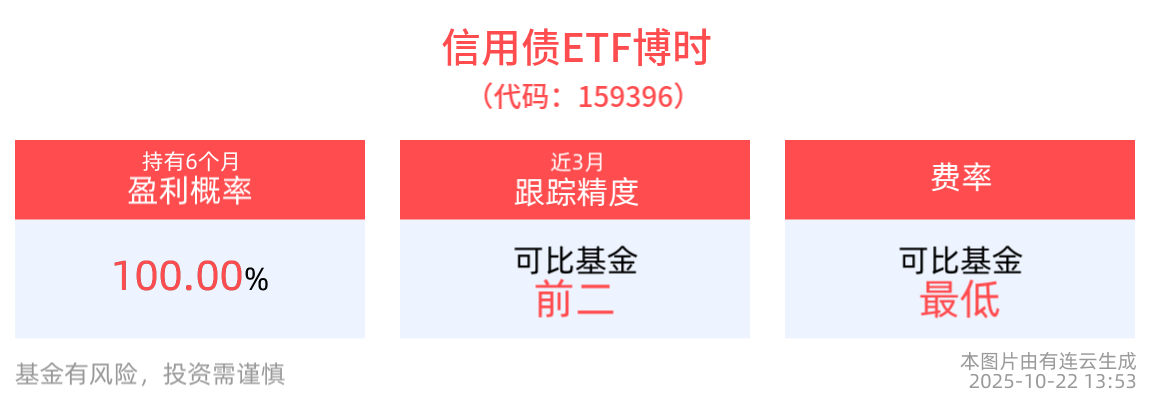
9月地产信用债融资大增9成,信用债ETF博时(159396)今日小幅上涨
Sou Hu Cai Jing· 2025-10-22 06:12
Group 1 - The core viewpoint of the news highlights the performance and trends in the credit bond ETF market, particularly focusing on the BoShi Credit Bond ETF, which has shown a slight increase in value and significant trading volume over the past year [2] - As of October 21, the credit bond ETF BoShi has a recent trading volume of 2.611 billion yuan on average per day over the past year, indicating strong market activity [2] - In September, the total bond financing in the real estate sector reached 56.1 billion yuan, marking a year-on-year increase of 31%, with credit bond financing contributing significantly to this growth [2] Group 2 - The report from CITIC Securities suggests that inflation predictions for 2026 may show a steady increase in PPI, influenced by various economic indicators, while CPI may experience fluctuations [3] - Huaxi Securities notes that the demand for credit bonds may decline in the fourth quarter due to seasonal trends and institutional profit-taking pressures, which could hinder the performance of the credit bond market [3] - The latest scale of the credit bond ETF BoShi is reported to be 10.034 billion yuan, closely tracking the Shenzhen benchmark credit bond index [3]
这只银行转债 迎来最后交易日
Zhong Guo Zheng Quan Bao· 2025-10-22 04:50
Core Viewpoint - The Shanghai Pudong Development Bank (SPDB) convertible bonds are set to cease trading on October 23, with the final conversion date on October 27, and redemption of principal and interest scheduled for October 28 at 110 CNY per bond [4][6]. Group 1: Trading and Redemption Details - The last trading day for SPDB convertible bonds is October 22, after which they will stop trading on October 23 [4][6]. - The final conversion date for the bonds is October 27, allowing holders to convert their bonds into company stock before the trading halt [4][6]. - The total redemption amount for the bonds is set at 110 CNY per bond, with funds to be distributed on October 28 [6]. Group 2: Conversion Activity - As of October 17, China Mobile converted 18.15 million SPDB convertible bonds into 150 million shares, increasing its shareholding from 17.80% to 18.15% [6]. - Prior to this, two asset management companies (AMCs) also converted their holdings into SPDB shares, indicating a trend of increasing conversion activity as the bonds approach maturity [6]. Group 3: Market Impact - Following the maturity of SPDB convertible bonds, the total number of bank convertible bonds in the market will decrease to six, with the overall scale dropping below 100 billion CNY [9]. - The exit of multiple bank convertible bonds from the market is expected to impact institutional investors' asset allocation, as these bonds are traditionally a core holding for fixed-income funds [9]. - Analysts suggest that the reduction in supply of bank convertible bonds may lead to a restructuring of the market and a revaluation of these assets, as they become scarcer [9].